
Reviewed · THIRD REICH & WORLD WAR II TOURS
Nuremberg: Walking Tour of Former Nazi Party Rally Grounds
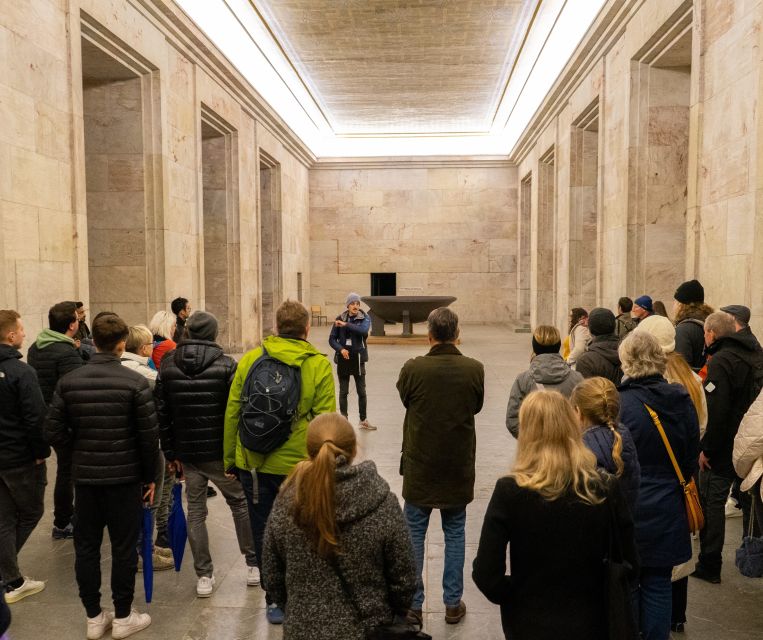
Scale can be chilling. This walking tour turns Nuremberg’s Nazi Party Rally Grounds into a clear, teachable story, from architecture to the way rallies were staged for mass control. I especially liked the guide-led route along the north-south axis, The Great Road, and the practical photo walk-through that helps you picture what stood here. One drawback to plan for: it is a lot of walking on an uneven, open-air site, and it is not a great fit if you have mobility limitations.
What makes it work is the tone and structure. You do not just see huge leftovers. You get the “why” behind them: how the National Socialist Party used spectacle, design, and crowd choreography to sell their version of history and cover up crimes. Guides also end with a look at how the site is discussed today, which keeps the tour from feeling stuck in the past.
In This Review
- Key highlights at a glance
- Entering the story at the Dokumentationszentrum
- Walking The Great Road and reading the axis
- Kongresshalle ruins: when 40 meters hits your body
- Zeppelin Field and the choreography of crowds
- How the guide links architecture to propaganda (and the crimes behind it)
- Where each stop fits (and what you might miss on your own)
- Walking logistics, timing, and what to pack
- Value check: is $15 worth it for two hours?
- Who this tour is for
- Should you book? My call
- FAQ
- How long is the Nuremberg walking tour?
- Where do I meet the guide?
- How much does it cost?
- What languages is the tour offered in?
- What are the main places you visit?
- Will the tour run in bad weather?
- Is this tour suitable for people with mobility impairments?
Key highlights at a glance
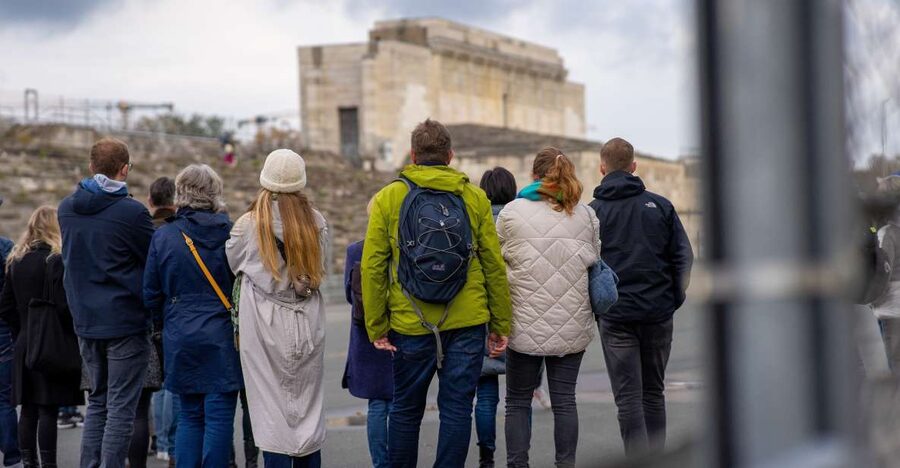
- Great Road route: Walk the north-south axis and understand why it was laid out for spectacle.
- Zeppelin Field: See where massive rally crowds were meant to gather.
- Congress Hall ruins: Get a real sense of scale, including ruins standing at 40 meters.
- Propaganda mechanics: Learn how the architecture supported staged rallies and mass messaging.
- Zeppelin Tribune scale: Finish at a structure designed to hold up to 200,000 people.
- Photo folder context: Your guide uses visual aids to help you read the space.
Entering the story at the Dokumentationszentrum
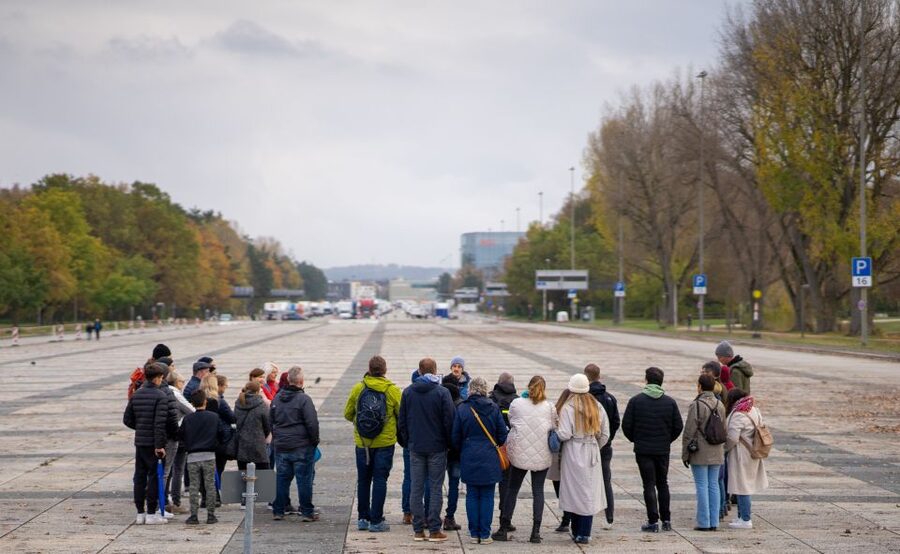
Most tours begin at the Dokumentationszentrum Reichsparteitagsgelände, at Bayernstraße 110. Look for the guide near the entrance stairs, holding a picture folder and wearing a name tag for Geschichte Für Alle e.V. Meeting there matters, because it sets expectations fast: this is a place where you should slow down, look carefully, and take in context.
If your booking lists Kongresshalle as a start option, you may begin a bit closer to the monumental structures. Either way, you’ll be moving through the rally grounds on foot for about two hours, with a live guide in German or English.
Practical note: this is rain or shine. The site is open. So bring a rain jacket even if the forecast looks friendly, and wear shoes you can trust on outdoor paths.
More Walking Tours in Nuremberg
- Nuremberg: Old Town Guided Walking Tour
★ 4.6 · 2,416 reviews - Nuremberg Old Town and Nazi Party Rally Grounds Walking Tour in English
★ 4.5 · 504 reviews - Nuremberg Old Town and Nazi Rally Grounds Walking Tour
★ 4.7 · 377 reviews
Walking The Great Road and reading the axis
One of the strongest parts of the experience is following The Great Road. You’re not just strolling through a historic corridor. You’re learning how a straight line was turned into a stage.
This north-south axis was part of the rally layout, guiding movement and sightlines. Once you stand on it with a guide explaining the intention, you start noticing details you would otherwise miss. The scale is obvious, but the effect is what sticks: this kind of planning makes crowds feel swept into a single direction and a single message.
I like that the tour treats the site like a designed system. Instead of “here’s a building,” it becomes “here’s a tool.” The Great Road is one of those tools. You’ll leave with a clearer sense of how people were guided, arranged, and made to feel part of something bigger than themselves.
Kongresshalle ruins: when 40 meters hits your body
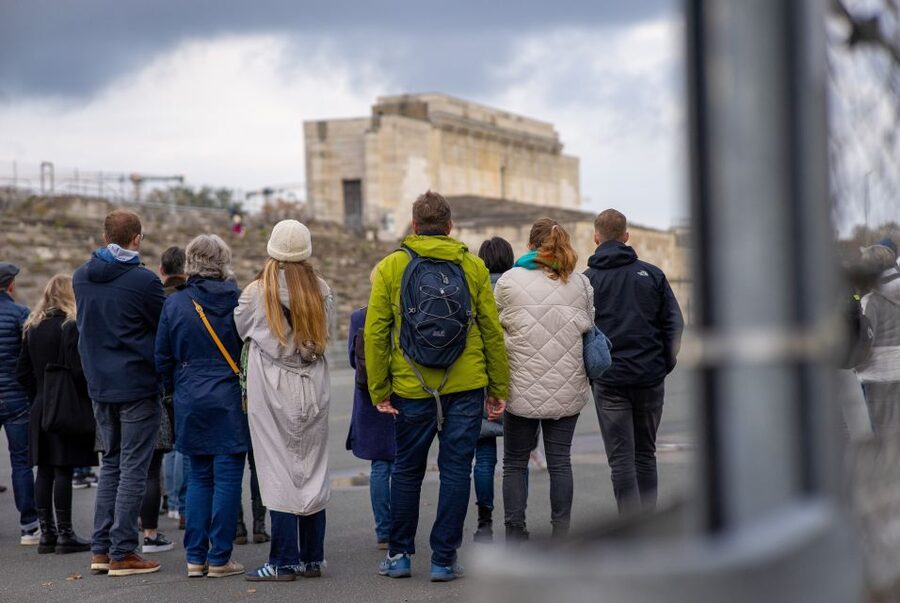
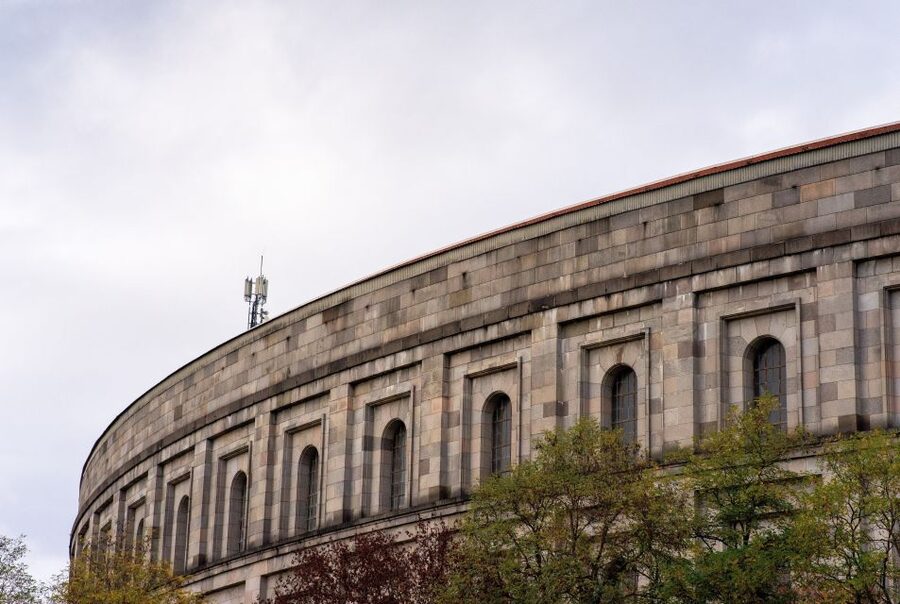
Next comes the Congress Hall ruins, including the detail that the remains reach about 40 meters high. In photographs, “big” can feel vague. In person, it becomes physical. Your brain adjusts slower than your eyes.
The guide’s job here is not only to point out what is left, but to explain why the Nazis invested in these forms in the first place. The National Socialist Party promoted a worldview, and they used monumental buildings to back it up. When you see the remains at this height, it’s easier to understand the psychological goal: dominance through size, order through layout, and legitimacy through permanence.
A balanced takeaway I appreciate: the tour is not afraid to name the crimes and propaganda role in the same breath as the architecture. That pairing is important, because the site can otherwise get reduced to a spectacle of ruins. The guide keeps pulling you back to what this place was used for.
Zeppelin Field and the choreography of crowds
The Zeppelin Field is the emotional center for many people, and the tour guides you right into its logic. The space was built for rally gatherings on a mass scale, and the guide helps you connect the ground plan to crowd behavior.
At this point, you start to feel the difference between ruins you can wander and a site that was designed to move people. The open field space encourages big visibility, and that matters for propaganda rallies. Your guide explains how architecture, sightlines, and timing worked together to stage events.
Then you finish at the Zeppelin Tribune, designed to hold up to 200,000 people. Even if you never plan to imagine filling it, the structure forces the point. This wasn’t small-town pageantry. It was engineered mass messaging on a grand scale.
How the guide links architecture to propaganda (and the crimes behind it)
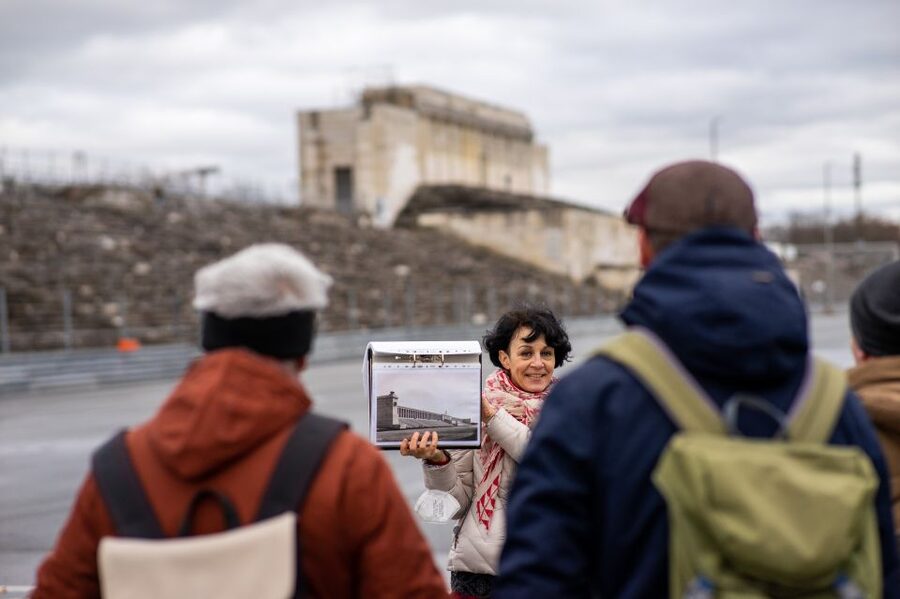
A huge part of the value here is the guide’s focus on function. You learn about the National Socialist Party, their crimes, and the propaganda rallies that supported their rise and control. The tour describes how the rallies were staged and what the architecture contributed to their effect.
One thing I’d call out is the way the tour addresses the “other side” of the concentration camp system. The goal is not graphic detail. It’s understanding that propaganda and persecution ran together, and that the rally grounds were part of the wider machine.
You also get a nod to current discussion about the use of the site. That matters in a practical way: it helps you hold two truths at once. The buildings are part of history, and the site also raises ongoing questions about memory, education, and responsibility.
Further Third Reich and wartime history tours:

Where each stop fits (and what you might miss on your own)
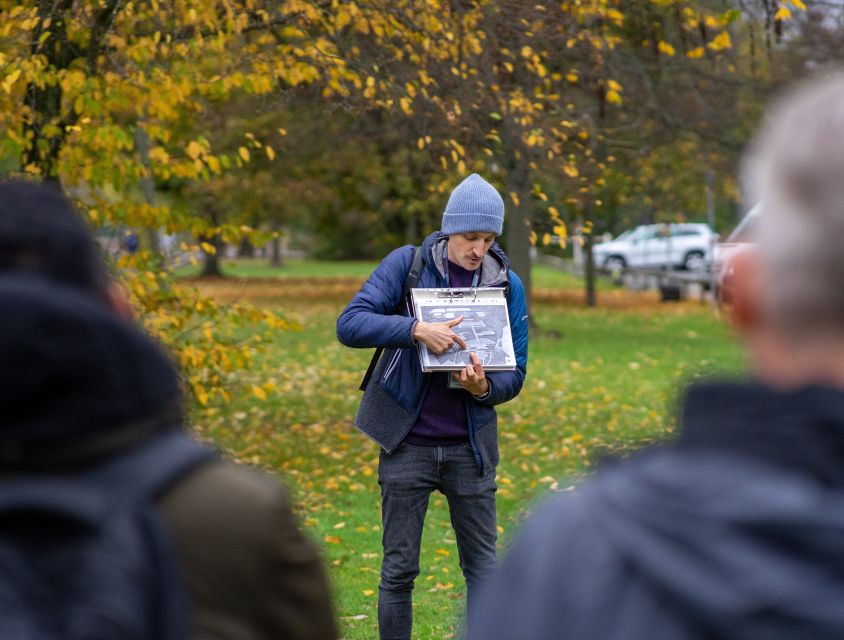
This is not the kind of site where self-guiding alone is worthless, but guided does help. Without a guide, it is easy to treat the rally grounds like a collection of impressive ruins. With a guide, it becomes a lesson in design and intent.
Here is what you gain at each major point:
- Dokumentationszentrum start: You get framing early, so you know what to look for as you walk out into the open spaces.
- The Great Road: You understand movement and spectacle, not just a pathway.
- Kongresshalle area: You grasp scale (including the roughly 40-meter remains) and the role of monumental architecture.
- Zeppelin Field and Tribune: You connect the space to mass gatherings and propaganda effect.
And one more practical point from how guides tend to work: many use a picture folder with before-and-after context. That helps you see what’s missing now. It also keeps you from over-focusing on what is gone, because you can mentally rebuild what the Nazis tried to project.
Walking logistics, timing, and what to pack
Plan for a steady pace and expect some outdoors walking. Several people note how much walking is involved, and that lines up with the route, which moves between key rally structures across a large area.
Also pay attention to timing. The tour is two hours, and in winter the sun sets early. If you’re booking a later departure, you might finish with less daylight, especially around the Zeppelin Field. I recommend choosing the time that gives you the best chance to see the grounds clearly, not just in outline.
What to bring is simple:
- Comfortable walking shoes with grip
- A rain layer (because rain or shine is the rule)
- Water or a snack on your own, since food and drinks are not included
- A charged phone or small camera for the guide’s visual aids and your own comparisons
If you have mobility impairments, this likely will not be a good fit. The tour involves walking around the grounds, and that’s not set up for limited mobility.
Value check: is $15 worth it for two hours?
At about $15 per person for a two-hour guided walking tour, the value is strong, especially if you care about how propaganda worked through design. You are paying for interpretation, not just access to outdoor ruins.
The site itself is big and easy to misread. The guide’s explanations make the differences between buildings feel meaningful. And the inclusion of both propaganda rally context and the crimes tied to the regime keeps the story grounded.
If you are the type who wants a quick highlight reel, you might feel impatient here. But if you like walking with a clear narrative and coming away with a better mental map, this feels like a good deal.
Who this tour is for
This tour is a smart pick if you want:
- A structured, guided way to understand the Nazi Party Rally Grounds
- A focus on propaganda staging and architectural purpose
- Context that connects visuals to real crimes and the concentration camp system
It is also a good fit for history buffs who like to ask questions and get direct answers, since guides typically handle group questions in detail. If you’re coming with kids, or with someone who gets overwhelmed by heavy topics, you’ll want to judge that carefully based on their maturity. The tour is careful in tone, but it deals with serious subject matter.
Should you book? My call
I’d book this if you want to understand the site beyond photos. The combination of walking along the Great Road, seeing Congress Hall ruins at major scale, and finishing at the Zeppelin Tribune gives you a complete sense of how the rally grounds were built for mass control and messaging.
I would skip it or reconsider if you cannot handle a walk-heavy, outdoor route, or if you’re trying to fit this into a tight daylight schedule and hate finishing in low light. Otherwise, it is a focused way to put Nuremberg’s rally grounds into context, with a guide who knows how to translate hard history into something you can actually grasp on the ground.
FAQ
How long is the Nuremberg walking tour?
The tour lasts about 2 hours.
Where do I meet the guide?
Meet next to the entrance stairs to the Dokumentationszentrum Reichsparteitagsgelände, Bayernstraße 110. The guide will hold a picture folder and wear a name tag for Geschichte Für Alle e.V.
How much does it cost?
The price is listed as $15 per person.
What languages is the tour offered in?
The live guide offers the tour in German and English.
What are the main places you visit?
You’ll walk around the former Nazi Party Rally Grounds, including stops such as Kongresshalle, The Great Road (Große Straße), Zeppelin Field (Zeppelinfeld), and you finish at the Zeppelin Field.
Will the tour run in bad weather?
Yes, the tour takes place rain or shine.
Is this tour suitable for people with mobility impairments?
No, it is not suitable for people with mobility impairments.
Cities at Walking Speed
- Nuremberg: Free Walking Tour
★ 4.9 · 213 reviews - “Rotes Bier” and “Blaue Zipfel”. A historical-culinary walk
★ 4.4 · 190 reviews - Walking tour Nuremberg
★ 5.0 · 188 reviews - Nuremberg 2-Hour Old Town Highlights Walking Tour in English
★ 4.4 · 107 reviews
Fresh on the arrivals board for Nuremberg

Third Reich & World War II Tours, compared.

Berlin’s Best: 2 Hour Walking Tour Third Reich and the Cold War
Read our review →
Third Reich Berlin: Hitler and WWII Walking Tour
Read our review →

Berlin Third Reich Sites: Half-Day Walking Tour
Read our review →Browse the lists this tour appears in