
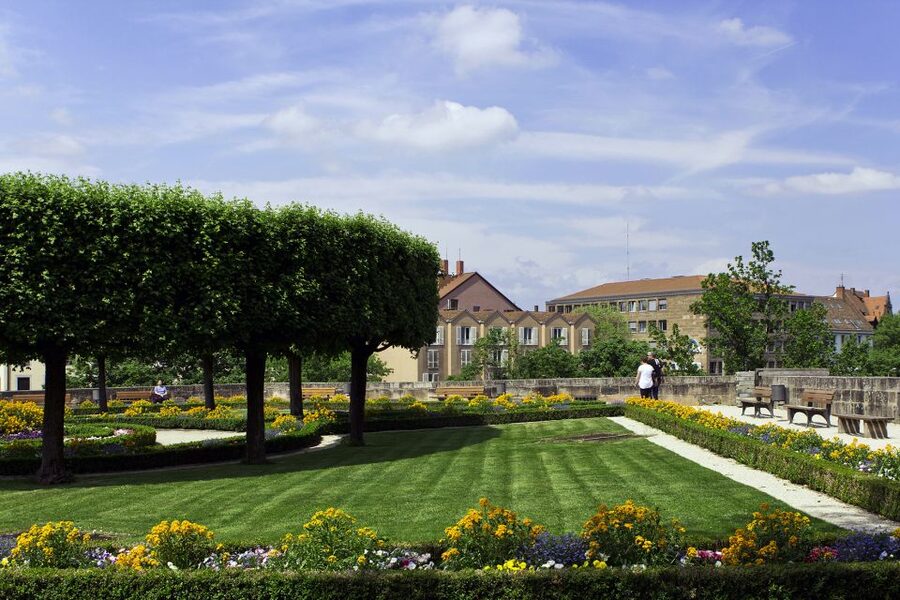
Reviewed · WALKING TOURS
Nuremberg: Old Town Guided Walking Tour
Nuremberg makes sense in 90 minutes. This guided walk stitches together medieval landmarks, a few hidden corners, and the kind of local storytelling that helps you read the city while you’re in it. I love the focus on Main Market Square first, because it instantly orients you for everything that follows.
I also like the stop at Albrecht Dürer’s House, since art, craft, and civic power sit side by side here. One drawback to plan around: it’s a walking tour with some uphill stretches, and it is not designed for wheelchair users or visitors with hearing or visual impairments.
In This Review
- Key things that make this tour work
- Where you start, and why Hauptmarkt 18 matters
- Hauptmarkt Nürnberg, the view cue, and the old town “click”
- Old City Hall: civic power you can actually see
- St. Sebaldus Church: where the city’s religious and artistic signals meet
- Tiergärtnertorplatz: a gate area that explains the old town layout
- Albrecht Dürer’s House: art you can point to, not just read about
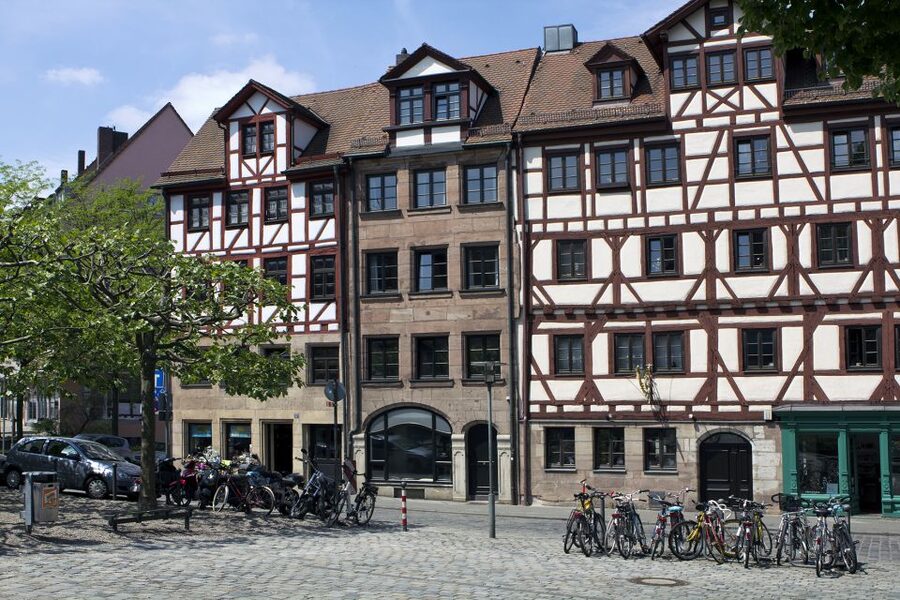
- Weissgerbergasse: craft history and the working life behind the streets
- The pacing, the cold, and where to stand for best hearing
- Price and value: what $18 buys you in Nuremberg
- Who should book this Old Town walking tour
- Should you book it?
- FAQ
- Where is the meeting point for the Nuremberg Old Town Guided Walking Tour?
- How long is the tour?
- Which stops will we visit during the walk?
- What languages are offered?
- Is this tour suitable for wheelchair users or visitors with accessibility needs?
- What should I bring for the walk?
- What if the group is small, or I need to cancel?
Key things that make this tour work
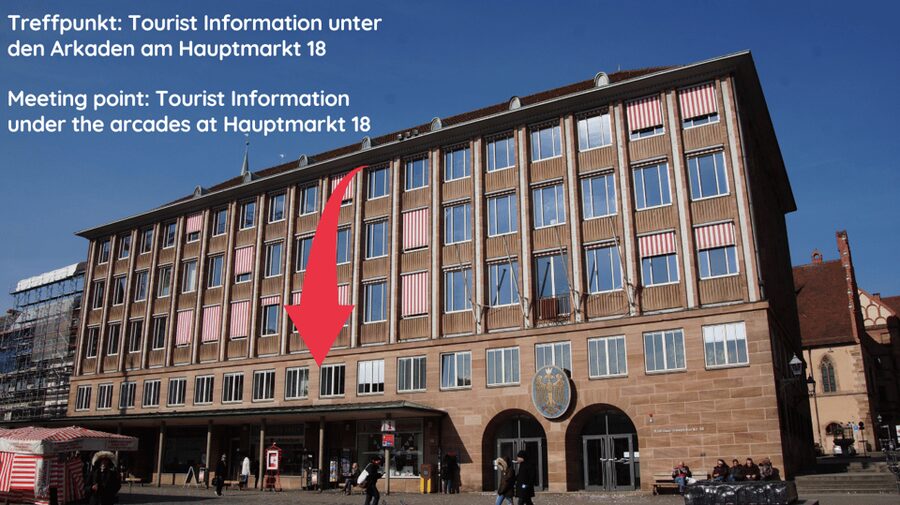
- Meet at the Tourist Information at Hauptmarkt 18 (look for the red and white Die Stadtführer badge)
- Start at Hauptmarkt Nürnberg and build your bearings fast in the old town core
- Old City Hall, St. Sebaldus, and Tiergärtnertorplatz in a tight, logical route
- Albrecht Dürer’s House adds a personal, human angle to the city’s famous art
- Weissgerbergasse shows how everyday trades shaped old Nuremberg streets
- A guide with jokes and personal anecdotes, so facts land easier and stick
Where you start, and why Hauptmarkt 18 matters
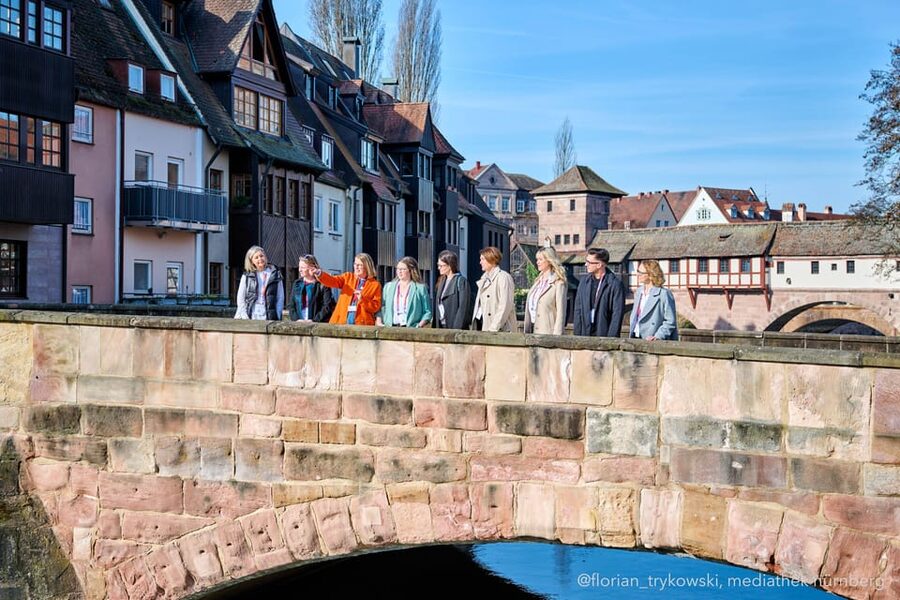
Meeting at the Tourist Information on Hauptmarkt 18 is a smart move, because it drops you in the oldest, most central part of the city right away. You’re told to look under the arcades, and to find the guide wearing a red and white badge that reads Die Stadtführer. Do that, and the rest becomes smooth.
Nuremberg’s Old Town is the kind of place where the buildings feel like chapters. The guide’s job is to connect the stones to the people, especially the shift between imperial power, merchant wealth, and later changes through the 19th and 20th centuries. You’ll hear how the city once functioned as a powerful imperial city and international economic center, and why that prosperity helped shape cultural and intellectual life.
This tour is only 1.5 hours. That shorter format is the point: it helps you get oriented fast without turning your day into a full-on homework session. It also pairs well with plans right after, like strolling the nearby Christmas markets if you’re visiting in winter. Just keep your expectations in check: you are seeing highlights and secret spots, not trying to memorize every alley in Nuremberg.
More Walking Tours in Nuremberg
- Nuremberg: Walking Tour of Former Nazi Party Rally Grounds
★ 4.7 · 1,665 reviews - Nuremberg Old Town and Nazi Party Rally Grounds Walking Tour in English
★ 4.5 · 504 reviews - Nuremberg Old Town and Nazi Rally Grounds Walking Tour
★ 4.7 · 377 reviews
Hauptmarkt Nürnberg, the view cue, and the old town “click”
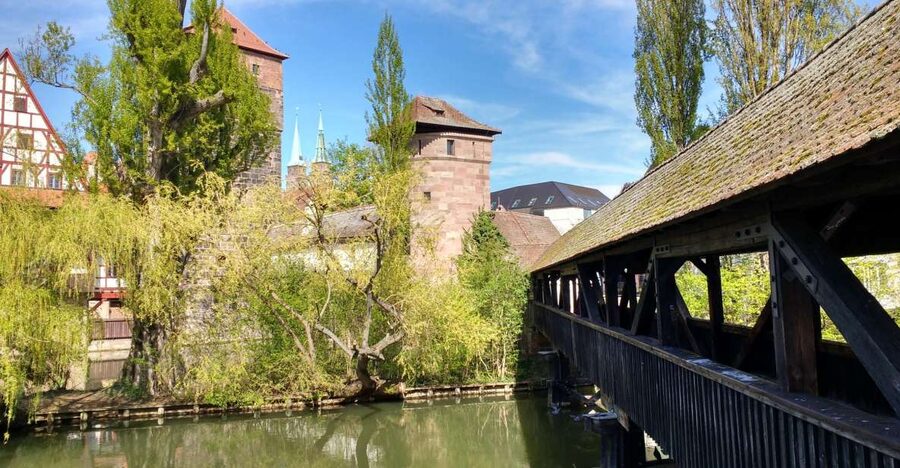
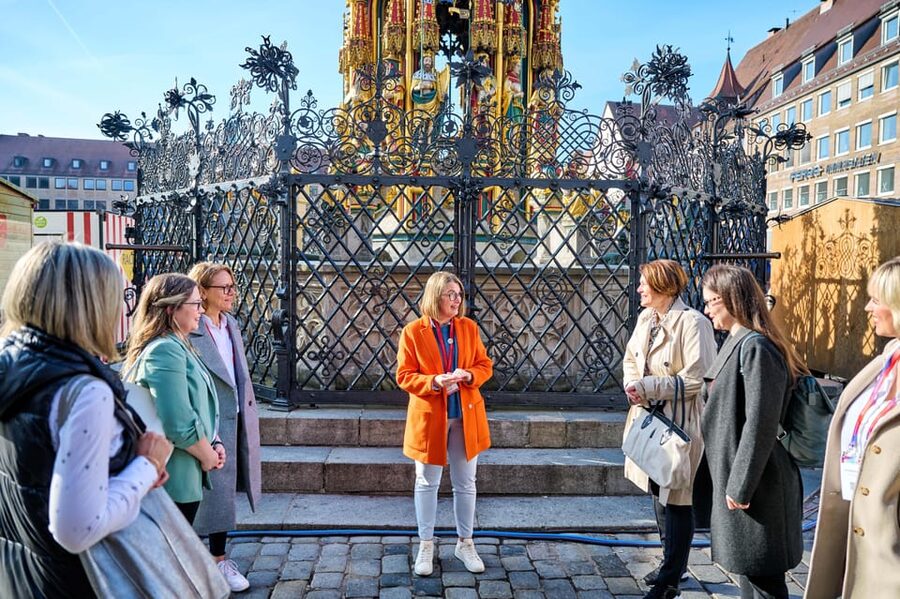
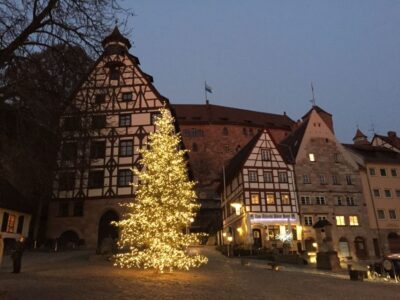
You begin at Hauptmarkt Nürnberg, Nuremberg’s main market square. This is where the city’s center of gravity feels the strongest. Standing here, you’ll notice the way the square acts like a stage, with important civic and church buildings close by. Even if you arrive with only a vague idea of Nuremberg, this stop usually gives you enough context to start reading the rest of the walk.
One of the best parts of this tour is that you’re not just walking past big sights. You’re getting a guided sense of what mattered, and why. The market square anchors the story, then the route leads you deeper into the medieval layout, including those “hidden corners” and side lanes that many people skip.
You also get views over the medieval old town during the walk. That matters more than it sounds. On foot, you feel height and direction in a way that photos can’t. It’s the moment when Nuremberg stops feeling like a set of monuments and starts feeling like a real place with sight lines, rooftops, and slopes. In cold weather, those viewpoints can be a bit chilly, but that’s also why it’s such a great short tour. You get the payoff without losing half your day to weather.
Old City Hall: civic power you can actually see
Next comes the Old City Hall. This stop is about civic identity. Nuremberg wasn’t only important because of who ruled nearby, it was also important because the city governed itself with confidence and resources. The city hall area helps you understand that middle layer between imperial authority and everyday life.
What I like about this kind of stop on a walking tour is how it turns architecture into a clue. Rather than treating the old buildings as museum pieces, you learn to connect them to the city’s role as a thriving economic center. That prosperity is what helped fuel cultural and intellectual activity, and you’ll see hints of that in the careful placement of major structures and the way the old town is organized.
If your guide is the talkative, story-driven type, this is where the anecdotes really help. Reviews for this tour often mention guides mixing history with light humor, and that’s especially useful here. City hall can sound dry until you understand what civic power looked like in stone, rooms, and ceremony.
A small practical note: sound can get swallowed in busy streets. If you find yourself straining to hear, position yourself closer to the guide and angle your body toward them, not toward the crowd.
St. Sebaldus Church: where the city’s religious and artistic signals meet
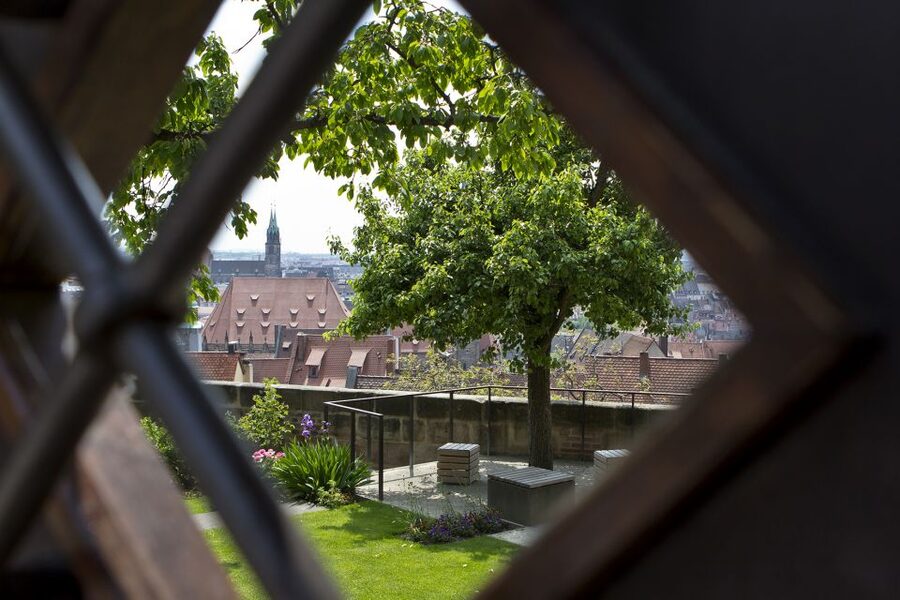
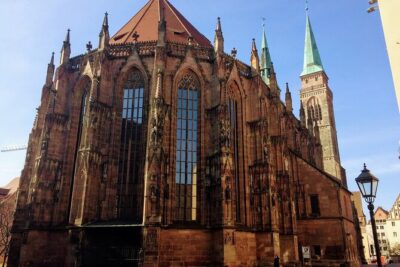
At St. Sebaldus Church, you’ll get a shift from civic buildings to spiritual ones, and that change helps you understand Nuremberg as a whole system. Churches here were not only places of worship. They were also landmarks of status, community, and artistic expression, and your guide will connect that to the city’s standing during different eras.
This is also a good stop for noticing how the old town’s streets funnel you between key points. The church is the kind of place where you can look up, then look around. Even without going inside, you’ll learn what features matter and how they relate to the timeline your guide is building for you.
In reviews, guides like Gabi and Gabrielle are praised for mixing clear explanations with quirky stories. That combo works well at church stops, because it helps you see beyond simple dates. You’ll likely hear little context cues that make later stops easier to understand, especially once the tour moves toward famous residents and trade streets.
Also, if you’re visiting in winter, St. Sebaldus can feel extra cold in the open areas nearby. Layer up and plan to keep walking. This tour is designed to keep momentum.
Tiergärtnertorplatz: a gate area that explains the old town layout
Tiergärtnertorplatz is the kind of stop that makes a guided walk feel worth it. It’s a square tied to the old fortifications and gate logic, and the guide uses it to explain how Nuremberg worked as a defended, organized place rather than just a pretty old district.
The value here is orientation. You start to understand why streets curve the way they do, why certain routes feel direct, and why you get periodic sight breaks. Once you have that mental map, you enjoy the next alley more. You stop seeing it as random stone and start seeing it as planning.
This part of the walk also supports the tour’s promise of secret spots and hidden corners. You may get guided into smaller lanes or tucked-in viewpoints that you might miss if you were going solo. Even if you don’t catch every detail, you’ll leave with a better sense of how to explore on your own afterward.
And because this tour is short, the guide needs to make every transition count. That’s why a stop like Tiergärtnertorplatz matters. It turns a pause into a lesson.
More German cities at walking speed:
Albrecht Dürer’s House: art you can point to, not just read about
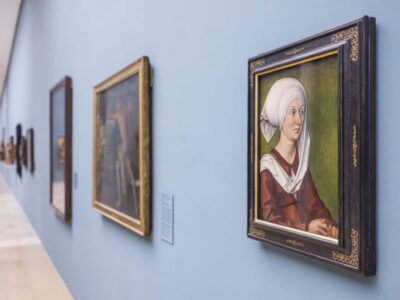
Then you reach one of the big emotional anchors of the walk, Albrecht Dürer’s House. This stop changes the tone from institutions to people. Dürer is a famous name, but the guide’s approach makes it feel grounded in place.
What you should expect is a tour that connects Dürer to the city’s earlier prosperity and cultural life. You’ll get the sense of Nuremberg as a place where art and thinking were supported by a strong civic and economic base. That’s the link your guide keeps returning to, so you’re not just collecting facts. You’re building a picture of how the city functioned.
In reviews, guides like Manfred, Frank, and Claudia are repeatedly singled out for being funny and story-driven. If your guide is one of those types, this stop is likely where the walk feels most alive. You might also hear about details you would never guess from the outside, and that’s what makes a guided stop different from a self-guided photo run.
Practical tip: take a minute to look around before you move on. With a place like this, small signs and street angles matter for understanding where the city’s creative legacy sits in the urban fabric.
Weissgerbergasse: craft history and the working life behind the streets
The walk ends with Weissgerbergasse, a trade street tied to the city’s working history. This is where you get out of the “big building” mode and into the everyday-life mode. The guide helps you understand how trades shaped streets, not just the economy.
Why this stop hits: it reminds you that famous cities are made of ordinary work too. When you learn about trades connected to the area, the old town starts to feel less like an outdoor set and more like a lived-in place with specific needs and routines.
You’ll also appreciate the street’s feel. It’s the sort of narrow lane that makes you slow down and look up, because the space around you feels designed for people moving, working, and trading. That’s a key part of why this tour is worth the money. The guide doesn’t only point out highlights. They teach you to read the street itself.
If you’re planning to continue exploring after the tour, this is a great stop to notice where the route naturally leads. You can use what you learned here to choose where to spend extra time.
The pacing, the cold, and where to stand for best hearing
The tour lasts about 1.5 hours. That pacing is fast enough to cover major highlights, slow enough for meaningful explanations, and short enough to keep your energy for the rest of your day.
One theme that shows up in feedback is cold weather. If you’re coming in December, expect it to feel biting during waiting moments in squares and view areas. Wear layers, and bring shoes with grip. The tour is walking-focused, and comfortable footwear matters because old town streets are not flat.
There are also comments about hearing. City noise can make guides harder to hear, especially if you’re not close. The best strategy is simple: stay within a few steps of the guide when the group is stopped, and don’t crowd the side edge of the group if your voice is going to carry. If you’re able to, choose a spot slightly in front rather than behind.
Accessibility is another reality check. This tour is not suitable for wheelchair users, visually impaired people, or hearing-impaired people based on how the route is planned and paced. If you fall into one of those categories, you’ll likely enjoy Nuremberg more with a different type of tour that fits your needs.
Price and value: what $18 buys you in Nuremberg
At $18 per person for about 90 minutes, you’re buying two things: time savings and interpretation. You could walk this route alone, sure. But the whole point of guided walking tours is that they turn random sights into connected meaning.
For this tour, the value comes from:
- A tight set of major landmarks, from Hauptmarkt to Old City Hall
- A guide format that includes local stories and humor, so you remember more than the headline facts
- A focus on short transitions, including those hidden corners that make you feel like you got a local hint, not just a bus route stop list
If you’re on a first visit, this is one of the easiest ways to get your bearings. If you already know Nuremberg a bit, it still helps you spot what matters and how neighborhoods connect.
Guides named in feedback, like Gabi, Gabriele, Gabrielle, Manfred, Frank, and Claudia, are repeatedly praised for mixing city history with practical street-level details. That matters because the city’s “big story” is easier to remember when it’s tied to what you’re literally standing next to.
Who should book this Old Town walking tour
This tour is best if you want a quick, confident start in Nuremberg’s core. I’d especially recommend it for:
- First-time visitors who want a guided spine for later self-guided exploring
- People who enjoy history when it comes with stories, not just dates
- Anyone going for the Christmas markets soon after, because the timing fits well
It’s less ideal if you need step-free access, strong assistance for visual limits, or accommodations for hearing. And if you hate cold weather walking, pick a warmer part of the day and wear serious layers.
Also, if you’re the kind of traveler who likes asking questions, this format can be satisfying because there’s a guide actively connecting stops and making you look at details you might otherwise skip.
Should you book it?
Book this tour if you want a clear Nuremberg orientation with a local guide and you’re comfortable with a brisk, short walk. The price is fair for what you get, and the route hits the most important Old Town landmarks while still making room for those tucked-away corners that make the city feel real.
Skip it if you need accessibility accommodations or you want a slow, sit-down style experience. For most people, though, it’s an efficient way to turn Nuremberg from a list of attractions into a place you can actually navigate and enjoy.
FAQ
Where is the meeting point for the Nuremberg Old Town Guided Walking Tour?
Meet in front of the Tourist Information shop at Hauptmarkt 18, under the arcades. Look for the guide with the red and white badge that says Die Stadtführer.
How long is the tour?
The tour lasts about 1.5 hours.
Which stops will we visit during the walk?
You’ll visit Hauptmarkt Nürnberg (Main Market Square), Old City Hall, St. Sebaldus Church, Tiergärtnertorplatz, Albrecht Dürer’s House, and Weissgerbergasse.
What languages are offered?
The guide can run the tour in English or German.
Is this tour suitable for wheelchair users or visitors with accessibility needs?
No. It is not suitable for wheelchair users, visually impaired people, or hearing-impaired people.
What should I bring for the walk?
Bring comfortable shoes, since it is a walking tour.
What if the group is small, or I need to cancel?
There is a minimum number of participants of 2 people. You can cancel up to 24 hours in advance for a full refund.
Fresh on the arrivals board for Nuremberg

Walking Tours, compared.
Berlin City walk Government District and Places of Democracy
Read our review →

Berlin’s Best: 2 Hour Walking Tour Third Reich and the Cold War
Read our review →
Browse the lists this tour appears in