
Reviewed · WALKING TOURS
Walking tour Nuremberg
One walk, and Nuremberg starts making sense fast. I like the local guide approach that turns landmarks into stories, and I like that you do not need to fight with a map since the guide keeps the route flowing. You get a guided hit list of the city’s center, plus details you would likely walk past.
The main thing to consider is the terrain. This is an old town walk with up and down bits, including the climb toward Kaiserburg, so comfortable shoes and a slower pace strategy matter.
In This Review
- Key highlights
- A 2.5-Hour Old Town Walk That Lets You Skip the Guesswork
- How the Route Starts and Ends at Schöner Brunnen, Hauptmarkt
- Stop 1: Der Schöne Brunnen and the Late 14th-Century Legend
- Stop 2: St. Sebaldus Church and the Reformation Threads
- Stop 3: Hauptmarkt Square, Frauenkirche, and Männleinslaufen
- Stop 4: Kaiserburg Castle, the Triple Castle Design, and the Hill Factor
- Stop 5: Albrecht Dürer House, Built Around 1420, Home to Dürer
- Stop 6: Tiergartnertorturm and the Defensive Tower Views
- Stop 7: Weissgerbergasse and WWII Destruction, Reconstruction, and Craft Life
- Stop 8: Altstadt Extras, Hidden Corners, and Two Church Names
- Pacing, Shoes, and How to Avoid Getting Strained
- Guides Make It: Native Storytelling and WWII Sensitivity
- Value for Money at About $3.63 Per Person
- Who This Nuremberg Walk Best Suits
- Should You Book This Nuremberg Walking Tour?
- FAQ
- How long is the Nuremberg walking tour?
- What language is the tour offered in?
- Where does the tour start, and where does it end?
- What is the starting time?
- How much does the tour cost?
- Do I need to buy entry tickets for the stops?
- Is there a mobile ticket?
- How big is the group?
- Is free cancellation available?
Key highlights
- Native-style storytelling that connects Gothic, churches, markets, and the castle into one timeline
- No-map navigation, since the guide leads you from stop to stop
- Big sights in a compact loop, including Kaiserburg Castle and the Albrecht Dürer House
- Practical breaks and photo opportunities, especially once you reach the castle area
- Sensitive WWII context alongside medieval Golden Age stories
- A guided look at craft life, with Weissgerbergasse and Nuremberg’s artisan past
A 2.5-Hour Old Town Walk That Lets You Skip the Guesswork
Nuremberg can feel like a place with too many layers. This tour helps you sort them without a pile of reading. In about 2 hours 30 minutes, you cover the key spine of the old town, from the Gothic fountain area through the churches, the central market, and up to the castle.
What I like most is the mix of big-name places and smaller, story-driven stops. You are not just ticking boxes. You are learning why each corner mattered, including how religion, trade, and even the city’s reconstruction after WWII shaped what you see today.
This walk also keeps things efficient. It is designed as a route you can follow easily, with a guide navigating for you. That means you spend your energy looking at Nuremberg, not comparing street signs.
More Walking Tours in Nuremberg
- Nuremberg: Old Town Guided Walking Tour
★ 4.6 · 2,416 reviews - Nuremberg: Walking Tour of Former Nazi Party Rally Grounds
★ 4.7 · 1,665 reviews - Nuremberg Old Town and Nazi Party Rally Grounds Walking Tour in English
★ 4.5 · 504 reviews
How the Route Starts and Ends at Schöner Brunnen, Hauptmarkt
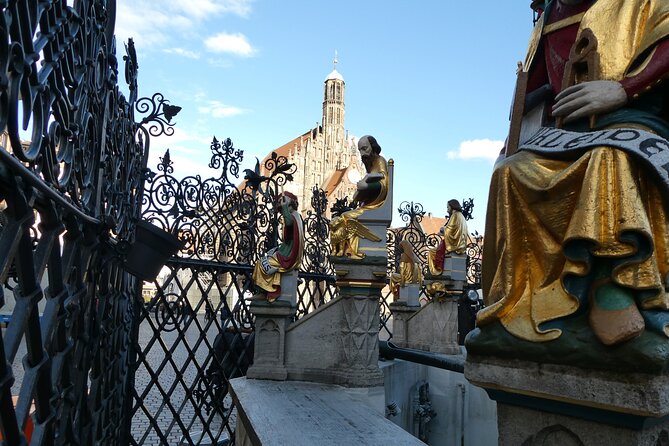
The tour starts at Schöner Brunnen at Hauptmarkt, address 90403 Nürnberg. Meeting there is smart, because it puts you in the center of the old town immediately. You also end back at the meeting point, so the walk finishes where you started, which makes it easier to plan the rest of your day.
You should plan around the scheduled start time of 11:30 am. This matters if you are pairing the tour with museums or meals, since the whole loop is roughly 2.5 hours. Also, this is a small-to-medium group setup, capped at 50 people, which helps keep the pace from turning into a human parade.
One more small win: you get a mobile ticket. That helps you avoid ticket printouts and keeps everything quick at the meeting point.
Stop 1: Der Schöne Brunnen and the Late 14th-Century Legend
You begin at Der Schöne Brunnen, a Gothic masterpiece tied to late 14th-century history. Even if you have never studied Nuremberg, the guide’s opening context usually gives you a mental picture right away: what the city looked like then, why the fountain area mattered, and how legends stick to specific places.
This first stop also sets the tone. The tour does not just point at monuments. It connects them to stories, including Nuremberg’s most famous legend associated with the meeting point. It is the kind of start that makes the rest of the walk feel like a guided timeline rather than a random stroll.
Because the stop is short, about 10 minutes, it is a good pace choice. You get the setup, and then you are moving on to the bigger religious and civic landmarks.
Stop 2: St. Sebaldus Church and the Reformation Threads
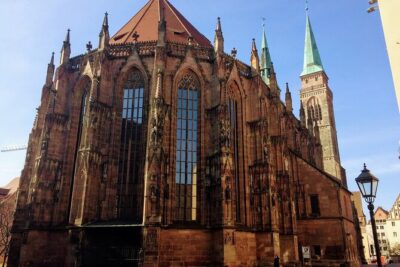
St. Sebaldus Church is described as Nuremberg’s most important church, with Romanesque-Gothic architecture. This is one of those stops where the building itself feels like a time machine, and the guide’s job is to connect that structure to the human stories inside it.
The walk includes religion and the Reformation, plus Nuremberg’s best-known musicians. That combination is practical because it helps you connect church history to culture, not just theology. If you are someone who likes to understand why art and music flourished where they did, this is a strong early stop.
This stop is also brief, around 10 minutes, so you will not feel like you are stuck waiting. Still, it is enough time to get the key context before you head to the city’s loudest public square.
Stop 3: Hauptmarkt Square, Frauenkirche, and Männleinslaufen
Hauptmarkt is Nuremberg’s central old town square. Here you will see landmarks like the Beautiful Fountain, the Frauenkirche, and the highlight named Männleinslaufen. The way this stop works on foot is simple: you stand where Nuremberg’s public life happened, and the guide ties the sights to what made the city tick.
This is not a deep museum stop. It is a civic one. You look around and learn how the square functioned as a center for daily life and major identity points for the city.
If you like photo stops, this is one of them. The square gives you open views and clear sightlines, so you can grab pictures without having to climb steep streets. The stop is short, about 10 minutes, but it is a good anchor before you go up to Kaiserburg.
More German cities at walking speed:

Stop 4: Kaiserburg Castle, the Triple Castle Design, and the Hill Factor
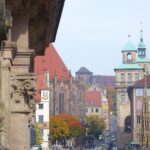
Then comes the big one, Kaiserburg. The castle is Nuremberg’s landmark, and it is described as a triple castle with the Imperial Castle, the Burggrafenburg, and the imperial city buildings. Knowing that layout matters because it helps you make sense of what you are looking at once you reach the hill.
Expect a walk upward. Multiple guides and groups handle this differently, but the overall theme from real experience is consistent: the hill is noticeable. If your knees are sensitive, bring your patience. If you pace yourself, the views and the sense of place are worth it.
The tour schedule allocates about 20 minutes at this stop, and many guides build in time for photos or a quick drink once you arrive. That is one of the best parts of walking tours when you choose the right route, you get a breather in the place everyone came to see.
Stop 5: Albrecht Dürer House, Built Around 1420, Home to Dürer
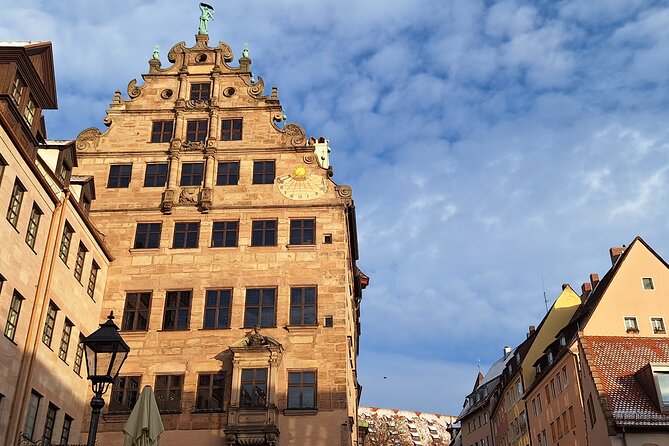
Next is the Albrecht Dürer House, a medieval house built around 1420. It later got its current look through modernization work attributed to Bernhard Walther after 1500. From 1509 until Dürer’s death in 1528, the house served as his home and work.
This stop is valuable because it turns a famous name into an address you can picture. If you have seen Dürer’s art before, the house makes that connection feel more real. If you have not, the guide’s storytelling can quickly give you the human side, how an artist lived and worked in that specific time and city.
The stop itself is short, around 10 minutes, so think of it as context and orientation. You are not leaving with a full biography, you are leaving with a clearer sense of why this city is tied to art and ideas.
Stop 6: Tiergartnertorturm and the Defensive Tower Views
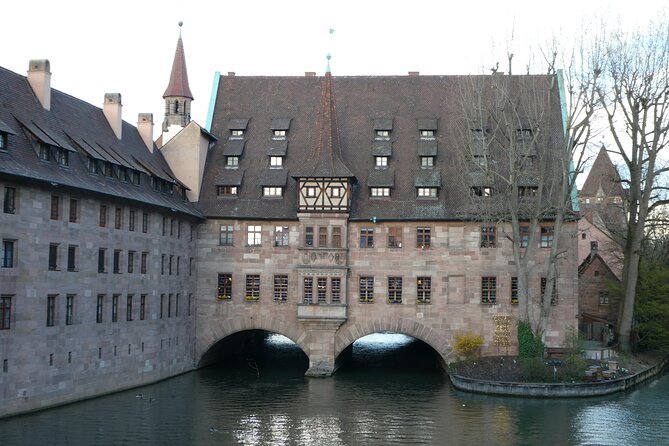
Tiergartnertorturm is a 14th-century defensive tower that towers over one of the city’s most beautiful squares. Even in a short stop, a tower like this gives you two things: a look at past defense thinking and a sense of how the city’s layout was designed around protection.
This stop works well after you have climbed and seen the castle area. It adds another layer. Instead of focusing only on rulers and major institutions, you get the defensive perspective, how Nuremberg safeguarded itself and shaped movement through space.
You will likely spend around 10 minutes here, and that is enough to connect the tower’s height and position to how the city functioned.
Stop 7: Weissgerbergasse and WWII Destruction, Reconstruction, and Craft Life
Weissgerbergasse is the craftsmen’s street, and it is presented as a must-see for medieval Nuremberg. The guide also covers the destruction and reconstruction of the old town during World War II.
That pairing is one of the most meaningful parts of the walk. You are not just looking at pretty medieval-style streets. You are learning that what you see today is shaped by damage, rebuilding, and decisions about preserving identity.
This stop is short, about 10 minutes, but it is often the type of place people remember later because it feels specific. It is easier to connect history to your own senses here, because streets and trade routes are where everyday life happened.
Stop 8: Altstadt Extras, Hidden Corners, and Two Church Names
The final part focuses on the Altstadt, with an experience described as an entertaining mix of history, legends, interesting facts, and useful recommendations. Along the way, the walk includes the main market, the imperial castle area, and the churches of St. Sebald and St. Lorenz.
You also get hidden corners. The route can include the castle gardens and the executioner’s house. Even if you do not love dark stories, a place like that helps you understand that cities were not only art and religion. They also had justice systems, jobs, and everyday realities that were part of city life.
The stop is short on paper, but the point is momentum. By the time you reach this area, you have the context from earlier stops, so the hidden corners land better.
Pacing, Shoes, and How to Avoid Getting Strained
This is a walking tour, and Nuremberg has hills and cobblestones. The castle climb is the big physical factor. If you want this to feel enjoyable rather than exhausting, plan for slower walking and a bit of leg work.
The good news is that the guides tend to manage pacing carefully. Many groups note that the tour includes breaks and that the leader helps you keep moving without rushing you past your limits. Still, it is smart to wear comfortable shoes with grip, because cobblestones can be slippery and uneven.
If you know you get tired on slopes, you can still do this tour well. Just plan a relaxed pace, keep water nearby if you are allowed to carry it, and do not treat the route like a fitness challenge.
Guides Make It: Native Storytelling and WWII Sensitivity
The tour is led by an English speaking tour guide born and raised in Nuremberg. In real-world feedback, names like Daniella, Andreas, Dennis, and Alexandra come up often. If you land with one of them, you are likely in for sharp storytelling, friendly interaction, and clear answers when questions pop up.
What stands out is how humor and seriousness are handled. Guides are described as using a dry sense of humor at times, but also approaching darker topics with care, including WWII history and the city’s reconstruction. That combination matters, because Nuremberg’s story includes both pride and pain.
You also get guide style extras that go beyond facts. Some guides share extra resources, like a Google Map QR code with recommended locations for after the walk. Even if you do not use everything, it is a handy way to stretch your day beyond the route.
Value for Money at About $3.63 Per Person
At $3.63 per person, you are buying a guided route with multiple major stops, all in roughly 2.5 hours. That is low cost for a city introduction that covers the essentials: fountains and legends, two key churches, the main market square, a castle landmark, and stops tied to Albrecht Dürer and craftsmen streets.
Also, each listed stop notes admission ticket free. That means you are not stacking entry fees while you are still learning where things are in the city. For many visitors, that turns this tour into a low-risk first step. You can do it early and then decide what to return to later at your own pace.
One smart budgeting move: use the tour to decide what you want to see longer. If Dürer clicks, you can plan more time around art. If the castle is your thing, you can expand your castle-area visit.
Who This Nuremberg Walk Best Suits
This tour fits best if you want a structured introduction to Nuremberg’s old town and you like hearing stories tied to specific buildings. It is especially good for first-time visitors who want the layout of the city without the stress of navigating alone.
It also suits people who value a local perspective. Having a native guide helps with the small context details that make landmarks feel less like random sights and more like a city with a personality.
If you have strong mobility limits, you might still participate, but the hill and cobblestones are the main concern to think about. The group size cap at 50 and the presence of breaks can help, but it remains a walk with upward segments.
Should You Book This Nuremberg Walking Tour?
Book it if you want fast orientation, clear storytelling, and a route that hits both the famous and the meaningful parts of Nuremberg in one go. The combination of native guides, a manageable 2.5-hour loop, and stops like Kaiserburg and the Albrecht Dürer House makes it a solid first chapter for your trip.
Skip it or at least consider another option if you know steep hills and uneven cobblestones are hard for you. This walk can still be fun with a careful pace, but you should go in with realistic expectations about the castle climb.
If you are deciding between doing nothing and taking a tour to get your bearings, this one is an easy call. It is budget-friendly, guided in English, and built to help you understand Nuremberg quickly.
FAQ
How long is the Nuremberg walking tour?
The tour lasts about 2 hours 30 minutes.
What language is the tour offered in?
The tour is offered in English.
Where does the tour start, and where does it end?
It starts at Schöner Brunnen at Hauptmarkt, 90403 Nürnberg, Germany. It ends back at the meeting point.
What is the starting time?
The start time is 11:30 am.
How much does the tour cost?
The price listed is $3.63 per person.
Do I need to buy entry tickets for the stops?
The stops listed in the itinerary show admission ticket free, so you will not be paying extra admission for those points on the tour.
Is there a mobile ticket?
Yes, the tour uses a mobile ticket.
How big is the group?
The tour has a maximum of 50 travelers.
Is free cancellation available?
Free cancellation is available. You can cancel up to 24 hours in advance for a full refund. If you cancel less than 24 hours before the start time, the amount paid is not refunded.
Fresh on the arrivals board for Nuremberg

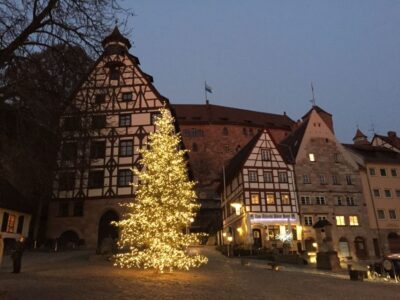
Walking Tours, compared.
Berlin City walk Government District and Places of Democracy
Read our review →

Berlin’s Best: 2 Hour Walking Tour Third Reich and the Cold War
Read our review →
Browse the lists this tour appears in