
Reviewed · HISTORICAL TOURS
“Rotes Bier” and “Blaue Zipfel”. A historical-culinary walk
Mini sausages, big stories, and local beer. This historical-culinary walk through Nuremberg ties old streets to food tastings, with Rotes Bier right in the spotlight. I love how the guide answers real cooking-history questions while you’re still in the middle of the city, so it feels like the past is talking to your taste buds.
The other thing I love is the sampling rhythm, especially the stop built around Nuremberg gingerbread and a real Nuremberg Bratwurst that explains why it is so small. Between explanations, you get bite-sized chances to taste, so you stay interested without needing to take notes like a student.
One consideration: the tour is held in German. If you are not comfortable following spoken German, you might still enjoy the flavors, but you may miss parts of the wordplay and the story connections, like how the tour links local food names to wider planning ideas.
In This Review
- Key points worth knowing before you go
- Rotes Bier and Blaue Zipfel: what you actually get for 2 hours
- Meeting at Altes Rathaus, and how to find your guide fast
- Bratwurst Röslein: learning the name and the tiny-size mystery
- Hauptmarkt Nürnberg and Hauptmarkt 2: where gingerbread and beer culture meet
- Trödelmarkt 13: the cooking pot moves through the market lanes
- Unschlitthaus and St. Sebaldus Church: answers tied to real places
- Altstadthof Brewery: where the red beer story ends with a local setting
- Price and value: is $29 worth it?
- Who this Nuremberg walk suits best
- Should you book this tour or skip it?
- FAQ
- What language is the tour in?
- How long is the historical-culinary walk?
- How much does the tour cost?
- Where do I meet the guide?
- What is included in the price?
- Does the tour run in bad weather?
- Is the tour wheelchair accessible?
Key points worth knowing before you go
- Altes Rathaus start point makes it easy to orient, right at the city’s historic center.
- Rotes Bier and Blaue Zipfel are explained through tasting, not just mentioned.
- Nuremberg Bratwurst gets explained twice: why it is called bratwurst and why it is famously small.
- Gingerbread is a main character, with tastings built around Nuremberg’s style.
- Food history questions are part of the script, including Devil’s Kitchen and ravioli timing.
- Two hours on foot keeps the walk focused, with frequent short tasting stops.
Rotes Bier and Blaue Zipfel: what you actually get for 2 hours

This is a guided walking tour in Bavaria that mixes old-town Nuremberg with food tastings in between. The tour is 2 hours, and it is priced at $29 per person, which is a practical deal when you compare it to paying separately for a guide plus multiple snacks and beer.
The experience is built around the idea that names and traditions have meaning. So you do not just eat. You learn why people in Nuremberg cooked the way they did, why certain foods became known, and how the city’s culinary identity got talked about over time. Then the tour gives you small, regular chances to taste what you are hearing.
One nice touch is that you are not expected to be a food expert. The guide’s job is to make those connections feel clear. And from what I saw and heard from the group’s feedback, the energy stays friendly and lively, not stiff.
More Walking Tours in Nuremberg
- Nuremberg: Old Town Guided Walking Tour
★ 4.6 · 2,416 reviews - Nuremberg: Walking Tour of Former Nazi Party Rally Grounds
★ 4.7 · 1,665 reviews - Nuremberg Old Town and Nazi Party Rally Grounds Walking Tour in English
★ 4.5 · 504 reviews
Meeting at Altes Rathaus, and how to find your guide fast
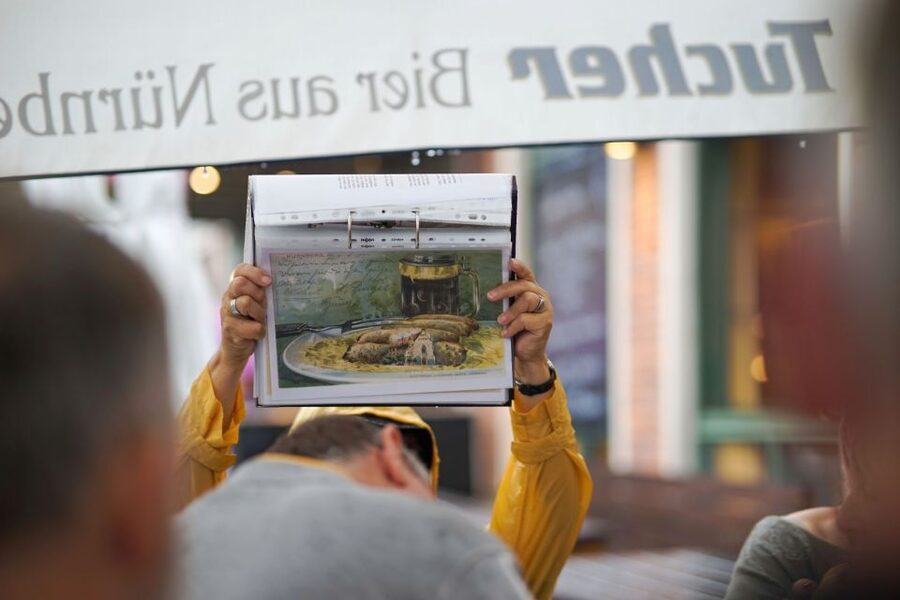
I like that the meeting point is easy to spot: meet your guide in front of the main entrance of the Alte Rathaus. Look for a picture folder and a green logo for Geschichte Für Alle e.V.
That matters more than it sounds. When a tour is short and you have multiple tasting stops, being on time keeps everything from feeling rushed. You’ll also be walking in the historic center, so it is worth arriving with comfortable shoes already on.
You should also expect the tour to run rain or shine. Pack accordingly. A light rain jacket and a dry layer can make the difference between enjoying the stories and getting cold while you wait between stops.
Bratwurst Röslein: learning the name and the tiny-size mystery
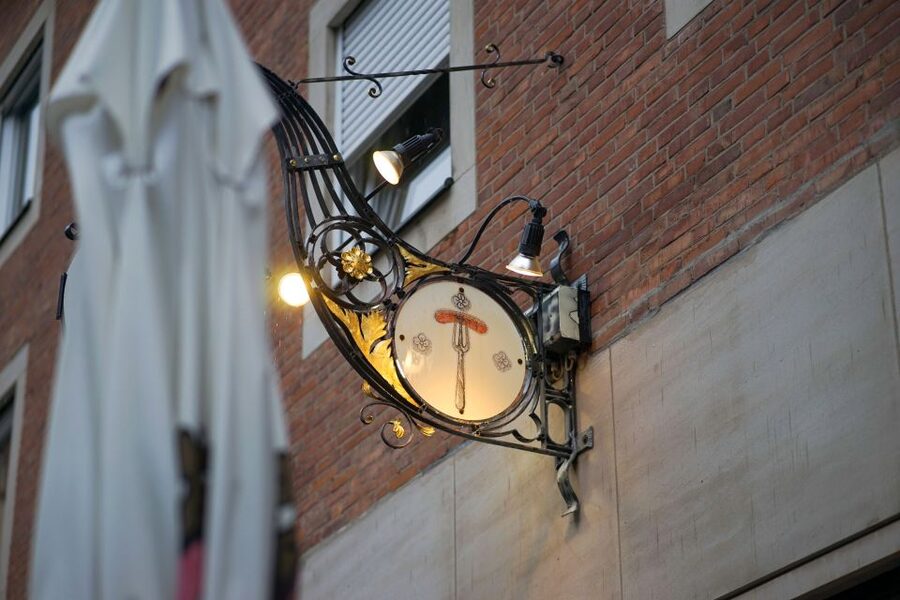
Your first real food stop is Bratwurst Röslein. This is where the tour’s “why” questions start to get answered in a very hands-on way.
You will not only taste a real Nuremberg Bratwurst, you’ll also learn why bratwurst is called bratwurst, plus what is special about the way Nuremberg does it. The tour specifically points out the famous fact that Nuremberg bratwurst is so small. That detail is not just trivia. It’s part of the local eating style, and the tour frames it as a reason the food became part of everyday culture, not just a souvenir plate.
Practical tip: if you are tempted to rush this bite, slow down. This is one of the tastings that works best when you pair it with the story you’re hearing. If you eat too fast, you miss the connection the guide is trying to make.
Hauptmarkt Nürnberg and Hauptmarkt 2: where gingerbread and beer culture meet
After a short walk, you reach Hauptmarkt Nürnberg, where the tour continues with guided storytelling and tasting.
This is one of the core stops for flavor identity. The tour focuses heavily on Nuremberg’s gingerbread, including the question of what makes Nuremberg gingerbread so special. Expect the guide to connect the city’s baking reputation to the way local traditions formed, and you’ll taste along the way so the information lands through your senses, not just your ears.
A bit later you stop at Hauptmarkt 2, again with guided narration and more samples. This is a typical pattern for why this tour works: each stop builds on the last one. You move a few minutes, you get a fresh chunk of story, then you taste something that matches the theme you just heard.
If you enjoy food tours, you’ll likely appreciate how this layout prevents repetition. Instead of eating everything at one place, you keep getting small resets. That makes it easier to stay engaged for the full two hours, even when you are not normally into history lectures.
Trödelmarkt 13: the cooking pot moves through the market lanes
Next up is Trödelmarkt 13. It’s a more intimate stop in terms of feel, because market lanes tend to pull you into how people actually lived and shopped. Here, you get another round of guided explanation paired with tasting.
One of the big themes across the whole tour is that cooking traditions are tied to what a city trades, sells, and celebrates. The tour explicitly raises questions about what Nuremberg cooks knew over time, including since when Nuremberg cooks known ravioli, and how much meat Nuremberg citizens ate. Even if you think you know the basics, this is where the tour frames those facts in a way that feels connected to the streets around you.
Practical tip: this is also a good moment to ask follow-up questions if you have any. In the feedback, people appreciated that the guide takes time for inquiries. If you are curious about how one food tradition connected to another, Trödelmarkt 13 is a solid place to ask because you’re right in the middle of the city’s active story zones.
More German cities at walking speed:
Unschlitthaus and St. Sebaldus Church: answers tied to real places
Then you head toward Unschlitthaus. The tour again keeps the format simple: guided tour plus food tasting. This stop helps connect the practical sides of city life to food culture. The tour’s storyline includes food history questions that sound abstract on paper, like Devil’s Kitchen and how planners in other places connect back to Nuremberg food ideas.
When you are standing in the actual old-town surroundings, those kinds of connections make more sense. You are not just listening to a list of facts. You’re watching the guide point to the setting and explain how people would have related to these spaces through everyday cooking and eating.
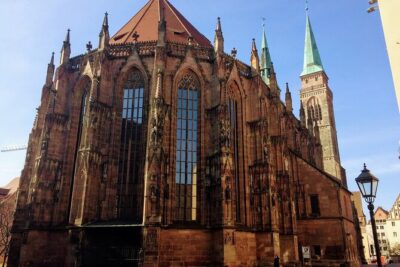
After that, you reach St. Sebaldus Church, another guided stop with tasting. A church stop can sometimes feel like a detour on a food tour, but here it works because the guide keeps pulling the story back to the kitchen. The tour uses these landmarks as anchors for how food culture sits inside a city’s broader identity.
Tip for enjoyment: when you are at a landmark stop like this, lean into the walking pace. Let the group flow. If you stay half-turned toward the buildings while you keep hearing the story, you get the full “place equals meaning” effect.
Altstadthof Brewery: where the red beer story ends with a local setting
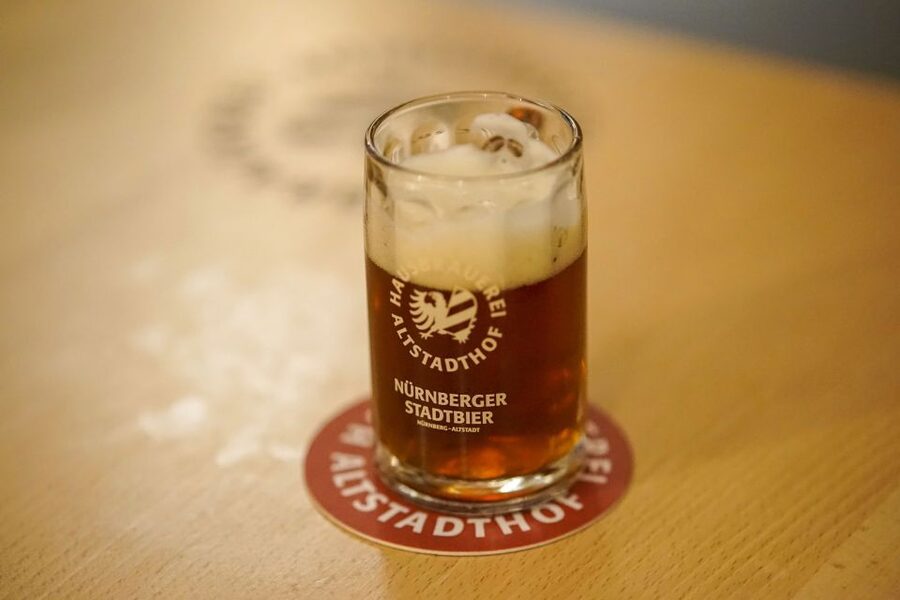
The final stretch brings you to Altstadthof Brewery, with another guided tour and tasting. This is where the tour’s theme comes home, because you end at Hausbrauerei Altstadthof, including the Rotbierstüberl area and the nearby Brauerei und Whiskydestillerie facilities.
At this stage, the food and drink theme stops feeling like trivia and starts feeling like a real local scene. The name of the tour itself, Rotes Bier and Blaue Zipfel, signals that beer culture is not a side note. It is part of the city’s identity, and the tastings are your direct introduction to what that means.
From the feedback I paid attention to, people are very positive about the beer and the classics like bratwurst and Lebkuchen style gingerbread. One key critique was that the snacks between tastings could feel a bit more substantial, but the core flavors were called out as excellent. That combination tells me the tour’s biggest strength is staying focused on the best local hits.
Also, ending at a brewery complex gives you a natural chance to keep exploring after the tour if you want. Even if you do not plan to do anything beyond your last tasting, finishing in a working food and drink environment makes the stories feel real.
Price and value: is $29 worth it?
Here is how I think about value for this kind of tour.
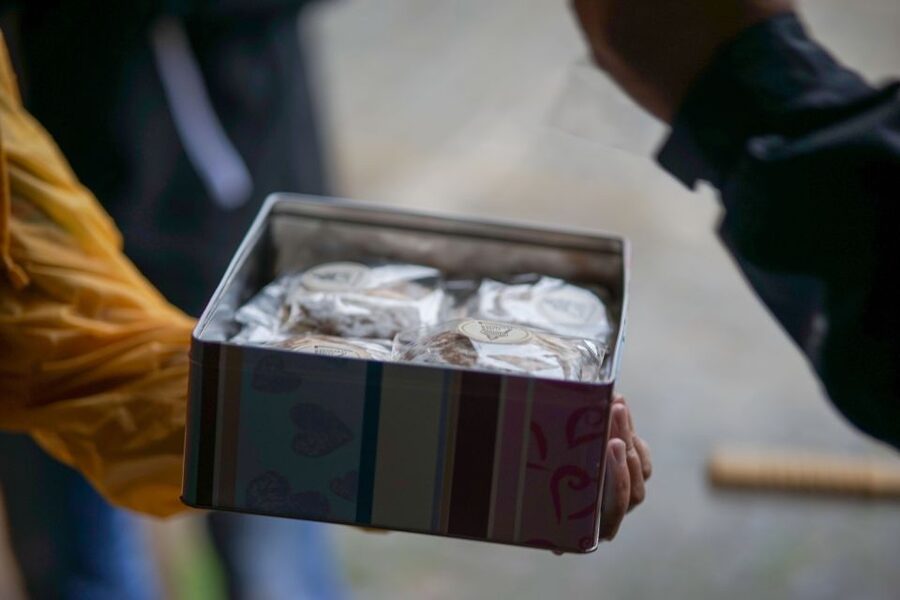
For $29, you get a guided walking tour through major old-town areas, plus snacks and beer. That matters because the tour is not asking you to pay for only conversation. You are paying for a guided experience that turns knowledge into tastes in multiple short stops.
The tour is also 2 hours, which is a good length for a city-center food walk. Longer tours can start to feel like you’re being dragged from one place to another. Here, the pacing is tight and built around short walking segments, so you stay present.
If you are the type of person who likes to eat while you learn, this price feels fair. If you only want a single big meal, you might wish the snack portions were more generous, since one note called out that the snacks could be a bit more valuable in terms of size. But for many people, the mix of stories plus multiple tastings is the whole point.
Who this Nuremberg walk suits best
This tour is a good match if you want food that is tied to place and meaning. You’ll like it if you enjoy learning why names exist and how local habits formed, like the tour’s specific questions about bratwurst naming, gingerbread fame, ravioli timing, and the idea of Devil’s Kitchen.
It is also ideal if you like structure. You get a clear path, frequent stops, and a consistent format: walk, story, tasting, repeat. That keeps the experience from feeling random.
Two groups in particular should consider booking:
- People who want a short food-and-history activity without committing a whole day.
- People who appreciate guides who can explain things with wit and answer questions, which feedback highlighted as a strong point, including a guide named Sonja.
Should you book this tour or skip it?
If you want a fun, organized way to experience Nuremberg through beer, bratwurst, and gingerbread, I think this tour is worth your time. The tastings plus guided answers to real cooking-history questions make it feel like more than just eating on the go.
Skip it if you only want a language-light experience or if you strongly prefer large food portions over small tasting bites. Since the tour is in German, you may get less of the story if your listening is limited, even though the flavors are still the headline.
If you’re in Nuremberg for a short stay, this is a smart way to get your bearings and leave with a stronger feel for what the city’s food identity means.
FAQ
What language is the tour in?
The tour is held in German.
How long is the historical-culinary walk?
It lasts 2 hours.
How much does the tour cost?
The price is $29 per person.
Where do I meet the guide?
Meet in front of the main entrance of the Alte Rathaus, with the picture folder and the green logo for Geschichte Für Alle e.V.
What is included in the price?
You get a walking tour with a guide, snacks, and beer.
Does the tour run in bad weather?
Yes, it takes place rain or shine.
Is the tour wheelchair accessible?
Yes, it is wheelchair accessible.
Centuries Per Block
- Nuremberg: 1.5-Hour Private Tour through Historical Old Town
★ 4.8 · 283 reviews - Nuremberg: Historical Rock Passages Tour
★ 4.8 · 131 reviews - Nuremberg:Complete Tour! Castle/Old Town/World War history
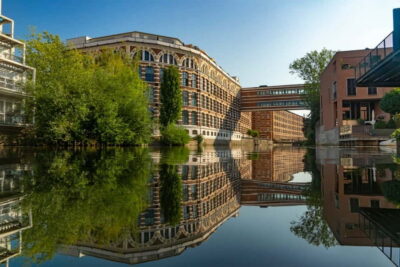
★ 5.0 · 45 reviews - Leipzig: City History Canal Sightseeing Tour on a Motorboat
★ 4.7 · 7,671 reviews
Fresh on the arrivals board for Nuremberg
Historical Tours, compared.
City History Canal Sightseeing Tour on a Motorboat
Read our review →

Browse the lists this tour appears in