
Reviewed · GUIDED WALKS IN BERLIN
Third Reich Berlin: Hitler and WWII Walking Tour
Berlin turns somber fast on this walk. In Third Reich Berlin, this 3-hour WWII route ties names, buildings, and the final battle into one easy-to-follow story.
I especially love how the tour gives you direction in a confusing city, starting at Friedrichstrasse and ending near Topography of Terror. I also like that guides such as Maria and Paul stay clear and engaging, so you leave with real context, not just random facts. The main drawback is that it’s outdoors and it’s a real walk, so plan for weather and comfortable shoes.
In This Review
- Key highlights you will feel right away
- Starting at Friedrichstrasse: get your bearings fast
- Reichstag and the story of democracy under attack
- Trains to Life, Trains to Death: the human cost is not abstract
- Holocaust Memorials: the space makes you slow down
- Brandenburg Gate: propaganda’s big stage, not just a photo spot
- Soviet perspective in Tiergarten: victory and loss in one memorial
- Wilhelmstrasse: where Nazi administration happened
- Goebbels’ propaganda power: where speeches became policy
- Göring and the Luftwaffe: power shows up in office design
- Hitler’s last days: Fuhrerbunker area and the New Reich Chancellery site
- Topography of Terror: how the SS and Gestapo enforced fear
- Price and value for a 3-hour Third Reich Berlin walk
- Who should book this, and who might want something else
- Practical tips to make the walk easier
- Should you book this Third Reich Berlin walking tour?
- FAQ
- How long is the Third Reich Berlin walking tour?
- How much does it cost per person?
- What language is the tour offered in?
- Where does the tour start and where does it end?
- What is included in the price?
- Is the Reichstag admission included?
- How much walking should I expect?
- Can I cancel for free?
Key highlights you will feel right away
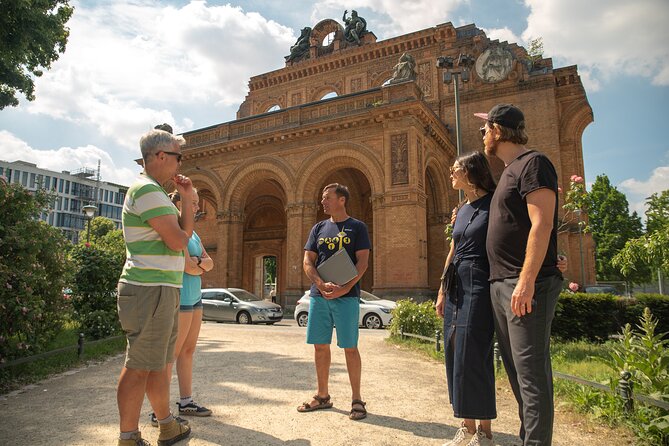
- Hitler’s bunker site and the New Reich Chancellery area, connected to April 1945 in plain language
- Goebbels’ Propaganda HQ and Wilhelmstrasse’s power offices, where policy and persecution were administered
- Reichstag’s 1933 fire story and the 1945 Soviet flag moment, Berlin history in one stop
- Holocaust reminders including Trains to Life, Trains to Death and the Memorial to the Murdered Jews of Europe
- Soviet War Memorial in Tiergarten, with the symbolism of victory and the cost of war
- Topography of Terror, built on the former SS and Gestapo headquarters site
Starting at Friedrichstrasse: get your bearings fast
Your tour starts at Friedrichstrasse Station, right where Berlin feels like a working city, not a museum. The early overview matters, because this walk moves through places that can look similar from the sidewalk. Once your guide frames what happened where, the streets start making sense.
You will get an introduction to the key sites you are heading to, including the Berlin locations tied to Hitler’s last days, the Nazi power centers in Wilhelmstrasse, and the Soviet assault route that ends at major landmarks. The pace is brisk but not rushed, and many stops are short, which keeps the 3-hour length realistic.
Two practical notes: arrive about 15 minutes early so you can start on time, and dress for the weather. People mention it gets cold fast, even when the day is otherwise calm.
More Guided Walks in Berlin
- Discover Berlin Half-Day Walking Tour
★ 5.0 · 9,624 reviews - Berlin City walk Government District and Places of Democracy
★ 4.7 · 8,467 reviews - Berlin: Third Reich & Cold War Guided Walking Tour
★ 4.9 · 8,378 reviews
Reichstag and the story of democracy under attack
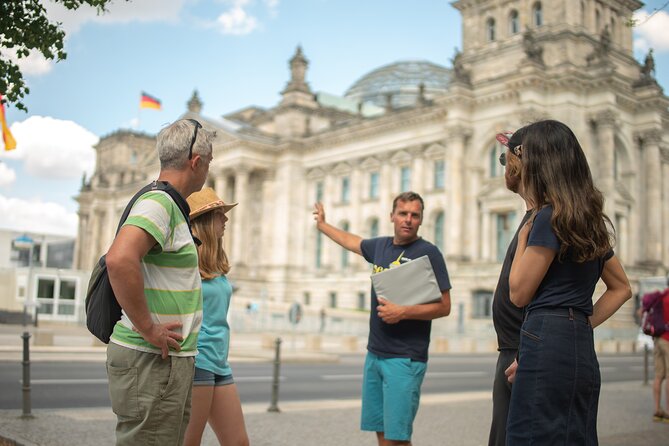
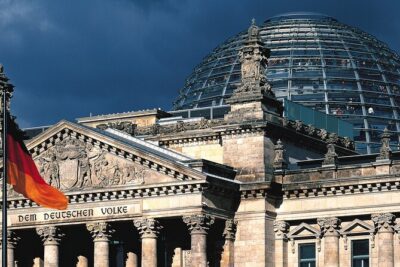
One of the big anchor points is the Reichstag Building. Your guide explains how the 1933 Reichstag fire helped the Nazis dismantle democracy, so you understand why this building was not just scenery, but a turning point. Then you connect that to 1945, when the Soviet flag is raised over the Reichstag after the intense Battle of Berlin.
This stop is worth it because it explains both the rise and the fall. The same walls that helped Nazis consolidate power also become a symbol of defeat. Even if you have walked past the Reichstag before, the tour gives you the timeline that makes it click.
Note on timing and cost: the Reichstag stop has an admission component that is not included. For planning, it helps to assume you might need to pay that separately.
Trains to Life, Trains to Death: the human cost is not abstract
At Trains to Life, Trains to Death, the focus shifts hard to victims deported from Berlin. This is not about generals and speeches. The memorial centers on deportation by train to Nazi concentration camps and the idea of cruel, mechanical removal from everyday life.
What I like about this kind of stop on a walking tour is that it forces the story to stay human. The walk could easily become only a list of power locations, but this memorial keeps the moral weight front and center.
The stop is brief, but it lands. If you want your understanding to go beyond architecture, this is where you feel it most.
Holocaust Memorials: the space makes you slow down
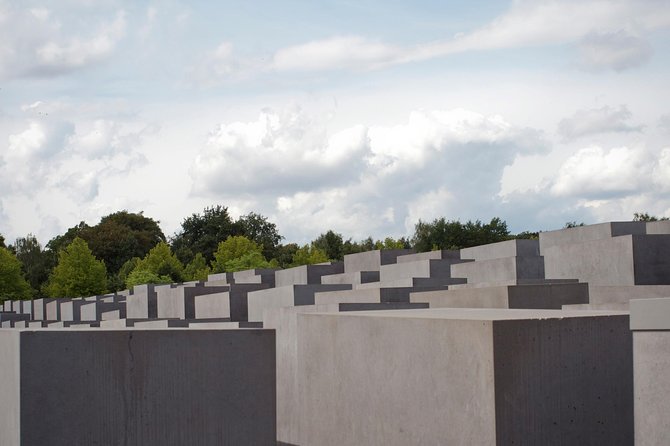
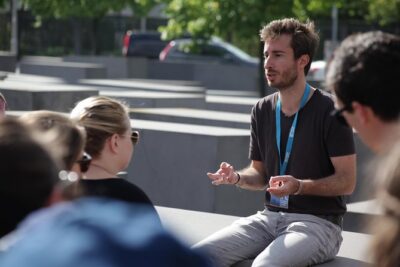
You also see the Memorial to the Murdered Jews of Europe, the one made of 2,711 concrete slabs of varying heights. The design is intentionally disorienting as you walk through it. That matters, because the experience is not meant to be comfortable, and it pushes reflection without forcing words.
Nearby, your guide links the memorials to the larger Nazi system of persecution. The tour’s value here is connection. You learn how policy became action, and how everyday life in Berlin was transformed.
This is a good stop for pause. If you need a moment to step aside, do it. This is one of those locations where quiet attention is part of the point.
Brandenburg Gate: propaganda’s big stage, not just a photo spot
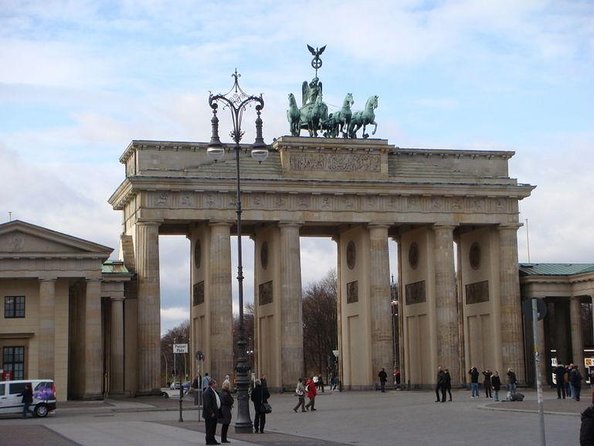
Brandenburg Gate is one of Berlin’s most famous sights, and on this tour it has a specific wartime-era meaning. Your guide points out how Nazis used it as a backdrop for rallies and grand displays of authority. During the Third Reich, it was adorned with swastikas, and it became part of the public theater of power.
Today, it is also a symbol of reunification, which makes the site more complicated and more worth visiting. The tour does a good job showing how a single landmark can carry different meanings across different regimes.
If you do not like looking at propaganda history, this stop can feel heavy. But the context you get makes it less like a shock photo and more like a lesson about how regimes work.
Further Third Reich and wartime history tours:
Soviet perspective in Tiergarten: victory and loss in one memorial
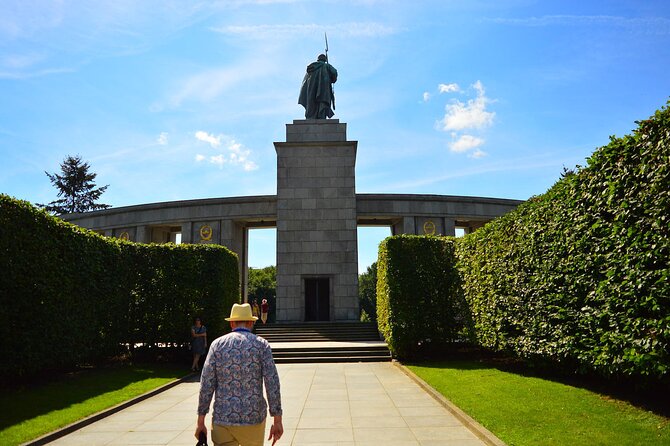
Another memorable stop is the Soviet War Memorial in Tiergarten. This is a striking site in the heart of Berlin, honoring Soviet soldiers who fought and died in the final battle stages. The guide explains the symbolic arrangement of the memorial, including the Soviet soldier holding a flag over two fallen Nazi soldiers.
What makes this stop important is that it forces the story to include the other side of 1945, not just the Nazi viewpoint. WWII in Berlin was not a single narrative. It was street by street, unit by unit, and eventually it was a whole city under siege.
You will see the military cemetery area around it, and your guide helps you read what you are seeing rather than just naming it.
Wilhelmstrasse: where Nazi administration happened
Wilhelmstrasse is where the tour becomes less about battle and more about governance. Your guide describes it as a central hub for Nazi offices, including ministries and the Reich Chancellery area. This is also where you hear about persecution being administered, not just imagined.
It is easy to walk through a modern city and assume history is behind you. Wilhelmstrasse is where the tour makes you notice how power is built into place. Decisions about war and repression were made here, and the architecture and layout make that feel real.
If you like understanding how systems function, this is one of the most useful parts of the walk. The tour helps you connect policies like Lebensraum to the militaristic thinking that fueled the war and the Holocaust.
Goebbels’ propaganda power: where speeches became policy
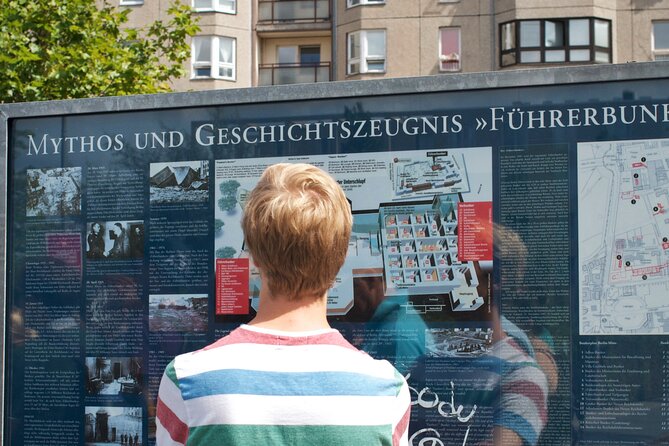
At the Ministry of Propaganda area, you focus on Joseph Goebbels. Your guide explains that it was there that Goebbels composed many of his infamous speeches and pushed Nazi messaging into public life.
This stop is a reminder that propaganda was not only theater. It was part of how the regime steered opinion, justified violence, and kept people aligned. When you connect this to the memorial stops later, the moral picture becomes clearer.
If you have ever wondered how dictatorial messaging becomes daily reality, this section gives you a concrete answer grounded in Berlin geography.
Göring and the Luftwaffe: power shows up in office design
On Wilhelmstrasse and nearby, you also see the former Reichsluftfahrtministerium, linked to Hermann Göring and the Luftwaffe. Your guide describes it as one of the most important Nazi air force buildings and explains Göring’s role as Hitler’s second-in-command.
You will likely notice the grand design and understand why the building itself felt like power. The tour uses this to talk about how the Nazi leadership organized the war machine, including air operations tied to earlier campaigns.
After the war, the building was repurposed, but the association stays. This tour is good at making you notice that the past survives in subtle ways, even when buildings change.
Hitler’s last days: Fuhrerbunker area and the New Reich Chancellery site
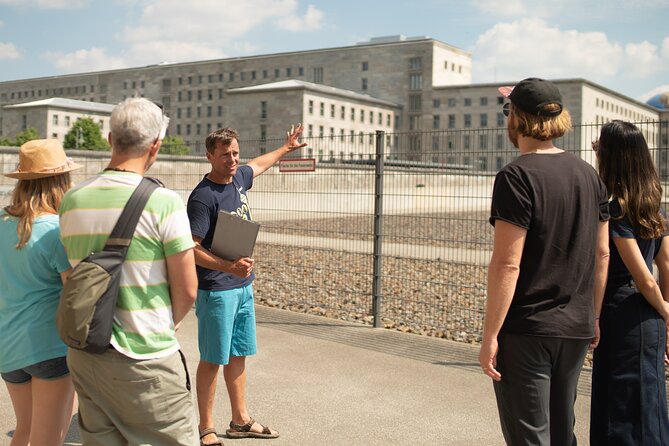
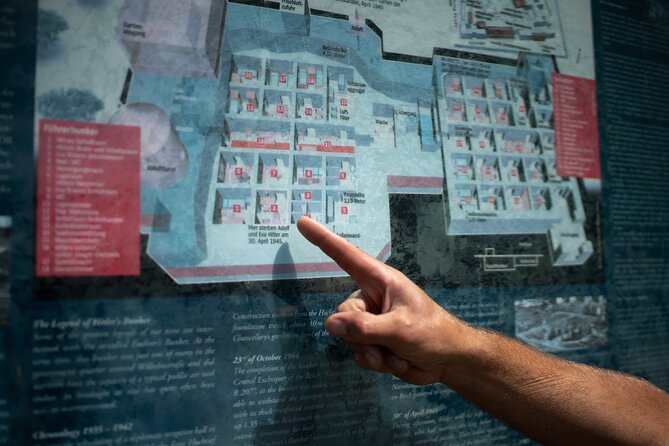
The stop above the Fuhrerbunker location is the emotional high point for many people. Your guide frames it as where Hitler spent the last days of WWII and how it connects to his Reich Chancellery area, built by Albert Speer.
Even though you are viewing a location rather than stepping into a museum, the context you get makes it feel specific. You are not just hearing that Hitler died in Berlin in April 1945. You are hearing what the bunker represented at that moment, and how the regime’s final phase played out inside Berlin’s real streets.
If you want a tour where the names matter, this is where your guide usually helps the story line up cleanly. People have also shared that guides use clever timing here, sometimes hinting at the bunker site until you reach it, which makes the moment land.
Topography of Terror: how the SS and Gestapo enforced fear
The walk ends at Topography of Terror, at Niederkirchnerstraße 8, very close to Checkpoint Charlie. This museum and memorial sits on the former SS and Gestapo headquarters site, and the focus is repression and the machinery of terror.
Your guide explains how these organizations enforced Nazi rule and implemented persecution and the Holocaust. The exhibitions use photos, documents, and accounts, and the setting itself makes it harder to treat as abstract history.
If you want closure on the theme of how the regime operated, this is where you get it. It also helps you connect everything from earlier stops, from propaganda to administration to mass violence.
Price and value for a 3-hour Third Reich Berlin walk
At $24.07 per person for a roughly 3-hour walking tour, the value is strong if you care about context. You are paying for a local guide who strings together political centers, battle routes, and memorial sites in one route, which is hard to replicate solo without losing time and focus.
You also benefit from the way the tour keeps most admissions simple. Many stops you see have admission free, while the Reichstag admission is not included. So you are not stuck with a pile of ticket fees on top of the tour cost.
Group size is capped at 25, which usually means you get enough attention for questions without feeling lost in a crowd.
Who should book this, and who might want something else
This tour fits best if you are a WWII history fan, or if you want a structured path through the hardest parts of Berlin history. It is also a good fit for students or parents traveling with teens who want a clear narrative with dates tied to real places.
It may feel like a lot if you prefer light sightseeing only. The subject matter is heavy. The strongest guides keep the tone respectful while still making the story understandable, and that balance is a big reason people praise the experience with guides such as Maria, Tom, Paul, and Eran.
If you dislike walking in cold weather or want frequent long indoor breaks, plan ahead. You will be outside for most of the 3 hours.
Practical tips to make the walk easier
Bring comfortable shoes. One person noted the tour is about 5,000 steps briskly between points of interest, which is manageable but not casual.
Dress in layers. Even on days that seem fine, Berlin weather can hit hard during an outdoor walk, including icy conditions people have mentioned. A warm hat and gloves can be the difference between coping and counting down minutes.
Have a quick coffee plan. Several guides seem to build in informal comfort breaks, and it helps to have your own warm drink option nearby too.
Should you book this Third Reich Berlin walking tour?
Yes, if you want a clear, organized way to see Berlin’s WWII and Third Reich sites without getting lost in details. The route makes smart connections between power centers, memorials for victims, and the final collapse of Nazi Germany, including places like the Fuhrerbunker area, Goebbels’ world, the Reichstag moment, and Topography of Terror.
I would book it with one caveat: come ready for a serious emotional tone and a real walk. If you can handle that, it is excellent value for a focused half-day that turns Berlin into a readable story.
FAQ
How long is the Third Reich Berlin walking tour?
It is about 3 hours.
How much does it cost per person?
The price is $24.07 per person.
What language is the tour offered in?
The tour is offered in English.
Where does the tour start and where does it end?
It starts at Reichstagufer 17, 10117 Berlin, Germany and ends at Topography of Terror, Niederkirchnerstraße 8, 10963 Berlin, Germany, close to Checkpoint Charlie.
What is included in the price?
A local expert guide and the 3-hour walking tour are included.
Is the Reichstag admission included?
No, Reichstag admission is not included.
How much walking should I expect?
Plan on a walking tour with several stops, and one guest specifically noted about 5,000 steps briskly between points.
Can I cancel for free?
Yes, free cancellation is available up to 24 hours in advance for a full refund.
Cities at Walking Speed
- Berlin: Discover Berlin Walking Tour
★ 4.9 · 5,998 reviews - Berlin: Hidden Backyards Guided Walking Tour
★ 4.8 · 5,360 reviews - Berlin: Alternative Berlin Walking Tour
★ 4.6 · 1,204 reviews - Berlin: City Street Art Guided Walking Tour
★ 4.8 · 1,051 reviews
Fresh on the arrivals board for Berlin



Guided Walks in Berlin, compared.
Berlin City walk Government District and Places of Democracy
Read our review →
Berlin’s Best: 2 Hour Walking Tour Third Reich and the Cold War
Read our review →
Browse the lists this tour appears in