
Reviewed · WORKSHOPS
DJ workshop in Berlin
Push a fader, feel the beat. This Berlin DJ workshop throws you into a club-style setup with CDJ 2000 Nexus gear and a real booth in the city’s electronic scene, all in just 2 hours. You’ll learn how DJs turn tracks into smooth transitions, without needing previous experience.
I love how the session blends theory and practice. You get real concepts like BPM and key, then you apply them right away on professional equipment. I also like the “you leave with something” payoff, the workshop includes professional DJ photos taken while you play.
One thing to consider: this is active work in a club environment, so it may feel like a lot if you want a passive, sit-and-watch lesson. Also, it is not suitable if you are hearing-impaired, and there are rules against alcohol and party groups.
In This Review
- Key highlights worth your attention
- Entering A Real Berlin Club Booth With Pioneer Gear
- How The 2-Hour Session Actually Flows
- CDJs And Mixer 101: What You Learn With Your Hands
- BPM, Key, And Song Structure, Explained In DJ Terms
- Beat Matching And Your First Transitions
- DJ Photos In A Real Booth, For Your Profile
- Price And Value: Is $176 Reasonable For Two Hours?
- Meeting Point, Clothing, And Berlin Reality Checks
- Who This Workshop Is For (And Who Should Pick Another Option)
- Should You Book This DJ Workshop?
- FAQ
- How long is the DJ workshop in Berlin?
- What is the price per person?
- Do I need any DJ experience or music knowledge to join?
- What equipment will I use during the workshop?
- Does the workshop include music for practice?
- Where do we meet?
- Is the workshop suitable for under 16s?
- What languages are available for the instructor?
- Are drinks and food included?
- FAQ
- Is the workshop suitable for people who are hearing-impaired?
- Are alcohol and drugs allowed?
- Is the workshop a party event?
- How big is the group?
- Will I get photos of myself at the decks?
Key highlights worth your attention
- Real club booth setup: Learn on Pioneer CDJ 2000 Nexus and DJM 900 equipment
- Small group limit of 4: More individual feedback than a big class
- Theory you can use: BPM, key, and song structure tied directly to mixing
- Your first transitions: Beat matching and practical mixing skills right away
- Professional DJ photos: Photos taken during the workshop for your digital DJ profile
Entering A Real Berlin Club Booth With Pioneer Gear
Berlin DJs do not just work on laptops in bedrooms. This workshop puts you in a real club setting with a proper DJ booth, so you understand how it feels to operate the gear in the environment where it matters. The goal is simple: help you connect music theory to the physical controls in front of you.
The equipment is the headline for good reason. You will use Pioneer CDJ 2000 Nexus players and a DJM 900 mixer, plus you get quality headphones. That matters because these controls are not just decoration. If you learn on the same family of gear used in clubs, your first steps feel more relevant and less “toy” than beginner-only setups.
You start with an easy get-to-know-you moment, then you head straight toward the decks. That short ramp-up keeps the workshop from feeling like a lecture. It also means you spend your limited time doing what you came for, hands-on mixing, not only watching others.
Also holding a platform in Berlin
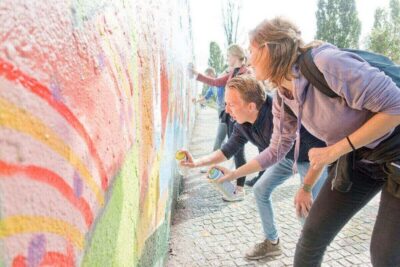
- Berlin: Graffiti Workshop at the Berlin Wall
★ 4.6 · 234 reviews - Berlin: Self-Guided Family and School Class Scavenger Hunt
★ 4.6 · 128 reviews - Berlin: Wine on Canvas – Paint Workshop and Wine Tasting
★ 4.7 · 59 reviews
How The 2-Hour Session Actually Flows
This is a compact class, so the timing is designed for quick momentum. You should expect a short intro, then a deliberate progression from basics to actual mixing decisions. The instructor, BiMän, guides you through both what to think and what to touch.
Early on, you build the mental map for DJing electronic tracks. You learn how tracks are structured, what DJs look for when they plan transitions, and how to read the music with practical tools. Then you move into the action on the decks, so the concepts do not stay abstract.
The “first wins” are built into the plan. You will learn to beat match and create your first transitions, step by step. You also develop a sense for flow, rhythm, and timing, which is what separates a clunky mix from something that feels musical.
Because the group is limited to four participants, you are not stuck waiting your turn for every question. You get personal support and individual feedback as you practice, and that accelerates learning.
CDJs And Mixer 101: What You Learn With Your Hands
If you have ever looked at CDJs and thought, where do I even start, you are exactly the right person for this workshop. The session is built for beginners, so you do not need prior knowledge. You get what you need on site, including headphones and the tracks used for practice.
You work on the real workflow DJs use. You select tracks, analyze what is going on musically, and then you combine songs with a transition that makes sense. It is not only about pressing buttons. You learn how each step influences what the audience hears.
A big part of DJing is timing, and the workshop focuses on that through repeated practice. You will work toward beat matching independently, which means you can move beyond waiting for an instructor to fix everything. Over two hours, that shift in confidence is the main point.
If you bring nothing, you are still set. The music for practice is provided, and you do not need to bring your own files or gear. That keeps your prep simple and your attention on learning.
BPM, Key, And Song Structure, Explained In DJ Terms
This is where a lot of DJ lessons fail beginners. They explain music concepts, but then they never connect them to real decisions. Here, you learn BPM, key, and song structure in a way that supports mixing.
BPM gives you tempo orientation. You learn how DJs use it to line up the rhythm so transitions feel stable rather than chaotic. Key adds another layer, helping you understand why some combinations sound smooth while others feel tense. Song structure helps you anticipate when a track changes energy, so you can plan your transitions instead of reacting late.
What makes this valuable is that you do not just memorize terms. You learn how to select and analyze tracks, then you apply that to the decks. The result is practical mixing logic you can reuse beyond the workshop.
Electronic music moves fast. The workshop helps you keep up by focusing on the essential signals, timing, rhythm, and how tracks are built. You end up with a method, not just a one-time trick.
Beat Matching And Your First Transitions
The highlight is not learning terminology. The highlight is actually creating transitions. You start step by step and work toward beat matching independently, so you build control rather than dependency.
In practice, beat matching becomes a hands-on skill loop. Listen, check the rhythm relationship, adjust what needs adjusting, then confirm that the mix holds together. The workshop structure pushes you through that loop instead of hovering at the “theory only” stage.
You also learn what to aim for when you mix. It is not only about making tracks line up. You develop a feel for flow, rhythm, and timing, which is what makes a transition feel like it belongs in the same story.
Small group size helps here. With only up to four participants, you are more likely to get targeted feedback instead of generic corrections. That matters when you are learning something technical like cueing and syncing.
Onward connections from Berlin:


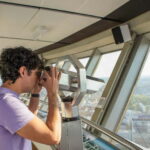

DJ Photos In A Real Booth, For Your Profile
You do not just leave with a new skill. You also get professional DJ photos taken while you are at the decks. That is a surprisingly motivating bonus for beginners, because it creates a tangible marker of progress.
The photos are taken during the workshop and delivered digitally afterwards. So you get the experience, and you get something you can actually use for your DJ profile, social media, or simple bragging rights with zero effort.
This also changes how you practice. You are not performing for a crowd, but you do have that “real session” energy. You learn in a club-like setting, and the photo moment reinforces that you are building a DJ identity, not just completing a class.
If you want a first milestone that feels official, this is a nice touch. Plenty of workshops teach skills, fewer package them with media that looks like you came prepared.
Price And Value: Is $176 Reasonable For Two Hours?
At $176 per person for 2 hours, you are paying for three things that many beginner classes separate: real club hardware, coaching, and a finished deliverable (the photos). It is not just a casual taster.
First, the equipment is top tier. Learning on Pioneer CDJ 2000 Nexus and DJM 900 is a real cost in itself. If the workshop used budget controllers, the learning transfer would likely feel weaker.
Second, you get guided instruction plus individual feedback in a small group of up to four. One-on-one attention is a major part of value. For many people, the difference between learning and just watching is whether questions get answered while you are actually practicing.
Third, you get photos plus tracks provided for practice. You do not need to source music files, set up software, or bring anything technical.
What is not included is also clear. Drinks and food are not provided, so you may want to plan a quick snack before or after.
Meeting Point, Clothing, And Berlin Reality Checks
You meet in front of the entrance to the Rewe supermarket. That is simple, and it makes it easier to orient yourself in Berlin before you head into the venue.
Dress for action. Comfortable clothing is recommended because you will be actively working on the decks, not sitting quietly in a classroom. Also, bring your normal travel flexibility mindset. This is a working club setting, so expect the energy to be part of the lesson.
There are venue rules you should respect. Alcohol and drugs are not allowed, and party groups are not the point here. The vibe is focused on learning and getting you spinning, not on turning the workshop into an event.
If you are sensitive to loud environments, keep in mind that this takes place in a club setting. And if you are hearing-impaired, the workshop is not suitable, based on the provided info.
Who This Workshop Is For (And Who Should Pick Another Option)
This workshop is a great match if you love electronic music and want to understand what actually happens at the booth. It is also ideal if you want to try DJing but you do not know where to begin. The lesson is designed for beginners, so you can show up with curiosity and follow along.
You will likely enjoy it even more if you want a structured method. The focus on BPM, key, and song structure gives you a practical framework instead of random mixing advice.
Choose another option if you want a long, in-depth course or a full club night experience. This is intentionally short, 2 hours, and it is meant to teach foundational skills and first transitions. It is not described as an all-day training program.
It is also not set up for kids under 16. If you are under 16, you will not be able to join. And if you need accommodations for hearing, this is not the right fit based on the information provided.
Should You Book This DJ Workshop?
If you want a first taste that feels legit, book it. The biggest reason is the combination of real booth equipment, beginner-friendly coaching, and tangible outputs like professional DJ photos. For the time and the small group size, the value is strong because you spend the session practicing, not just learning concepts.
I would especially recommend it if you are the type who learns faster by doing. You get theory support, but you also get your hands on the deck and your ears trained for beat matching and transitions.
If you prefer quiet, purely instructional learning, or you are worried about noise, you might want to look for a different format. Otherwise, this is a fun, focused way to understand DJing and walk away with confidence you can build on.
FAQ
How long is the DJ workshop in Berlin?
The workshop lasts 2 hours.
What is the price per person?
The price is $176 per person.
Do I need any DJ experience or music knowledge to join?
No prior knowledge is required. Beginners are welcome.
What equipment will I use during the workshop?
You will learn on Pioneer CDJ 2000 Nexus players and a DJM 900 mixer. Headphones are also provided.
Does the workshop include music for practice?
Yes. Tracks and music for practice are provided, so you do not need to bring your own music.
Where do we meet?
You meet in front of the entrance to the Rewe supermarket.
Is the workshop suitable for under 16s?
No. It is suitable for participants aged 16 and over.
What languages are available for the instructor?
The instructor speaks German and English.
Are drinks and food included?
No. Drinks and food are not included. You can bring your own if you want.
FAQ
Is the workshop suitable for people who are hearing-impaired?
No. It is not suitable for hearing-impaired people.
Are alcohol and drugs allowed?
No. Alcohol and drugs are not allowed.
Is the workshop a party event?
Party groups are not allowed, and the workshop is not described as a party event.
How big is the group?
The workshop is limited to a small group, with a maximum of 4 participants.
Will I get photos of myself at the decks?
Yes. Photos are taken during the workshop and made available digitally afterwards.
Fresh on the arrivals board for Berlin

Workshops, compared.
Self-Guided Family and School Class Scavenger Hunt
Read our review →
Hands-On Brewery Tour & Tasting of 4 Organic Beers
Read our review →
Wine on Canvas – Paint Workshop and Wine Tasting
Read our review →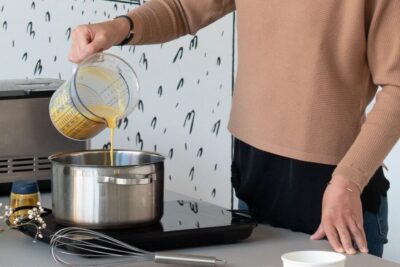

Berlin Photography Masterclass – Private Photography Lesson
Read our review →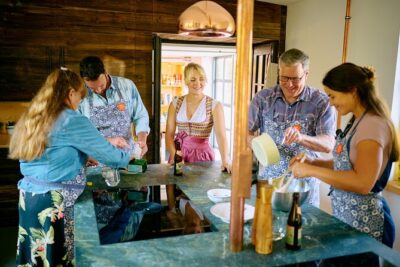
Bavarian Schnitzel Cooking Class in Oberaudorf Farmhouse
Read our review →
Stencil Workshop in Munich’s Creative Soul (Max. 12 guests)
Read our review →Browse the lists this tour appears in