
Reviewed · WORKSHOPS
Stencil Workshop in Munich’s Creative Soul (Max. 12 guests)
Spray paint postcards, see Munich differently. This small-group stencil workshop is a fun way to connect street art, design, and Munich neighborhoods, guided by Philipp an architect and certified city guide. I especially love the hands-on spray-paint stencil part, and how the walk adds real context to each stop. One thing to plan for: there are no food or drinks included, so eat before you go.
You’ll keep things moving for about 150 minutes, with a group capped at 12 so you get help without waiting in line. Along the way, you’ll hit Instagram-famous spots like Alte Utting, but also the creative south Munich places that explain why the city looks the way it does.
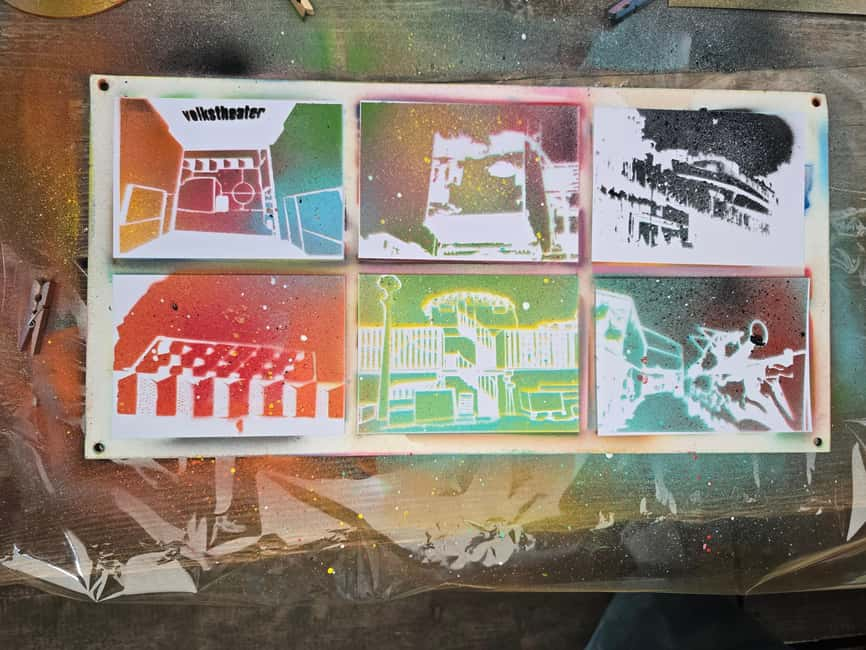
The workshop itself happens in a heated shipping-container studio, where you create six postcards using stencils. No prior art experience is needed, but you should be ready for a little mess, wear warm layers, and bring clothes that can get dirty.
In This Review
- Key highlights worth your time
- Entering Munich’s creative south with an architect guide
- Meeting at Piazza Zenetti Square, the quick way to start
- Münchner Volkstheater and the former cattle-yard district story
- Alte Utting on the water: beer garden culture with a NYC nod
- Bahnwärter Thiel: 40 containers turned into a creative hub
- The heated shipping-container studio: stencil postcards in 150 minutes
- Your take-home souvenir: why postcard art feels better than a magnet
- Price and value: $42 for guided walking plus included materials
- What to bring and how to dress for a stencil day
- Best fit: who this workshop suits (and who might skip it)
- Language and guide style: easy for solo travelers too
- Quick check: where it ends and how the day flows
- Should you book this Munich stencil workshop?
- FAQ
- Where does the tour meet?
- How long is the experience?
- How much does it cost?
- Is prior art or spray-painting experience needed?
- What materials are included for making postcards?
- Are food and drinks included?
- How do I get there by public transportation?
- What languages is the tour offered in?
- Is this tour suitable for wheelchair users?
- What should I wear or bring?
Key highlights worth your time
- Philipp’s architect viewpoint gives meaning to what you see, not just where it is
- Alte Utting blends water views, beer garden culture, and international attention
- Bahnwärter Thiel is street art built from 40 repurposed shipping containers
- Heated container postcard workshop makes the spray-painting comfortable and focused
- Six finished postcards plus an envelope set, so you leave with something tangible
Entering Munich’s creative south with an architect guide
This tour works because it does two things at once: it teaches you how to look, then it gives you a way to make your own version of what you saw.
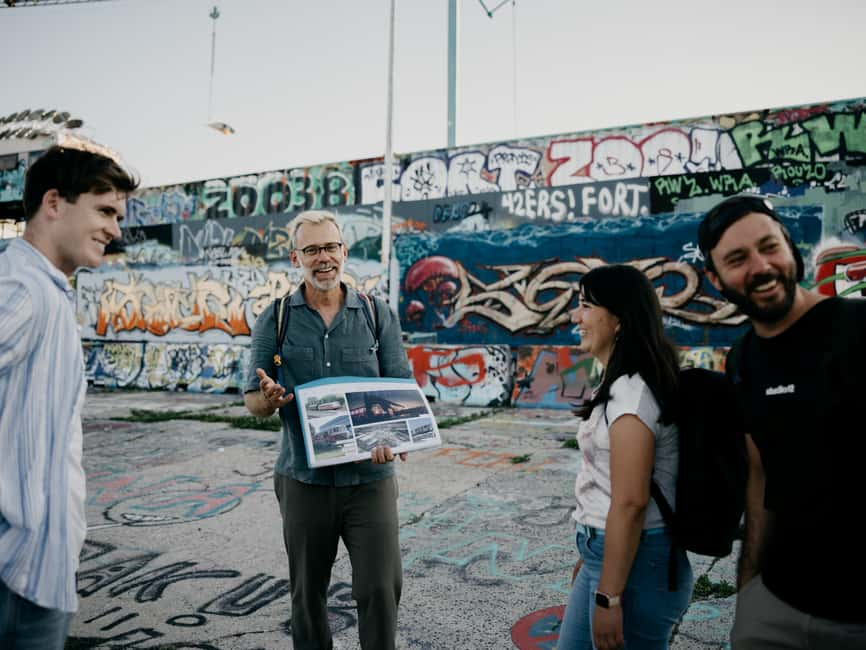
Philipp, who is both an architect and a certified official tour guide, keeps the pace friendly and the explanations practical. Instead of lecturing, he points out design choices you might miss on your own, from how art sits inside city space to how reused buildings keep a neighborhood character alive.
You also get small-group attention. With a max of 12 people, questions actually land, and you’re not stuck watching over someone else’s shoulder while you’re trying to create.
Also holding a platform in Munich
- Munich: Hands-On Brewery Tour & Tasting of 4 Organic Beers
★ 4.7 · 117 reviews - Munich: Perfume Creation Workshop
★ 5.0 · 9 reviews - Berlin: Graffiti Workshop at the Berlin Wall
★ 4.6 · 234 reviews
Meeting at Piazza Zenetti Square, the quick way to start
You meet at Piazza Zenetti Square, identified by its distinctive grey and turquoise street furniture. That simple visual cue matters, because the tour has a set start and you do not want to waste the first 10 minutes hunting for the group.
If you’re coming by subway, the easiest route is U3 or U6, exit at Poccistraße, then walk about 10 minutes to Piazza Zenetti. Look for Philipp with a tablet slung over his shoulder, and you’ll spot him fast.
Come prepared to walk. The whole experience is designed as a walking tour plus a hands-on studio session, so comfortable shoes are not optional.
Münchner Volkstheater and the former cattle-yard district story
One of the first big “wait, that’s in Munich?” stops is Münchner Volkstheater. You get a sense of how this cultural building connects to a revitalized former cattle-yard district, which helps the architecture click into place instead of feeling like random brickwork.
What I like about starting here is that it sets a theme for the rest of the day: the city doesn’t just preserve, it repurposes. And when you notice repurposing, you start seeing the same logic everywhere you go, including in the shipping-container areas later.
You’ll learn enough to make the creative parts feel earned. After this, when you see street art in the south, it’s not just decoration. It’s part of a city system, and you understand why it lives where it does.
Alte Utting on the water: beer garden culture with a NYC nod
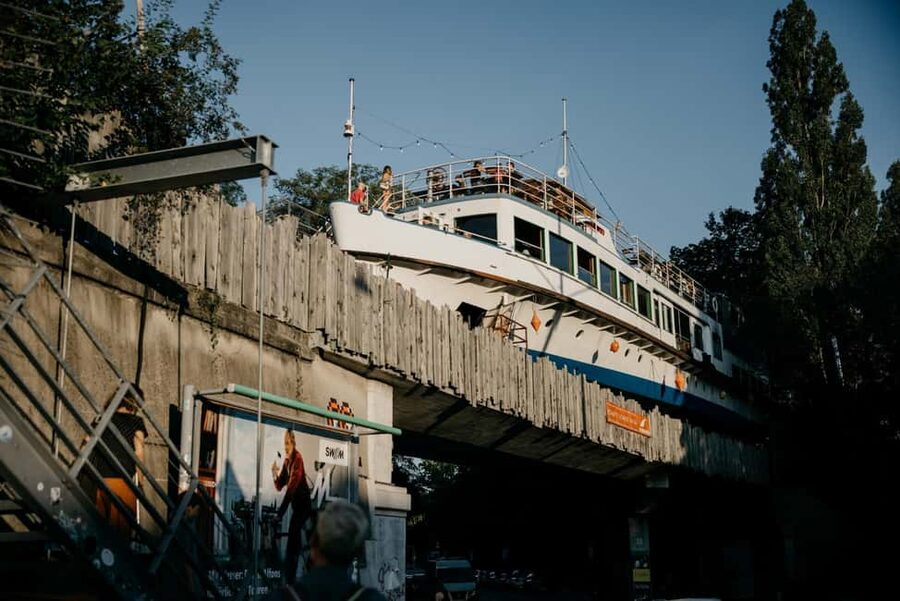
Then you move to Alte Utting, a boat-turned cultural spot that works like a floating beer garden. This stop stands out because it’s not just a pretty viewpoint. It’s a reminder that Munich’s identity is built from odd ideas that somehow become beloved traditions.
The tour ties Alte Utting into a bigger story, including the fact that it has been featured in The New York Times. That detail helps you understand the scale of the reputation, even if you’re not the type to care about press mentions.
Practical note: because it’s a boat setting, you’ll probably get a different sense of movement and space than you would at a normal biergarten. If you like urban quirks, this is one of the most memorable “Munich does this weirdly well” moments on the route.
Bahnwärter Thiel: 40 containers turned into a creative hub
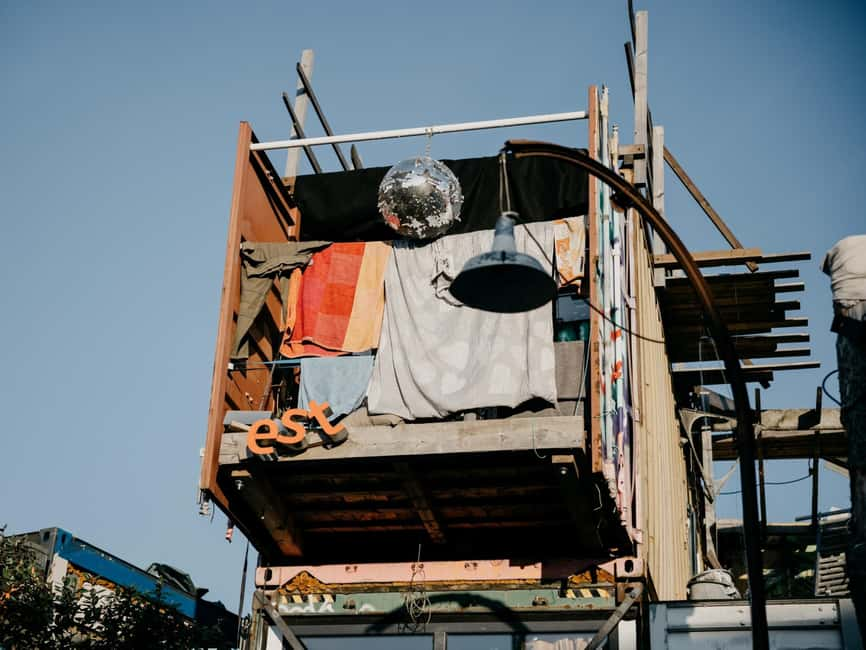
Next comes Bahnwärter Thiel, a creative hub built from 40 repurposed shipping containers. This is the place where the tour’s street art focus becomes real, because you’re not just hearing about graffiti culture. You’re walking through it as part of a physical environment.
What you’ll love here is the context. Philipp helps you read what you see with clearer eyes, so the containers become more than a photo opportunity. You start noticing how the city materials, the layout, and the art choices fit together like a system.
This is also a good stop for first-timers to Munich street art. If you’ve never taken the “urban art” scene seriously, the walking portion makes it feel understandable and grounded.
Onward connections from Munich:
The heated shipping-container studio: stencil postcards in 150 minutes
The workshop is where everything turns hands-on.
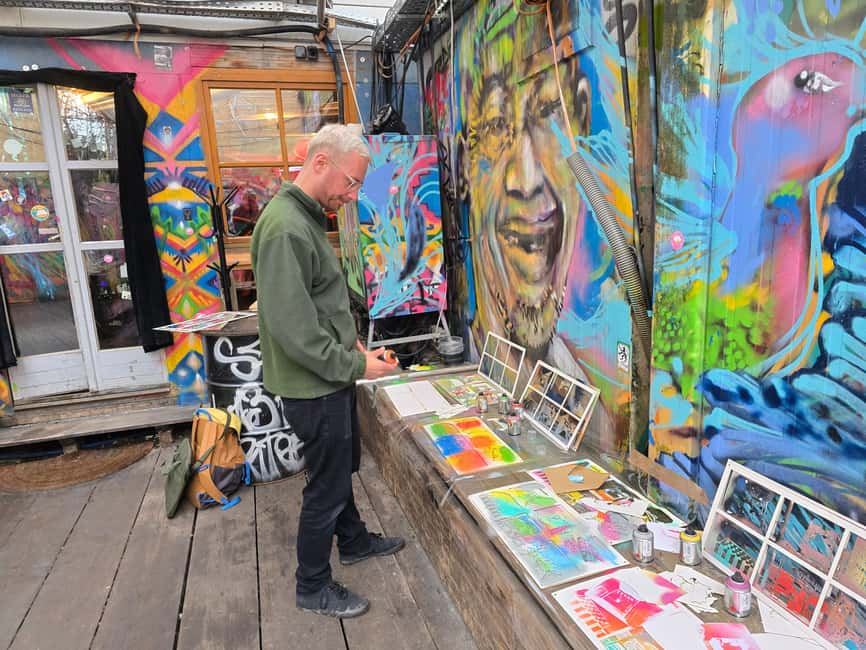
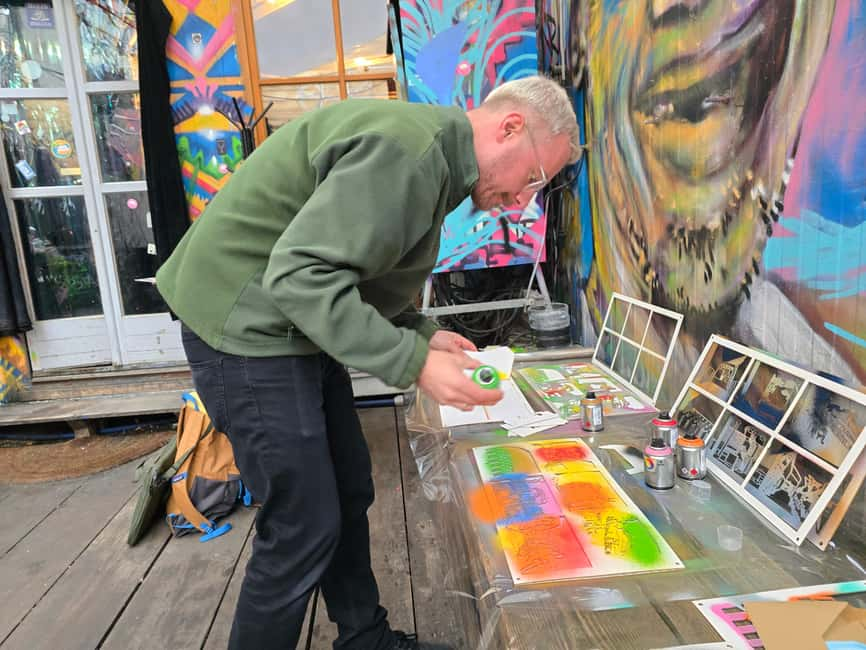
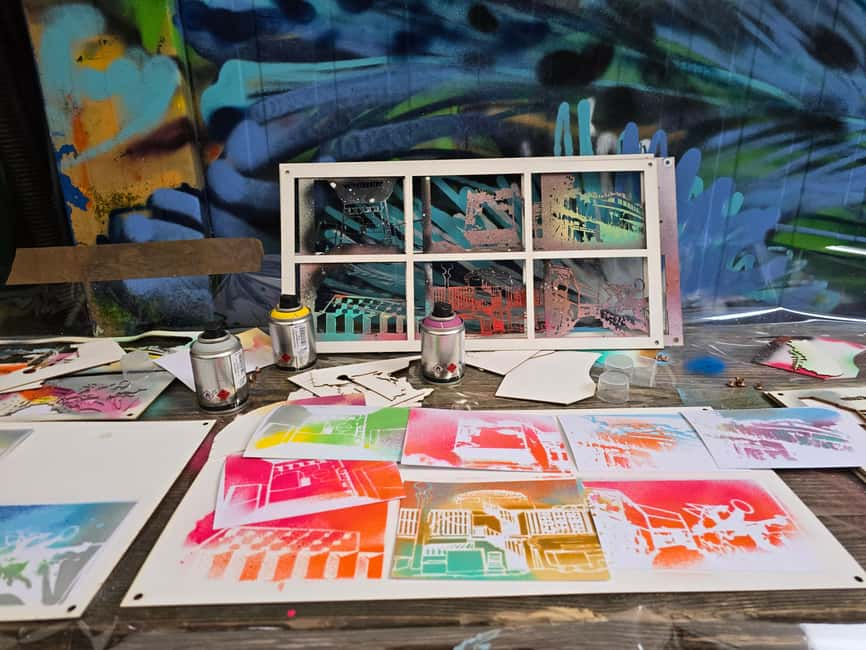
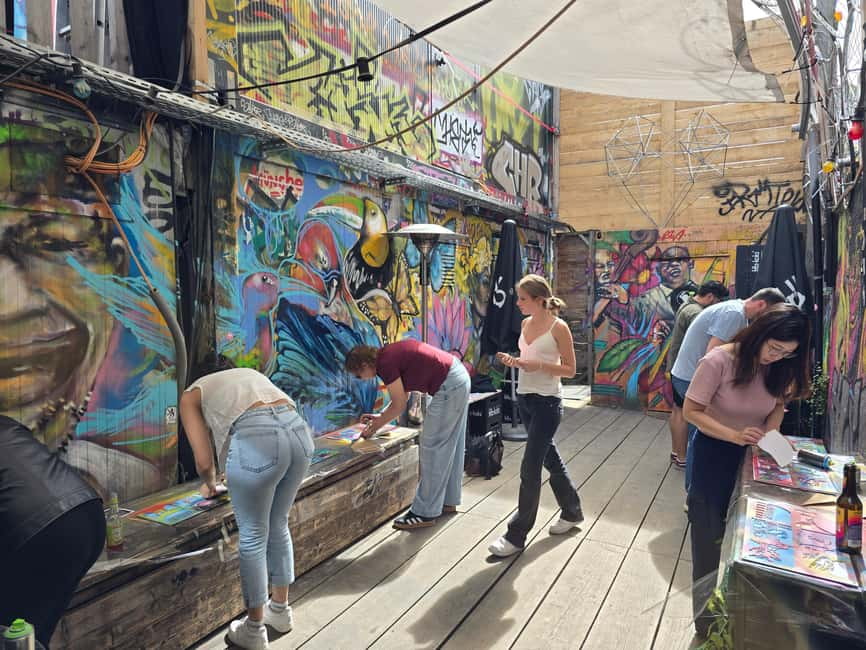
You’ll go into a heated shipping container and use stencils to spray-paint your own Munich postcards. You make six unique postcards, plus you get envelopes so you can mail them or save them as a set.
No experience is required. The stencil method is the cheat code. It gives structure, so even if you’ve never used spray paint before, you can still produce something that looks intentional instead of random.
You’ll also get safety support, including safety glasses, protective gloves, masks, and clothing covers. That matters. It means you can focus on getting the stencil lines crisp, not on figuring out how to stay safe.
If you’re traveling with kids, this is often the highlight. The process feels like craft plus art, and the end result is immediate, physical, and fun to show off.
Your take-home souvenir: why postcard art feels better than a magnet
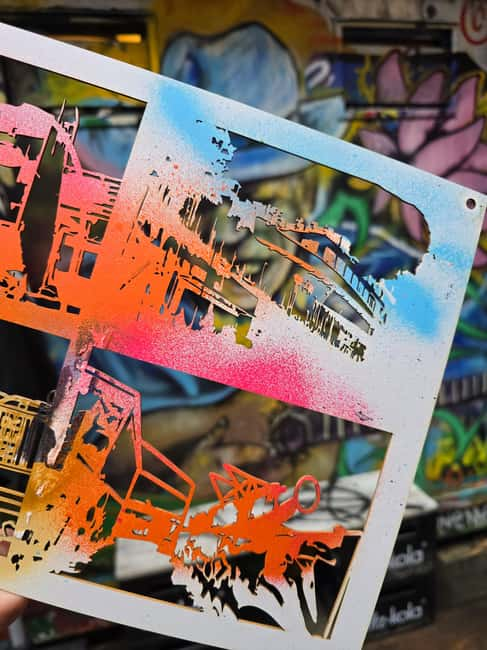
A lot of souvenirs are small, cheap, and forgettable. These postcards are different because they’re personal. You choose the stenciled designs tied to the day’s highlights, and you physically create the version you’ll keep.
You also get a unique postcard as a gift depicting one of the tour highlights you saw. That extra postcard makes the set feel complete, especially if you plan to send a note home.
Then there’s the practical part: you leave with something you can actually use. Mailing a postcard is still a great way to turn a trip into a story, and the paper reminds you of the afternoon’s sights every time you see it.
Price and value: $42 for guided walking plus included materials
At $42 per person, this experience is good value because it bundles three things that usually cost separately.
First, you pay for a guided walking tour with an architect perspective and a certified official city guide. Second, you get the studio supplies included, meaning spray paint, stencils, postcards, envelopes, and safety gear. Third, you leave with your finished art, not just photos.
It’s also a smart price for people who want an activity that feels active but not exhausting. The whole experience runs 150 minutes, so you still get a meaningful creative output without turning your day into a full project.
And since food and drinks are not included, you have control over where you eat. That can be a plus in Munich, where you may want to pair your day with a specific biergarten or snack stop that fits your mood.
What to bring and how to dress for a stencil day
Plan your outfit like you’re doing art class with good posture.
Bring comfortable shoes for the walking portion, and warm clothing because you’ll spend time outside and inside a studio container. Also wear clothes that can get dirty, since spray paint and protective clothing are helpful but not magic.
You’ll receive clothing covers, but it still helps to dress in layers you don’t mind taking home from the day. If you’re picky about fabrics, choose something you’re comfortable wearing again later.
One more quick rule: smoking is not allowed. It’s a standard safety and etiquette issue, especially around a spray-paint setup.
Best fit: who this workshop suits (and who might skip it)
This tour is a strong match if you want Munich beyond the usual postcard angles.
It’s especially good for:
- People who like street art, design, and architecture explanations
- Families who want a shared activity that keeps kids involved
- Travelers who enjoy making souvenirs instead of buying them
It’s less ideal if:
- You need wheelchair access, because it’s not suitable for wheelchair users
- You want a food-focused experience, since food and drinks are not included
- You dislike walking for about 150 minutes total, plus the studio time
Also, if you like the idea of a small group, this is designed for it. Max 12 guests means the day feels guided, not crowded.
Language and guide style: easy for solo travelers too
You can join in English or German, and Spanish is also available. That helps if your group has mixed comfort levels, or if you want extra clarity during the stencil steps and safety instructions.
Philipp’s mix of city guide expertise and architectural thinking shows up in the way he connects each stop. The walking part gives you a mental map of why the south Munich scene works the way it does, and the workshop turns that map into something you can hold.
If you’re traveling solo, the small group format also makes it easier to ask questions and get practical help while you work.
Quick check: where it ends and how the day flows
The tour starts at Piazza Zenetti and finishes at Bahnwärter Thiel. That means your creative neighborhood walk and your art-making session sit on a logical loop, without a lot of backtracking.
Since you’re finishing at the same creative hub you explored on foot, you’ll likely want to take a few minutes after the workshop to look around again. At that point, the containers and street art stop feeling random, and start feeling like a coherent place.
Should you book this Munich stencil workshop?
If you want a creative activity that also teaches you how to read Munich, book it. The big winners are the small-group format, Philipp’s architect guide perspective, and the fact that you leave with six stencil postcards you made yourself.
Skip it only if you cannot handle an art-oriented afternoon with messy clothes risk, or if wheelchair access is required. Also plan a meal before you go since food and drinks are not included.
If that sounds workable, this is a fun way to spend a compact chunk of time in Munich’s south and take home a souvenir with real meaning, not just a photo.
FAQ
Where does the tour meet?
You meet at Piazza Zenetti Square. It is easy to spot by the grey and turquoise street furniture.
How long is the experience?
The duration is 150 minutes.
How much does it cost?
The price is $42 per person.
Is prior art or spray-painting experience needed?
No experience is needed. You’ll create the postcards using stencils with guidance during the workshop.
What materials are included for making postcards?
Spray paint, stencils, envelopes, and 6 postcards are included, along with safety glasses, protective gloves, masks, and clothing covers.
Are food and drinks included?
No. Food and drinks are not included.
How do I get there by public transportation?
A suggested option is subway lines U3 or U6 to Poccistraße station, followed by about a 10-minute walk to Piazza Zenetti.
What languages is the tour offered in?
The tour is offered in German, English, and Spanish.
Is this tour suitable for wheelchair users?
No. It is not suitable for wheelchair users.
What should I wear or bring?
Wear comfortable shoes and warm clothing. Bring clothes that can get dirty, since the activity involves spray painting.
Fresh on the arrivals board for Munich




Workshops, compared.
Self-Guided Family and School Class Scavenger Hunt
Read our review →
Hands-On Brewery Tour & Tasting of 4 Organic Beers
Read our review →
Wine on Canvas – Paint Workshop and Wine Tasting
Read our review →
Berlin Photography Masterclass – Private Photography Lesson
Read our review →
Bavarian Schnitzel Cooking Class in Oberaudorf Farmhouse
Read our review →Browse the lists this tour appears in