
Reviewed · WALKING TOURS
Trier: Private Guided Walking Tour
Roman Trier makes time feel squishy, and this private walk strings UNESCO Roman and medieval stops into one easy route. You’ll see why Trier gets called the second Rome, from the grand stone gates to the everyday streets around it.
I love Porta Nigra, especially the guide’s explanation of why it got its name. I also like the private setup, meaning the guide is with your group only and can adjust on the spot if you want more time on one stop.
One consideration: with just two hours and entrance fees not included, you may need to plan a little extra if you want to go inside everything.
In This Review
- Key highlights you’ll feel right away
- Why Trier works so well on foot
- Meeting by the Black Gate, then walking into Roman Trier
- Porta Nigra: the giant gate and why it’s called that
- House of the Three Magi: when a building becomes a story
- Konstantin-Basilika and Trier’s oldest German cathedral
- Karl Marx’s birthplace: history with a human pulse
- Under the streets: navigating Trier’s subterranean labyrinth
- Moselle vineyards and half-timbered atmosphere
- Price and value for a 2-hour private group walk
- How the guide approach can affect your experience
- Who this tour is best for
- Quick checklist before you go
- Should you book this Trier private guided walking tour?
- FAQ
- Where is the meeting point for the Trier tour?
- How long is the guided walking tour?
- Is this a private tour?
- How much does the tour cost?
- What languages is the tour offered in?
- Are entrance fees included in the price?
- Can the tour be customized?
- What is the cancellation policy?
- Is there an option to reserve and pay later?
- Are there different starting times?
Key highlights you’ll feel right away
- Start right by Porta Nigra’s Black Gate so the whole walk begins in the city’s Roman center.
- Porta Nigra and its name origins, explained in a way that makes the monument feel less distant.
- House of the Three Magi, where a building becomes a story.
- Konstantin-Basilika plus Trier’s oldest German cathedral, a powerful one-two of Roman scale and later faith.
- The subterranean labyrinth, giving Trier’s hidden layers a physical reality.
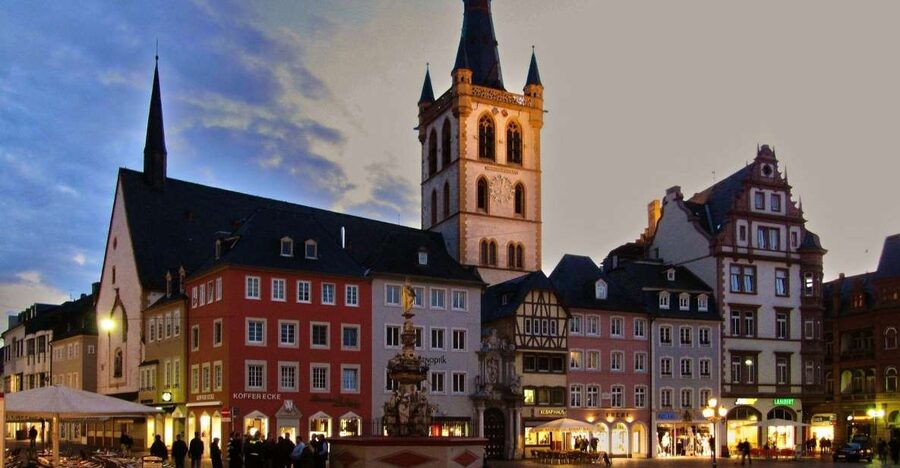
- Moselle vineyards and half-timbered streets, so the tour ends with real atmosphere, not just stones.
Why Trier works so well on foot
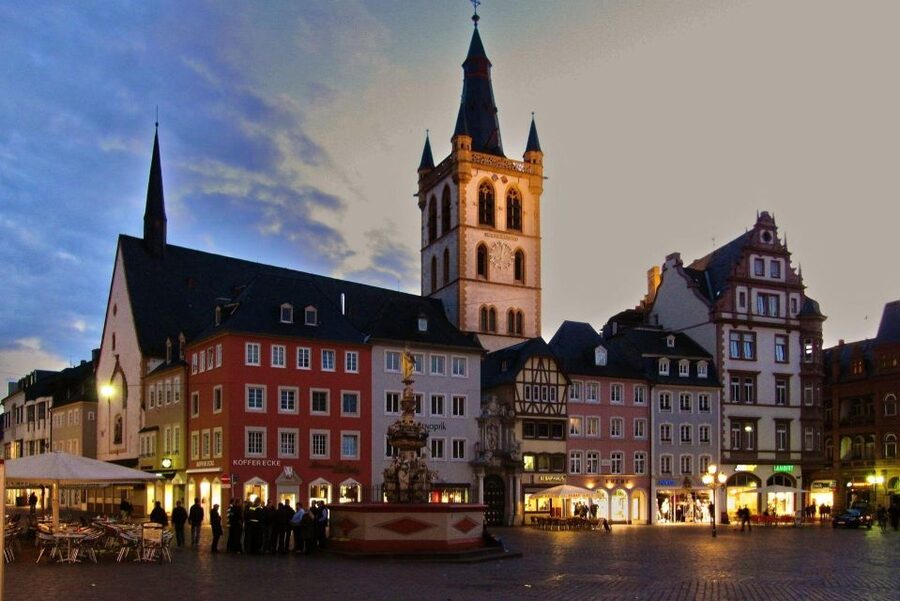
Trier is one of those European cities where history isn’t trapped behind glass. It’s right in the street grid, in the stone walls, in the cathedral silhouette, and in the quiet corners that connect Roman power to everyday life.
This tour is built for that. In about two hours, you bounce between the headline sites and the smaller story beats that make Trier feel like a living place, not a museum room. It’s a smart format if you have limited time but still want the big ideas: UNESCO Roman remains, the Moselle setting, and the birthtown of Karl Marx.
More German cities at walking speed:
- Trier: Guided City Walk with Wine Tasting
★ 4.8 · 979 reviews - Trier: Guided Old Town Highlights and History Walking Tour
★ 4.7 · 687 reviews - Trier: City Walking Tour
★ 4.6 · 118 reviews
Meeting by the Black Gate, then walking into Roman Trier
You meet in front of the Black Gate at Porta-Nigra-Platz, 54290 Trier. That’s a useful start point because it’s close to the Roman core, so your first minutes already feel like you’re in the story.
From there, your guide keeps the route moving in a way that fits a private walking tour. You are not stuck waiting for a bus or juggling a large group. If your group includes English speakers and German speakers, the guide can work in English or German, and it helps you stay connected without missing the meaning.
Porta Nigra: the giant gate and why it’s called that
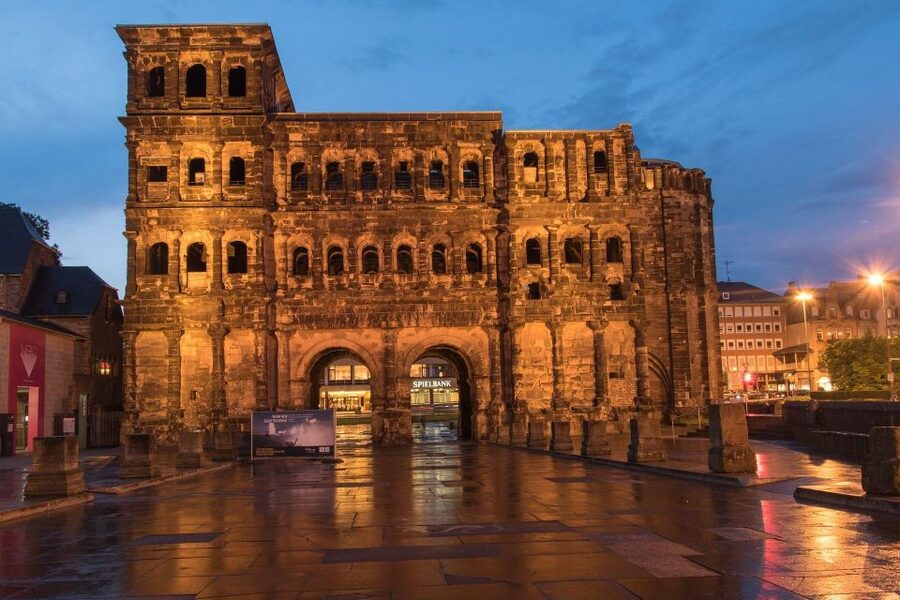
Porta Nigra is the kind of monument you think you know, until someone explains what you’re actually looking at. The big draw here is not just the size, but the human details your guide brings in, like the origin of the name and what it signals about how people understood the site over time.
When you stand in front of it, you get a real sense of Roman confidence. It’s also easy to take photos, and the guide can point out the features that most people overlook when they rush past. Consider this your orientation stop, the moment your brain starts matching the buildings to the stories.
If you’re wondering what to do with your camera, do this: pause for a slow look first, then take the wide shot, then come back for close details. The monument is dramatic from afar, but the textures land harder up close.
House of the Three Magi: when a building becomes a story
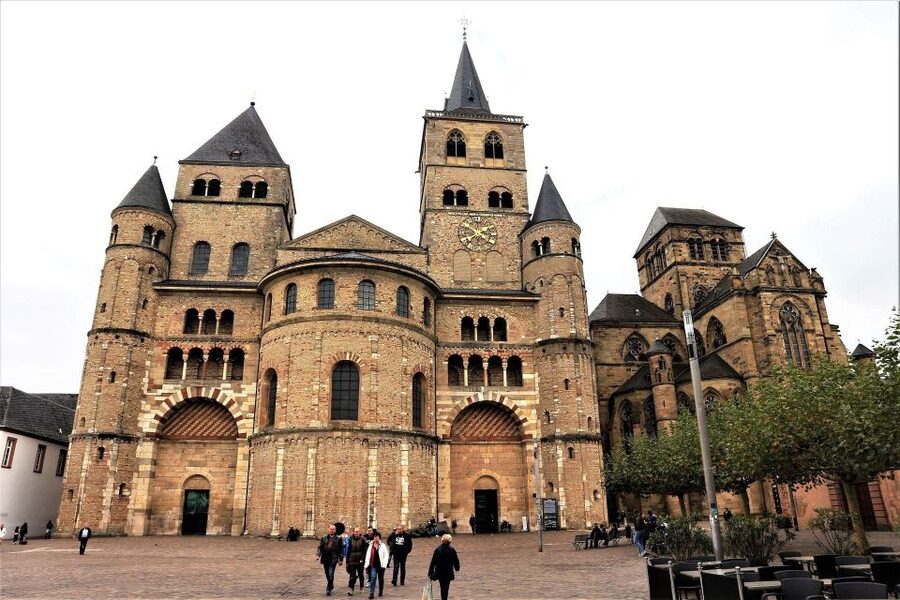
Next is the House of the Three Magi, which fits perfectly into Trier’s mix of Roman legacy and later interpretation. This stop matters because it’s not only about stone size. It’s about meaning, symbols, and the way Trier remembers itself.
Your guide uses the house to connect themes you’ll hear throughout the walk, especially how religious and cultural references traveled through time. You’ll also get a sense that the city’s past isn’t just in famous ruins, it’s in the way people shaped and used spaces.
The main benefit here is pacing of attention. Porta Nigra is the big visual. The House of the Three Magi is the place where the tour switches from wow-factor to comprehension.
Konstantin-Basilika and Trier’s oldest German cathedral
Trier has a habit of stacking big themes in a small area. One of the strongest stretches on this walk is the section built around the Konstantin-Basilika and Trier’s oldest German cathedral.
The tour highlights the Konstantin-Basilika as the world’s largest remaining Roman structure. Even if you’ve seen Roman buildings elsewhere, this framing changes your mental model. You’re not just looking at an old shell, you’re trying to understand how immense this was when it still functioned in daily life.
Then comes the other anchor, the city’s oldest German cathedral. This is where the tour earns its contrast. You move from Roman scale to later spiritual architecture, and the guide helps you read the differences without getting lost in dates.
Practical tip: if you tend to glaze over when tours jump through centuries, tell your guide early. In a private format, you can steer the story toward the angles that click for you, like how the city’s identity shifted rather than just memorizing timelines.
Also holding a platform in Trier
Karl Marx’s birthplace: history with a human pulse
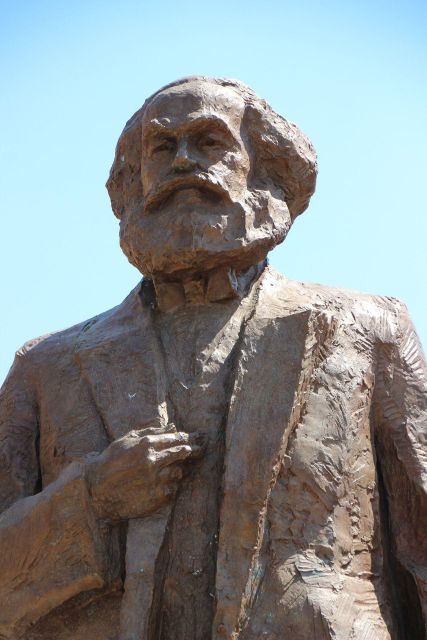
Trier’s Roman sites are the headlines, but the tour also brings in the story of the birthtown of Karl Marx. This is valuable because it turns Trier from a stone-and-shadow stop into a place tied to ideas that shaped modern history.
Instead of treating Marx as a name floating in textbooks, the guide connects him to the city you’re walking through. That changes the feeling of the streets. You start noticing how a city can be both ancient and still relevant to the way people think.
If your group is the type that wants a bit of context, this is usually the stop that makes the tour feel worthwhile beyond photos.
Under the streets: navigating Trier’s subterranean labyrinth
One of the tour’s most distinctive promises is the subterranean labyrinth, where you unravel Trier’s hidden history. Even when you don’t know what’s ahead, the idea alone does something helpful: it tells your brain that Trier has layers you can’t see from the street.
This part of the experience is also a nice contrast to the open-air monuments. It’s where the guide can explain how underground spaces supported daily life, storage, movement, or other functions tied to the city’s long timeline. You’re learning by contrast: light versus shadow, surface versus structure.
Wear shoes you trust for uneven or dim areas. You don’t need hiking boots, but you do want grip and comfort. If you get cold easily, consider a light layer, because underground spaces often feel cooler.
Moselle vineyards and half-timbered atmosphere
Trier isn’t all Roman giants. The tour includes the city’s half-timbered houses and the vineyards along the Moselle, which is where the walking experience starts to feel like a real afternoon, not a history lecture.
This segment matters because it helps you picture Trier as a place people live in now. Vineyards are part of the city’s economy and identity, and the half-timbered architecture gives you a sense of scale and rhythm that contrasts with the heavier Roman stones.
If you enjoy planning a follow-up moment, this is your cue to think about where you might want a drink or a meal after the tour. The walk ends with the city’s atmosphere still in your head, which makes it easier to choose a neighborhood instead of guessing blindly.
Price and value for a 2-hour private group walk
The tour price is $280 per group up to 15, for a 2-hour guided experience. That pricing model is worth paying attention to because your value depends on your group size.
Here are quick math examples:
- If you have 2 people, it’s about $140 per person.
- 5 people brings it to about $56 per person.
- 10 people brings it to about $28 per person.
- Near the top end at 15 people, it drops to about $18.67 per person.
Compared to per-person tours, this can be a great deal if you’re traveling with a small group or friends. The private format also helps: your guide can respond to questions and keep the pacing suited to your interests.
One more value note: entrance fees are not included. That isn’t a dealbreaker, but it means your total cost may go up if you want to enter specific sites during the walk. If your goal is mostly seeing exteriors and learning the story, you can keep it simple and budget accordingly.
How the guide approach can affect your experience
This tour lives or dies by communication. The best version is when the guide keeps the story clear and the pace comfortable, especially through crowded and visually busy stops like Porta Nigra.
You may encounter different styles depending on the guide. Past feedback includes praise for guides who kept the mood up even in bad weather, and another note about tours feeling too quick or unclear. In a private tour, you can usually fix that by asking for one simple adjustment: slower pacing, a repeat of an explanation, or extra time on the stop you care about most.
If you want to make the most of it, show up ready to ask smart questions. Not complicated questions. Just the ones you actually have, like why Porta Nigra’s name stuck, or how the different buildings connect in Trier’s story.
Who this tour is best for
This is a strong match if you:
- Want UNESCO Roman sites without spending all day piecing together bus routes.
- Like walking tours where the guide connects landmarks to meanings, not just facts.
- Are traveling with family or friends and want a private guide rather than a big group.
It also works well for first-timers who want a “starter map” of Trier. You’ll leave with a clearer idea of where the Roman core sits and how the city’s modern identity sits alongside it.
Quick checklist before you go
- Bring a water bottle, especially if the weather is warm.
- Wear comfortable shoes for street walking and the underground segment.
- Plan a bit of extra money for entrance fees if you want to go inside sites.
- If your group has mixed languages, use the tour language you feel most confident discussing questions in.
Should you book this Trier private guided walking tour?
I’d book it if you want a guided route that makes Trier’s biggest hits click in two hours, with a private setup that lets your group set the pace. The combination of Porta Nigra, House of the Three Magi, Roman scale like the Konstantin-Basilika, plus the subterranean labyrinth is a rare mix for a short walk.
Skip it or consider another option if you know you want long time inside multiple buildings, or if you dislike tours that move quickly between stops. In that case, you might prefer a longer tour format or plan a lighter itinerary around key sites.
If you do book, treat it as your history filter. Ask questions, take slow looks at the standout monuments, and then use the remaining time in Trier to linger where the guide points you.
FAQ
Where is the meeting point for the Trier tour?
The meeting point is in front of the Black Gate at Porta-Nigra-Platz, 54290 Trier, Germany.
How long is the guided walking tour?
The tour duration is 2 hours.
Is this a private tour?
Yes, it is a private group tour, and a local professional guide will be with your group only.
How much does the tour cost?
The price is $280 per group, up to 15 people.
What languages is the tour offered in?
The tour is offered in English and German.
Are entrance fees included in the price?
No, entrance fees are not included.
Can the tour be customized?
Yes, there is possible customizing on the tour with your local guide on the spot.
What is the cancellation policy?
Free cancellation is available up to 24 hours in advance for a full refund.
Is there an option to reserve and pay later?
Yes, you can reserve now and pay later.
Are there different starting times?
Starting times can vary, and you should check availability to see the available start times.
Fresh on the arrivals board for Trier

Walking Tours, compared.
Berlin City walk Government District and Places of Democracy
Read our review →
Berlin’s Best: 2 Hour Walking Tour Third Reich and the Cold War
Read our review →
Browse the lists this tour appears in