
Reviewed · WALKING TOURS
Trier: City Walking Tour
Porta Nigra sets the pace for Trier. In just 1.5 hours, you connect Roman walls to medieval politics and baroque city pride, led by an official guide from Trier. I love the steady march past Porta Nigra and the way you get four UNESCO-listed monuments explained along the route.
One consideration: this is a focused highlights walk. You’ll see the major exteriors and key courtyards, but you won’t have time for long indoor stays at every stop.
In This Review
- Key highlights worth your attention
- Where You Start: Tourist Information Right by Porta Nigra
- Porta Nigra: the Roman Gate That Sets the Whole Tone
- Hauptmarkt and the Medieval Power Stories of Trier
- The Bishop vs Empire Story, Plus Why Knights and Monkeys Show Up
- Trier Cathedral, Church of Our Lady, and the UNESCO Courtyard Stops
- Electoral Palace and Baroque Splendor in the Center
- Aula Palatina: Your Final UNESCO Hit and a Natural Ending Point
- Price, Value, and Who This 1.5-Hour Walk Fits Best
- Should You Book the Trier City Walking Tour?
- FAQ
- How long is the Trier City Walking Tour?
- How much does the tour cost?
- Where do I meet the guide?
- What UNESCO monuments will I visit?
- Is this a guided tour?
- What languages are available?
- Where does the tour end?
- Is the tour wheelchair accessible?
- Is free cancellation available?
- Can I reserve without paying right away?
Key highlights worth your attention
- Four UNESCO World Heritage Sites, one walk: You move between the UNESCO buildings that define Trier’s core.
- Porta Nigra as the Roman “first chapter”: The tour opens at Trier’s most famous landmark.
- Street-name storytelling in the Middle Ages: You pass through areas tied to fortified citizens and medieval power struggles.
- St Peter and the bishop-versus-empire theme: The guide turns local belief and conflict into a clear narrative.
- Baroque flavor near the Electoral Palace: Modern grandeur shows up after the older layers.
- English or German with an official live guide: The tour is designed for real understanding, not just landmarks.
Where You Start: Tourist Information Right by Porta Nigra
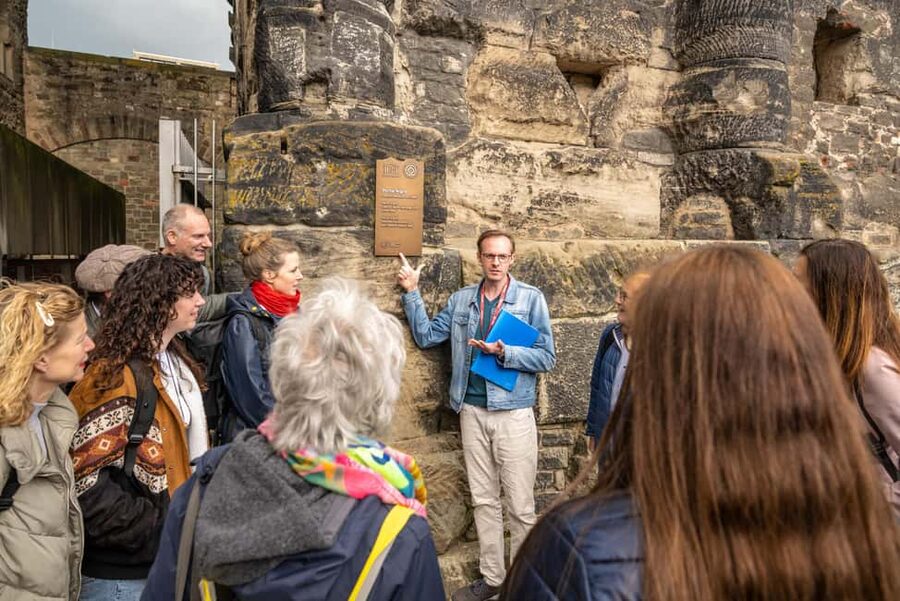
The tour meets in front of the Tourist Information office, right by Porta Nigra. That’s a smart setup because you start with the one monument most people come to Trier for, and you’re not hunting for your group in a busy square.
Since this is an official tour with Trier’s own guide team, you can expect a structured route and a guide who knows what to point out. If you like asking questions, this is a good format because you’ll have a live person guiding the pace for the full 1.5 hours.
Price note: at about $17 per person for a 1.5-hour guided walk with four UNESCO stops, you’re paying mostly for interpretation. In other words, you’re buying context, not just walking.
More German cities at walking speed:
- Trier: Guided City Walk with Wine Tasting
★ 4.8 · 979 reviews - Trier: Guided Old Town Highlights and History Walking Tour
★ 4.7 · 687 reviews - Trier: Private Guided Walking Tour
★ 4.2 · 32 reviews
Porta Nigra: the Roman Gate That Sets the Whole Tone
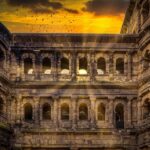
Porta Nigra is the centerpiece at the start, and the guide uses it like a “chapter opener” for everything that comes after. You begin right at the Roman scale, and it quickly makes the rest of Trier easier to understand.
This stop matters because Porta Nigra is not just an old wall. It’s a living landmark you can orient around, and it gives you that first jolt of perspective: Trier wasn’t always the cathedral town people picture, it was also a Roman city with major engineering and authority.
I like that the tour doesn’t treat Porta Nigra as a stand-alone photo stop. You’re shown as part of a bigger story that moves forward in time, which helps you remember what you saw instead of collecting isolated pictures.
Hauptmarkt and the Medieval Power Stories of Trier
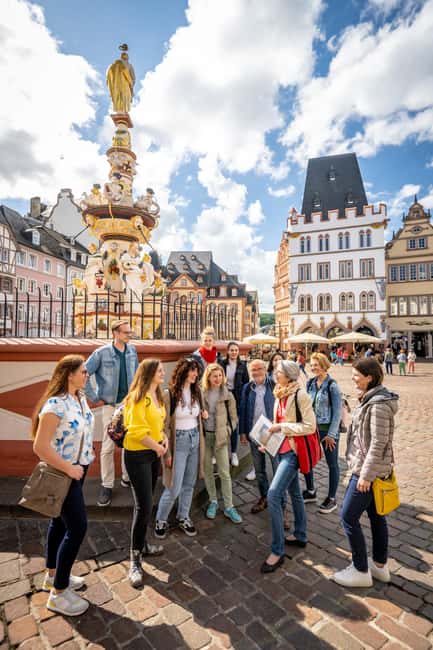
After Porta Nigra, the walk heads toward Hauptmarkt, where you get the Middle Ages layer of Trier’s identity. This is where the tour’s tone shifts. Instead of Roman structure, you hear about how fortified citizens protected their possessions using architectural tricks.
You’ll also pass through areas tied to specific historical names the guide connects to everyday life. Along the way, Trier’s medieval world comes through as something practical, not only dramatic. The city’s design reflects who had power, what people feared, and how communities tried to stay safe.
A standout detail is how the guide explains the long-running struggle between local religious authority and imperial authority. It’s the kind of conflict that sounds abstract until you hear it linked to buildings and streets you can actually stand beside.
The Bishop vs Empire Story, Plus Why Knights and Monkeys Show Up
One of the most memorable parts is the theme of St Peter and the city’s identity tied to patronage and authority. The guide frames it clearly: St Peter is the patron saint of Trier, and that matters because the bishop’s side and the imperial side fought for influence.
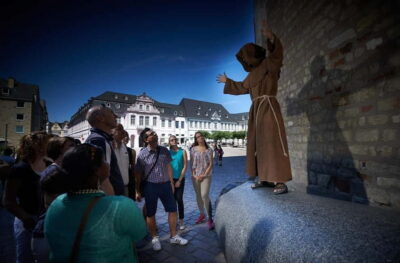
You’ll hear how the fight for imperial immediacy could turn into real spectacle, sometimes told with colorful imagery like knights, monkeys, and church towers. The details may sound playful, but the point is serious. The city’s buildings and positions helped express power, persuasion, and resistance.
If you like history that explains motivation, not just dates, this is where the tour earns its time. It connects the why behind the architecture you’re seeing.
Trier Cathedral, Church of Our Lady, and the UNESCO Courtyard Stops
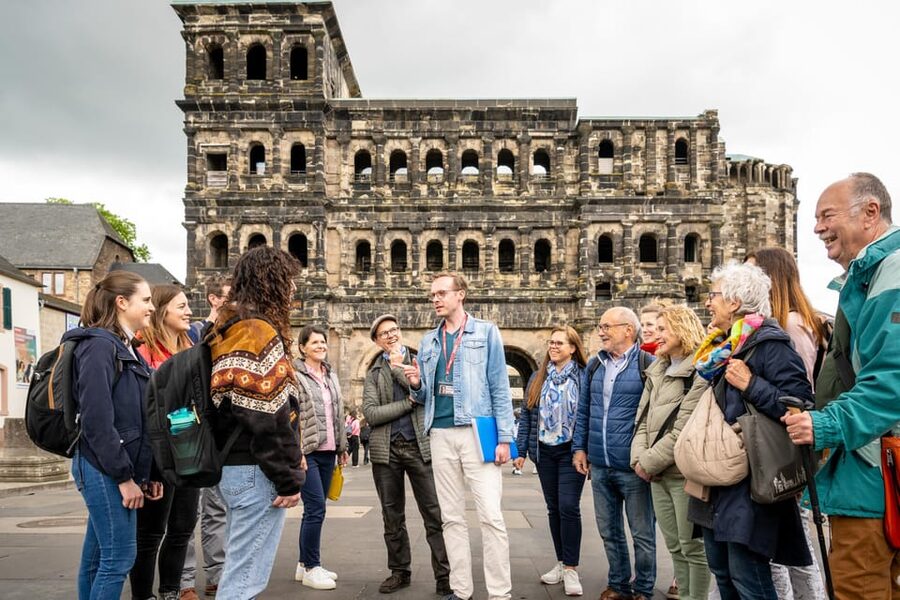
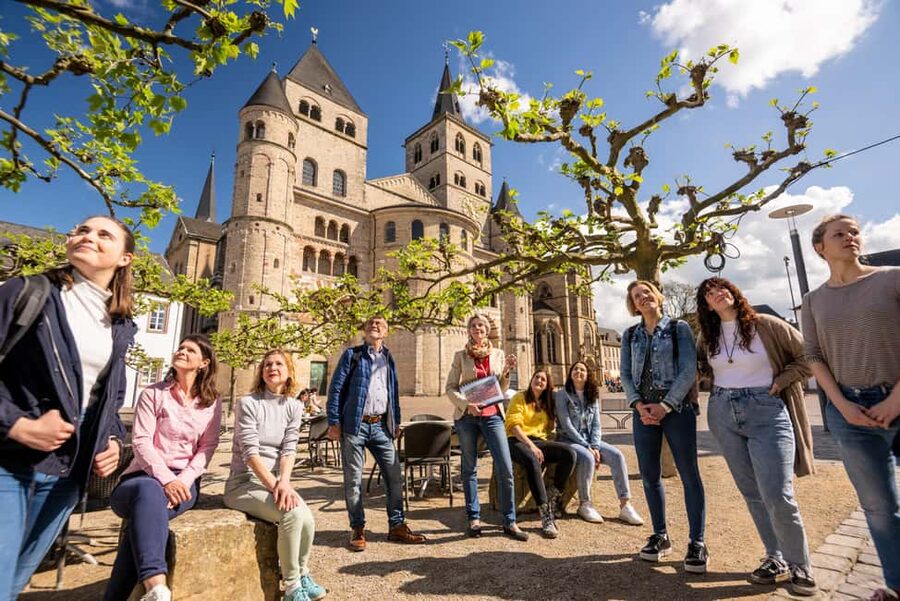
At the cathedral stop and nearby highlights, the tour shifts again. Now the emphasis is on sacred architecture and the spaces that surround it, including the cathedral courtyard and the Church of Our Lady area.
This section is valuable because it helps you read the “in-between” parts of the monuments. Courtyards and approaches are where you feel the planning and the scale, and they often reveal how the site functioned, not only how it looks in a photo.
You’ll also pass the basilica element tied to the UNESCO grouping. Seeing these buildings back-to-back during the same walk is a practical advantage. It stops the UNESCO list from feeling like a checklist and instead turns it into a coherent neighborhood story.
Also holding a platform in Trier
Electoral Palace and Baroque Splendor in the Center
Next comes the Electoral Palace and its baroque presence. The guide frames it as a later layer, a reminder that Trier kept evolving long after the Romans.
This is where the tour adds variety. If your day is mostly Roman and medieval sites, the Electoral Palace brings in a different kind of energy: grandeur shaped for governance, status, and public presence.
I like this pacing because it prevents “history fatigue.” You’re not stuck staring at one era for 90 minutes straight. You’re moving through time, and each stop helps you calibrate what you’re looking at.
Aula Palatina: Your Final UNESCO Hit and a Natural Ending Point
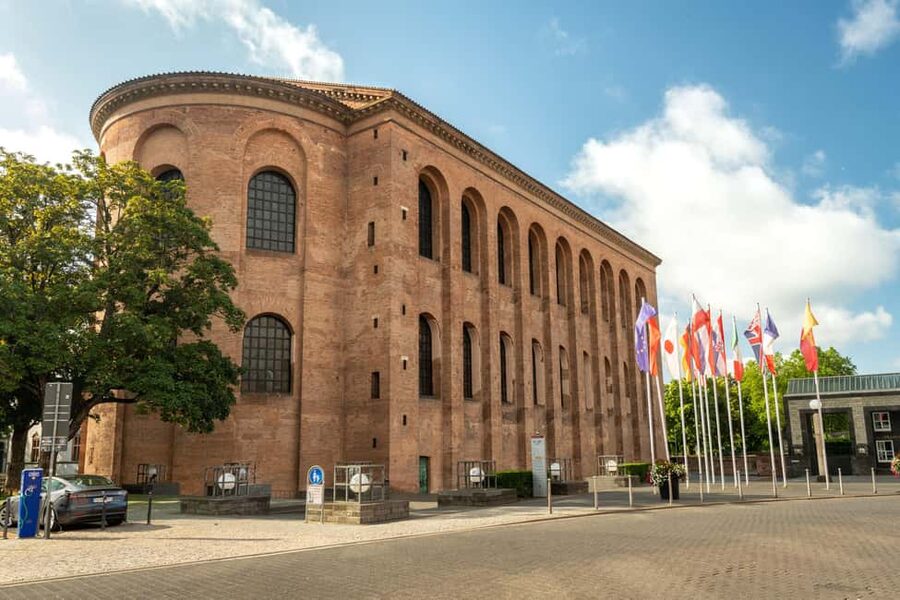
The walk finishes with the Aula Palatina, the palatial hall that rounds out the UNESCO monuments you’re visiting. This stop works well as an ending because it lands in the Roman imperial story the tour started with, even though you’ve already passed through medieval and baroque chapters.
You’ll get to see it in context of the whole route, which makes the building feel less like a random “last stop” and more like the place where the story snaps back toward its roots.
The tour also ends with drop-off near the Kurfürstliches Palais and the Palastgarten. That’s handy if you want to keep walking in the same general area rather than backtracking through the city center.
Price, Value, and Who This 1.5-Hour Walk Fits Best
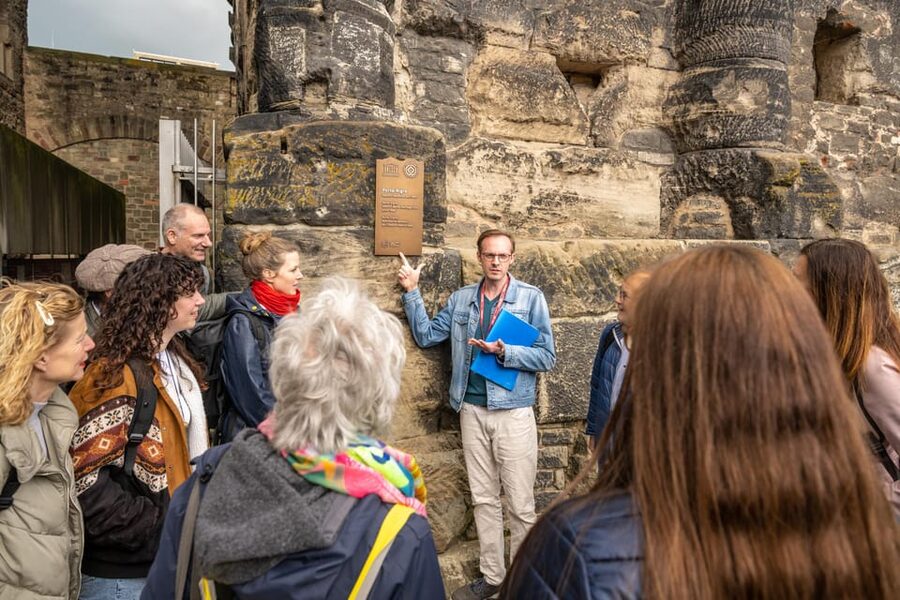
For $17 per person, you’re getting a live guide, and you’re visiting four UNESCO monuments in about 1.5 hours. The value isn’t only that you save time compared to planning. It’s that you get the guide’s explanations for what you’re seeing, including the big themes that connect separate sites.
This is ideal if:
- you’re short on time and want the core Trier classics in one go
- you like a guided narrative, especially for medieval politics and local patronage
- you want an efficient way to understand why Trier’s UNESCO buildings matter
- you need a wheelchair-accessible option (the tour is listed as wheelchair accessible)
If you want a slow, museum-style day with lots of indoor time, you might need to pair this with independent exploring afterward. But as an orientation and story-driven introduction, this tour hits the sweet spot.
Should You Book the Trier City Walking Tour?
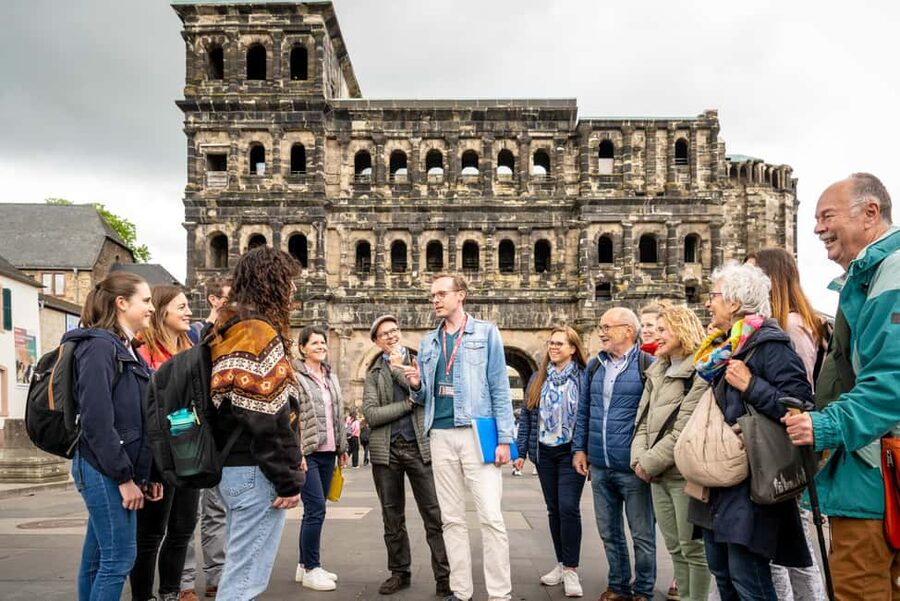
I’d book it if you want your Trier day to feel guided, clear, and well paced. Starting at Porta Nigra and moving through four UNESCO monuments with an official guide is a strong combo, especially if this is your first time in Trier.
Skip it only if you already know Trier well and you mainly want deep time inside buildings. This walk is built for seeing the key sights and understanding the connections, not for lingering for hours in each interior.
FAQ
How long is the Trier City Walking Tour?
The tour lasts about 1.5 hours.
How much does the tour cost?
It is priced at $17 per person.
Where do I meet the guide?
Meet in front of the Tourist Information office, right at Porta Nigra.
What UNESCO monuments will I visit?
You visit four UNESCO monuments as part of the city center walking route.
Is this a guided tour?
Yes. It includes a local live guide.
What languages are available?
The live guide offers German and English.
Where does the tour end?
You are dropped off near Kurfürstliches Palais and the Palastgarten.
Is the tour wheelchair accessible?
Yes, the tour is listed as wheelchair accessible.
Is free cancellation available?
Yes, you can cancel up to 24 hours in advance for a full refund.
Can I reserve without paying right away?
Yes, there is a reserve now, pay later option listed.
Fresh on the arrivals board for Trier

Walking Tours, compared.
Berlin City walk Government District and Places of Democracy
Read our review →
Berlin’s Best: 2 Hour Walking Tour Third Reich and the Cold War
Read our review →
Browse the lists this tour appears in