
Reviewed · MOSELLE RIVER CRUISES
Trier: Mosel wine meets history – wine tour with cellar visit
Trier’s wine history is all around you. In a compact, easy circular walk, you’ll visit key old-town spots while tasting Mosel wines tied to the city’s development. I like how it mixes Trier’s landmarks with real wine breaks, not just a lecture.
What I especially liked is the structure: you get a Porta Nigra sparkling Elbling start, then a Moselle Riesling tasting in the main market square, and the pacing stays friendly. The finale at Palais Kesselstatt also feels like the point of the trip, with wine plus atmosphere in centuries-old walls.
One possible drawback: it’s a walking tour in historic streets, so if you sit a bit off from the guide, background noise can make it harder to catch every detail. That said, it still feels like a well-told route.
In This Review
- Key moments that make this tour work
- Trier plus Mosel wine, in just two hours
- Start at Tourist Information, then right into the action at Porta Nigra
- Hauptmarkt Riesling tasting, right where Trier slows down
- Domfreihof and the old-town path between tastings
- Palais Kesselstatt cellar visit: where the tour earns its keep
- The three wines and what they teach you
- Price and value: what $34 gets you here
- Who this tour suits best (and who should rethink)
- Small planning tips so you enjoy every stop
- Should you book this Trier Mosel wine tour?
- FAQ
- Where does the tour start?
- How long is the wine tour?
- How much does the tour cost?
- What language is the tour guide?
- How many wine tastings are included?
- Which wines are included?
- Where do you visit the historic wine cellar?
- Is the tour suitable for children?
- Can I cancel and get a refund?
- Is there a pay-later option?
Key moments that make this tour work
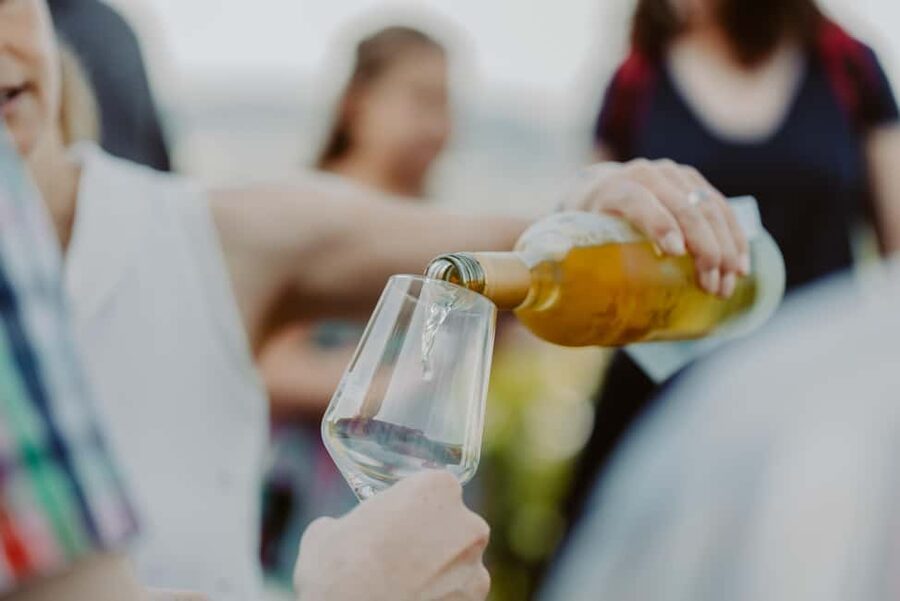
- Porta Nigra opener with Elbling: start with a glass of sparkling Elbling right at Trier’s famous gate
- Hauptmarkt Riesling: a Moselle Riesling tasting in the main square, with history woven into the walk
- Three guided tastings, not three random stops: each pour is linked to Trier and the Mosel wine story
- Domfreihof and old-town alleys: short walking segments with context so it does not feel like moving for the sake of moving
- Palais Kesselstatt cellar visit: the tasting finale happens in a historic wine cellar setting
- Finish at Weinstube Kesselstatt: you end where the wine experience feels natural, not rushed
Trier plus Mosel wine, in just two hours
Trier is Germany’s oldest city, and you can feel that age when you walk its center. This tour turns that feeling into something drinkable and memorable, using Mosel wine as the thread that connects each stop.
I like the time frame. At two hours, you get the basics of Trier’s old-town highlights and three tastings, without committing to a whole afternoon. It’s a smart pick if you’re doing other things in the area the same day, or if you want a “start-of-trip” orientation that still ends with a glass of something good.
You’ll be in a small, guided loop that stays focused on the city center. You’re also explicitly in wine-territory. Trier is one of the most important wine cities in Germany, and the tour treats that as more than marketing. You learn why wine mattered for how the city developed, then you taste it in spots that make the story feel grounded.
More slow bends of the Moselle:
- Trier, Mosel: Wine tour with a boat ride
★ 4.0 · 60 reviews - For the love of Riesling – Mosel Wine tour
★ 5.0 · 11 reviews - Cochem: Panoramic Cruise on the Moselle River
★ 4.4 · 1,004 reviews
Start at Tourist Information, then right into the action at Porta Nigra
The experience begins at the Trier Tourismus und Marketing GmbH Tourist Information area, right in front of the entrance. The guide is there to pull the group together and get you moving, and you do not waste time searching for the first landmark.
From the start, the tour builds confidence fast: you begin at Porta Nigra, Trier’s iconic ancient gate. The guide kicks things off with a glass of sparkling Elbling. This is a great way to start because it instantly sets the mood. The wine is light and lively, and it pairs nicely with a first burst of sightseeing where everything is visual and atmospheric.
Practically, this first stop also helps you understand the pacing. You’re not expected to keep up at a sprint. It’s more like a guided stroll with a few anchor points, then wine breaks that are integrated into the route.
Hauptmarkt Riesling tasting, right where Trier slows down
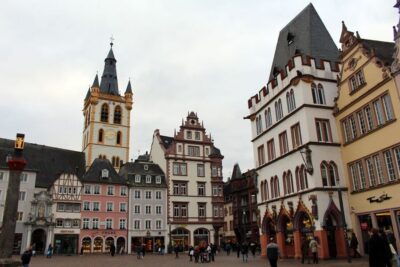
Next you move into the center around the Hauptmarkt (main market square). This is one of those places where Trier’s everyday life meets its old bones, and it works well as a tasting location because you get a sense of place while you drink.
Here you’ll have a glass of Moselle Riesling. The tour frames this wine through Trier’s relationship to viticulture, so the tasting doesn’t feel generic. Riesling is often described in broad terms, but the point here is more direct: you taste it, then you connect it to why Trier matters in the Mosel wine world.
The Riesling is also described as delicately tart. If you like wines that keep their edge and do not feel heavy, that detail matters. It can also be a useful reference point for the other two pours later in the walk.
Domfreihof and the old-town path between tastings
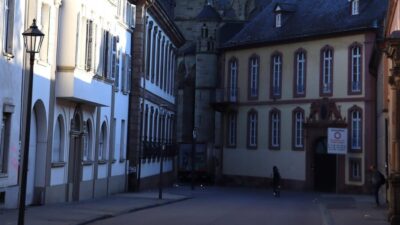
After the main market square, the route continues through the center with a stop at Domfreihof. This part is about linking the wine story to the city’s fabric, not just ticking off buildings.
Walking between tastings is the heart of the experience. I like this format because it helps you remember the wine you just drank. You get a few minutes of strolling, you hear the guide’s explanations, then another tasting gives you a reset. It is not a constant back-and-forth, and it does not turn into a long march.
That said, here is the one realism to keep in mind. Historic streets can get noisy. If you have trouble hearing in general, plan to position yourself where you can best see and listen to the guide. One thing that would help is a microphone, because the route has enough background sound to make every word less clear when you are not close.
Palais Kesselstatt cellar visit: where the tour earns its keep
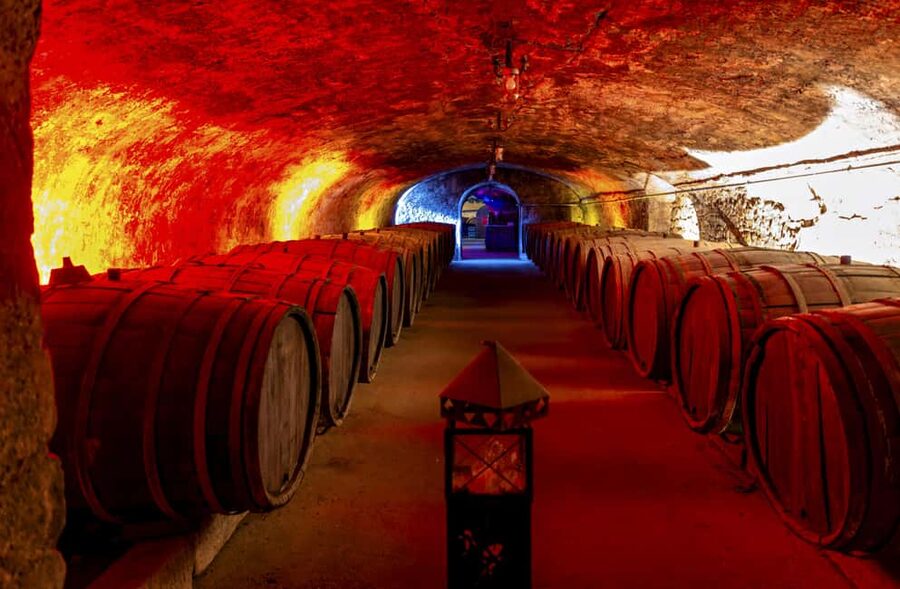
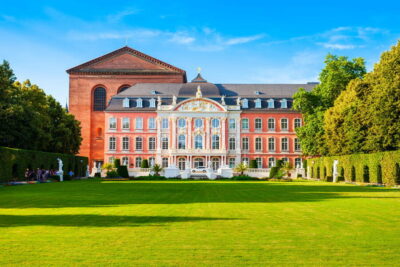
The highlight is the visit to the historic wine cellar of Palais Kesselstatt, with the tasting serving as the finale. The setting matters. You’re in a cellar environment framed by centuries-old walls, and that kind of atmosphere changes how wine feels. It’s not just flavor in a glass, it’s flavor in context.
In the cellar, you’ll enjoy a glass of regional sparkling wine. This works as a satisfying ending because you start with sparkling Elbling at Porta Nigra, then you get the Riesling in the open city space, and you finish with a sparkling wine in a place built for storing and aging. The tour uses that structure to let you feel the difference between location and wine style.
Between wine breaks, you get time for history, anecdotes, and atmosphere. That balance is important. If your goal is only wine, you could go to a tasting room on your own. If your goal is wine plus Trier’s story, the cellar visit is the moment that makes the tour feel more than a simple stop-and-sip.
There is also a practical takeaway: you might not see every nook and passageway in the cellar setting. The visit can feel like a focused walkthrough of the key accessible areas rather than an entire behind-the-scenes exploration. So if you love long, deep cellar tours, set your expectation for a short, guided cellar experience that serves the tasting and story.
Also holding a platform in Trier
The three wines and what they teach you
Even if you are not a serious wine person, three tastings is enough to build a clear mental map. You go from sparkling Elbling to Moselle Riesling, then to sparkling wine again in the Palais Kesselstatt cellar.
Elbling is a great starter because it is often seen as a local signature grape in the Mosel region. Starting with it at Porta Nigra gives you a fun “beginner-friendly” tone, bright and easy to drink while you look at a massive landmark.
Riesling then shifts the flavor focus. You taste it in the Hauptmarkt, where the tour frames it through Trier’s winemaking significance. If you’re new to Mosel wine, this is a smart moment to notice how Riesling can feel crisp and lightly tart rather than sweet.
Finally, the sparkling wine in the cellar closes the loop. You are tasting something connected to the region while also learning through the setting. This is the part that helps the whole tour click, because it connects flavor to time and place, not just to a name on a label.
Price and value: what $34 gets you here
At about $34 per person for roughly two hours, this is not a bargain-tasting deal where you get one small pour and a quick nod. You get a pro guide, a walking city tour, and three specific glasses tied to Trier’s wine story, including a cellar visit at Palais Kesselstatt.
For me, the value is in what is included. You’re not just paying for wine. You’re paying for someone to connect Trier’s old-town spaces to the Mosel wine world, then deliver that connection at three real stops. That kind of guided flow is hard to reproduce on your own unless you already know the route and have tasting access lined up.
If you like structured experiences, this price starts to make sense quickly. The tour is long enough to feel like an outing, short enough to fit into a busy itinerary, and focused enough that you leave with both knowledge and a buzz of pleasure.
Who this tour suits best (and who should rethink)
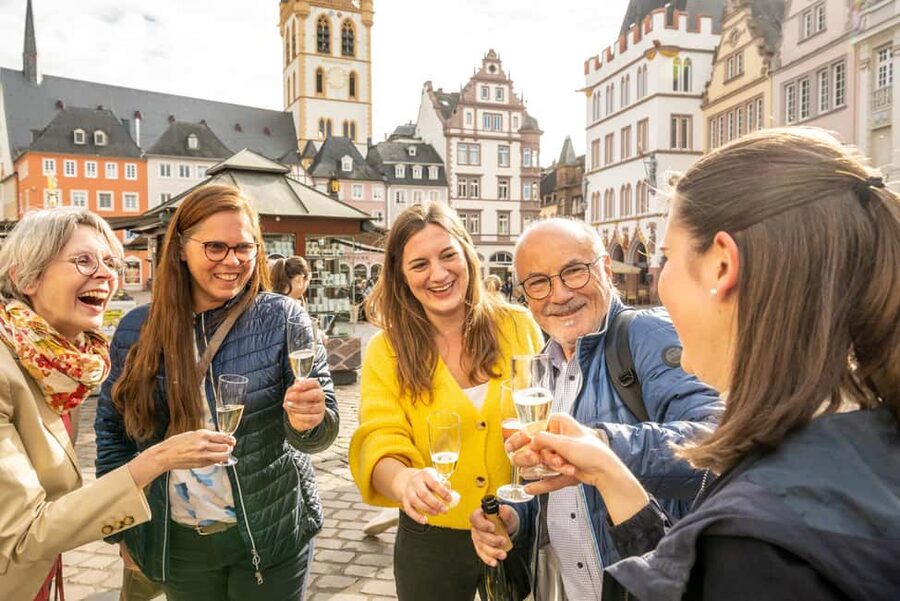
This tour fits best if you want a guided walk in Trier’s center and you enjoy tasting while you learn. You will likely appreciate the mix of landmark time and wine breaks, especially if you are staying in or near the city and want a compact, high-return activity.
It’s also a good match if you are the type who likes questions and wants your guide to answer them. One of the comments I found most encouraging is that the guide can handle questions during the tour, which makes the experience feel more like a conversation than a scripted slideshow.
It is not suitable for children under 16, and the guide language is German, so it’s best if you can follow basic German (or at least follow along with the structure even if some details pass you by).
If you are traveling with someone who hates walking, this might still work because the pace is not described as a long grind. But if you want a purely seated tasting with minimal walking, you may find this format less satisfying.
Small planning tips so you enjoy every stop
Wear comfortable shoes. You are walking through Trier’s center on a loop that includes multiple guided segments. Even when the pace is relaxed, cobblestones and old streets add up.
Arrive with a clear expectation: you will receive three glasses, including a couple of sparkling tastings. That is part of the experience, so plan your day accordingly if you need to stay sharp for driving or a late appointment.
And if you are sensitive to sound, position yourself so you can hear the guide. The route has enough background noise that you will enjoy the history more when you can actually catch the details.
Should you book this Trier Mosel wine tour?
If you want Trier old town plus wine tastings in a tight two-hour window, I think this is a strong choice. The structure is practical, the stops are meaningful, and the Palais Kesselstatt cellar visit is the kind of ending that makes the whole walk feel worthwhile.
Book it if:
- You like short guided walks that still feel like an experience
- You want three Mosel-focused tastings, not just one
- You’re curious about why Trier became a major wine city
- You enjoy Germany’s wine culture when it is explained in plain, story-based terms
Consider skipping if:
- You only want the biggest, deepest cellar tour possible
- You need a fully English guided experience, since the live guide is German
- You prefer tastings with minimal walking and maximal time in one place
If your goal is to get your bearings in Trier while tasting the Mosel like a local, this one does the job efficiently and with a lot of charm.
FAQ
Where does the tour start?
It starts at the Trier Tourismus und Marketing GmbH Tourist Information area, directly in front of the Tourist Information entrance.
How long is the wine tour?
The duration is 2 hours.
How much does the tour cost?
The price is $34 per person.
What language is the tour guide?
The live tour guide is German.
How many wine tastings are included?
You’ll have three wine tastings during the walk.
Which wines are included?
You get a glass of sparkling Elbling at Porta Nigra, a glass of Moselle Riesling at the main market square, and a glass of sparkling wine in the Palais Kesselstatt wine cellar.
Where do you visit the historic wine cellar?
You visit the historic wine cellar of Palais Kesselstatt, and the tour finishes at Weinstube Kesselstatt.
Is the tour suitable for children?
No. Children under 16 are not suitable for this experience.
Can I cancel and get a refund?
Yes, you can cancel up to 24 hours in advance for a full refund.
Is there a pay-later option?
Yes. You can reserve now and pay later, keeping your plans flexible by booking your spot and paying nothing today.
Centuries Per Block
- Trier: Guided Old Town Highlights and History Walking Tour
★ 4.7 · 687 reviews - Leipzig: City History Canal Sightseeing Tour on a Motorboat
★ 4.7 · 7,671 reviews - Berlin: Natural History Museum Entrance Ticket
★ 4.6 · 3,382 reviews - Leipzig: 1.5-Hour Historical Walking Tour in German
★ 4.7 · 2,217 reviews
Fresh on the arrivals board for Trier
Moselle River Cruises, compared.

Reil, Mosel: Guided organic wine tasting and cellar tour
Read our review →
KD Panoramic Evening Cruise on the Moselle River
Read our review →
Cochem, Moselle: Boat – Beilstein, meal, wine and liqueur tasting
Read our review →
Kröv, Mosel: Covered wagon ride through the vineyards with wine tasting
Read our review →Browse the lists this tour appears in