
Reviewed · WALKING TOURS
Trier – Private Guided Walking Tour
Trier reads like a Roman time machine. This private guided walk through Trier puts you face-to-face with major landmarks, starting with Porta Nigra and ending at the Imperial Baths area, while your guide ties everything into one clear story of the city. I especially like how the pacing lets you see big monuments up close without feeling stuck on a bus, and I also like the stop inside the Basilica of Constantine, where the preserved Roman walls help you understand why this place matters.
You should know one tradeoff. The tour is about 2 hours, so it moves steadily. If your idea of sightseeing is long sits, slow photo sessions, or lots of detours, this format may feel a bit brisk.
That said, it is a private experience for up to 15 people, offered in English with a mobile ticket, so it is an easy way to get your bearings fast in Trier while keeping the group small enough for real questions. Guides like Andrea are the reason people come away smiling and saying the time flew.
In This Review
- Key Things That Make This Trier Walking Tour Worth It
- How 2 Hours on Foot Gives You Trier’s Roman Center
- Porta-Nigra-Platz to Porta Nigra: UNESCO’s Largest City Gate Feel
- Frankenturm, the Market Cross, and a Medieval Trading Hub on Your Route
- St. Gangolf Kirche and Kornmarkt: Early Faith With Local Specifics
- Trier Saint Peter’s Cathedral: Germany’s Oldest Church Claim Meets Roman Foundations
- Constantine’s Throne Room Inside the Basilica of Constantine
- Market Cross, Saint George’s Fountain, and the Electoral Palace Wrap-Up
- Guide Andrea and What Private Really Changes
- Price and Value for a Group of Up to 15
- Should You Book This Trier Private Guided Walking Tour?
- FAQ
- How long is the Trier private guided walking tour?
- What language is the tour offered in?
- How big is the group for a private tour?
- Where do we start and where does the tour end?
- Do I need admission tickets for the main stops?
- What is included in the price?
- What happens if I cancel?
Key Things That Make This Trier Walking Tour Worth It
- Private group up to 15: your guide can shape the pace for your group, not a crowd.
- Porta Nigra and the Constantinian core: you see both the iconic gate and the church tied to Constantine’s era.
- Short, focused stops: each site gets enough time for context, then you move on.
- Free admission at the listed sights: the main stops are marked as admission ticket free.
- Andrea’s style: the tour is praised for being engaging and for bringing in details that stick.
- Ends at the Imperial Baths area: you wrap up in the historic Roman bathing complex zone.
How 2 Hours on Foot Gives You Trier’s Roman Center
Trier is one of those rare German cities where you can walk through layers of the past without needing a car. This tour is built for that. The whole experience runs about 2 hours, and the route is designed to keep you moving through the city’s biggest anchors, rather than sending you on a long scavenger hunt.
What you get is practical, not theoretical. Instead of just hearing that Trier had Roman importance, you stand in front of the structures themselves: the massive Porta Nigra, the churches that connect back to early Christianity, and the Constantinian basilica where Roman architectural elements are still visible in the church interior. That kind of “see it, then understand it” format is why this works so well for families and even groups with teens, since you are not stuck in one place for too long.
Also, the tour is private, not a fixed group schedule with limited interaction. That matters if you want answers to specific questions, like what makes a city gate so monumental, or why the basilica interior has been kept intact through major repairs.
More German cities at walking speed:
- Trier: Guided City Walk with Wine Tasting
★ 4.8 · 979 reviews - Trier: Guided Old Town Highlights and History Walking Tour
★ 4.7 · 687 reviews - Trier: City Walking Tour
★ 4.6 · 118 reviews
Porta-Nigra-Platz to Porta Nigra: UNESCO’s Largest City Gate Feel
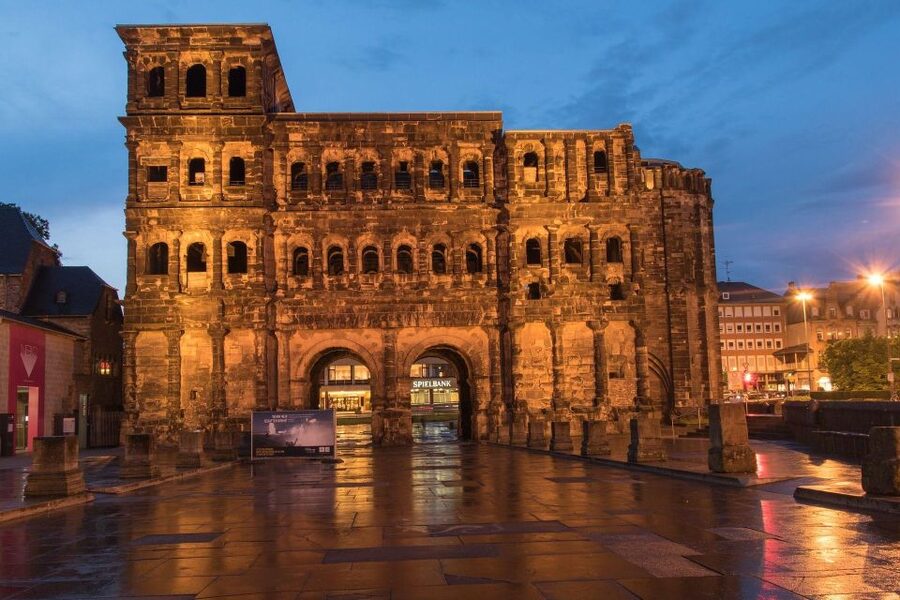
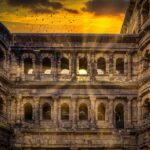
The tour starts at Porta-Nigra-Platz, and it is a strong opening. You head straight to Porta Nigra, the UNESCO World Heritage site and the largest city gate from the ancient world. Your guide’s explanation focuses on what you are actually looking at: it was built with grey sand after 170 AD. That timing and material detail helps you see the gate as a constructed project, not just an old wall.
You also pass Dreikonigenhaus, a unique house in Trier that is famous for its standout look. Even if architecture is not your main interest, this is the kind of side stop that keeps the walk lively because it breaks up the Roman-only vibe with something distinctive closer to everyday city life.
Then you get the fortified residential tower known as Frankenturm. It is built in the 11th century, which is a useful reminder that Trier was not frozen in Roman time. It grew, changed, and repurposed. Seeing the jump from the ancient gate to a later defensive tower is one of the most convincing ways to understand how cities evolve.
This stop cluster also works well for photos because you are walking and turning rather than standing in a single spot for long stretches. The main drawback is simple: you will cover ground quickly. If you want to linger at every facade, you may need to keep your pace up until the next planned stop.
Frankenturm, the Market Cross, and a Medieval Trading Hub on Your Route
From the Porta Nigra area, you move toward the Market Cross on the main market. This is where the tour shifts from the ancient monumental scale to the human scale of Trier’s historic civic life.
The Market Cross sits in a market square that was famous for its medieval trading hub. Your guide connects the architecture and layout to how commerce worked, and you get a practical sense of where people would have moved through the city. Once you are standing there, it is easier to imagine the flow of everyday life across centuries.
This is also a good place to do a quick mental reset. After the Roman gate and the fortified tower, the market square brings you back to the city’s pulse. And because the tour continues on foot, you can naturally blend sightseeing with a coffee stop on your own afterward, depending on your schedule.
One consideration: because it is a walking tour with multiple short visits, you may not spend extra time browsing shops. The goal here is context and orientation, not shopping time. Still, having the market in the route is a plus if you want a convenient place to pause on your own later.
St. Gangolf Kirche and Kornmarkt: Early Faith With Local Specifics
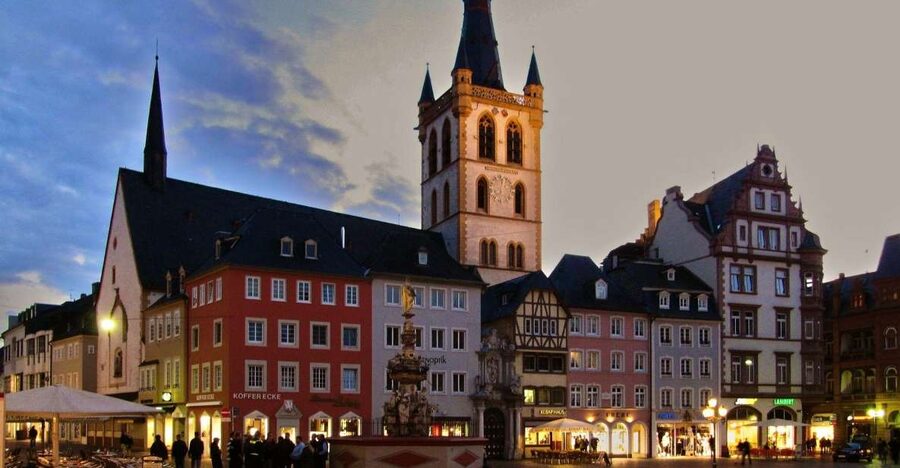
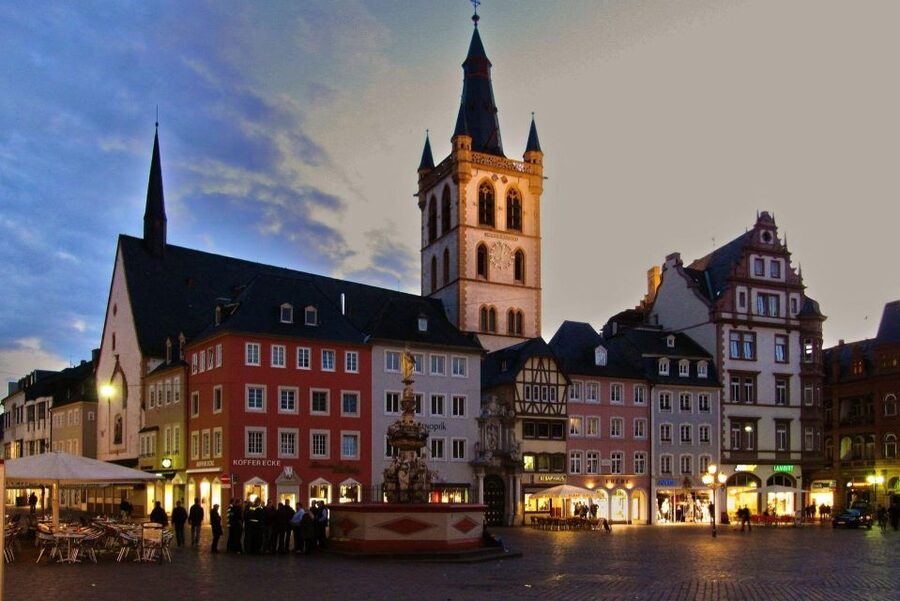
Next up is St. Gangolf Kirche, dedicated to St. Gangulphus. This church is described as the second-oldest church in Trier, and your guide gives you the sort of detail that makes the building feel grounded in real local tradition, not just generic “old church” facts.
You also walk by Saint George’s Fountain in the Kornmarkt area, which was built between 1750 and 1751 by the same builder of the Electoral Palais. That builder connection is exactly the kind of link that makes a tour feel coordinated. You are not just seeing one object at a time, you are learning that parts of the city share designers and eras.
Stop time is about 15 minutes here, so you will not be going deep into side chapels, but you should come away with a sense of what makes this church important in Trier’s long timeline. The drawback to keep in mind is that churches can vary in how busy they are and how long you can comfortably linger. In a 2-hour tour format, your best move is to focus on what your guide is pointing out.
Trier Saint Peter’s Cathedral: Germany’s Oldest Church Claim Meets Roman Foundations
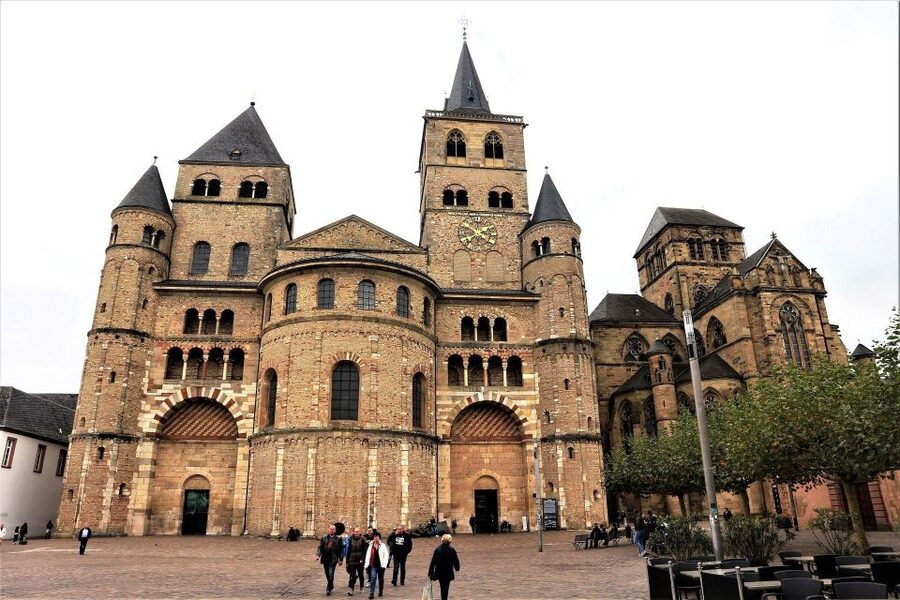
Then you visit Trier Saint Peter’s Cathedral, described as the oldest church in Germany. The standout detail is the scale, plus the origin story: its foundation was built with Roman brick in the early 4th century.
That Roman brick fact is more than trivia. It tells you that the early Christian story in Trier did not start from scratch. It grew out of existing building materials and Roman-era construction methods. Standing there, you get a clearer understanding of how Christianity spread and how new religious spaces were shaped by the older Roman world around them.
Stop time is about 15 minutes, so again, it is a “get the essentials” visit. If you want to linger for art or inscriptions, plan to come back later on your own. If you are short on time, this stop works because it gives you the key historical anchors without turning your day into a marathon.
Also holding a platform in Trier
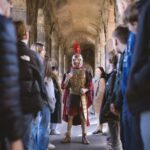
Constantine’s Throne Room Inside the Basilica of Constantine
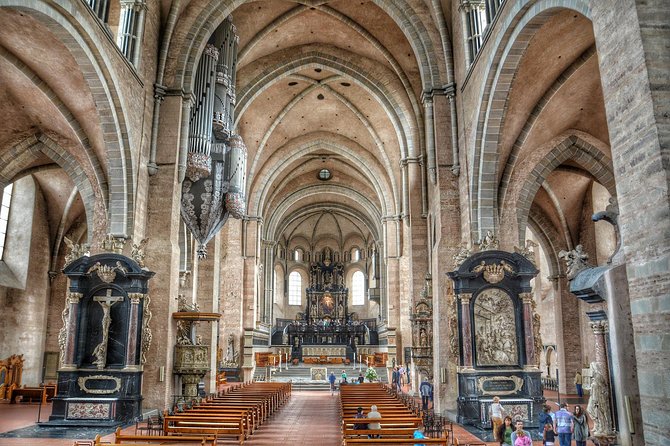
This is one of the big reasons people book this tour. You visit the Konstantin-Basilika, also associated with the Evangelische Kirche zum Erlöser. Built around 310 AD, it carries Roman-era weight from the start.
Here is what makes it especially compelling: the inner walls have been kept intact without changes, even after repairs due to World War II. That means you are not just touring an old church, you are seeing evidence of survival. It is the kind of detail that makes the building feel emotionally and historically real.
The highlight is the Throne Room of Constantine the Great and subsequent Roman emperors from the 4th century. The tour frames the room’s Roman structures, and notes that today it is used as a Protestant church. In other words, you are seeing how power and architecture shifted over time, but the physical space remains.
Admission is marked free on the tour, so you can focus on the experience rather than paying extra. The only “consideration” is mental: this stop can make other sights feel simpler by comparison, because it is so conceptually rich. If you tend to overthink buildings, you might want to let the information settle as you walk to the next part of the route.
Market Cross, Saint George’s Fountain, and the Electoral Palace Wrap-Up
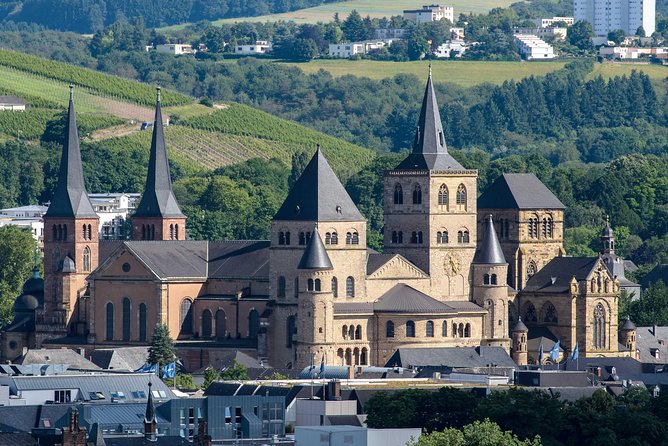
After the Constantinian stop, you return to the Market Cross on the main market area for about 10 minutes. This is less about repeating and more about reinforcing. By the time you reach it again, you have already learned what Roman and early Christian Trier looked like, so the medieval market context lands differently. It is like seeing a photo twice, once for faces and once for background details.
Next is Saint George’s Fountain in the Kornmarkt for about 15 minutes. The tour highlights the build date again, 1750 to 1751, and repeats that the builder links back to the Electoral Palais. In a short tour, repeating a key connection is a good teaching technique. It helps you remember the city as a network of linked buildings, not a list of isolated stops.
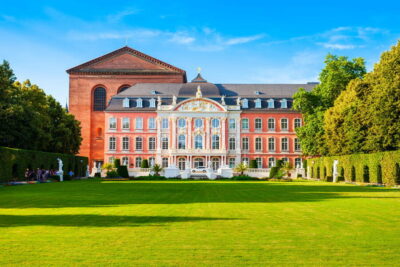
Finally, you continue to the Electoral Palace, the 16th-century residence of the Archbishops and Electors of Trier. The walking tour ends around the Roman Bath complex, constructed in the 4th century AD. This is a satisfying ending because you transition from medieval power and residence back to Roman public life. And if your tour highlights include Aula Palatina, this is the right area to expect those “you are standing in an imperial zone” vibes.
One practical tip: the ending at the Imperial Baths area is a natural finish point, but you may want to plan how you will continue your day. You will likely feel tempted to linger, since this is where Roman-era atmosphere is strongest.
Guide Andrea and What Private Really Changes
This tour is private, and the impact is noticeable. With a group that can be up to 15, your guide can keep the walk energetic without turning every question into a logistics problem.
Andrea is specifically praised for being engaging, for knowing Trier’s history and architecture, and for taking groups to places that are not as frequented as the most obvious stops. That last point matters because Trier is not huge, but the difference between seeing something once and seeing it with context is the difference between “nice photos” and “I get it now.”
If you book, you will get the best experience by asking simple, targeted questions at the moments when your guide is actively pointing out details, like:
- Why this gate looks like it does, and what “grey sand after 170 AD” tells you.
- What the preserved church walls mean for your understanding of the Constantinian era.
- How the medieval trading hub at the Market Cross connects to where people would gather.
Also, if you are with kids or teens, this tour style is built for you. Short stops, frequent movement, and clear explanations keep attention from drifting.
Price and Value for a Group of Up to 15
The price is $369.34 per group, for up to 15 people. That sounds steep until you divide it by group size, which is exactly how you should think about it.
If you fill the group (15 people), the cost works out to roughly $24 to $25 per person. If you are a smaller group, the per-person rate rises, but you still gain something that is hard to price: you are not stuck with a larger crowd, and you can get a guide who can tailor the pace and questions.
Because the tour includes an official tour guide and is private, the value is strongest when you have enough people to share the group cost. If you are traveling as a couple, it can still be worth it, especially if you want a focused route and you do not want to spend your time piecing together what to see in Trier.
The other “value detail” is that the main stops are marked as admission ticket free on this tour. Even if you later decide to return independently, you can start with this guided backbone and build your own follow-up.
Should You Book This Trier Private Guided Walking Tour?
I think this is a smart booking for you if you want a guided walkthrough of Trier’s most important anchors without spending hours planning. It is especially good if you like Roman architecture, enjoy church history, or you want a quick and reliable way to understand why Trier is UNESCO-worthy.
Book it if:
- You want a private format for your group up to 15.
- You want to see Porta Nigra and the Basilica of Constantine in one compact route.
- You appreciate short stops with context, rather than one long lecture.
Skip it, or consider a different approach, if:
- You need a very slow pace with lots of downtime.
- You want lots of shopping time or extended interior time at every building.
If you are in Trier for a short stay, this gives you a clean storyline. And if the name Andrea comes up in your guide assignment, count it as a very good sign.
FAQ
How long is the Trier private guided walking tour?
It runs for about 2 hours.
What language is the tour offered in?
The tour is offered in English.
How big is the group for a private tour?
It is a private tour for your group, with a maximum of up to 15 people.
Where do we start and where does the tour end?
You start at Porta-Nigra-Platz, 54290 Trier, Germany, and the tour ends at the Imperial Baths, 54290 Trier, Germany.
Do I need admission tickets for the main stops?
The listed stops are marked as admission ticket free on this tour.
What is included in the price?
The tour includes an official tour guide and a private guided tour.
What happens if I cancel?
This experience is non-refundable and cannot be changed for any reason.
Fresh on the arrivals board for Trier
Walking Tours, compared.

Berlin City walk Government District and Places of Democracy
Read our review →
Berlin’s Best: 2 Hour Walking Tour Third Reich and the Cold War
Read our review →
Browse the lists this tour appears in