
Reviewed · THIRD REICH & WORLD WAR II TOURS
Munich and Nazi History Combination Day Tour Small Group
Dark history hits hardest when it is placed in real streets.
This Munich and Dachau combo tour pairs Dachau Memorial Site with a tightly guided walk around Nazi-era Munich, so you see how ideology moved from speeches to systems. I like the fact that you travel by Munich public transport with a guide who keeps things moving, and you get time to ask questions instead of rushing past everything.
The main consideration is emotional weight. Dachau is not a sightseeing stop, and the day includes serious content, plus the tour requires comfortable shoes and no kids under 14.
In This Review
- Key highlights that make this day tour work
- Why pairing Dachau with Nazi-era Munich is a smart move
- Marienplatz start: easy to find, and a day that stays organized
- Dachau Memorial Site: how the morning is paced and why it matters
- The return to Marienplatz and your lunch break reset
- Munich walking tour: Nazi-era locations you can actually picture
- Hofbräuhaus, Führerbau, and Königsplatz: where rallies met architecture
- Transportation, pace, and the kind of guide you want for this topic
- Price and value: what $141 is buying you
- Who should book this Munich and Nazi history combo tour
- Final call: should you book it?
- FAQ
- Where do we meet for the tour?
- What time does the tour start, and how long is it?
- What’s included in the tour price?
- Which stops are part of the day?
- How big is the group?
- Are children allowed and can I bring large luggage?
Key highlights that make this day tour work
• Memorial-accredited Dachau guidance with a licensed guide and time in the museum
• Max 15 people, so you get a near-private feel, not a cattle schedule
• A planned transport rhythm using the Munich transit system, which keeps the day efficient
• Hitler and 1938 turning points in Munich, tied to real locations you can stand on
• Strong pacing with a lunch break at Marienplatz and a short, focused walking finish at Königsplatz
Why pairing Dachau with Nazi-era Munich is a smart move
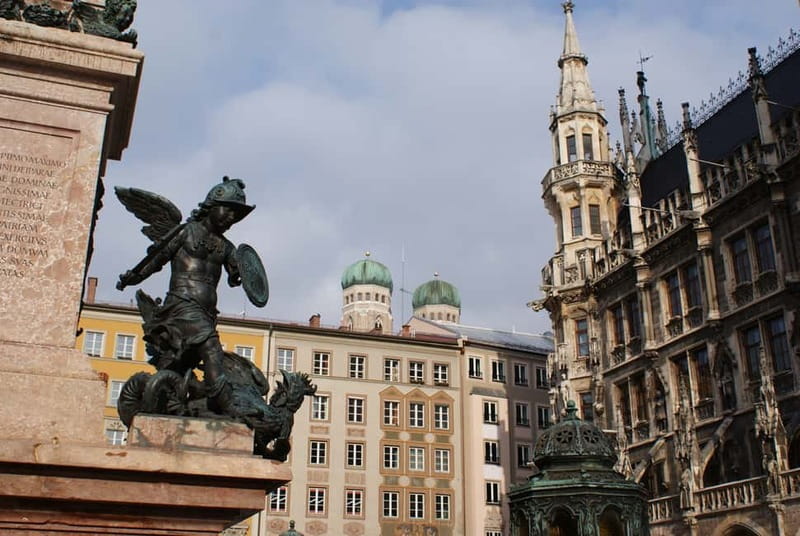
I like this format because it connects two levels of understanding. In the morning, you start with Dachau, where the machinery of repression is impossible to ignore. Later, you walk through Munich with context for how Nazi power grew and how the party used the city as stage and symbol.
If you only see Munich’s famous buildings, you might miss how much this city’s 20th-century story is tied to Adolf Hitler and the Nazi movement. This tour does not let you stay on the surface. It gives you enough framing to notice details you would otherwise walk past.
You do need to be ready for discomfort. The goal is education and remembrance, not shock value. You should expect a thoughtful experience that asks you to slow down, listen, and process what you are seeing.
Further Third Reich and wartime history tours:
- Munich: Third Reich & WWII Walking Tour
★ 4.6 · 6,181 reviews - Third Reich Walking Tour Munich
★ 4.5 · 4,291 reviews - Munich: Birthplace of the Third Reich Guided Walking Tour
★ 4.6 · 771 reviews
Marienplatz start: easy to find, and a day that stays organized
The day starts at 09:00 AM at Marienplatz, right in central Munich, in front of the Tourist information center. Your guide holds a placard that clearly reads Dachau Memorial Tour, which makes meeting up simple even if you are still figuring out Munich.
The group size limit is 15, which matters more than it sounds. With a smaller group, you move together without the constant “where is everyone?” vibe you can get on larger tours. It also means your guide can answer questions without the pressure of rushing the whole pack.
You also get a clear structure: train to Dachau, guided time at the memorial, train back, a lunch window at Marienplatz, then a second part that starts again around 03:00 PM. That is a long day, but it is built to feel workable, not chaotic.
One small heads-up: luggage or large bags are not allowed. If you are traveling with a big backpack or suitcase, plan to travel light for this day.
Dachau Memorial Site: how the morning is paced and why it matters
You spend about three hours at Dachau with a licensed guide. That is the core of the morning, and it is where the tour earns its seriousness. A good guide here does more than explain dates. You learn how the site functioned, how prisoners experienced it, and how remembrance and education fit the present.
You also get allocated time to explore the museum exhibit. I like that you are not locked into only outdoor walking. The museum time gives you a chance to absorb details at your own pace, and the guide is there to clarify anything you do not understand.
Questions are encouraged, and that is a big deal in places like this. When you are trying to make sense of complex events, it helps to ask follow-ups instead of just hoping the tour mentions your specific curiosity.
Here is the practical side: the memorial involves walking and standing. Wear comfortable shoes and dress for the weather. Also note that sometimes current regulations can change what is on-site versus off-site, with extra independent time. That means the exact flow can shift, but the educational focus stays.
The return to Marienplatz and your lunch break reset
After Dachau, you take the Munich transit system back to Marienplatz. There is a short break built in, about one hour for refreshments and lunch, and your guide will suggest places to eat.
I like breaks like this because they let you process. For a lot of people, the emotional intensity of Dachau hits during the ride back or right after you re-enter a normal city atmosphere. Giving you time to grab food, use the bathroom, and reset your focus makes the afternoon walk more meaningful rather than just tiring.
Marienplatz is also a useful meeting point. It is central, easy to orient around, and it gives you options after the tour. Even if you decide not to use your own itinerary, you still end up in a part of town where it is easy to continue sightseeing.
Munich walking tour: Nazi-era locations you can actually picture
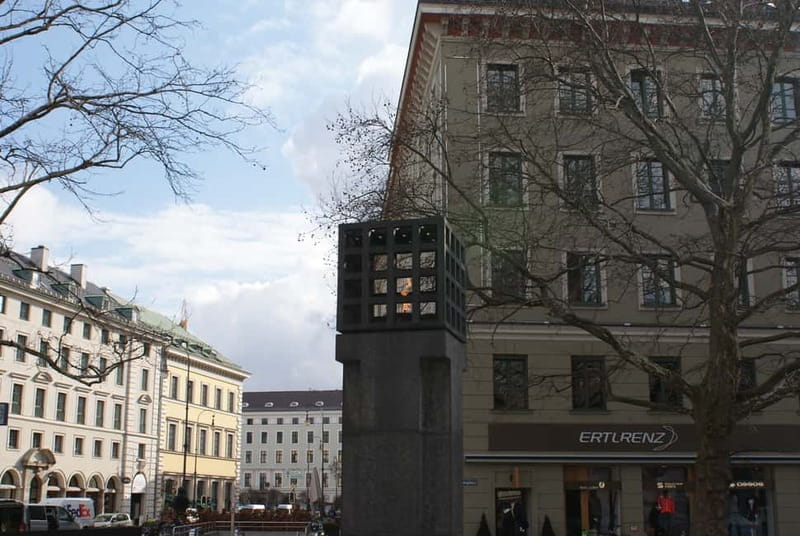
Part two begins again from Marienplatz around 03:00 PM with a walking route through relevant sites connected to Adolf Hitler and the Nazi party. The best part is that the tour does not treat “Nazi Munich” as one vague backdrop. It ties the story to specific places.
You will see key references such as where Hitler joined the German Workers Party. That detail matters because it shows the shift from idea to organization. You also learn about the November 1938 decision connected to a pogrom against German Jews. Being shown the location for such a turning point helps you understand how policy became violence.
Another location on the route is where the Munich Agreement was signed in 1938. That is a moment many people have heard of, but it lands differently when you are standing in the city that hosted the events.
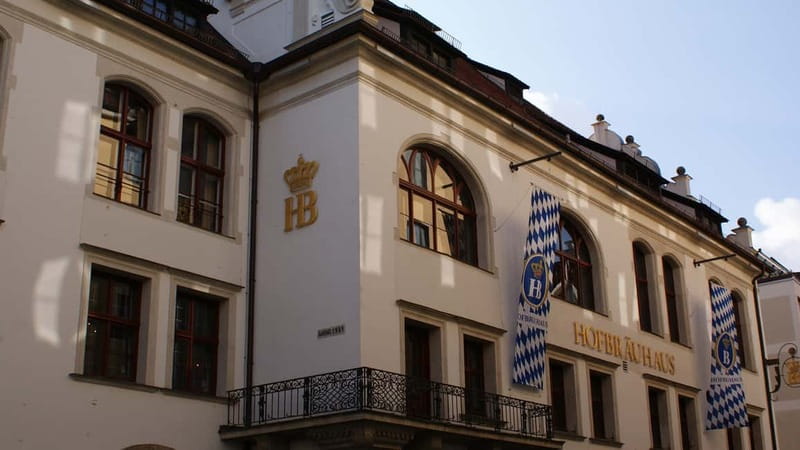
The route also includes places that are not only political. You will pass the oldest parish church in Munich, and you might pause for a look at a quaint beer garden. Hofbräuhaus München appears on the itinerary as well, with a short guided stop that connects a famous Munich institution to the broader context of the time.
The mix is deliberate. You get to see the city’s everyday face while your guide ties it to the Nazi era. That contrast helps you understand how propaganda and power can coexist with normal life.
More centuries per city block:


Hofbräuhaus, Führerbau, and Königsplatz: where rallies met architecture
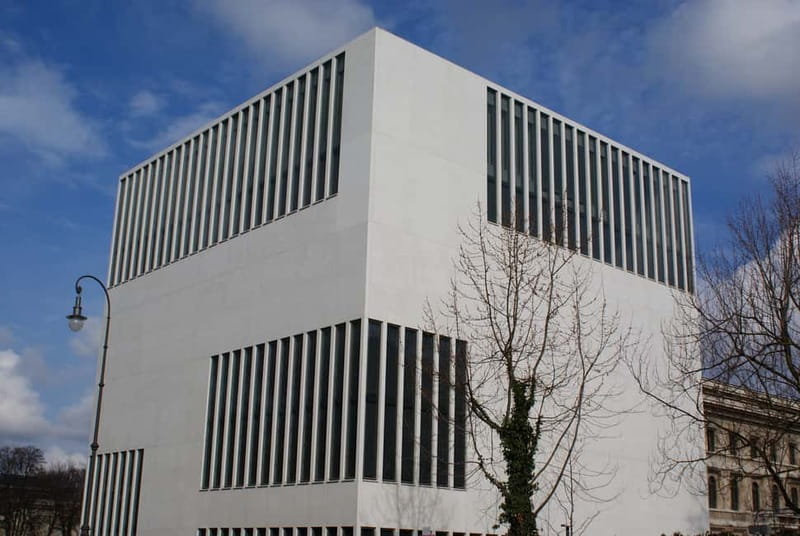
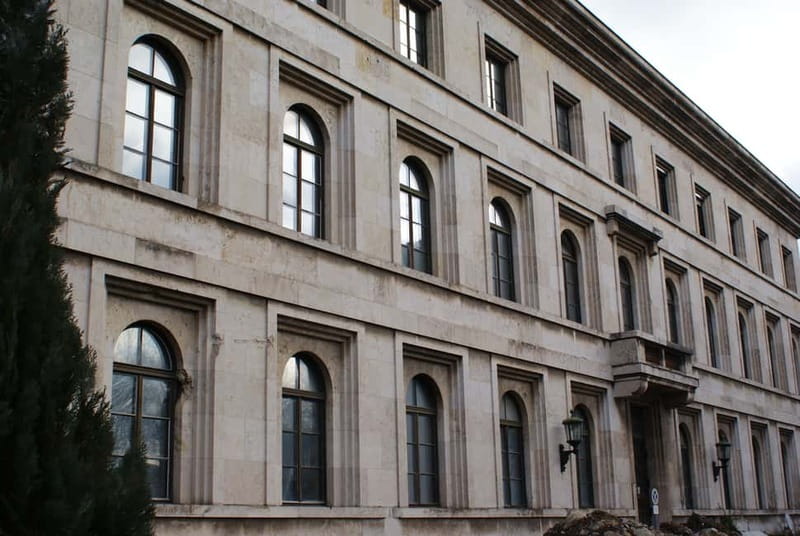
Late in the afternoon, the walking tour focuses on the places where Nazi spectacle became part of public space. You get guided stops at Hofbräuhaus München and Führerbau, then the route finishes at Königsplatz.
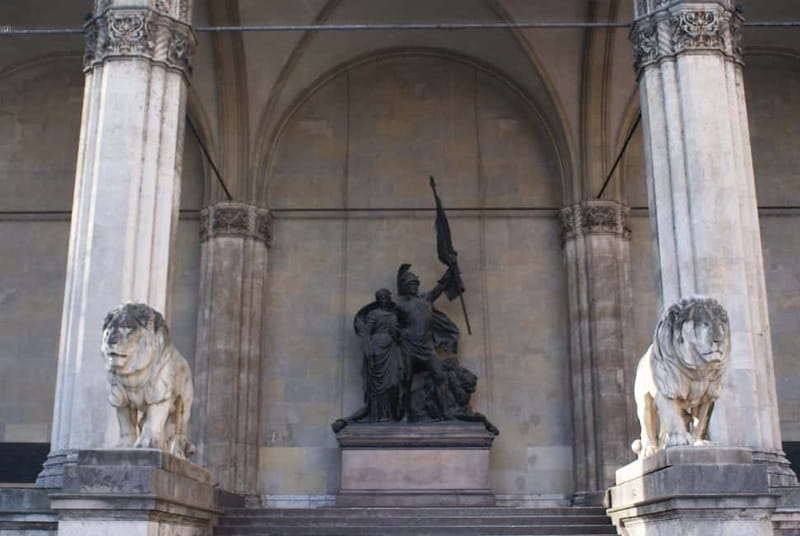
Führerbau is one of those buildings that feels significant as soon as you are there, even if you had only heard its name before. The guide also points you toward the new documentation center of National socialism. I like this because you are not left with only street-level interpretation. You get a way to keep learning using modern documentation.
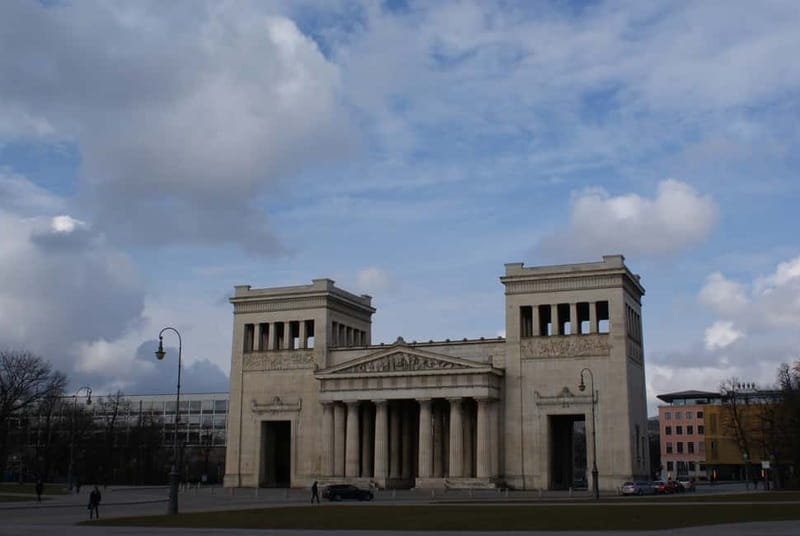
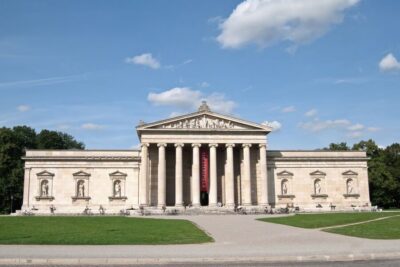
Königsplatz is tied to Nazi rallies. Standing near a place built for public gathering helps you visualize how messages traveled and how crowds were formed. It turns history into something spatial, which is often easier to understand than a list of dates.
The final segment is short, about 15 minutes at Königsplatz. That is intentional. By then, you have already received the main context, so the finish gives you a focused closing without dragging out the walk.
Transportation, pace, and the kind of guide you want for this topic
This kind of day tour lives or dies on logistics. Here, the pacing is built around public transport. There are train segments of about 45 minutes each way, and the guide handles getting everyone through the system efficiently.
In the reviews, the guide, Alun Evans, is repeatedly praised for navigating crowded transit smoothly and keeping the day running without drama. That matters on a full day when you do not want to waste time hunting trains or waiting at staircases.
The other big factor is how the guide handles questions and emotional content. People specifically call out that Alun is friendly, organized, and careful with tone, while still giving very detailed historical context. You should expect a guide who can answer follow-ups, including questions that are not perfectly phrased.
Time allocation also comes up in the best reviews. You get time for the Dachau museum, and you get a real lunch window at Marienplatz before the walking portion. That balance is what keeps the afternoon from feeling like a blur.
Price and value: what $141 is buying you
At $141 per person for an 8-hour day, this tour is not a budget add-on. But it is also not priced like a private chauffeur day. The value comes from what is included.
You get an experienced memorial-accredited guide, plus transportation costs for the duration of the tour. Those two items are the expensive parts that add up quickly if you try to arrange everything yourself. Also, small group size helps here, since you are paying for guided interpretation and smooth logistics, not just a seat on a bus.
Meals and drinks are not included, so you will still plan your own lunch. The good news is you are in Marienplatz during that break, so you can choose something convenient and easy to eat.
Overall, the price feels geared toward visitors who want a structured, guided experience at Dachau and a context-heavy walk in Munich. If you are the type who likes to ask questions and wants clear explanations tied to locations, the cost starts to make sense quickly.
Who should book this Munich and Nazi history combo tour
This tour is a strong fit if you want both education and wayfinding. The Dachau half is serious, and you will appreciate having a guide who can guide your attention and help you understand what you are seeing. The Munich half is also specific and focused, and without a guide you could miss the significance of several sites.
I think it is especially good for:
• Adults who want context on Hitler and the Nazi party tied to real Munich locations
• Travelers who prefer a small group, max 15, to keep things personal
• People comfortable walking and standing for multiple segments in a long day
It may not be the right fit if:
• You are traveling with children under 14, since kids are not permitted
• You are not comfortable with the emotional weight of Dachau
• You need a fully accessible, low-walking experience, since comfortable shoes are recommended and the day includes walking segments
Final call: should you book it?
If you want a day that mixes remembrance with real Munich context, I would book this. The combination of a memorial-accredited Dachau guide, meaningful museum time, and a focused walk that ties Nazi milestones to actual buildings and squares gives you an experience that is both structured and easier to understand.
Skip it only if you know you cannot handle the emotional side of Dachau, or if the walking and standing will be a problem for you. If you are good with a serious day and you like clear, location-based explanations, this is one of the more practical ways to learn how Nazi power took shape in Munich.
FAQ
Where do we meet for the tour?
Meet at Marienplatz central Munich in front of the Tourist information center. The guide will have a placard that reads Dachau Memorial Tour.
What time does the tour start, and how long is it?
The tour starts at 09:00 AM. Total duration is about 8 hours, including transit, Dachau, breaks, and the walking tour.
What’s included in the tour price?
Included items are an experienced memorial accredited guide and transportation costs for the duration of the tour. Meals and drinks are not included.
Which stops are part of the day?
The day includes Dachau Concentration Camp Memorial Site, then a Munich walking tour with Nazi and Hitler-related locations, plus stops such as Hofbräuhaus München, Führerbau, and the finish at Königsplatz.
How big is the group?
The group is limited to a maximum of 15 participants.
Are children allowed and can I bring large luggage?
Children under 14 are not permitted. Luggage or large bags are not allowed on the tour.
Fresh on the arrivals board for Munich
Third Reich & World War II Tours, compared.
Berlin’s Best: 2 Hour Walking Tour Third Reich and the Cold War
Read our review →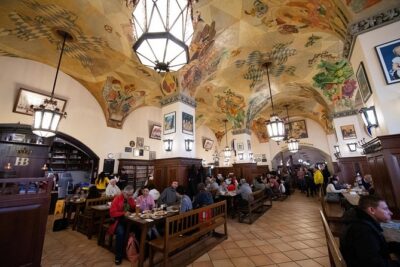
Third Reich Berlin: Hitler and WWII Walking Tour
Read our review →
Walking Tour of Former Nazi Party Rally Grounds
Read our review →
Browse the lists this tour appears in