
Reviewed · HISTORICAL TOURS
Munich History Tour: Private & Personalized with a Local Guide
Munich history, timed to your interests. I like that this is a true private walking experience with a local guide who uses a pre-tour questionnaire and direct messaging to shape your route. I also like the built-in rhythm of photo stops at Marienplatz, Nymphenburg Palace, Munich Residenz, and St. Peter’s Church, with storytelling that connects what you’re seeing to the bigger events that shaped the city.
One thing to keep in mind: it’s a walking tour, so expect a good amount of time on your feet, and you’ll handle attraction tickets yourself since they are not included.
In This Review
- Key highlights I’d plan around
- A walking history route that actually fits your day
- Where you meet in Munich, and how the tour flows
- Getting oriented at the start, with a guide who sets context fast
- Marienplatz and the Neues Rathaus, where the city’s story starts
- Nymphenburg Palace: royal Bavaria without the museum fog
- Munich Residenz: palace rooms, hidden courtyards, and the big Germany storyline
- St. Peter’s Church: oldest parish vibes, plus city views
- Price and logistics: what you’re really paying for
- Guides and pacing: why names matter in a history tour
- A fair warning: where things can go sideways
- Who this tour suits best
- Should you book this Munich History Tour?
- FAQ
- How long is the Munich History Tour?
- Is this tour private or shared?
- Where does the tour start?
- Is hotel pickup included?
- Is transportation included between sites?
- Are attraction tickets included?
- Are food and drinks included?
- Do I get to customize the itinerary?
- What if I need to cancel?
Key highlights I’d plan around
- Hotel meet-up and on-foot start (or a central landmark if you prefer)
- A customized itinerary based on what you actually want, from palaces to WWII to local food stops
- Photo stops at top historic landmarks without feeling like a rushed checklist
- A local guide who adjusts your pace, including groups that need slower going
- Private, only your group format, which makes it easier to ask questions and tweak plans
- Public transport may be suggested for longer moves, with costs handled on the day
A walking history route that actually fits your day
This isn’t a “stand here, listen, repeat” tour. It’s more like you and a local guide choosing how you want Munich’s past to show up in your afternoon. You can pick a start time and, after booking, you fill out a questionnaire about your must-sees and preferences. Then your guide reaches out directly so you can help set the tone, whether you lean toward royal power, wartime history, church history, or just getting your bearings fast.
The best part for me is the flexibility. Since it’s private, you don’t have to match the pace of strangers. Several guides in the orbit of this experience have been praised for going at the group’s speed, being patient with lots of photos, and staying conversational rather than performing a monologue. If you’re visiting early in the trip or you want a structure that still feels personal, this format works.
More centuries per city block:
- Munich: Guided Tour of the historic Town Hall on Marienplatz
★ 4.8 · 63 reviews - Munich Craft Beer & Cultural Tour With Snack
★ 5.0 · 46 reviews - Munich and Nazi History Combination Day Tour Small Group
★ 5.0 · 32 reviews
Where you meet in Munich, and how the tour flows
You start at Fischbrunnen, Marienplatz 8, 80331 München, and the tour ends back at the meeting point. If you selected a hotel meet-up option, your guide meets you there and you begin on foot. If your hotel isn’t on the list, you can choose a central landmark option instead, which keeps things simple if you don’t want to plan around walking from a distant address.
Even though you might be walking the whole time, longer transfers are possible. The tour data notes that public transport or local taxis may be used between sites, with any costs handled on the day after you talk it over with your host. That matters because it gives your guide a way to keep the itinerary reasonable if your hotel is far from the core old-town area.
Practical tip: bring comfy shoes and plan for street-level staircases around older churches and palaces. This tour can be a great “first history pass,” but it’s still active.
Getting oriented at the start, with a guide who sets context fast
The first stop is designed to orient you. Your host kicks things off with how Munich’s history, traditions, and modern culture weave together. You’ll get an overview of the city’s spirit, from beer garden culture to elegant boulevards. Importantly, your guide uses this early moment to help shape your personalized route based on what you’re drawn to.
This is also where you can steer. If your group wants more architecture and less wartime detail, you can adjust. If churches and spiritual history are the focus, you can nudge the plan. The tour structure supports that because it’s customized after your pre-tour questionnaire and follow-up communication.
Names you may encounter from this experience’s guides include Paola, Michelle, Anna, Franz, and Stefan/Stefano, and several have been praised for adjusting to the group and explaining things clearly in English. One guide, for example, was repeatedly noted for American English proficiency, which helps if you want history terms explained in a way that lands quickly.
Marienplatz and the Neues Rathaus, where the city’s story starts
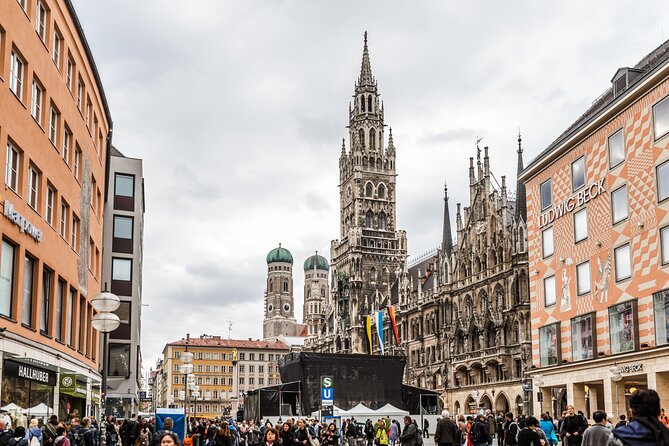
One of the anchors of the route is Neues Rathaus on Marienplatz, Munich’s central meeting place. Here, you’ll see the striking Neo-Gothic facade and learn what lies behind it. Your guide also connects it to why Marienplatz matters in the first place, setting you up to understand Munich as more than pretty buildings.
A big attraction here is the Glockenspiel. Even if you’ve seen photos, it’s different when someone puts it in context: what the performances represent and how they became part of Munich’s public life. Your guide helps you read the architecture and symbolism rather than just watching something mechanical.
This stop is also ideal for photos because it sits right in the old-town core. If you’re timing your trip around daylight, this is a good moment to aim for softer light, especially if you enjoy wide-angle shots of the square and the facade.
Nymphenburg Palace: royal Bavaria without the museum fog
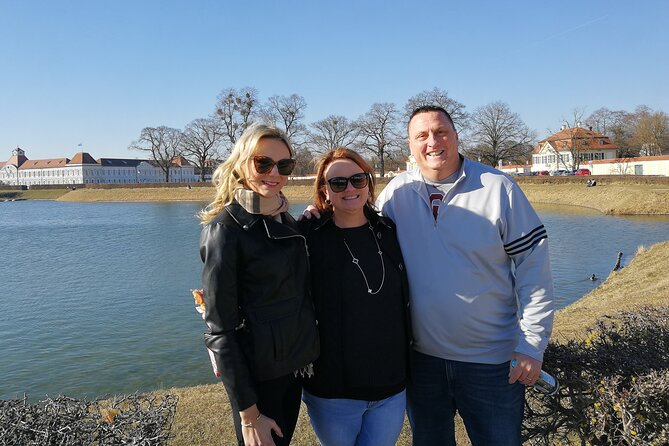
Next comes Nymphenburg Palace, one of Bavaria’s signature royal sites. You’ll walk through the palace’s grand setting and spend time on its gardens and ornate courtyard spaces. What makes this stop feel worth the time is the way the guide frames the palace as a living piece of the region’s identity, not just a pretty complex.
The tour data emphasizes stories about kings and dukes and court intrigue, and that’s a strong theme in what guides deliver here. The goal is to understand why this palace matters to Munich, and how royal life influenced culture and power in the city.
What I like for planning: you’re not locked into museum-style pacing. You’re touring with the aim of seeing the scale and feeling the “royal footprint,” which can be easier if your group has mixed interests. If someone in your group isn’t dying to read every room detail, the setting still delivers.
Also holding a platform in Munich


Munich Residenz: palace rooms, hidden courtyards, and the big Germany storyline
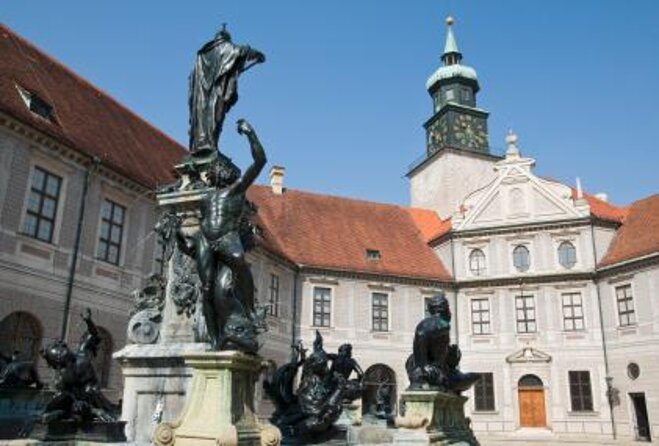
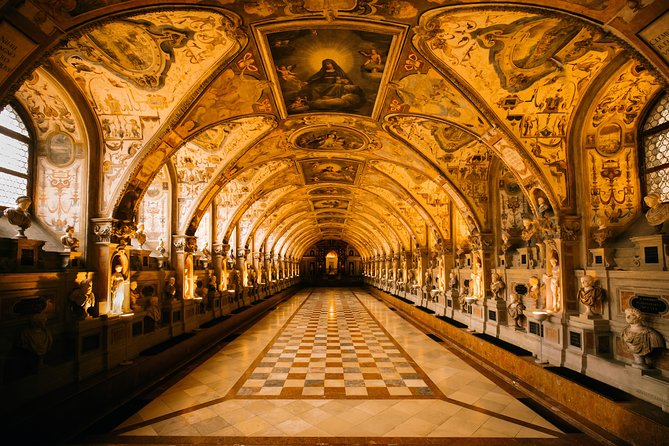
The Munich Residenz is another centerpiece. This is where the tour leans into “how history actually happened,” since your guide helps connect the palace to Munich’s complex past and events that shaped modern Germany.
You’ll see opulent rooms and hidden courtyards, with your host pointing out details you’d likely miss if you were going in cold. The most valuable part is the guiding thread that turns rooms and corridors into history you can remember. Instead of collecting random facts, you get explanations tied to what you’re standing in front of.
A practical note: the Residenz can be a lot to take in visually. A private guide helps with decision-making. If you want more time lingering on one area, you can usually ask. If you’re short on energy, your guide can adjust the route so you still leave feeling like you saw the essentials.
St. Peter’s Church: oldest parish vibes, plus city views
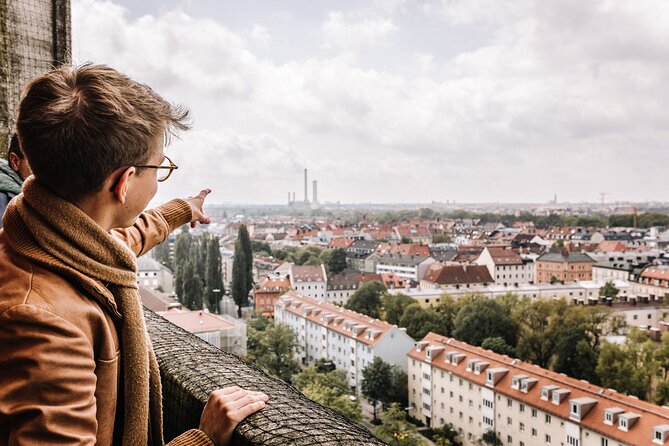
The tour wraps at St. Peter’s Church, described as Munich’s oldest parish church. This is a great closing stop because it shifts from palaces and government to spiritual and community history.
You’ll take in the interiors, and your guide explains the church’s significance in Munich’s cultural and religious life. The tour data also mentions sweeping city views, which can turn this final leg into a real payoff moment, especially if the weather cooperates.
If your group likes architecture and symbolism, this stop gives you a different flavor than the palace sequence. It also tends to be a calmer way to end, after multiple big landmarks.
Price and logistics: what you’re really paying for
At $111.05 per person, this is priced as a mid-range private guided experience for 2 to 4 hours. The value comes less from any one building and more from the private format: you’re not splitting time with strangers, and you can get your questions answered on the spot.
What’s not included is also important. Food, drinks, and attraction tickets are not included. Transportation is not included in the sense that there’s no private vehicle. The tour is primarily walking, and any public transport or taxi costs are discussed with your host and settled on the day.
So the real budgeting question becomes: will you want to enter specific attractions at each stop? The tour experience is a walking format with major landmarks, and if you plan to add ticketed experiences, build that cost into your day.
Duration is flexible, and the itinerary is customizable. If you choose the longer end, you likely get more time for photos, questions, and slower pacing at churches or courtyards.
Guides and pacing: why names matter in a history tour
This kind of tour lives or dies on the guide’s style. In the feedback for this experience, several guides were singled out for very practical things: clarity, pacing, and the ability to customize.
- Paola was praised for being engaging, knowledgeable, and charming, plus personalizing around interests like churches and history and being patient with lots of photos.
- Michelle was praised for going at the group’s speed and clearly imparting information.
- Anna was highlighted for the back story behind old-town sights and for taking people to places locals would use but visitors might miss. She was also described as considerate of requests and helped guests spot what’s worth buying versus overpriced.
- Franz was noted for excellent English and for adjusting to a slower pace, then still making room for lots of sights and useful context, including war and religion.
- Camilla and Stefano were also praised for being friendly, conversational, and able to keep seniors comfortable with thoughtful pacing.
- Stefan was praised for architecture and history expertise, patience with seniors, and a good sense of humor.
That’s a lot of signals that you’re not just getting a script. You’re hiring someone who can read the room and match your pace, which is especially valuable if you have kids, seniors, or anyone who gets tired easily.
A fair warning: where things can go sideways
No tour is perfect, and this one comes with a couple of risk points you should handle proactively.
First: meeting-point confusion. There has been at least one reported situation where guests received conflicting information about whether the guide would meet them at a hotel versus a central point. The practical fix is simple. Before you leave your hotel, message your host directly to confirm the exact meeting location and time. If you have a hotel meet-up selected, double-check that too.
Second: time management. If your route is set at the longer end but your group wants more stops, it’s worth clarifying expectations at the start. Ask your guide how many stops are realistic within your booked duration, then decide together.
Third: no-show and communication failures have also been mentioned in feedback. You can’t eliminate that risk entirely, but you can reduce damage by having the guide’s contact details saved, staying reachable, and allowing a few minutes buffer at the meeting point.
Who this tour suits best
This tour tends to fit well if you want:
- a first-day orientation to Munich’s history without spending hours planning
- a private guide who can tailor the mix between royal history, wartime history, and churches
- a photo-friendly walk that still teaches you what you’re looking at
- a group where pacing needs to be flexible, not rigid
It might be less ideal if you want a strictly structured, ticket-heavy day where everything is guaranteed entry-based. Since tickets and transport costs are not included, you’ll be doing some decisions on your end.
Should you book this Munich History Tour?
I’d book it if you value a personalized route and you want major Munich landmarks explained in plain language while your guide adapts to your pace. The price makes sense when you treat it as a shortcut to understanding the city, not just a series of photos.
I’d think twice if you hate planning at all. You’ll be managing tickets and any transport between sites, and you should confirm meeting details in advance to avoid stress. For most people, though, a quick message to your guide before you go is all it takes to make this a smooth, worthwhile half-day.
If you want a strong starting point in Munich and you like history that connects buildings to real events, this private walking tour is a solid pick.
FAQ
How long is the Munich History Tour?
It runs for about 2 to 4 hours, with flexible durations and start times you can choose when booking.
Is this tour private or shared?
It’s private. Only your group participates.
Where does the tour start?
The standard start point is Fischbrunnen, Marienplatz 8, 80331 München, Germany. The tour ends back at the meeting point.
Is hotel pickup included?
Hotel meet-up is offered. If your hotel isn’t on the list, you can choose a central landmark meeting option instead. This is still primarily an on-foot tour.
Is transportation included between sites?
Transportation is not included. The experience is primarily walking, and your host may suggest public transport for longer distances. Any transport costs can be settled on the day.
Are attraction tickets included?
No. Tickets to any attractions are not included.
Are food and drinks included?
No. Food and drinks are not included.
Do I get to customize the itinerary?
Yes. You’ll get a pre-tour questionnaire to share interests and must-sees, and your guide personally reaches out to tailor the route.
What if I need to cancel?
You can cancel for a full refund if you cancel at least 24 hours in advance of the experience start time. Cancellation changes less than 24 hours before the start are not refunded.
Fresh on the arrivals board for Munich

Historical Tours, compared.
City History Canal Sightseeing Tour on a Motorboat
Read our review →
Browse the lists this tour appears in