

Reviewed · GUIDED WALKS IN MUNICH
Munich: Birthplace of the Third Reich Guided Walking Tour
Munich has many stories, and this one hurts. This guided walk follows the rise of the Nazi movement in town, from early beer-hall speeches to the machinery of persecution. I especially like how the tour treats the topic with empathy while still keeping the pace clear, and how guides like Jake, Sam, Dan, and Nic tend to answer questions in a friendly, direct way.
You’ll see the places tied to hate and state violence, so it is not a casual stroll. The emotional weight can be heavy, even if your guide adds small, human moments of lightness to help you get through it.
With 2.5 hours and a price that is hard to beat for a guided, English-language walking tour plus transport to the historic center, this can be one of the smartest ways to understand why Munich mattered. Just plan for walking time, cool weather layers, and a mind ready to process difficult history.
In This Review
- Key takeaways before you go
- Entering the story: what makes Munich matter
- Meeting at Radius Tours and getting to the historic center
- Beer halls and speeches: where the movement learned to sell itself
- Brownshirts, street conflict, and the road to control
- Goebbels, propaganda planning, and the Night of Broken Glass
- The official Nazi Headquarters and what survived the war
- Monuments and memorial spaces for victims and opponents
- How the guides tend to shape your experience
- Price and value: why $29 can make sense
- Who should book this tour, and who might not
- Should you book? My take
- FAQ
- Where do I meet for the tour?
- How long is the guided tour?
- Is the tour guide available in English?
- How much is the tour?
- What’s included in the price?
- Is hotel pickup included?
- Is transportation to the historic center provided?
- Can I cancel and get a full refund?
- Can I reserve now and pay later?
Key takeaways before you go
- Beer halls where Hitler tested his message: you’ll connect the speeches to the movement’s early momentum.
- Specific sites tied to major Nazi events: you’ll stand at locations linked to propaganda and Kristallnacht planning.
- A clear timeline for how power grew: from the failed putsch to how ideology spread into everyday control.
- Nazi-era buildings that survived the war: you’ll see how physical spaces still shape memory.
- Monuments for victims and opponents: the tour points you toward places of remembrance, not just confrontation.
- Guides who handle heavy material carefully: names that come up often include Jake, Sam, Dan, Nic, Steve, and Aileen.
Entering the story: what makes Munich matter
Munich was not just a backdrop. In the early 1900s and into the Nazi years, it became a stage where ideas, intimidation, and organization turned into something that could take power.
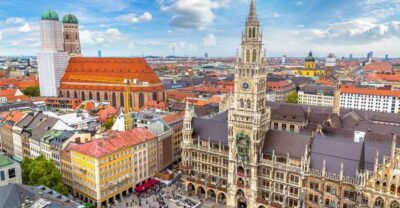
This tour follows that shift step by step. You start in central Munich and then work through key locations tied to the movement’s early fanatics, early public speeches, and later state power. The big value here is the cause-and-effect feeling: you see how ideology grew legs long before the world saw the full disaster.
You’ll also get forced into a reality check about anti-Semitism. The tour’s focus on discrimination and the lead-up to major atrocities helps you understand that this was not some distant political drama, it was human choices, backed by institutions.
More Guided Walks in Munich
- Munich: Third Reich & WWII Walking Tour
★ 4.6 · 6,181 reviews - Third Reich Walking Tour Munich
★ 4.5 · 4,291 reviews - Munich: Old Town & Viktualienmarkt City Walk in German
★ 4.7 · 2,304 reviews
Meeting at Radius Tours and getting to the historic center
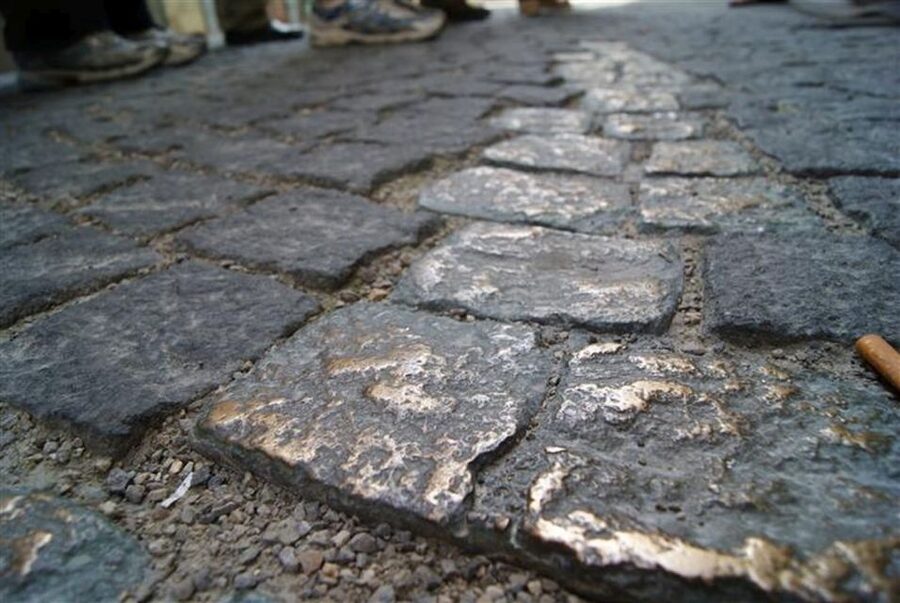
You meet at the Radius Tours office, and from there the tour includes transportation to the historic center of Munich. Hotel pickup is not included, so you’ll want to be ready to get yourself to the meeting point on time.
The tour is a 2.5-hour walking experience with an English live guide. That duration is long enough to build a story, but short enough that you’re not stuck for half a day in the same mindset.
One practical tip: wear shoes you trust. Even if the route is guided and organized, it is still a walking tour, and you’ll be stopping frequently to stand, look, and listen. Munich weather can swing, so bring a layer and a rain option if you’re going outside in shoulder seasons.
Beer halls and speeches: where the movement learned to sell itself
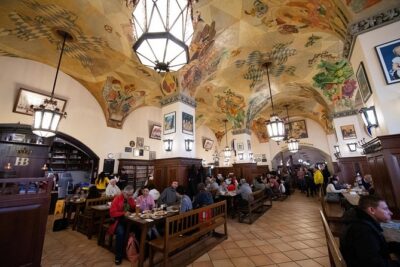
One of the most striking parts is the beer-hall angle. Munich’s beer halls were social spaces, and the Nazis used that normal setting to make their message feel familiar and public.
You’ll visit venues tied to Hitler’s early party gatherings and speeches. That matters because it shows how the movement gained visibility. It also helps you understand the psychology of propaganda: repetition, confident talking, and group energy can make dangerous ideas feel like common sense to people around you.
Standing in these places, you get a sense for why the Nazi message took root in a city that already had its own political tensions. You’re not just hearing about ideology, you’re seeing how it was delivered in ordinary places people chose to go.
Brownshirts, street conflict, and the road to control
After the early speeches, the tour moves onto streets where the Nazis fought their way toward power. You’ll get a guided look at the spaces linked to confrontation and intimidation, including the role of Hitler and the Brownshirts in pressuring society.
This section is valuable because it turns history into something you can picture. Instead of thinking of the Nazis as only politicians behind desks, you see a movement that used street-level tactics too, and that helps you connect what you see today to what was happening then.
If you like clear timelines, this part tends to satisfy. Guides often connect the early public events to later steps, so the big picture stays intact even while the walk covers multiple stops.
Goebbels, propaganda planning, and the Night of Broken Glass
The tour includes a stop at the building where Goebbels plotted what became known as the Night of Broken Glass. This is one of those moments where the site-focused approach really hits.
Kristallnacht is not just a name from a textbook. You’ll learn how it functioned as a turning point on the road to the Holocaust, and you’ll connect it to the broader logic of Nazi propaganda and persecution.
The goal is to help you see how violence can be prepared, justified, and normalized through planning and messaging. A good guide will pace the emotional content and still keep the facts clear, and many of the guides associated with this tour are praised for balancing empathy with enough humor to help you keep going.
Further Third Reich and wartime history tours:



The official Nazi Headquarters and what survived the war
Another major stop is the official Nazi Headquarters area. This is where the tour shifts from movement energy to power structure.
You’ll stand in the zone where the Nazi Party organized and operated. And you’ll also see other buildings with scars of World War II. The tour’s point here is sobering: much of central Munich was devastated by Allied bombing, yet some Nazi buildings survived. That means your eyes land on physical remnants of an ideology that caused catastrophe.
I like this approach because it’s not purely historical. It forces you to think about how cities remember. When a dangerous building survives, the question becomes what people do with the space afterward, and what kind of public acknowledgment comes next.
Monuments and memorial spaces for victims and opponents
The tour doesn’t end at Nazi sites. It includes monuments honoring many victims and opponents of Nazism.
That change of focus matters. It keeps the story from turning into only a spectacle of dark architecture. Instead, it nudges you toward remembrance, accountability, and the people who resisted or suffered because they were targeted.
As you walk between the Nazi-era locations and memorials, you start to feel the structure of Munich’s public memory. You’re moving from the machinery of persecution to the community’s response, and that contrast helps the message stick.
If you’re visiting with someone who is new to this history, this part is a helpful bridge. It gives you something constructive to hold onto, not only horror.
How the guides tend to shape your experience
The tour is led by a live English guide, and the praise in the guide profiles is consistent. People often highlight guides who can explain tough topics in a clear, human way and who welcome questions.
You’ll see names repeated often, including Jake, Sam, Dan, Nic, Steve, Iain, Aileen, and Mark. One guide detail that shows up in the descriptions is the use of photo materials to help you picture what happened when direct visual evidence is limited. That kind of support helps a lot on a walking tour, where your view is mostly streets and buildings in the present.
Another pattern is tone. Several guides are praised for holding a careful balance of empathy and lightness, so you do not get steamrolled by emotion. That doesn’t remove the seriousness, but it can make the information easier to absorb.
Price and value: why $29 can make sense
At $29 per person for about 2.5 hours, this tour sits in the value zone you want in a big European city. You’re not just paying for a walking script. The price also covers the guide, the tour itself, and transportation to the historic center of Munich.
Hotel pickup is not included, so your costs and convenience depend on how you’re getting to the meeting point. But if you’re staying in or near central areas, this can be a very efficient way to get context quickly without spending your day piecing together sites on your own.
This is also one of those times when a guide can be worth more than the ticket cost. Sites like beer halls and the Nazi HQ area are easy to see and hard to interpret. You want the “why” explained clearly, and that is what the format is built for.
Who should book this tour, and who might not
This is a strong choice if you want a focused overview of how Nazi ideology rose in Munich, and how that rise connected to persecution and Kristallnacht. It’s also ideal if you enjoy history that is tied to real streets and buildings, not just a distant lecture.
You should consider skipping if you’re seeking a lighter, purely sightseeing style tour. This experience centers on anti-Semitism, Nazi planning, and the structures that enabled mass violence. Even when your guide helps you process it, the material is inherently heavy.
If you do go, I suggest pairing it with quiet time afterward. That could be a museum stop, a memorial visit at your own pace, or just a calm meal. Don’t schedule something intense right after if you can avoid it.
Should you book? My take
Book this if you want an organized, English-language walk that turns Munich into a readable story. For $29 and 2.5 hours, it’s one of the more efficient ways to understand why Munich became a key launching ground for the Nazi movement, not just a place where events happened.
I’d especially recommend it if you like question time. The best versions of this tour seem to work well when you ask what you’re unsure about, because guides can connect the sites into a clear timeline.
Skip it if your priority is comfort, or if you know you react strongly to historical trauma. You can always choose a different Munich walk that focuses only on art, architecture, and everyday city life. But if you’re ready to learn, this tour gives you a direct path through the darkest chapters.
FAQ
Where do I meet for the tour?
Meet at the Radius Tours office.
How long is the guided tour?
The tour lasts 2.5 hours.
Is the tour guide available in English?
Yes, the live tour guide is English.
How much is the tour?
The price is $29 per person.
What’s included in the price?
The price includes the guide, the tour, and transportation to the historic center of Munich.
Is hotel pickup included?
No, hotel pickup is not included.
Is transportation to the historic center provided?
Yes, transportation to the historic center of Munich is included.
Can I cancel and get a full refund?
Yes, you can cancel up to 24 hours in advance for a full refund.
Can I reserve now and pay later?
Yes, you can reserve now and pay later.
Cities at Walking Speed
- Munich: Night Watchman Walking Tour
★ 4.7 · 2,092 reviews - Munich Ghosts and Spirits Evening Walking Tour
★ 5.0 · 1,900 reviews - Munich Old Town Walking Tour
★ 4.5 · 1,287 reviews - Munich: Walking Tour Old Town and Viktualienmarkt
★ 4.7 · 839 reviews
Fresh on the arrivals board for Munich

Guided Walks in Munich, compared.
Old Town & Viktualienmarkt City Walk in German
Read our review →
Munich Ghosts and Spirits Evening Walking Tour
Read our review →
Browse the lists this tour appears in