
Reviewed · GUIDED WALKS IN MUNICH
Munich City Walking Tour, includes Third Reich & Viktualienmarkt
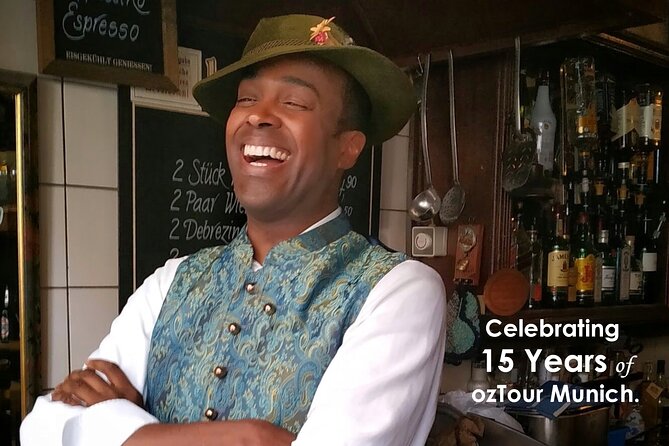
Munich makes sense after three hours walking. This small-group tour connects major squares with the stories behind them, led by Ozzie, with a food and beer break at Viktualienmarkt. I liked the practical guidance for getting around Munich, plus the way the tour frames hard history alongside everyday city life. One drawback to plan for, it is a lot of outdoor time, so cold weather can mean more standing around than you would like.
For $31.78 and about 3 hours 15 minutes, you cover a satisfying slice of central Munich, from cathedral views to medieval gates and royal-era buildings. The walk also keeps things friendly, with a max group size of 20 and an English-speaking guide, so you can actually ask questions instead of just following a blur.
If you want your first day in Munich to feel organized and meaningful, this is a strong choice. And if you are the type who likes churches, beer halls, and city squares for the way they shape local life, you will probably have a great time.
In This Review
- Key reasons this walk works
- A Three-Hour Munich Primer From Schützenstr to Odeonsplatz
- The Route Strategy: Big Landmarks Plus Everyday Munich
- Frauenkirche: Munich’s Cathedral and the Devil’s Footstep
- The German Hunting and Fishing Museum: Wolpertinger Weirdness That Works
- Hofbräuhaus: Beer Hall History and What to Expect
- Isartor to Marienplatz: Medieval Gate to City Square Heart
- Max-Joseph-Platz and the Maximilianeum: Royal Power and Parliamentary Realities
- St. Michael’s and St. Peter’s: Two Church Styles and One City View
- Wolfsbrunnen, Odeonsplatz, and Karlsplatz: Art Nouveau, Royal Squares, and Stachus
- Viktualienmarkt Lunch Break: Where the Day Becomes Food and Beer Culture
- Third Reich Context: Clear, Serious, and Kept in the City Story
- Weather, Pace, and Comfort: The Real Decision Points
- Who This Tour Fits Best, and Who Might Want Another Option
- Should You Book This Munich City Walking Tour?
- FAQ
- How long is the Munich City Walking Tour?
- How much does the tour cost?
- Is the tour offered in English?
- What is the maximum group size?
- Where do I meet the tour and where does it end?
- Is the lunch included?
- Can I bring a service animal?
- Is free cancellation available?
Key reasons this walk works
- Small group size (max 20) keeps the pace human and the questions possible
- Third Reich context built into the route, not tacked on as a lecture
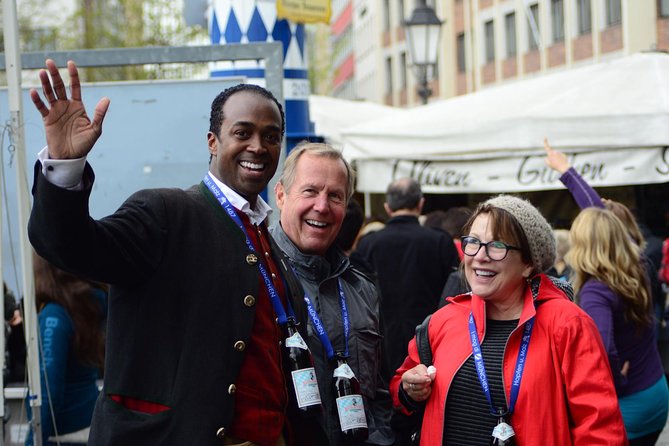
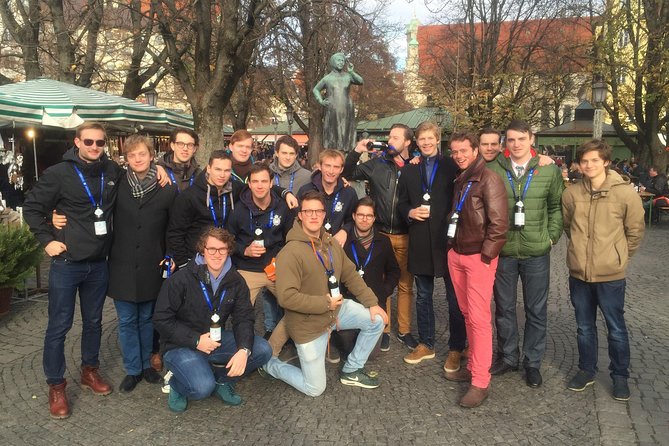
- Beer and food culture at the right moment, with a mid-tour stop at Viktualienmarkt
- Good “how to get around” tips, so you can plan the rest of your trip faster
- A mix of famous sights and local streets, from Frauenkirche to Stachus
A Three-Hour Munich Primer From Schützenstr to Odeonsplatz
This is the kind of tour you do early, when you still feel a little lost. The meet-up is at Schützenstr 11, 80335 München, and the walk finishes around Odeonsplatz (Odeonspl. 3). That end point matters, because Odeonsplatz puts you right back in the thick of central Munich for your next step, whether that is a museum, a dinner plan, or just wandering.
The tour runs about 3 hours 15 minutes, and you are moving the whole time. This is not a “sit in a bus and feel transported” experience. It is a walking tour with frequent stops, so you get multiple photo moments and context, without trying to force every stop to be a long visit.
It is also English-only, and it is capped at 20 people. In a city like Munich, that small size helps. You spend more time understanding what you are looking at, and less time simply waiting for the group to shuffle forward.
If you are traveling with kids, a stroller, or anyone with limited mobility, you might find the outdoor standing time annoying. The tour is very “most travelers can participate,” but you still should come prepared for walking and weather.
More Guided Walks in Munich
- Munich: Third Reich & WWII Walking Tour
★ 4.6 · 6,181 reviews - Third Reich Walking Tour Munich
★ 4.5 · 4,291 reviews - Munich: Old Town & Viktualienmarkt City Walk in German
★ 4.7 · 2,304 reviews
The Route Strategy: Big Landmarks Plus Everyday Munich
What I like about this itinerary is the balance. You start with heavyweight Munich icons, then you bounce into places that explain how Munich thinks and lives. You are not only seeing landmarks. You are learning the city’s logic: gates, squares, religious power, royal power, and then food and beer as daily culture.
The stops are also chosen so you can connect dots. After seeing Frauenkirche, St. Michael’s Church, and St. Peter’s Church, the churches stop feeling random. They start feeling like part of a single story about Munich as a religious and political center.
Then the walk turns outward. Marienplatz and Viktualienmarkt give you that public-life Munich. You see where people gather, snack, buy produce, and linger. This is where “Munich on a map” starts to become “Munich as a place you could live.”
Frauenkirche: Munich’s Cathedral and the Devil’s Footstep
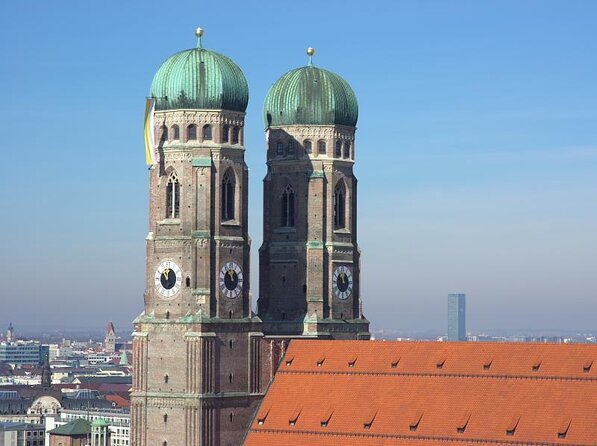
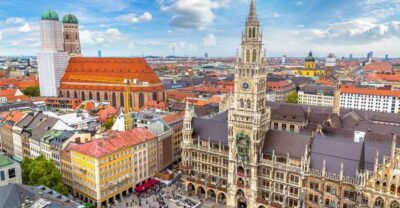
The tour begins with Frauenkirche, the iconic twin-towered cathedral that towers over the city skyline. Even if you only have a short window, this stop is valuable because it anchors you in Munich’s visual identity. The church is tied to the archbishopric of Munich and Freising, so you quickly understand that Munich’s major landmarks connect to real power structures, not just tourism postcard views.
Inside, you can look at the wide interior and historic crypt, and you will hear about the legendary Devil’s Footstep. That little detail matters more than it sounds. Legends like this are how a place teaches you what locals notice, repeat, and remember. It makes the building feel like it belongs to Munich’s people, not only to architecture guides.
Practical note: this is an indoor stop, but you should still be ready for time on the move before and after.
The German Hunting and Fishing Museum: Wolpertinger Weirdness That Works
Next comes the German Hunting and Fishing Museum, housed in a former Augustinian church. You might not expect a hunting and fishing museum to fit a walking tour, but it makes sense here. It shows that Germany’s outdoor traditions and local fauna are part of the cultural fabric, not just background scenery.
This museum spreads out across 3,000 square meters, with exhibits that include stuffed wildlife, antique weapons, and the famous Bavarian Wolpertinger creatures. If you have ever wanted a “Munich, but strange in a fun way” moment, this is it. The Wolpertinger element also gives you a sense of regional folklore, how Bavarians blend nature, humor, and storytelling.
Potential drawback: if you prefer only iconic landmark visits, a museum stop like this can feel like a left turn. But for me, it is exactly what makes the day feel less like a checklist.
Hofbräuhaus: Beer Hall History and What to Expect

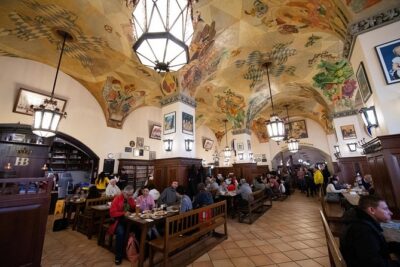
Then you hit Staatliches Hofbräuhaus, the famous Hofbräuhaus beer hall. Dating back to 1589, it started as a royal brewery and now operates as a landmark where you can taste Bavarian beer culture in a very classic setting.
This stop is useful even if you are not ordering a full meal. The bigger value is understanding what the Hofbräuhaus stands for. It is a place where beer is not treated like a beverage first, it is treated like a social ritual. The hall is known for home-brewed Bavarian beer, hearty food, and live traditional music, so you get a sense of how Munich turns everyday drinking into community.
If you plan to eat there later, you will know what to look for. If you do not, you still get the cultural context, which makes later beer-garden stops feel more intentional.
One more practical thought: beer halls can be louder than you expect. If you are sensitive to noise, be ready for that in and around the hall.
Further Third Reich and wartime history tours:

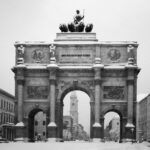
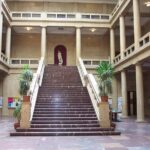

Isartor to Marienplatz: Medieval Gate to City Square Heart
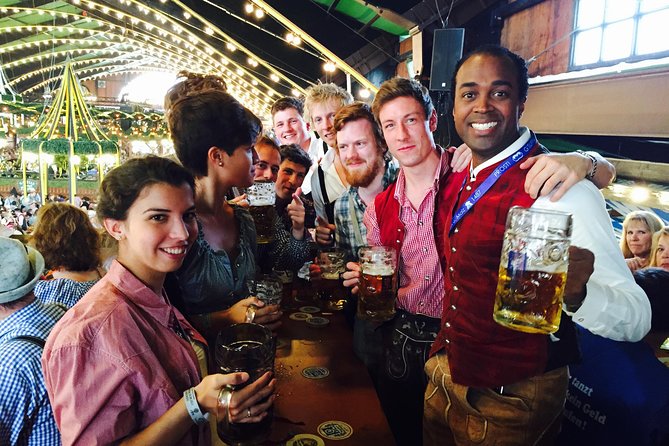
Isartor is one of Munich’s last medieval city gates, built in 1337 as part of the city’s fortifications. It is a quick stop, but it is doing real work for the tour. City gates are a reminder that towns used to be defended, organized, and controlled from the edges, not just the center.
This area also connects you to the Valentin-Karlstadt Museum, dedicated to Bavarian comedian Karl Valentin. That matters because Munich is not only about power and religion. It is also about humor and everyday life. Comedy is culture, and local comedy says a lot about what people value.
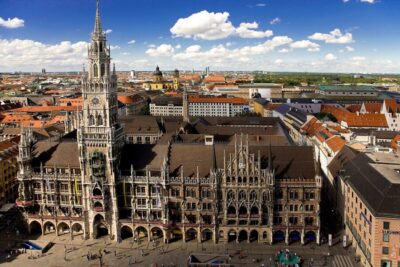
From there, you move to Munich Marienplatz, the central square tied to the city since 1158. Marienplatz is where you understand the modern flow of Munich. You have the New Town Hall, the Glockenspiel, and the Mariensäule monument. You also get time to absorb the energy around shopping streets and people-watching.
Two practical tips here:
- Look up the timing for the Glockenspiel before you arrive, because that is often when it grabs attention.
- Take a minute to stand back. Marienplatz is one of those squares where the surrounding buildings matter as much as the center.
Max-Joseph-Platz and the Maximilianeum: Royal Power and Parliamentary Realities
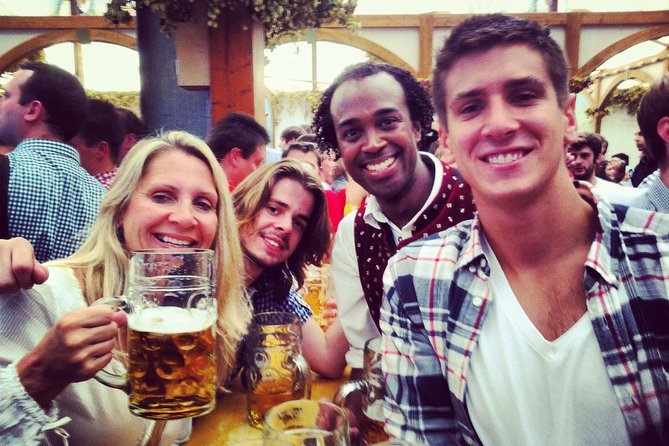
The tour then heads to Max-Joseph-Platz, a grand square connected to major institutions like the National Theatre and the Munich Residenz area. You get the neoclassical feel of a city shaped by royal patronage, not only medieval origins. This stop helps you read Munich’s architecture like a timeline.
Right after that, you have the Maximilianeum, a palatial building originally supported for gifted students and, since 1949, home to the Bavarian State Parliament. That is a fascinating pairing, because you go from theatre and residence to modern governance. You start to see how Munich keeps shifting roles while staying in the same neighborhoods.
Also, the building sits above the Isar River, so if weather is decent, you get a nice sense of the river’s presence in city planning.
If you like political context, you will likely appreciate that these are not random statues and buildings. They are about who gets power, who gets funded, and what the city chooses to display.
St. Michael’s and St. Peter’s: Two Church Styles and One City View
Next are the big church stops: St. Michael München and St. Peter’s Church.
St. Michael’s is Munich’s largest Renaissance church, built in the late 1500s as part of the Jesuit order. The facade is striking, and inside you will find the vast barrel-vaulted ceiling, with early Baroque influence. You can also explore the royal crypt, which connects religious space to ruling families. This stop feels like you are looking at Munich’s “who mattered” story through architecture.
Then comes St. Peter’s Church, Munich’s oldest parish church, dating to the 12th century. Known locally as Alter Peter, it has a 91-meter tower with city views. You also get a mix of styles inside, including Gothic, Baroque, and Rococo elements, plus a high altar that anchors the interior.
What I like here is the contrast. Renaissance and Jesuit planning on one side. Medieval roots and mixed interior styles on the other. After these, you do not just see churches. You see evolution.
Wolfsbrunnen, Odeonsplatz, and Karlsplatz: Art Nouveau, Royal Squares, and Stachus
Now you shift from churches and institutions into public space.
Wolfsbrunnen is an Art Nouveau fountain from 1904, created by sculptors Heinrich Düll and Georg Pezold. It features a bronze scene of Little Red Riding Hood and a wolf, commissioned by the Wolf family. That kind of detail is why this tour feels more like living city culture than sightseeing.
Then you reach Odeonsplatz, a grand central square designed in the early 1800s. It includes the Theatine Church, the Feldherrnhalle, and the Residenz, all reflecting Italian-inspired architecture. This is where Munich starts to feel like a staged backdrop for major history, in the best and most unsettling ways.
After that, you move to Karlsplatz, locally called Stachus. It is famous for a few reasons: the Karlstor gate, a lively fountain in summer, and an ice rink in winter. You also see how the square functions across seasons. Munich is not only historical. It is practical and seasonal.
These stops are often short, but they matter. They give you a sense of how people move through the city day-to-day.
Viktualienmarkt Lunch Break: Where the Day Becomes Food and Beer Culture
This is a highlight for most people for a reason. Viktualienmarkt is Munich’s historic open-air market, and it has been a vibrant hub since the early 1800s. You will see fresh produce, Bavarian specialties, and artisanal goods in a space designed for browsing and grazing.
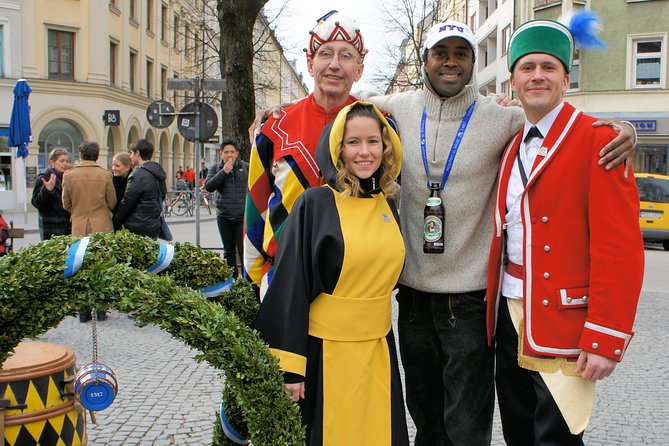
The tour includes a mid-tour break here for a freshly made Bavarian lunch, and this is where you refuel without losing the flow of the day. The snack options listed include a Bavarian Bratwurst (spicy, cheese, or regular) OR Bavarian potato salad with a pretzel, plus one Bavarian beer. There is also mention of a reusable beer bottle holder, which is a fun practical touch if you like souvenirs that are actually usable.
One practical point: the lunch stop is described as a pause for food you buy, not a guaranteed included meal. So decide in advance whether you want the bratwurst-and-beer version, or a lighter snack.
Why this stop is so valuable:
- It teaches you what to order in Munich beyond the usual tourist clichés.
- It shows how the city organizes everyday life around food.
- It gives you time to sit and recover, which keeps the rest of the walk enjoyable instead of exhausting.
Also, the market is a natural bridge between history and modern Munich. You can look at the stalls, then immediately connect what you saw earlier in the day to how Munich actually spends time.
Third Reich Context: Clear, Serious, and Kept in the City Story
The tour title includes Third Reich material, and that is not an easy topic. The value here is how it is handled as part of the city narrative, not treated like a random detour.
From what the guide approach seems to be, the goal is context. You are not just learning facts about buildings or symbols. You are learning how the past shows up in public space, and how Munich has moved forward while still carrying visible reminders.
I would suggest you treat this part like a moment to slow down, even if the tour keeps moving. If you want to understand Munich as it is today, it helps to know what came before. And it helps when the guide explains it in a way that stays human, not theatrical.
If the topic is emotionally heavy for you, you can give yourself a small reset during the market stop later. Food and a beer garden pause can make the rest of the day feel more livable.
Weather, Pace, and Comfort: The Real Decision Points
Let’s be honest about the day. It is a walking tour, and a good chunk is outdoors. In winter, you will want layers you can move in. If you expect snow, cold rain, or wind, dress like you mean it. The tour will still continue, because it is designed as a route through the city.
A few comfort tips that help:
- Wear shoes with grip, because some areas can be slippery.
- Bring a hat or hood if the wind bites.
- Keep a warm layer in your day bag, even if mornings start mild.
Also, the pace is likely to feel different depending on your guide and your group. When you are in a group of up to 20, the guide has to balance explanations with everyone’s ability to stand still. So if you dislike long standing time, show up prepared, and use the indoor stops for your breathing room.
Who This Tour Fits Best, and Who Might Want Another Option
I think this tour is best for:
- First-time visitors who want a clear orientation to central Munich
- People who enjoy a mix of architecture, squares, and food
- Travelers who like history explained in a way you can connect to streets you are actually walking
- Anyone who wants a small group and time for questions
You might choose a different tour if:
- You hate walking and prefer mostly indoor attractions
- You want deep museum time at fewer stops, not lots of quick, meaningful stops
- You plan to focus on one very specific theme only, like only WWII history or only beer halls
Should You Book This Munich City Walking Tour?
If you want a smart first-day plan, this is an easy yes. For $31.78 you get a compact, high-stop-count route through major Munich touchpoints, plus practical tips for getting around. The Viktualienmarkt lunch break is a big part of why it feels fun, not just educational, and the small group size helps you actually interact.
My only caution is weather and pace. Go in prepared to be outside, and you will enjoy the day much more. If you show up in layers and bring your curiosity, this walk should give you a Munich you can navigate confidently for the rest of your trip.
FAQ
How long is the Munich City Walking Tour?
The tour lasts about 3 hours 15 minutes.
How much does the tour cost?
The price is listed as $31.78 per person.
Is the tour offered in English?
Yes, it is offered in English.
What is the maximum group size?
The tour has a maximum of 20 travelers.
Where do I meet the tour and where does it end?
You meet at Schützenstr 11, 80335 München, Germany, and the tour ends at Odeonsplatz (Odeonspl. 3, 80539 München, Germany).
Is the lunch included?
The guided tour is included, but snacks and lunch are not included. There is a mid-tour pause for a freshly made Bavarian lunch at Viktualienmarkt.
Can I bring a service animal?
Yes, service animals are allowed.
Is free cancellation available?
Yes, free cancellation is available. You can cancel up to 24 hours in advance for a full refund.
Cities at Walking Speed
- Munich: Night Watchman Walking Tour
★ 4.7 · 2,092 reviews - Munich Ghosts and Spirits Evening Walking Tour
★ 5.0 · 1,900 reviews - Munich Old Town Walking Tour
★ 4.5 · 1,287 reviews - Munich: Walking Tour Old Town and Viktualienmarkt
★ 4.7 · 839 reviews
Fresh on the arrivals board for Munich

Guided Walks in Munich, compared.
Old Town & Viktualienmarkt City Walk in German
Read our review →
Munich Ghosts and Spirits Evening Walking Tour
Read our review →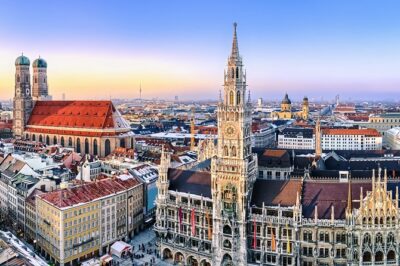

Birthplace of the Third Reich Guided Walking Tour
Read our review →Browse the lists this tour appears in