
Reviewed · WALKING TOURS
Frankfurt Walking Tour: Explore Top Sights & Hidden Gems
Frankfurt tells its story on foot. This 2.5-hour route strings together seven major landmarks and a few quick looks that explain the city’s cultural and political roots, from Goethe to the democratic moment of 1848. I really like the 20-minute stops, because it keeps the pace lively and helps you cover a lot without getting stuck in one spot for hours. I also love that the listed sights have admission tickets marked as free, so your $32 goes mostly toward the guided walk and not entry fees.
The only catch is time. Each stop is about 20 minutes, so if you want to linger, read every sign slowly, or take a long photo session inside, you may feel a bit rushed.
In This Review
- Key Highlights You Should Care About
- Why This 2.5 Hour Frankfurt Loop Works So Well
- Start at Alte Oper: The Postwar Cultural Anchor
- Goetheplatz: Where the City Sits in Plain Sight
- Goethe House: The Writer’s Birthplace and 18th-Century Life
- St Paul’s Church: The 1848 Democracy Moment
- Römerberg: Frankfurt’s Iconic Square, Timber-Framed Charm
- Frankfurt Cathedral (Kaiserdom): Gothic Style and Imperial Meaning
- Eiserner Steg: The Iron Footbridge Over the Main
- Price and Value: What $32 Buys You in Frankfurt
- The Real-World Pace and What to Bring
- Who This Tour Fits Best (and Who Might Want Something Else)
- Final Call: Should You Book This Frankfurt Walking Tour?
- FAQ
- How long is the Frankfurt walking tour?
- What time does the tour start?
- Where does the tour meet?
- Does the tour end at the same place?
- Is the tour offered in English?
- Are admission tickets included for the stops?
- How many people are in a group?
- Is gratuity included in the price?
- Are service animals allowed?
- Can I cancel for a full refund?
Key Highlights You Should Care About
- Seven-stop route through core Frankfurt: from Alte Oper to Eiserner Steg
- English tour with a professional guide who adds context you might miss on your own
- Small group size (max 15) for easier questions and a smoother pace
- Admission ticket free at each listed stop keeps the cost simple
- Mobile ticket so you do not have to fuss with paper confirmations
Why This 2.5 Hour Frankfurt Loop Works So Well
This is a smart length for first-time Frankfurt visitors. At about 2 hours 30 minutes, you get a real overview of the city core without turning your day into a full logistics project.
The stop structure matters too. With roughly 20 minutes per location, you get just enough time to understand what you are looking at, then move on before the walk feels like a slog. That makes it easier to enjoy both the big-ticket landmarks and the quieter, human-scale corners along the way.
More Walking Tours in Frankfurt
- Frankfurt Highlights English Walking Tour
★ 5.0 · 1,203 reviews - Frankfurt on Foot Daily Walking Tour in English
★ 4.9 · 323 reviews - Frankfurt: Private or Shared Walking Tour
★ 4.5 · 158 reviews
Start at Alte Oper: The Postwar Cultural Anchor
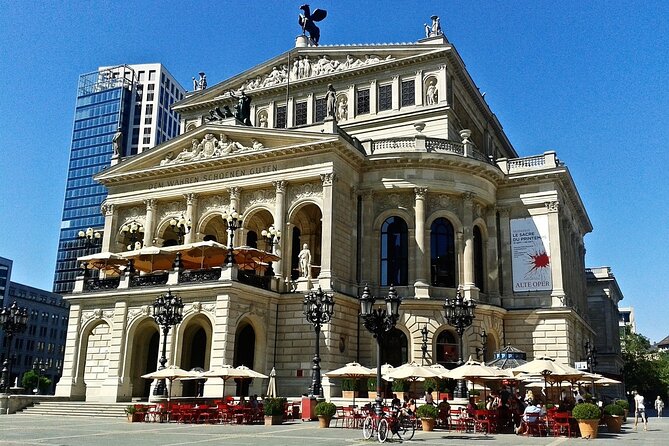
Your tour begins at Alte Oper, a grand neo-Renaissance building that once served as Frankfurt’s main opera house. The key point here is what the building represents: cultural resilience after World War II, and a signal that the city’s arts scene has always been part of its identity.
Even if you have never cared much about opera, you can still read the building like a clue. It tells you that Frankfurt rebuilt with intention, not just with practicality. I like that the tour frames it as more than a pretty façade, it is a symbol of recovery and artistic life.
Practical note: because this is a walking tour format, you will be looking from outside for most of your time here. That is fine, since the goal is orientation fast.
Goetheplatz: Where the City Sits in Plain Sight
Next comes Goetheplatz, a central square named for Johann Wolfgang von Goethe. This stop is about connecting a famous person to a real place, not treating Goethe like a name on a textbook page.
You will get the sense of how the square works today, with shops and everyday city landmarks around it. Think of this as a way to ground the story before you jump into the heavier literary and historical sites.
If you like urban walks where you can observe how people actually use space, this is a good breather. It keeps the tour feeling like a living city rather than a museum track.
Goethe House: The Writer’s Birthplace and 18th-Century Life
Then you move to Goethe House, described as Goethe’s birthplace and a window into 18th-century life. This stop is built for context, not just curiosity. You are not only seeing a historic site, you are getting early influences behind Goethe’s literary legacy.
The value here is timing. After you have already seen Goetheplatz, the name now has a physical point in the city. That link helps the visit stick, because you are not bouncing from landmark to landmark with no thread.
One consideration: with only about 20 minutes, you should go in with a simple plan. Pick one or two themes you want to notice, like daily life or early influences, and focus on those. Trying to absorb everything at once is how people end up feeling rushed.
St Paul’s Church: The 1848 Democracy Moment
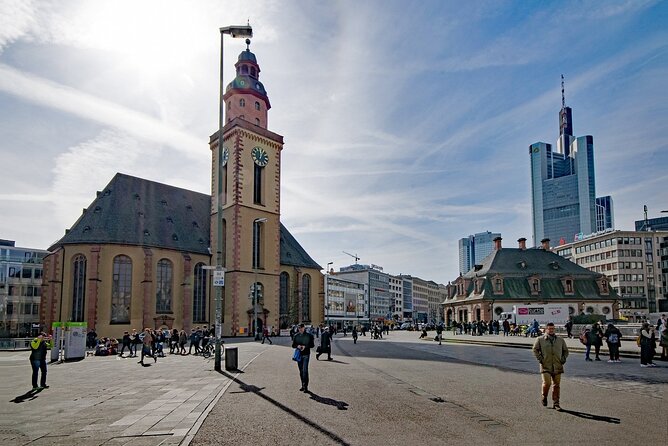
At St. Paul’s Church, the tour turns from literature to politics. This place is known for hosting the first freely elected parliament in 1848, and it is described as a key symbol of German democracy.
I like this stop because it adds a human scale to big historical ideas. You are standing in a building tied to a clear turning point, so the story has a concrete anchor. And because the tour keeps it moving, you leave with a usable understanding, not a vague impression.
If politics is not your usual travel interest, you will still likely find this one memorable. The reason is simple: the tour explains what happened here, not just that it is important.
More German cities at walking speed:



Römerberg: Frankfurt’s Iconic Square, Timber-Framed Charm
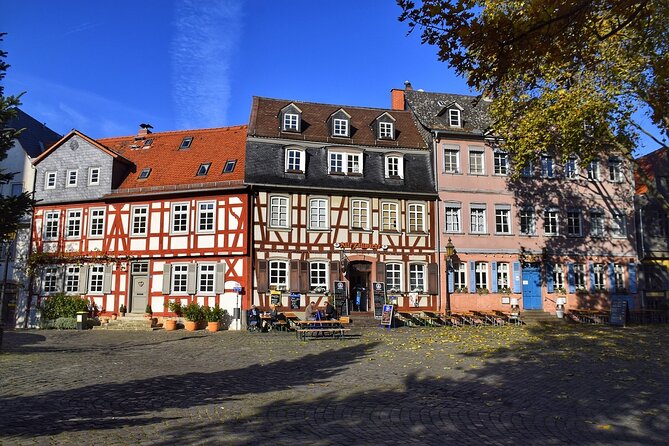
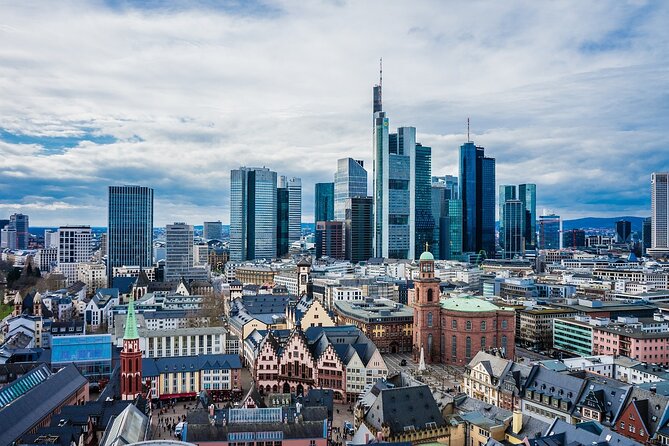
Now the tour hits Römerberg, Frankfurt’s most iconic historic square. The description focuses on the timber-framed houses and the medieval charm, plus the fact that this area has been linked to civic and commercial life for centuries.
This is the stop where you should slow down just a touch, even if the guided time is set. Use the 20 minutes to take in the shapes, the street edges, and the way the square feels like a stage for everyday city life.
Römerberg is also a great photo stop. If you enjoy architecture shots, you will see why this square is the one people point to first when describing old Frankfurt.
Possible drawback: because it is such a recognizable area, it can feel busy compared with quieter streets. If crowds bother you, keep your photo goals small and quick, then move on with the group.
Frankfurt Cathedral (Kaiserdom): Gothic Style and Imperial Meaning
Next is the Frankfurt Cathedral, also known as the Kaiserdom. This Gothic cathedral is described as having played a central role in imperial coronations, and it is also tied to the city’s religious heritage.
This stop works well right after Römerberg because the tone changes. One moment you are in medieval civic space, and then you are looking at a religious landmark with imperial significance. That contrast helps you feel how Frankfurt has balanced multiple layers of power over time.
With a 20-minute window, the trick is to focus on form and function. Look at the Gothic style features, then connect them to the idea of coronations. You do not need to memorize dates to get the meaning of the building.
Eiserner Steg: The Iron Footbridge Over the Main
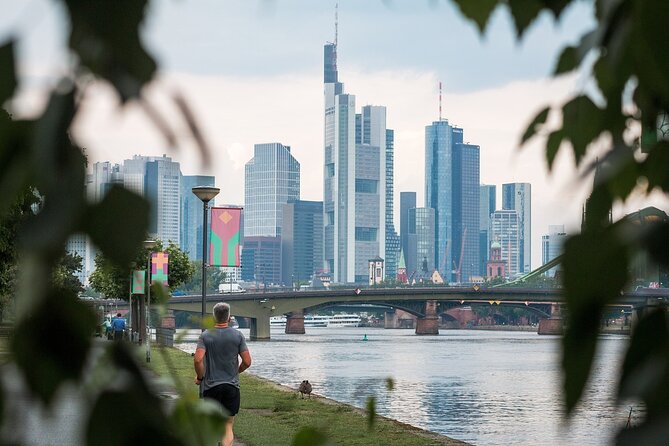
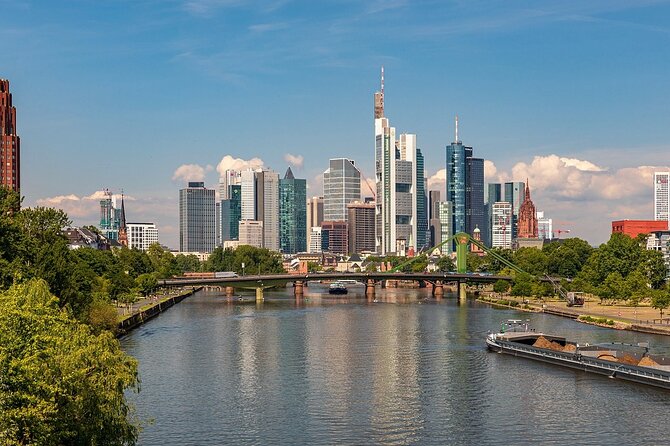
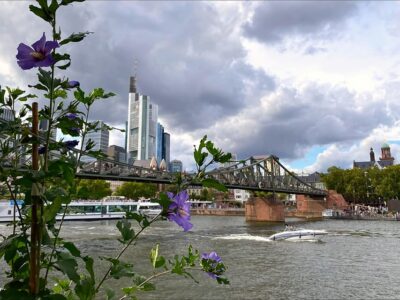
Finally, you cross to Eiserner Steg, a historic iron footbridge over the Main River. The emphasis here is on views of Frankfurt’s skyline and on how this bridge acts as a link between the old town and Sachsenhausen.
This is a smart ending because it gives you movement and breathing room. After walking through squares and landmark clusters, the river crossing lets you reset your eyes and then take in the city as a whole.
If you like scenic “wrap-up” moments, this is the kind of stop that does it. Even with short guided time, the bridge angle often gives you a quick sense of direction, and you will see how the river shapes the city.
Price and Value: What $32 Buys You in Frankfurt
At $32 per person, the value here comes from the blend of guidance plus entry-free access at the listed stops. You are paying for a professional tour guide and a structured route that hits major highlights in about 2.5 hours.
It also helps that the group size is limited, with a maximum of 15 travelers. Smaller groups usually mean better pacing and more chances to ask questions, especially when the guide is explaining how the sites connect.
One detail that stands out from the experience feedback is the guide Srishti, praised for strong city and history command. That matters, because these landmarks can feel like a list if nobody connects the dots. Here, the tour aims to do the connecting for you.
Also, the tour is offered in English and uses a mobile ticket. That reduces friction if you are trying to keep your travel day simple.
The Real-World Pace and What to Bring
This is a walking tour, so you should plan like it. Wear comfortable shoes, and bring a light layer if the weather shifts.
The 20-minute rhythm is a feature, not a flaw, as long as you match your expectations. This is not a slow, open-ended wandering day where you can read every plaque for a half hour each. It is a guided overview meant to help you get your bearings fast.
For photo planning, do quick decisions. Pick one or two spots in each area where you can frame the big look, then let the rest be context. You will enjoy the walk more that way.
Who This Tour Fits Best (and Who Might Want Something Else)
This tour is a great fit if you want a curated sense of Frankfurt without needing to study the city map for hours. It is also useful if you care about German culture and want a thread that moves from literature to democracy to architecture.
You will likely enjoy it if you are:
- visiting for a first time and want the core landmarks in one morning block
- comfortable with a brisk walking pace
- interested in explanations tied to what you see, not just sightseeing checklists
If you are someone who loves long museum-style visits and wants deep time in interiors, you might want a different format. The 20-minute stop structure is designed for breadth, not for extended exploration.
Final Call: Should You Book This Frankfurt Walking Tour?
I think you should book this tour if your goal is a fast, organized introduction to Frankfurt’s most important landmarks. The route makes sense, the pacing is manageable, and the focus on context turns the stops into a story you can remember.
I would skip it only if you know you need long, unstructured time at each location. Otherwise, this is a good use of a couple of hours in the city, with free admission tickets listed for the sights on the route and an English guide who can connect the historical dots.
FAQ
How long is the Frankfurt walking tour?
It runs for about 2 hours 30 minutes.
What time does the tour start?
The start time is 11:00 am.
Where does the tour meet?
The meeting point is Alte Oper, Opernpl. 1, 60313 Frankfurt am Main, Germany.
Does the tour end at the same place?
Yes. The activity ends back at the meeting point.
Is the tour offered in English?
Yes, it is offered in English.
Are admission tickets included for the stops?
Admission tickets for the listed stops are marked as free.
How many people are in a group?
The tour has a maximum of 15 travelers.
Is gratuity included in the price?
No. Gratuities are optional.
Are service animals allowed?
Yes, service animals are allowed.
Can I cancel for a full refund?
You can cancel up to 24 hours in advance of the experience start time for a full refund. If you cancel less than 24 hours before, the amount paid is not refunded.
Fresh on the arrivals board for Frankfurt



Walking Tours, compared.
Berlin City walk Government District and Places of Democracy
Read our review →
Berlin’s Best: 2 Hour Walking Tour Third Reich and the Cold War
Read our review →
Browse the lists this tour appears in