
Reviewed · WALKING TOURS
Frankfurt on Foot Daily Walking Tour in English
Three hours, and Frankfurt clicks into place. This English-only on-foot walk is built for real orientation, starting in the heart of the Römerberg area and weaving through major sights without bus hassle. You’ll get a clear path through the city’s layers, from medieval squares to WWII remembrance sites.
I love the way the route balances big monuments with human-scale details, especially around Holocaust memory. I also like that most stops are free entries, plus you get a snack break and planned bathroom stops so the walk stays comfortable. One consideration: it’s an easy walk distance-wise, but expect about 7 km worth of moving (and some streets can get slippery in rain), and the WWII and Holocaust sites are emotionally heavy.
Key points worth your attention
- English-only guides who keep the pacing easy and the stories clear
- Free entries at the key stops, so you’re not paying extra at each site
- Serious stops that explain Nazi-era history, including Stolper Steine and the Holocaust memorial wall
- Great photo moments, especially along the Main river and from the pedestrian bridge
- A useful stop at Klein Markt Halle when it’s open (not Sundays and holidays)
In This Review
- Meeting on Römerberg, and how to start smart
- The Römer and Römerplatz: power, tradition, and today’s heart
- Rebuilt Old Town: how the New Alt Stadt tells a story
- Book Burning Memorial: facing the dark chapter in daylight
- Alt Nikolai Church, House Wertheim, and the half-timber clues
- Eisener Steg and the Main river: views that make the route worth it
- Kaiserdom St. Bartholomew: imperial power on the exterior
- Karmeliter Cloister and Jörge Ratgeb: art that doesn’t feel distant
- Stolper Steine and the Jewish quarter: memory in the sidewalk
- The Jewish Holocaust Memorial Wall: Anne, Margot, and Edith Frank
- Medieval Jewish Cemetery and the Ghetto Wall: history you can still read
- Klein Markt Halle and the snack break: a useful taste of daily life
- Price, value, and what makes it feel fair at $35
- What to wear and how much walking you should expect
- Who this Frankfurt on Foot tour is best for
- Should you book it?
Meeting on Römerberg, and how to start smart
The tour runs daily for a full three hours, with an English live guide. The start time is 10:00, and your meeting point is directly across from the Tourist Info on the Römerberg, in front of the Binding Schirn Pub, on the street, with a Frankfurt on Foot sign. (One detail to double-check: the tour information also mentions Braubach Strasse 41, so plan to find your guide using the Römerberg sign.)
You’ll want to arrive a few minutes early. Frankfurt can be easy to navigate, but you’re starting in a busy historic core, and the guides keep the day moving with photo stops and quick transitions. This is a good tour to do early in your trip, because it gives you landmarks you can then use later when you wander on your own.
And yes, you’ll be walking. This is no-transport, on-foot sightseeing, so bring comfortable shoes. If you’re traveling in cold or wet weather, expect slick cobblestones and plan to move carefully.
The Römer and Römerplatz: power, tradition, and today’s heart
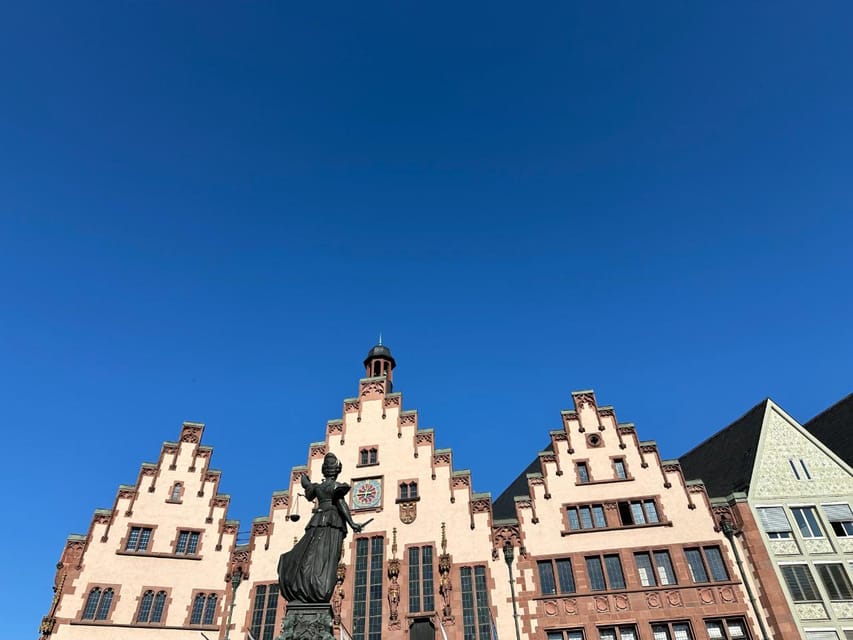
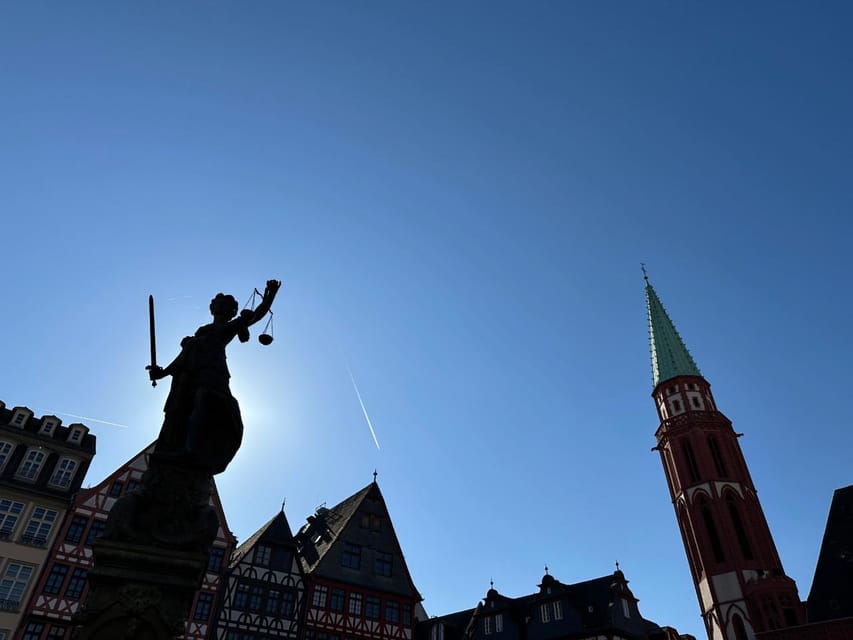
You begin at the Römerberg center of things, with the Römer and Römerplatz in your first sights. The Römer is Frankfurt’s historic city hall, in use since 1405, and Römerplatz is the old town square where city life has played out for centuries. This area sets the tone fast: you’re in a living civic center, not a museum set behind glass.
What I like about starting here is that the guide can quickly connect the medieval world to the modern one you’re seeing around you. You get the layout of the old town without needing to study a map for an hour first. It also makes the later WWII and rebuilding stories easier to follow, because you’re anchoring everything to real geography.
Practical note: this is a walking tour, but the early part is usually the easiest way to find your rhythm, and it’s loaded with obvious photo opportunities. If you like skyline views, you’re also positioning yourself for later river viewpoints.
More Walking Tours in Frankfurt
- Frankfurt Highlights English Walking Tour
★ 5.0 · 1,203 reviews - Frankfurt: Private or Shared Walking Tour
★ 4.5 · 158 reviews - Frankfurt: Private Walking Tour with a Local
★ 4.4 · 83 reviews
Rebuilt Old Town: how the New Alt Stadt tells a story
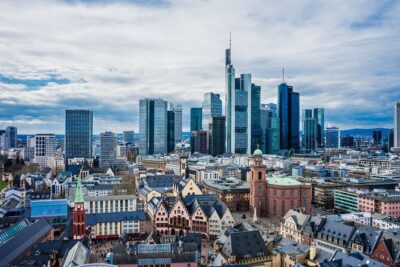
One of the most interesting stops is the New Alt Stadt, and the key thing your guide will explain is not just what was rebuilt, but why it was rebuilt. Frankfurt’s old core was heavily shaped by 20th-century destruction and then re-created, and the guide helps you understand what that means for identity, memory, and architecture.
This kind of stop can go two ways. It can feel like a simple “look at these pretty buildings” moment, or it can become a lesson in how cities choose what to restore and what to change. Done well, like this tour aims to do, it turns the streets into a timeline you can actually walk through.
Also, keep in mind that parts of the route can mean more time outside, especially around churches where interior access may vary by day. It’s not a dealbreaker, but if you’re hoping for inside visits everywhere, you’ll want a little flexibility in your own plans.
Book Burning Memorial: facing the dark chapter in daylight
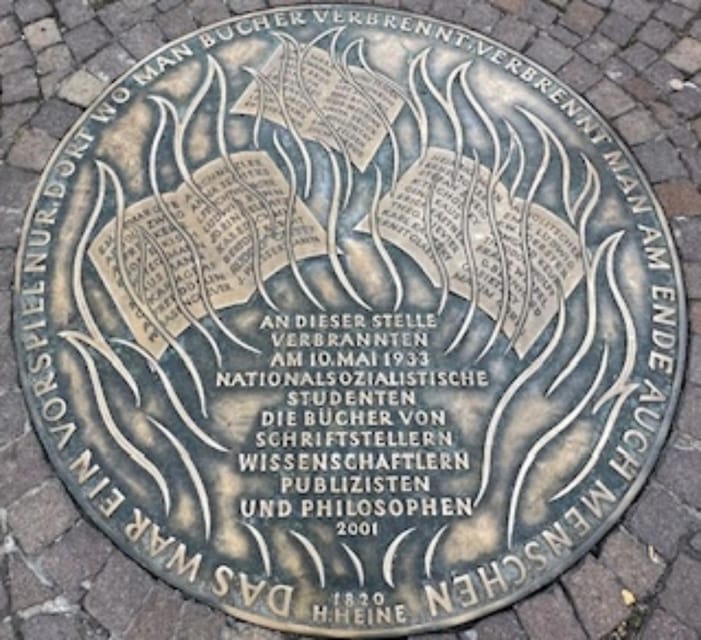
From the rebuilt streets, you’ll move to the Book Burning Memorial, the site connected to Nazi book burnings. This stop is part of the tour’s promise to explain Frankfurt’s history honestly, not only the pretty parts.
If you’re someone who likes factual context, this is a strong moment. The memorial isn’t abstract. It’s placed right in the city’s center, so you feel how ideology can become policy, and how public acts can shape culture.
One consideration: expect this to be emotionally heavy. The pace is still easy walking, but your brain may feel like it’s slowing down, because these stops are about real harm and real lives. I’d plan this part of the day so you have time afterward to decompress with a coffee or food rather than sprinting straight into a busy museum circuit.
Alt Nikolai Church, House Wertheim, and the half-timber clues
Next you’ll see Alt Nikolai Church, a Gothic church built in 1290, with exterior viewing on Sundays. Even when you’re only seeing the outside, it’s useful for orientation because church architecture in central Europe tells you a lot about when a city mattered and how it organized community life.
Then comes House Wertheim, highlighted because it’s the inner city’s only original half-timbered house left at the end of World War II. When a building is one of the few survivors, it becomes a physical survivor too. It helps you understand the contrast between pre-war Frankfurt and what came after.
These stops are short, but they add up. If you’ve ever felt like old towns look similar, these details are what make Frankfurt feel distinct. You begin to notice street-level clues: materials, styles, and what was lost or preserved.
Eisener Steg and the Main river: views that make the route worth it
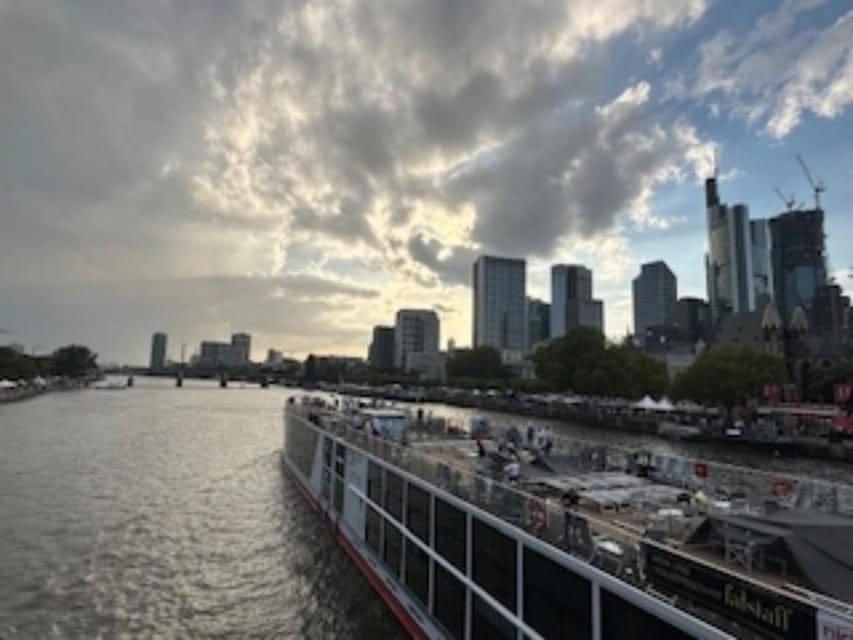
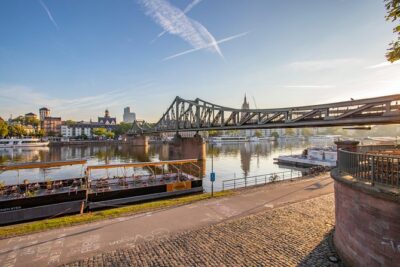
Then the walk shifts toward the river with Eisener Steg, a pedestrian bridge over the Main. This is one of those places where you get rewarded just for showing up. From here, you can see the skyline and the clusters of museums along the riverbanks.
What I like about including a bridge stop is that it resets your eyes. After memorial and reconstruction themes, it’s a real breather to look across open water and scan the city’s modern line. It’s also one of the best “where am I?” moments, because you can now picture how the old core relates to the river and the museum mile.
Bring your camera or phone because this is where the “best overview” promise becomes tangible. It’s not only pretty. It’s a map you can understand with your feet.
More German cities at walking speed:


Kaiserdom St. Bartholomew: imperial power on the exterior
Your tour includes St. Bartholomew, often called the Kaiserdom, the Imperial Church. This is the kind of building that screams importance, because for centuries it was a site for coronations and elections of the Holy Roman Emperor.
Like Alt Nikolai, the tour generally keeps to exterior-only on Sundays and religious holidays. Even outdoors, you can still grasp why it mattered: the scale, the placement, and the way it dominates the nearby civic space.
If you’re visiting Frankfurt for the first time, I find imperial church stops helpful because they explain the city’s role in Europe, not only Germany. Frankfurt was never just a commuter city. It has been a node of politics and finance, and the guide can connect that to what you see today.
Karmeliter Cloister and Jörge Ratgeb: art that doesn’t feel distant
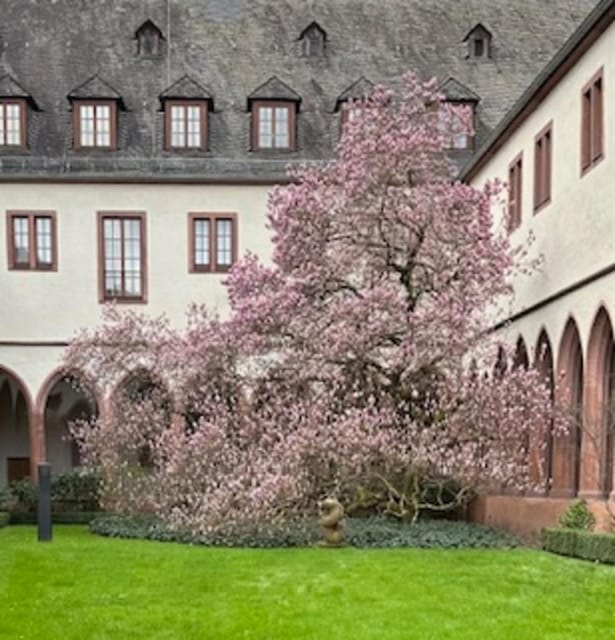
One standout interior stop is the Jörge Ratgeb wall paintings in the Karmeliter Cloister. Your guide will point out that these are the largest religious wall paintings north of the Alps, painted in the early 1500s.
Two practical notes matter here. First, they’re not shown on some holidays, so you might not see them every day. Second, even if you’re not an art person, wall paintings at this scale are hard to ignore once you’re close.
This stop gives the tour a different texture. It adds culture that isn’t only buildings and dates. It also helps you see that Frankfurt’s story isn’t only about politics. It’s about faith, art, and how people lived visually and emotionally in the past.
Stolper Steine and the Jewish quarter: memory in the sidewalk
Then you’ll step into a very specific way of remembering: Stolper Steine, often called stumbling stones. This is a unique system where small memorial plaques mark the lives of victims who were murdered under the Nazi regime.
The power here is in its ordinariness. You see remembrance where people should be walking to work, catching trains, and going about daily life. Your guide’s job is to connect each location to the story behind it, and to help you read the street as a historical document.
From there, the tour moves through key Jewish history sites, including the Jewish Holocaust Memorial Wall and surrounding areas tied to medieval Jewish presence. This isn’t a quick photo-op style stop. It’s personal, grounded, and designed for respect.
The Jewish Holocaust Memorial Wall: Anne, Margot, and Edith Frank
One of the most poignant stops is the Jewish Holocaust Memorial Wall chosen by the city of Frankfurt. It honors the approximately 12,000 Jewish citizens of Frankfurt who were killed in the Shoa and includes Anne, Margot, and Edith Frank.
This is not a generic memorial wall. It’s personal and specific, which is exactly what makes it hit so hard. When a city includes names and family details in public space, it’s choosing remembrance over forgetting, year after year.
If you want to understand why this matters, pay attention to how your guide frames Frankfurt’s role in WWII, and how Jewish life here was shaped and then destroyed. Even if you already know parts of the story, the local focus changes how the information lands.
If you’re traveling with kids, the tour is described as children 12 and under are free and welcome, as long as they can handle about 7 km of walking. For younger kids, the emotional content may be a lot, so it’s wise to decide in advance whether this part fits your family.
Medieval Jewish Cemetery and the Ghetto Wall: history you can still read
Next you’ll view the Medieval Jewish Cemetery, one of the oldest and largest Jewish cemeteries in Germany, though you’ll see it from the outside. Then you’ll visit the Jewish Ghetto Wall, once part of city defenses in 1180 and later part of the walls that surrounded the Medieval Jewish ghetto.
These stops help you widen the timeline. Instead of only focusing on WWII, you’re seeing that Frankfurt’s Jewish community history stretches much farther back. That gives the Holocaust-era memorial stops more context, because you’re not just learning what happened later, you’re seeing that a community existed and endured for centuries.
The outside viewing matters too. Even without entering, you can still pick up how the walls and boundaries shaped daily life. This is history built into the geometry of the city.
Klein Markt Halle and the snack break: a useful taste of daily life
Near the end, the tour often includes a stop at Klein Markt Halle, a produce hall that’s described as a favorite. You’ll see lots of everyday variety, including fruits and vegetables, chocolate and pastries, cheeses and breads, meats and fish, plus delicacies from around the world.
Two practical constraints apply. Klein Markt Halle is not available on Sundays and holidays, so you might miss it depending on the day. Also, snacks and drinks are not included, though the tour does include a snack break. That means you’ll likely have time to buy a bite rather than being handed a fully planned meal.
This stop is great if you want a concrete connection to modern Frankfurt food culture. Even 10 minutes there can help you later choose what to eat without panic. If you’re the type who always forgets to pack snacks for tours, this is one place where you’ll appreciate the timing.
One small consideration from real-world pacing: the snack break can be just long enough to grab something, not long enough to linger. If you want to sit and eat slowly, plan to do that after the tour ends.
Price, value, and what makes it feel fair at $35
At $35 per person for a 3-hour walking tour, the value comes from how much you get inside the time. This isn’t just a general stroll with stories. It includes free entry to the tour stops and is designed for a strong overview of Frankfurt, with guides handling the context so you’re not stuck reading street signs and guessing.
You’re paying for:
- An experienced English guide who connects the city’s past to what you see now
- A route that covers major sights without paying for transportation
- Planned breaks, including a bathroom break and a snack break
- Free entries at the included points
So yes, the price is reasonable, especially if you’d otherwise spend that kind of money piecing together multiple attractions and walking yourself between them.
It’s also a smart choice if you’re traveling solo or with a mixed group. The tour language is English only, and the structure is consistent, which helps you follow the story without falling behind.
What to wear and how much walking you should expect
This is an easy walking tour, but it’s still about being on your feet for a while. Bring comfortable shoes, and on rainy days expect cobblestones that can feel slippery. If you’re touring in winter, consider gloves and a hat, because your hands will get cold fast if you pause for photos and memorial moments.
The tour is wheelchair accessible and stroller friendly, and the tour information notes wheelchair and stroller friendliness directly. For kids 12 and under, they’re free and welcome, assuming they can manage about 7 km of walking.
If you have limited mobility, you should still confirm how the pacing and stops work for your specific needs, since this is a walk-first tour with no transportation used.
Who this Frankfurt on Foot tour is best for
This tour is ideal if you want a guided hit of Frankfurt that goes beyond postcards. It’s especially good for first-time visitors who want an overview that includes both beauty and truth, including WWII-era memory sites and Jewish history in the city.
It also works for people who like practical guidance. You’ll get lots of photo opportunities, plus suggestions in the form of “what to look at and why,” not only a list of monuments.
If you love deep architectural details or you care about WWII remembrance, you’ll likely feel satisfied because the route gives both scale and specificity. If you only want upbeat sights and would rather avoid heavy topics, this might feel like too much emotional weight for one morning. In that case, you could consider splitting your day and doing a lighter activity afterward.
Should you book it?
Yes, I’d book this tour if you want a high-impact, English-guided overview of Frankfurt in just three hours, with free-entry stops and built-in breaks. The route is especially strong if you care about the real story of the city, not only the restored facades.
Book it confidently if:
- You want a plan you can trust for a first visit
- You’re okay with WWII and Holocaust-related memorials
- You like walking routes that end with good skyline and river views
Skip or adjust your expectations if:
- You want only casual sightseeing with light topics
- You dislike walking for about 7 km and long standing moments
- You’re hoping for inside access everywhere, since some churches and artworks are exterior-only on Sundays and holidays, and some sites are not shown on certain holidays
If your goal is to understand Frankfurt fast, this tour is one of the most efficient ways to do it.
Fresh on the arrivals board for Frankfurt


Walking Tours, compared.
Berlin City walk Government District and Places of Democracy
Read our review →
Berlin’s Best: 2 Hour Walking Tour Third Reich and the Cold War
Read our review →
Browse the lists this tour appears in