
Reviewed · 1-DAY TOURS
Trier Small-Group Day Trip from Frankfurt
Roman walls in Trier, all in one day. I like the small-group size and the guide-led pacing that keeps the story clear from Roman gates to cathedral relics. The main drawback is that it is a long day, with an about 2.5-hour drive each way.
You start at Wiesenhüttenpl. 38 in Frankfurt (9:30 am) and you are back at the same point at day’s end. This trip caps at 8 travelers and uses a mobile ticket, so it is designed to run smoothly even though Trier is a big visual day. In at least one rainy-day example, the guide George handled the weather by swapping in different sites so the day still felt worth it.
In This Review
- Key points to know before you go
- Trier day trip from Frankfurt: what makes it work
- Frankfurt to Trier by car: timing, comfort, and sanity
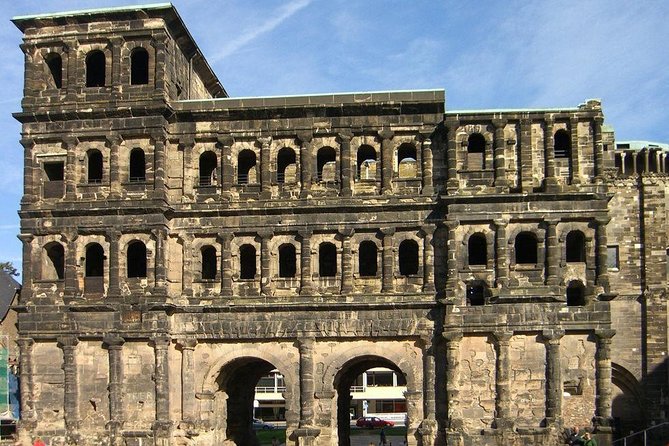
- First big stop in Trier: Porta Nigra and the Roman city feel
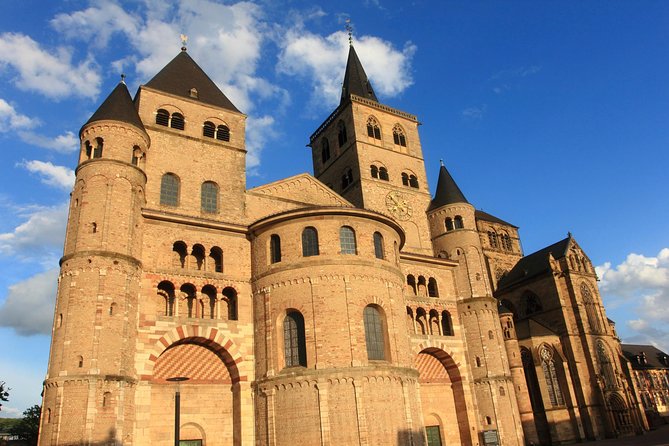
- St Peter’s Cathedral: the oldest cathedral in Germany moment
- Church of Our Lady (Liebfrauenkirche): oldest Gothic church vibe
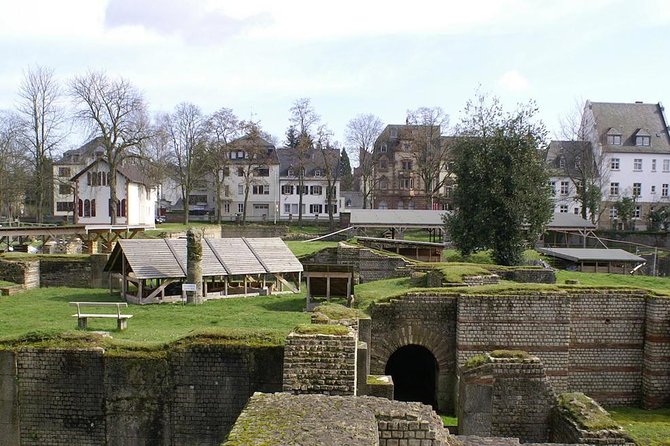
- Roman Amphitheater and Imperial Baths: the included payoff
- Trier Amphitheater
- Trier Imperial Baths
- The walk-through plus museum and Rococo stops
- Free time you can actually use: Hauptmarkt, Palastgarten, and the Roman Bridge area
- How long is really enough for Trier?
- Small group size: what it changes on the ground
- Price and value: is $457.25 reasonable
- Who this Trier tour suits best
- Should you book this Trier small-group day trip?
- FAQ
- Where is the meeting point for the Frankfurt to Trier tour?
- What time does the Trier day trip start?
- How long is the tour from start to finish?
- How many people are in the group?
- Is hotel pickup included?
- What is included in the tour price?
- Are food and drinks included?
- Do I get a mobile ticket?
- What is the cancellation policy?
- Is this tour suitable for most travelers?
Key points to know before you go
- Up to 8 people means you get real answers, not just a headcount.
- UNESCO sights in one loop includes Porta Nigra, St Peter’s Cathedral, and the Church of Our Lady.
- Entrance included for the Trier Amphitheater and Trier Imperial Baths.
- Free time is built in for Hauptmarkt and Palastgarten, plus a look at the Roman Bridge area.
- A guide who adapts can rescue the plan if rain changes the vibe.
- A full-day structure works well if you want Trier now, not as a separate multi-day trip.
Trier day trip from Frankfurt: what makes it work
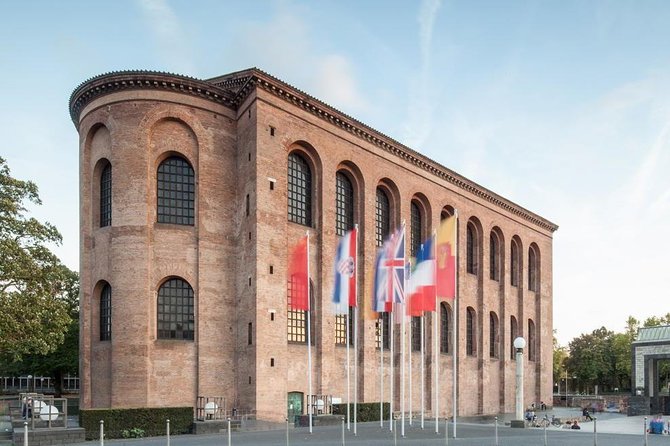
Trier is the kind of place that makes time feel weird. Roman stone is right next to medieval churches, and Rococo turns up in the middle of the same streets. If you want to see a lot without managing ticket lines, transit, and a self-made map, this kind of small-group guided day trip is a strong fit.
The best part is the way the tour treats Trier like a single story. You start with the big Roman anchors, then move into the religious power centers, then finish with the settings that make Trier feel like a lived-in German town, not just an outdoor museum.
The thing to keep in mind is the rhythm. This is a 10-hour experience (approx.). That includes the drive from Frankfurt, so it is not the kind of outing where you linger for hours whenever you find a photo spot that feels perfect.
Also holding a platform in Frankfurt
- Frankfurt: River Main Sightseeing Cruise with Commentary
★ 4.3 · 5,127 reviews - Frankfurt: Hop-On, Hop-Off Grand or Express Bus Ticket
★ 3.9 · 2,088 reviews - Frankfurt: 1-Hour Panorama Boat Cruise on the river Main
★ 4.4 · 1,822 reviews
Frankfurt to Trier by car: timing, comfort, and sanity
The tour meets at ETS Touristik GmbH in Frankfurt, at Wiesenhüttenpl. 38 (meeting point before the tour). The departure time is 9:30 am, and you start with an about 2.5-hour drive west to Trier along the Moselle River.
Two practical advantages here:
- You avoid stitching together trains and local buses while carrying a day pack.
- The vehicle is air-conditioned, which matters in Germany more than people expect when summer heat sneaks in.
During the ride and walking portions, you get narration and orientation. That helps a lot in Trier, because once you know what you are looking at, the Roman scale gets easier to grasp. For example, Porta Nigra is enormous, and it hits harder when a guide places it in context before you walk right up to it.
If you get easily tired by long drives, plan for a little slower energy once you arrive. You will be on your feet through multiple sites, even with breaks and free time.
First big stop in Trier: Porta Nigra and the Roman city feel
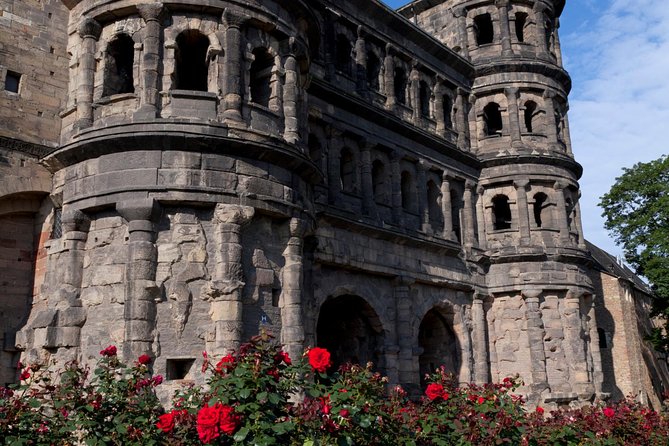
The walk in Trier is designed to build momentum fast, and Porta Nigra is the moment where it all clicks. This Roman city gate is dated to around 180 BC and it is described as the largest Roman city gate north of the Alps. The story is not just size for show. Your guide frames it as a key marker of how Trier functioned as a major Roman settlement.
Here is what you should pay attention to:
- The scale of the sandstone blocks, which are said to weigh up to 6 tons each.
- The way the gate sits within the medieval-era street fabric. You do not feel like you are walking through ruins in isolation.
After Porta Nigra, the tour keeps pulling you forward into the Roman layer of the city. That is smart, because once you shift to the cathedral and church stops, your brain will already understand what kind of city Trier used to be. It makes the later UNESCO stops feel connected instead of random.
St Peter’s Cathedral: the oldest cathedral in Germany moment
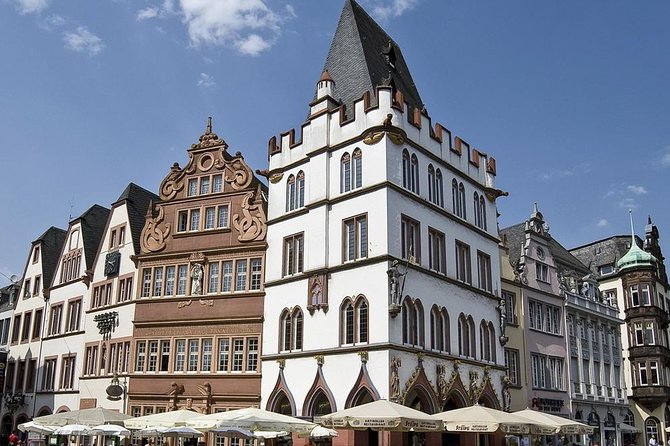
Trier’s cathedral stop is one of the emotional high points because it links power, faith, and Roman-era continuity in one place. The tour visits the Cathedral of Trier, also known as the High Cathedral of Saint Peter in Trier, and it is described as the oldest cathedral in Germany.
The guide’s narration matters here, especially around the relic called the Holy Rock. Even if you are not religious, it is still fascinating to see how relics shaped medieval pilgrimage and why certain sites stayed important for centuries.
Possible drawback: churches can have uneven walking surfaces and may have rules for entering certain areas. If you are the type who hates last-minute behavior changes, wear practical clothes and keep your schedule flexible during church visits.
Church of Our Lady (Liebfrauenkirche): oldest Gothic church vibe
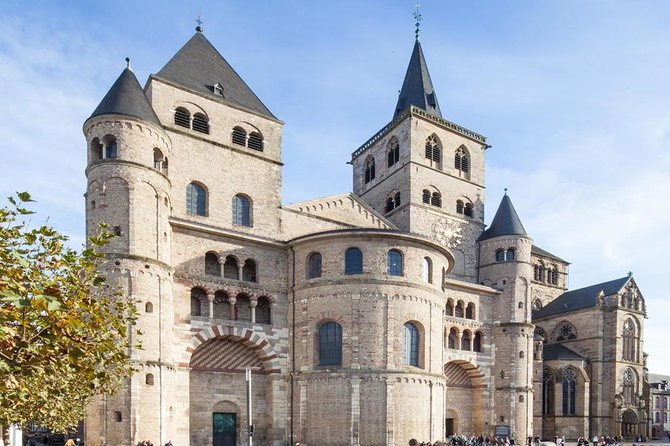
Next up is the Church of Our Lady, or the Liebfrauenkirche, described as the oldest Gothic church in Germany. This stop gives you a different visual contrast from the Roman stones and arches.
Why it is worth your attention:
- Gothic details show up in ways that feel more delicate than Roman mass.
- It reminds you Trier did not freeze in time. It kept evolving, and the architecture kept responding to new cultural priorities.
If you love architecture, this is a strong pair with St Peter’s Cathedral. You see older and newer styles in one day, without needing to plan separate trips.
Onward connections from Frankfurt:

Roman Amphitheater and Imperial Baths: the included payoff
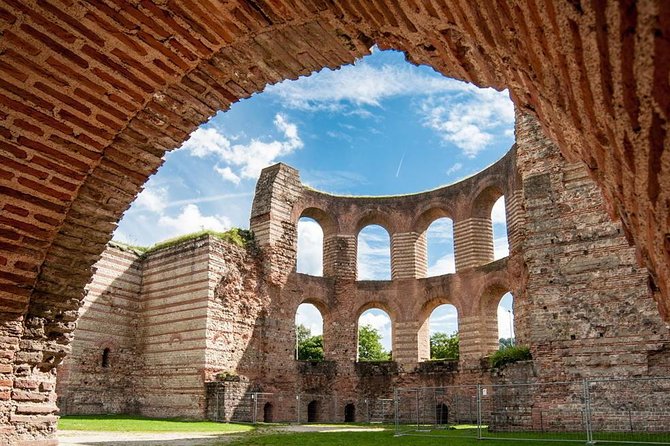
Two UNESCO-linked Roman sites are included with entrance: the Trier Amphitheater and the Trier Imperial Baths. These are the stops where Trier stops being an “I see it” day and turns into an “I can picture it” day.
Trier Amphitheater
The amphitheater is presented as a Roman stage for cruel entertainment, including animal games and gladiator combat. If you tend to get bored at ruins that feel like piles of stone, the amphitheater often fixes that. A good guide helps you imagine the arena layout and what the crowd experience would have felt like.
Trier Imperial Baths
The Trier Imperial Baths are described as beautifully preserved ruins of a Roman public bath complex built in the fourth century AD. This is a different kind of Roman site. It is not about public spectacle only, it is about daily life and civic culture.
Practical tip: Roman bath sites can be cool and a bit shadowy depending on where you are standing. Layers are smart, even on mild days.
Because both entrances are included, you are not left thinking, now what do I do about tickets. That makes the overall value easier to judge.
The walk-through plus museum and Rococo stops
The tour also mentions additional sights you may encounter along the route, including the Archaeological Museum, the Electoral Palace, and Palace Garden (Palastgarten). Trier is known for stacking categories of attraction in one compact town, and this tour takes advantage of that.
Here is how these stops tend to matter:
- The Archaeological Museum helps you connect what you saw outdoors to the objects and interpretation behind them.
- The Electoral Palace is noted as the birthplace of Karl Marx and is described as one of the most beautiful Rococo palaces in the world.
- Palace Garden (Palastgarten) is highlighted as a crown jewel of garden architecture, which is your chance to slow down a bit from Roman scale and church interiors.
The only caution is that museum time and palace time can be weather dependent and dependent on how the guide manages the pacing that day. Wear shoes that can handle uneven historic streets, and accept that you will not see every corner of every building if you want to keep the day moving.
Free time you can actually use: Hauptmarkt, Palastgarten, and the Roman Bridge area
A major part of why this day trip works is the free time. You get room to breathe and to choose what you want to linger over.
The tour specifically calls out chances to explore:
- The Main Market square (Hauptmarkt)
- Palace Garden (Palastgarten)
- The Roman Bridge area (described as probably the oldest bridge in Germany)
This matters for you because it turns the day into something personal. Maybe you want one extra coffee stop in Hauptmarkt. Maybe you want better photos in the garden. Maybe you simply want to walk without a steady stream of facts in your ear for 20 minutes.
One small note based on how people enjoy the day: some visitors like adding quick overview time using local transport options during their own free window, especially if rain changes walking comfort. The key idea is simple, use free time to make the city feel like it belongs to you, not just to the itinerary.
How long is really enough for Trier?
The tour runs about 10 hours total. You start with the Frankfurt to Trier drive, then you spend around 6 hours in Trier, including guided walking, multiple UNESCO-linked stops, and free time.
That time split is realistic for Trier because you are combining:
- big architectural stops (cathedral and church)
- major Roman structures (Porta Nigra, amphitheater, Imperial Baths)
- town-square atmosphere (Hauptmarkt)
- green space (Palastgarten)
But you should know what this does not do. It does not turn into a slow, wandering, “see everything at your own pace” day. If you want a deep museum day, or if you love taking 45-minute breaks inside every building, you may feel rushed.
On the flip side, if your goal is to hit Trier’s most important highlights in one day and leave with a clear mental picture, the duration is about right.
Small group size: what it changes on the ground
This tour caps at a maximum of 8 travelers. That is not just a nice-to-have. It changes the experience in small, practical ways.
I like that small group size helps you:
- hear the guide better on busy streets
- ask follow-up questions without feeling like you are blocking traffic
- adjust more easily if someone needs a bathroom break or an extra minute to get their bearings
There is even a review example where the group was just the couple and the guide. When that happens, you effectively get a semi-private tour. That can be amazing for learning and for flexibility.
Price and value: is $457.25 reasonable
The listed price is $457.25 per person. That sounds steep until you count what you get: a guided day trip, air-conditioned transportation, and professional guidance, plus entrance included for two major Roman sites, the Trier Amphitheater and Trier Imperial Baths.
Here is how I would frame the value for you:
- If you would otherwise rent a car or piece together transit, the cost can look fair fast.
- If you would want a guide to connect the Roman and medieval layers, you are paying for interpretation, not just movement.
- The included entrances reduce the guesswork that usually comes with planning independent sightseeing.
The tradeoff is that you are paying for a fixed plan. If you want hours of free wandering without a guided structure, you might get a cheaper DIY version. But you would likely spend more time figuring out where to go and how to prioritize, especially with Trier’s UNESCO sites.
Also, this trip is commonly booked about 90 days in advance. If Trier is a must-do for your trip dates, booking early is smart so you do not end up hunting for alternatives at the last minute.
Who this Trier tour suits best
This day trip is a good fit if:
- You want to see Roman Trier and UNESCO-linked highlights in one organized day.
- You like having context for architecture, not just photos.
- You prefer small-group dynamics over big bus crowds.
It is also a nice choice if you are traveling without a rental car. The meeting point in Frankfurt and the guided return make it feel controlled, even with a busy schedule.
If you dislike long drives or you need lots of downtime, you might find the 10-hour length challenging. In that case, Trier might feel better as a longer stay.
Should you book this Trier small-group day trip?
If your top priority is seeing Trier’s strongest UNESCO sites, plus Porta Nigra, St Peter’s Cathedral, the Liebfrauenkirche, and Roman highlights like the amphitheater and Imperial Baths, then yes, I think this is a solid way to do it from Frankfurt.
Book it if you want a plan that is organized but not cookie-cutter, with time set aside for Trier’s town-square and garden atmosphere. Skip it if you want an unstructured day, or if the drive length will stress you out more than the sightseeing thrills you.
FAQ
Where is the meeting point for the Frankfurt to Trier tour?
The tour starts at Wiesenhüttenpl. 38, 60329 Frankfurt am Main, Germany. The meeting point is listed as the Departure Office of Greenline Frankfurt.
What time does the Trier day trip start?
The start time is 9:30 am.
How long is the tour from start to finish?
The duration is listed as 10 hours (approx.).
How many people are in the group?
The group size has a maximum of 8 travelers.
Is hotel pickup included?
No. Hotel pickup and drop-off are not included.
What is included in the tour price?
Included items are an air-conditioned vehicle and a professional guide. Entrance fees for the Trier Amphitheater and Trier Imperial Baths are also included.
Are food and drinks included?
Food and drinks are not included unless specified.
Do I get a mobile ticket?
Yes, the tour uses a mobile ticket.
What is the cancellation policy?
You can cancel for free up to 24 hours in advance for a full refund. Cancellations within 24 hours of the start time are not refunded.
Is this tour suitable for most travelers?
The tour states that most travelers can participate.
Fresh on the arrivals board for Frankfurt



1-Day Tours, compared.
Neuschwanstein & Linderhof Castle Full-Day Trip
Read our review →
Munich Hop-On Hop-Off Tour: 1-Day or 2-Day Ticket
Read our review →
Salzburg Sightseeing Day Trip from Munich by Rail
Read our review →
Neuschwanstein Castle and Linderhof Palace Day Trip from Munich
Read our review →Browse the lists this tour appears in