
Reviewed · CITY TOURS
Frankfurt: Discover the heart of Frankfurt – a city tour in Russian
Frankfurt can feel surprisingly human on foot. This 2-hour tour, led by Dimitri, uses humor and photo-based stories to show you what sits behind Frankfurt’s modern fronts, from Paulskirche to the Römerberg. I like how it mixes big-city landmarks with smaller alleys and courtyards you would skip on your own. I also love the guide angle, Dimitri has lived in Frankfurt for 35 years and tells it like a person who genuinely cares. One consideration: it is not suitable for wheelchair users, and the pacing relies on comfortable walking and short stops.
You’ll get a street-level, step-by-step tour of the historic center, with multiple quick photo moments and guided explanations along the way. It aims for a practical route that keeps the distance manageable, with a walk of roughly a couple kilometers for many people, so the 2 hours stays doable even if the weather is cold or rainy. I like the emphasis on details, like the Iron Bridge story and the Museum Embankment area, and I especially like that you have a shot at short interior views if opening times allow. The main drawback is also the most common one in Germany, some interiors may be closed due to city events, so plan for “outside first” and flexibility.
In This Review
- Key Highlights Worth Your Time
- Why This Russian-Guided Frankfurt Walk Feels Different
- Meeting Point, Timing, and What to Wear
- From Paulskirche Into the Paulskirche Stop
- Römer Area and Kaisersaal, Where Medieval Power Still Shows
- The Iron Bridge Story, Eiserner Steg and Museumsufer
- Haus Wertheym and the Details That Keep It Human
- Römerberg Edges, Historical Museum Frankfurt, and the Small Church Stops
- Fountain of Justice and Schirn Art Gallery, Culture With a Side of Theater
- Saalgasse, Frankfurt Cathedral, and Roman Ruins, Different Eras Without the Long Detour
- Coffee House to the Golden Scale, Hühnermarkt, and Struwwelpeter
- The Kaiserpfalz and Krönungsweg, Reading the Medieval Remains
- New Old Town Frankfurt and Goldenes Lämmchen, Why the Modern City Won’t Win
- Price and Time Value for a 2-Hour Historic Core
- Who Should Book This Tour (and Who Might Prefer Another Format)
- Should You Book This Frankfurt Russian City Tour?
- FAQ
- Where does the tour start?
- How long is the tour?
- How much does it cost?
- What language is the tour in?
- Is food included?
- Are there any interior visits?
- What sights will we see?
- What should I bring?
- Is the tour suitable for wheelchair users?
- Is transport included?
Key Highlights Worth Your Time
- Dimitri’s 35 years in Frankfurt shows up in the way he points out small details and answers questions
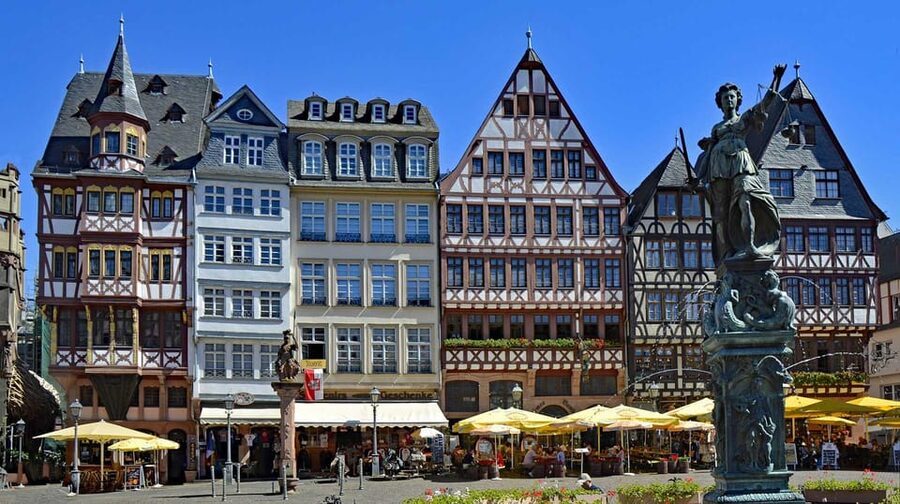
- Römerberg and the Römer town hall area give you the most dramatic medieval core in a short time
- Eiserner Steg and Museumsufer connect the city’s geography with how people lived and moved
- Short, optional interior stops (when open) add depth without turning it into a long day
- Hidden courtyards and side lanes help you understand Frankfurt as more than a postcard
- A tight route and frequent stops keep the walk comfortable for most visitors
Why This Russian-Guided Frankfurt Walk Feels Different
Frankfurt has a reputation for finance and glass towers, but its oldest streets tell a different story. This tour is built for that contrast. You move through the classic sights on the outside, then you get pulled a bit off the main lines to see how older buildings and medieval traces peek through behind newer facades.
The biggest reason I think this works is the guide dynamic. Dimitri is one of the most popular and best-rated local guides with Russian roots. He doesn’t just list facts, he explains why certain places matter and what changed over time. Expect a mix of humor and clear storytelling, plus photo materials that help you visualize what the area looked like when the city was younger.
Value also matters here. For about $20 per person and a 2-hour format, you get a lot of guided orientation in the historic core. It is not a “wander until you’re lost” experience. It is structured, with quick stops that keep momentum while still giving you time to look closely.
Also holding a platform in Frankfurt
- Frankfurt: River Main Sightseeing Cruise with Commentary
★ 4.3 · 5,127 reviews - Frankfurt: Hop-On, Hop-Off Grand or Express Bus Ticket
★ 3.9 · 2,088 reviews - Frankfurt: 1-Hour Panorama Boat Cruise on the river Main
★ 4.4 · 1,822 reviews
Meeting Point, Timing, and What to Wear
You meet at the main entrance of St. Paul’s Church (Paulskirche), with a sign that says Experience Frankfurt. The guide waits in front of the entrance and carries a pass. Because this is a short, focused route, arriving on time helps. The tour also relies on walking between stops, so comfort counts more than distance.
Bring comfortable shoes first. The route is not described as a huge hike, and the walk is short for most people, but cobblestones and tight historic streets can still feel tiring. Bring an umbrella if rain is possible, and dress in weather-appropriate clothing because outdoor sights do a lot of the work here.
If you are traveling with kids or teens, you’re likely fine. One family experience highlighted that the walk stayed under about 2 km and left energy for food afterward. Still, keep expectations realistic: this is a city tour, not an indoor museum day.
From Paulskirche Into the Paulskirche Stop
The tour starts at Paulskirche, then moves quickly into the St. Paul’s Church area for a short photo stop and guided visit. Even if you only spend about 10 minutes here, it sets the tone: Frankfurt’s role in European public life shows up early.
This first segment matters because it gives you a reference point. You’re not simply seeing buildings. You’re building a mental map for how the historic city center is laid out and where key institutions sit. The guide’s explanations are designed to help you spot features later as you walk, including architectural cues and street alignments that can be easy to miss.
Römer Area and Kaisersaal, Where Medieval Power Still Shows
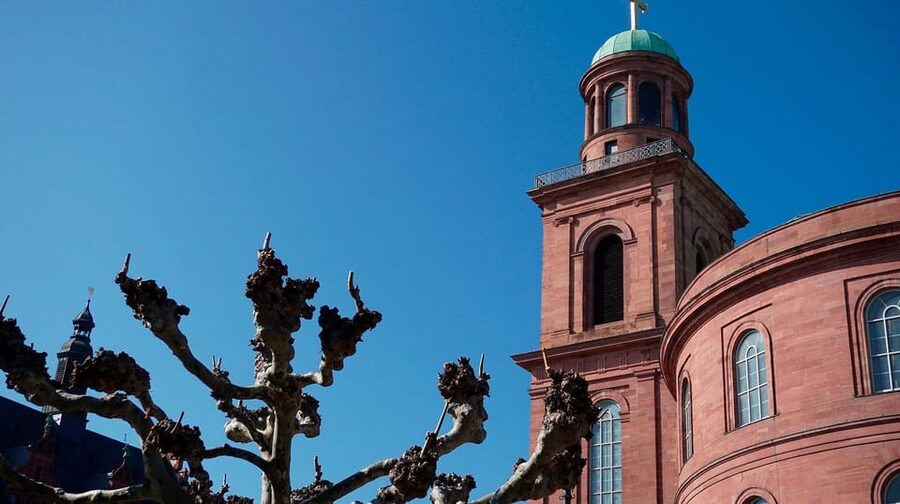
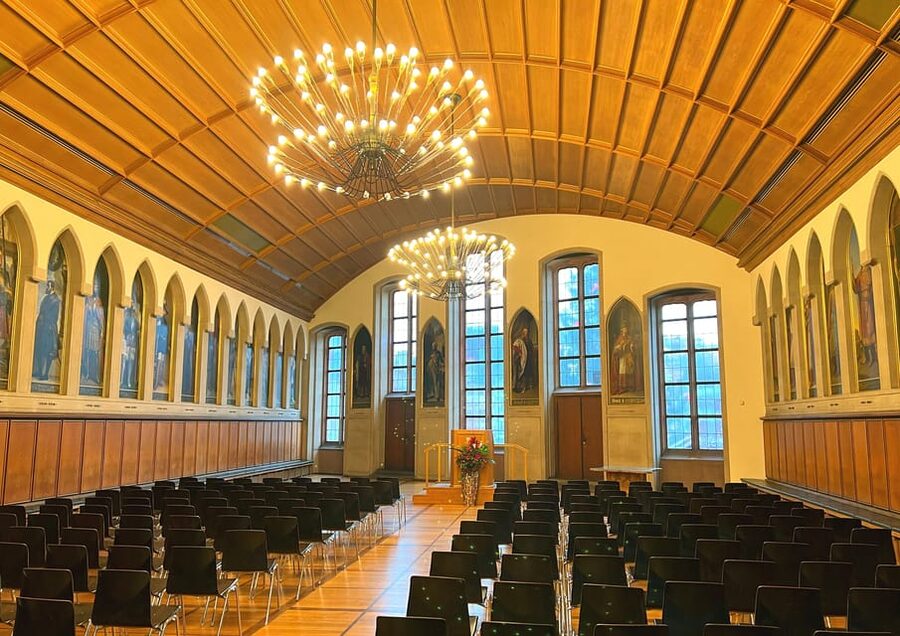
Next you reach the Römer complex, and this is one of the most important zones of the entire route. You get a photo stop and short guided visit at Römer itself, then you move to the Kaisersaal area for a longer stop.
The Römerberg is where medieval Frankfurt feels concentrated. You see the historic Römer town hall, and you also get information about what the “imperial” connections meant in the city’s identity. If openings allow, the tour includes short interior time tied to imperial rooms, specifically the Imperial Hall in the Römer. If those interiors are closed due to city events, the tour will still give you the outside context.
One practical tip: this is where your eyes should slow down. Look for details in the facades and the way the square creates a stage for power and ceremony. If you’re the kind of visitor who enjoys architecture, you’ll likely get a lot out of this stop.
The Iron Bridge Story, Eiserner Steg and Museumsufer
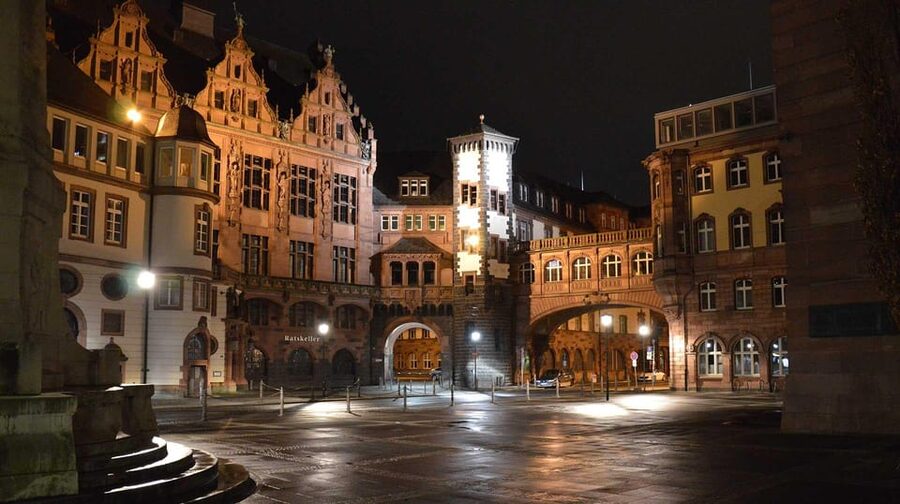
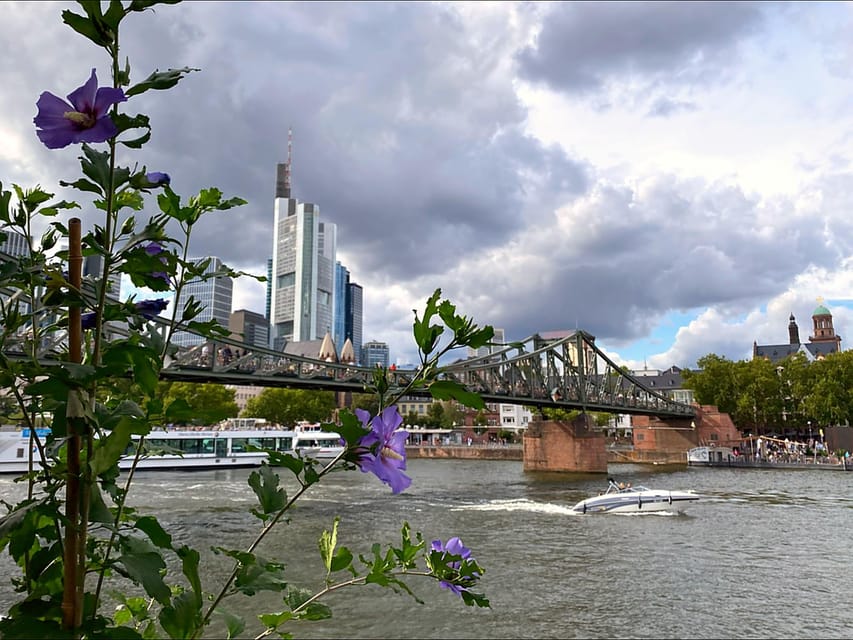
After the Römerberg core, the tour shifts toward movement and connection. At Eiserner Steg, you’ll have a photo stop and guided discussion for about 15 minutes. This is where the guide explains the stories behind the Iron Bridge and what it represents in Frankfurt’s layout.
Why that matters: bridges are not just crossing points. They are shortcuts through time. Standing at or near Eiserner Steg, it is easier to understand how the city’s river life shaped neighborhoods, daily routes, and public spaces. The tour then includes the Museumsufer area in the broad sight list, meaning you’ll connect the riverfront with the city’s cultural and civic identity.
Don’t rush this part. Even though the stop is relatively short, it is a shift in perspective. The city changes from tightly packed medieval blocks to a more open river logic, and that helps you understand why Frankfurt grew the way it did.
Onward connections from Frankfurt:

Haus Wertheym and the Details That Keep It Human
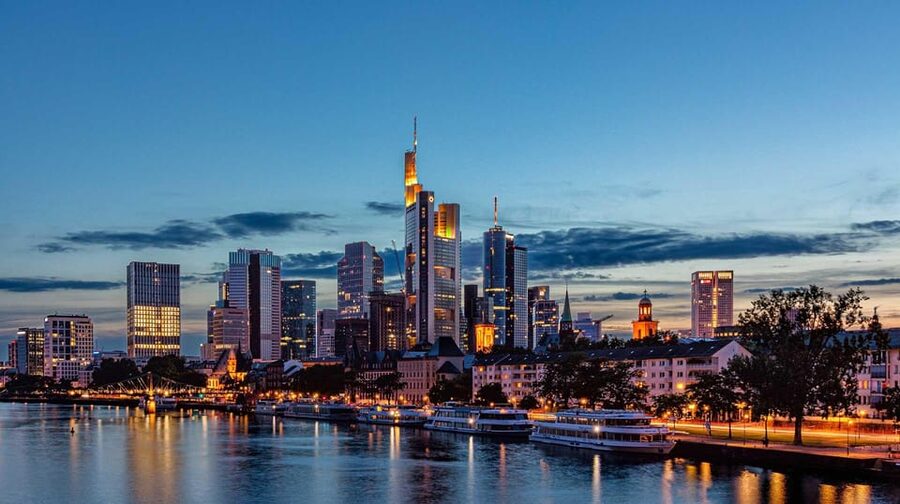
You’ll pass Haus Wertheym next, with a brief photo stop and guided visit. This is the kind of place you might otherwise walk by because it isn’t the biggest headline name on a map. That is exactly the point. The tour makes time for these “in-between” stops so the center feels lived-in rather than staged.
Expect short guided explanations. The guide tends to focus on small visual cues and stories tied to the building fabric and street pattern. If you like city tours where you learn how to read streets, this section is helpful. It trains your eye to notice what is original, what is restored, and what is repurposed.
This stop is also a good moment to ask questions, Dimitri is known for answering everything clearly and pointing out details others might not mention.
Römerberg Edges, Historical Museum Frankfurt, and the Small Church Stops
As you continue, you’ll make a series of quick photo and guided segments around the inner historic core. The route includes the Historical Museum Frankfurt for a short guided walk-through. You’ll also see Old St Nicholas Church with another quick photo stop.
These small segments do two jobs. First, they keep the route flowing without wasting time. Second, they build continuity. You start to see how Frankfurt’s historic identity is not concentrated in one square. It spreads through church-adjacent streets, institutional buildings, and alleys that connect squares.
Even when a stop is only a few minutes, it can still be meaningful because the guide connects it to the larger theme: how power, culture, and daily life overlapped in the old center.
Fountain of Justice and Schirn Art Gallery, Culture With a Side of Theater
A couple of highlights land close together. You’ll stop at the Fountain of Justice for a short guided segment, then pass the Schirn Art Gallery area.
The Fountain of Justice is brief but memorable because it represents the city’s civic identity in a visual, symbolic way. Justice themes show up again and again in historic centers, and this one is easier to spot and understand once your guide has framed the context.
Then you move toward Schirn Art Gallery. Even if you do not go inside, it’s useful as a sign of how the historic center supports contemporary cultural life. The tour keeps it realistic here, mostly outside view and guided interpretation, so you stay on time.
Saalgasse, Frankfurt Cathedral, and Roman Ruins, Different Eras Without the Long Detour
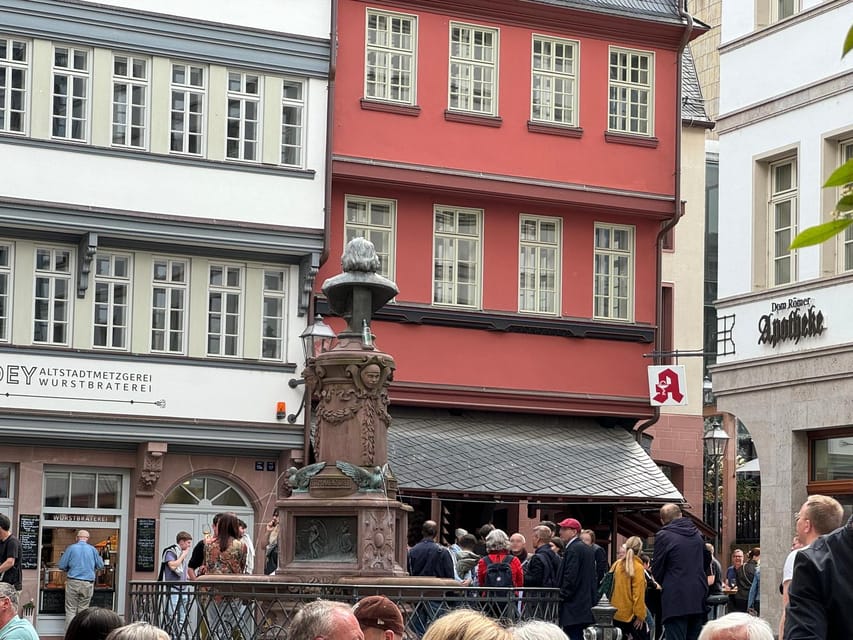
At Saalgasse you get another short photo stop and guided explanation, which helps you understand how streets function like corridors of time. Saalgasse is narrow, walkable, and a great place to notice how medieval and later building styles sit side-by-side.
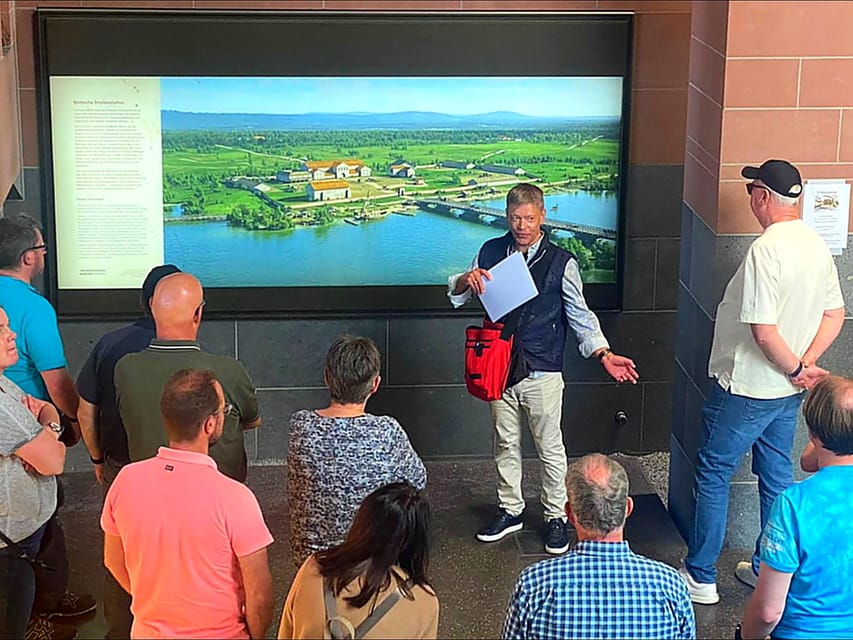
Then comes Frankfurt Cathedral, followed by Roman ruins. This sequence is valuable because it compresses layers. You move from medieval imperial and civic centers toward older Roman traces, which makes the city’s timeline feel tangible rather than abstract.
The Roman ruins stop is brief, but it can still shift your view of Frankfurt. If you tend to think of cities as having one main era, this part corrects that instinct. Frankfurt has multiple timelines running in parallel, and the old center helps you see that quickly.
Coffee House to the Golden Scale, Hühnermarkt, and Struwwelpeter
This tour includes a cluster of “smaller famous” stops that add texture. You’ll see the Coffee House to the Golden Scale, then Hühnermarkt, and later the Struwwelpeter Museum area, plus Goldenes Lämmchen.
Here’s why I think these stops are more than filler. They make the city playful. Historic Frankfurt is not just stone authority. It also has quirky street traditions and buildings tied to everyday life, and the guide’s storytelling helps you understand that side without turning the tour into a cartoon.
The Struwwelpeter Museum is only a short stop, so don’t expect a full visit. But it adds a human note, and it helps break up the heavier imperial themes from earlier in the route.
The Kaiserpfalz and Krönungsweg, Reading the Medieval Remains
One of the most intriguing parts of the route is how it leads you toward fascinating remains of the medieval imperial palace and nearby areas, including Kaisersaal and Kaiserpfalz zones, plus Krönungsweg.
What makes this worth your time is not only the names, it is the way the guide connects them to what you can still observe today. The city has changed. Some structures are gone. But their footprint and surrounding features still give clues. This is where the photo materials can help most, because you can compare the present streetscape with the idea of what once stood here.
If your travel style includes “I want to understand how it worked back then,” this is the part that will likely make the tour click. It takes you from seeing a square to grasping an urban system built for ceremony and rule.
New Old Town Frankfurt and Goldenes Lämmchen, Why the Modern City Won’t Win
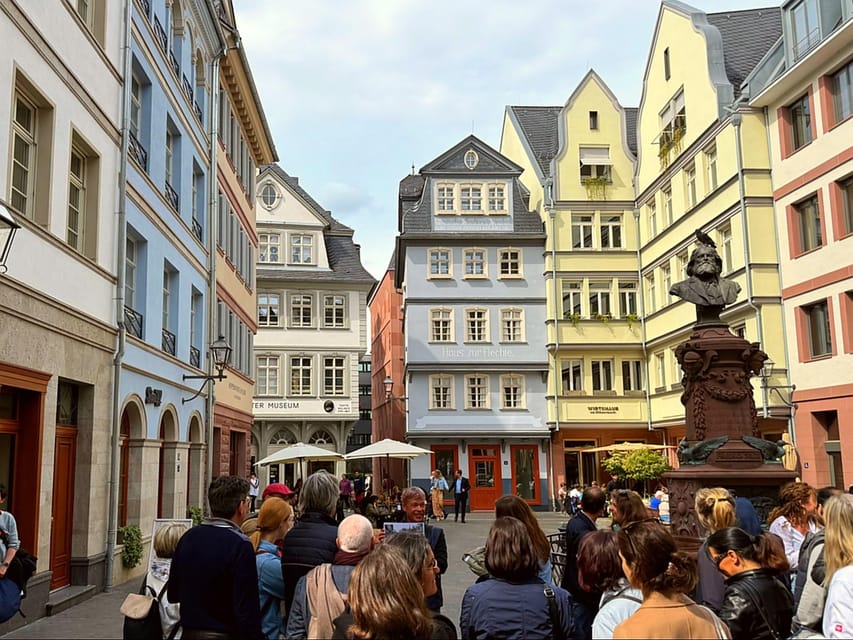
The final section is the New Old Town Frankfurt area, plus a few last photo stops that give you a sense of the restored historic core.
The New Old Town stop is one of the longer ones at about 15 minutes, and it’s where the tour’s theme becomes clear. Frankfurt’s modern life is right there, but the city also values rebuilding and referencing the old center. The result is a place where you can still feel the medieval street mood, even with contemporary buildings in the mix.
This is also where many people end up feeling satisfied. You started at a major symbolic church site. You worked through imperial and civic spots. And then you finish in the New Old Town atmosphere where the streets feel made for strolling, not just looking.
The tour finishes at Römerberg, so your final visual anchor is the same square that grounded the route at the beginning. It helps you leave with a memory you can actually navigate.
Price and Time Value for a 2-Hour Historic Core
At $20 per person for 2 hours, you are paying for focus. This tour isn’t about squeezing every interior museum room into your day. It’s about guided orientation across a compact area with meaningful stops.
You get:
- A guided walk with a certified Russian-speaking guide
- Short visits to imperial interiors if opening times allow (including the Imperial Hall in the Römer, and the Imperial Palace Franconofurd)
- A route designed around outside sights, plus optional interior time if feasible
Not included is food, and transport to and from the meeting point. That’s normal, but it affects planning. Bring water if needed, and think about food as a next step, not part of the tour. If you want a real meal afterward, this tour’s short walking distance helps you have the energy to try Frankfurt-style food you’ve been saving for later.
When is this a great value? If you are short on time and want an intelligent tour that shows you both the headline monuments and the side lanes. If you have a full day, you can still use it as a fast orientation, but you will likely want other time slots for museums afterward.
Who Should Book This Tour (and Who Might Prefer Another Format)
I’d recommend this tour if you like:
- Clear storytelling with humor, not dry recitation
- A compact route where every stop has a reason
- Learning how to spot the “old city” details behind modern structures
- A guide who pays attention to small things and answers questions
It also seems like a good fit for families, since at least one experience noted the walk stayed under around 2 km and didn’t feel exhausting for a 14-year-old.
If you don’t like walking much at all, or you need step-free access, then this is probably not the right pick since it is not suitable for wheelchair users. Also, if you want museums as the main event, this is more of an outside-and-stories tour, with only one or two potential interiors depending on openings.
Should You Book This Frankfurt Russian City Tour?
I think it is an easy yes if your goal is to understand Frankfurt quickly and enjoy the old core without getting lost. The guide, Dimitri, is a major reason. He’s described as highly engaging, detail-focused, and strong at keeping attention with explanations and photo-based visualization. That combination matters, especially in a city where the modern skyline can distract you from what’s underneath.
Book it if:
- You have about 2 hours and want maximum orientation
- You want the Römerberg, Eiserner Steg, and imperial sites explained in plain language
- You prefer guided storytelling over self-guided wandering
Skip or consider another option if:
- You need wheelchair-friendly access
- You only want large indoor museum time, since interiors are optional and depend on openings
If your main goal is to leave Frankfurt feeling like you actually understand the city center, this tour does that job well, without turning the day into a marathon.
FAQ
Where does the tour start?
The meeting point is at the main entrance of St. Paul’s Church (Paulskirche), by the sign Experience Frankfurt. The guide waits there and can be recognized by the Erlebnis Frankfurt sign and a guide pass.
How long is the tour?
The tour lasts 2 hours.
How much does it cost?
It costs $20 per person.
What language is the tour in?
The tour is guided in Russian.
Is food included?
No, food and drinks are not included.
Are there any interior visits?
If possible due to opening times, the guide may include one or two short interior visits with explanations. Some specific interiors, like St. Paul’s Church and the Kaisersaal in the Römer, are not obligatory and may be closed due to city events.
What sights will we see?
You will pass major historic sights and landmarks such as Paulskirche, Römerberg and the Römer complex, Eiserner Steg, Museumsufer, Kaiserdom, Kaiserpfalz, Neue Altstadt, and the route also includes multiple additional stops for photo moments and guided explanations.
What should I bring?
Bring comfortable shoes, an umbrella, and weather-appropriate clothing.
Is the tour suitable for wheelchair users?
No, it is not suitable for wheelchair users.
Is transport included?
Transport to and from the meeting point is not included.
Fresh on the arrivals board for Frankfurt




City Tours, compared.
1-Hour City Tour by Boat with Guaranteed Seating
Read our review →
Berlin City walk Government District and Places of Democracy
Read our review →
City History Canal Sightseeing Tour on a Motorboat
Read our review →
Browse the lists this tour appears in