
Reviewed · WALKING TOURS
Frankfurt: Private or Shared Walking Tour
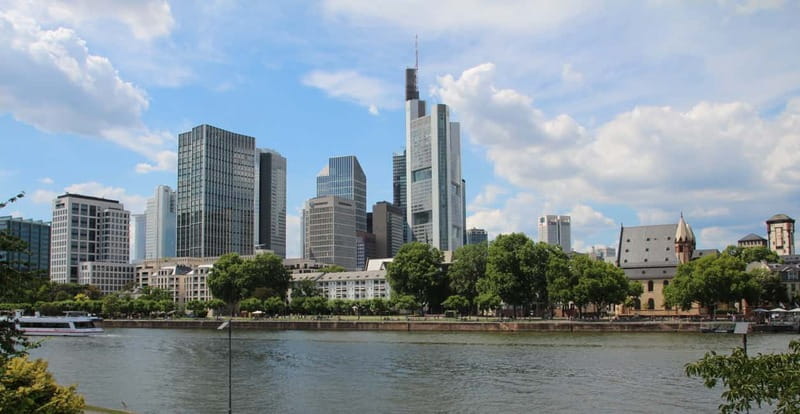
Frankfurt tells its story on your feet. This 1.5-hour walking tour threads Altstadt landmarks together with the city’s modern skyline, then adds real context for what survived, what was rebuilt, and what is brand new. I especially liked two things: you get a clear walk from Römerberg to major civic sites, and you end up at Paulskirche, tied to Germany’s first national assembly.
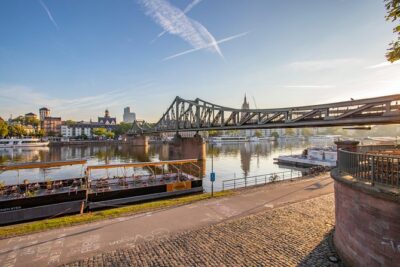
I also liked the way the guide keeps the pace friendly while still covering big themes, like the Eiserner Steg (built in 1868) and how Frankfurt’s look changed after World War II. One possible drawback: at 1.5 hours, it is a “see the key points, then choose your next stop” kind of tour, so you may want extra time afterward if you want to linger.
Key highlights worth your attention
- Justitia-Brunnen at Römerberg as a smart starting point, right in the historic center
- Eiserner Steg (1868), a classic iron footbridge that helps anchor the story in place
- WWII destruction and 2008 to 2009 renovations, explained as part of the city’s rebuilding
- Römer and Paulskirche, including the location of the first German national assembly
- Neue Altstadt, Frankfurt’s latest “old town” project you can walk through with context
In This Review
- Starting at Römerberg: Justitia-Brunnen sets the tone
- Eiserner Steg and the WWII to 2008-9 rebuilding story
- Römer and Paulskirche: civic power in walking distance
- Neue Altstadt: Frankfurt rebuilds the past with intention
- Old town against skyscrapers: the contrast is the whole point
- What I think about the guide experience (German, short, and flexible)
- Price and value: $17 for 1.5 hours is the right kind of bargain
- How to get the most out of a short Altstadt walk
- Who this tour fits best
- Should you book this Frankfurt walking tour?
- FAQ
- Where is the meeting point for the Frankfurt walking tour?
- How long is the walking tour?
- How much does the tour cost?
- Is the tour shared or private?
- What language is the live tour guide?
- What are the main highlights on the route?
- Can I cancel for a refund, and can I pay later?
Starting at Römerberg: Justitia-Brunnen sets the tone
I like when a walking tour starts in the right mood, and this one does. You meet at Justitia-Brunnen at Römerberg, the kind of landmark that instantly tells you you are in the heart of the old city. From there, you do not wander aimlessly. You move with purpose, with the guide laying down a simple question you’ll keep using: what does this place look like now, and why?
This is a great setup for first-time Frankfurt visitors. Römerberg is central, easy to orient around, and it makes the rest of the route feel like a guided storyline rather than a list of buildings. Even if you already know Frankfurt a bit, you’ll likely appreciate how the guide ties local landmarks to larger turning points, especially around wartime loss and reconstruction.
Eiserner Steg and the WWII to 2008-9 rebuilding story
The first real “walk-and-look” moment comes early, with the iron footbridge of the Eiserner Steg, built in 1868. Walking toward and across it, you get a sense of how Frankfurt has used engineering and infrastructure to connect the city, not just to cross water.
What makes this section more useful than it sounds is the way the guide connects physical places to historical change. Along the stroll, you hear about how many of the grand buildings were destroyed during World War II. That detail matters because it explains why Frankfurt does not look like a preserved medieval town. Instead, it looks like a city that kept rebuilding, with different eras layering on top of one another.
Then the tour shifts to more recent change, including a major renovation in 2008 to 2009. The point is not to memorize dates. It is to understand the logic of restoration and redesign. You start seeing the city as a living project, not a museum. And that sets you up well for the next stops, where the old city core and Germany’s civic story show up side by side.
More Walking Tours in Frankfurt
- Frankfurt Highlights English Walking Tour
★ 5.0 · 1,203 reviews - Frankfurt on Foot Daily Walking Tour in English
★ 4.9 · 323 reviews - Frankfurt: Private Walking Tour with a Local
★ 4.4 · 83 reviews
Römer and Paulskirche: civic power in walking distance
Next, you move into the classic civic zone around Frankfurt’s old center, including the Römer and Paulskirche. This is one of the tour’s strongest chapters because it turns “pretty buildings” into a timeline of political life.
At the Römer area, you get a sense of Frankfurt’s long role in civic identity. The buildings here help explain why the city has mattered far beyond its skyline. Then you reach Paulskirche, a site tied directly to the location of the first German national assembly. That connection is the kind of fact that sticks, because it makes the space feel consequential. You are not just looking at a church you might pass later. You are standing at a place where national political direction was shaped.
Two things I’d recommend you do here. First, keep your eyes up and not only at eye-level details. This part of Frankfurt rewards quick scanning: façades, the way the space feels, and how the square area functions. Second, let the guide frame what happened there, even if you only catch part of the story. The payoff is understanding why this stop gets included every time Frankfurt has a “core landmarks” walking tour.
Neue Altstadt: Frankfurt rebuilds the past with intention
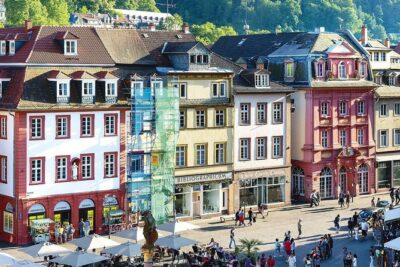
Then comes one of the most interesting contrasts on the route: Neue Altstadt, Frankfurt’s new old town project. The name might sound like a marketing phrase, but walking through with a guide changes how you see it. You start noticing that “new” does not mean “fake.” It often means “planned,” and sometimes it means “chosen to heal the city’s continuity.”
This is a stop that works especially well if you care about how cities handle heritage after major disruptions. The tour makes the connection between what was lost and what was recreated. You do not just hear that buildings changed. You learn where the idea of a “new old town” fits into the city’s overall story, including the post-war rebuilding themes you heard earlier.
If you like architecture, you’ll likely enjoy how the guide points out what makes the Neue Altstadt feel like an answer to earlier gaps. If you do not think you care about architecture, you can still enjoy it because it gives you an easy way to read the city: look for what the city is trying to communicate through design.
Old town against skyscrapers: the contrast is the whole point
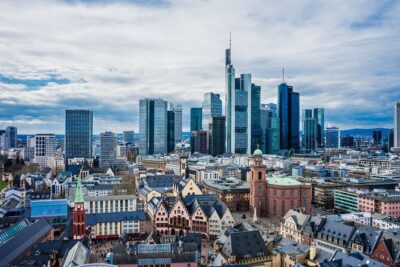
One line in the tour description can sound like a throwaway promise, but it is actually the tour’s method. You are guided through comparisons between historic monuments and modern-era skyscrapers. That contrast is not accidental. It is how Frankfurt tells a story of power and reinvention.
As you move through the walk, you notice that Frankfurt is a dual-city. It has a recognizable old core, and it also has the financial district energy that made the skyline famous worldwide. The guide helps you see that the city did not simply switch from old to new. It layers them, and the route is arranged so you keep feeling that shift in your own steps.
This is also where the tour becomes practical. After the walk, you will know where the old town vibe lives, and you’ll understand how to connect it to the modern areas on your own. You can use this as a “map with meaning,” not just a geography lesson.
What I think about the guide experience (German, short, and flexible)
The tour runs with a live guide in German, and that matters for your expectations. If you speak some German, you’ll probably follow nearly everything and enjoy the small details more. If you do not, you can still get a lot from the visual elements and the structure of the route, but you may catch key points more than every word.
I also picked up a pattern from guide feedback: people love when the guide is adaptable and warm, even when timing is tight or weather is not ideal. In particular, reviews mention guides such as Sanel and Markus, with praise for flexibility, empathy, and clear explanations. One review even highlighted a private tour where the guide adjusted timing and still delivered strong insights during a rainy evening. That sort of responsiveness is not guaranteed on every tour, so it is worth valuing when you see it in the overall feedback.
More German cities at walking speed:


Price and value: $17 for 1.5 hours is the right kind of bargain
At $17 per person for about 1.5 hours, this walking tour is priced in the “worth it for orientation” range. You are paying for a guide who can connect landmarks into a coherent story, not just for movement from one place to another.
Here is how I think about the value. If you spend your first day in Frankfurt trying to figure out what matters, you’ll burn time guessing. This tour gives you a compact framework: Römerberg, the Eiserner Steg, the post-war rebuilding thread, Römer, Paulskirche, and Neue Altstadt. Those are anchors. Once you know them, you can choose whether you want more time in the squares, museums, or the financial district area afterward.
You also have options: you can go shared or choose a private group. If you want quieter conversation or a more flexible pace, private makes sense. If you are fine with other small groups and want to keep costs down, shared is likely the best fit.
How to get the most out of a short Altstadt walk
Because the tour is only 1.5 hours, you’ll get more from it if you walk in with a few habits. First, bring comfortable shoes. This is a city-center walking route, so your feet will do a lot of the work.
Second, plan to look at the route as a framework, not a checklist. If you try to “collect” every fact, you’ll lose the emotional sense of the place. Instead, listen for the big themes: how Frankfurt was damaged, how it rebuilt, and how it decided what “new old town” should mean.
Third, treat Paulskirche as the moment to slow down. That is the stop that turns the trip into more than sightseeing. You are standing at a location connected to the first German national assembly, and it deserves your attention even if you do not know every historical detail going in.
Who this tour fits best
I think this tour is especially good for:
- First-time Frankfurt visitors who want a focused old-town introduction
- People who like the mix of architecture and history in a compact format
- Travelers who want a clear explanation of why Frankfurt looks the way it does, not just what to photograph
- Anyone interested in Germany’s political history through a walkable, central setting
If you prefer very long, museum-heavy days, this might feel short. But if you like smart, efficient walking and then you want to choose your own next stops, it is a strong match.
Should you book this Frankfurt walking tour?
Yes, I’d book it if you want an efficient, well-framed walk through Frankfurt’s core, especially the historic civic sites and the contrast between restored or recreated old spaces and modern development. The route hits several high-impact anchors, including Römerberg, Eiserner Steg, Römer, Paulskirche, and Neue Altstadt, and it connects them with context about destruction in World War II and renovation work in 2008 to 2009.
Book it particularly if you value guided interpretation. At this price point and length, you get a lot of direction for your time on the ground. If you only want a “see it, snap it, move on” experience, you might find the story focus more than you asked for. If you like understanding why places look the way they do, this is a smart call.
FAQ
Where is the meeting point for the Frankfurt walking tour?
You meet your guide at Justitia-Brunnen at Römerberg.
How long is the walking tour?
The tour lasts 1.5 hours.
How much does the tour cost?
The price is $17 per person.
Is the tour shared or private?
It can be either a shared walking tour or a private group option, depending on what you select.
What language is the live tour guide?
The live tour guide speaks German.
What are the main highlights on the route?
You visit the Altstadt highlights, explore the Neue Altstadt, and see the area connected to the location of the 1st German national assembly, plus stops such as Römer and Paulskirche.
Can I cancel for a refund, and can I pay later?
Yes, you can cancel up to 24 hours in advance for a full refund, and the option to reserve now & pay later is available.
Fresh on the arrivals board for Frankfurt


Walking Tours, compared.
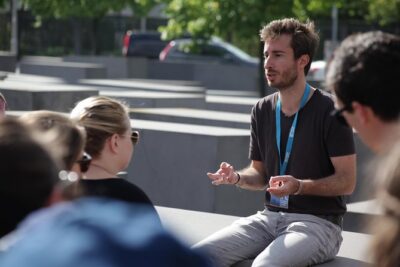
Berlin City walk Government District and Places of Democracy
Read our review →
Berlin’s Best: 2 Hour Walking Tour Third Reich and the Cold War
Read our review →
Browse the lists this tour appears in