
Reviewed · CYCLING TOURS IN BERLIN
Berlin Wall History Small Group Cycling Tour
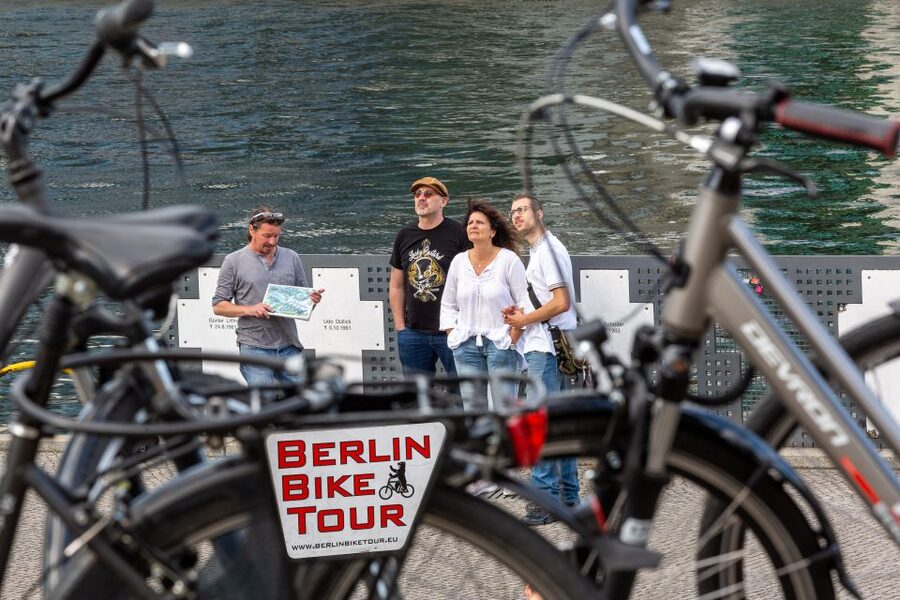
Berlin Wall sites still feel close to the street. This small-group ride follows the old border route and puts you at the places where history happened, even where the wall is mostly gone. I especially like the small group size and the way the guide connects landmarks to real, hard-to-forget escape stories. A good consideration is that the tour runs in all weathers and the guide language is German, so plan around that.
If you want a Berlin highlight tour that is more than photos, this one works. You bike past the remains near Bornholmer Straße and Checkpoint Charlie, then you move on to memorial spots like Invaliden Cemetery, where the stories stick. The other thing I like is the practical route design, it mixes border history with big anchor sights such as Brandenburg Gate, Potsdamer Platz, and the Tränenpalast. The only drawback to factor in is that you will cover a lot in 4 hours, so it is not a slow museum crawl.
And yes, you will be cycling. Your guide, Ferenz, is known for mixing clear facts with a personal sense of what the times felt like around the Wende, which is a big part of why this tour lands emotionally, not just informationally.
In This Review
- Key things to know before you ride
- Following the Berlin Wall route, from 9 November 1989 to today
- Meeting at Bornholmer Straße, and why the start location matters
- The Bornholmer Straße crossing, Mauerpark, and the rabbit trail effect
- Bernauer Straße and Chausseestraße, watchtowers and the Death Strip context
- Invaliden Cemetery and the Memorial Gunter Litfin stop
- Along the Government Bank to the Parliament of Trees
- Brandenburg Gate, Potsdamer Platz, Checkpoint Charlie, and Tränenpalast
- Price and value: is $40 worth 4 hours?
- What to expect on the bike, and how to prepare
- Who should book this Berlin Wall cycling tour
- Should you book it?
- FAQ
- Where does the tour start?
- How long is the Berlin Wall cycling tour?
- What is the group size?
- What language is the live guide?
- What should I bring, and what is not allowed?
- Is the tour affected by rain?
- Is food included?
Key things to know before you ride
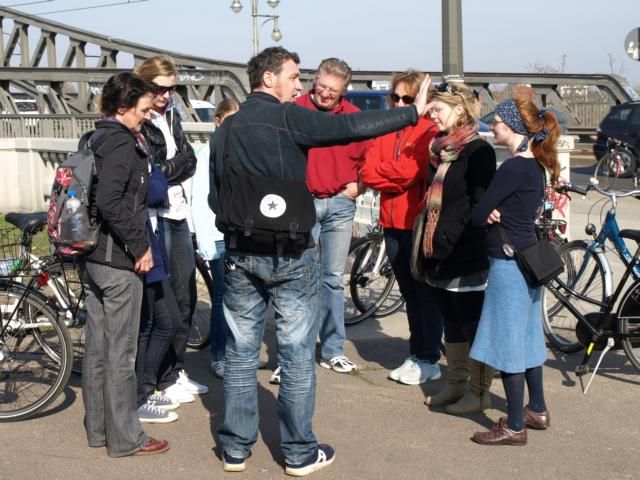
- Small group, big access, with a max group size of 8 for a more personal pace.
- Bornholmer Straße to the Mauerpark area, including the crossing spot from 9 November 1989.
- Memorial-focused route, with stops at Bernauer Straße and Chausseestraße border sites and later Invaliden Cemetery.
- Watchtowers and the Death Strip context, where you can still understand what the border machinery was doing.
- Landmarks that matter, including Brandenburg Gate, Potsdamer Platz, Checkpoint Charlie, and Tränenpalast.
- All-weather planning, with a rain poncho available if the sky opens up.
Following the Berlin Wall route, from 9 November 1989 to today
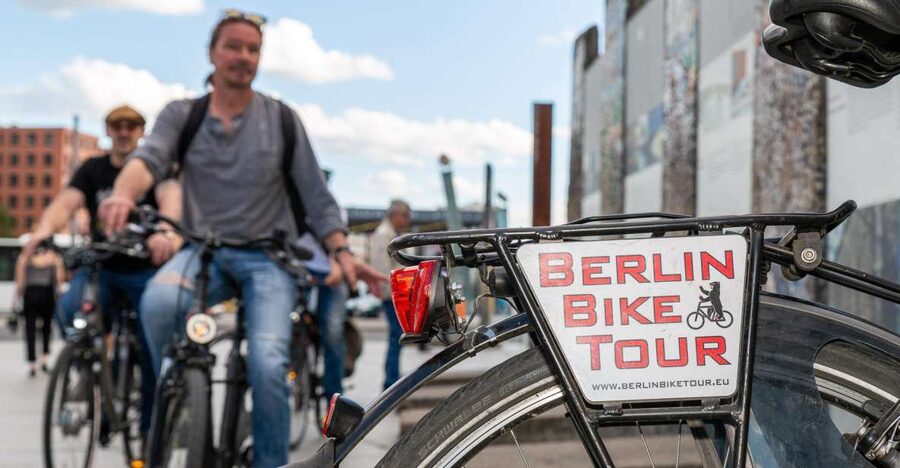
This tour follows the old logic of the Berlin Wall line, along what is sometimes called the Mauerweg. The interesting part is not that you see one long, intact wall, because you cannot. Instead, you learn how the border system worked by moving between key places that still leave traces in the streets, memorial designs, and remaining structures.
You start at the Square of the 9th November 1989 area, the place tied to the first East German citizens crossing. That sets the tone, you begin at the moment the border broke open, not at a generic overview stop. From there, the tour turns into a walk through how quickly a city can change once ordinary people make a choice.
More Cycling Tours in Berlin
- Berlin: Sights and Highlights Bike Tour with a Local Guide
★ 4.8 · 2,698 reviews - Berlin Highlights 3-Hour Bike Tour
★ 5.0 · 948 reviews - Berlin City Bike Tour with Beer Garden Stop
★ 5.0 · 917 reviews
Meeting at Bornholmer Straße, and why the start location matters
Meet your guide at 75 Bornholmer Straße, Berlin 10439. The good news is that this is easy to reach, with tram connections at Björnsonstraße and S-Bahn service at Bornholmer Straße being very close. If you are arriving from central Berlin, this start point saves you time and stress.
You will be cycling right away, so arrive with the basics ready. Bring your passport or ID card, sunglasses, a sun hat if it is bright, and a camera. And keep your bag situation simple, luggage or large bags are not allowed.
The Bornholmer Straße crossing, Mauerpark, and the rabbit trail effect
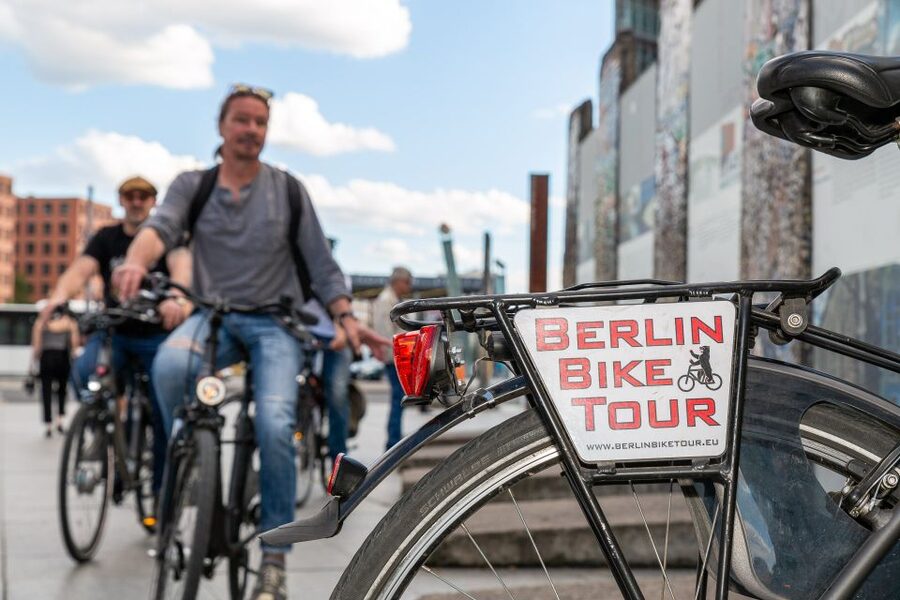
The first big stretch is where the border story starts to feel physical. You begin at the crossing area tied to 9 November 1989, and you learn how the cherry trees on Bornholmer Straße came to be planted there. It is a subtle but powerful kind of transformation, a place that once enforced control now holds everyday city life.
Then the route heads toward Mauerpark. This is where you can watch the city layers overlap, where people relax now while the ground remembers what used to be dangerous. You will also hear about the original watchtower and the idea of the death-strip, presented so you can picture what was happening in real time.
One detail that makes this section memorable is the way you follow rabbit images on the ground. It turns a route into a scavenger hunt for history clues, and it helps you remember the sequence of border locations without feeling like you are stuck in lecture mode.
Bernauer Straße and Chausseestraße, watchtowers and the Death Strip context
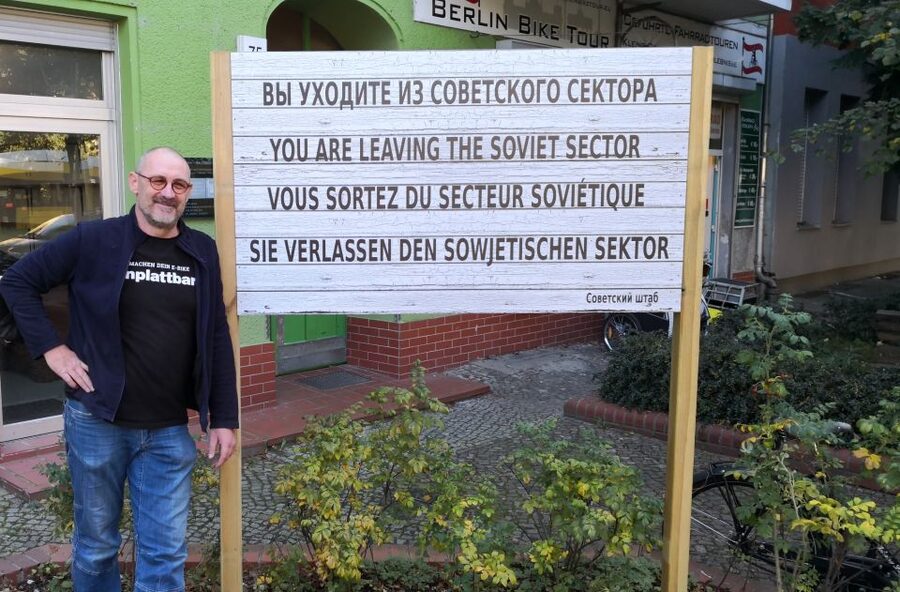
As you move toward Bernauer Straße and the Chausseestraße border crossing area, the tour becomes more about how the border worked, not just where it ran. Wall memorials here help you understand the scale of separation, especially when little wall is left in place. You get a sense of the border control points as systems, with observation, barriers, and fatal risks built into everyday geography.
You also visit the Chapel of Reconciliation. Even if you are not religious, this kind of memorial stop helps you process what “freedom to escape” meant for people who did not have many options. The ride stays focused on explanation, so you are not left guessing what you are looking at.
At Chausseestraße, you continue seeing remnants and interpreting them with your guide. That is the key value of this tour. Berlin’s border traces can be confusing when you are alone, you can spot a structure and still miss the why behind it.
Invaliden Cemetery and the Memorial Gunter Litfin stop
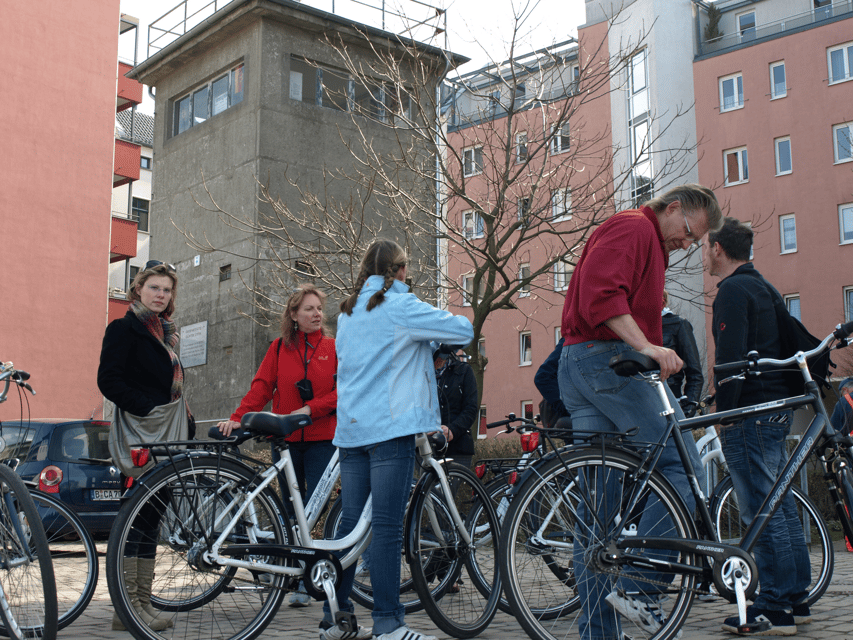
One of the strongest parts of the experience is the section that includes Invaliden Cemetery. This area shifts the tone, it is not just about political geography, it is about people. You ride in an area connected to the former Invalidenstraße border crossing and then you reach the memorial for Gunter Litfin.
This is where the tour’s “tragic and fateful stories” promise becomes real in your mind. The guide frames why these stories matter, and why they were part of how the border regime functioned as a deterrent. You end up understanding that some routes were not just “escape paths,” they were life-or-death decisions made with almost no room for error.
If you are sensitive to heavy topics, plan for that. This is not a cheerful bike ride through history. It can be difficult, but it is also the part that gives the route meaning.
More traces of the Wall through Berlin:
Along the Government Bank to the Parliament of Trees
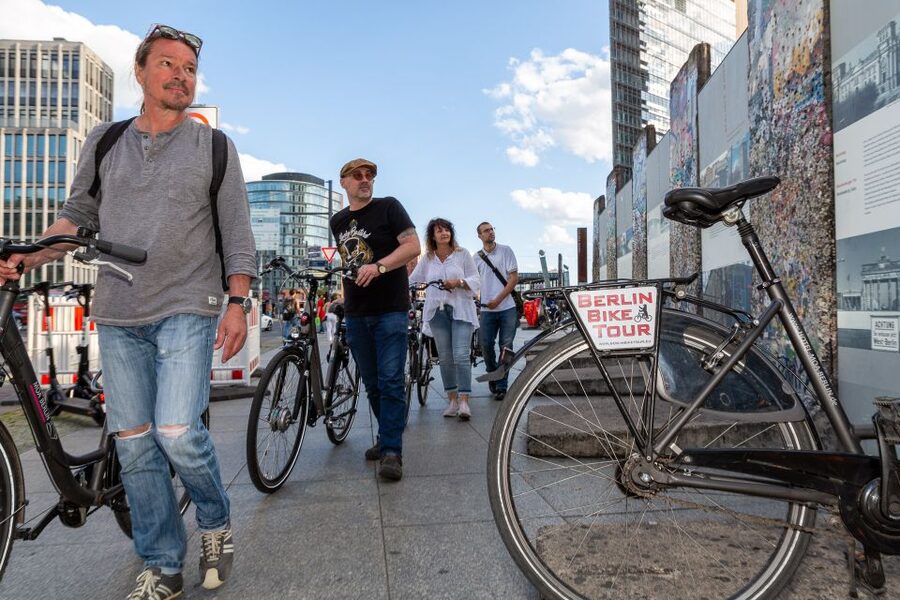
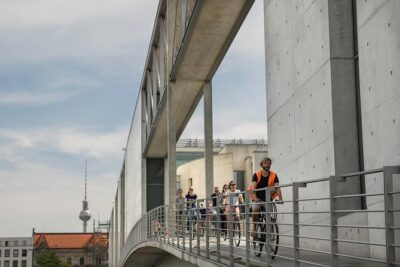
After the memorial stretch, the ride turns more cinematic. You pass along the Government Bank area and continue toward the Parliament of Trees, a site that carries symbolism tied to Germany’s later civic identity.
This section is useful because it reminds you that Berlin did not just end with the Wall. The city rebuilt, governments returned, and public space became part of the story again. You get a sense of the shift from a closed border logic to a public, democratic one.
It also works well as a pacing moment. After emotionally intense stops, biking through larger civic landmarks gives your brain a break while still staying on theme.
Brandenburg Gate, Potsdamer Platz, Checkpoint Charlie, and Tränenpalast
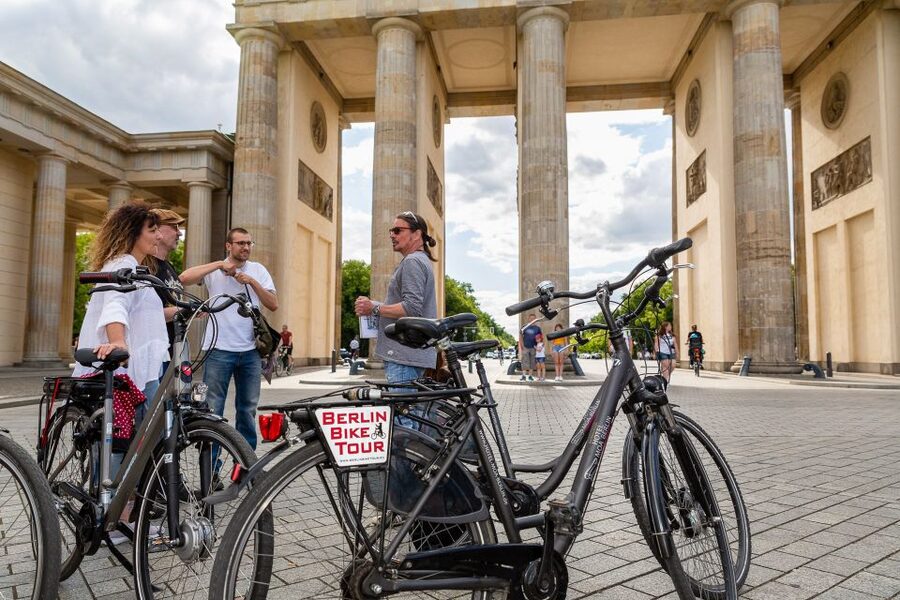
You then circle into some of Berlin’s best-known sights, but with wall-history framing attached. The Brandenburg Gate stop is the obvious magnet, but here it is not just a postcard moment, it is a point on the timeline that helps you connect East-West division to later reunified symbolism.
Next comes Potsdamer Platz. The place feels busy and modern now, yet your guide ties it back to the fact that this area used to sit in a much more controlled, fragmented city. The value here is perspective. It is easy to treat Potsdamer Platz as just entertainment and shopping, but on this ride, it becomes a reminder of how borders reshape urban life.
Then you hit Checkpoint Charlie and the Tränenpalast, the Palace of Tears. This is where the tour name makes sense in real terms. You are looking at a place where separation created emotional outcomes, and where reunification came with its own complicated aftermath.
You also pass other notable areas such as the Museum Island vicinity and nearby churches and civic buildings mentioned in the route, which helps you keep situational awareness while the guide explains the border logic around Friedrichstraße.
Price and value: is $40 worth 4 hours?
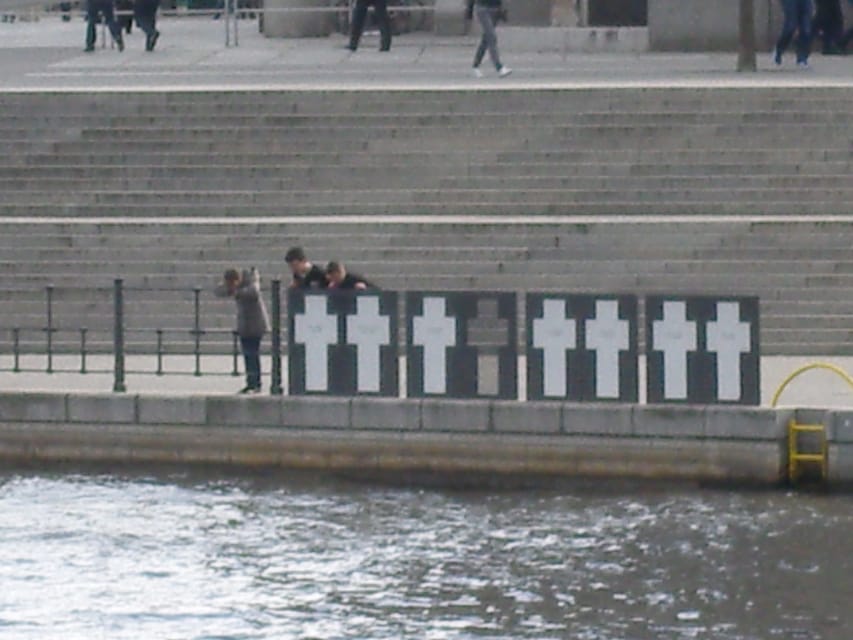
At $40 per person for a 4-hour experience, the value is pretty straightforward: you are paying for a bicycle, a city guide, fees, and rain poncho support if needed. You are not paying for a long, multi-day program, but you are getting a guided route that stitches multiple major border-related sites together into one ride.
What makes the price feel fair is efficiency. Many people can reach one landmark on their own, but it is harder to connect the smaller border traces in a coherent sequence, especially when wall remnants are faint and memorial design can be subtle. The guide provides that “connective tissue,” which is what you really buy.
One thing to watch: food and drink are not included. So you may want to plan a snack before or after, especially if you tend to bike with energy snacks.
What to expect on the bike, and how to prepare
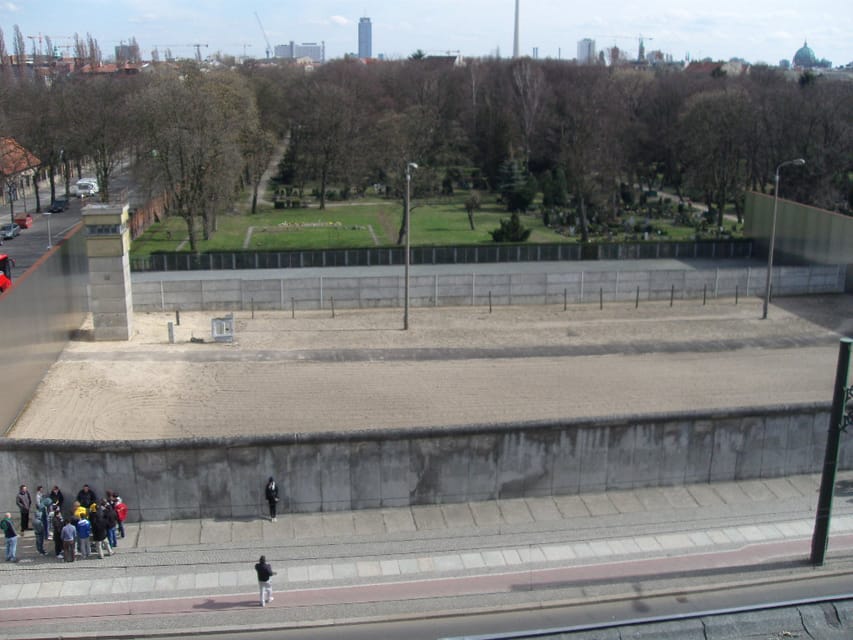
This is an outdoor tour, and it runs in all weather. If rain shows up, you get a rain poncho, which means you do not have to buy gear in Berlin just for one morning or afternoon.
Wear sunglasses, and if it is sunny, a hat helps a lot. Bring your camera because the ride takes you to both memorial spaces and major landmarks. And because luggage or large bags are not allowed, travel light to avoid awkward carrying.
Also remember the tour is German language. If you do not speak German, you might still follow with effort, but the full benefit is in understanding the explanations as delivered.
Who should book this Berlin Wall cycling tour
This works best if you want history connected to streets, not only museums. If you like walking tours but want more movement and a clearer sense of geography, cycling adds speed and keeps the route feeling efficient. It also suits people who want a guided approach to memorials like Invaliden Cemetery, where self-guided visiting can feel disconnected.
It is also a good choice for visitors who want big sights like Brandenburg Gate and Checkpoint Charlie included, but without treating them like generic sightseeing. The wall framing changes how you experience those stops.
If you hate heavy stories, or you know you will not handle memorial-heavy stops well, you may want to choose a different type of tour. This one includes tragic context on purpose.
Should you book it?
I recommend booking if you want a focused Wall-history route with practical biking and real context at the key memorial points. The strong points are the small group size, the guide’s ability to connect facts with personal perspective, and the way the route moves from the crossing moment of 9 November 1989 to iconic landmarks like Brandenburg Gate and the Tränenpalast.
You should think twice if you only want upbeat sightseeing, or if German-only guiding is a challenge for you. And if you are traveling with lots of luggage, this tour’s luggage rules will be annoying.
If your goal is to understand how Berlin’s border system worked, while still seeing the city’s landmark hits, this half-day ride is a strong value.
FAQ
Where does the tour start?
Meet your guide at 75 Bornholmer Straße, Berlin 10439.
How long is the Berlin Wall cycling tour?
The tour lasts 4 hours.
What is the group size?
It is a small group with a minimum of 3 participants and a maximum of 8.
What language is the live guide?
The live tour guide speaks German.
What should I bring, and what is not allowed?
Bring your passport or ID card, sunglasses, a sun hat, and a camera. Luggage or large bags are not allowed.
Is the tour affected by rain?
It runs in all weather. On rainy days, you are given a rain poncho.
Is food included?
No, food and drink are not included.
Centuries Per Block
- Berlin: Natural History Museum Entrance Ticket
★ 4.6 · 3,382 reviews - Berlin: 3-Hour World Heritage Cruise to Potsdam
★ 4.5 · 1,569 reviews - Berlin: History of the Third Reich Guided Walking Tour
★ 4.7 · 791 reviews - Berlin: Berlin Charité Guided History Tour
★ 4.4 · 660 reviews
Flat Kilometres
- Berlin Highlights: 3-Hour Bike Tour
★ 4.9 · 809 reviews - Berlin Highlights Sightseeing Bike Tour in Small Groups
★ 5.0 · 652 reviews - Berlin: The Wall and Third Reich Guided Bike Tour
★ 4.8 · 578 reviews - Berlin: Alternative Bike Tour of Kreuzberg & Friedrichshain
★ 4.7 · 548 reviews
Fresh on the arrivals board for Berlin


Cycling Tours in Berlin, compared.
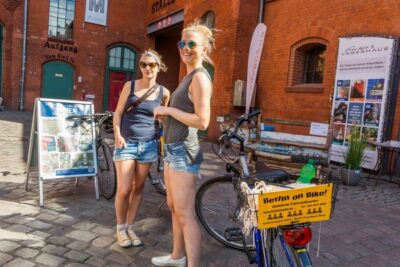
Sights and Highlights Bike Tour with a Local Guide
Read our review →
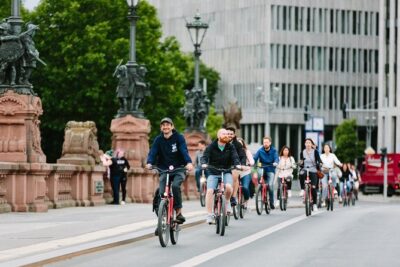
Berlin Highlights Sightseeing Bike Tour in Small Groups
Read our review →
Alternative Bike Tour of Kreuzberg & Friedrichshain
Read our review →
Browse the lists this tour appears in