
Reviewed · CYCLING TOURS IN BERLIN
Berlin: The Wall and Third Reich Guided Bike Tour
A wall, a bunker, and a bicycle, all in one ride. This 3-hour tour strings together Nazi-era leftovers and Cold War borderland sites into one active, story-driven loop with stops that stay close to the real geography. I especially like how it mixes big landmarks with quiet backstreets, and how guides like Carl and Juliet make tense topics feel human, not like a textbook. One possible drawback: you only get brief guided moments at many stops, so if you want long museum time, you will need extra time on your own.
I also like that you get an easy rhythm: ride 15 kilometers, stop for a short guided explanation, then pedal on while the city shows you what the maps never do. The route includes Berlin Wall Memorial sites, places tied to the Nazi plan for Germania, and even bunker remnants tucked into parks. If the weather turns slippery or rainy, the bike paths can be a little tricky, so you will want to ride carefully and use the provided ponchos when needed.
In This Review
- Key things that make this tour worth your time
- A 15-kilometer ride that makes Berlin’s twentieth century make sense
- Where you start at Poststraße 11, and how the bike sets the pace
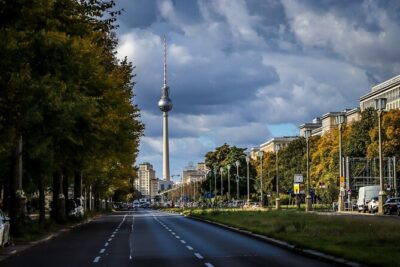
- Nikolaiviertel and the quick start near the TV Tower
- The New Synagogue area and why it matters in the broader story
- Berlin Wall Memorial on Bernauer Straße, where the border feels real
- From Ruppiner Straße to the Wall path: turning memory into motion
- Flak Tower III Humboldthain: the Nazi military footprint in plain sight
- A Piece of the Berlin Wall, then Memorial Gunter Litfin and Invalids’ Cemetery
- Boros Bunker and the Germania plan: when architecture meets ideology
- Holocaust Memorial photo stop: keeping the story connected to all victims
- Hitler’s Bunker and why the site is not accessible today
- Bundesministerium der Justiz and the ride back toward Nikolaiviertel
- Bikes, weather, and how hard is it really
- Price and value at $41 for a 3-hour guided ride
- Should you book? My honest take
- FAQ
- How long is the Berlin Wall and Third Reich guided bike tour?
- Is the bike rental included in the price?
- Where do I meet the guide?
- What languages are available for the live guide?
- Is this tour suitable for families?
- Is rain gear provided?
Key things that make this tour worth your time
- Short stops, clear context: You get quick, focused explanations so the tour covers more ground than a walking-only approach.
- Wall history in real locations: You see the border traces and photo spots tied to how the Wall operated.
- Bunkers and Germania talk: Flak Tower III and the Boros Bunker add a physical sense of what the Nazis built, planned, or tried to build.
- Ghost station and escape stories: Borderland details turn the Cold War into day-to-day survival, not just dates and maps.
- Guides who handle hard questions well: People highlight guides who stay calm with difficult topics and answer follow-ups.
- Active but not exhausting: Most of the route uses calmer streets and bike paths, with only occasional busier roads.
A 15-kilometer ride that makes Berlin’s twentieth century make sense
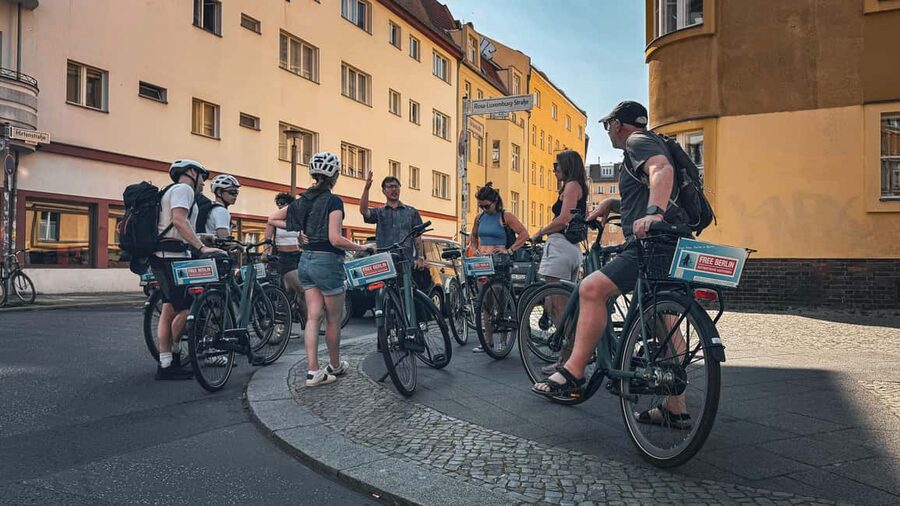
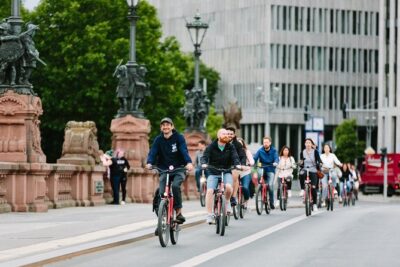
This is the kind of Berlin tour that fits the city’s scale. You cover about 15 kilometers by bike in roughly 3 hours, which is fast enough to hit major sites but paced enough to absorb what you are seeing. The big win is that you are not just looking at plaques. You are moving along the same kinds of routes people used, with the city’s layout doing half the teaching.
What I like most is the balance between active and relaxed. The tour keeps you cycling, but it also stops often enough that you get a storyline. You will hear about daily life in the divided city, why the border mattered so much, and how attempts to escape could end in tragedy. Guides named Carl, Jake, and Paul have been praised for being funny when it works, thoughtful when it does not, and for keeping the group together so you do not feel scattered.
The other reason this ride works is that Berlin gives you natural layers. You will pass places that look ordinary today, then the guide fills in what made them dangerous or strategically important in the Nazi and Cold War eras.
More Cycling Tours in Berlin
- Berlin: Sights and Highlights Bike Tour with a Local Guide
★ 4.8 · 2,698 reviews - Berlin Highlights 3-Hour Bike Tour
★ 5.0 · 948 reviews - Berlin City Bike Tour with Beer Garden Stop
★ 5.0 · 917 reviews
Where you start at Poststraße 11, and how the bike sets the pace
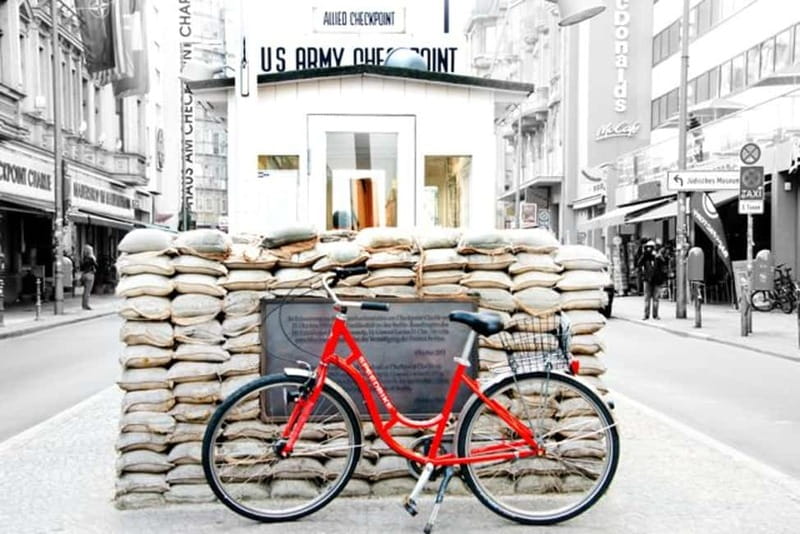
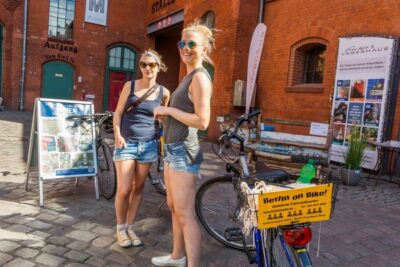
Meet at the office at Poststraße 11, in the courtyard entrance of the building. Look for the FREE BERLIN sign. From there, you begin near Nikolaiviertel, a centrally located area about five minutes from the TV Tower.
You pick a rental bike of your choice, and you can request a helmet. Bikes are fitted with baskets and are regularly checked by a certified mechanic, which matters more than you might think when you are riding for hours. If rain hits, waterproof ponchos are included, and you will see how quickly Berlin weather can change your comfort level.
This tour is also built for real groups, not factory-line tourism. It runs with a live guide in German, French, or English, and you can do private or small-group versions if you want a quieter, more tailored experience. Some guides also seem to adjust the pacing based on what the group wants to linger on, so if you care deeply about one theme, you have a better chance of getting it.
Nikolaiviertel and the quick start near the TV Tower
You start in Nikolaiviertel, and the guide begins the storyline immediately. This spot is useful because it gets you into the rhythm of the city fast. You are not scrambling to understand Berlin while already trying to interpret Cold War maps. Starting near a central landmark helps you get your bearings quickly, then the route carries you outward into the places that mattered most.
Nikolaiviertel also sets expectations for the tour’s style: you will be guided in short bursts. The first stop segment is brief, then you are moving again. This is a theme you will keep seeing throughout the ride, which keeps the tour energetic.
If you dislike fast pace, this may still work for you as long as you are okay with moving between sites rather than staying at one location for a long time. The tour is designed for coverage, not a slow, museum-like experience.
The New Synagogue area and why it matters in the broader story
One of the early guided stops is near the New Synagogue Berlin and Jewish Centre. This matters because the Nazi era story is not only about walls and bunkers. It is also about people targeted by the regime, and the city’s Jewish landmarks are part of that context.
You will not have time here for a deep standalone visit, since the tour format is built around riding and short explanations. Still, placing this early in the route signals that the tour is not only about engineering and power. It is about how ideology turns into real consequences.
If you are the type who likes to connect locations through themes rather than through dates, this sequencing will feel satisfying. You start with the city’s layers, then you build toward the more difficult physical remnants tied to the regime.
Berlin Wall Memorial on Bernauer Straße, where the border feels real
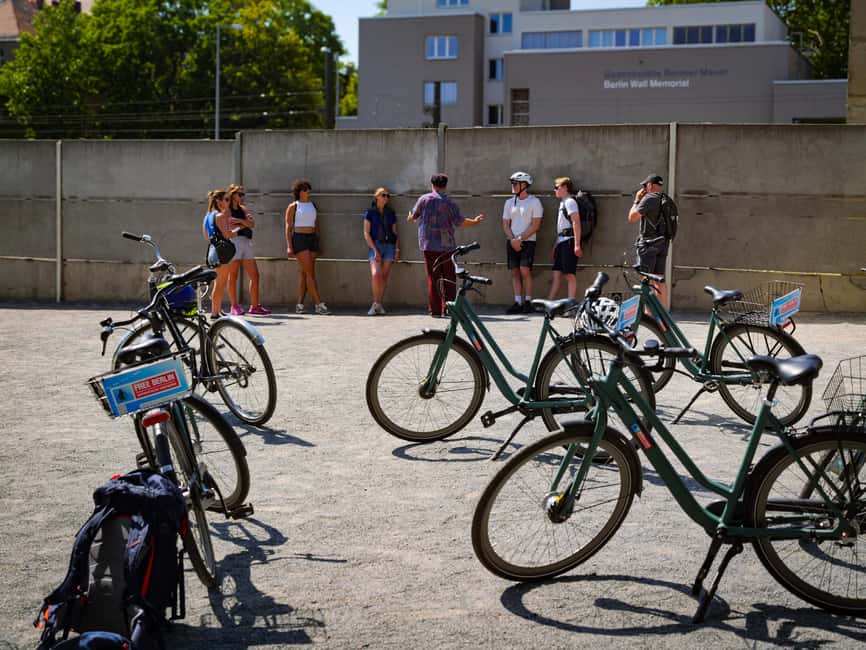
The Berlin Wall Memorial on Bernauer Straße is one of the most meaningful stops on the ride, and it is also one where being on a bike helps. You can see the location in relation to the surrounding streets, then get the guided explanation that turns the scene into a borderland map.
This stop is framed around the remains of the Wall and how the border area found new uses over time. That is important because the Wall is not simply gone. Parts of it have been repurposed or preserved, and Berlin’s approach to the memory landscape affects how you understand what happened here.
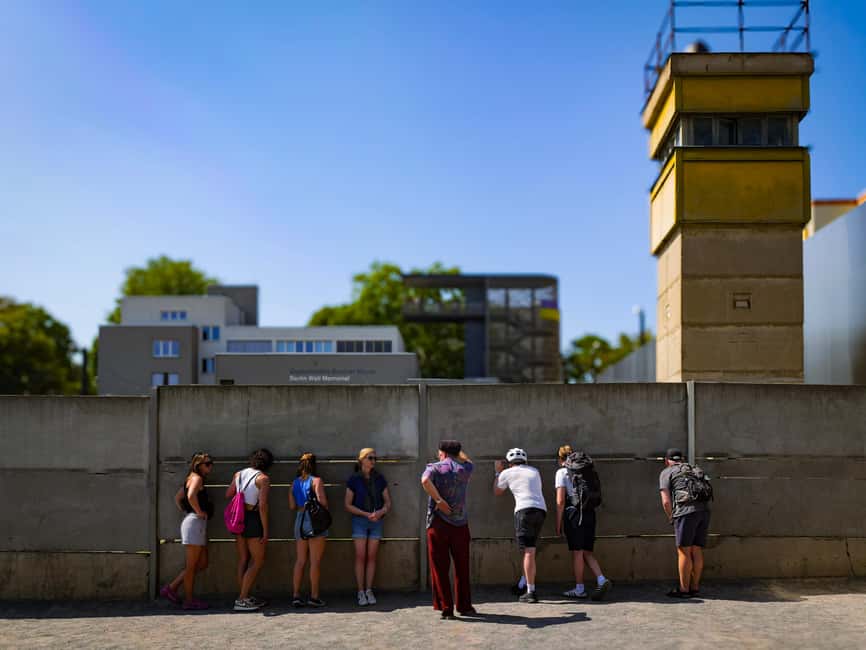
The guide also sets up the idea of border operations and daily life: watchtower logic, the fear of being caught, and the way escape attempts were handled. Even if you have read about this before, you usually feel it more strongly when the place is right there.
Practical note: expect photo-stop energy here. The guide provides quick context and you get a short window to look around and take pictures before you roll on.
Further Third Reich and wartime history tours:
From Ruppiner Straße to the Wall path: turning memory into motion
You continue through areas like Ruppiner Straße, then head toward Mauerpark and the Berliner Mauerweg. These locations help you see how the Wall is tied to today’s Berlin, not only to old photographs.
Mauerpark is especially useful for understanding reuse. The border traces exist in the city’s bones, but modern Berlin life has grown around them. That contrast is part of the story. The Cold War border was built to stop movement, yet today you can ride along routes that reflect a very different relationship to space.
You also get more of the Wall route feel as you follow parts of the Berliner Mauerweg and cycle past structures like the Behmstraßenbrücke. The bridge area helps you keep visual continuity, which is handy because the Wall story is spread across many kilometers.
The biggest advantage here is that you are not stuck reading a single sign. You are experiencing how the border shaped the city, then how the city remade itself around those lines.
Flak Tower III Humboldthain: the Nazi military footprint in plain sight
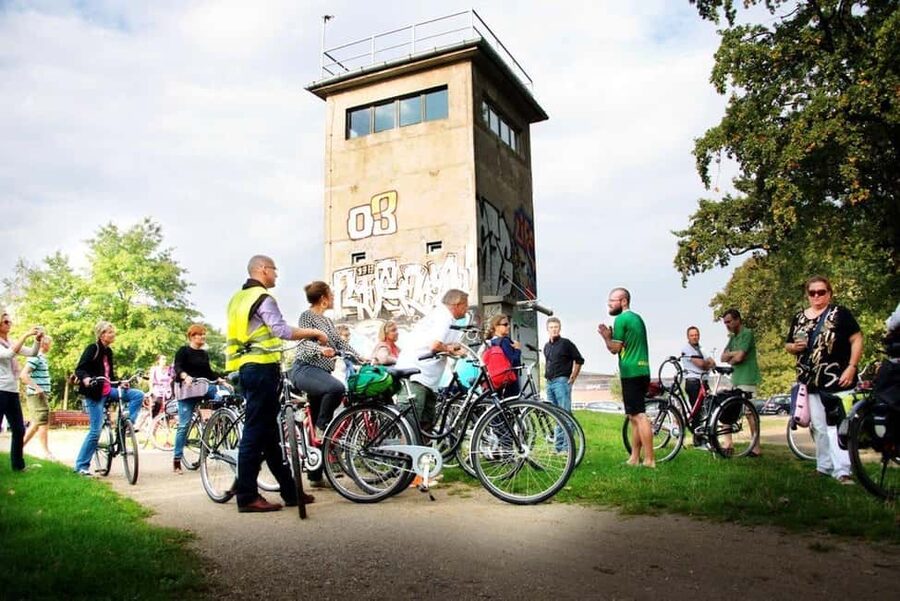
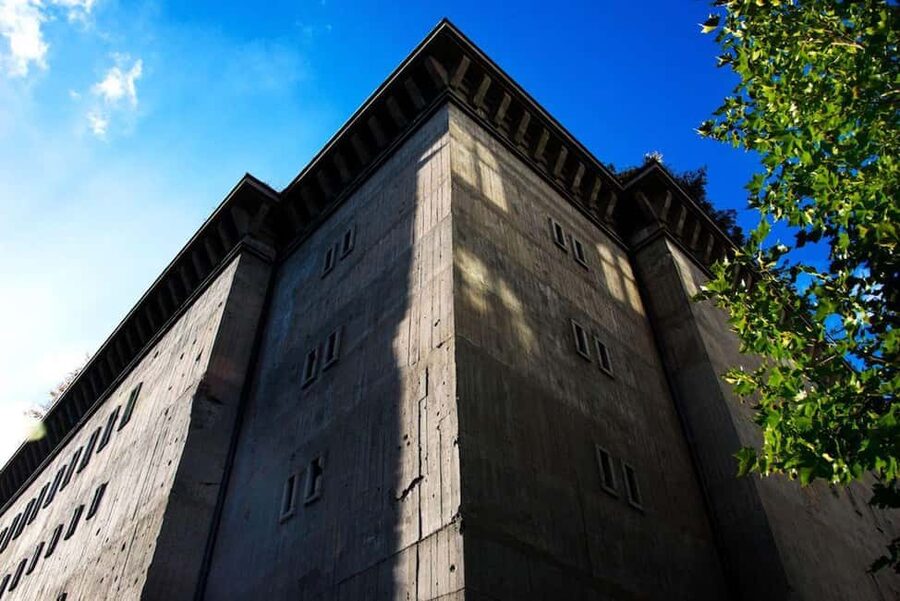
A key physical stop is the Flak Tower III at Humboldthain, plus another photo stop at the area connected to the Wall. Flak towers are a reminder that Nazi ambition was not only political. It was also industrial and military.
This is where the tour’s “small moments with big meaning” style really works. You might walk past a structure like this if you were exploring alone and assume it is just another old building. On the bike tour, the guide ties it to what it was for and why it fit into broader planning.
The guide also connects these structures to the idea of control, protection, and power, then shifts back to the Wall era when the city got divided into opposing systems. This switching is not random. It is designed to show how one era’s infrastructure became part of later history.
A Piece of the Berlin Wall, then Memorial Gunter Litfin and Invalids’ Cemetery
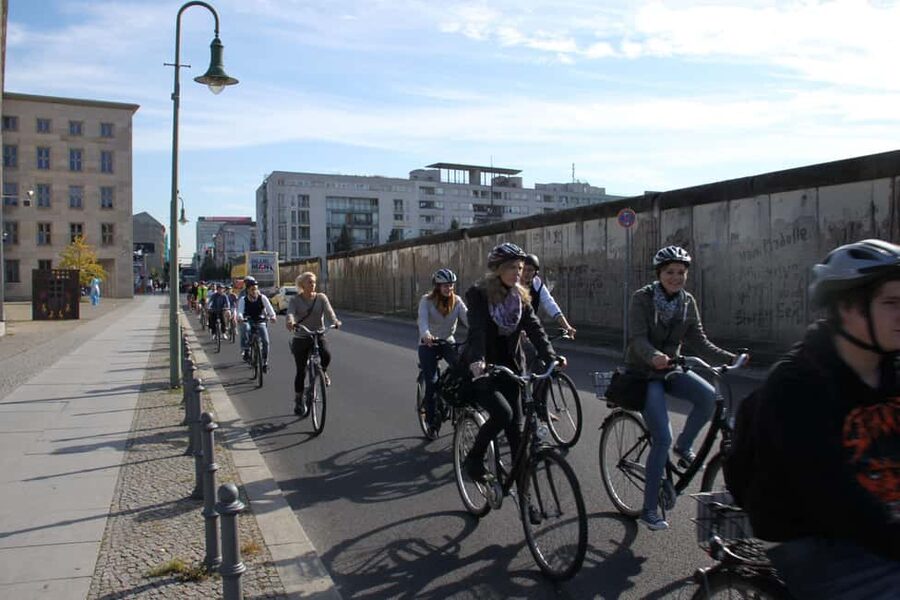
You will reach a stop for a Piece of the Berlin Wall, which is one of those moments that gives you a tactile anchor. It helps you remember that this was not a concept. It was built from materials and decisions.
Then the ride moves into memorial territory, including Memorial Gunter Litfin and the Invalids’ Cemetery. These stops add a different kind of weight. Instead of focusing only on structures, the guide brings in human consequence tied to escape attempts and the risks of living in a sealed city.
This is one of the tour segments where I would pay attention even if you already know the outline. The best tours are the ones that change your sense of scale. Memorial stops do that by forcing you to connect tragedy to place.
Because the tour format is time-limited at each site, you will not have long reading sessions. But the guided explanation can point you toward what to notice and what questions to carry afterward, if you want to return later.
Boros Bunker and the Germania plan: when architecture meets ideology
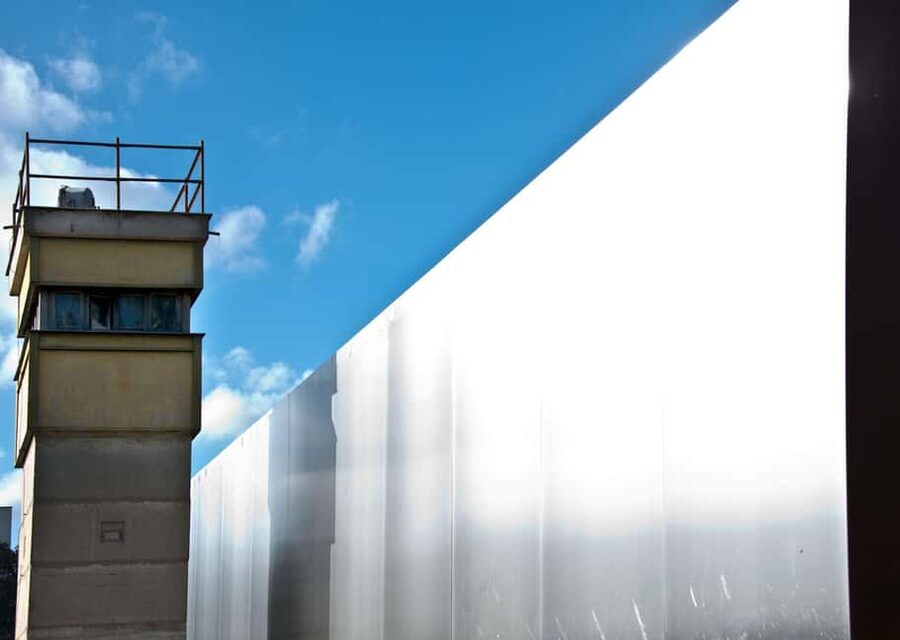
One of the most interesting stops is Sammlung Boros, also connected with the Boros Bunker. This segment helps you understand how the physical world carried Nazi thinking, including the famous vision of Germania, a never-realized dream city.
You also hear about an enormous bunker concept and the guide explains what the vision meant in practice. That matters because Germania was not only a fantasy sketch. It reflected how the regime imagined controlling space, moving people, and projecting power. The bunker and related structures show how that thinking looked when it turned into steel and planning.
If you enjoy “what did they actually build” history, this part is a strong payoff. A lot of ideological history stays abstract in other formats. Here, you get a structure and a story, which makes it easier to understand why these places still matter.
One small caveat: because this is a bike tour, time at each stop is short. If you want extra time inside related spaces, you will need to add it later.
Holocaust Memorial photo stop: keeping the story connected to all victims
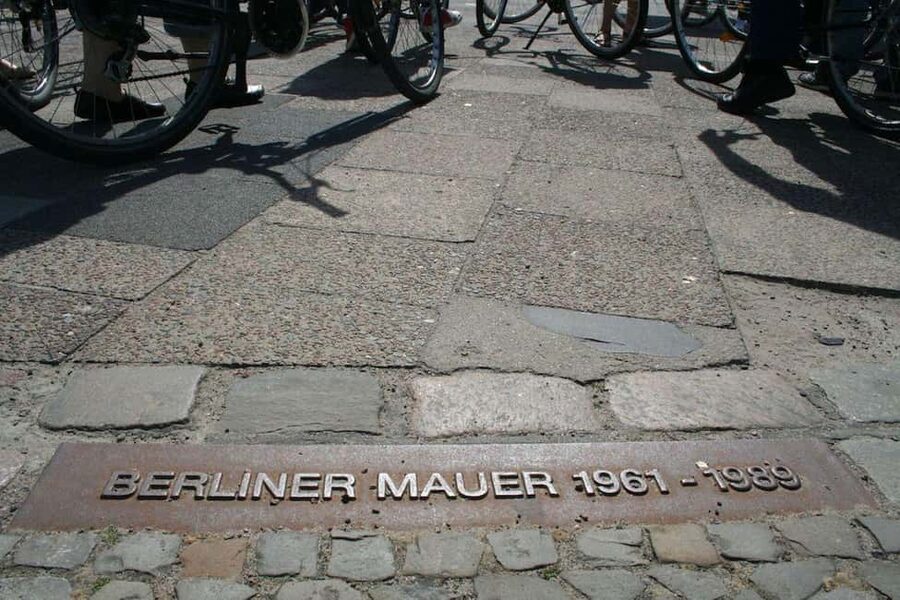
You pass the Holocaust Memorial area for a photo stop, with a short guided explanation. This stop is included for a reason: it broadens the timeline beyond buildings and borders into the wider crimes of the Nazi regime.
A photo-stop format means you will not get a full guided museum-style experience here. But the placement in the route helps you connect the Wall and bunker story to the deeper context of persecution and genocide that shaped what the regime was willing to do.
For many people, this is the moment that makes the entire tour feel more serious and less like a “history walk.” It shifts the emotional weight from architecture and strategy back toward human suffering.
Hitler’s Bunker and why the site is not accessible today
The tour includes the area tied to Hitler’s bunker, often referred to as Führerbunker. You get a guided stop, but the guide also explains why it is no longer accessible today. That is important. Berlin’s landscape has changed, and some sites exist more as knowledge and memory than as something you can easily visit on foot.
This stop matters because the bunker is part of the myth and the reality of the regime’s collapse. The guide connects it to the broader story of how the city ended up divided, and how later Cold War realities turned Berlin into a symbol of competing systems.
Also, the tour format helps you see the bunker story as a stepping stone. It is not an isolated fascination with Hitler. It is a chapter in the city’s long transformation from Nazi power structures to Cold War battleground.
Bundesministerium der Justiz and the ride back toward Nikolaiviertel
You finish after additional guided segments, then return to the starting area near FREE BERLIN Bike Tours & Rental. One reason I like the wrap-up this way is that it gives your brain a chance to stitch together the “then versus now” effect.
By the time you ride back, you have seen how Berlin uses memory in different forms. Some locations are preserved structures. Some are memorials. Some are spaces where you can still feel the shape of the past even if the physical details are gone.
This back half of the ride is also where you often start noticing patterns in the city. You see how the Wall’s route influenced movement, where major roads cut across smaller neighborhoods, and how bike paths turn old barriers into new routes for everyday life.
Bikes, weather, and how hard is it really
This tour is family-friendly, and infant seats can be provided on request. That is a useful signal: while it is an active ride, it is not pitched as extreme cycling.
The bike setup includes baskets, and helmets are available if requested. On-bike safety has been praised, including the sense that the ride stays organized even with traffic nearby. Some routes are described as cycling through mainly quiet streets and cycle paths, though you should expect occasional busy roads.
If it is wet, consider riding a bit slower than you would on a dry day. One clear tip that comes up is that some paths can get slippery when wet, even if the city infrastructure is generally bike-friendly. The ponchos help for rain, but tires still matter.
Price and value at $41 for a 3-hour guided ride
At $41 per person for about 3 hours, this tour is good value if your goal is to see a lot of key sites without spending an entire day on transit and between neighborhoods. You are paying for three things: bike rental, a guide, and an efficient route that clusters multiple major Cold War and Nazi-era locations.
The bike rental and ponchos are included, and bikes are maintained, which reduces your logistical stress. In practice, this means you spend your time learning and cycling rather than negotiating stations, lines, or patchwork routes.
If you have limited time in Berlin, this is the kind of tour that compresses a complicated story into a single ride you can actually complete. If you want a slower, museum-heavy experience, you will likely pair this with a separate ticket for any sites that interest you most.
Should you book? My honest take
Book it if you want a smart way to connect Berlin’s Wall story to Nazi-era remnants and Cold War bunker themes, without getting stuck only in one part of the city. I would also recommend it if you like guides who keep you moving through places you might miss on your own, and who can handle hard questions in a calm, clear way.
Skip it or plan extra time if you need long stops at each site. This tour is built for coverage, so the guided moments are brief and focused. You will leave with a strong framework and a handful of specific places to revisit if you want more depth later.
If you are choosing between a big bus tour and going it alone, this bike format is a sweet spot. You get human scale, real geography, and a storyline you can carry with you all day.
FAQ
How long is the Berlin Wall and Third Reich guided bike tour?
The tour lasts 3 hours.
Is the bike rental included in the price?
Yes. Bike rental is included, and helmets are available if requested.
Where do I meet the guide?
Meet at the FREE BERLIN Bike Tours & Rental office at Poststraße 11, in the courtyard entrance. Look for the FREE BERLIN sign.
What languages are available for the live guide?
The live guide is available in German, French, and English.
Is this tour suitable for families?
Yes, the tour is family-friendly. Children are welcome, and infant seats can be provided on request.
Is rain gear provided?
Yes. Waterproof ponchos are included in case of rain.
Flat Kilometres
- Berlin Highlights: 3-Hour Bike Tour
★ 4.9 · 809 reviews - Berlin Highlights Sightseeing Bike Tour in Small Groups
★ 5.0 · 652 reviews - Berlin: Alternative Bike Tour of Kreuzberg & Friedrichshain
★ 4.7 · 548 reviews - Berlin: Guided Bike Tour to Explore the Highlights
★ 4.8 · 506 reviews
Fresh on the arrivals board for Berlin

Cycling Tours in Berlin, compared.
Sights and Highlights Bike Tour with a Local Guide
Read our review →
Berlin Highlights Sightseeing Bike Tour in Small Groups
Read our review →
Alternative Bike Tour of Kreuzberg & Friedrichshain
Read our review →

Cold War & Berlin Wall History Guided Bike Tour
Read our review →Browse the lists this tour appears in