
Reviewed · CYCLING TOURS IN BERLIN
Berlin: Alternative Bike Tour of Kreuzberg & Friedrichshain
Berlin’s attitude is easier to see from the saddle. This alternative bike tour strings together East Side Gallery street art and Kreuzberg backstreet culture in one smooth run. You start in Prenzlauer Berg, cruise along Karl-Marx-Allee, and end up along the Spree with parks and neighborhoods that feel more lived-in than listed in guidebooks.
I especially like two things: the way the route turns famous symbols like the Berlin Wall into something you can actually ride past, and the stop-and-chat style with guides such as Oli and Anna, who explain what you are seeing in plain language. One possible drawback: Berlin bike infrastructure can be a mixed bag, and you may face a few stretches where you share space with cars, so you will want to stick close to your guide and the group.
The payoff is that you get context fast, without spending your whole first day on monuments. You cover about 17 kilometers at a relaxed pace, with enough photo time and chances to ask questions, all in a small group of up to 15.
In This Review
- Key things to know before you pedal through Kreuzberg and Friedrichshain
- Starting in Prenzlauer Berg, then moving east with purpose
- Why biking works so well for Kreuzberg and Friedrichshain
- Prenzlauer Berg to Karl-Marx-Allee: DDR boulevard energy, up close
- Friedrichshain’s Boxhagener Platz and RAW Tempel: alternative Berlin beyond the hype
- The East Side Gallery and Oberbaumbrücke: the Wall becomes part of daily life
- Kreuzberg and SO36: courtyards, Görlitzer Park, and street-level culture
- River Spree segments: why the ride feels like a reset
- Pace, distance, and bike setup for a 210-minute route
- Guides like Oli, Anna, Patricia, and Joost: why the storytelling is the real value
- What to bring, what you get, and what to skip
- Price and value: how $41 buys more than a ride
- Should you book this Berlin alternative bike tour?
- FAQ
- Where does the tour start?
- How long is the tour?
- How far will I cycle?
- What neighborhoods and sights are included?
- Is the tour in a group?
- What bike equipment is provided?
- Are helmets and gloves included automatically?
- Does the tour include snacks and drinks?
- What weather gear do you provide?
- What is the tour language?
- Final thought
Key things to know before you pedal through Kreuzberg and Friedrichshain
- East Side Gallery ride-by viewing that keeps the Wall’s story moving as you go
- Kreuzberg SO36 vibes through streets, courtyards, and the kind of everyday culture you can’t spot from a bus window
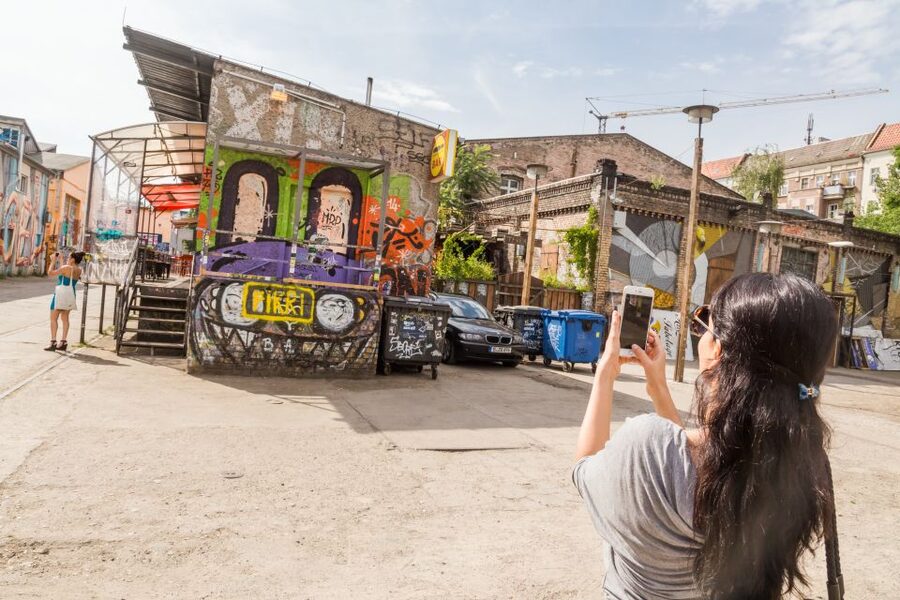
- Friedrichshain park stops around Boxhagener Platz and the RAW Tempel area
- River Spree scenery that makes the ride feel like a break, not just transportation
- Guides who tell the story in a personal way, with real-world neighborhood tips baked in
- A 210-minute rhythm that is long enough to feel like a tour, not so long you are done after the first hour
Starting in Prenzlauer Berg, then moving east with purpose
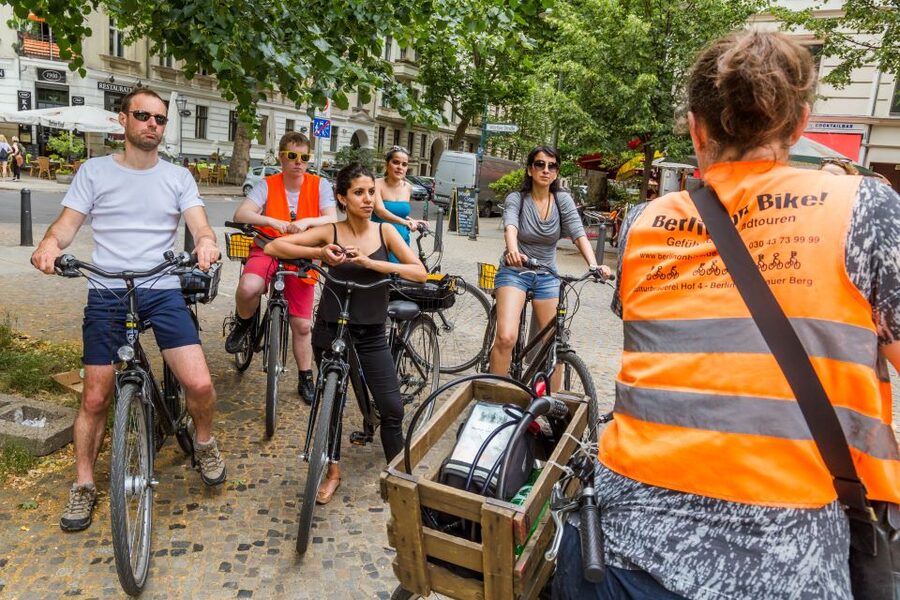
Most Berlin tours hit the big sights first. This one starts a little more local, at the Kulturbrauerei area in Prenzlauer Berg. From there, you pedal toward Volkspark Friedrichshain and the wide, DDR-era feel of Karl-Marx-Allee.
Why this opening matters: Prenzlauer Berg and Friedrichshain are next-door siblings with very different personalities. By getting you moving early, the tour sets up the contrast you came for, from East German boulevard planning to today’s alternative street life. And because the pace stays relaxed, you are not guessing where you should look, you just follow the guide and soak it in.
You also get that practical benefit that cycling brings: you are close to street level. You see storefronts, courtyards, murals, and how people actually use public space, not just what buildings look like from across a plaza.
More Cycling Tours in Berlin
- Berlin: Sights and Highlights Bike Tour with a Local Guide
★ 4.8 · 2,698 reviews - Berlin Highlights 3-Hour Bike Tour
★ 5.0 · 948 reviews - Berlin City Bike Tour with Beer Garden Stop
★ 5.0 · 917 reviews
Why biking works so well for Kreuzberg and Friedrichshain
Berlin is one of Europe’s better cities for cyclists, but it is not perfect. Some bike paths are excellent, some are more like suggestions, and you may hit a few road sections where you share the lane or deal with car traffic.
That is why the tour’s setup and group size matter. You ride in a small group (maximum 15), you move at a relaxed pace, and you stay together so the route stays safe and efficient. In real-world terms, you get the freedom of “going your own way” without the stress of navigating every turn in neighborhoods that can change block by block.
Also, the tour covers roughly 17 kilometers in about 210 minutes. That is a sweet spot: far enough to feel like you saw a full slice of the city, but not so long that you are exhausted when you reach the fun parts like the Spree and the East Side Gallery.
Prenzlauer Berg to Karl-Marx-Allee: DDR boulevard energy, up close
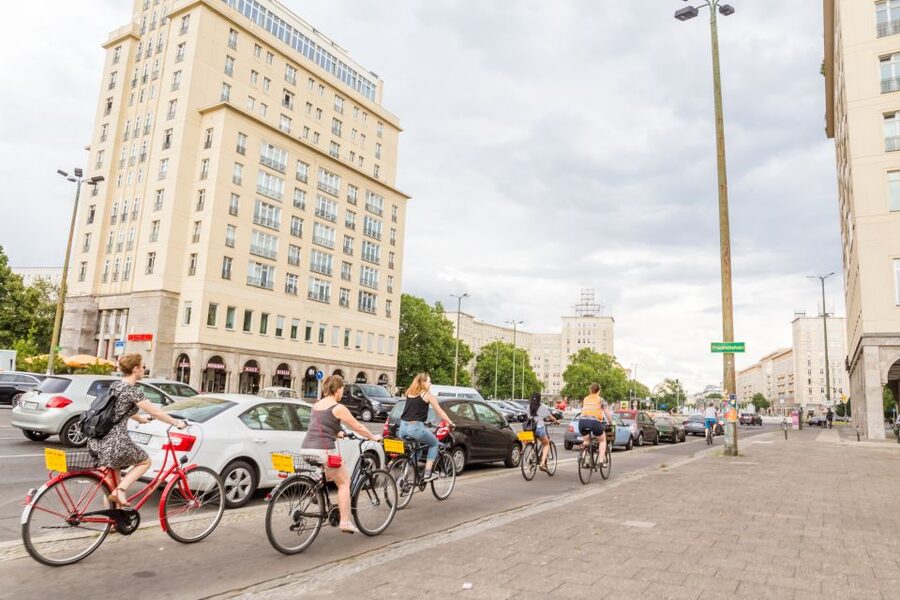
From Kulturbrauerei, the ride takes you toward Volkspark Friedrichshain and into the rhythm of Karl-Marx-Allee. This is where you start noticing how planners shaped everyday life in Berlin during the DDR era, from the grand spacing of buildings to the “boulevard as a system,” not just a road.
What you will like here is the feeling of scale. From a bike, you can appreciate the street width, the long sightlines, and the way the city’s design pushes people to move in certain directions. Even if you have already read about DDR architecture, seeing it unfold while you ride tends to make it click.
A practical note: Karl-Marx-Allee is also where you might notice traffic intensity more than in purely park-like stretches. Stay calm, keep your position, and enjoy the big urban views.
Friedrichshain’s Boxhagener Platz and RAW Tempel: alternative Berlin beyond the hype
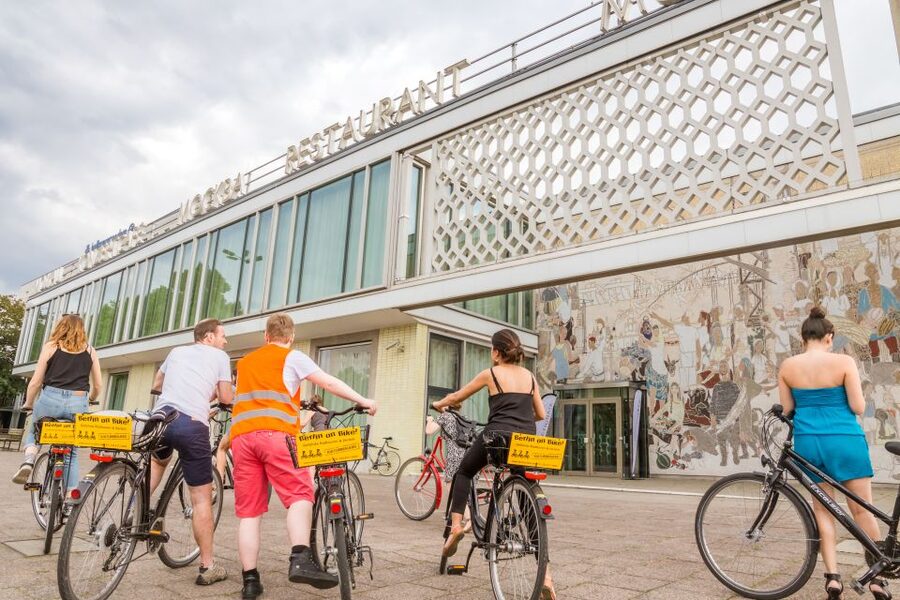
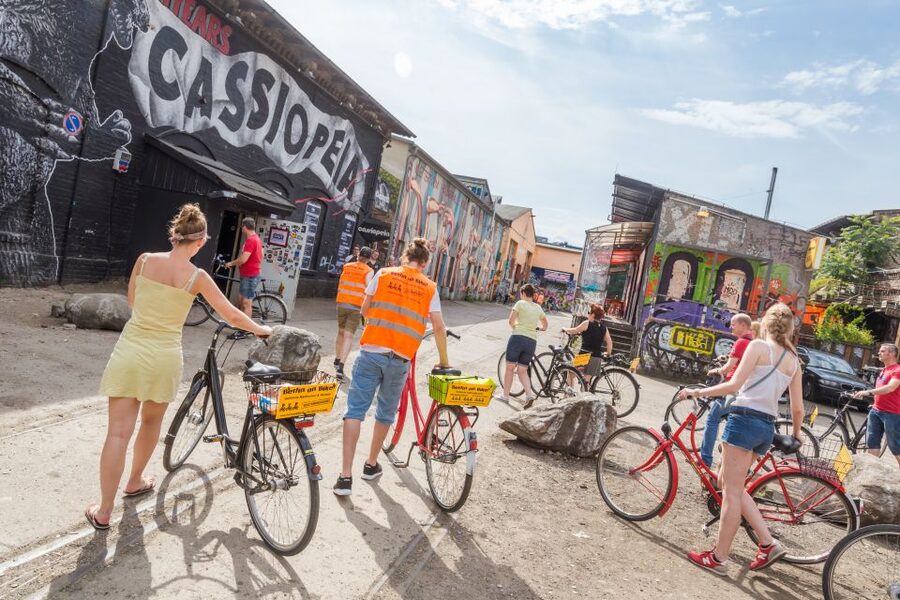
In Friedrichshain, you circle around Boxhagener Platz and reach the RAW Tempel area. This part of the tour is about alternative culture, not just aesthetics. You start to see why people come to Friedrichshain for a certain kind of Berlin day-to-night energy.
Boxhagener Platz gives you that lived-in square feeling, where local life spills out around it. And RAW Tempel is the kind of place that helps you understand the city’s post-wall identity: industrial bones plus creative reuse, where old structures become a platform for art, scenes, and community.
One of the best ways to experience this segment is to treat it like a neighborhood walk, just faster. Look at the textures: street art layers, building edges, and how spaces are used. The guide’s stories help too, because you will usually get explanations that connect what you see now to why the neighborhood developed the way it did.
The East Side Gallery and Oberbaumbrücke: the Wall becomes part of daily life
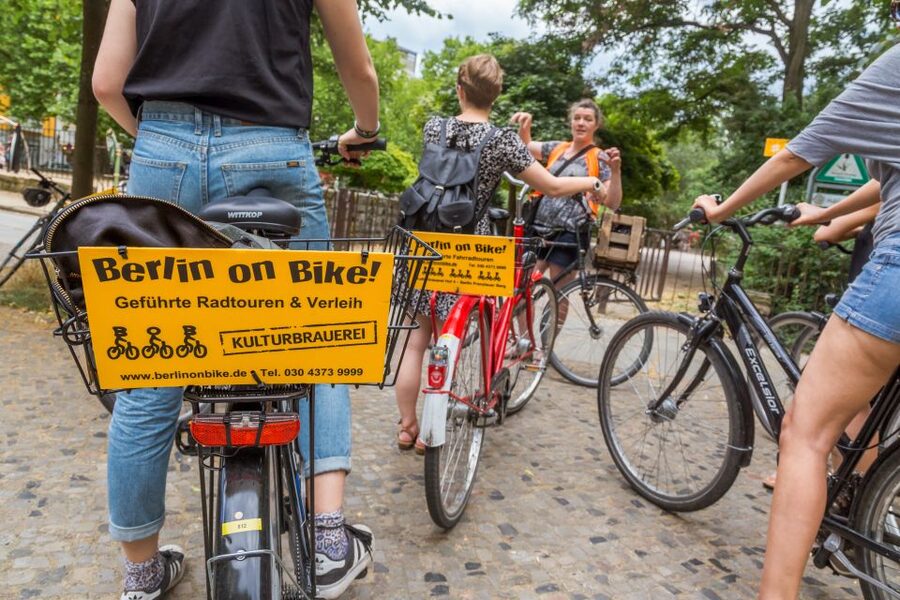
Then comes the ride you do not forget: the East Side Gallery, the largest remaining stretch of the Berlin Wall. You pass it by bike, which changes the experience. Instead of standing still and looking at panels, you glide along and notice the continuity, the length, and how the art sits inside a real city corridor.
This is also where you get the emotional swing of Berlin. The Wall is not just a photo stop. It is a physical object that once divided lives, and now it is a canvas, a memory, and a public statement all at once.
After that, you cross over the Oberbaumbrücke. Bridges in Berlin often feel like they are framing the city for you, and biking makes it easier to feel the river scale. You get moving views across water, plus the sense of transition as you roll into the next neighborhood, Kreuzberg.
If you like street art, you will enjoy the fact that you are not just seeing it in isolation. You are seeing it embedded in history, movement, and the urban plan.
More flat kilometres by bike:
Kreuzberg and SO36: courtyards, Görlitzer Park, and street-level culture
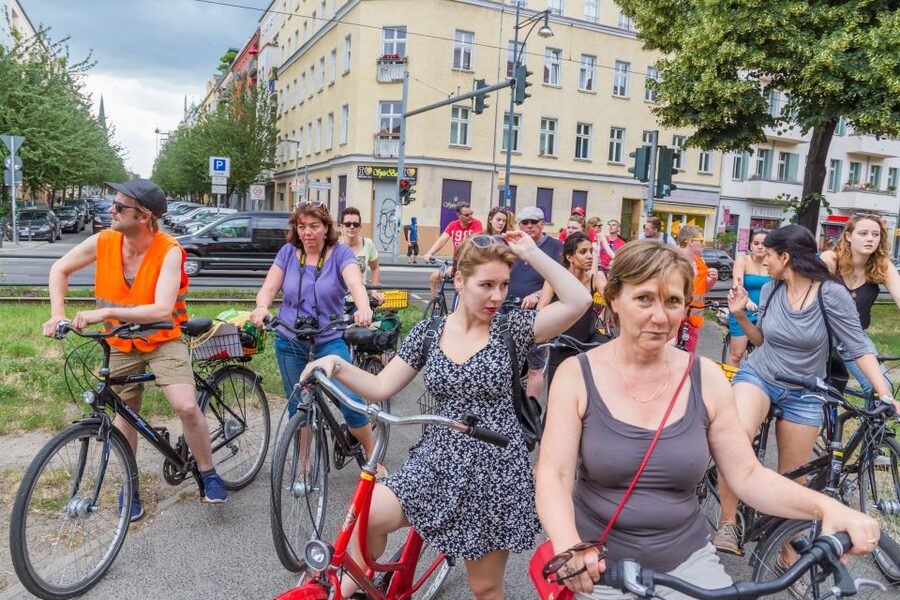
After crossing the river, the tour shifts into Kreuzberg. This is where the name Alternative Bike Tour makes sense, because you are not only riding past landmarks. You are moving through the kind of streets where Berlin feels experimental and personal.
You will go through areas including SO36, plus Görlitzer Park. Expect back courtyards, parks, and that in-between feeling where the city does not look frozen in time. Instead it looks like it is negotiating the present.
Görlitzer Park is a good example of what makes Kreuzberg rewarding on a bike. It is not a museum park. It is a public space where people hang out, move through, and shape the atmosphere through everyday use. From your bike seat, you can take in the edges of the park and then keep rolling, instead of being stuck in one exact view.
Backcourtyards are another highlight. Berlin can be surprisingly private in places. A courtyard detour lets you see how the architecture works and how neighborhoods maintain a quieter life behind the street.
River Spree segments: why the ride feels like a reset
One reason this tour earns repeat bookings is the time spent near the River Spree. Water does something to cycling. It breaks up the architecture, gives your eyes a rest, and gives you a straighter line to follow, which is great when you are matching pace with a group.
You also get better opportunities for photos and slower looks. Along the river, the city tends to open up. That makes it easier to see how neighborhoods connect instead of treating each district as a separate postcard.
If you are the kind of traveler who likes a plan but still wants air between sights, this Spree portion helps you feel like you are experiencing Berlin, not touring it.
Pace, distance, and bike setup for a 210-minute route
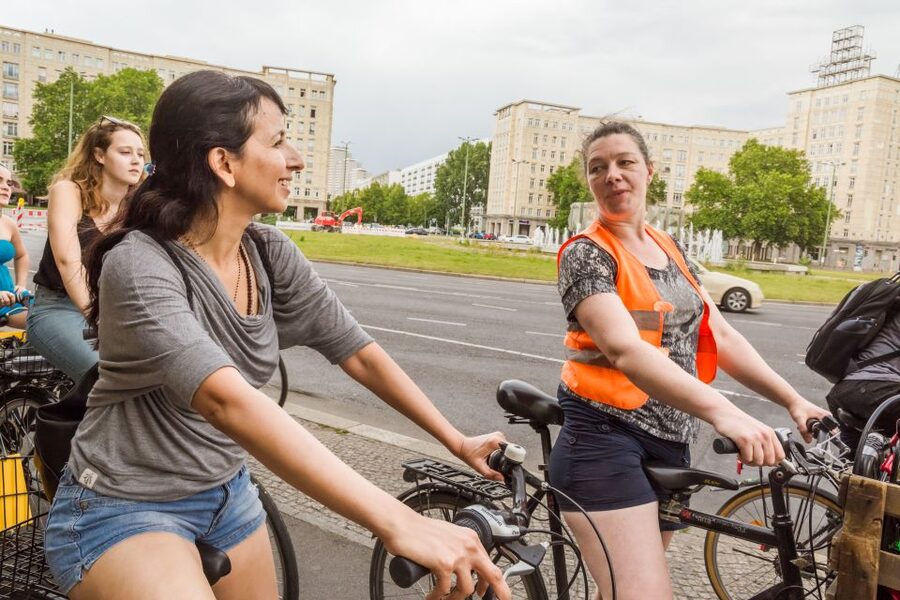
This tour runs about 210 minutes and covers around 17 kilometers. The pace is relaxed, and you should have time for questions and photos.
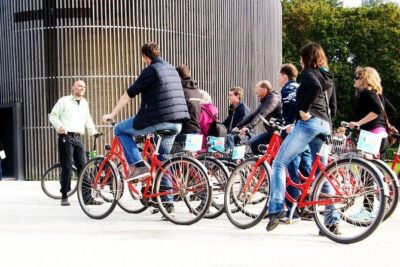
Bikes are described as comfortable rental bikes, and they come from a large fleet so you can pick a size that fits. There are baskets for lighter items, which is handy if you plan to carry a small camera bag or a thin jacket. You also get extra riding comfort through items like trouser clips and sunscreen, and rain ponchos if the weather turns.
Also, the tour uses safe, quieter roads and bike paths for most of the route. Still, because Berlin traffic exists, you should expect occasional stretches where you ride near cars. The good news is that the small group structure and the guide’s attention keep this from becoming stressful.
Guides like Oli, Anna, Patricia, and Joost: why the storytelling is the real value
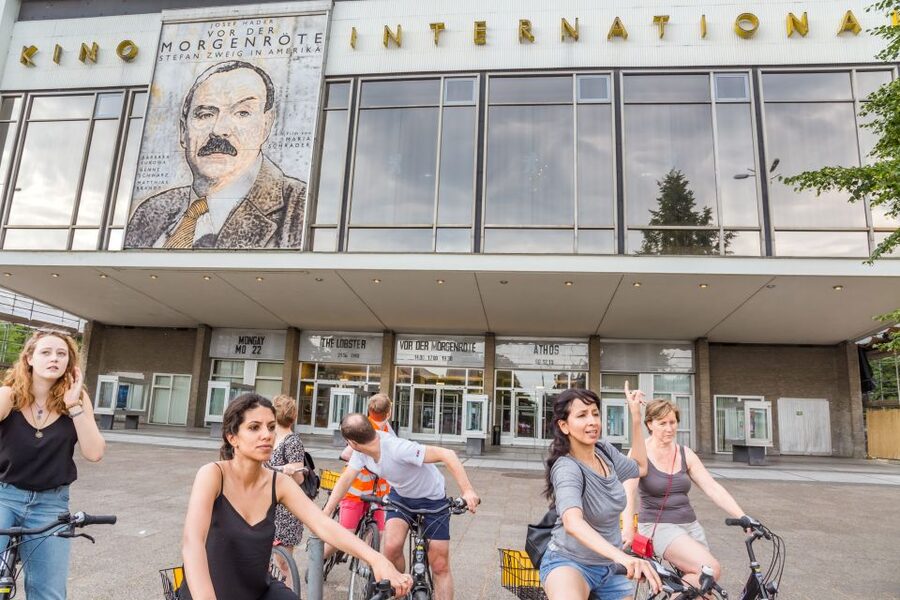
The best part is not only where you go. It is how you understand it once you are there.
Across the guides listed for this tour, you see a strong pattern: they are talkers in a good way. People mention guides learning names, keeping a personal atmosphere, and telling stories that connect major events like WWII and the Cold War to how these neighborhoods look and feel today.
That is a big deal for a first-time or short-on-time Berlin visit. You get historical context without drowning in facts. You also get insider tips about where to eat or what to notice next, especially in Kreuzberg.
If you are biking with a less confident cyclist in your group, pay attention to the guide style. Several guides are praised for keeping the group together and maintaining a safe, calm feel. That means you can focus on seeing, not on micro-managing balance and speed.
What to bring, what you get, and what to skip
Here is the practical checklist that keeps the ride comfortable:
You should bring comfortable clothes. If you have them, also consider closed-toe shoes and layers, since Berlin weather can switch without warning.
Included with the tour:
- a reliable bicycle
- helmet and gloves upon request
- sunscreen and trouser clips
- rain ponchos if weather is bad
Not included:
- snacks and drinks
That last one matters more than it sounds. 210 minutes is long enough that you might start craving a drink, especially if you are sightseeing with energy. I suggest you eat beforehand and bring water if you can. The tour provides gear for weather, but it does not provide refreshment.
Price and value: how $41 buys more than a ride
At about $41 per person, this tour is priced like a mid-range activity, but you are paying for more than transportation. You are buying:
- a route that covers multiple Berlin neighborhoods in one go
- a guided explanation of what you are seeing in real time
- equipment support so you can ride confidently and stay comfortable
- a small group setting that reduces the chaos factor
If you are trying to build a first-day Berlin plan, this kind of route often pays for itself in time. Instead of stitching together subway stops and walking detours, you get a coherent story from Prenzlauer Berg to Friedrichshain to Kreuzberg, plus the Wall segment and the Spree.
The main reason this feels like good value is that you end with a better mental map. Once you understand why these neighborhoods developed, it is easier to choose where to spend the rest of your trip.
Should you book this Berlin alternative bike tour?
Yes, if you want a high-impact way to see Berlin’s east side neighborhoods with context. It is a strong match for first-timers who need bearings fast, and also for repeat visitors who want a fresh perspective beyond the usual monuments.
Book it if you:
- like street art, DDR architecture, and neighborhood culture
- enjoy cycling and want a route that mostly uses bike paths and quieter roads
- value a guide who tells stories and gives practical suggestions
Skip it or think twice if:
- you are uncomfortable riding near mixed traffic, even occasionally
- you want snacks and drinks included, because you will need to plan that yourself
- you do not want to ride about 17 kilometers at a relaxed, but still active, pace
FAQ
Where does the tour start?
The tour starts at Kulturbrauerei in Prenzlauer Berg. The exact meeting point may vary depending on the option booked.
How long is the tour?
The duration is listed as 3 hours to 210 minutes.
How far will I cycle?
You will cover about 17 kilometers during the tour.
What neighborhoods and sights are included?
You cycle through Prenzlauer Berg, Friedrichshain, Kreuzberg, and you visit the East Side Gallery. The route also includes areas around Volkspark Friedrichshain, Karl-Marx-Allee, Boxhagener Platz, RAW Tempel, Oberbaumbrücke, Görlitzer Park, and SO36.
Is the tour in a group?
Yes. It is run in small groups with a maximum of 15 participants.
What bike equipment is provided?
You get a reliable bicycle. Helmet and gloves are available upon request.
Are helmets and gloves included automatically?
Helmet and gloves are included upon request.
Does the tour include snacks and drinks?
No. Snacks and drinks are not included.
What weather gear do you provide?
Rain ponchos are provided for bad weather. Sunscreen and trouser clips are also included.
What is the tour language?
The live tour guide is available in English, Dutch, and German.
Final thought
If you want Berlin in motion, this tour delivers. You get the Wall’s street-art power, Friedrichshain’s alternative edge, Kreuzberg’s everyday character, and a river ride that makes the whole day feel paced instead of packed. Just wear comfortable clothes, plan for no snacks on board, and stay with your group when the road gets busy.
Fresh on the arrivals board for Berlin

Cycling Tours in Berlin, compared.
Sights and Highlights Bike Tour with a Local Guide
Read our review →
Berlin Highlights Sightseeing Bike Tour in Small Groups
Read our review →

Cold War & Berlin Wall History Guided Bike Tour
Read our review →Browse the lists this tour appears in