
Reviewed · CYCLING TOURS IN BERLIN
Berlin: Guided Bike Tour to Explore the Highlights
Berlin has a way of slipping into your head quickly. This 3-hour guided bike tour gives you that fast, close-up feeling as you pedal past major landmarks and side-streets at a calm pace. I love the active-but-relaxed format, where you cover a lot without feeling rushed, and you still get context from the guide. Guides like Riko and Juliet are often praised for making history sound like a conversation, not a lecture.
The second big win for me is the route experience: you cycle through central Berlin and along the River Spree, with photo stops at famous sights plus quick commentary at the places many people only pass by. One consideration: this is not a slow, sit-down museum tour, so if you want long time inside specific sites, you will likely need a follow-up visit.
In This Review
- Key things I’d mark on your Berlin checklist
- A Bike Tour That Gets You Bearings Fast in Central Berlin
- Meeting Point at Poststraße 11, Plus Getting Your Bike Sorted
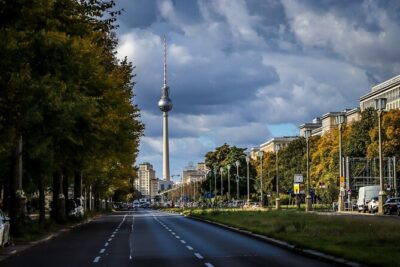
- Nikolaiviertel and the TV Tower Stop: Berlin’s “start point” energy
- Hackescher Markt to Museum Island: Culture with quick, useful context
- Schinkelplatz, Strandbar Mitte, and Spreebogenpark: A calmer Berlin rhythm
- Berlin Hauptbahnhof to the Reichstag: Modern transit, political weight
- Bebelplatz, Brandenburg Gate, and the Holocaust Memorial: Walking past meaning
- Potsdamer Platz to Topography of Terror and Checkpoint Charlie
- Gendarmenmarkt and Humboldt Forum: Berlin’s present, in two moods
- The Guide Factor, and Why This Tour Feels Less Copy-Paste
- Price and Value: Why $41 Can Work for a First Trip
- Who This Tour Fits Best, and Who Should Skip It
- Should You Book This Bike Tour of Berlin?
- FAQ
- How long is the Berlin guided bike tour?
- Where do I meet the guide and how do I find the office?
- What’s included with the tour price?
- Is this tour family-friendly?
- What languages are the guided tours offered in?
- What should I do if it rains?
Key things I’d mark on your Berlin checklist
- Central start that’s easy to reach: Nikolaiviertel, about a five-minute walk from the TV Tower
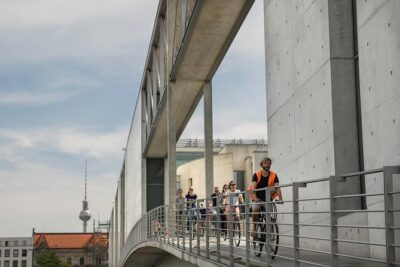
- Iconic landmarks in a single loop: Brandenburg Gate, Museum Island, Reichstag area, Checkpoint Charlie, and more
- Local stories tied to what you ride past: short stops plus anecdotes that explain why places look the way they do today
- Spree River riding for variety: you get a different rhythm than the streets-and-squares loop
- Rain-ready by design: waterproof ponchos are provided
- Guides can customize: the route can shift based on group interests and current events, so tours feel less copy-paste
A Bike Tour That Gets You Bearings Fast in Central Berlin
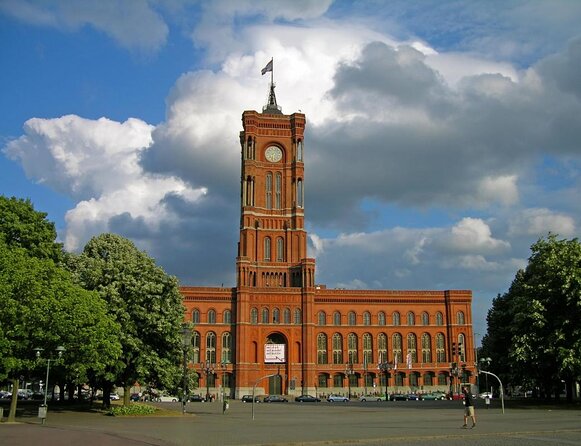
If you’re new to Berlin, the hardest part is figuring out how the city connects. One bike ride helps you connect the dots quickly, because you’re moving between neighborhoods and “wow” buildings instead of waiting for buses to catch up.
This tour is built around that idea: you ride the highlights, and you also get the small human details that make Berlin make sense. Expect a mix of old and new, with the story told through what you see. Even the pace supports beginners. It’s active, but the stops are frequent, and the riding time feels manageable for a 3-hour outing.
More Cycling Tours in Berlin
- Berlin: Sights and Highlights Bike Tour with a Local Guide
★ 4.8 · 2,698 reviews - Berlin Highlights 3-Hour Bike Tour
★ 5.0 · 948 reviews - Berlin City Bike Tour with Beer Garden Stop
★ 5.0 · 917 reviews
Meeting Point at Poststraße 11, Plus Getting Your Bike Sorted
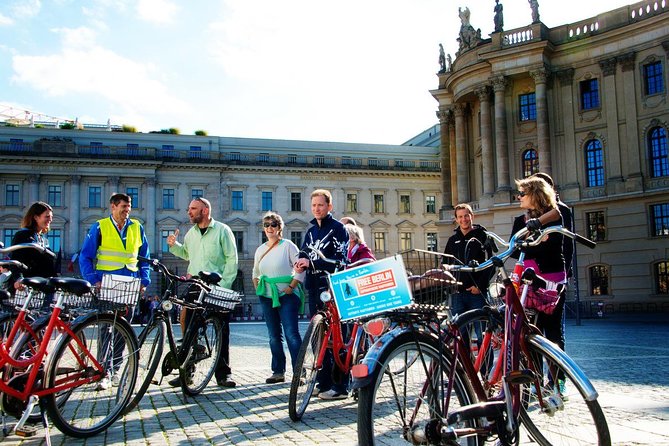
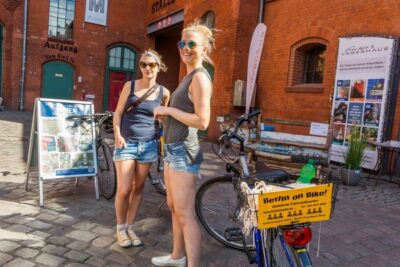
You meet the guide at the Free Berlin Bikes office at Poststraße 11, in the courtyard entrance. Look for the FREE BERLIN sign. If you’re arriving from the TV Tower area, the tour’s starting neighborhood is close enough that you can feel oriented before you even get on the bike.
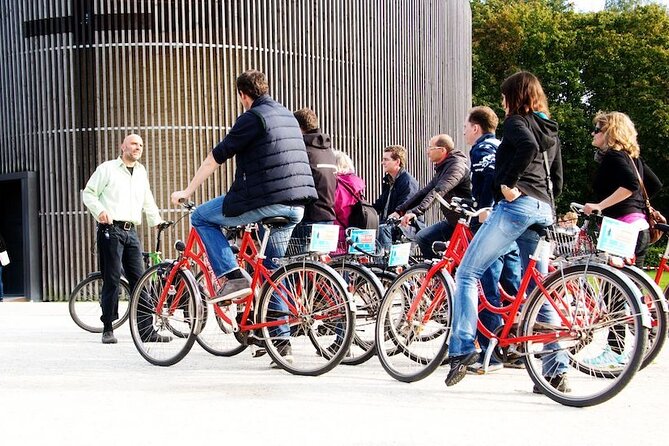
Bike setup is part of the experience. You’ll choose a bike from a range of options, and you can request a helmet. The bikes have baskets and are regularly serviced, and the operator can store large baggage for the duration of the tour. If mounting a bike is a concern for you, it helps to ask for a style that’s easier to get on. Some riders note that a slanted top tube can make mounting less awkward, especially because the rear baskets change balance.
Nikolaiviertel and the TV Tower Stop: Berlin’s “start point” energy
The tour begins in Nikolaiviertel, just about a five-minute walk from the TV Tower. Nikolaiviertel is a strong opening because it gives you a feel for Berlin’s historic core early on, without sending you straight into the busiest parts first. It’s a good place to settle in, get comfortable on the bike, and hear how the guide plans to connect the dots.
From there, you’ll have a quick photo stop around the TV Tower. Even if you don’t hang around the area later, this moment sets the visual scale. Berlin’s modern landmarks feel much bigger when you see them from street level, then roll onward.
Hackescher Markt to Museum Island: Culture with quick, useful context
Hackescher Markt is the kind of stop that gives you atmosphere fast. The tour keeps things efficient here: you get a short guided moment and a chance to orient yourself so you’ll know what you’re looking at later when you walk around on your own.
Then comes Museum Island. You get a photo stop plus guide talk, and that matters because Museum Island isn’t just architecture. It’s part of the way Berlin organizes culture in a visible, almost official way. When someone explains what you’re looking at while you’re moving past it, you remember the shapes better later.
Practical takeaway: this portion works best if you keep your expectations realistic. In 3 hours, you’re not doing full museum time. You’re getting the “what matters and why” layer, so your independent exploring has direction.
Schinkelplatz, Strandbar Mitte, and Spreebogenpark: A calmer Berlin rhythm
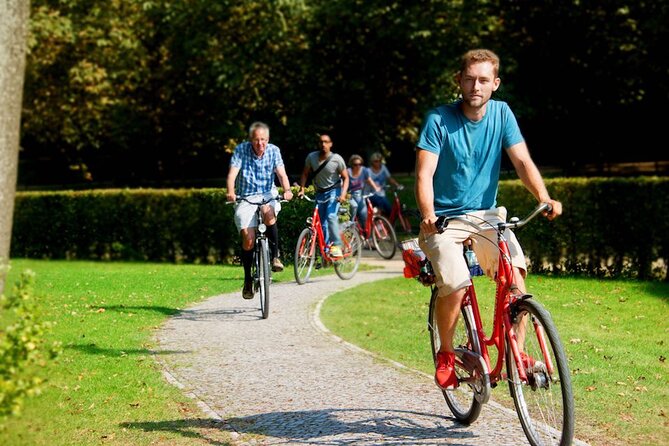
This stretch is where the bike tour starts to feel like more than a checklist. Schinkelplatz and nearby stops help break up the big-name sights with spaces that look different depending on the light and the time of day.
Strandbar Mitte adds a different flavor. It’s one of those stops that reminds you Berlin isn’t only about monuments. You also have leisure culture and seasonal street life, and you’re seeing it from the bike, which feels more natural than trying to squeeze through crowds on foot.
Then you ride into the Spreebogenpark area. This is part of why the tour feels varied. The River Spree corridor gives you a different visual rhythm than streets and squares. If you’ve been to other European capitals, you’ll notice how Berlin often stages its identity through waterways and bridges. Here, you get that in motion.
More flat kilometres by bike:


Berlin Hauptbahnhof to the Reichstag: Modern transit, political weight
Berlin Hauptbahnhof is a fast-moving reality check: modern architecture and the daily flow of people. It’s a useful stop because it anchors the story in the present. You’re not only looking at what happened. You’re seeing what Berlin runs on now.
A short guided stop near the Reichstag follows. This is one of the areas where the guide’s commentary matters most. In a short time window, you can either get lost in generic facts or you can walk away with a clearer sense of what this building represents and how the surrounding space fits into Berlin’s story.
Good to know: the tour keeps stops brief. That means you’ll leave with awareness, not exhaustive detail. If something grabs you, plan to return later on foot when you have time to linger.
Bebelplatz, Brandenburg Gate, and the Holocaust Memorial: Walking past meaning
You’ll pause at Bebelplatz for a photo stop and a bit of guidance. This stop is a good example of how Berlin can compress ideas into street-level space. You don’t just see buildings. You learn what people associate with them.
Then you reach Brandenburg Gate. It’s the obvious highlight, but it’s also one of the most effective moments on a bike tour because you approach it with momentum from multiple directions. You understand where it sits in relation to everything around it, rather than seeing it as a standalone postcard.
Next comes the Holocaust Memorial area, again with a photo stop and guided commentary. This is emotionally heavy territory, and the best way to handle it on this kind of tour is to let the guide set the frame and then take a moment to absorb what you see as you move through the space. You don’t need to treat it like a sightseeing photo backdrop. You can also keep your pace steady and respect the seriousness of what’s around you.
Potsdamer Platz to Topography of Terror and Checkpoint Charlie
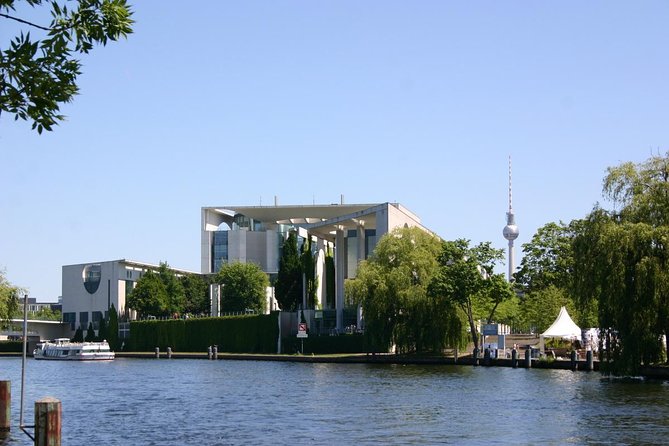
Potsdamer Platz is a dramatic contrast point. It’s modern, busy, and visually intense. On a bike tour, it helps you see how Berlin’s “renewal” isn’t just a slogan. You feel it in the street layout and the mix of old and new.
From there, you continue toward Topography of Terror for a guided stop and then to Checkpoint Charlie. These stops are part of Berlin’s 20th-century story in a very direct way. The value here is that the tour connects locations you might otherwise treat as separate stops on a map.
This section is also where you should pay attention to timing and energy. If you start feeling mentally overloaded, it helps to treat the guided moments as a setup for your later, slower reading. In other words, use the bike tour to point you to what to revisit, not to absorb everything in one go.
Gendarmenmarkt and Humboldt Forum: Berlin’s present, in two moods
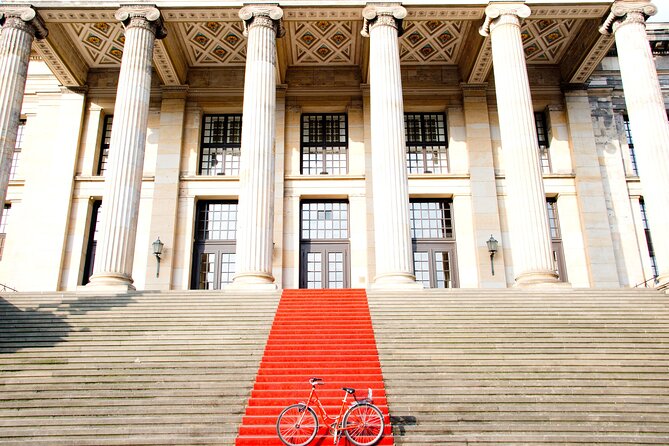
Gendarmenmarkt is a classic square, and it’s a satisfying photo stop. It gives you a sense of Berlin’s refined urban form and helps you see how the city can look polished without losing character.
Humboldt Forum rounds out the loop with a guided stop. This is a “today” kind of stop, and that’s why it closes nicely. After monuments, political sites, and historical corridors, you end the guided portion with a sense of current Berlin culture and identity.
By the time you roll back toward the finish, you’ll likely realize the tour doesn’t just show you where things are. It also trains your eye to notice contrasts: rebuilt spaces versus surviving ones, official architecture versus everyday street life, and major landmarks versus the neighborhood textures between them.
The Guide Factor, and Why This Tour Feels Less Copy-Paste
One of the tour’s strongest selling points is that guides are not locked into one script. The Free Berlin concept allows each guide to design their own route, tailoring it to the group’s interests, current events, and Berlin’s changing feel. That’s why people can return and still get something different.
You’ll also hear anecdotes, not only facts. Guides like Julia, Christopher, Simon, and Berndt are repeatedly noted for being energetic and for answering questions clearly. Even when a stop is short, you come away with story threads that help you interpret what you’re seeing later.
One practical hint: listen carefully during the short road rules portion and follow the guide’s pace. One rider noted that the rules of the road briefing was genuinely useful, and it makes a difference for comfort and safety.
Price and Value: Why $41 Can Work for a First Trip
At about $41 for a 3-hour tour, the value comes from efficiency and interpretation. You get bike rental of your choice, a helmet if requested, and waterproof ponchos if the weather turns. You’re also paying for a guide’s ability to tie locations together into a coherent story, which is hard to replicate with a self-guided walk unless you’re already reading up.
More importantly, biking gives you access to a larger area without the time drain of moving between far-apart sights. You also get close views of buildings and city life as you pass through neighborhoods, rather than only seeing them from a bus window.
Who This Tour Fits Best, and Who Should Skip It
This tour fits best if you:
- are new to Berlin and want a fast sense of the city center
- want a mix of iconic sights and a few lesser-known angles
- like moving with purpose, but still want frequent short stops
It’s not suitable if you can’t ride a bike.
Should You Book This Bike Tour of Berlin?
If you want an efficient introduction to Berlin’s center, this tour is an easy yes. It’s built for first-timers, and it doesn’t require you to be an expert cyclist. You’ll leave with a mental map, a set of story lines, and a short list of places worth returning to for longer visits.
Book it if you’re the type who learns best when someone explains what you’re seeing in real time. Skip it if you want slow, in-depth museum time for every major stop. In 3 hours, this tour prioritizes the big picture, and it does that well.
FAQ
How long is the Berlin guided bike tour?
The tour lasts about 3 hours.
Where do I meet the guide and how do I find the office?
Meet at Free Berlin Bike Tours & Rental at Poststraße 11, at the courtyard entrance. Look for the FREE BERLIN sign.
What’s included with the tour price?
Your booking includes bike rental of your choice. Bike helmets are available if requested, and waterproof ponchos are provided in case of rain.
Is this tour family-friendly?
Yes. It is described as family-friendly, and children are welcome. Infant seats can be provided on request.
What languages are the guided tours offered in?
The live guide is available in English, French, and German.
What should I do if it rains?
The tour provides waterproof ponchos, so you can keep riding during light rain rather than stopping entirely.
Fresh on the arrivals board for Berlin

Cycling Tours in Berlin, compared.
Sights and Highlights Bike Tour with a Local Guide
Read our review →
Berlin Highlights Sightseeing Bike Tour in Small Groups
Read our review →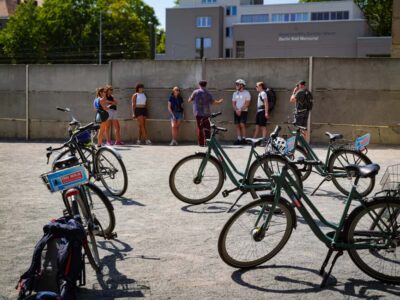
Alternative Bike Tour of Kreuzberg & Friedrichshain
Read our review →
Cold War & Berlin Wall History Guided Bike Tour
Read our review →Browse the lists this tour appears in