
Reviewed · MUSEUM TOURS IN BERLIN
Skip-the-Line: Berlin Wall Museum at Checkpoint Charlie
Escape stories turn Berlin Wall history real. I like how this museum leans on original objects from real escapes, so the Cold War stops feeling like a textbook. It also shows how the museum itself grew from an early protest effort after the Wall went up.
One thing I really appreciate is the skip-the-line ticket for the museum, with the meeting point at Friedrichstraße 43-45 in Berlin. It makes it easier to start reading and looking right away, and the place is bigger than you expect once you’re inside.
My only caution: this is a lot of reading, and the listing says an audioguide is not included. If you prefer more hands-on exhibits, plan extra time to pace yourself through the text-heavy galleries.
In This Review
- Key points before you go
- Berlin Wall Museum at Checkpoint Charlie: what you are really paying for
- Ticket value and a realistic time plan for a 1-day visit
- Where to start: Friedrichstraße 43-45 and using your skip-the-line ticket well
- The museum’s origin story: why it exists at all
- The escape artifacts you should look for first
- How the museum explains fleeing from the GDR regime
- Your Checkpoint Charlie connection: top-floor views and how the museum uses space
- More than Cold War basics: protests, non-violent movements, and the story after the Wall
- When guides enter the picture, what to look for
- Practical tips: how to handle a museum that is heavy on text
- Logistics that matter on the day
- Who this visit is best for, and who should adjust expectations
- Should you book this Berlin Wall Museum skip-the-line ticket?
- FAQ
- Where is the meeting point for the Berlin Wall Museum at Checkpoint Charlie?
- How long is the experience?
- How much does the ticket cost?
- What is included in the ticket?
- Is an audioguide included?
- Is a guided tour included?
- Does the ticket include skip-the-line entry?
- Is the museum wheelchair accessible?
- Can I cancel for a refund?
- Can I reserve now and pay later?
Key points before you go
- Original escape artifacts like a hot-air balloon, a mini-submarine, cars, and airplanes
- A museum founded in protest on October 19, 1962, with a mission tied to helping people flee
- A strong Checkpoint Charlie connection, including an overhead view on the top floor
- A story that goes beyond the Wall, reaching into later conflicts and today’s human rights issues
- Plan for reading time, since the experience is detailed and text-forward
Berlin Wall Museum at Checkpoint Charlie: what you are really paying for

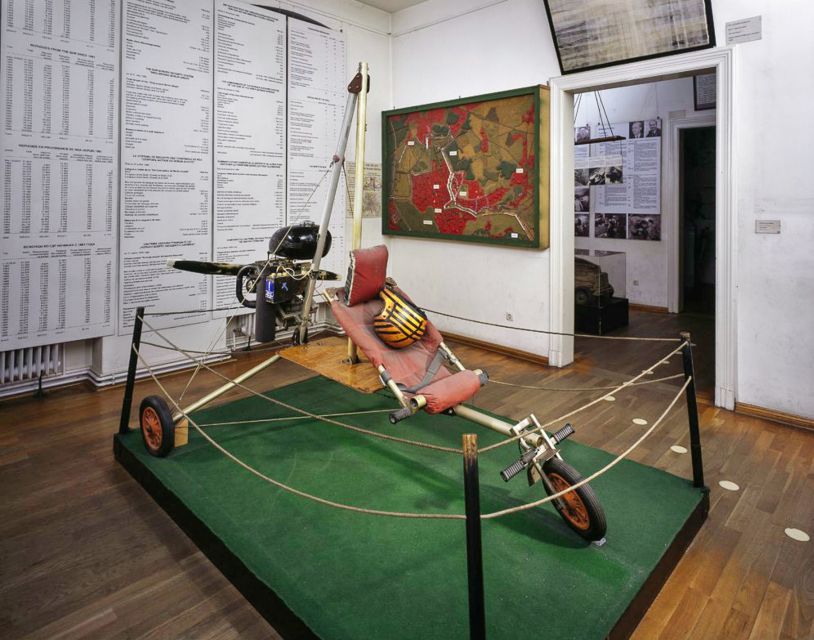
This visit is not just about checking a famous Berlin spot. You are paying to see how people actually tried to get out of the unjust GDR system, using items that were once part of escape attempts. That angle is powerful because it turns history into something physical, specific, and hard to forget.
The price is listed at $21 per person, which is fair for a museum that can realistically eat up 1 day and keeps giving you new details as you move room to room. A lot of Berlin attractions are either quick photo stops or broad overviews, but this one is built to help you understand the mechanics of escape and resistance.
More Museum Tours in Berlin
- Berlin: DDR Museum Tickets
★ 4.3 · 3,443 reviews - Berlin: Natural History Museum Entrance Ticket
★ 4.6 · 3,382 reviews - Berlin: Museum Island Multiple Museum Entry Ticket
★ 4.4 · 2,861 reviews
Ticket value and a realistic time plan for a 1-day visit
The experience is listed as 1 day, and the pace is up to you since it’s an entrance ticket. In practice, I’d treat this as a half to full day museum stop, especially if you actually read the labels and signage.
People often report spending around 2.5 hours inside when they stop to absorb the displays. If you go faster, you can still cover a lot, but you’ll miss the nuance in how the museum explains planning, risk, and the human side of it all.
If you are traveling with teens or anyone who gets bored by text, you might want to set expectations upfront. This museum is information-heavy, and a few interactive elements can feel less useful than you hope if they are not working as intended.
Where to start: Friedrichstraße 43-45 and using your skip-the-line ticket well
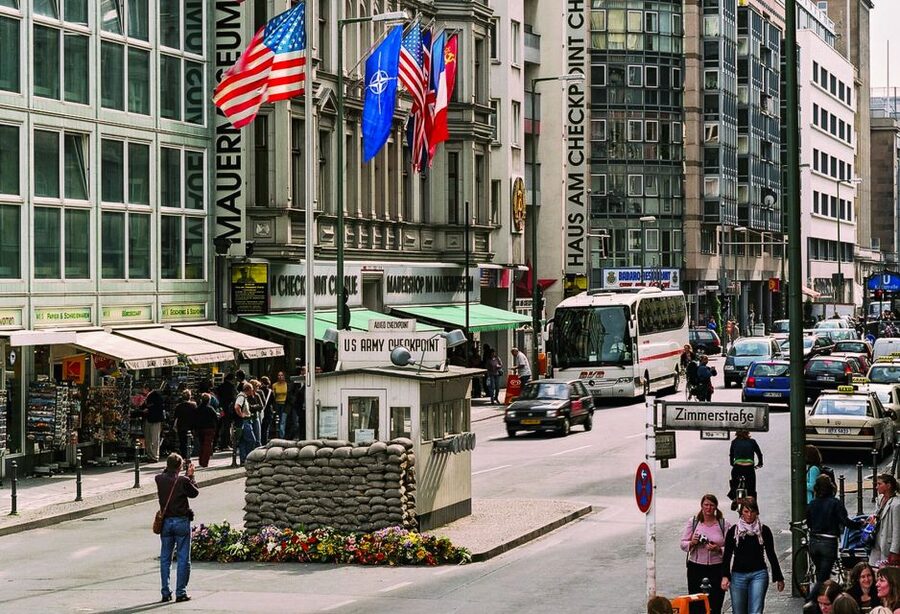
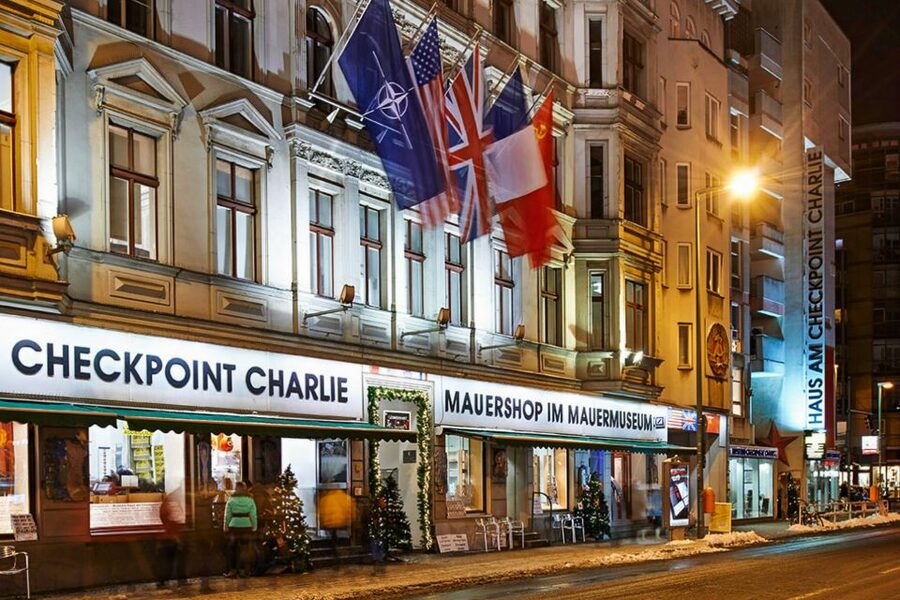
Your meeting point is Friedrichstraße 43-45, 10969 Berlin, which is also where you’ll find the museum entrance. The key advantage here is the skip-the-ticket-line approach, so you’re not standing around while other people wait to buy entry.
Arriving a bit early helps. Even with skip-the-line entry, the museum experience starts the moment you step in, and you’ll want enough time to collect your bearings before you commit to reading long wall panels.
The museum’s origin story: why it exists at all
The museum was founded on October 19, 1962, shortly after the Berlin Wall was built. The mission was to protest the Wall and to assist people who were seeking help to escape.
That origin matters, because the exhibition doesn’t feel like it was assembled only to “preserve artifacts.” It’s also framed as part of an ongoing fight against human rights violations linked to the Wall. In the museum’s own story, it gradually increased its exhibition space and played a role in documenting resistance that supported the Wall’s fall.
The escape artifacts you should look for first
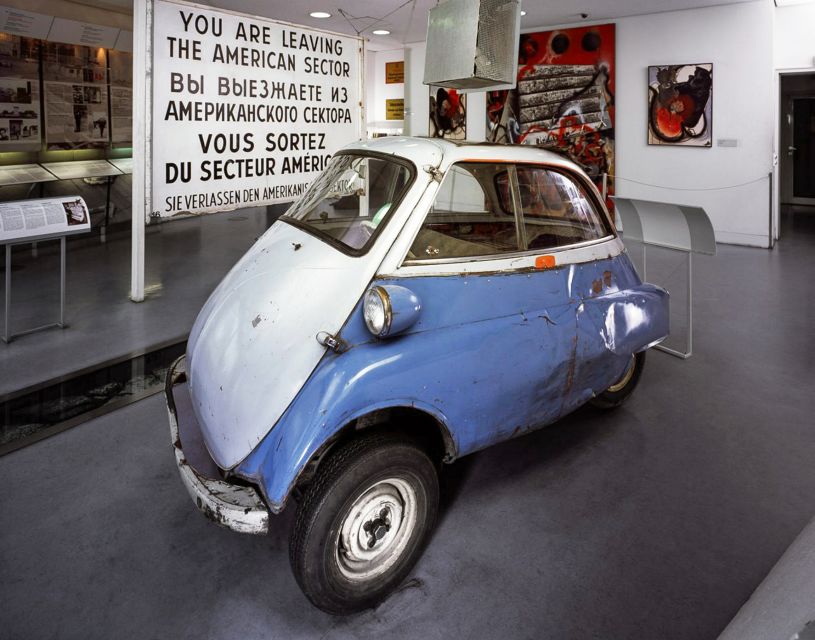
If you do only one thing inside, make it finding the escape objects. This museum is famous for original material from successful escape attempts, and the list of major items is striking: a hot-air balloon, a mini-submarine, cars, and airplanes.
I love this approach because it removes the “could have happened” feeling. You are looking at what people used, which makes the ingenuity feel earned and grounded, not dramatic for drama’s sake.
Start with these pieces, then build outward. Once you’ve seen the hardware, the surrounding stories about planning, help networks, and the danger of getting caught start to click faster. It’s a lot easier to understand the risks when you know what the endgame looked like.
More traces of the Wall through Berlin:




How the museum explains fleeing from the GDR regime
Beyond escape tools, the museum focuses on how East Germans tried to flee the unjust GDR regime and how supporters helped them do it. The displays explain that people assisting refugees used the museum as a base to plan escapes and organize resistance.
That “base” detail is a big deal. It reframes the escape stories from one-person heroics to a system involving planners, helpers, and timing. Even if you only skim some of the text, that structure makes the story more believable and more human.
You’ll also see that the museum received donations after escapes, including the means of conveyance and other objects used during those attempts. That helps you understand why the exhibits feel so concrete and why the museum’s collection grew from real events.
Your Checkpoint Charlie connection: top-floor views and how the museum uses space
Checkpoint Charlie is right outside in the real city, but the museum also gives you a visual link inside. Several exhibits include a top-floor view that visitors describe as exceptionally good, with an overhead look tied to Checkpoint Charlie.
I like museums that let you connect a famous street with what that place meant day to day. Here, the spatial storytelling helps you stop thinking of the Wall as a line on a map and start thinking of it as a lived environment, complete with chokepoints and rules you could not safely ignore.
If you want the best moment, don’t rush past the higher-level viewpoint. Even if you are eager to read everything, pause here first so later details land with more context.
More than Cold War basics: protests, non-violent movements, and the story after the Wall
One of the strongest reasons to go is that the museum does not treat the Berlin Wall as the whole ending. It continues to document and archive through later years, including current concerns about human rights.
In particular, you can find displays that connect the Wall story to protests and non-violent movements. That theme helps you understand why the museum originally existed as protest, not simply as a memorial.
And the exhibit scope can reach beyond the Cold War itself. One visitor specifically pointed out an item connected to people fleeing Ukraine, including a car from a refugee story. It’s a sobering reminder that walls and repression do not vanish just because one era ends.
When guides enter the picture, what to look for
Even though the listing you have says guided tours are not included, guides do show up in real experiences for some visitors. People have highlighted guides named Peter, Steve, and Louisa for being engaging and well paced.
If you end up with a guided component at any point, you’ll likely benefit most in the dense sections where narrative flow matters. A good guide helps you prioritize what to read first, and it can also make the story feel less overwhelming when you’re surrounded by too much information.
Practical tips: how to handle a museum that is heavy on text
Plan to slow down. This museum includes a lot of written explanation, and many visitors explicitly note that it’s reading-heavy. If you’re the type who skims, you’ll still get the big picture, but you’ll miss the “why” behind the escape attempts.
On the upside, there are translations into different languages for many displays, and reviews praise how accessible the information feels across languages. That means you can spend time with the parts that matter to you without feeling shut out by language barriers.
If you rely on audio, pay attention to what’s offered. The listing says an audioguide is not included, and one review mentioned wishing they had used a headset. So if you prefer audio interpretation, consider bringing your own plan rather than assuming it’s part of the ticket.
Finally, go in with a flexible mindset. Some interactive elements may not hold attention the way you expect, and a few displays can feel less streamlined than you want. It’s still worth it, but you’ll enjoy it more if you accept the museum as mostly text and artifacts.
Logistics that matter on the day
You should be able to access the museum easily after booking online, and the skip-the-line approach is a genuine time saver. The museum is also listed as wheelchair accessible, so the route inside is meant to work for visitors with mobility needs.
If you’re a photo person, be ready for restrictions. One review mentioned disappointment that they were not allowed to take pictures, so it’s smart to check rules once you arrive rather than guessing.
Construction or renovations can affect wayfinding, so if you don’t see signs immediately, ask staff for the quickest route to the main galleries. One visitor noted that it wasn’t the easiest to locate due to renovations, which is the kind of thing that adds frustration when you’re on a tight schedule.
Who this visit is best for, and who should adjust expectations
This is best for you if you want more than a quick Cold War overview. If you care about how systems work, and you want to see how escape attempts involved tools, timing, and help networks, you’ll get a lot out of it.
It’s also a strong choice if you like museums that connect past events to ongoing issues. The way it carries into modern conflicts and today’s human rights concerns makes the experience feel relevant rather than frozen in 1989 nostalgia.
It may be less satisfying for you if you hate reading in museums or if you want a lot of interactive gameplay. This place is about information, not just visuals, and even supportive elements can still leave you surrounded by labels.
Should you book this Berlin Wall Museum skip-the-line ticket?
Yes, I’d book it if you want a high-impact Berlin stop with real artifacts and a story that goes beyond famous names. The skip-the-line entry helps you start sooner, and the collection includes iconic escape items like a hot-air balloon and even a mini-submarine, which is not the kind of museum content you casually find elsewhere.
Skip it only if you know you cannot handle text-heavy exhibitions. If that’s your case, you might still enjoy the major artifacts, but you’ll probably feel drained before you finish the full narrative. If you do book, give yourself enough time to read and reset, because this is the type of museum where slowing down is part of the payoff.
FAQ
Where is the meeting point for the Berlin Wall Museum at Checkpoint Charlie?
The meeting point is Friedrichstraße 43-45, 10969 Berlin.
How long is the experience?
The experience is listed as 1 day.
How much does the ticket cost?
The price is $21 per person.
What is included in the ticket?
The ticket includes the entrance.
Is an audioguide included?
No, an audioguide is not included.
Is a guided tour included?
No, a guided tour is not included.
Does the ticket include skip-the-line entry?
Yes, the activity includes skip-the-line ticket entry.
Is the museum wheelchair accessible?
Yes, it is wheelchair accessible.
Can I cancel for a refund?
Yes, you can cancel up to 24 hours in advance for a full refund.
Can I reserve now and pay later?
Yes, reserve now and pay later is available.
Halls Between Trains
- Berlin: Interactive DeJa Vu Museum Entrance Ticket
★ 4.1 · 1,338 reviews - Berlin: “Pergamonmuseum. The Panorama” Exhibition Tickets
★ 4.6 · 1,245 reviews - Berlin WelcomeCard: Museum Island & Public Transport
★ 4.3 · 999 reviews - From Berlin: Sachsenhausen Concentration Camp Museum Tour
★ 4.8 · 514 reviews
Fresh on the arrivals board for Berlin





Museum Tours in Berlin, compared.



“Pergamonmuseum. The Panorama” Exhibition Tickets
Read our review →
East Side Gallery Spree Cruise in a Solar Catamaran
Read our review →
Cold War, Berlin Wall, Spies and the East Side Gallery
Read our review →
Berlin WelcomeCard: Museum Island & Public Transport
Read our review →Browse the lists this tour appears in