
Reviewed · MUSEUM TOURS IN BERLIN
Cold War, Berlin Wall, Spies and the East Side Gallery
The Berlin Wall was not just a wall, it was daily life made physical. This tour strings together the big Cold War players and the lived-in details, from CIA, KGB, and Stasi surveillance to the emotional reality of East versus West Berlin.
I especially love how the route mixes iconic landmarks with the lesser-seen places that explain how the system worked. I also like that you stop at the sites where separation happened at street level, like the Palace of Tears, not just in textbooks.
One consideration: you will need to manage local transit (a Zone AB ticket is required), and if you are hard to hear in a crowd, arrive early and position yourself close to the guide at each stop.
In This Review
- Key takeaways before you go
- Mapping the Cold War from Friedrichstrasse to the murals
- Getting oriented with the Friedrichstrasse ghost-train mood
- Admiralspalast and SED origins, where politics got formal
- Palace of Tears (Tränenpalast), where the border hurt
- Alexanderplatz and Karl-Marx-Allee, communist power in public space
- Berlin Wall, Bernauer Strasse, and the Death Strip reality check
- Brandenburg Gate, from division symbol to peace icon
- East Side Gallery, the Berlin Wall turned into public art
- Price and value, at about $18.04 for 3 hours
- Pace, group size, and how to get more out of the guide
- Should you book this Cold War Berlin walking tour?
- FAQ
- What is the duration of the tour?
- Where does the tour start and end?
- What time does the tour begin?
- What language is the tour offered in?
- Do I need a transportation ticket?
- Is the tour ticket mobile?
- Is food included?
- Cancellation and refunds
Key takeaways before you go
- Friedrichstrasse as the starting nerve center, tied to Berlin’s division and border-crossing stories
- A ghost-train style ride that sets the Cold War mood fast, before you start walking the Wall areas
- Palace of Tears (Tränenpalast), where goodbyes at the border were the point
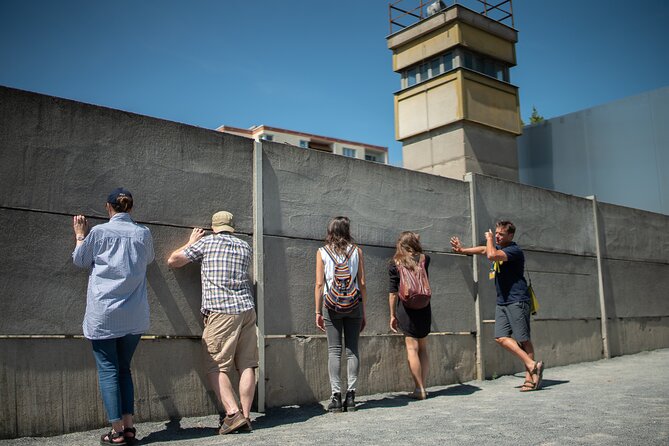
- Death Strip and Wall traces, including Bernauer Strasse and sobering wall-viewing angles
- Stasi-linked history connected to how control, fear, and surveillance operated
- East Side Gallery murals, turning concrete and oppression into public art and memory
Mapping the Cold War from Friedrichstrasse to the murals
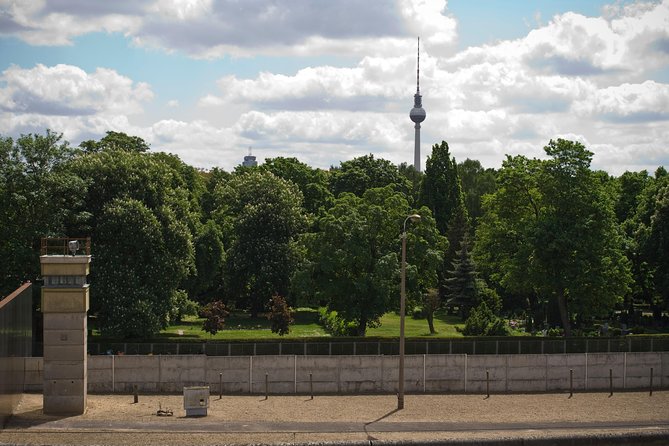
Berlin in the Cold War was not a single story. It was a three-layer sandwich: the postwar mess, the U.S. versus Soviet standoff, and the everyday pressure placed on people living in the German Democratic Republic. This tour helps you see how those layers overlap.
You start in the zone of Friedrichstrasse, a historic hub during the division. That matters because Friedrichstrasse was where people, documents, and emotions collided, not where abstract politics stayed abstract. By the time you reach the later Wall sites and the East Side Gallery, the big picture clicks into place: what looked like city geography was actually a security system.
Expect a local expert guide leading you through the key themes: military tension between the U.S. and NATO versus the Soviet bloc, espionage and surveillance techniques tied to the CIA, KGB, and Stasi, and the daily life that grew around all that control.
More Museum Tours in Berlin
- Berlin: DDR Museum Tickets
★ 4.3 · 3,443 reviews - Berlin: Natural History Museum Entrance Ticket
★ 4.6 · 3,382 reviews - Berlin: Museum Island Multiple Museum Entry Ticket
★ 4.4 · 2,861 reviews
Getting oriented with the Friedrichstrasse ghost-train mood
A smart way to start is to let the Cold War show itself before you read it. This tour begins at Friedrichstrasse station with a meet-and-greet and an overview of what you will see. Then you move along a “ghost train” style underground route experience that once connected East and West Berlin during the Cold War era.
Even without turning it into a movie scene, this part does two useful things for your brain. First, it shows the unnatural logic of division, train tracks and tunnels included. Second, it trains you to think in boundaries: lines on maps that became checkpoints in real life.
If you want this to land well, stay switched on right from the start. The guide will set you up for the rest of the day’s sites, including why certain buildings and crossings mattered.
Admiralspalast and SED origins, where politics got formal
Next you head toward Admiralspalast Berlin, a stop tied to the East German Political Party (SED) founding in 1946. This is not the kind of site that screams Cold War from the sidewalk. That is exactly why it’s valuable.
Here, the tour helps you connect the dots between power and bureaucracy. The Cold War was fought with tanks and spies, yes, but also with organizations that wrote the rules, shaped institutions, and trained people to expect surveillance as normal.
The drawback of stops like this is that they are usually brief and outside-focused. You will want the guide’s context, so if you are spread out from the group, scoot in and keep your questions ready.
Palace of Tears (Tränenpalast), where the border hurt
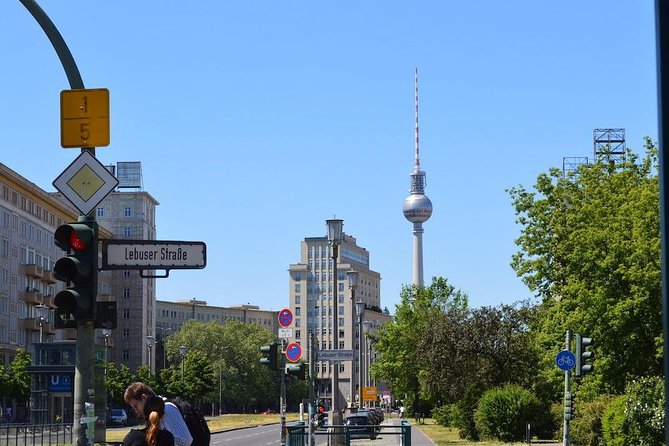
The Palace of Tears, or Tränenpalast, is the kind of stop that changes how you read the whole Wall story. Located at Friedrichstrasse, it was the emotional core of the border crossing. Families and loved ones were forced to separate, often through tearful goodbyes.
What you get here is not just a memorial vibe. You visit a museum space that explains the emotional and physical toll of the Wall. The emphasis is on separation, escape attempts, and how reunification came after years of enforced distance.
For many people, this is the emotional anchor of the tour. Practical note: plan for it to feel heavier than the exterior photo stops. If you are traveling with kids or sensitive travelers, this is the moment you might want to pause, breathe, and slow down.
Alexanderplatz and Karl-Marx-Allee, communist power in public space
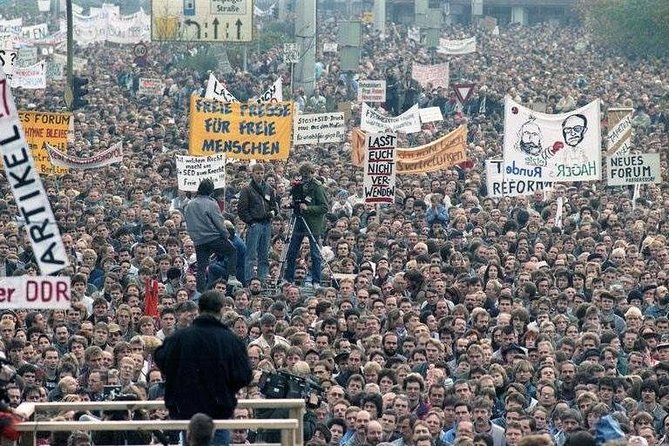
As you move into Alexanderplatz, the tour frames it as the beating heart of East Berlin, where communist power played out in public. This is where mass rallies and propaganda met everyday movement.
You get a chance to see how the built environment supports the messaging. The square and its surrounding architecture do not just look like “older Berlin.” They were part of a system that projected strength and guided behavior.
Then you shift to Karl-Marx-Allee, known as an East German showcase boulevard. You will see the monumental Stalinist-style architecture and the way it signaled control and ideology. The key value here is that your guide ties the grand facades to the everyday reality, so you do not walk away thinking the only story is surface style.
A small consideration: these stops are exterior-heavy. If you want lots of indoor museum time, pair this tour with a separate museum visit later.
More traces of the Wall through Berlin:

Berlin Wall, Bernauer Strasse, and the Death Strip reality check
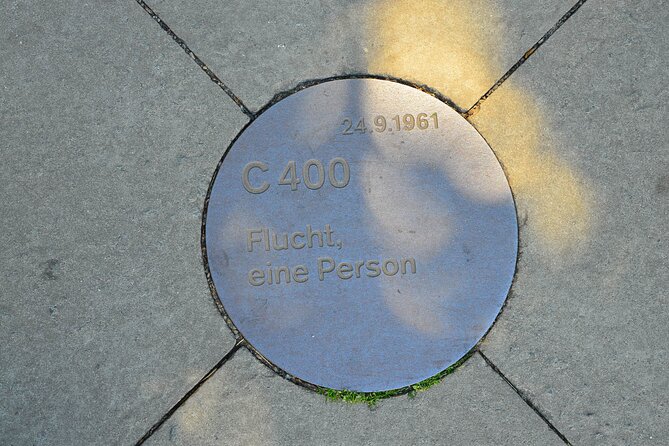
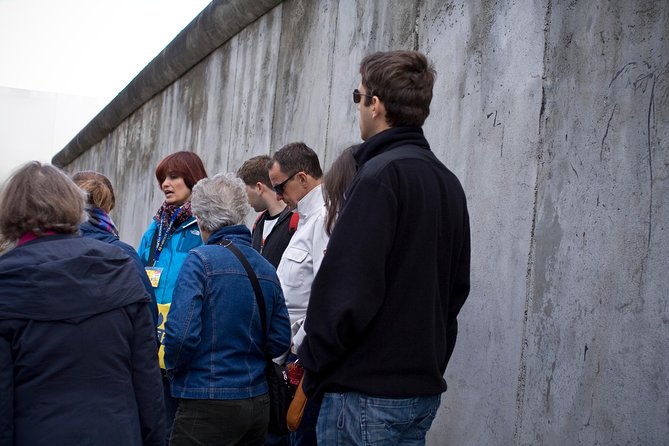
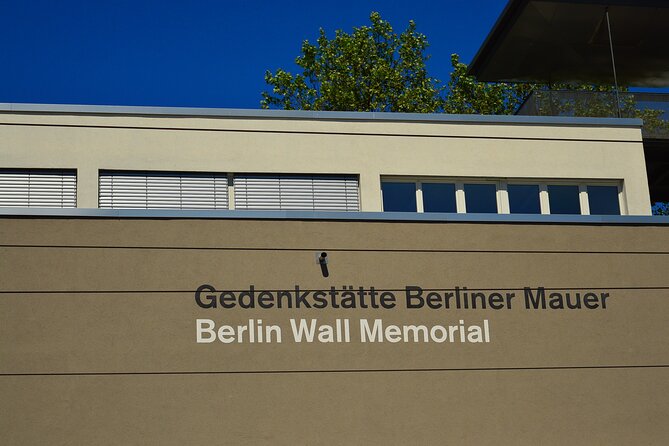
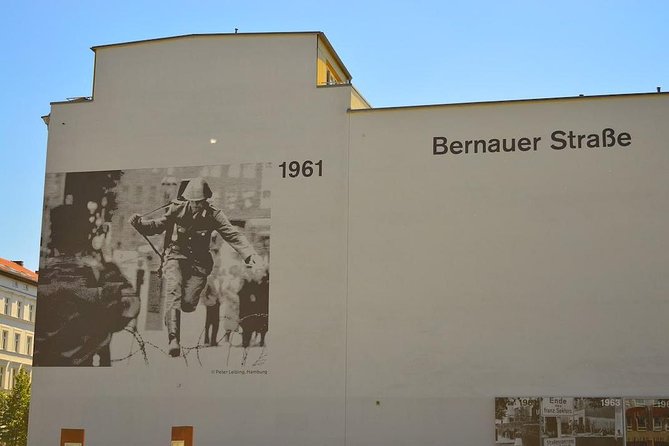
The Wall portion is where the tour earns its title. You retrace the trail of the so-called Death Strip, walk along Bernauer Strasse, and look at remains of the wall at the Berlin Wall Memorial and areas linked to the Former Stasi (DDR secret police).
Bernauer Strasse is especially important because it is tied to escape attempts. That turns a normal street walk into a lesson about distance, sightlines, and how quickly a plan could collapse. When you hear the guide’s explanation, you start to understand why the Wall was engineered to reduce escape opportunities, not just to block movement.
You also learn how surveillance worked in practice. The tour focuses on CIA, KGB, and Stasi intelligence approaches, and you see how that pressure shaped what people said, who they trusted, and how they lived.
If you are the type who likes to take photos constantly, do this with discipline. The most useful images here are the ones you capture while the guide is explaining angles and constraints. Later, you will be glad you did.
Brandenburg Gate, from division symbol to peace icon
You also walk under the Brandenburg Gate, one of Berlin’s most important monuments. During the war era, it symbolized division between Berlin and Germany. Today, it has a national message of peace and unity.
This stop matters because it gives you contrast. The Wall story is about enforcement. Brandenburg Gate is about meaning shifting over time, often depending on who controls the narrative.
Try to look at it in two layers: the physical monument and the political message attached to it across different eras. That is the sort of mental habit this tour pushes you toward.
East Side Gallery, the Berlin Wall turned into public art
The finale heads to the East Side Gallery, the longest permanent graffiti wall in the world and one of the largest remaining stretches of the Berlin Wall. What used to be a deadly border zone is now a canvas for murals.
Here, the tour connects your earlier lessons to a hopeful public outcome. The guide discusses how the murals transform concrete oppression into bold art, built around resistance, hope, and the fall of the Cold War divide.
This is also where the tour feels like it closes the loop. You start with separation and surveillance. You finish with memory that invites conversation instead of fear that kills silence.
If you want a photo-heavy finish, this is the place to do it. Just keep in mind the earlier sites will be the ones you mentally “carry” long after you go.
Price and value, at about $18.04 for 3 hours
The price is listed at $18.04 per person, and that is a fair deal for a guided Cold War storyline in central Berlin. The tour is about 3 hours, with a local expert guide, and key emotionally important stops.
The best value angle is that the guide experience does the hard work of connecting CIA, KGB, and Stasi surveillance to real streets, crossings, and buildings. Without that narration, many of these places are just interesting architecture. With it, they become a map of control.
One cost note: you will need a Berlin Transport daypass AB Zone ticket, which is listed as €10.00 per person and is required. Plan that into your budget so you do not get stuck at the last minute. Also, food and drinks are not included, so build in a quick snack plan either before you start or after you finish near the East Side Gallery.
Pace, group size, and how to get more out of the guide
The tour can have a maximum of 22 travelers. That is big enough to feel social, small enough that the guide can still manage the group. From the way the tour is described, you will be moving between stops with walking plus transit legs.
My practical advice: arrive early, take a good spot close to the guide at each stop, and ask questions right away rather than saving them for the next landmark. This kind of history comes alive when you can interrupt for clarification, especially when you hear how surveillance and escape attempts fit into each location.
If you are someone who gets lost in crowded outdoor spaces, keep your footing and your attention. Berlin sidewalks near major sites can be busy, and the guide will be switching from story to logistics.
Should you book this Cold War Berlin walking tour?
Yes, I think you should book it if you want Cold War Berlin with real context, not just photos of famous places. This works especially well for first-timers who feel overwhelmed by Berlin’s postwar timeline. The tour is built to connect big-player tension (U.S., NATO, Soviet bloc) with personal consequences you can actually picture.
Skip it or consider an alternate approach if you only want a light overview with no emotional stops. The Palace of Tears will hit hard. Also, if you dislike transit-based days and strict meeting points, you may find yourself annoyed by the required Zone AB ticket and the need to arrive on time.
If your goal is to understand how the Wall shaped daily life, how surveillance became routine, and how memory evolved into public art, this is a strong match.
FAQ
What is the duration of the tour?
It runs for about 3 hours.
Where does the tour start and end?
It starts around Berlin Friedrichstrasse station, with the tour concluding at the East Side Gallery area near Mühlenstraße.
What time does the tour begin?
The start time is 10:00 am.
What language is the tour offered in?
The tour is offered in English.
Do I need a transportation ticket?
Yes. A Berlin Transport daypass AB Zone ticket is required, listed at €10.00 per person.
Is the tour ticket mobile?
Yes, the tour uses a mobile ticket.
Is food included?
No. Food and drinks are not included.
Cancellation and refunds
You can cancel for a full refund if you cancel at least 24 hours before the experience starts.
Halls Between Trains
- Berlin: Interactive DeJa Vu Museum Entrance Ticket
★ 4.1 · 1,338 reviews - Berlin: “Pergamonmuseum. The Panorama” Exhibition Tickets
★ 4.6 · 1,245 reviews - Berlin WelcomeCard: Museum Island & Public Transport
★ 4.3 · 999 reviews - From Berlin: Sachsenhausen Concentration Camp Museum Tour
★ 4.8 · 514 reviews
Fresh on the arrivals board for Berlin



Museum Tours in Berlin, compared.

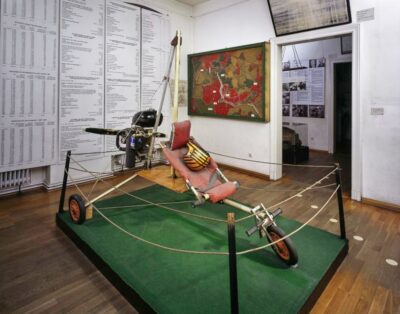
Skip-the-Line: Berlin Wall Museum at Checkpoint Charlie
Read our review →
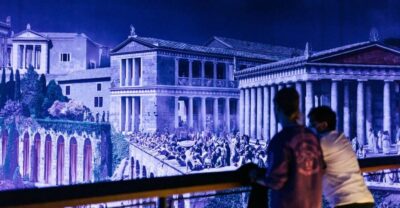
“Pergamonmuseum. The Panorama” Exhibition Tickets
Read our review →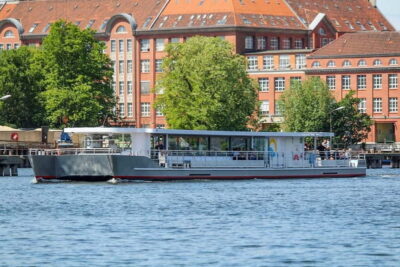
East Side Gallery Spree Cruise in a Solar Catamaran
Read our review →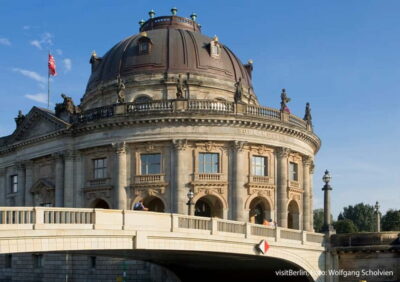
Berlin WelcomeCard: Museum Island & Public Transport
Read our review →Browse the lists this tour appears in