
Reviewed · CYCLING TOURS IN BERLIN
Berlin: Guided Bike tour of the Berlin Wall and Third Reich
Berlin taught itself with concrete.
This guided bike tour threads the Berlin Wall story into the broader Third Reich and Holocaust chapters, with stops that are meaningful and often off the main postcard path. I like that you get a comfortable city bike with a helmet from the start, plus a local-style route that makes the past feel tied to real neighborhoods. One heads-up: it is built for a fast-moving overview, so you only get short stop time at each site.
You also get a guide who can read the room. In past rides, guides like Paul, Theo, Juliette, Simon, Constantine, Yonis, Jacob, and Peter leaned on personal context and Q and A moments to keep the ride from turning into a lecture. If you want to linger for reflection, plan to do a follow-up visit after the 3-hour loop.
In This Review
- Key things to know before you pedal
- Why this Berlin Wall and Third Reich bike tour feels different
- Price and what you get for $42.34
- Meeting point, bikes, and how the ride works
- Stop-by-stop: from Nikolaiviertel to the Holocaust Memorial
- What makes the guides matter on this tour
- How hard is the biking, really?
- Who should book this Berlin Wall and Third Reich bike tour
- Should you book this tour?
- FAQ
- How long is the Berlin Wall and Third Reich bike tour?
- What is included in the tour price?
- Do I need to pay entrance fees at the stops?
- Is the tour family-friendly?
- Is food included?
- Which language options are available, and does it affect the route?
- Can I cancel for a full refund?
Key things to know before you pedal
- Short, high-impact stops: you see a lot in 3 hours, not everything in depth
- Local route flexibility via the Free Berlin concept, so your exact stops can shift
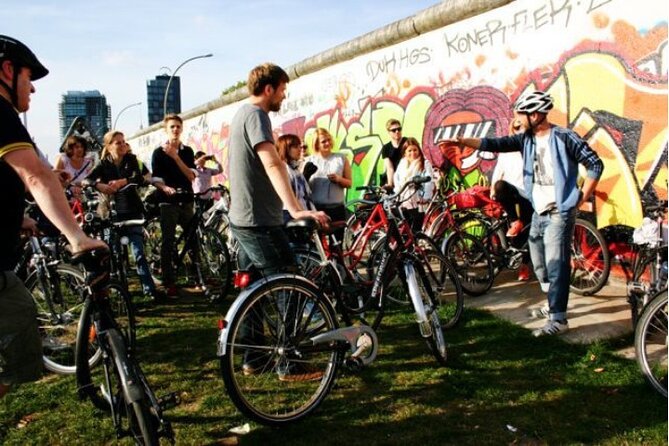
- Helmet and bike included, plus a relaxed pace with frequent breaks
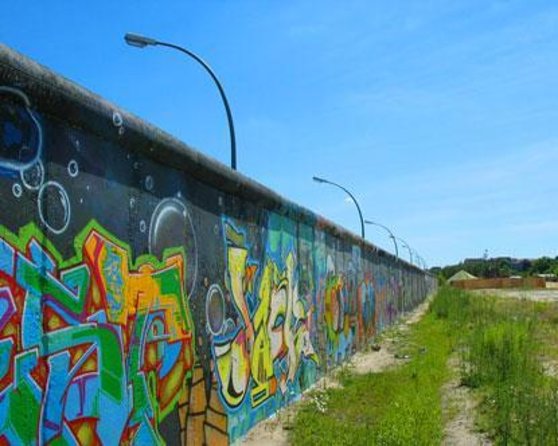
- Wall remnants you can actually feel at the few preserved stretches
- Language matters for Checkpoint Charlie, since it is only included on the English version
Why this Berlin Wall and Third Reich bike tour feels different
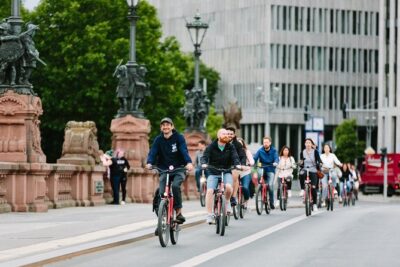
Berlin is flat and spread out, which is great for biking, but what you ride through matters more than the smooth ride itself. This tour is designed around the idea that the Wall was not just a line on a map. It shaped streets, neighborhoods, escape routes, and how people thought about freedom every single day.
What makes the experience click is the mix of places you can physically stand near, plus places that explain the emotional weight of policy and violence. You are not only looking at monuments. You are also getting city geography, so the history has context when you hear it.
The best part for me is the tone. The guide keeps the ride moving, but the stops are chosen for learning moments, not random sightseeing. Even when you are rolling through busy areas, you are often stopping at quieter corners where the facts land harder.
More Cycling Tours in Berlin
- Berlin: Sights and Highlights Bike Tour with a Local Guide
★ 4.8 · 2,698 reviews - Berlin Highlights 3-Hour Bike Tour
★ 5.0 · 948 reviews - Berlin City Bike Tour with Beer Garden Stop
★ 5.0 · 917 reviews
Price and what you get for $42.34
At about $42.34 per person for roughly 3 hours, this is a value play for Berlin. You are paying for three things at once: a guide, a bike, and a structured route that focuses on history rather than leaving you to stitch it together yourself.
If you tried to DIY this, you would still spend time figuring out bike logistics, then probably end up spending extra money on bikes, transit, and entrance tickets. Here, the stops listed for the route show free admission for the sights on the itinerary, and the bike and helmet are included.
Also, the group size cap matters. With 4 to 15 participants, it usually stays small enough that the guide can keep everyone safe and answer questions without losing the group. That is a big deal on roads and cycle lanes.
Meeting point, bikes, and how the ride works
You start and end at Free Berlin Bike Tours & Rental, Poststraße 11, 10178 Berlin. It is near public transportation, which makes it easier to build this into a day that includes museums or a tram hop afterward.
What you actually get with your booking:
- A comfortable city bike and a helmet
- A professional guide
- Family-friendly setup, including the option for infant seats on request
- The Free Berlin concept, meaning each guide can shape the route on the topic so tours are not always identical
Practically, that route flexibility is both a pro and a possible surprise. If you have a strict must-see list, ask your guide early what they can fit. The concept is meant to keep things interesting and responsive, but it also means you might not hit every named spot every time.
Stop-by-stop: from Nikolaiviertel to the Holocaust Memorial
This tour is built like a timeline you can ride. You move from older city fabric, into the Wall era, and then into Nazi-era architecture and Holocaust memorial spaces, using Berlin geography to connect it all.
Nikolaiviertel (the old-town start)
You begin in Nikolaiviertel, often treated like the real old center of Berlin. It is a good way to start because it reminds you that Berlin did not begin in the 20th century. The tour sets you up to ask a big question right away: how did a city with deep roots still get dragged into mass violence and destruction?
Why it works: starting old town makes the later history feel more tragic, because you are seeing the same city that was later cut, divided, and reshaped.
Possible drawback: if you are hoping for an immediate Wall moment, this first stop is more “context and perspective,” not a dramatic Wall remnant.
Stiftung Neue Synagoge Berlin, Centrum Judaicum
Next is the story around the Stiftung Neue Synagoge Berlin. The tour frames it through civil courage, including an account of a police officer protecting the building during the night of broken glass. Even if you have read about these events before, hearing them near the place helps your brain attach names and outcomes to stone and street.
Why it works: it is not just tragedy. It includes resistance and protection, which makes the history feel human instead of only mechanical.
A quieter memorial for deportation and Holocaust victims (GDR-era contrast)
Midway through, you stop at a memorial tied to Holocaust victims and deportations, designed during the GDR era and set in stark contrast to the memorial closer to Brandenburg Gate. This stop is valuable because it shows that public memory in Berlin has been shaped by politics, not just by events.
Why it works: it teaches you that how a country remembers is part of the story.
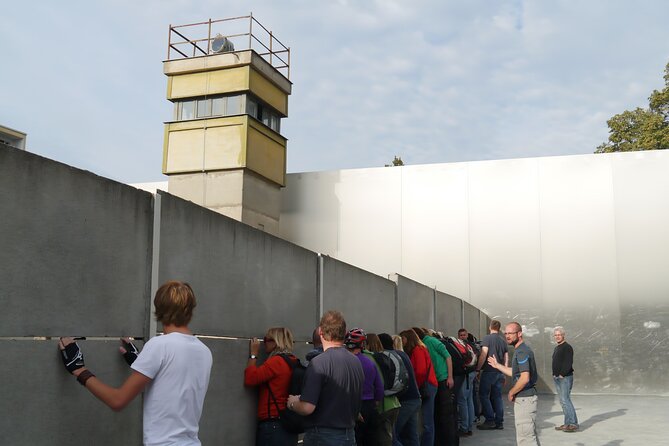
Memorial of the Berlin Wall
Now you get to the Wall, and this stop is special because it is one of the preserved stretches where the Wall is still physically there in a way you can understand and feel. The guide uses this as a “what it meant in real life” moment, not a vague history lesson.
Why it works: Berlin has many Wall references, but only a few places let you grasp scale and impact quickly.
Tradeoff: the stop is around 10 minutes, so you get the core understanding, then you move on.
Mauerpark
At Mauerpark, you see how Berlin transformed a tortured zone into a place known for free expression and Sunday energy. The tour uses the park to explain how a city changes when a barrier falls after decades of control.
Why it works: it is the emotional counterweight to the hard stops, and it makes the Wall story feel like it has an ending, not only a scar.
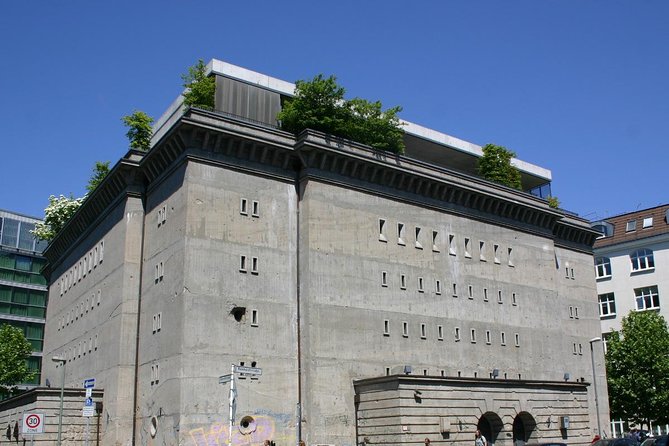
Humboldthain Flak Tower
You continue toward the Humboldthain Flak Tower, once a giant fortress and air-raid shelter. Here the tour connects architecture to Nazi planning, plus you get an added perk: a panoramic view from the tower area.
Why it works: you learn to look at buildings as propaganda, defense, and lived reality.
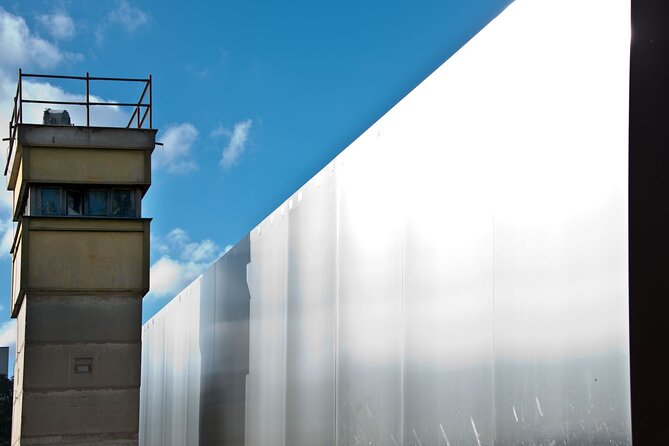
Günter Litfin memorial watchtower
Next is the Gunter Litfin memorial at the preserved original watchtower. The tour uses this to mark Günter Litfin as the first person shot at the Wall. It is one of those moments where the facts become immediate because you are standing where decisions were enforced.
Why it works: it moves beyond dates and into consequence.
Invalidenfriedhof and escape stories
Then comes Invalidenfriedhof, a cemetery cut by the Wall. The stop ties into Prussian military history and, more importantly here, escape stories linked to nearby former checkpoints and a canal that acted as a natural border.
Why it works: you get geography for escape routes, so the Wall story feels strategic and frightening, not abstract.
Spreebogenpark and Albert Speer’s Great Hall vision
At Spreebogenpark, the tour points you toward an overview of Germany’s governing district and discusses plans tied to Albert Speer, including the idea of a Great Hall with space for an enormous crowd.
Why it works: it explains the scale of Nazi ambition in a way you can connect to what stands around you today.
Reichstag Building from the outside
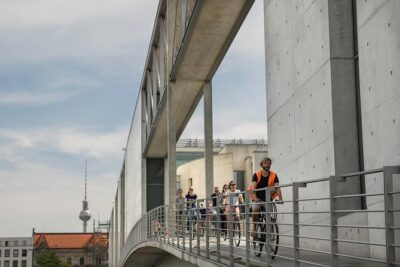
Next is a stop by the Reichstag Building, focusing on Hitler’s grab of power and Germany’s democratic history. You do not go inside, but you still get a strong foundation from the outside.
Why it works: it helps you connect the Wall timeline with the political collapse that set it up.
Additional Holocaust memorial stops
The tour includes more than one Holocaust-related memorial stop, including one described as one of three memorials for major victim groups. The biggest set-piece is the Holocaust Memorial, the Memorial to the Murdered Jews of Europe.
The Holocaust Memorial
This is a heavy, powerful stop. The tour frames it with attention to size and importance, and it also encourages reflection through the way the guide prompts questions. When people engage with it actively, the experience can feel personal without becoming sentimental.
Why it works: the memorial is already designed to slow you down, and with a guide guiding the meaning, you leave with more than a quick photo.
Fuhrerbunker
The tour also covers the Fuhrerbunker site, where Hitler hid during the last weeks and died by suicide. Today, you mostly see a parking lot, and the guide explains why it looks like what you see now.
Why it works: it forces you to confront how history can become invisible in plain sight.
Checkpoint Charlie (English version only)
Finally, Checkpoint Charlie is included only on the English version. The tour treats it as the best-known border station of the Cold War, including why tensions between the USA and USSR made it a place where the world felt dangerously close to catastrophe.
Important practical note: if Checkpoint Charlie is on your must-see list, pick the English version.
What makes the guides matter on this tour
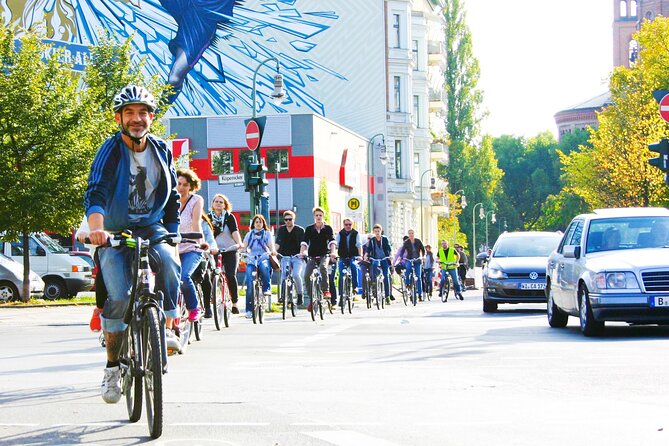
Bike tours live or die by the guide, and this one has a strong track record. I picked up a clear pattern from excellent guides I have heard about in this style of tour: the best ones blend stories, geography, and quick checks for group understanding.
You might get guides such as:
- Paul, who shares a West Berlin perspective and emphasizes differences between East and West
- Theo, who supports safe biking even when main-road cycle lanes feel intimidating
- Juliette, known for balancing the ride and keeping stop timing manageable
- Simon or Simone, who keep things engaging with questions and clear pacing
- Constantine, attentive on busier roads while using more park routes
- Yonis, energetic with detailed historical context
- Jacob and Peter, who connect facts to personal experience and make the people in the story feel real
If you want to maximize value, come with one question you genuinely care about. The tour format works best when you treat it like a conversation plus a ride, not like a headset audiobook.
More traces of the Wall through Berlin:
How hard is the biking, really?
Berlin is famously bike-friendly, and this route generally takes advantage of that. Based on what I would expect for a 3-hour city bike tour, the pace is kept relaxed enough for most people who can handle a bike. The tour includes breaks, and the stops are spaced so you are not constantly off and on the seat.
Still, be realistic. You are riding through real streets and cycle lanes. Even if you feel confident in the saddle, bring a calm mindset, because any group tour can create bottlenecks when you stop at lights or arrive at viewpoints.
Practical tip: wear weather-appropriate layers and bring water. The bike setup includes basket space that can help with small carry items, but this is still a 3-hour effort.
Who should book this Berlin Wall and Third Reich bike tour
Book it if you want:
- A guided history route that ties together the Wall era and the Nazi period
- A way to see a lot of Berlin without getting lost
- A bike-friendly format with frequent stops and a manageable pace
- Family-friendly history, since children are welcome (infant seats can be arranged on request)
Consider a different option if:
- You need long time at each memorial. This is an overview-style ride with short stops.
- You have a very strict checklist of sites and want zero routing flexibility. The Free Berlin concept means the guide may adjust to keep the experience smooth and coherent.
Should you book this tour?
I would book it if you want a smart, efficient way to understand Berlin’s 20th-century story on two wheels, with a guide who can explain why each place matters. The price is fair for bike plus guide, and the stop selection gives you both the Wall’s physical reality and the memorial spaces that carry the moral weight.
If you are the kind of traveler who likes to sit longer at one or two places, plan a second visit afterward. This tour is best as your foundation, not your final word.
FAQ
How long is the Berlin Wall and Third Reich bike tour?
It lasts about 3 hours.
What is included in the tour price?
You get a bike, a helmet, and a professional guide.
Do I need to pay entrance fees at the stops?
The stops listed on the route show admission ticket free.
Is the tour family-friendly?
Yes. Children are welcome, and infant seats can be provided on request. Children must be accompanied by an adult.
Is food included?
Food and drinks are not included unless specifically mentioned.
Which language options are available, and does it affect the route?
The tour operates in English and German depending on the option you select. Checkpoint Charlie is only included in the English version.
Can I cancel for a full refund?
Yes, free cancellation is available up to 24 hours in advance for a full refund. Canceling less than 24 hours before the start time is not refundable.
Flat Kilometres
- Berlin Highlights: 3-Hour Bike Tour
★ 4.9 · 809 reviews - Berlin Highlights Sightseeing Bike Tour in Small Groups
★ 5.0 · 652 reviews - Berlin: The Wall and Third Reich Guided Bike Tour
★ 4.8 · 578 reviews - Berlin: Alternative Bike Tour of Kreuzberg & Friedrichshain
★ 4.7 · 548 reviews
Third Reich & Wartime History
- Third Reich Berlin: Hitler and WWII Walking Tour
★ 5.0 · 3,301 reviews - Berlin: Third Reich, Hitler, and WWII Walking Tour
★ 4.9 · 1,757 reviews - Berlin Third Reich Sites: Half-Day Walking Tour
★ 5.0 · 835 reviews - Berlin: History of the Third Reich Guided Walking Tour
★ 4.7 · 791 reviews
Fresh on the arrivals board for Berlin


Cycling Tours in Berlin, compared.
Sights and Highlights Bike Tour with a Local Guide
Read our review →
Berlin Highlights Sightseeing Bike Tour in Small Groups
Read our review →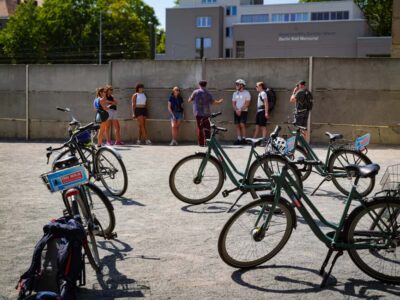
Alternative Bike Tour of Kreuzberg & Friedrichshain
Read our review →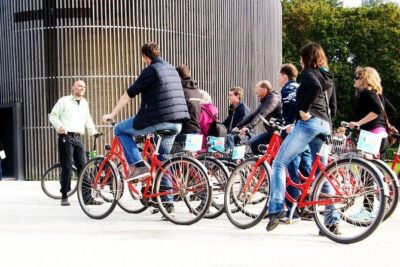
Browse the lists this tour appears in