
Reviewed · WALKING TOURS
Surprise Walk of Rostock with a Local
One stroll, many Rostock surprises. This is a small-group walk that threads together the city’s standout sights with a local who knows what to point out and why. In about 1 hour 30 minutes, you move from the port area into town, then finish at the Botanical Garden.
I especially like the mix of serious landmarks with easy pacing, including stops at Nikola Church (the oldest church of Rostock) and the Marienkirche area. I also like that you get practical food, drink, and explore recommendations rather than just names and dates. The main thing to think about is that it is a walking-focused tour and it is not recommended for guests with impaired mobility.
In This Review
- Key things to know before you go
- A 90-Minute Surprise Walk With a Local in Rostock
- Starting at Neuer Markt, ending at the Botanical Garden
- Port of Rostock to St. Petri Church: get oriented fast
- Nikola Church and Marienkirche: the oldest and the iconic
- Town Hall, Central Square, and the astronomical-clock moment
- Ständehaus architecture and the story your guide ties together
- University Square sculptures: a detail stop that pays off
- Kröpeliner Tower to Doberaner Square: towers and street-level color
- Botanical Garden finish: end on something calmer
- Price and value: is $118.96 worth it?
- What the small-group format really changes
- Timing in real life: when to schedule this walk
- Who should book this Rostock walk?
- Should you book this Rostock Local Walk?
- FAQ
- How long is the Surprise Walk of Rostock with a Local?
- How much does the tour cost?
- Is the tour offered in English?
- How many people are in the group?
- Where does the tour start and end?
- What is included in the price?
- What is not included?
- Are service animals allowed?
- Is the tour suitable if I have impaired mobility?
- What is the cancellation window?
Key things to know before you go
- Up to 8 people keeps the tour personal, with time for questions and on-the-spot adjustments.
- Churches, squares, and city buildings are packed in, so you get a real sense of the city fast.
- Ending at the Botanical Garden gives you a relaxing payoff after the historic sights.
- English-speaking local hosting plus a mobile ticket makes it straightforward to join.
- Route can shift with weather and interests, so plan to stay flexible with your day.
A 90-Minute Surprise Walk With a Local in Rostock
If you only have a short window in Rostock, this is a smart way to get your bearings without feeling rushed. The format is simple: meet your local, walk a clear route through key landmarks, and pause long enough to actually notice details.
What makes it work is the balance. You get big “I recognize this” sights like major churches and central civic buildings, plus smaller moments like squares and viewpoints where a local can explain how people actually experience the area.
More German cities at walking speed:
- Rostock: City Walking Tour
★ 4.9 · 198 reviews - Warnemünde: Guided Walking Tour
★ 4.3 · 102 reviews - Rostock: Private Guided Walking Tour
★ 5.0 · 4 reviews
Starting at Neuer Markt, ending at the Botanical Garden
The tour starts at Neuer Markt 1a (18055 Rostock) and ends at the Botanical Garden, Hamburger Str. 28 (18069 Rostock). That end point matters, because it helps you turn the last part of your day into something pleasant instead of just drifting back to where you started.
It also means you can plan your onward travel around a garden stop. If you are trying to fit this into a cruise day or a tight itinerary, having a defined start and finish is a real advantage.
Port of Rostock to St. Petri Church: get oriented fast
You begin at the Port of Rostock, and you start seeing the city from the water side right away. That early contrast helps. You are not jumping straight into stone and monuments, you are building context first.
From there, the walk moves toward St. Petri Church. This is the kind of stop where a local guide can point out what to look for beyond the main façade, and it is a good moment to ask questions because your pace stays relaxed.
One practical tip for this section: keep your phone ready for quick reference photos. The tour is light on “seat time,” so snapping what you see helps you remember where you are when you later compare neighborhoods and streets.
Nikola Church and Marienkirche: the oldest and the iconic
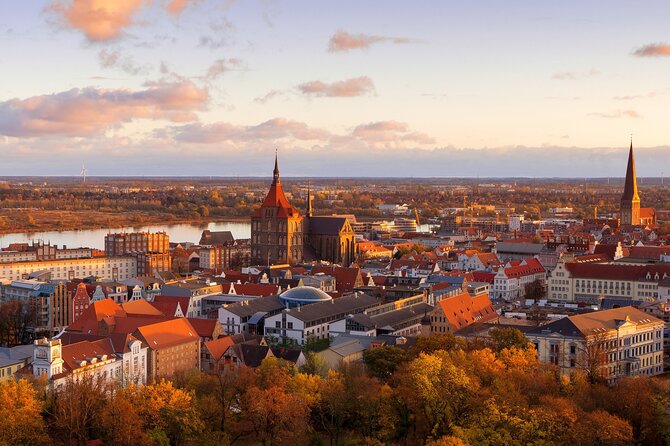
Next comes Nikola Church, identified as the oldest church of Rostock. That label is useful, because it tells you this is not just another church stop. You can treat it like a milestone in the story the route is trying to tell.
After that, you reach St. Mary Church (Marienkirche). In a short 90 minutes, hitting both the oldest church and a major church stop gives you two different impressions of the city’s religious and civic identity.
A small-group walk makes this more enjoyable than a quick bus circuit. With fewer people, your guide can slow down when someone spots something interesting, and you can ask what the different parts of the buildings usually mean.
Town Hall, Central Square, and the astronomical-clock moment
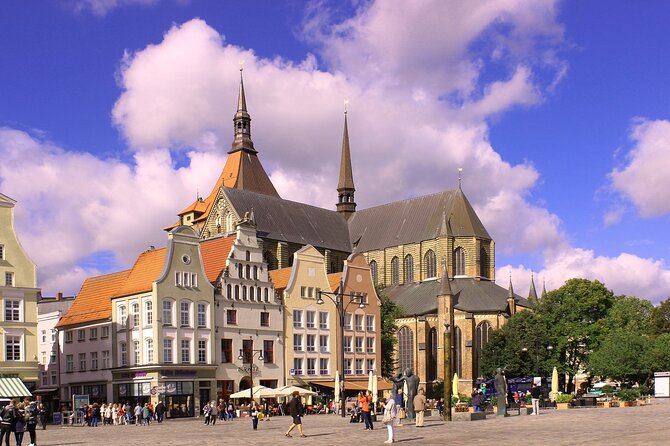
A key highlight on the route is the Town Hall. It is also where you may catch the astronomical clock that shows up in the tour experience. Even if you do not stop for a long look, the Town Hall area is the kind of place where details grab your attention once the guide points them out.
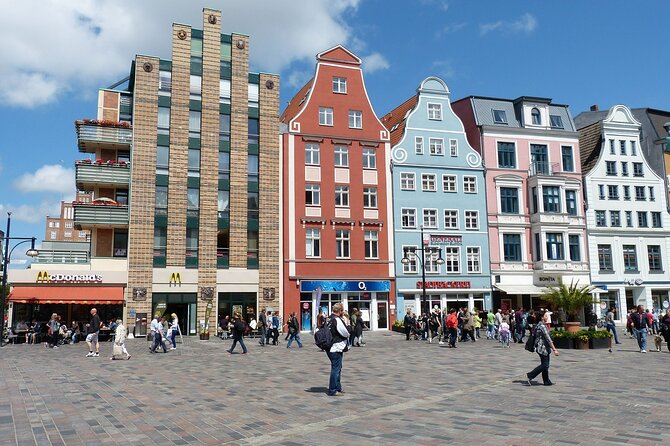
From the Town Hall, you head to the Central Square area to take in the lively energy of the city center. This part of the walk is less about one monument and more about atmosphere, which is exactly what you want during a “surprise walk.” It is where the city starts to feel like a place you could actually spend an afternoon.
If you like photos, this is a strong stretch. Squares give you room to step back, frame buildings, and capture street scenes without fighting crowd flow.
Also holding a platform in Rostock



Ständehaus architecture and the story your guide ties together
One of the stops on the route is Ständehaus, described as amazing architecture. In a walking tour, “architecture” is not just a word. It usually means you will get a chance to stand where you can see proportions, façades, and how the building relates to the square or street around it.
This is also a good time to listen for the practical context locals give. A guide’s value is not only what they know, it is how they connect things. You are walking a tight loop, so a good explanation helps the landmarks feel related instead of like disconnected postcards.
When you reach this portion of the route, pay attention to the guide’s pointers about what to notice. If your guide is anything like Varvara, the feedback says she was patient, responsive to questions, and gave a clear overview of Rostock in a way that feels natural rather than lectured.
University Square sculptures: a detail stop that pays off
The itinerary includes University Square, with attention to its original sculptures. This is a great example of why this walk is more than just “walk, point, move on.” Sculptures often become background clutter for independent visitors, but a local can help you understand what you are seeing and how it fits the space.
If you care about details, linger here. The group size stays small, and the tour is designed to adapt to your walking pace and interests, so this is a good moment to ask what makes those sculptures important in their setting.
Kröpeliner Tower to Doberaner Square: towers and street-level color
After University Square, the walk continues to Kröpeliner Tower. Tower stops are a nice mid-to-late route break because they change your perspective. You often get a different view of streets below, and it helps your brain connect the route you are actually walking.
Then you reach Doberaner Square, where the tour shifts again from major building landmarks to street-level public space. This is where you can start thinking about where you would want to eat or drink if you had more time. That is also one reason the local recommendations are helpful. The guide is seeing your interests in real time and can suggest options you would not automatically find.
Botanical Garden finish: end on something calmer
The tour ends at the Botanical Garden. Even with limited time, finishing with a garden stop makes the day feel complete, because it gives you a quieter atmosphere after churches, civic buildings, and squares.
One important note: entry tickets for transportation, museums, and monuments are not included. The tour describes a visit to the garden, but you may still encounter ticketing depending on how the garden is run that day. If you want to plan smoothly, treat the end as time to enjoy the grounds and check on-site for whether there is an admission fee for specific areas.
This end point also makes it easy to extend your day. If you have energy left, you can stay nearby. If you are tired, you have a natural place to slow down.
Price and value: is $118.96 worth it?
At $118.96 per person, this is not a bargain-basement walking tour. The question is what you get for that price, and the answer is the combination of small-group attention and personalized recommendations.
For me, the value case comes down to three things:
- You are paying for a guide who can shape the walk to your interests and pace.
- You get guidance on what to do next, not just what you saw today.
- The group size cap of up to 8 means fewer wasted minutes.
If you are traveling solo, the per-person price can feel high. If you are traveling with a partner or small group and can book early, it often feels more reasonable because you share the guide’s attention.
Also, the tour is offered in English and uses a mobile ticket. That reduces friction, especially if you are short on time and do not want to hunt for paperwork or complicated meetups.
What the small-group format really changes
A small group sounds like a marketing line until you feel it. With up to 8 people, you are not constantly waiting for others to catch up. You can stop at a building and actually read the scene through your guide’s eyes.
It also changes the question-and-answer part. If you want to know where to grab lunch, what streets are best for strolling, or how to structure a second day, your guide has the bandwidth to respond.
The feedback around Varvara is a good example. The reviews highlight that she was interesting, knowledgeable in her explanations, patient, and professional, and that she could recommend next steps for the rest of the trip, including practical connections. That is exactly the kind of “local help” that makes a walk like this more than a checklist.
Timing in real life: when to schedule this walk
The tour runs for about 1 hour 30 minutes, which is a strong length for first-time orientation. It is long enough to cover multiple landmarks and short enough that you are not locked into an all-afternoon commitment.
It is also an easy slot for people on cruise days. One review called it a good option for cruise passengers who do not go to Berlin. That tells you the format fits shorter city stops, where you want an organized route and a local view without the pressure of a full-day plan.
One more thing: the itinerary may vary depending on weather conditions. So if you book on a rainy day, go in expecting small changes. The best mindset is, this is a guided walk that adapts, not a rigid performance.
Who should book this Rostock walk?
I think this tour is a great match if:
- you want to see core Rostock landmarks without spending hours figuring out logistics
- you like getting local recommendations for where to eat, drink, and explore
- you prefer small groups over large bus-style tours
- you are comfortable with walking and want a steady-paced route
You may want to skip it if you have mobility limits, because it is described as not recommended for guests with impaired mobility. It is also probably not ideal if you want a super slow, sit-and-stare museum day. This is a walk-and-notice experience.
Should you book this Rostock Local Walk?
Book it if you want the best use of a short time window. This is one of those tours where the route makes sense, the pacing works for a first visit, and the guide helps you turn sightseeing into real local choices for the rest of your day.
Skip it if you dislike walking or if you need a more accessible, low-movement format. Otherwise, for English-speaking visitors who want an organized introduction to Rostock’s standout sights, including the Port of Rostock area, major churches, central squares, Kröpeliner Tower, and a garden finish, it is a strong value play for your time.
If your schedule allows, I would book ahead. On average, it gets booked about 64 days in advance, which suggests it fills up during busy travel periods.
FAQ
How long is the Surprise Walk of Rostock with a Local?
It lasts about 1 hour 30 minutes.
How much does the tour cost?
The price is $118.96 per person.
Is the tour offered in English?
Yes, it is offered in English.
How many people are in the group?
The group is limited to a maximum of 8 travelers.
Where does the tour start and end?
It starts at Neuer Markt 1a, 18055 Rostock and ends at Botanical Garden, Hamburger Str. 28, 18069 Rostock.
What is included in the price?
The tour includes a knowledgeable local, a small group experience, and personalized recommendations.
What is not included?
Personal expenses are not included. Entry tickets for transportation, museums, and monuments are also excluded.
Are service animals allowed?
Yes, service animals are allowed.
Is the tour suitable if I have impaired mobility?
This tour is not recommended for guests with impaired mobility.
What is the cancellation window?
You can cancel for a full refund up to 24 hours in advance of the experience start time.
Fresh on the arrivals board for Rostock






Walking Tours, compared.

Berlin City walk Government District and Places of Democracy
Read our review →


Berlin’s Best: 2 Hour Walking Tour Third Reich and the Cold War
Read our review →
Browse the lists this tour appears in