Reviewed · PRIVATE
Private taxi tour to Potsdam and Sanssouci 6-8h
Sanssouci makes Potsdam feel like a storybook. This private 6 to 8 hour taxi tour is interesting because you see a lot in one day, with no bus transfers and a plan built around the palaces and viewpoints. I love the way Gunter Bauer brings the buildings to life, from Frederick the Great’s rococo rooms to the later Italian-style touches. I also love that you get a private group experience, so you can ask for what you care about without fighting crowds. The one drawback to think about is castle and palace admission, since some stops require a paid ticket unless you book the Sanssouci+ option.
From your hotel, you roll out in an air-conditioned vehicle, parking fees are handled, and you get a mobile ticket. It is the kind of day where you can take photos, pause for views, and still feel like you got the meaning behind the pretty facades. Just bring good walking shoes, because the parks include mostly unpaved paths.
A top-rated guide also means the stops connect. In past days with Gunter, people liked how he pointed out war damage and what was rebuilt, and how he even sends photos after the tour. If you want Prussian drama plus real, practical planning, this is a strong choice.
In This Review
- Key highlights to know before you go
- From Berlin to Potsdam in one smooth taxi day
- The odd, fun start at Sanssouci Park: obelisks and a fake-looking portal
- Sanssouci Palace: eight rooms, rococo elegance, and Frederick the Great’s taste
- Windmill views and the Orangery’s “winter storage” logic
- The Chinese House break: Mode Chinoise and gold-edged tea culture
- Weinbergterrassen: the postcard viewpoint and the glass-vine solution
- Friedenskirche and the Italian campanile moment
- Inside Sanssouci Park: temples, royal children, and an axis that’s 2 kilometers long
- New Palace at Potsdam: 600 rooms, hidden tech, and the Communs courtyards
- Potsdam’s gates and Dutch Quarter: city texture beyond the palaces
- Potsdam City Palace, garrison church, and the art collections that replaced loss
- Cecilienhof Palace: the Potsdam Conference room where the war’s end was argued
- Glienicke Bridge and the Italian patio pause by the lakes
- Timing, walking, and what to bring so the day stays enjoyable
- Who this Potsdam taxi tour is best for
- Should you book this private Potsdam and Sanssouci taxi tour?
- FAQ
- How long is the private taxi tour to Potsdam and Sanssouci?
- Where does pickup happen?
- Is this tour private or shared?
- What language is the tour offered in?
- Are Sanssouci palace admissions included?
- What is included besides transportation?
- Are snacks included?
- What should we wear for the park walking?
- Can families bring a baby stroller or a car seat?
- Are service animals or pets allowed in the vehicle?
Key highlights to know before you go
- Hotel pickup plus a private taxi day, 6 to 8 hours so you can fit Potsdam into a Berlin trip.
- Sanssouci Palace and the park viewpoints, including the wine terraces and classic postcard angles.
- Architecture-first commentary by Gunter Bauer, with style changes explained in plain language.
- Practical photo stops and time for breaks, not just a rush from one gate to the next.
- Optional extras by request, such as adding a meal stop in the Russian Colony of Alexandrowka if that’s your interest.
- A smart mix of palaces, gardens, and city corners, from the Dutch Quarter to Potsdam Conference sites.
From Berlin to Potsdam in one smooth taxi day
This is a private taxi tour that starts with pickup from your hotel or accommodation in Berlin. You choose your start location, then you meet the car where you are staying. The driver part is easy, the guide part is where the day becomes worth it.
Price is listed at about $179.01 per person for the experience. What makes that feel reasonable is that the vehicle time is included, parking is included, and both the taxi ride and the city tour are included with VAT. That matters because the “cheap” option can turn expensive once you add admission, transit tickets, and time wasted.
Duration is about 6 to 8 hours, starting at 10:30 am. That time window is ideal for seeing Sanssouci and enough of Potsdam to feel like you got the full story, without turning the day into a marathon. One thing to plan for: snacks are not included, so bring water and something small or plan a café stop during the day.
Also holding a platform in Berlin
- Berlin: Reichstag, Dome and Government District Guided Tour
★ 4.7 · 18,288 reviews - Berlin: 1-Hour City Tour by Boat with Guaranteed Seating
★ 4.3 · 16,993 reviews - Berlin: TV Tower Standard Entrance Ticket
★ 4.4 · 15,883 reviews
The odd, fun start at Sanssouci Park: obelisks and a fake-looking portal
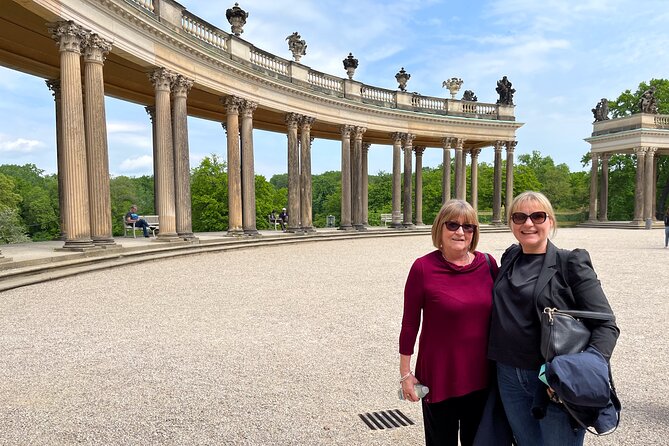
Before you hit the big names, the park gives you a sense of play. You’ll see the main entrance portal that looks like an obelisk fantasy, brought to Europe as if someone shipped Egypt in a suitcase. There are even decorative hieroglyph-like markings, but the key point is that they are meant to look “ancient,” not to be readable.
Then you’ll notice another clever trick. A ruined-looking building is part of the design, built for a purpose beyond decoration. It helps hide a technical setup connected to the park’s water system, including the higher-lying pond that feeds fountains at Sanssouci Palace.
This opening matters because it sets the tone. Potsdam’s royal parks are not just gardens. They are staged ideas. If you like when design has a backstory, you’ll enjoy how the day moves from “what you see” to “why it was made that way.”
Sanssouci Palace: eight rooms, rococo elegance, and Frederick the Great’s taste
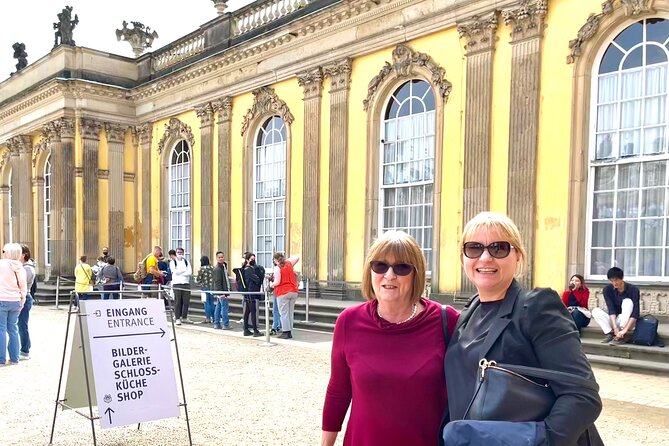
Sanssouci Palace is the star, and it earns it. The rococo palace is described as Frederick the Great’s dream castle, placed alone on a small vineyard. Yes, wine is still grown nearby, but the modern reality is that the vines are protected behind glass.
What I like about this stop is the scale. It has only 8 rooms, and those rooms connect to the garden. That makes the visit feel more intimate than the grand, maze-like palaces that can exhaust you. For Frederick, the palace was more than a public landmark. It was tied to his personal ideal of an absolutist ruler.
Expect the guide to connect details like the king’s flute playing and his music discussions with visitors. You also hear the more awkward, very period details too, including who was allowed in and how Voltaire fit into Frederick’s circle. It is court history with specifics, not vague name-dropping.
Practical note: palace admission is not included by default at this stop, unless you choose the Sanssouci+ option that covers all castle tours. Time-wise, plan for about 30 minutes at Sanssouci Palace before moving on.
Windmill views and the Orangery’s “winter storage” logic
Right after the palace feel, the day adds a practical surprise: the historic windmill. This one still exists partly because the owner fought a dispute and won. The story is a reminder that Prussian rule wasn’t only about power and buildings. It also involved legal outcomes, and the mill still grounds grain today.
Then you head to the Orangery, which is both functional and scenic. In winter, it houses exotic plants that cannot survive outside. The design also creates an eye-catcher on the ridge, and you get a great overview of the park from here.
These stops are a good balance. After the palace interiors, the windmill and Orangery let your eyes rest. They also give you a sense of how the park worked year-round. The royal garden was not only for summer strolls and paintings. It needed systems, staff, and buildings that made the “dream” possible.
If you’re shopping for value in a day like this, these are the kinds of stops that make the guided experience feel more complete than a quick photo circuit.
The Chinese House break: Mode Chinoise and gold-edged tea culture
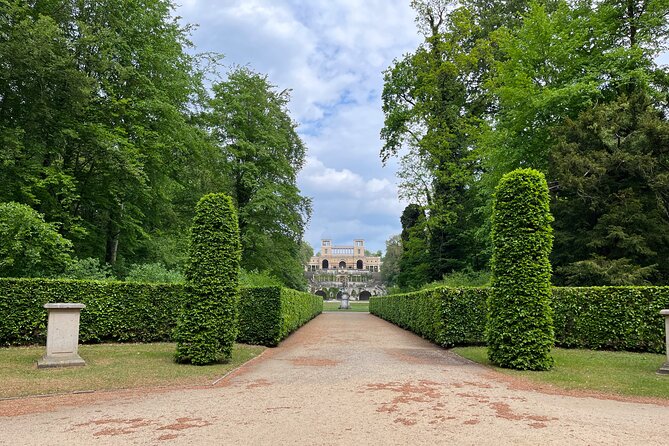
One of the most memorable moments in Sanssouci Park is the Chinese House. This is not a generic tea pavilion. It is described as Mode Chinoise, a deliberate show of Chinese-style design, with precious furniture and delicate porcelain, all decorated with gold.
If you have ever seen visitors treat the park like a backdrop for photos only, the Chinese House changes that. It is a small building, but the details are the point. The guide’s job here is to show how the palace world used taste as a signal. Frederick’s court wanted style, surprise, and luxury cues that felt exotic but controlled.
There is also a related winegrowers cafe element in the day, built with a Chinese-inspired look. That means you can pair the visual highlight with an actual comfort stop. If you want a calmer moment after walking, aim to spend extra time here, even if you only do it for a few quiet minutes.
This is also a smart spot for people in your group who may not want to run from room to room. It gives you a visual payoff without requiring a long ticketed interior visit.
Onward connections from Berlin:



Weinbergterrassen: the postcard viewpoint and the glass-vine solution
From the Chinese House side, the tour turns toward the classic view: the Weinbergterrassen and the large fountain area. This is the part many people recognize instantly from photos, but it is more meaningful when someone explains what it took to make it work.
Wine growing in Potsdam was complicated by the cooler climate. The gardeners solved the problem by hiding precious vines behind glass, creating a warm micro-environment. The idea was simple. Protect the plants, extend the season, and keep the dream of vineyards alive.
The fountain story is similarly clever. A separate lake was created higher up and disguised with a ruin mountain to hide the real engineering behind the scenic effect. The guide’s commentary makes you see the design choices as “stagecraft,” not as random decoration.
This is also a good time to stop and orient yourself visually. You can see the relationship between the palace, the terrace lines, and how the park spreads outward.
Expect about 15 minutes here. It is short enough to keep you moving, long enough for one good view and a few photos.
Friedenskirche and the Italian campanile moment
Potsdam’s royal complex includes a moment of Italy, even though you are deep in Germany. King Friedrich-Wilhelm IV’s love of Italy peaks at the Friedenskirche, where you get a bell tower built in Italian style, separate from the main building.
The building sits around a small artificial pond where reflections play an important role. The quiet detail is that the ruler’s final resting place is here too, away from the hustle and bustle of Berlin and far from the Hohenzollern burial place in Berlin Cathedral.
This stop works well for two reasons. First, it gives you a break from the heaviest palace visuals. Second, it adds a layer of personal meaning to the architectural choices.
If you like “why here, why like this,” this is a strong stop on the day.
Inside Sanssouci Park: temples, royal children, and an axis that’s 2 kilometers long
Sanssouci Park is the real attraction, and it is big enough that a guided plan matters. The palaces connect across the park over about 2 kilometers, linking Sanssouci Palace to the New Palace and forming a visual line between the key points.
Along the way you will see smaller highlights integrated into the garden design: small castles, Roman baths, and the Chinese tea house again in context.
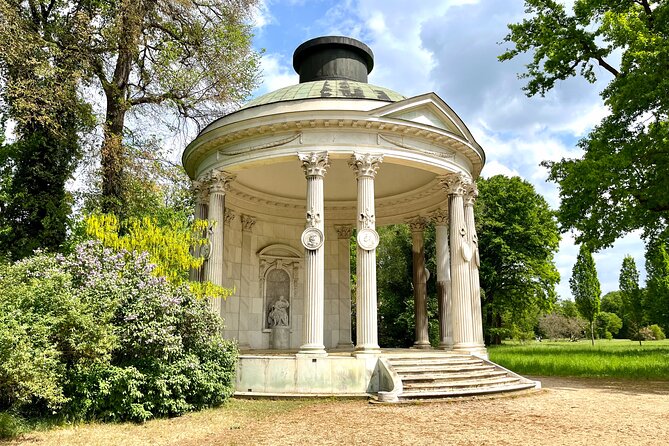
One standout is the Friendship Temple, designed as a more intimate meeting place, described as suited for a small tete-a-tete. It is the kind of stop that makes you understand why “pleasure gardens” existed. People did not only stroll. They met, watched, and arranged private experiences.
The day also includes the idea that every king’s child could have a castle, especially for Crown Prince and Crown Princess Elisabeth. That comes through in details like an oriental sultan tent embedded in a living room and the garden setting built for her mood and preferences.
Then there is a long, very royal connection: an avenue that measures about 2 kilometers, leading toward a smaller vineyard castle. Even if you do not walk the full thing, it helps you picture the park as an extended residence, not just an attraction.
Plan on about 45 minutes for the park time, and wear shoes you can trust.
New Palace at Potsdam: 600 rooms, hidden tech, and the Communs courtyards
If Sanssouci Palace feels like Frederick’s dream home, the New Palace feels like power staged at maximum scale. The guide explains it as “fanfanery,” a boasting statement meant to impress royal relatives. It is described as shining with 600 rooms, compared with the scale of Buckingham Palace.
What makes the New Palace story more interesting than “big building” is how it functioned. It was divided into apartments so royal relatives had a holiday home during visits, including reception rooms, music rooms, bedrooms, writing rooms, and even small bathroom cabinet arrangements.
Food gets handled in a very real way too. Kitchens were in separate common buildings called Communs. The guide uses this contrast to show how rank and smell shaped the architecture, with food often cold on arrival.
The most modern-feeling detail is the mechanical drive of an elevator for an empress. Yet it is hidden behind romantic architecture. An oriental building with a minaret acts as a cover, with the steam turbine chimney behind it. The electricity production still happening is part of the point, that the park includes actual infrastructure, disguised with style.
Expect the day to weave in other park essentials as well, such as grotto-style romantic features, and the guide will help you spot the design patterns that repeat across this vast complex.
Potsdam’s gates and Dutch Quarter: city texture beyond the palaces
Once you step out of the palace bubble, Potsdam becomes more human scale. The day includes the Brandenburg Gate in Potsdam, which is kept in classicism, similar in spirit to Berlin’s. But it has its own names and direction-based meaning, including the Jägertor concept connected to hunting grounds.
Then you see the Nauen Gate. It is one of four surviving gates, kept in medieval Romanesque style. It feels huge compared to Potsdam’s shorter buildings, and the square around it includes cafés and restaurants. This is a good place to break your walking rhythm.
The Dutch Quarter adds a different flavor entirely. In the 17th century, Dutch canal builders were brought in, and their accommodation is still visible in traditional Dutch style. The area is known for red clinker buildings that make you feel like you have slipped across to Holland for a moment.
This neighborhood is also where browsing feels natural, with small shops, crafts and antiques, plus bars and cafés. One review detail highlights a royal visit from Queen Beatrix, which adds a fun bit of context to why this quarter has stayed special.
The day continues into central Potsdam with a pedestrian-style main street and town-house ensembles, plus a geometric city layout designed to drift through the quarrés.
If you want more than palace highlights, this city time is where the tour becomes genuinely useful.
Potsdam City Palace, garrison church, and the art collections that replaced loss
War and ideology changed Potsdam, and the tour does not avoid that. You’ll see how the City Palace returned as the Prussian kings’ residence before Friedrich II, then suffered destruction and was later rebuilt so the baroque splendor could be restored.
Today, it is used by the state parliament in a way that brings the building back into public life. The external look and the inner courtyard matter here, but the guide’s stories help you connect the rebuilding to what the city wanted to preserve.
Another key stop is the garrison church, which catches your eye because it rises above the surrounding old-town houses with a dome and colonnades. It had completely disappeared and later recreated, supported by patrons including Günter Jauch and Hasso Plattner, whose collection found a home in a rebuilt noble palace setting.
This part of the tour is valuable even if you are not a museum person. It explains why Potsdam looks like it does today, instead of asking you to memorize history dates.
Cecilienhof Palace: the Potsdam Conference room where the war’s end was argued
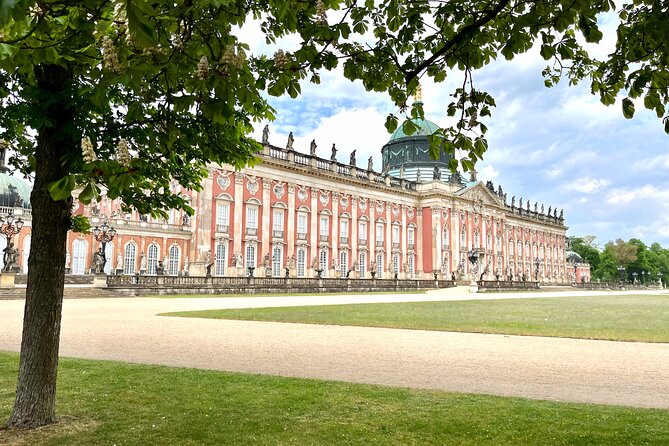
Cecilienhof Palace is a highlight. It is described as the youngest of the Prussian palaces, built for the Crown Prince and Crown Princess, Cecilie von Braunschweig, with the marriage in 1913 right before World War I.
Architecturally, it looks like an English country house. Under the surface, it was already modern for its era, with central heating and bathrooms. Inside, there is even a ship cabin style look room.
But most visitors focus on the 1945 Potsdam victors’ conference, where Stalin, Truman, and Churchill negotiated the post-war world. The conference room is still furnished as it was then, and the outdoor facilities remain part of the visit.
This is where your day hits a different emotional note. Sanssouci is about display and taste. Cecilienhof is about decisions with consequences. A guided day helps you keep both realities in the same frame.
Glienicke Bridge and the Italian patio pause by the lakes
On the route to and from Potsdam, the tour includes the Glienicke Bridge. It is a bridge with history and action. It was closed for about 40 years as the border between West Berlin and the GDR, and it became famous for covert spy agent and prisoner exchanges between the US and the Soviet Union.
This is also why the bridge inspired Hollywood as an authentic film backdrop.
Nearby you get a palace sight that is hard to miss, described as on the Berlin side, with a pretty patio set up like an optics-of-a-roundabout. The design is Italian style. The guide also connects the view across the lake to Potsdam, with the Crown Prince’s brother Carl looking out across the water.
Opposite is the New Garden with the Marble Palace, also described as Italian style. There was even a separate casino for entertainment. It is a good capstone to the day because it connects lakes, palace gardens, and political history in one stretch of road.
Timing, walking, and what to bring so the day stays enjoyable
A day like this works when you pace it. You will do short stops such as 10 to 30 minutes at windmill and palace areas, then longer scenic time in Sanssouci Park and New Palace grounds. That means you should plan for uneven terrain and real walking.
Wear good walking shoes, not sandals. Parks include mostly unpaved paths, so traction matters. Also bring a light layer. Even in warm months, park shade changes your comfort quickly.
Snacks are not included, so plan for water and something small. You may find a café break during the Dutch Quarter time, and you should feel free to request what kind of food stop you want. One review mentions adding a meal in the Russian Colony of Alexandrowka, so if that is on your wish list, ask during the planning.
A practical perk: Gunter takes photos of your group at the key sites and shares them with you afterward, which means you can focus on the places, not constantly posing.
Who this Potsdam taxi tour is best for
This private tour fits well when you want a clear plan without losing flexibility. It is also ideal if you like architecture, palace interiors, and the way rulers used style to signal power.
It is especially good for:
- Couples or solo travelers who want a private pace
- People who care about the stories behind design details, not just names
- Visitors with limited time in Berlin who still want to experience Potsdam’s main complex properly
It may be less ideal if you want long, unstructured free time. This day is packed, and while there are breaks, you will be moving through a lot of highlights.
Also think about ticket planning. Some palace and park attractions require paid admission, unless you book the Sanssouci+ option. If you hate ticket surprises, make your choice in advance.
Should you book this private Potsdam and Sanssouci taxi tour?
I would book it if you want the biggest Potsdam highlights with a guide who explains why each building exists. The combination of Sanssouci Palace, park storytelling, the New Palace scale, Cecilienhof’s 1945 conference context, and a city walk through gates and the Dutch Quarter is exactly what makes a guided private day valuable.
I would not book it if you are only interested in one or two sites and want a mostly self-guided half-day. In that case, a shorter plan with fewer ticket decisions could be smarter.
Given the 5 out of 5 rating across 30 reviews and the fact that people consistently praised Gunter’s architecture and history connections, this tour is a strong bet for getting your head around Potsdam quickly and enjoying it along the way.
FAQ
How long is the private taxi tour to Potsdam and Sanssouci?
It runs about 6 to 8 hours, with a start time of 10:30 am.
Where does pickup happen?
Pickup is offered from your desired location in Berlin, like your hotel or apartment. You will be guided to wait outside your accommodation after the organizer sends an SMS or WhatsApp message.
Is this tour private or shared?
This is a private tour/activity. Only your group will participate.
What language is the tour offered in?
The tour is offered in English.
Are Sanssouci palace admissions included?
Admission is not included by default at the palace stops. If you book the Sanssouci+ option, admission fee for all castle tours is included.
What is included besides transportation?
Included items are pickup, an air-conditioned vehicle, parking fees, and the taxi ride and city tour taxes. A mobile ticket is also provided.
Are snacks included?
No. Snacks are not included, so you may want to bring water or plan a café break during the day.
What should we wear for the park walking?
Wear good walking shoes. The parks include mostly unpaved walking paths around the palaces.
Can families bring a baby stroller or a car seat?
A baby car seat (MaxiCosy) is available on request. Stroller use is also possible, but the stroller cradle must be removable and the frame foldable, and you should expect to allow extra space for luggage.
Are service animals or pets allowed in the vehicle?
Service animals are allowed. For pets, medium-sized dogs can lie on the floor in the rear, while large dogs can only go in the back, and then luggage space may be limited. Seating areas are taboo for animals unless they are in a suitable transport box.
Fresh on the arrivals board for Berlin

Private, compared.

Berlin Private Complete History All Day Walking Tour
Read our review →
Munich Private Tour with a Local – Highlights & Hidden Gems
Read our review →
Private Walking Tour Berlin Third Reich Hitler and World War II
Read our review →
Your private 3-hour Hamburg driving tour with a former policeman
Read our review →
Private Berlin: Iconic Sights and Hidden Gems Walking Tour
Read our review →
1.5-Hour Private Tour through Historical Old Town
Read our review →