
Reviewed · GUIDED WALKS IN BERLIN
Private Walking Tour Berlin Third Reich Hitler and World War II
Berlin hits you fast, then keeps talking. This private walk connects the places behind Hitler’s reign with major memorials that force you to think. You’ll get hotel pickup and drop-off, plus a guide who can slow down or speed up to match your group.
What I especially like is how the route mixes “how power worked” with “what that power did to real people.” You’ll see major sites tied to Nazi government and terror, then move into remembrance places like the Memorial to the Murdered Jews of Europe and the Holocaust-related story around Anhalter Bahnhof.
One consideration: this tour is emotionally heavy and very focused on state violence. If you prefer a lighter, mostly architectural day, you may want a different Berlin route.
In This Review
- Key highlights worth marking on your map
- A Berlin “Third Reich” tour that moves with purpose
- Price and logistics that affect your day
- Stop 1: Soviet Memorial Tiergarten, victory with a heavy shadow
- Stop 2: Detlev-Rohwedder-Haus and Wilhelmstraße’s administrative gravity
- Stop 3: Topography of Terror, repression in documents and space
- Stop 4: Bendlerblock and the German Resistance Memorial Center
- Stop 5: Bebelplatz, book burning and the cost of censorship
- Stop 6: Reichstag Building, the Reichstag Fire story and the return of democracy
- Stop 7: Memorial to the Murdered Jews of Europe, disorientation as meaning
- Stop 8: Führerbunker, standing above Hitler’s last refuge
- Stop 9: Anhalter Bahnhof, deportations and a chilling kind of “normal”
- Stop 10: T4 Memorial, the Nazi euthanasia program and human dignity
- Stop 11: Moltkebrücke, April 1945 and the Soviet crossing
- Stop 12: Wilhelmstraße again, the administrative engine and propaganda
- The real value after 3 to 4 hours
- Should you book this Berlin Third Reich walking tour?
- FAQ
- How long is the private walking tour in Berlin?
- Is hotel pickup and drop-off included?
- What language is the tour offered in?
- Are there admission fees for the stops?
- Does the tour run in bad weather?
- Can I cancel and get a refund?
Key highlights worth marking on your map
- Hotel pickup and drop-off so you start the day already inside Berlin, not wrestling transit.
- Private format means you can ask questions and set the pace, with no crowd pressure.
- Topography of Terror and Sachsenhausen-adjacent context, in Berlin form: repression, evidence, victims, and how systems scale cruelty.
- Resistance is included, not only perpetrators. You’ll visit the German Resistance Memorial Center at the Bendlerblock.
- Memorial design that messes with your instincts at the Memorial to the Murdered Jews of Europe.
- One stop with an extra ticket cost: the Reichstag Building admission is not included.
A Berlin “Third Reich” tour that moves with purpose
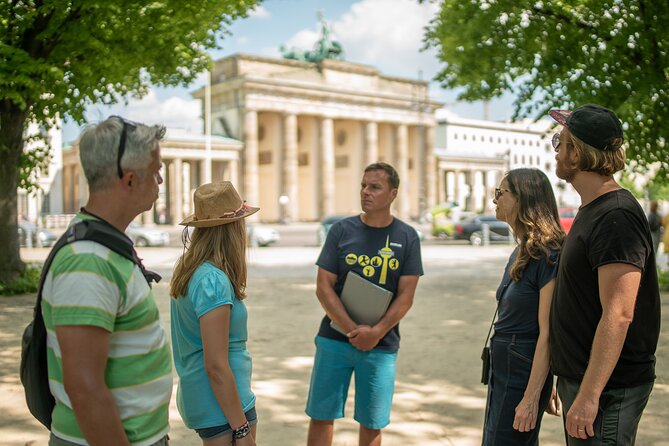
Berlin can feel like a city made for context. The streets look normal, then your guide connects them to decisions, propaganda, and fear. That is the real value here. You’re not just looking at plaques. You’re learning how Nazi power turned into violence, step by step, in the middle of the German capital.
This is also a strong option if you like education with real human pacing. In the reviews, guides such as Emma, Jasper, Simon, and Georgia are praised for explaining clearly and tailoring the tour. I like that this is private, so if your group has questions, you can spend a few extra minutes where it matters to you.
More Guided Walks in Berlin
- Discover Berlin Half-Day Walking Tour
★ 5.0 · 9,624 reviews - Berlin City walk Government District and Places of Democracy
★ 4.7 · 8,467 reviews - Berlin: Third Reich & Cold War Guided Walking Tour
★ 4.9 · 8,378 reviews
Price and logistics that affect your day
At $192.97 per person for a private walking tour lasting about 3 to 4 hours, the price is not a “cheap morning stroll.” But it is easier to justify when you look at what’s included.
You get professional guide time plus hotel pickup and drop-off, and most stops have free admission tickets. The only major exception noted is the Reichstag Building, where admission is not included. That matters for budgeting, because it is the one place you may still pay an extra ticket once you’re there.
Operationally, it runs in all weather conditions. You will be outdoors enough that you should dress like Berlin in season, not like Berlin in a travel brochure. One review mentions being cold around 20 degrees, so layers are not optional.
Stop 1: Soviet Memorial Tiergarten, victory with a heavy shadow
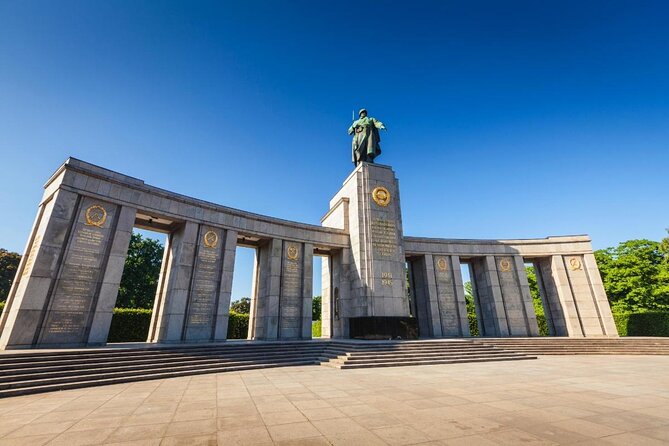
You start at Soviet Memorial Tiergarten, inaugurated in 1949. The guide frames it in the context of the Battle of Berlin in 1945, when Soviet forces fought their way into the city. The architecture is striking, including a large statue of a soldier holding a sword and a shield, meant to symbolize victory and sacrifice.
Why this stop works early: it sets up the ending that followed the regime. Before you walk the Nazi story sites, you understand that Berlin paid for this power with mass violence from multiple directions.
Practical note: it’s short, about 10 minutes, and it’s free. Treat it like a tone-setter. If your group needs a moment to breathe, this is a good place to do it.
Stop 2: Detlev-Rohwedder-Haus and Wilhelmstraße’s administrative gravity
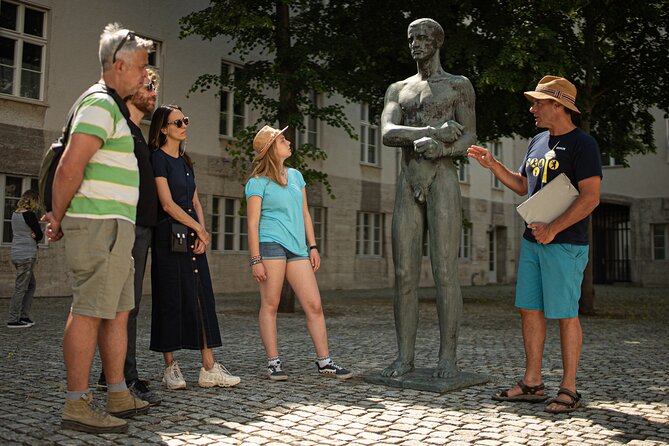
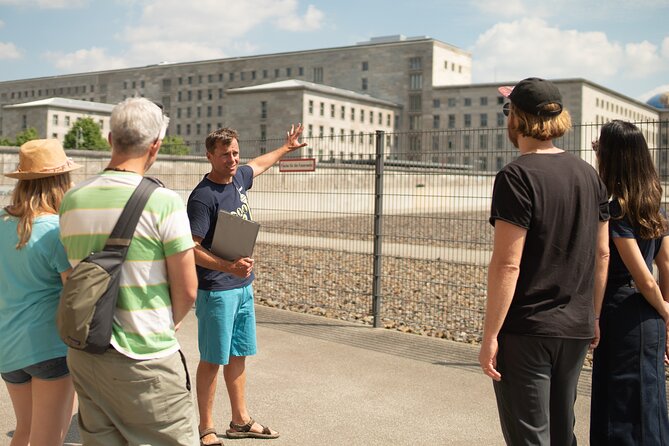
Next comes Detlev-Rohwedder-Haus on Wilhelmstraße. Originally built in the 1930s as Reichsbank headquarters, it later served as the Ministry of Aviation under Hermann Göring. After World War II, it became the German Federal Treasury.
This building matters because it shows how institutions reused space. A headquarters becomes a ministry. A wartime bureaucracy becomes a state treasury. Your guide helps you see how the same walls carried different official purposes, not just different leaders.
This stop is about 10 minutes and free. It’s also a reminder that Wilhelmstraße is often called the center of Nazi government for a reason: it’s the corridor where policy moved.
Stop 3: Topography of Terror, repression in documents and space
Topography of Terror is the moment the tour turns from explanation to evidence. The exhibition covers the rise of the Nazi regime and the political repression that followed. It explains methods of terror used against dissenters, using photographs, documents, and testimonies.
You’ll experience it as both indoor and outdoor exhibition space, on the grounds of the former SS and Gestapo headquarters. About 20 minutes here is realistic because you will want breaks, even if you keep moving.
What I like is that it’s not only about ideology. It focuses on the mechanics of repression, which makes later memorial stops hit harder. One drawback: since the topic is dark, you may feel mentally overloaded if you push too fast. If you need it, ask your guide for a short pause. This is a private format, and that time helps.
Further Third Reich and wartime history tours:
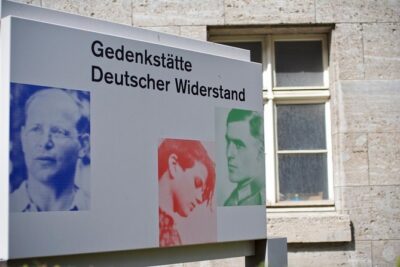
Stop 4: Bendlerblock and the German Resistance Memorial Center
Then you get something essential: German resistance. At the German Resistance Memorial Center in the Bendlerblock, you’ll learn about resistance movements and key figures, including Claus von Stauffenberg, tied to the July 20, 1944 assassination attempt on Hitler.
This is not a triumphal stop. Your guide emphasizes motivations, actions, and consequences. That includes how tyranny punishes even the “right idea,” and how courage still leaves people paying a brutal price.
It’s about 20 minutes and free. If you have teenagers or curious first-time visitors, I think this is the stop that makes the tour feel balanced. It proves you can discuss evil without turning the whole day into a one-note story of doom.
Stop 5: Bebelplatz, book burning and the cost of censorship
At Bebelplatz, the theme becomes censorship and the control of ideas. You’ll hear about the book burning on May 10, 1933, when thousands of books described as “un-German” were destroyed by the Nazi regime.
Your guide ties that to surrounding landmarks, including the State Opera House and Humboldt University, and then to the memorial underneath the square: empty bookshelves symbolizing lost literature.
This stop is only about 10 minutes and free, but it hits because it’s not abstract. When a regime targets books, it targets thinking. If you’re someone who cares about civil rights today, this connection is hard to miss.
Stop 6: Reichstag Building, the Reichstag Fire story and the return of democracy
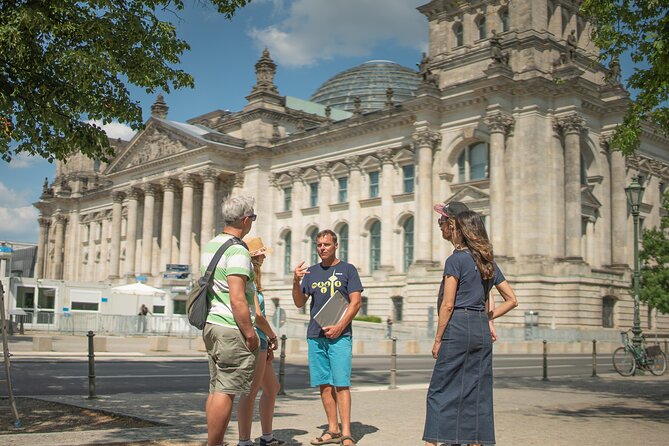
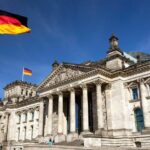
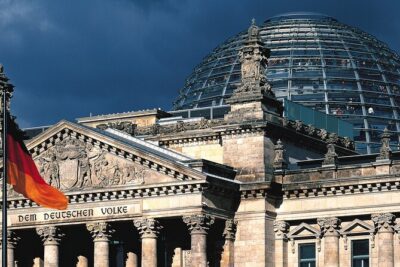
You’ll visit the Reichstag Building, completed in 1894. During the Nazi rise, the building became central in Germany’s political life. Your guide covers the Reichstag Fire in 1933, which the Nazis exploited to consolidate power and suppress opposition.
World War II left the building heavily damaged, and it was later restored as a symbol of democracy. That arc is part of why this stop is more than a photo op. You’re watching a national building get redefined.
Timing here is about 15 minutes, and admission is not included. Budget for it if this stop is a must for your group. If you prefer to avoid surprise costs, ask your guide ahead of time how to plan for it.
Stop 7: Memorial to the Murdered Jews of Europe, disorientation as meaning
Next is the Memorial to the Murdered Jews of Europe. It’s officially the Memorial to the Murdered Jews of Europe, and the design is the message: 2,711 concrete slabs in a grid, with varying heights that create a disorienting experience.
Your guide explains the design’s significance and the historical context of the Holocaust, including the impact of Nazi policy on European Jewry. The goal is not only remembrance. It’s to make sure the complexity of memory stays in your mind, not on a checklist.
Plan for about 15 minutes and free entry. This is one of the best stops to slow down. Move at a normal walking pace, but don’t rush the emotional weight the design creates.
Stop 8: Führerbunker, standing above Hitler’s last refuge
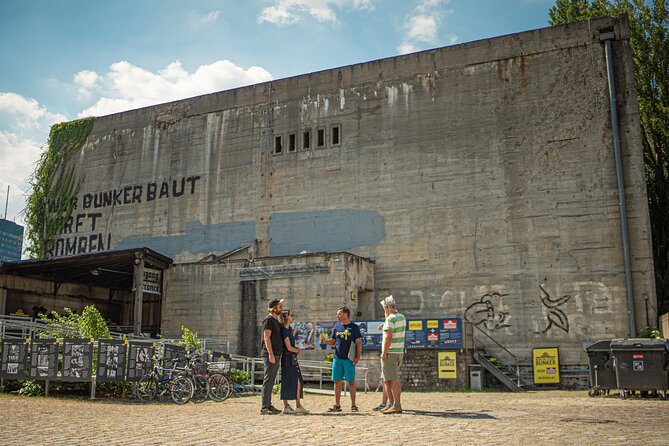
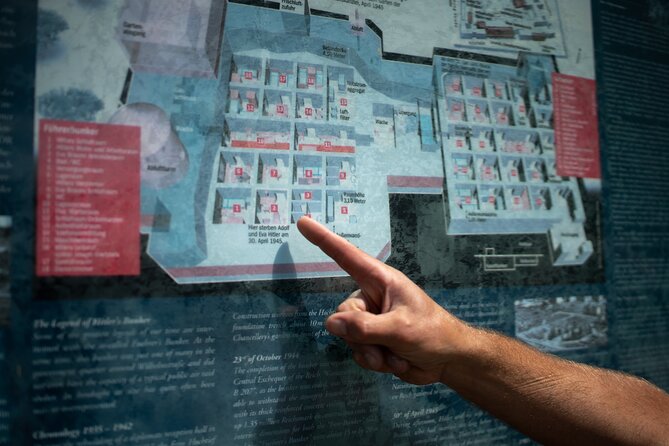
You’ll then stand above Führerbunker, the underground complex beneath the Reich Chancellery that served as Adolf Hitler’s last refuge during the final months of World War II.
Your guide explains the bunker layout and why it mattered as Allies closed in on Berlin. You’ll hear about the despair atmosphere and key decisions made in those final days.
A lot of the original structure was destroyed after the war, so this is not a museum room. It’s a reminder of what secrecy and power looked like when the end came.
Timing is about 10 minutes and free. If you tend to get restless on short stops, this one can still feel long in the best way, because it’s asking you to imagine decisions made below your feet.
Stop 9: Anhalter Bahnhof, deportations and a chilling kind of “normal”
At Anhalter Bahnhof, the day turns toward logistics, the way persecution used transit and schedules. The station was once one of Berlin’s busiest terminals. In the Nazi era, it played a role in the deportation of Jews to concentration camps, acting as a departure point for many families.
Today, it’s a haunting reminder, with memorials and exhibits that commemorate victims. Your guide shares stories of people who passed through its gates and places that story in a broader context of persecution.
This stop is about 10 minutes and free. If your group likes history that connects directly to how systems worked, you’ll likely rate this as one of the strongest stops. One caution: if you are sensitive to Holocaust themes, give yourselves extra time to recover after this one.
Stop 10: T4 Memorial, the Nazi euthanasia program and human dignity
Then comes the T4 Memorial for the Victims of the Nazi Euthanasia Program on Tiergartenstraße 4. This commemorates victims of the T4 program, a Nazi campaign aimed at the systematic extermination of people considered unworthy of life. It targeted individuals including those with disabilities and mental illnesses.
Your guide explains the history and impact through informative displays and shares stories of victims. It also leads you into broader implications and ethical questions, with an emphasis on remembrance and preventing similar atrocities.
Timing is about 10 minutes and free. This stop is short, but it’s heavy enough to deserve your full attention. If you feel yourself getting numb, tell your guide. A good guide will adjust pacing without making you feel awkward.
Stop 11: Moltkebrücke, April 1945 and the Soviet crossing
At Moltkebrücke, you walk over the bridge and learn why it became strategically important in the final days of the war. In 1945, Soviet forces crossed it during their assault on Berlin, marking a pivotal shift.
Your guide recounts events from April 1945 and describes how the bridge served as a critical route for advancing troops. It’s also a moment to think about how cities are changed not only by battles, but by movements and routes.
About 10 minutes and free. If you like military history, you’ll probably enjoy the clarity here. If you prefer political history, it still works because it shows how power collapses through physical geography.
Stop 12: Wilhelmstraße again, the administrative engine and propaganda
Finally you spend time walking Wilhelmstraße, described as a central avenue for Nazi administration. Your guide points out key sites along the way, including connections to the Detlev-Rohwedder-Haus and how various ministries and offices operated there.
You’ll also hear about military parades and propaganda rallies that helped solidify Nazi control. This stop helps you stitch together earlier places into a bigger picture of how policy, performance, and coercion all lived in the same urban space.
Timing is about 20 minutes and free. If you’ve felt mentally busy by now, this is a good place to ask a question about how the regime maintained control. Your guide can often translate the “how” into something you can remember later.
The real value after 3 to 4 hours
By the end, you’re not just tired. You’re clearer. You can connect the dots between Nazi government sites, terror institutions, resistance, censorship, and the memorial landscape that Berlin has built since the war.
I also like the way this format encourages follow-up. One review mentions going back the next day to revisit Topography of Terror and the Holocaust Memorial in more detail. That’s a smart strategy: this tour gives your brain a map, then you can return for the parts you can’t forget.
And you’ll likely leave with practical mental hooks. When a guide like Simon gives tips for what to revisit, or when Georgia shapes the tour from the start point and adjusts pacing, it means your day stops being a random checklist and becomes a planned narrative.
Should you book this Berlin Third Reich walking tour?
Book it if you want a private, structured route through Berlin’s most important Nazi-era locations and memorials, with hotel pickup and mostly free admissions. It’s especially worth it if you’re the kind of person who likes asking questions and getting context, not just collecting landmarks.
Skip it or choose a lighter alternative if your group struggles with heavy Holocaust and state violence themes, or if you want mostly art, shopping, or casual sightseeing. This day is about memory and understanding. It’s not meant to be fun, but it can be meaningful and deeply educational when you’re ready for it.
FAQ
How long is the private walking tour in Berlin?
It runs about 3 to 4 hours.
Is hotel pickup and drop-off included?
Yes. Hotel pickup and hotel drop-off are included.
What language is the tour offered in?
The tour is offered in English.
Are there admission fees for the stops?
Most stops list free admission tickets, but the Reichstag Building admission is not included.
Does the tour run in bad weather?
Yes. It operates in all weather conditions, so dress appropriately.
Can I cancel and get a refund?
Yes. You can cancel for a full refund up to 24 hours in advance. If you cancel less than 24 hours before the start time, the amount paid is not refunded.
Cities at Walking Speed
- Berlin: Discover Berlin Walking Tour
★ 4.9 · 5,998 reviews - Berlin: Hidden Backyards Guided Walking Tour
★ 4.8 · 5,360 reviews - Berlin: Alternative Berlin Walking Tour
★ 4.6 · 1,204 reviews - Berlin: City Street Art Guided Walking Tour
★ 4.8 · 1,051 reviews
Fresh on the arrivals board for Berlin
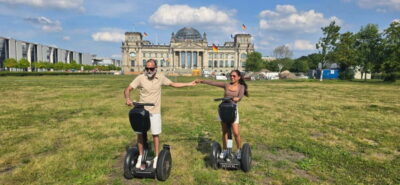
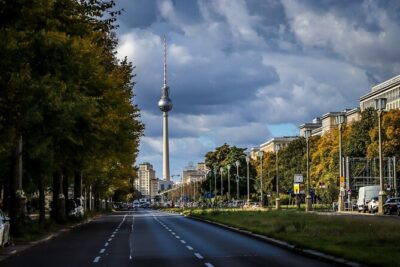


Guided Walks in Berlin, compared.
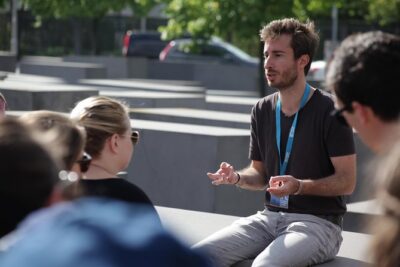
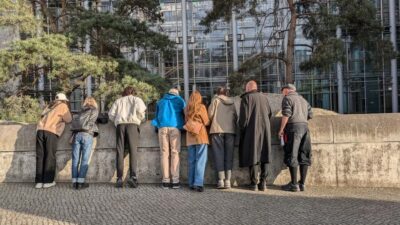
Berlin City walk Government District and Places of Democracy
Read our review →
Berlin’s Best: 2 Hour Walking Tour Third Reich and the Cold War
Read our review →
Third Reich Berlin: Hitler and WWII Walking Tour
Read our review →
Browse the lists this tour appears in