
Reviewed · GUIDED WALKS IN BERLIN
Berlin Private Complete History All Day Walking Tour
Berlin can feel like two cities at once.
This private all-day-style walk strings together the big WW II and Cold War sites, then adds the human stories that make them make sense. I like that it is private, so your guide can keep the pace and questions tailored. I also like that the route hits major anchors like the Brandenburg Gate, Museum Island, and Checkpoint Charlie without wasting your day on transport.
My one caution is simple: this is a real walking day with frequent stops and some emotional content. If your legs need frequent breaks, plan for it and tell your guide early.
In This Review
- Key Highlights Before You Go
- A Private Berlin History Walk That Stays Focused (And Walkable)
- Why WWII and Cold War Landmarks Work So Well in One Day
- Brandenburg Gate and the Reichstag: Symbols That Kept Changing Meaning
- Tiergarten to the Holocaust Memorial: When the Setting Gets Personal
- Fuhrerbunker, Elser, and Aviation Ministry: Following the Threads to the End
- Topography of Terror and the Wall: Where History Feels Like It’s Still Underfoot
- From Friedrichstraße to Gendarmenmarkt: Cold War Edges to Beautiful Squares
- Bebelplatz, Humboldt University, and Neue Wache: Ideology Meets Learning
- Museum Island, the Humboldt Forum, and St. Mary’s Church: A Complex Story in Stone
- Alexanderplatz Finish: DDR Rebuilding in Your Final View
- Price and Value: What You Pay for in a $253.95 Private Day
- Who Should Book This Tour (And Who Might Skip It)
- Should You Book Birchys Berlin Tours for This Complete History Walk?
- FAQ
- How long is the Berlin Private Complete History All Day Walking Tour?
- Where does the tour start and end?
- Is this tour private?
- Is pickup offered?
- What language is the tour offered in?
- Are food and drinks included?
- Is there admission cost for the stops?
- What is the cancellation policy?
Key Highlights Before You Go
- A private guide for undivided attention, not a crowd shuffle.
- World War II and Cold War heavy-hitters in one efficient loop through central Berlin.
- Most stops are free to access as listed, so you are not stacking ticket costs.
- Real geography on foot, from DDR-era rebuilding to Wall remnants.
- Photo-friendly moments, and yes, you can ask for help getting a good shot.
- Multiple guides have strong WWII/Cold War credibility, including Ciaran Ryan, Rhys, Eugen, Paul, and Beth.
A Private Berlin History Walk That Stays Focused (And Walkable)
This is a private walking tour in Berlin, timed for a full day of landmarks without using vehicles. You meet near Ebertstraße 24 in Mitte (10117), then the tour winds down at Alexanderplatz. Pickup is on foot with your guide, so think of this as starting with a short orientation and then committing to a steady walk through central sights.
The big value of private here is how the day can flex. If you want more context at one stop, you can ask. If you want fewer details at another, you can usually trade depth for pace. In practice, that is what makes a long history day feel more like a conversation than a lecture.
One more thing I appreciate: it is offered in English with a mobile ticket. That keeps the day smooth, especially if you are starting on your first full day and want to get oriented fast. The tour runs about 6 hours, and the pace is set for your group, not for a stopwatch.
More Guided Walks in Berlin
- Discover Berlin Half-Day Walking Tour
★ 5.0 · 9,624 reviews - Berlin City walk Government District and Places of Democracy
★ 4.7 · 8,467 reviews - Berlin: Third Reich & Cold War Guided Walking Tour
★ 4.9 · 8,378 reviews
Why WWII and Cold War Landmarks Work So Well in One Day
Berlin is the kind of city where history sits on the street. A gate is not just a gate. A building is not just a building. A memorial is not just something you look at and move on from.
This tour is built around that idea. You are not only seeing iconic places, you are learning what each place meant during the moment it mattered most. The day leans heavily into World War II sites, then pivots to Cold War borders and the DDR rebuilding story, before ending with an education and culture finish around Museum Island.
Be ready for an emotional curve. You will visit the Holocaust Memorial, plus locations tied to the machinery of terror and the final days of Hitler’s rule. It is handled through context, symbolism, and stories, not shock value. Still, it is the sort of day where you may want to bring your own emotional pacing and accept that some stops hit harder than others.
Brandenburg Gate and the Reichstag: Symbols That Kept Changing Meaning
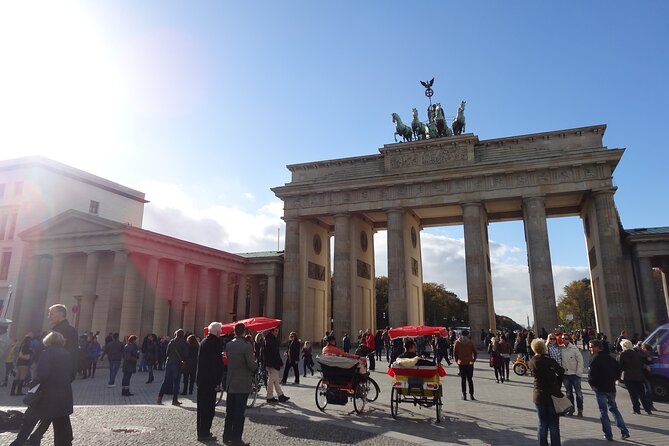
You start at the Brandenburg Gate, and your guide frames it as more than a photo spot. It is tied to why it was constructed in the first place, then to how it became a focal point for the Berlin and Germany that were reshaped again and again after construction. During the Cold War, it also became a symbol of divided Berlin, which helps you understand why the gate feels so charged even in calm daylight.
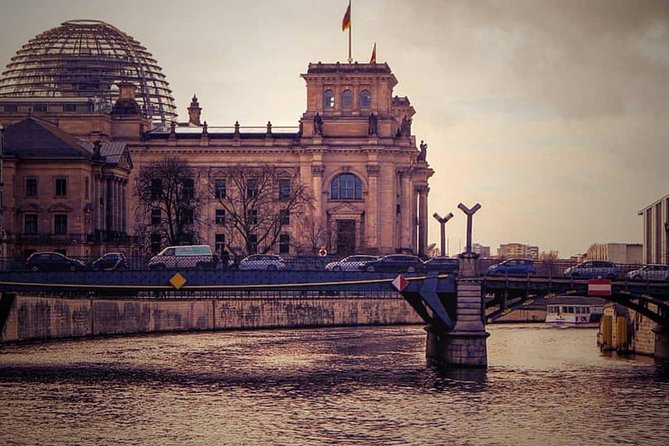
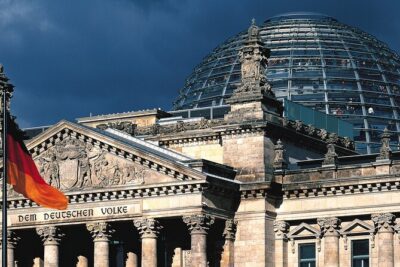
Next comes the Reichstag Building. Expect a straight shot at the symbolism, but with real specifics: the role of the Hohenzollerns, why the building mattered as Nazi dictatorship consolidated in early 1933, and how the building was involved in the brutal fighting at the end of the Soviet Battle of Berlin. If you think of it as only a German landmark, this part rewires that idea into something more grounded and unsettling.
Practical tip: ask your guide for a photo. The stops are short by design, around 10 to 15 minutes, but your guide can help you pick an angle and avoid wasting time. Also, if you love architecture, stick with the explanations for a few minutes longer. This is where details pay off.
Tiergarten to the Holocaust Memorial: When the Setting Gets Personal
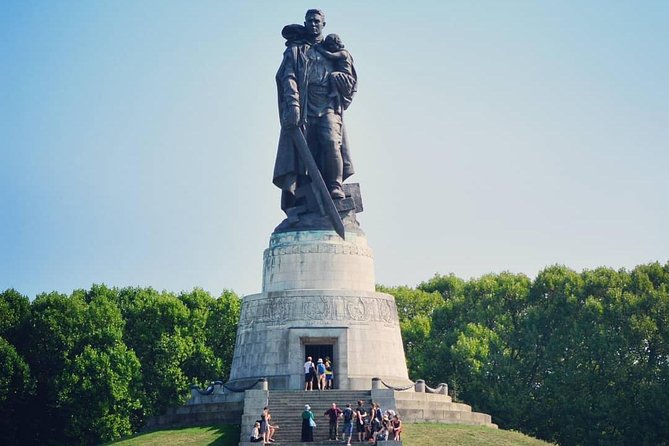
The next stretch moves into green space with the Soviet Memorial in Tiergarten. What surprised me conceptually about this stop is the tour’s focus on how West Berlin contained this memorial, plus the origin of materials used in its construction. That kind of behind-the-scenes detail makes the site feel less like a fixed monument and more like a historical statement that had to fit into a contested city.
Then you walk part of the Tiergarten itself, the large central park. This is a good reset after heavy sites, and it is not filler. You learn how the park developed from medieval times and how Berlin’s later events affected it too. It reminds you that Berlin’s history is not only about buildings. It is also about space, movement, and what city leaders chose to protect or transform.
From there, you look toward the Victory Column from a distance. From afar, it can feel like a generic landmark. But the guide’s talk about when and why it was constructed adds the political punch you would miss just by sight.
Finally, the day turns to one of the most important visits: the Memorial to the Murdered Jews of Europe. This is a substantial memorial, and the tour treats it as more than check-the-box. You get time to experience it and to understand what it represents, which matters a lot because this is not a site where “speed viewing” feels respectful.
Fuhrerbunker, Elser, and Aviation Ministry: Following the Threads to the End
Now the tour tightens around the late-stage story. You visit the area tied to the Fuhrerbunker. Even as a concept, it is a hard stop, but the guide frames it with the site’s infamous reputation as the place where Hitler spent his final days. The tone here is careful, historical, and specific enough that you are not just absorbing a headline.
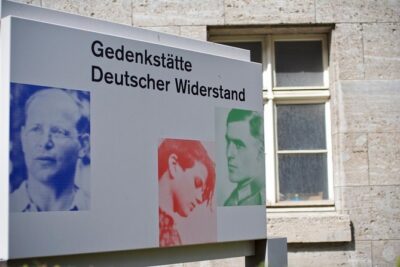
A quick turn to Johann Georg Elser brings in a different kind of WWII story, one that is both tense and thought-provoking. You hear about the man who came painfully close to changing world history. This stop helps you see resistance and consequences in a way that is not only about leaders and battles.
Then you move to the Aviation Ministry of Berlin, an imposing building in continuous use since 1936. That continuity matters because it makes the building feel like a witness to turbulent 20th century change rather than a relic left behind. In a city where many structures were reshaped, this is a reminder that not everything got wiped off the map.
If you are sensitive to the tone of late WWII, this sequence can feel intense. I like that it is short and structured, with time caps at each stop, so you can absorb without burning out.
More German cities at walking speed:


Topography of Terror and the Wall: Where History Feels Like It’s Still Underfoot
The tour then enters Topography of Terror, tied to the former SS, Gestapo, and SD headquarters. This stop is designed to be direct about what happened there during Nazi rule, then to cover what happened post-war with the site. It is one of those places where context turns the physical space into a moral lesson, not just an architectural one.
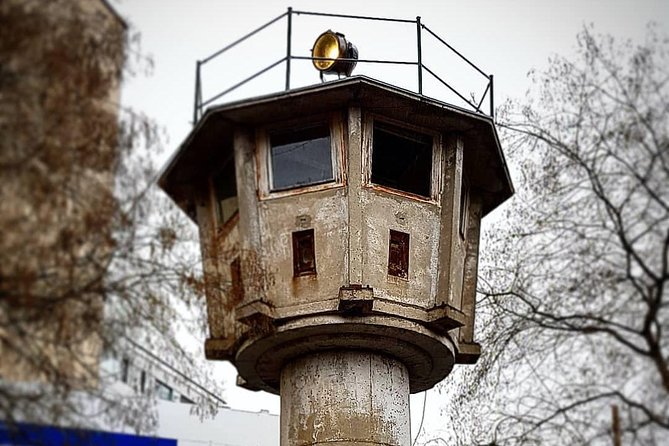
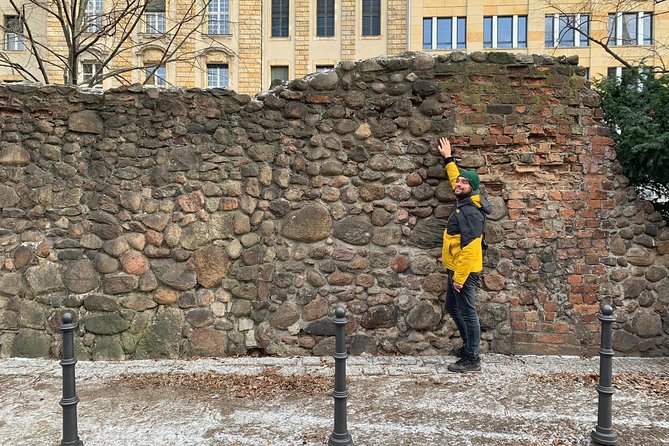
After that, you visit a section of the Berlin Wall and learn why and how it was constructed. The guide also shares stories of escapes and tragic deaths connected to attempted crossings. This is where the tour’s “walking geography” matters. When you stand near a remaining section, you can feel how the border shaped daily movement and risk.
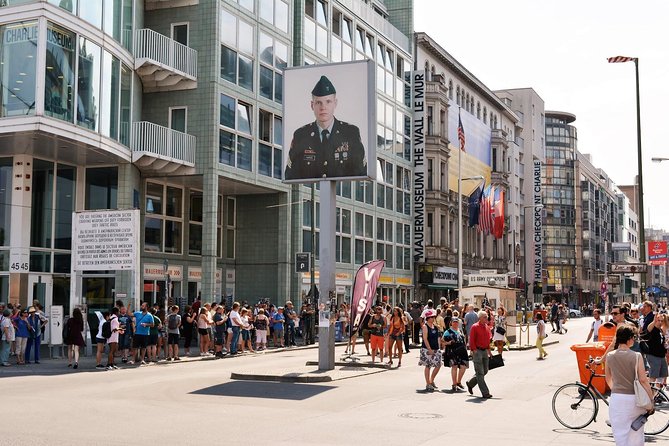
Next up is Checkpoint Charlie. This is the famous crossing point people recognize instantly, and it can be easy to treat it like a Cold War theme set. The tour avoids that by keeping it anchored to the real Cold War role of the site, and by explaining why it became iconic.
The pace here is usually quick, with a short visit at each major anchor. That is efficient, but it also means you should be ready to ask questions fast if something hits your interest. A private guide is ideal for that.
From Friedrichstraße to Gendarmenmarkt: Cold War Edges to Beautiful Squares
After the Wall and checkpoint, you walk down Friedrichstraße, once known as Cabaret Mile. This is a smart tonal change. It keeps the day from becoming only heavy monuments and shows how Berlin life and nightlife played into how people survived, remembered, and resisted.
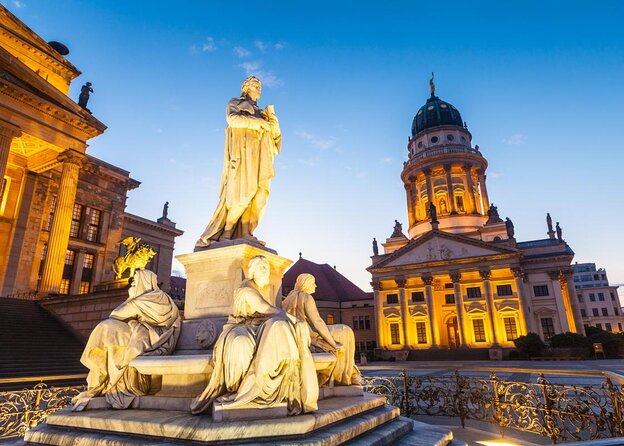
Then comes Gendarmenmarkt, a gorgeous square, and one that you might not think to visit on a strict history-only day. The tour connects its origins to how it developed into an architectural gem. It is a reminder that Berlin’s story includes culture and planning, not only destruction and division.
These stops also help you visually reset before the more academic sites around Bebelplatz and the university area.
Bebelplatz, Humboldt University, and Neue Wache: Ideology Meets Learning
You then reach Bebelplatz, surrounded by 18th century buildings. The tour connects key places around the square, including St. Hedwig’s Catholic Cathedral, Humboldt University law faculty, and the City Opera House. The big emotional pivot here is the site’s link to Nazi book burnings and the memorial present in the square.
It is one of the best parts of the tour for anyone who thinks about history as ideas, not only events. Destroying books is not just a symbolic act, it is a way to control what a society can learn and imagine. A guide can make that real fast.
Next is Humboldt University (Humboldt Universitat). You get the history of the university building and the story of the Humboldt family. This is an effective contrast after Bebelplatz because you are seeing how Berlin valued education, then how that value got attacked and rewritten.
Then you visit Neue Wache on Unter den Linden. The tour takes you inside and frames it as a political weathervane, with the current version functioning as a moving memorial. It is another “architecture with meaning” stop, and it helps you understand why Berlin’s memorial design often feels different from what you might see elsewhere.
Museum Island, the Humboldt Forum, and St. Mary’s Church: A Complex Story in Stone
The tour ends with a cluster of iconic cultural and architectural landmarks. You walk through Deutsches Historisches Museum area from the outside, and you learn about the oldest surviving building on Unter den Linden that is now home to the German History Museum.
Then you reach Museum Island, a UNESCO area. You get an explanation of how the island developed and how the museums, cathedral, and architects shaped what you see today. Even if you do not plan to enter every museum, this stop gives you a framework for what you will notice later.
After that is the Humboldt Forum, where you learn its complicated and surprisingly recent history. That phrase matters because it is a reminder that Berlin’s “old” is still being actively negotiated through restoration choices and public debate.
Finally, you visit St. Mary’s Church. The tour emphasizes its age, continuous use, and survival. It is the kind of stop that rewards a slow look, because church architecture tends to tell its story through small design choices you might miss when you are moving quickly.
Alexanderplatz Finish: DDR Rebuilding in Your Final View
To close the day, you end at Alexanderplatz, rebuilt post-war and known as the DDR capital center. This final stop lands the tour’s long arc: from WWII devastation and Nazi collapse, through Cold War division, to post-war rebuilding and the DDR worldview.
If you want an easy way to keep momentum after the tour, Alexanderplatz is practical. It gives you a big transport hub and lots of places to wander next, depending on your interests and energy level.
One practical consideration: by the time you reach the end, you might feel like you have already seen too much. That is normal after a 6-hour loop of major anchors. Give yourself an hour later in the day for slower walking so the day’s details can actually settle in.
Price and Value: What You Pay for in a $253.95 Private Day
At $253.95 per person for about 6 hours, you are paying for a private guide and an efficient route through central Berlin’s top WWII and Cold War sights. This only feels “expensive” if you compare it to casual group tours. Compared to what you get here, it is often fair value.
Here’s why. First, it is private, so your guide can answer questions and adjust pacing. That matters most on a history-heavy day. Second, the tour includes stops where admissions are listed as free for the stops themselves, so you are not piling on ticket costs at each location. Third, you are not paying for transportation because it is walking-based, and that is a real saving if you would otherwise take taxis or transit between distant anchors.
What is not included is food and drinks, so you should budget for lunch on your own. Also, because the tour is walking and structured, you should plan for comfortable shoes and a water bottle. The day can feel long if you treat it like a sightseeing stroll.
For solo travelers, couples, and small groups, private walking is often the best match. You get a tailored experience without the awkwardness of asking a big group to slow down for questions.
Who Should Book This Tour (And Who Might Skip It)
This is a great choice if you:
- Want a fast start to Berlin on your first or second day and need your bearings.
- Care about WWII and Cold War context, not just famous landmarks.
- Like asking questions and getting specific answers tied to what you are seeing.
- Prefer a private day where the guide can adapt to you.
You might think twice if you:
- Struggle with long walking days or frequent stop-and-go.
- Want a lighter, more casual sightseeing vibe. This tour is history-forward, with several intense stops.
- Get overwhelmed by memorial sites. You can still do the tour, but go in with expectations and your own pacing.
Should You Book Birchys Berlin Tours for This Complete History Walk?
I think you should book it if your goal is to understand Berlin in layers, especially the WWII and Cold War pieces that sit right in the city center. The private format and tight selection of major sites make it one of the most efficient ways to turn a day of walking into a day with clear meaning.
If you book, do yourself a favor: wear shoes you can tolerate for a long day, bring water, and be ready to ask your guide questions when a stop connects to what you already know. That is when the tour turns from informative into genuinely memorable.
FAQ
How long is the Berlin Private Complete History All Day Walking Tour?
It lasts about 6 hours.
Where does the tour start and end?
It starts at Ebertstraße 24, 10117 Berlin, Germany and ends at Alexanderplatz, 10178 Berlin, Germany.
Is this tour private?
Yes. It is a private tour, so only your group participates.
Is pickup offered?
Pickup is offered on foot with the tour guide. You’ll meet at the start location.
What language is the tour offered in?
The tour is offered in English.
Are food and drinks included?
No. Food and drinks are not included.
Is there admission cost for the stops?
The tour listing indicates that admission tickets for the stops are free.
What is the cancellation policy?
You can cancel for a full refund up to 24 hours in advance of the experience start time. If you cancel less than 24 hours before, the amount paid is not refunded.
Centuries Per Block
- Berlin: Natural History Museum Entrance Ticket
★ 4.6 · 3,382 reviews - Berlin: 3-Hour World Heritage Cruise to Potsdam
★ 4.5 · 1,569 reviews - Berlin: History of the Third Reich Guided Walking Tour
★ 4.7 · 791 reviews - Berlin: Berlin Charité Guided History Tour
★ 4.4 · 660 reviews
Fresh on the arrivals board for Berlin



Guided Walks in Berlin, compared.
Berlin City walk Government District and Places of Democracy
Read our review →
Berlin’s Best: 2 Hour Walking Tour Third Reich and the Cold War
Read our review →
Third Reich Berlin: Hitler and WWII Walking Tour
Read our review →
Browse the lists this tour appears in