Reviewed · PRIVATE
Private Taxi Tour of Berlin East and West and Neighbourhood approx. 4-6h
Berlin tells its story fastest by car. This private taxi tour strings together East and West landmarks in 4 to 6 hours, with English commentary and frequent chances to step out.
I like the door-to-door pickup within the S-Bahn ring because it saves you from figuring out buses and traffic. I also like the stop style, quick but purposeful, so you see major sites like the Brandenburg Gate, the Wall stretches, and the East Side Gallery without spending your whole day in transit.
One consideration: because it is still a taxi day, you cannot count on long museum time at every stop, and the vehicle can feel tight for a full group of four.
In This Review
- Key highlights I’d plan around
- Price and value for a 4 to 6 hour East-West day
- How the pickup zone and timing shape your day
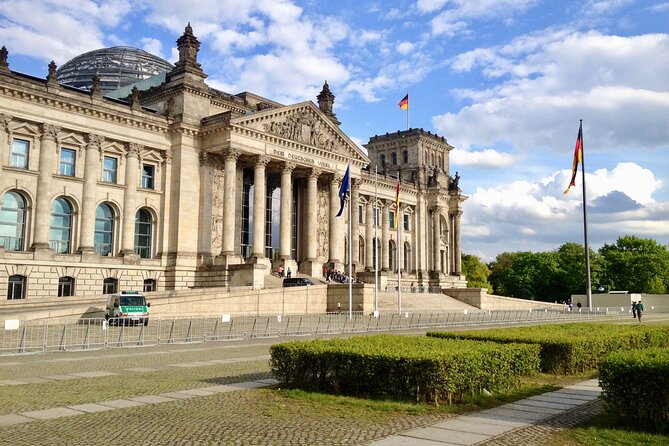
- The Reichstag to Brandenburg Gate corridor, where Berlin shows off its reinvention
- Wilhelminian era to modern Bundestag
- Brandenburg Gate, Berlin’s most photographed “problem”
- Following Berlin’s modern parliament spine, then stepping toward the Wall story
- The parliament building as a working machine
- The chancellery and the journalist viewpoint
- The border returns in the port area
- Hauptbahnhof to Friedrichstraße: rail power, escape routes, and daily movement
- Berlin Hauptbahnhof, massive and practical
- Bahnhof Friedrichstraße and the Wall’s logic
- Unter den Linden and the state boulevard, architecture as ideology
- Soviet-era dominance in the diplomatic core
- Forum Fridericianum and book-burning memory
- Neue Wache memorial space
- Gendarmenmarkt and the German-French duality, Berlin’s postcard perfection with real meaning
- Synagogue, German Historical Museum, and Hackescher Höfe for culture with texture
- The New Synagogue area
- German Historical Museum location and the story in the walls
- Hackescher Höfe, Berlin’s restored Art Nouveau courtyard buzz
- Humboldt Forum and the Berlin Palace rebuild logic
- Nikolaiviertel, Red City Hall, and the Spree old-town zoom effect
- Nikolaiviertel as reconstructed old Berlin
- Red City Hall in the wider civic story
- Wall remnants, Topography of Terror, and Checkpoint Charlie moments that matter
- Topography of Terror
- Niederkirchnerstraße and wall perforation
- Checkpoint Charlie, what you can see and what you should know
- East Side Gallery and the Oberbaum Bridge, where the Wall turned into public art
- East Side Gallery
- Oberbaum Bridge, a border you can still picture
- West Berlin icons: Kurfürstendamm, KaDeWe, and Kaiser Wilhelm Memorial Church
- Ku’damm and the shopping boulevard feeling
- KaDeWe food level, a Berlin ritual
- Kaiser Wilhelm Memorial Church and surviving a war by partially keeping it
- Kulturforum and Mies van der Rohe’s metal-roof modern gallery moment
- National Gallery and the no-internal-wall concept
- Sony Center at Potsdamer Platz, and the trick of relocation
- Should you book this East-West taxi tour?
- FAQ
- How long is the Berlin East and West private taxi tour?
- Is pickup included, and where does it cover?
- What language is the tour offered in?
- Is this a private tour or shared?
- What’s included in the price?
- What is not included?
- Are child seats available?
- Do I need tickets for museums and major stops?
Key highlights I’d plan around
- A true private taxi experience in an air-conditioned vehicle, not a crowded hop-on hop-off bus.
- Pickup inside the S-Bahn ring is included, with near-city meeting convenience.
- Short walk stops at the big hitters, plus photo-friendly positioning.
- English guide and onboard WiFi, so you get context instead of just passing landmarks.
- Comfort-first pacing that can work well if you do not want extended walking.
Price and value for a 4 to 6 hour East-West day
The cost is $179.82 per person for a 4 to 6 hour private taxi tour. That sounds high until you compare it to what Berlin can cost you in time and energy: distances are long, roads change, and parking near landmarks can be a headache. This is built to solve that problem.
What you are really paying for is efficiency plus comfort. You get air-conditioned private transportation, WiFi on board, and parking fees handled. The tour price also includes the taxi tariff and the city tour pricing (with VAT built in), which means you are not later trying to guess what the driver charges are for.
Value can also depend on your expectations. If you want a quick orientation and a guided narrative across Berlin’s key political, cultural, and Wall-era places, this is strong value. If you want deep time inside a bunch of museums, you may find the pace pushes you to choose.
Also holding a platform in Berlin
- Berlin: Reichstag, Dome and Government District Guided Tour
★ 4.7 · 18,288 reviews - Berlin: 1-Hour City Tour by Boat with Guaranteed Seating
★ 4.3 · 16,993 reviews - Berlin: TV Tower Standard Entrance Ticket
★ 4.4 · 15,883 reviews
How the pickup zone and timing shape your day
Pickup is offered within the S-Bahn ring, described as about 5 km around the center near the Brandenburg Gate. That matters because it sets expectations. You can usually start right in the action, without a long taxi bill to reach the historical core.
You will also move through areas where streets can feel complicated. That is why this tour leans on a mix of:
- roadside views from the taxi,
- brief get-out moments near key structures, and
- optional longer breaks at a few stops when time and traffic cooperate.
In practice, that means your day can feel smooth if you come with priorities. If you have must-see items, tell the guide early so the routing can match your energy level and interests.
Tip: the tour includes mobile ticketing and free admission is marked for several stops, but not every stop is the same kind of visit. Ask in advance which stops are the ones you can actually enter, so you do not waste time hovering outside.
The Reichstag to Brandenburg Gate corridor, where Berlin shows off its reinvention
Your day often begins in the parliamentary and government zone, where buildings tell you how Germany has rewritten itself over and over.
Wilhelminian era to modern Bundestag
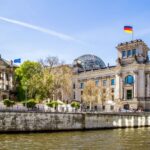
One of the most interesting contrasts is the way the old political symbolism was treated after the war. You hear the story of a once-messaged building, later ignored in West Berlin, then transformed for the reunified Bundestag. The Reichstag dome becomes a metaphor for the new Berlin: the updated glass reflects modern transparency, even if the structure itself carries older scars.
Brandenburg Gate, Berlin’s most photographed “problem”
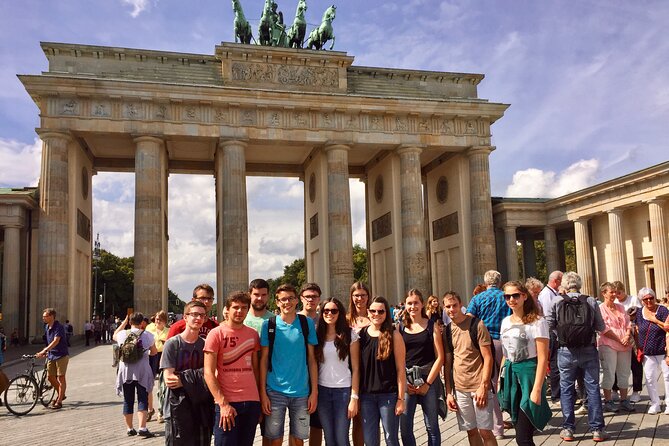
Then you hit Brandenburg Gate. It was never meant to be an isolated icon, but Berlin forced it into that role for decades. The area around Pariser Platz was devastated, walls and barriers shaped movement, and even nearby landmarks changed or vanished. After reunification, reconstruction brought the street edges back in a modernized style, while the Gate stayed the emotional anchor.
A practical upside of seeing this by taxi is that you get positioned where crowds form. A quick walk and photos here can still feel rewarding, even if you do not have hours.
Onward connections from Berlin:
Following Berlin’s modern parliament spine, then stepping toward the Wall story
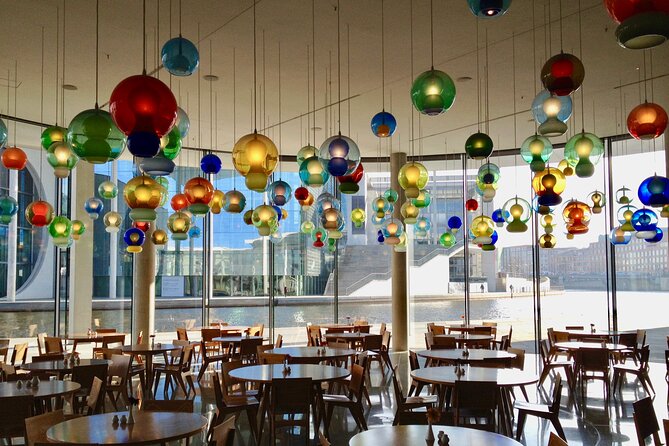
After Brandenburg Gate, the route keeps pushing into the political heart of the city.
The parliament building as a working machine
You pass the “engine of parliament,” where the real committee work happens, and where you can sometimes see enough from outside to understand how the place functions. This is one of those stops where a guide matters. Even just reading the buildings without context makes it hard to tell what is public-facing versus what is working space.
The chancellery and the journalist viewpoint
You also see the chancellery area and the modern media-surveillance angle nearby, where accredited journalists observe key moments. For me, it is the kind of scene that makes government feel real, not abstract.
The border returns in the port area
Then the story pivots toward the Wall era again, including the east-west border and the tragic escape attempt tied to the port. This is not just history wallpaper. It adds weight to why Berlin has so many memorial choices built into everyday streets.
Hauptbahnhof to Friedrichstraße: rail power, escape routes, and daily movement
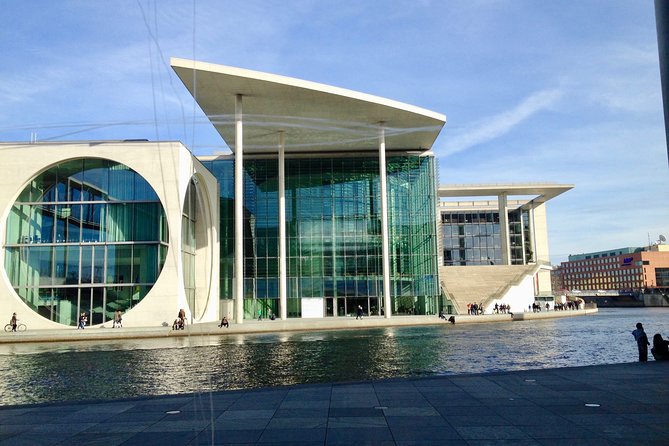
Next comes Berlin’s “movement engine.” The tone shifts from monuments to infrastructure.
Berlin Hauptbahnhof, massive and practical
The tour commonly passes Berlin Hauptbahnhof, the biggest crossing station in Europe, with layers of tracks, huge halls, and massive passenger flow. Whether the exact numbers are exact or marketing-like, the scale is real. Seeing it from the taxi gives you the immediate sense that Berlin runs on rail, not just on tram lines and tourist buses.
Bahnhof Friedrichstraße and the Wall’s logic
Then you get the Friedrichstraße story: the station that was the rare link between East and West at the time, used both for travel and for escape attempts. You hear how checkpoints and barriers created a maze, and how Stasi observation fits into the landscape.
A key detail from the tour style: some moments are better as quick stops. Even if you do not spend time inside everything, the guide’s framing helps you connect today’s rail station convenience to the past rules.
Unter den Linden and the state boulevard, architecture as ideology
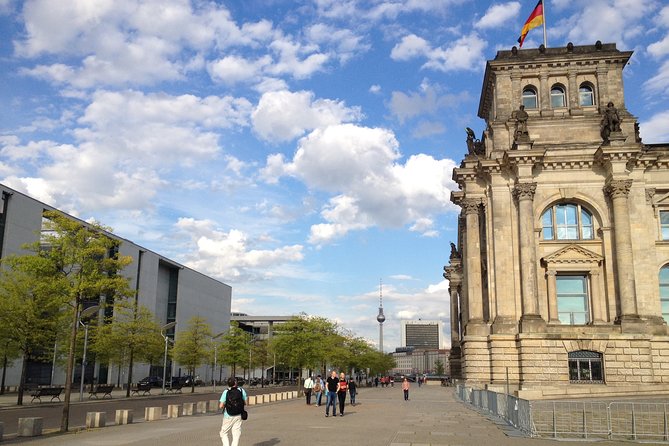
Unter den Linden is one of those streets where you cannot really separate beauty from politics. Seeing it by taxi makes sense because you cover length fast while still getting context.
You move through the grand boulevard that began as a hunting path, then expanded into an ordered ceremonial avenue with the famous alignment and major public buildings. You also learn how the choice of tree lines and urban planning reflects power. Today it is full of iconic fronts, plus practical cafés and university and library buildings.
Soviet-era dominance in the diplomatic core
The route also includes the former Soviet foreign representation building. Its size is part of the message, especially when you compare it to the ruins around Pariser Platz after the war. It is architecture used like a headline.
Forum Fridericianum and book-burning memory
You reach the Forum Fridericianum area, tying together major civic institutions. The square is tied to the May 10, 1933 book burning, and that detail gives the space a heavy undertone, even if the square itself can feel open and walkable.
Neue Wache memorial space
Another stop you should understand before you look: Neue Wache as a memorial. The guide’s explanation helps you see it as a place shaped for mourning, not just a statue view.
Gendarmenmarkt and the German-French duality, Berlin’s postcard perfection with real meaning
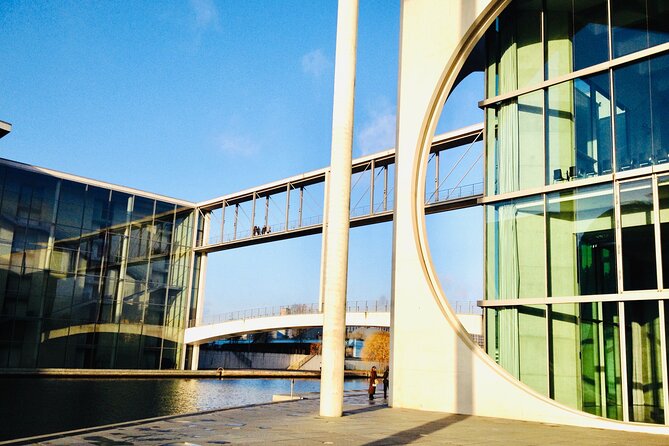
Gendarmenmarkt is a highlight because it looks like a movie set and also functions like a living public space.
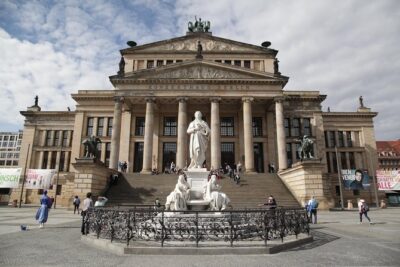
You see the German and French cathedrals. They are not used as bishop seats, and they are not simple religious leftovers either. The guide connects them to Frederick II’s design choices and to the Huguenot refugee story linked to the French cathedral.
Then comes the useful practical part: the area is free-flowing for photos, and it is easy to understand why many people call it the prettiest square in Berlin. Even if you only spend minutes outside, the architecture makes the time feel worth it.
Synagogue, German Historical Museum, and Hackescher Höfe for culture with texture
From central squares, the route shifts to Berlin’s cultural layers.
The New Synagogue area
You pass the synagogue complex with its Moorish-style elements and a golden dome. After the war, the church itself was destroyed, and the rebuilding approach evolved. The guide points out the exhibition space in the entrance portal and the security-style entry setup.
Practical tip: treat this as a place where you might want a bit more time than you think, because it is easy to want to read before you move on.
German Historical Museum location and the story in the walls
You also pass the German Historical Museum, in the former armory. You get why the building matters and what the museum represents: war history collections, shifts over time, and how fresco replicas tied to death masks can make you stop and look twice.
Hackescher Höfe, Berlin’s restored Art Nouveau courtyard buzz
Then you hit Die Hackeschen Höfe. This is one of those places where a taxi stop works because the value is in the courtyard experience, not the road. The guide explains how the courtyards were built as a showcase work-and-life model, later decayed, then restored after reunification.
Today it is shops and galleries, plus small brand-like stops like KPM porcelain displays and the Ampelmännchen shop tie-in. It is tourist-friendly, but it still feels Berlin instead of generic.
Humboldt Forum and the Berlin Palace rebuild logic
Humboldt Forum is one of the strongest “reunification-era choices made visible” stops.
You hear how there used to be nothing but a parking lot, and how the former Berlin Palace silhouette remained even as the original building vanished. After reunification, the rebuild turned into a political and cultural statement. The modern concrete building holds non-European art collections and other Humboldt University holdings, while the outer courtyard reconstruction aims for detailed accuracy.
The roof terrace is a big draw. Even if you only get to look briefly, the whole point is to understand Berlin’s layout from above and connect the dots between East and West.
Practical consideration: roof views can mean timed entry. Ask ahead what is the best way to get the slot you want.
Nikolaiviertel, Red City Hall, and the Spree old-town zoom effect
Next the route often heads to the kind of Berlin that feels like it predates most of the modern city plan.
Nikolaiviertel as reconstructed old Berlin
Nikolaiviertel is presented as old Berlin you can actually walk through, tied to the Nikolaikirche and a set of restored buildings. The guide explains the reconstruction logic from the 1980s and how it was designed to feel like a zoomed-in older Berlin.
It is also where you can connect Berlin’s layers quickly: church history, city museum use, and Biedermeier-style rooms like the Knoblauchhaus, plus the food and views toward the Spree.
Red City Hall in the wider civic story
You also see the Red City Hall, not just as a pretty brick building, but as a seat with real administrative weight. The guide ties it to East Berlin and West Berlin governance arrangements, plus the neo-Gothic design choices.
If you want an easy breather stop where you can stand, look, and reset your brain, this part of the route does that.
Wall remnants, Topography of Terror, and Checkpoint Charlie moments that matter
Berlin’s Wall story is spread across many places, and the guide helps you connect them without making you memorize dates.
Topography of Terror
You spend time around the Topography of Terror area, tied to excavations and documentation. The focus is Nazi security apparatus crimes and how the remains of cellars became part of the public learning space.
This is not a cheerful stop. But it is one of the most important “understand why the Wall and fear shaped daily life” points.
Niederkirchnerstraße and wall perforation
Then you see another Wall remnant area, including how the wall design and the surrounding rulers’ assumptions about safety changed the landscape. This kind of stop can feel surprisingly close up, because wall sections can look less dramatic than you imagine from photos.
Checkpoint Charlie, what you can see and what you should know
Finally you hit Checkpoint Charlie. You learn how it worked as an Allied checkpoint, why the Cold War tension could spike hard, and why what you see today is a mix of replica and museum-related context. It is tourist-heavy, but the guided story gives it meaning beyond the crowd.
East Side Gallery and the Oberbaum Bridge, where the Wall turned into public art
Then the route shifts to the Wall’s afterlife in public space.
East Side Gallery
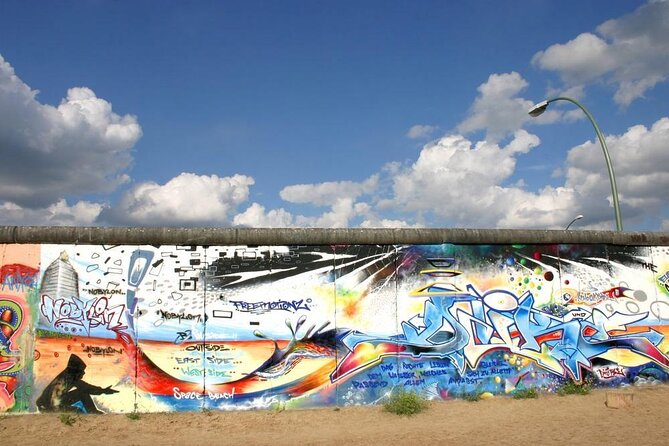
The East Side Gallery stop is brief but iconic. You see one of the longest surviving Berlin Wall sections, and you learn why the painted wall is a layered construction and how the art arrived after reunification. Even if time only allows a few minutes, it is one of those places where your brain starts to connect history to images you may have seen before.
Oberbaum Bridge, a border you can still picture
You also pass the Oberbaum Bridge, built as a boundary story between East and West with customs markings. The guide ties it to medieval towers and to the idea of a city line enforced over time.
This is a great stop for orientation. Standing near the bridge, you get a sense of how Berlin divides and connects districts.
West Berlin icons: Kurfürstendamm, KaDeWe, and Kaiser Wilhelm Memorial Church
No East-West day is complete without West Berlin’s big public-energy zones.
Ku’damm and the shopping boulevard feeling
You cover Kurfürstendamm, also known as Ku’damm, and the Tauentzien direction. The guide points out how the street shaped West Berlin’s identity, then how it adapted into a modern shopping mile with major flags like upscale boutiques and big department stores.
KaDeWe food level, a Berlin ritual
KaDeWe comes up as a must if shopping is your thing. The big focus is the department store’s scale and the idea of a luxury-food experience, especially up on the gourmet floor. You can treat it as a browse stop, not a spending requirement.
Kaiser Wilhelm Memorial Church and surviving a war by partially keeping it
Then you see the Kaiser Wilhelm Memorial Church area. The guide explains why you still have a preserved portal and tower, and why the surviving structure became a symbol shaped by destruction and rebuilding choices. It is also known as a Berlin nickname for its look, which adds a bit of local humor to a serious setting.
Kulturforum and Mies van der Rohe’s metal-roof modern gallery moment
To close out, the route often reaches the modern Berlin art and architecture side.
National Gallery and the no-internal-wall concept
You see the Nationalgalerie designed by Ludwig Mies van der Rohe, famous for its self-supporting metal roof and the bold idea of showing art without internal walls on the main level. The guide explains how the exhibition model uses spaces differently, with changing exhibitions up top and where you find more traditional viewing setups.
This is an architectural moment where a guide helps you see the logic, not just the look.
Sony Center at Potsdamer Platz, and the trick of relocation
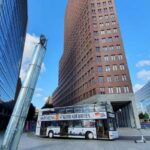
Finally, you reach Sony Center at Potsdamer Platz. The guide ties the modern glass and steel structure to its designer and to the key planning detail: a listed wing from the old Hotel Esplanade was moved rather than erased. That kind of fact makes Berlin feel like a city that tries to keep some memory even when it rebuilds hard.
You finish with a strong reminder that Berlin’s story is not one straight line. It is upgrades, interruptions, and choices made again.
Should you book this East-West taxi tour?
Book it if you want:
- a fast, guided orientation across Berlin’s East and West in one day,
- comfort, since you are using a car as your main mode,
- a guide who will explain what you are looking at, not just point you at it,
- and a route heavy on major landmarks like Brandenburg Gate, Wall history stops, Gendarmenmarkt, Hackescher Höfe, Humboldt Forum, and Potsdamer Platz.
Skip it or adjust expectations if:
- you want long museum time every stop,
- your group expects lots of inside access without advance planning,
- or you are very sensitive to vehicle size, because a small taxi can feel cramped for four.
Quick decision tip: if you have a list of 3 must-sees, tell the guide before pickup. This tour works best when you help steer the pacing.
If that sounds like your style, this is one of the most efficient ways to get your Berlin bearings fast and leave with a clearer picture of how the city became what it is today.
FAQ
How long is the Berlin East and West private taxi tour?
It runs about 4 to 6 hours.
Is pickup included, and where does it cover?
Pickup is included within the S-Bahn ring, described as roughly 5 km around the center near Brandenburg Gate. Outside that zone is an extra charge.
What language is the tour offered in?
The tour is offered in English.
Is this a private tour or shared?
It is private, meaning only your group participates.
What’s included in the price?
The tour includes collection/pickup, air-conditioned private transportation, parking fees, WiFi on board, and the taxi ride plus city tour pricing (with VAT included).
What is not included?
Lunch is not included.
Are child seats available?
Yes. A child seat for toddlers (six months to three years) and a booster seat for older children are available. A baby seat can be brought on request.
Do I need tickets for museums and major stops?
The tour uses mobile ticketing, and several stops are marked as admission ticket free. For other places, it depends on what you choose to do during your time window.
Fresh on the arrivals board for Berlin


Private, compared.

Berlin Private Complete History All Day Walking Tour
Read our review →
Munich Private Tour with a Local – Highlights & Hidden Gems
Read our review →
Private Walking Tour Berlin Third Reich Hitler and World War II
Read our review →
Your private 3-hour Hamburg driving tour with a former policeman
Read our review →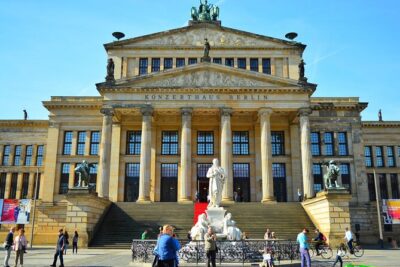
Private Berlin: Iconic Sights and Hidden Gems Walking Tour
Read our review →
1.5-Hour Private Tour through Historical Old Town
Read our review →