
Reviewed · SACHSENHAUSEN MEMORIAL VISITS FROM BERLIN
Private Sachsenhausen Concentration Camp Memorial Tour
Sachsenhausen hits hard, but this tour helps. You get a licensed guide trained by the camp’s memorial foundation plus a private format that lets you set the pace, stop for questions, and make sense of what you’re seeing. If you want more than a drive-by memorial visit, this is built for that.
I also like the structure. Your visit stays focused on the most important parts of Sachsenhausen, while the guide ties the site to the wider story of how the Nazi dictatorship hardened through the 1930s and how World War II changed what the camp held and who ended up there.
One thing to think about up front, this is serious, emotionally heavy ground, and transportation is not included. So you’ll want to plan how you’ll get from Berlin to the memorial and back without stress.
In This Review
- Key points to know before you go
- Why Sachsenhausen is worth your time in Berlin
- Meeting at Pariser Platz and starting with a clear plan
- Tower A to Station Z, what you’ll see and why it matters
- The museum spaces you’ll walk through, from kitchen to exhibitions
- How the guide turns buildings into a real timeline
- Time alone on the grounds, and why it’s not a gimmick
- Private guiding style, from Aaron to Paul to Julian
- Price and value: $390.50 per group up to 5
- Getting the most from your Sachsenhausen visit
- Who this private tour is best for (and who might skip it)
- Should you book this Sachsenhausen private tour?
- FAQ
- How long is the Private Sachsenhausen Concentration Camp Memorial Tour?
- How much does the tour cost, and what group size is allowed?
- Is the tour offered in English, and do I get a ticket on my phone?
- What is included in the tour price?
- Where do we meet, and does it end nearby?
- Is transportation to and from Sachsenhausen included?
- Are service animals allowed, and what are the refund rules if I cancel?
Key points to know before you go
- Private, English-led tour for up to 5, so you can ask questions at full volume, not whisper them
- Admission is included for the memorial experience, covering the core time on site
- You’ll walk key structures, including Tower A, Station Z, SS and Gestapo Prison, and prisoner barracks blocks
- The guide connects the camp’s evolution to Nazi politics and WWII, not just the buildings
- You’ll get time to explore on your own, which helps when words can’t keep up with what you see
Why Sachsenhausen is worth your time in Berlin
Sachsenhausen is one of those places where the geography of the camp matters. The buildings are arranged in a way that makes the system feel real, not abstract. You’re not just reading names on a sign, you’re seeing how the site was designed to control people.
That is exactly why the private format matters here. When you have one group and a trained guide, you can slow down around the parts that hit hardest, and you can ask for clarification without worrying that you’re holding everyone up. This is the kind of tour where you want your questions answered in plain language, then answered again in human language.
It also helps that the tour is designed as a long enough block, about 6 hours total, so the day does not feel like a rushed checklist. You’ll spend around 3 hours with admission included, which is enough time to follow the story from entrance structures into the prison spaces and then through the places tied to punishment and confinement.
Other visits to the Sachsenhausen memorial:
- Berlin: Sachsenhausen Concentration Camp Tour in English
★ 5.0 · 5,711 reviews - Berlin: Sachsenhausen Concentration Camp Memorial Tour
★ 4.7 · 3,716 reviews - Sachsenhausen Concentration Camp Bus Tour in English from Berlin
★ 5.0 · 1,962 reviews
Meeting at Pariser Platz and starting with a clear plan
You start at the Academy of Arts at Pariser Platz 4, in Berlin. It’s a practical meeting point, and it’s described as being near public transportation, which is useful if you’re managing your own travel arrangements.
The tour ends back at the same meeting point. That sounds small, but it can reduce decision fatigue late in the day. After a somber visit, you usually don’t want to guess how to get home or test an unfamiliar route.
One more practical note that affects your experience: you get a mobile ticket. When you’re trying to stay focused on what matters, the last thing you want is a scramble for printed papers or a late-proofing moment at the start.
Tower A to Station Z, what you’ll see and why it matters
Your tour centers on Sachsenhausen as the first purpose-built concentration camp within Nazi Germany. The guide’s job is not just to point. It’s to explain what each part of the site says about how the camp system worked, how it changed, and how Nazi power tightened over time.
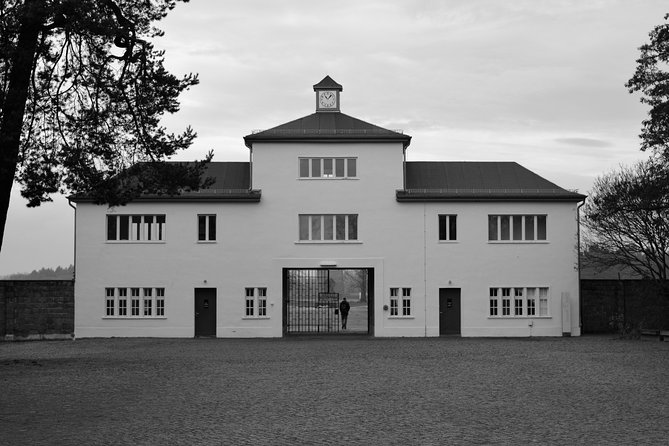
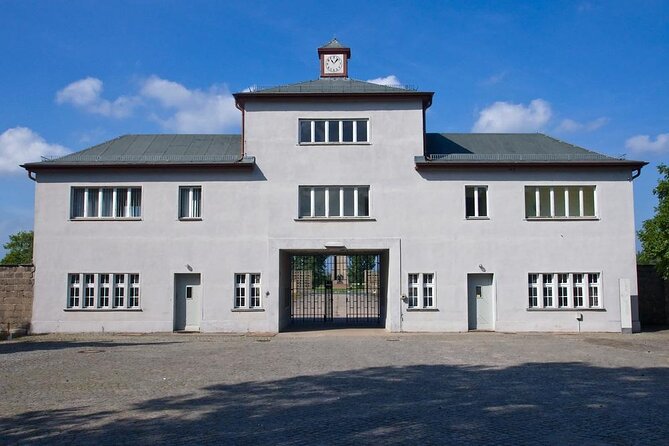
You start at the memorial and museum area, at the main entrance tower, Tower A. This is where the site’s authority begins in a very physical way. It’s the kind of moment where you feel the difference between what a camp is in a textbook and what it is when you stand near it.
From there, the walkthrough shifts into structures tied to the violence and control of the system. You’ll see:
- the camp infirmary and pathology building
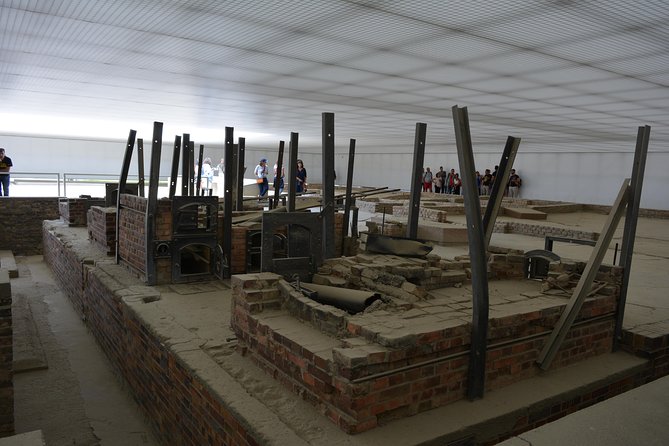
- Station Z, described as the purpose-built execution facility
- the SS and Gestapo Prison
- the former prisoner barrack blocks
These stops are heavy. But that heaviness is the point. The guide connects what you’re seeing to the camp’s functioning, and to how the Nazi regime used institutions to strip away identity, movement, and protection.
Station Z is a key example. Because it is called out specifically as the execution facility, it helps you understand the camp was not only for detention. It was part of a larger machinery where violence was organized and planned, and where the site’s design supported that role.
The museum spaces you’ll walk through, from kitchen to exhibitions
Between the prison spaces and the barracks, you’ll also pass through an exhibition in a former camp kitchen building. That detail matters. A kitchen implies daily routine and basic human life, but in a camp context it becomes part of the system of exploitation and control.
In practice, this kind of museum stop can do two useful things for you. First, it gives your mind a place to sort through information after the most difficult parts of the grounds. Second, it gives the guide a chance to step back and explain the timeline of how the camp and the broader system came into being, then how it developed.
The guide frames the story around shifts you might not expect if you only picture one snapshot of a camp. They explain how prisoner types, numbers, and nationalities changed over time, and they place those changes against the rise and hardening of Nazi dictatorship in the 1930s and the pressures and scale of World War II.
In other words, the visit is not only about the past as a static scene. It’s about a system that evolved.
How the guide turns buildings into a real timeline
The standout strength of this tour is the way the guide builds a timeline for you, so the site makes sense even if you feel overwhelmed at first. In the provided feedback, guides like Aaron are singled out for laying out how politics at the time shaped the camp system, and for giving a detailed but organized summary of how Sachsenhausen developed.
What you should look for in your own guide, even if you do not know their name ahead of time, is this specific skill: connecting the physical location to a sequence of events. This tour is clearly designed for that. The guide’s end goal is that you leave understanding how the camp and the system came into being, how they developed, and how the prisoner population changed with the Nazi regime and the war.
That’s also why a private tour works so well here. You can ask the kind of questions that come from real confusion, not study notes. You can ask for a clearer explanation of a term the guide uses, or you can request a slower walkthrough of the most difficult spaces.
In several cases, guides are praised for handling difficult topics without turning the experience into a history lecture that feels emotionally numb. If you’re bringing teenagers, that pacing is especially important, and the feedback includes examples of guides adapting explanations for young people.
Also holding a platform in Berlin



Time alone on the grounds, and why it’s not a gimmick
One subtle but meaningful feature of this experience is that you get some time on your own. The feedback includes that the guide gave space for independent viewing of parts of the camp.
That matters more than it sounds. When you’re standing inside a site like this, you might want to stop without talking for a few minutes, or you might want to return your eyes to a specific area a second time. A private guide can make room for that, instead of keeping you locked in motion.
It also helps with pacing for your own emotions. If you need quiet, you should have it. If you want to read slowly, you should be able to do that. This tour’s private structure makes those choices feel practical, not forced.
Private guiding style, from Aaron to Paul to Julian
Since the tour is private, your guide shapes the entire tone. The provided feedback highlights a few guide names, and the common thread is clarity plus care.
Aaron is mentioned multiple times for being strong at connecting the site to the broader political timeline, and for making complex history feel manageable rather than heavy in a discouraging way. Paul is described in one case as easygoing and flexible, and another example credits him with suggesting books and movies to help you keep learning after you leave the grounds. Julian is praised for detailed storytelling and for taking plenty of time to share the history behind what you see.
There is also a very practical benefit in the feedback: some guides take extra steps beyond the memorial boundaries, like helping your group understand the best way back. That can be a lifesaver on an emotional day, because it reduces the number of choices you have to make after you’re tired.
For balance, here’s the tradeoff with a private tour: you’re paying for that one-on-one attention. If you’re traveling as a solo person and you do not need much interpretation, this may feel pricier than a standard group option.
Price and value: $390.50 per group up to 5
The price is listed as $390.50 per group (up to 5), for about 6 hours total. That makes the value mostly about how many people share the cost and how important guided context is to you.
Here’s the math idea you should use: if you use the full group size of five, that comes out to about $78.10 per person. Then remember admission is included, and the guide is described as licensed and trained by the camp’s memorial foundation. In a situation like this, a trained guide is not an optional upgrade, it’s part of how the visit becomes understandable instead of just tragic.
If you’re only two people, the per-person cost goes up, and the value hinges more on whether you’ll truly use the private format. If you want time to ask questions and tailor the pacing to what affects your group, private is often worth it. If you only need a quick overview, you might reconsider.
One more value signal: this tour is booked about 32 days in advance on average. That suggests it is in demand, so if your dates are firm, it’s smart to reserve sooner rather than later.
Getting the most from your Sachsenhausen visit
A site like Sachsenhausen will not “feel fun.” It will feel real, and it will feel difficult. That’s not a marketing problem, it’s the nature of the place.
So your goal should be different: aim to leave with understanding. You want to connect how the camp system began, how it grew, and how prisoner categories and nationalities shifted with the Nazis’ tightening control and the war.
Here are a few practical ways to do that during your visit:
- Stay flexible with the timing at each structure. If one space pulls you in, slow down.
- Ask for clarification around how the regime changed through the 1930s and what World War II did to the camp’s role.
- Use the time alone wisely. Read what you can, look longer than you think you should, and then regroup with the guide when you want context.
Also, because the tour is offered in English and described as suitable for most people, you do not need a specialist background to follow it. But you do need emotional stamina. Plan a low-key evening afterward.
Who this private tour is best for (and who might skip it)
This tour is a strong fit if:
- you want a personalized experience rather than a crowd-paced route
- your group includes teenagers, and you want history explained in a way they can process
- you care about understanding the timeline, not just seeing famous spots
- you prefer to ask questions and get direct answers
You might think twice if:
- your group cannot handle very serious subject matter
- you do not want to manage transportation on your own, since public transport tickets and private transport are not included
- you are looking for a short stop only, because this is structured as a longer, full-day style visit
Should you book this Sachsenhausen private tour?
If you want Sachsenhausen to be more than a solemn photo stop, I’d book it. The private structure, the focus on specific major sites, and the way the guide connects the camp to the evolution of Nazi power through the 1930s and World War II make it feel like an organized education, not a blur.
Go for it especially if your group benefits from interpretation, timeline building, and question time. The feedback points to strong guides, including Aaron, Paul, and Julian, and they’re praised for making difficult content understandable and paced.
If you’re price-sensitive or you’d rather handle the memorial on your own, you could choose a different option. But if you value a trained guide and you want your visit to land with clarity, this one is hard to beat.
FAQ
How long is the Private Sachsenhausen Concentration Camp Memorial Tour?
The tour lasts about 6 hours.
How much does the tour cost, and what group size is allowed?
It costs $390.50 per group and accommodates up to 5 people.
Is the tour offered in English, and do I get a ticket on my phone?
Yes, the tour is offered in English, and it includes a mobile ticket.
What is included in the tour price?
A professional licensed guide is included, and the memorial admission ticket is included as part of the site visit.
Where do we meet, and does it end nearby?
You meet at Academy of Arts, Pariser Platz 4, 10117 Berlin, Germany, and the tour ends back at the same meeting point.
Is transportation to and from Sachsenhausen included?
No. Public transport tickets and private transportation are not included.
Are service animals allowed, and what are the refund rules if I cancel?
Service animals are allowed. You can cancel for a full refund if you cancel up to 24 hours in advance of the experience start time, with local time used for the cutoff.
Fresh on the arrivals board for Berlin
Sachsenhausen Memorial Visits from Berlin, compared.
Sachsenhausen Concentration Camp Tour in English
Read our review →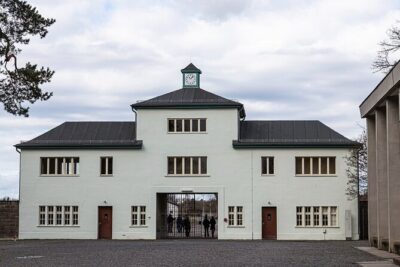
Sachsenhausen Concentration Camp Memorial Tour
Read our review →
Sachsenhausen Concentration Camp Bus Tour in English from Berlin
Read our review →Sachsenhausen Concentration Camp Tour in English
Read our review →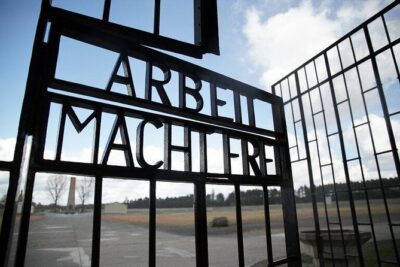
Sachsenhausen Concentration Camp Memorial Tour (Max. 15 Guests)
Read our review →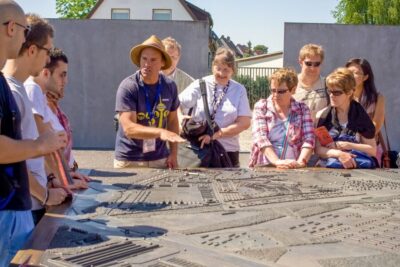
English Bus Tour to Sachsenhausen Concentration Camp
Read our review →
Sachsenhausen Concentration Camp and Potsdam Tour
Read our review →
Sachsenhausen Concentration Camp Memorial Tour
Read our review →Browse the lists this tour appears in