
Reviewed · BERLIN WALL TOURS
Private Cold War Berlin: Espionage, Berlin Wall, a Divided City
Cold War Berlin gets personal fast on this walk. You’ll connect the Wall’s most memorable remnants with border-crossing drama and real espionage stories, while enjoying hotel pickup and drop-off and guide-led storytelling that brings names like Tina and Toni into the mix. The only real catch is the tour is on foot, so bring comfortable shoes and plan for weather changes since it runs in all conditions.
This is a private experience in English for 3 to 4 hours, priced at $191.44 per person. It’s a strong fit for first-time visitors who want the big picture, and repeat Berlin lovers who want the darker, behind-the-scenes side of the city’s division.
In This Review
- Key Highlights You Shouldn’t Miss
- Why Berlin’s Cold War Story Works So Well as a Walking Tour
- Price and Logistics, What $191.44 Actually Buys
- The Pace: Active Walking, Weather-Proof, and Not a Couch Tour
- Stop 1: Bernauer Strasse Memorial and the Wall Escape Stories
- Stop 2: Tränenpalast, Palace of Tears, and the Spy Network Angle
- Stop 3: East Side Gallery, Art on the Wall After 1989
- Stop 4: Stasimuseum at Stasi Headquarters and How Surveillance Worked
- Stop 5: Checkpoint Charlie, a Cold War Hotspot You Can Still Feel
- Stop 6: Prenzlauer Berg’s Fröbelstraße Corner, NKVD to Stasi
- Stop 7: Alexanderplatz, November 4, 1989, and the Power Symbols Nearby
- What Makes the Guides Matter Here
- Practical Tips to Make Your Walk Comfortable
- Who Should Book This Cold War Berlin Tour
- Should You Book Private Cold War Berlin: Espionage, Berlin Wall, a Divided City?
- FAQ
- How long is the Private Cold War Berlin walking tour?
- What does the $191.44 per person price include?
- Is this tour private and in English?
- Are there any paid admissions for the stops?
- Does the tour run in bad weather?
- Is food included during the tour?
- What is the cancellation policy?
Key Highlights You Shouldn’t Miss
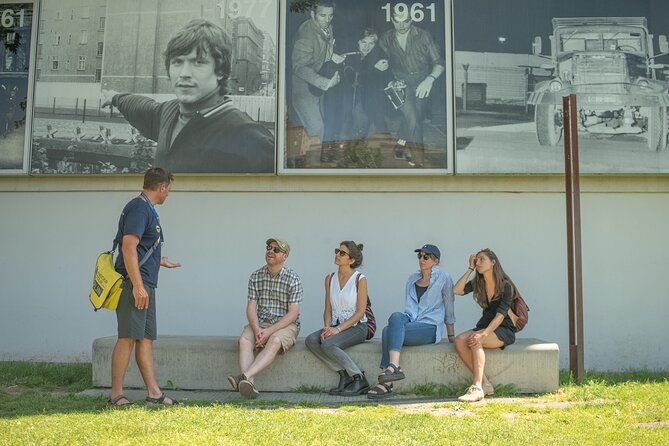
- Bernauer Strasse and the Wall Memorial: a preserved section of the Wall and escape stories tied to places like Tunnel 57 and Tunnel 29
- Tränenpalast at Friedrichstrasse: the emotional farewells of border crossing, plus the spy hub energy of the Cold War
- Stasimuseum in the former headquarters: how surveillance worked in practice, including hidden cameras and wiretapping
- Checkpoint Charlie: a tense Cold War flashpoint and a place where global brinkmanship played out
- Alexanderplatz and the November 4, 1989 protest: the scale of people demanding change, and nearby power symbols
Why Berlin’s Cold War Story Works So Well as a Walking Tour
Berlin’s division is not one monument. It’s a chain reaction across streets, buildings, and checkpoints. That’s why walking matters here. You move through the city the way people did, absorbing how the Wall shaped daily life and how espionage shaped decisions behind closed doors.
You’ll also feel the contrast Berlin became famous for: one place can be grief, the next can be art, the next can be surveillance. This tour keeps those connections tight, so the story stays understandable instead of getting lost in headlines.
And yes, you’ll cover serious material. But the pacing stays practical. It’s built around short, focused stops so you’re not stuck in one museum room for the entire half day.
More traces of the Wall through Berlin:
- Berlin: Third Reich & Cold War Guided Walking Tour
★ 4.9 · 8,378 reviews - Berlin’s Best: 2 Hour Walking Tour Third Reich and the Cold War
★ 5.0 · 5,486 reviews - Skip-the-Line: Berlin Wall Museum at Checkpoint Charlie
★ 4.1 · 2,041 reviews
Price and Logistics, What $191.44 Actually Buys
At $191.44 per person for a 3 to 4 hour private guided walk, the value is mostly about three things:
- Convenience: hotel pickup and drop-off are included, so you spend less time figuring out transit and more time using your brain.
- A pro guide: you get one professional guide leading the full sequence of sites.
- No paid admissions needed at the stops listed: the tour notes free admission tickets for the major locations, which helps keep the total cost predictable.
Food and drinks are not included, so you’ll want to plan a snack strategy ahead of time. If you’re the type who likes to stop for coffee while walking, you may do that off-tour.
Also, it’s a private tour, meaning it’s only your group. That usually makes questions easier, and it helps the guide tailor the pace if you need to slow down.
The Pace: Active Walking, Weather-Proof, and Not a Couch Tour
This experience is best suited to active travelers. Even though each stop is time-limited, you’re still moving around Berlin on foot between sites. The tour also operates in all weather conditions, so you’ll want to dress for rain, wind, or cold as needed.
A helpful detail: it’s listed that most travelers can participate. Still, if you have mobility limits, this is the kind of tour where you’ll feel the ground truth fast. One review specifically praised a guide for accommodating physical limitations, which is a reassuring sign to look for, but you should still treat this as an active walking route.
Stop 1: Bernauer Strasse Memorial and the Wall Escape Stories
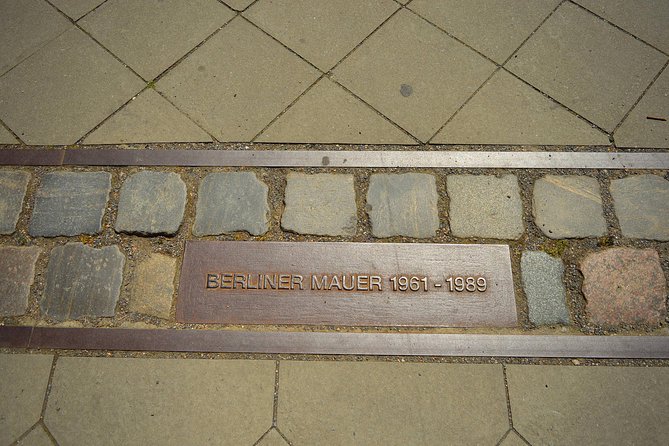
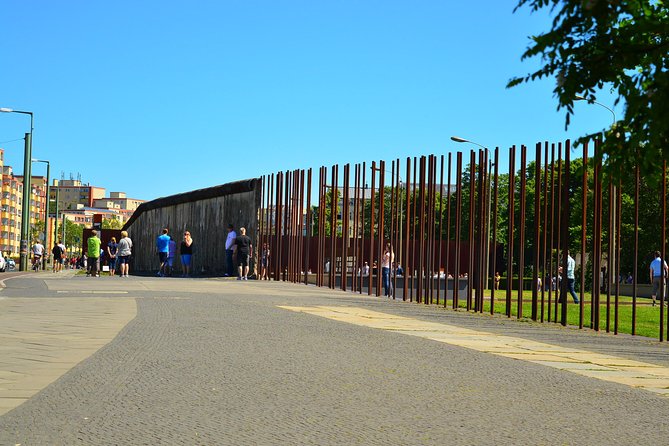
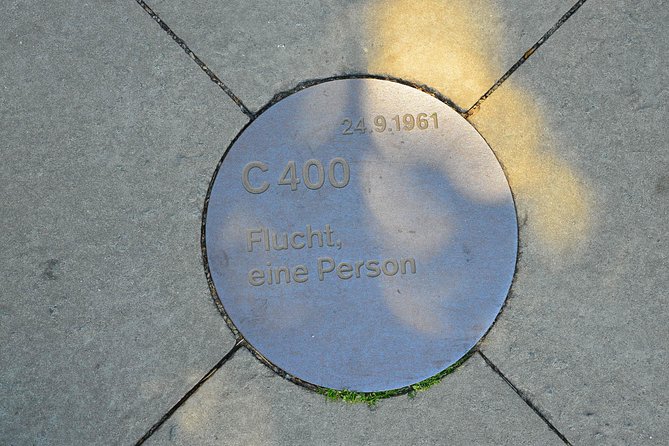
The Bernauer Strasse area is where the Wall’s human impact becomes hard to ignore. You’ll see the Memorial of the Berlin Wall, including a preserved section of the Wall plus the Chapel of Reconciliation. It’s the kind of setting where the city’s division feels physical, not abstract.
What makes this stop especially valuable is the escape context. Your guide will talk about daring attempts, including Tunnel 57 and Tunnel 29. Tunnel 29 is highlighted for a reason: it famously helped 29 people reach freedom in 1962.
That detail matters because it turns the Wall from a political idea into a series of individual choices, risks, and outcomes. And since the tour focuses on how the Wall affected families and communities, you’ll get the broader Cold War narrative without it turning into a lecture.
Consideration: This stop is emotionally heavy. If you know you get overwhelmed by trauma-focused stories, plan a slower pace for the next portion so you can process.
Stop 2: Tränenpalast, Palace of Tears, and the Spy Network Angle
At Friedrichstrasse, the Tränenpalast, or Palace of Tears, captures the border-crossing moment that many people remember. This was a key border crossing site during the Cold War, and the building became known for emotional farewells when East Berliners crossed into West Berlin.
But the tour doesn’t only stay on grief. It also connects this place to espionage. The Tränenpalast is described as a hotspot for spies attempting to cross between East and West, using clever tactics to avoid detection. That combination is powerful. You see the Wall as both a separation machine and a high-stakes intelligence environment.
Today, the building functions as a museum covering the Berlin Wall era, border control practices, and spy networks. Expect moving exhibits and stories tied to both escape and intelligence gathering.
Why it’s worth your time: It explains how borders are not just political lines. They are systems that people try to outsmart, sometimes at extreme personal risk.
Also holding a platform in Berlin


Stop 3: East Side Gallery, Art on the Wall After 1989
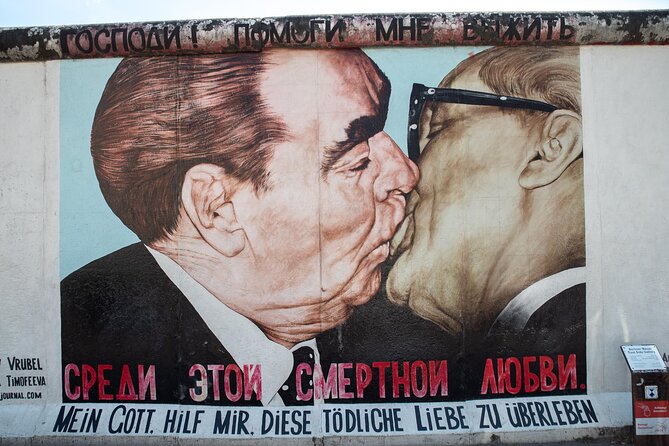
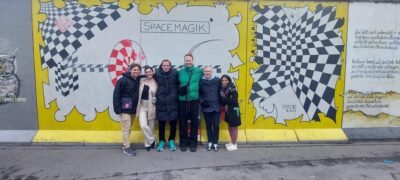
Then the tone shifts, but in a meaningful way. You’ll walk the East Side Gallery, a 1.3 km stretch of the Berlin Wall transformed into an open-air art gallery.
After the Wall fell in 1989, artists from around the world painted murals on remaining Wall sections. Your guide will share the history behind the murals and the artists’ messages, many focused on hope and optimism in the years after reunification.
This stop works well because it lets you see legacy in both directions. The Wall is still there, but Berlin chose to reframe it through public art and international voices.
A practical note: Since it’s outdoors, bring something for the weather. You’ll get your best experience when you’re not busy battling cold or rain.
Stop 4: Stasimuseum at Stasi Headquarters and How Surveillance Worked
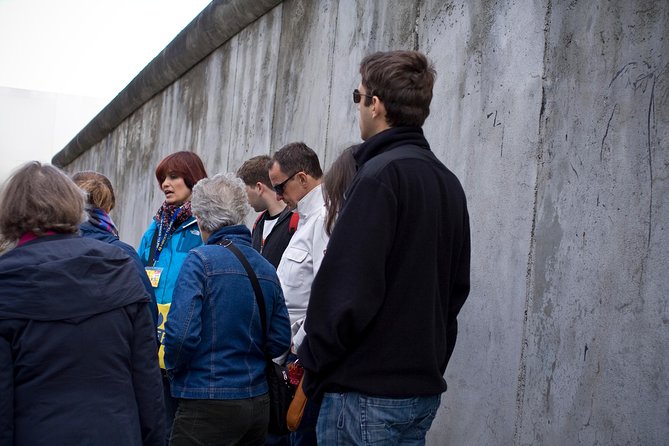
If you want the Cold War machinery up close, the Stasimuseum is the stop. You’ll visit the former Stasi headquarters, now a museum that explains the surveillance and control system of East Germany’s secret police.
This is where the tour’s spy theme becomes operational. Your guide takes you through the facility and describes tactics used to monitor and suppress dissent, including hidden cameras and wiretapping. You’ll also learn about informants, even everyday citizens being pulled into the network.
The tour also emphasizes the human cost: how surveillance impacted families and individuals, including interrogation and harassment. It’s sobering, but it’s also clarifying. You come away understanding that the Stasi system was not just dramatic spy action. It was everyday control shaped by constant risk.
Consideration: If you dislike surveillance-focused material, you might find this stop intense. But it’s also one of the most informative pieces of the whole route.
Stop 5: Checkpoint Charlie, a Cold War Hotspot You Can Still Feel
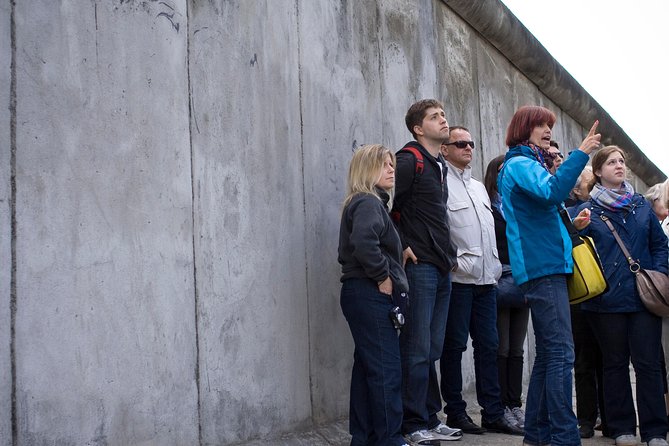
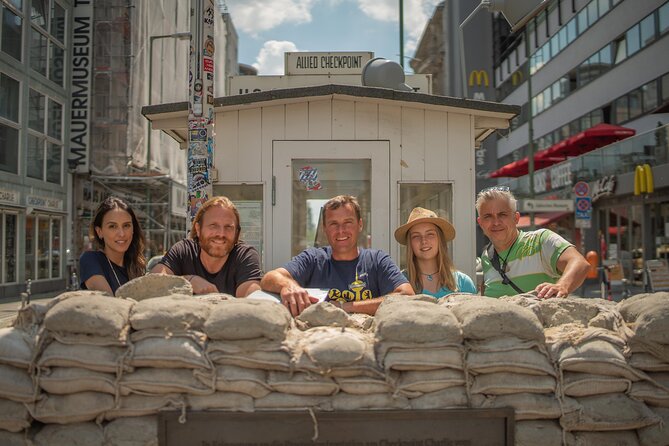
Checkpoint Charlie is one of those Berlin places that’s instantly recognizable, yet it still packs a punch when you hear the context. This former border crossing between East and West Berlin became a symbol of the divide between communist East and democratic West.
Your guide will explain tense standoffs between American and Soviet forces, especially during the Berlin Crisis of 1961 when the Wall was erected. This is where the Cold War stops being a distant concept and becomes a series of moments that put the world on edge.
You’ll also hear about dramatic events tied to espionage themes like daring escapes and spy exchanges, plus the role this crossing played in the lives of ordinary Berliners. The museum at the site adds more context with exhibits focused on espionage, escapes, and the Cold War story.
Why it’s a smart stop: It gives you a well-known reference point while still explaining how the crossing affected real people and how global tensions played out in one place.
Stop 6: Prenzlauer Berg’s Fröbelstraße Corner, NKVD to Stasi
In Prenzlauer Berg, the story turns from Wall-era escape to the prison system behind political control.
You’ll focus on the Fröbelstraße corner, where both the former NKVD prison and the Stasi prison existed. After WWII, Soviet authorities used the NKVD prison to detain political prisoners and people suspected of being enemies of the state, including suspected spies.
When the GDR formed, the prison was taken over by the Stasi, continuing the pattern of surveillance and repression. Your guide explains the harsh conditions faced by prisoners and how Soviet and East German authorities tried to control and silence opposition.
There are stories of bravery and resistance here too, which keeps the stop from being only bleak. It connects institutions to individual consequences, which is what makes this kind of history worth learning in the first place.
Consideration: This is another emotionally intense stop. If you’re someone who needs time to reset, pace yourself and take short breaks between sites.
Stop 7: Alexanderplatz, November 4, 1989, and the Power Symbols Nearby
The final stretch brings you into the energy of mass change. At Alexanderplatz, your guide shows how the area fit into Cold War history and GDR power structures.
You’ll hear about the November 4, 1989 protest, when over half a million East Berliners gathered to demand change. That scale is hard to picture until you understand it as a real moment, happening in a real public space.
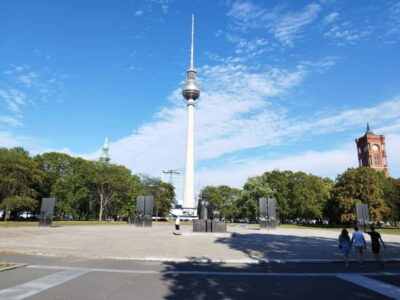
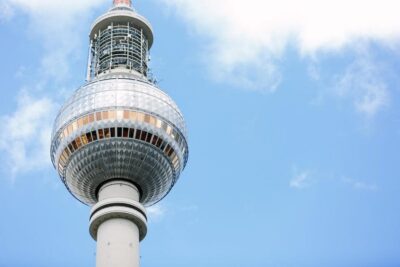
Your guide will point out Cold War landmarks in the area, including the Television Tower (Fernsehturm) and the Red City Hall, linked to GDR leadership. You’ll also learn how this area related to Stasi surveillance efforts and how Alexanderplatz became a focus for both repression and peaceful resistance.
This stop matters because it completes the loop. You started with division and escape attempts. You end with the demand for change that helped push the Wall era toward its end.
What Makes the Guides Matter Here
The biggest strength of this type of tour is never just the buildings. It’s the way the stories get told.
In particular, guides like Tina are praised for being natural storytellers and for sharing the lived experiences of people in East and West Germany during the Cold War. Toni is also noted for a calm, informative style that makes tough history easier to follow. One guide even specifically accommodated physical limitations, which is a reminder that good guides adjust to real people, not a perfect ideal itinerary.
If you care about context, not just facts, this is where the experience earns its 5 out of 5 reputation.
Practical Tips to Make Your Walk Comfortable
This tour runs in all weather and it’s focused on walking. So your comfort choices matter more than usual.
- Wear comfortable shoes with grip.
- Dress for weather, since the day can change fast.
- Since food and drinks are not included, plan a snack break nearby if you need one.
- If you’re sensitive to heavy themes, give yourself a little mental space between the prison, surveillance, and border-crossing stops.
Also remember: admission tickets are free for the stops that are listed with that detail, so you can keep your budget steady and focus on the learning.
Who Should Book This Cold War Berlin Tour
Book this if you:
- want the Cold War story connected across multiple key sites, not scattered in pieces
- like history that includes real tactics and real human stakes
- are an active walker who doesn’t mind a serious, emotional subject line
- value a private guide who can keep pace and answer questions
Skip it (or choose a shorter, less walking option) if:
- walking for several hours in changing weather is tough for you
- you prefer light, upbeat sightseeing where you can control the emotional intensity
Should You Book Private Cold War Berlin: Espionage, Berlin Wall, a Divided City?
If you want Berlin at its most honest, this is a strong bet. The route gives you the Wall’s escape stories, the border’s emotional theater, the spy and surveillance systems, and then the public protests that pushed change forward. For many people, that combination is the whole reason Berlin history feels so real.
At $191.44 per person, the value comes from private guidance, hotel pickup and drop-off, and the fact that the included stops don’t add separate admission costs on the ticketed items listed. The main reason not to book is simply comfort with active walking and the weight of the topics.
If you can handle a walking route and you like your history human-sized, I’d book it.
FAQ
How long is the Private Cold War Berlin walking tour?
It runs about 3 to 4 hours.
What does the $191.44 per person price include?
It includes hotel pickup, hotel drop-off, and a professional guide.
Is this tour private and in English?
Yes. It’s a private tour with only your group, and it is offered in English.
Are there any paid admissions for the stops?
The tour lists free admission tickets for each of the main stops noted.
Does the tour run in bad weather?
Yes, it operates in all weather conditions, so you should dress appropriately.
Is food included during the tour?
No, food and drinks are not included.
What is the cancellation policy?
You can cancel for a full refund if you cancel up to 24 hours in advance of the experience start time. If you cancel less than 24 hours before, the amount paid is not refunded.
Fresh on the arrivals board for Berlin
Berlin Wall Tours, compared.

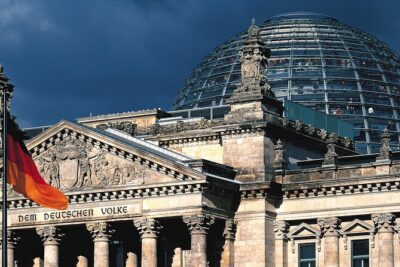
Berlin’s Best: 2 Hour Walking Tour Third Reich and the Cold War
Read our review →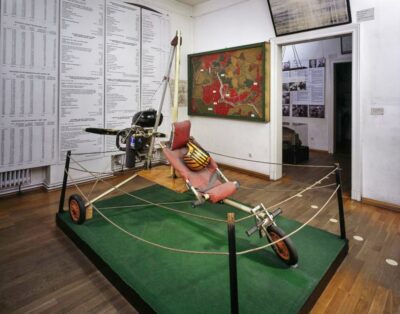
Skip-the-Line: Berlin Wall Museum at Checkpoint Charlie
Read our review →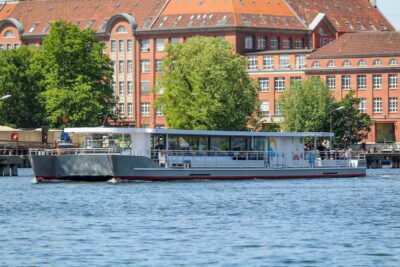
East Side Gallery Spree Cruise in a Solar Catamaran
Read our review →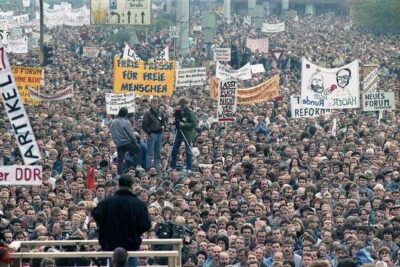
Cold War, Berlin Wall, Spies and the East Side Gallery
Read our review →
Cold War & Berlin Wall History Guided Bike Tour
Read our review →
Browse the lists this tour appears in