
Reviewed · THIRD REICH & WORLD WAR II TOURS
Munich Third Reich and WWII Segway Tour
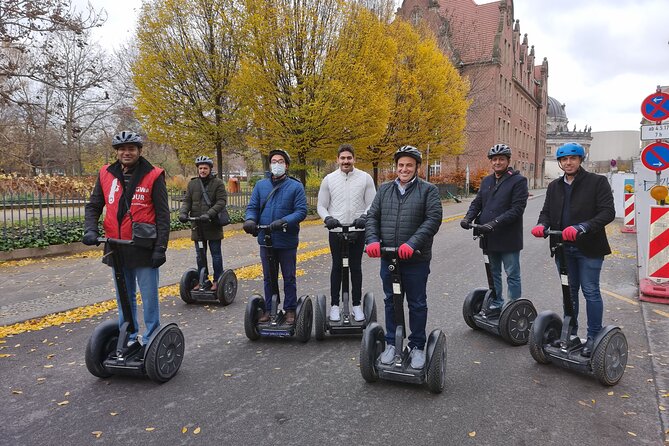
Munich’s Nazi-era story rides fast. This 3-hour Segway tour connects major landmarks tied to the rise of Hitler and the Nazi movement, with an English guide so the background makes sense as you move. You get to cover a lot of ground without feeling like you are just rushing between plaques.
I like the way this tour gets you onto streets and angles that cars cannot, so the city feels different from a normal walking route. I also love the clear focus on specific stops tied to the story, including places like the Führerbau and the Braunes Haus, explained in plain language you can actually follow.
One consideration: the route runs through central areas that can feel busy, and if you are hoping for only WWII-only monuments, the mix of streets and stops may not match your exact expectations. Also, if you are sensitive to crowds, dress and patience matter, since you will be moving with the group.
In This Review
- Key things to know before you go
- Riding Munich in 3 hours, and why it works
- Where you start, how long you have, and what group size means
- Getting comfortable on a Segway: the safety-first part you should take seriously
- The Nazi-era geography: why these specific stops matter
- Königsplatz and Führerbau: where the message took physical form
- Braunes Haus and propaganda-adjacent landmarks
- Hitler’s addresses in Munich: the story changes as the power grows
- White Rose and resistance: where the story turns toward consequences
- Beer halls, the old city finish, and why Hofbräuhaus shows up
- Price and value: is $82.82 per person a fair deal?
- Who this Segway tour is best for
- My call: should you book this one?
- FAQ
- How long is the Munich Third Reich and WWII Segway Tour?
- Where does the tour start and where does it end?
- Is the tour offered in English, and do I get a ticket on my phone?
- What group size should I expect?
- What day and time does it usually start?
- Can I cancel for free?
Key things to know before you go
- Cars can’t reach some of these spots, which is why a Segway changes how you experience central Munich
- English-guided history with named locations, including Königsplatz and Hitler-related addresses
- Small-group feel with a maximum of 20 travelers, so questions do not get lost
- Photo breaks are part of the plan, not an afterthought
- Cold-weather reality check: the Segway motion can make chill feel sharper than you expect
- You learn fast, and guides can support nervous riders before you roll out
Riding Munich in 3 hours, and why it works
If your Munich plan includes beer halls, museums, and the old center, this Segway tour can act like a “connect-the-dots” layer. Instead of picking one museum and hoping it covers everything, you get a guided route that links the physical city to the political story, then hands you landmarks you can later revisit at your own pace.
The big value here is motion. Munich can be deceptively big when you are walking, and you end up tired before you reach the interesting bits. On a Segway, you keep moving, so the guide can maintain the storyline from place to place. You are not just looking at buildings, you are getting the “why was this here, and what did it represent?” context along the route.
The tour is priced at $82.82 per person, which is not cheap. But for many visitors, the cost feels easier to swallow because you are buying time, safety coaching, and a structured route in a compact window. If you like efficient sightseeing that still feels personal, this is the kind of activity that justifies itself.
More Segway Rides in Munich
- Munich: City Highlights Guided Segway Tour
★ 4.6 · 266 reviews - Munich: City Highlights Guided Segway Tour
★ 4.5 · 161 reviews - Munich’s Highlights 3-hour Segway Tour
★ 5.0 · 76 reviews
Where you start, how long you have, and what group size means
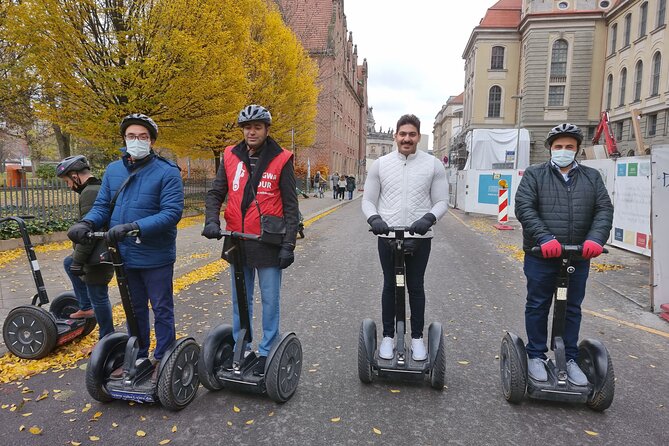
You meet at Artur-Kutscher-Platz 2A, 80802 München, and the tour ends back at the same point. The start time is 10:00 am, and the duration is about 3 hours. That matters because it frames the day: you can pair this with a morning museum plan or keep the afternoon flexible for food and exploring.
Group size caps at 20 travelers. In practice, that usually means you get a bit more breathing room for questions and photo stops than you would on a huge bus tour. One of the best signals from the reviews is how often guides were praised for taking time, helping riders get comfortable, and answering questions without rushing.
You should also take note of the day-of practicalities. The tour runs near public transportation, which is helpful if you want an easy connection from your hotel. And if weather is cold or windy, plan accordingly, because riding on a Segway tends to make chill feel more intense than just standing still.
Getting comfortable on a Segway: the safety-first part you should take seriously
The best Segway tours do two things well: they teach you quickly and they keep you calm while you learn. This experience is built for that. Multiple riders called out how easy it was to get the hang of the Segway, even if they were nervous at the start. Guides like Josef, Karl, Claudia, and Rawen were repeatedly praised for being patient, friendly, and helpful with first-time riders.
Here is what you should do to make your first minutes go smoothly:
- Wear gloves if it is chilly, your hands will thank you.
- Listen closely during the practice and slow-start phase, even if you think you already get it.
- If your Segway feels off in any way, speak up right away instead of trying to muscle through.
One review did mention a Segway malfunction and a rider falling backwards, thankfully without serious injury. That is not something you should expect, but it is a good reminder to pay attention and follow the guide’s directions. When something feels wrong, quiet embarrassment is not worth it.
The Nazi-era geography: why these specific stops matter
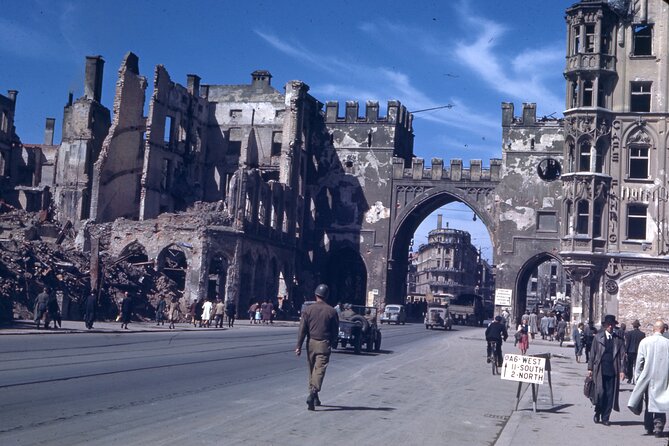
This is not a random “see the city” Segway loop. The route is organized around key locations tied to the Nazi period and the lead-up to WWII, with the guide explaining the rise of Hitler, the Beer Hall Putsch, and how Munich became a crucial stage for the movement.
Even if you already know the basics, the value is how the story is anchored in street-level reality. You see how power was projected through buildings, institutions, and public spaces. That turns names you learned in school into actual places you can point to.
Königsplatz and Führerbau: where the message took physical form
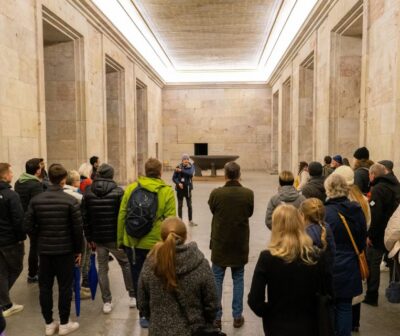
The route includes Königsplatz and the Führerbau, both used to frame authority. You will hear why these kinds of ceremonial spaces mattered, and how the early push of the movement gained visibility. The guide’s job is to keep it clear, including how the Munich setting tied into the movement’s early political momentum and why some attempts, like the Beer Hall Putsch, did not play out as hoped.
One practical benefit of starting this way is that you get a “map in your head” early on. Once you understand what each place represents, later stops feel less like unrelated sightseeing and more like a guided argument in history form.
Further Third Reich and wartime history tours:



Braunes Haus and propaganda-adjacent landmarks
As you roll onward, you will pass sites connected to Nazi power, including the Braunes Haus. You also make room for stops tied to cultural institutions and public messaging, such as Haus der Kunst. In a short tour, the goal is not to turn you into an expert. It is to show you the thread: political control often shows up in who gets to use buildings, shape public life, and define what culture should look like.
If you are the type who likes to understand “how,” these stops tend to hit the mark. Instead of only focusing on events, you get the setting that helped those events gain traction. That can make later museum visits more meaningful, because you recognize buildings and themes you already encountered on two wheels.
Hitler’s addresses in Munich: the story changes as the power grows
One of the more striking parts is the inclusion of Hitler-related apartments from different years, including an apartment noted for 1920-29 and another marked for 1933. The point is not just that he lived in Munich at all. It is that his life and the movement’s influence shifted over time, and the city reflects that change.
Seeing these addresses on a Segway adds something walking cannot. You are not stuck reading one placard for 15 minutes. You are moving through the surrounding streets, so you get a stronger sense of location and scale.
You may also notice other landmarks along the way that help you connect daily-life Munich with the political story, including institutional squares and major civic sites listed on the route, such as Maximilianeum and Odeonsplatz.
White Rose and resistance: where the story turns toward consequences
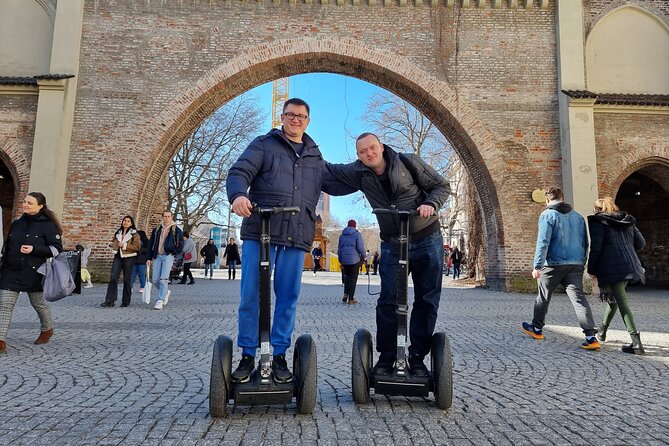
The tour includes a stop tied to the White Rose. That is where the narrative often shifts from the rise of the movement to the cost and pushback. Even in a short 3 hours, having a resistance thread matters because it keeps the story from becoming one-note.
If you have teens or older kids who want the “what happened next” angle, this portion helps. It gives context for why the end of the story was not just about leaders, but also about people who refused to go along.
The guide’s pacing is key here. You want enough time to absorb the significance of what you are looking at, without turning the ride into a lecture. The positive reviews repeatedly praised guides for taking time with questions and for keeping the tone clear and understandable.
Beer halls, the old city finish, and why Hofbräuhaus shows up
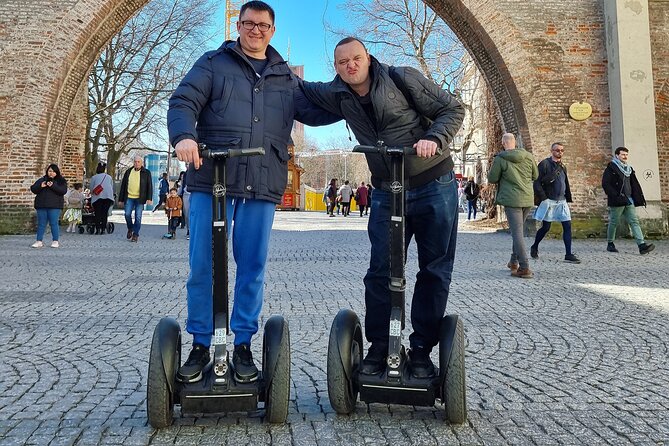
The route rounds toward well-known central landmarks, including Hofbraukeller and Hofbräuhaus, plus Residenz München and other classic stops such as Angel of Peace. This can feel odd at first if you assume you are only riding between grim WWII sites. But that mix is actually useful.
Munich did not pause history while the Nazi era unfolded. Everyday life and famous meeting places continued to shape the setting around political events. Seeing a Beer Hall landmark and then immediately connecting it to the movement’s story helps you understand how power tried to blend into normal life, and how public spaces become stages.
If your goal is to get a “complete picture” fast, this finale can stick with you. You do not end the tour in a quiet corner. You end in a place where the city is still itself, which is exactly what travel should do.
Price and value: is $82.82 per person a fair deal?
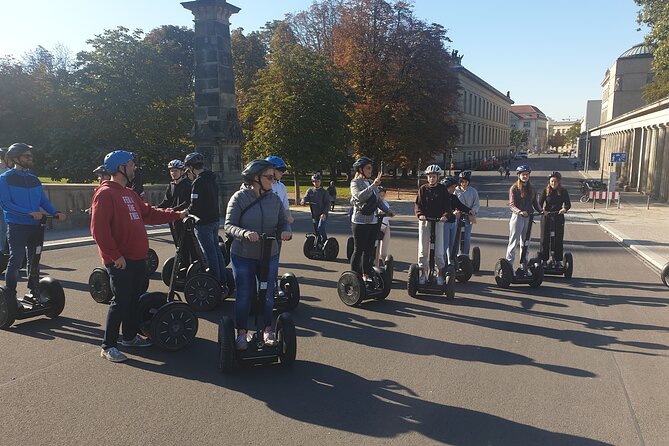
At $82.82, you are paying for a few things at once:
- a guided English storyline tied to named sites
- Segway training and equipment time
- the ability to cover more ground than walking in the same time window
- small-group pacing with a cap at 20 travelers
- time for questions and photos, which helps learning stick
If you are the type who enjoys history but hates getting stuck in museums with limited context, this tour is often a good match. You get a guided arc across multiple locations, then you can decide what to revisit later.
On the flip side, if you only want the most famous WWII dark sites and nothing else, you might feel the mix is broader than expected. One rider also described feeling disappointed by a day that leaned more into shopping-area streets, so you should go in ready for a route through central Munich, not a bunker-only crawl.
Who this Segway tour is best for
This experience is a strong fit for:
- families and couples who want a lot of landmarks in a single morning
- travelers who find walking tiring and want momentum
- history-curious people who like clear explanations tied to real places
- first-time Segway riders, since the guides are often praised for support
If you are traveling with kids, the ride can be a real win because it feels like an activity, not only a history lesson. And several guides were praised for patience, which matters when you have a teen who is unsure on the platform at the start.
If you are extremely sensitive to crowds or you dislike any chance of equipment issues, consider your comfort level before booking. The tour is limited to 20, which helps, but downtown Munich can still feel busy.
My call: should you book this one?
I think this is a smart choice when you want Munich’s WWII-era story mapped onto the city quickly, with a guide who handles questions well and helps riders feel confident on the Segway. The strongest selling points are the fun way to cover ground, the named landmarks, and guides who were repeatedly described as friendly, patient, and practical, including Claudia, Josef, Karl, and Rawen.
Skip it or reconsider if you want an ultra-focused, only-WWII monument route, or if you know you dislike crowded central streets. Also dress for movement and cold. A 10:00 am ride can feel colder than you expect once you are gliding through open areas.
If you want a morning that mixes motion with meaning, this tour is an easy yes.
FAQ
How long is the Munich Third Reich and WWII Segway Tour?
It runs for about 3 hours.
Where does the tour start and where does it end?
The tour starts at Artur-Kutscher-Platz 2A, 80802 München, and it ends back at the meeting point.
Is the tour offered in English, and do I get a ticket on my phone?
Yes. The tour is offered in English and you receive a mobile ticket.
What group size should I expect?
The tour has a maximum of 20 travelers.
What day and time does it usually start?
The start time shown is 10:00 am.
Can I cancel for free?
Yes. You can cancel up to 24 hours in advance for a full refund, with changes needed at least 24 hours before the start time.
Kilometres, Standing Up
- Munich: Third Reich and World War II Segway Tour of the City
★ 4.1 · 44 reviews - 2-Hour Segway Discovery Tour Munich
★ 5.0 · 20 reviews - Munich 2-Hour Segway Tour
★ 5.0 · 15 reviews - 3-H Munich: City Highlights Guided Segway Tour
★ 4.8 · 7 reviews
Fresh on the arrivals board for Munich





Third Reich & World War II Tours, compared.


Berlin’s Best: 2 Hour Walking Tour Third Reich and the Cold War
Read our review →
Third Reich Berlin: Hitler and WWII Walking Tour
Read our review →
Walking Tour of Former Nazi Party Rally Grounds
Read our review →
Browse the lists this tour appears in