
Reviewed · CITY TOURS
Luxembourg to Trier: Tour of Germany’s Oldest City.
Trier is Germany in Roman mode. This day trip from Luxembourg packs Porta Nigra and St. Peter’s Cathedral into a tight, easy plan that also gives you time to wander on your own. I like how the route is built around the big “you are here” landmarks, so you always know where the story is heading. One drawback to think about: it is a full sightseeing day, so if you want slow travel and long museum time, you may feel rushed.
What I really like is the blend of Roman power and later culture, with stops like the Basilica of Constantine area and the St. Barbara Roman Baths. You also get guided context before you go freeform in the market-square area, so you can make your own choices without getting lost. The only real consideration is that a couple of the listed place names look a bit off, so I recommend keeping your schedule flexible and asking the guide to confirm the exact stop wording when you meet.
In This Review
- Key highlights worth planning for
- Luxembourg to Trier: how this 5.5-hour plan works in real life
- Meeting point at Luxembourg Gare Centrale, next to Oberweis
- First stop: Porta Nigra and stepping into Roman Trier
- Constantine-era highlights: Aula Palatina and the Basilica of Constantine
- Roman Trier in walking form: amphitheater and St. Barbara Roman Baths
- Karl Marx House: ideas in the same streets as emperors
- St. Peter’s Cathedral and the “look downstairs” moment
- Market Square free time: St. Peter Fountain and your own pace
- Price of about $129: what you’re really paying for
- Guides matter: the difference between a tour and a story
- Who this Trier day trip is best for
- Should you book this Trier day trip?
- FAQ
- Where is the meeting point in Luxembourg?
- How long is the tour?
- What languages are available?
- Is there time to explore Trier on my own?
- What is included in the price?
- Do I need any ID and are pets allowed?
Key highlights worth planning for
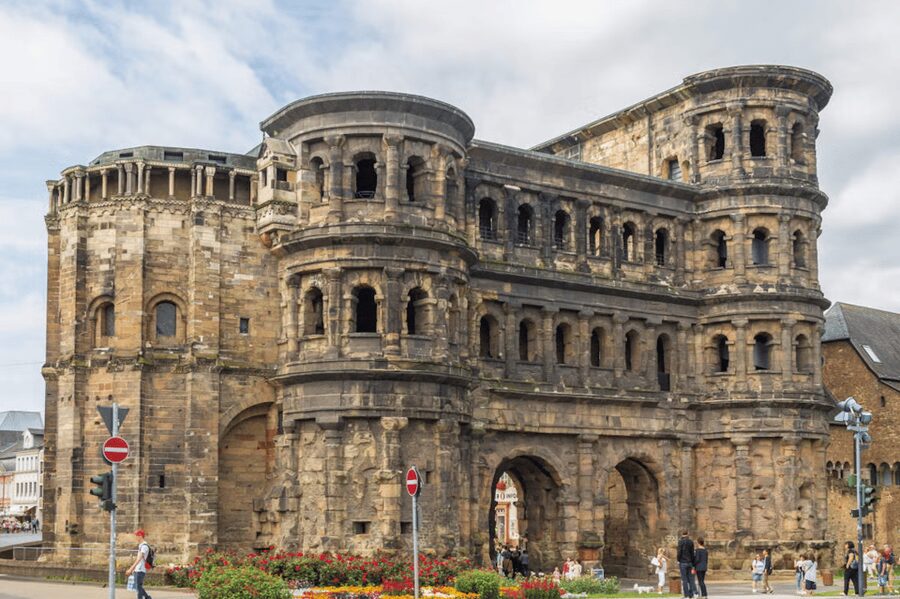
- Porta Nigra (Black Gate), with the guide explaining why the stones look black
- Basilica of Constantine era, including the famous apse throne story (from the Roman emperor)
- St. Barbara Roman Baths, a UNESCO World Heritage Site stop on the walking route
- Karl Marx House, a 1727 birthplace-turned museum with socialism and communism context
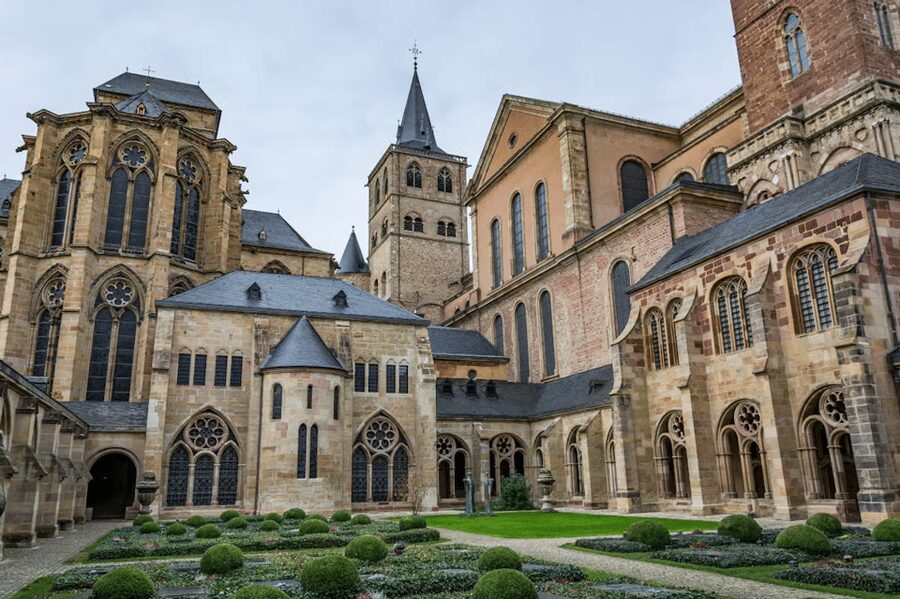
- St. Peter’s Cathedral, including original 10th-century walls and a “look downstairs” moment
- 2 hours of free time after the guided portion, so you can choose what to linger over
Luxembourg to Trier: how this 5.5-hour plan works in real life
This is a day trip that starts right where you are, with the meeting at Luxembourg Gare Centrale (Tram). You’ll take a round-trip train ride of about an hour each way, which matters because it keeps the day from turning into a travel marathon. The total time is listed as 330 minutes, so you’re looking at roughly a half-day of guided time plus a solid block to roam.
The best part of this kind of format is clarity. With a guided route, you don’t spend your energy figuring out what to see first. With free time, you also don’t feel trapped in a checklist. For me, that balance is what turns “I should see Trier” into “I actually saw Trier.”
A small-group size, limited to 15, is also a big deal on a walking itinerary. It tends to make the pace more human and the explanations easier to hear. If you’re the type who likes good guiding rather than just moving from stop to stop, this format fits.
Also holding a platform in Trier
- Trier: Guided City Walk with Wine Tasting
★ 4.8 · 979 reviews - Trier: Guided Old Town Highlights and History Walking Tour
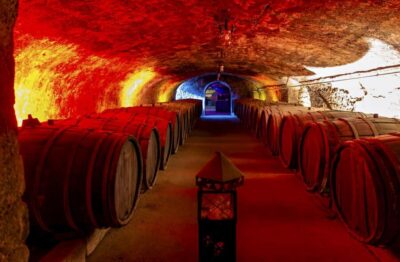
★ 4.7 · 687 reviews - Trier: Discovery Tour – Germany’s Oldest Wine Cellar
★ 4.7 · 218 reviews
Meeting point at Luxembourg Gare Centrale, next to Oberweis
You meet the guide at the entrance of the train station, next to the Oberweis café. That detail helps a lot because these day trips can get chaotic right before departure. Show up early enough to check signage and avoid standing around in the wrong place.
Languages are English and Spanish, and you get a live guide for the full route. In practice, that means you can ask quick questions as you walk, and you’re not stuck reading plaques alone. The group is small, so it is easier to get personal help if you have timing questions or want a recommendation for your free time.
If you travel with kids, you’ll still likely enjoy the day, but keep expectations realistic. This is history you can see, not a long stop at one giant museum. Bring energy for walking and staircases, especially near the cathedral area.
First stop: Porta Nigra and stepping into Roman Trier
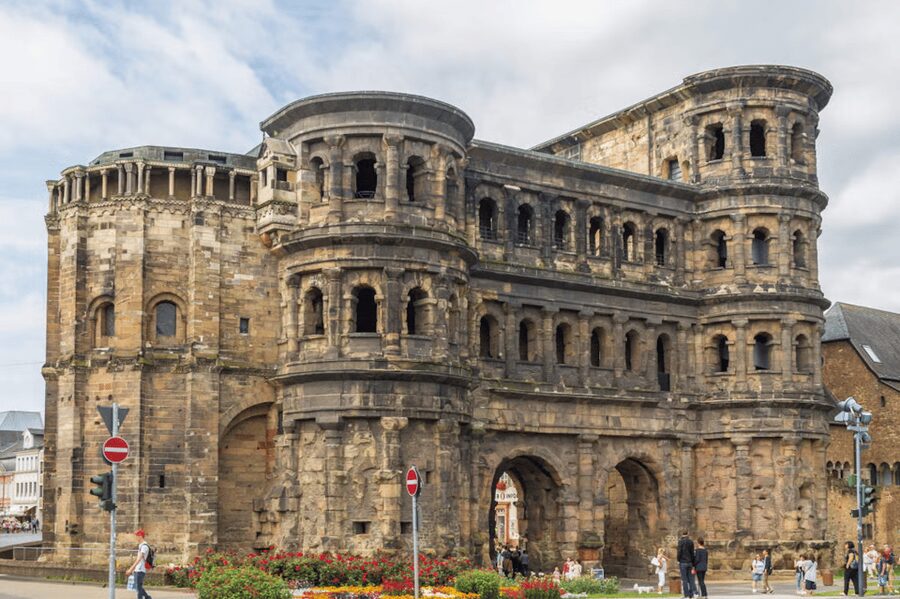
The day kicks off at Porta Nigra, the Black Gate. You get a guided look for about 30 minutes, and the gate is framed as the largest Roman-style entrance in the world. That is a big claim, but the bigger point is this: the gate is one of those places that instantly makes Rome feel real, not distant.
The guide also points out why the stones are black. Even if you’ve seen photos, the explanation changes the experience because you stop treating it like a postcard and start looking at the material and what time does to stone. I like that the tour builds curiosity early, so you’re ready for the rest of the Roman sites without needing a history class first.
There’s also a practical win here. Porta Nigra is the kind of landmark you can use as your mental anchor for the day. After the gate, it is easier to understand where you are in the old town and why the next stops are placed where they are.
Constantine-era highlights: Aula Palatina and the Basilica of Constantine
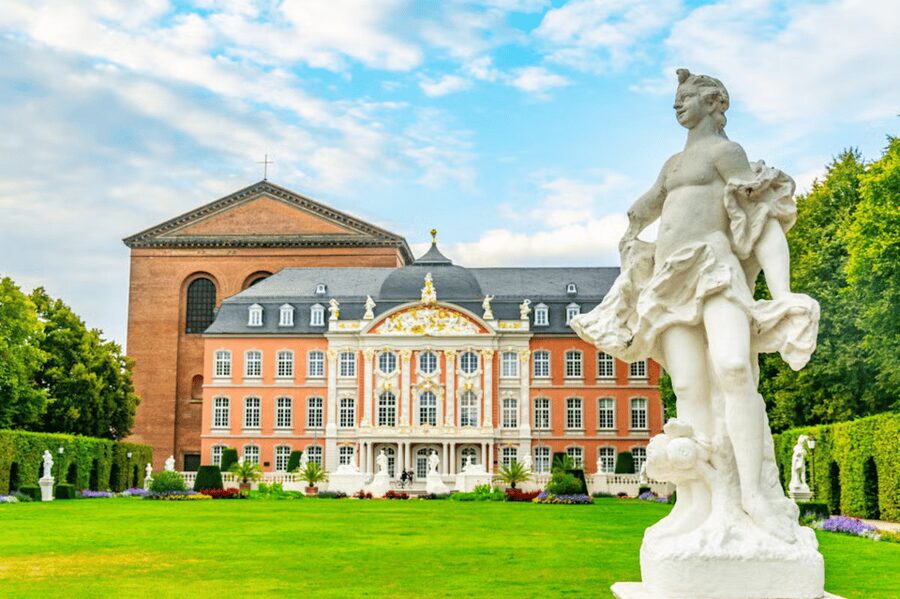
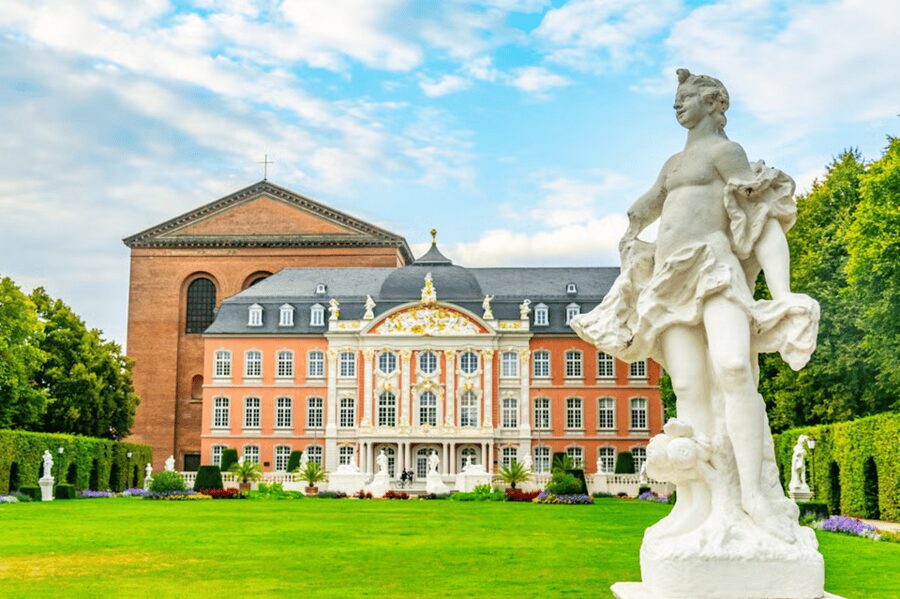
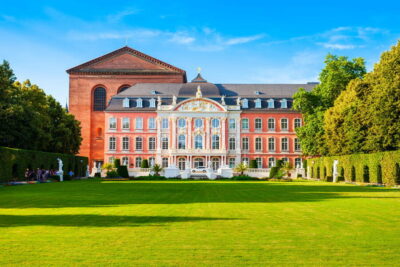
Next up is the Aula Palatina guided stop for about 25 minutes. From there, the tour focuses on the Constantine-era centerpiece, the Basilica of Constantine, built in the year 310. This is one of the most intriguing parts of the day because it connects architecture to political power.
One of the most memorable details is the apse story: it once housed the throne of the Roman emperor. That kind of detail gives you a mental picture of what this space was for, not just what it looks like now. When a place is tied to a specific year and a specific function, it becomes much easier to follow the historical thread.
If you enjoy landmarks that have a direct relationship to events, this portion is a good fit. If you prefer modern explanations or contemporary culture, you might want to balance this Roman focus with your own sightseeing during the 2 hours of free time later.
Roman Trier in walking form: amphitheater and St. Barbara Roman Baths
Then the tour shifts deeper into Roman Trier. You’ll see the 2nd-century Amphitheater, presented as a place where history comes alive when you stand in the right spots and can picture crowds. Even without a long talk, an amphitheater adds drama to the route. It gives you scale, and it makes earlier stops feel more connected to daily life.
Nearby is the St. Barbara Roman Baths, also listed as a UNESCO World Heritage Site. The bath stop is valuable because it broadens Roman life beyond monuments and entrances. You’re not only looking at power and politics, you’re seeing what a city did for health, routine, and social time.
This part is also where the guided pace matters. Roman ruins can be confusing if you’re on your own, because the lines between structures are not always obvious. A guide helps you read the space, and then you can walk away with a clearer mental map.
Onward connections from Trier:

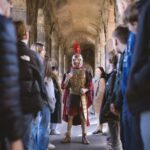
Karl Marx House: ideas in the same streets as emperors
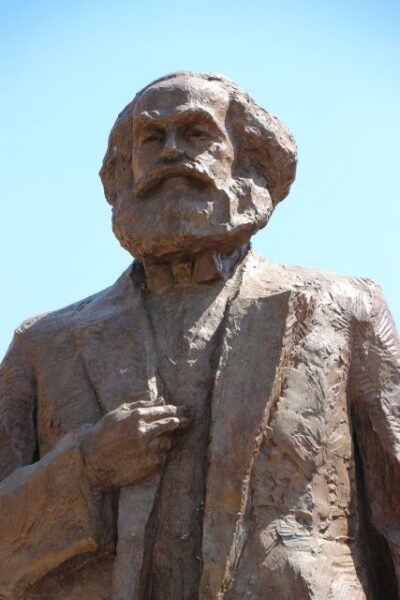
After Roman Trier, you pivot into later history at the Karl Marx House, with a guided visit of about 20 minutes. It is described as the birthplace built in 1727 and now a museum about the story of socialism and communism.
I like this stop because Trier is not only an ancient city. You can sense how later thinkers lived in the shadow of older buildings, and how ideas marched through history even when the architecture changed. This is the kind of contrast that makes a short day trip feel fuller, not shallower.
You do not need to be an expert on Marx to enjoy it. The museum framing is built for visitors, and in a guided format, you can pick up the basics quickly and then decide how much you want to absorb. If you’re traveling with someone who likes philosophy or modern political history, this is a satisfying counterweight to the Roman sites.
St. Peter’s Cathedral and the “look downstairs” moment
The tour then highlights Trier’s most important landmark: the St. Pierre (St. Peter’s) Cathedral. You’ll have about 20 minutes with a guide, plus the inside details matter. The tour description includes altars and tombs, and it points out original 10th-century walls.
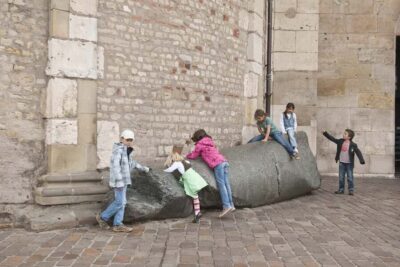
One extra detail stands out: the instruction to go downstairs and look out for the cathedral’s mysterious guardian. Even if you don’t know what you’re looking for, the guide’s hint encourages you to pay attention when you enter lower areas. That turns the visit from a quick look at the main hall into something with a little story-payoff.
This is also where I recommend a practical approach. If you arrive and the cathedral is crowded, be patient and follow the guide’s path first. Once you get the layout, you can decide how long you want to linger on tombs, altars, and specific architectural features.
Market Square free time: St. Peter Fountain and your own pace
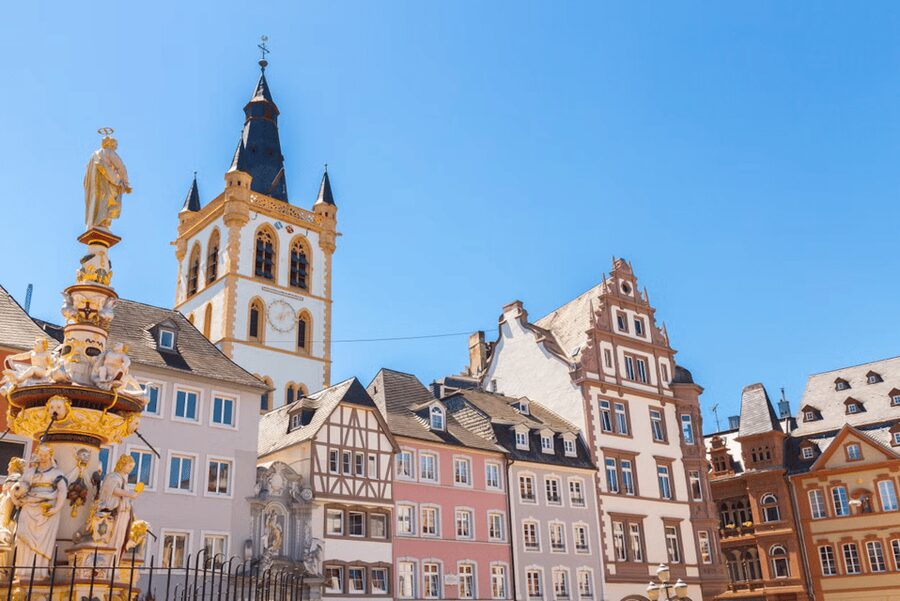
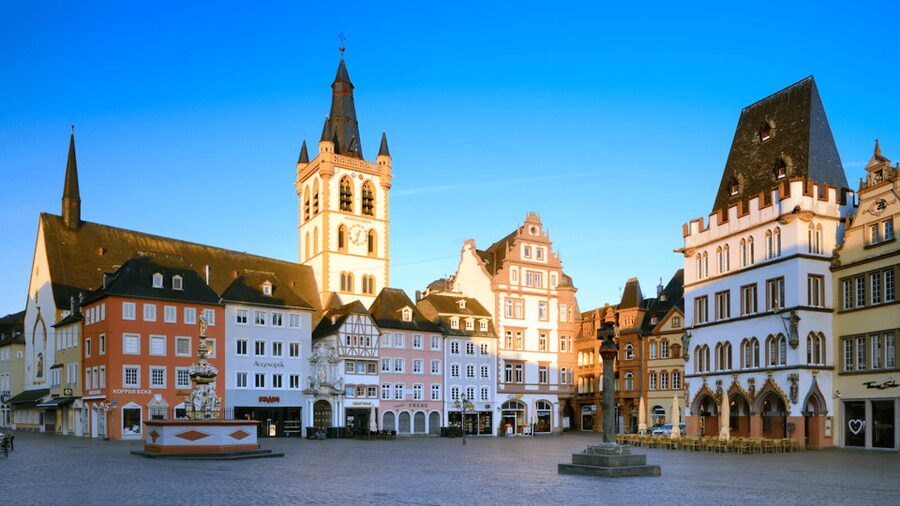
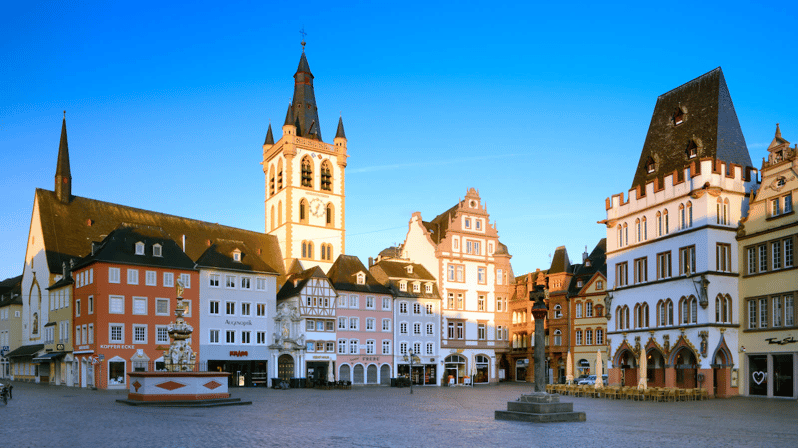
After the main guided portion, you get 2 hours of free time to continue exploring Trier at your own pace. This is one of the best perks of the whole day. It lets you slow down and choose what you care about most after the guide has given you a map of the city.
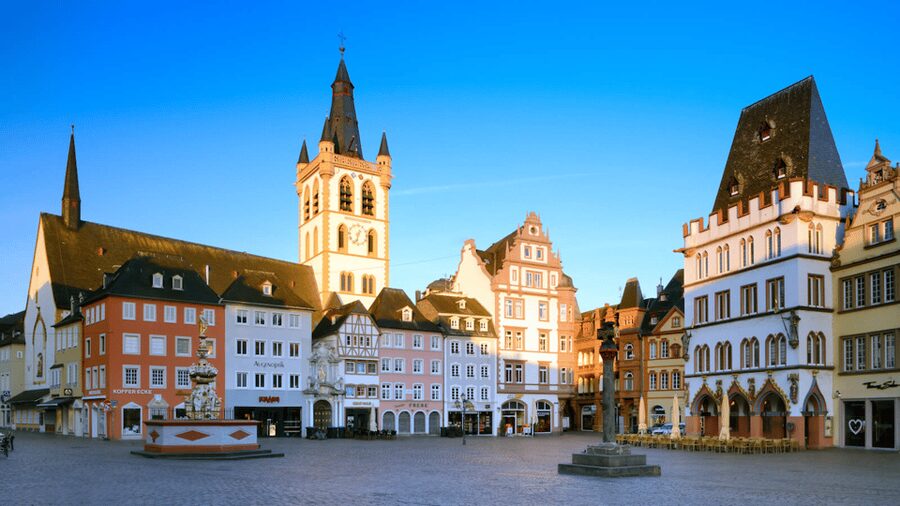
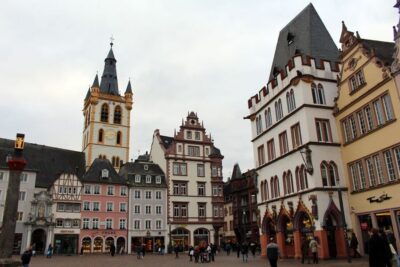
The day trip focuses your attention on Market Square, with colorful houses and flower and fruit stalls. You’ll also find the St. Peter Fountain, called out as a perfect photo moment. If you want a coffee and a place to people-watch, this is where you’ll naturally end up.
I suggest using this time strategically: don’t try to add 10 new sights. Instead, pick one or two things that match your energy level. If you feel museumed-out, head for a short walk around the square and nearby streets. If you still have steam, you can look for extra Roman or medieval details that caught your eye during the guided tour.
A small note on place names: the written itinerary text you receive may mention Market Square near a different city name. The rest of the day trip description clearly points to Trier’s Market Square and St. Peter Fountain, so if you see any confusing label on your materials, ask the guide to confirm where the free time starts.
Price of about $129: what you’re really paying for
At $129 per person for a roughly 5.5-hour day, you’re paying for three things. First, you’re paying for the round-trip train ticket. Second, you’re paying for a live guide covering a dense cluster of sites without you having to plan transport within the city. Third, you’re paying for a small group size that keeps the day more manageable.
This price makes more sense when you add up the alternative. If you try to do Trier independently from Luxembourg, you’ll spend time figuring out timing, route order, and which Roman sites are worth the effort. Here, the route is designed so you hit the heavy hitters: Porta Nigra, Constantine-era sights, Roman Baths, Marx House, and St. Peter’s Cathedral, then you top it off with free time.
You also get English or Spanish guiding, which can be huge if you want history explained in plain terms rather than pieced together from signs. The tour’s overall structure is built for maximum payoff in a limited timeframe, which is exactly what you want in a day trip.
Guides matter: the difference between a tour and a story
The quality of guidance is one of the strongest parts of this experience. The tour’s guides have been praised for clear, informative storytelling and for making the sites understandable fast. Names that have come up include Anna, Ana, and Paulina, and the consistent theme is that they connect the landmarks to real context so you can follow along without feeling overwhelmed.
If you’re picky about tours, this is where to focus. A Roman city can turn into confusion if someone just says the same basic facts at every stop. Here, the guides are described as engaging and organized, which helps you leave with a sense of cause and effect, not just a pile of monuments.
This is also where the small-group limit works in your favor. When there are fewer people, the guide can keep an eye on the group and adjust the pace.
Who this Trier day trip is best for
This tour is ideal if you want a one-day snapshot of Trier without spending hours planning. It suits history lovers, architecture spotters, and anyone who likes seeing major landmarks with explanations before roaming.
It also works well for couples and friends because the guided portion gives you shared highlights, and the free time lets each person decide what to focus on. If you’re traveling solo, the structured route reduces the stress of navigating a foreign city on your own.
Where it might be less ideal is if you hate walking, or if you want to spend lots of time inside buildings beyond a guided look. The day is compact, so you’ll need to pace yourself and save your biggest questions for the free time when you can slow down.
One more practical note: pets are not allowed. Bring your passport or ID card, since the tour explicitly requests it.
Should you book this Trier day trip?
I’d book it if you want a focused day trip from Luxembourg to see Trier’s standout landmarks with a live guide, then finish with a couple hours to wander. At $129, the value comes from the combination of guided time, small group size, and a train day that runs smoothly without you piecing it together yourself.
Skip it or ask questions first if you know you need more time at each site, or if you prefer a slower pace with heavier museum time. Also, if the confirmation message you receive has odd or mismatched stop names, message the operator or confirm with the guide at the start, so you’re clear on what you’re actually visiting.
FAQ
Where is the meeting point in Luxembourg?
You meet the guide at the entrance of Luxembourg Gare Centrale (Tram), next to the Oberweis café.
How long is the tour?
The tour duration is listed as 330 minutes.
What languages are available?
The live guide offers English and Spanish.
Is there time to explore Trier on my own?
Yes. After the guided portion, you get 2 hours of free time to continue exploring Trier at your own pace.
What is included in the price?
The price includes the round-trip train ticket and guided tour of the entire route.
Do I need any ID and are pets allowed?
Bring a passport or ID card. Pets are not allowed.
Fresh on the arrivals board for Trier
City Tours, compared.
1-Hour City Tour by Boat with Guaranteed Seating
Read our review →
Berlin City walk Government District and Places of Democracy
Read our review →
City History Canal Sightseeing Tour on a Motorboat
Read our review →
Browse the lists this tour appears in