
Reviewed · THIRD REICH & WORLD WAR II TOURS
Hitler’s Berlin – the rise and fall (Small Group)
Berlin tells hard truths on a short walk. This small-group Hitler’s Berlin tour connects the Nazi rise and fall to specific sites, with expert WWII context and Then & Now photographs that help you see how places changed.
I like that you get a tight route with room for Q&A and reflection, not just a rushed lecture. I also like that the stops focus on victims and responsibility, not only big-name buildings. The main drawback is the topic is heavy, and you’ll be on your feet for about 2.5 hours with limited chances to sit, so plan your pace.
In This Review
- Key things you will notice on this route
- A small-group route through Nazi Germany’s key sites
- Starting at Pariser Platz, then walking to Topography of Terror
- Stop 1: Memorial to the Sinti and Roma Victims of National Socialism
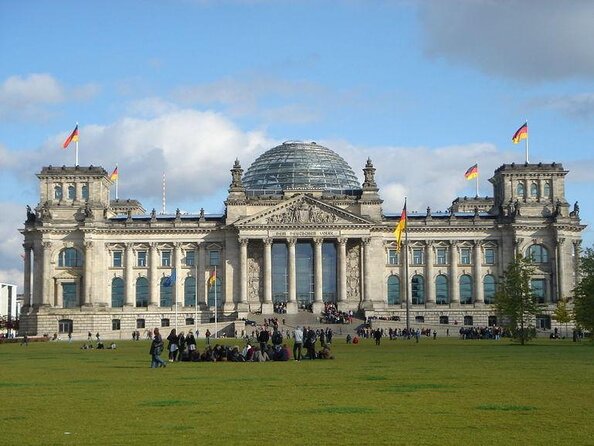
- Stop 2: Reichstag building and the rise to power
- Stop 3: Soviet Memorial Tiergarten and the cost of the Battle of Berlin
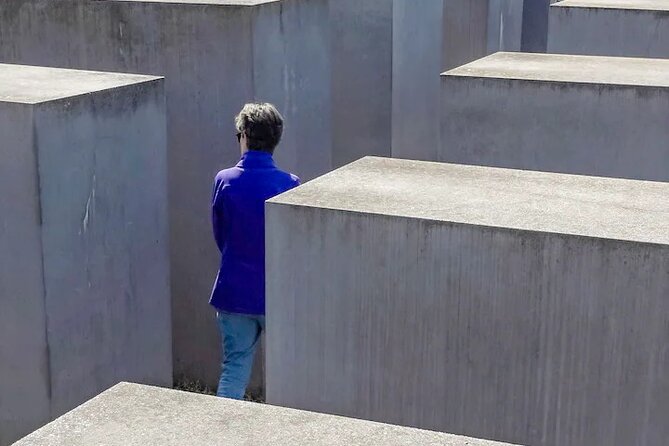
- Stop 4: Memorial to the Murdered Jews of Europe
- Stop 5: Monument to Homosexuals Persecuted Under National Socialist Regime
- Stop 6: Führerbunker and Hitler’s final days
- Stop 7: Johann Georg Elser and resistance beyond famous names
- Stop 8: Aviation Ministry of Berlin, the building that signaled power
- Stop 9: Topography of Terror, where the Gestapo headquarters once stood
- Price and value for a 2.5-hour expert-led walking tour
- Who should book this tour, and who might want a different pace
- Should you book Hitler’s Berlin with a small group?
- FAQ
- How long is the Hitler’s Berlin small-group tour?
- What is the group size?
- Is the tour offered in English?
- Where does the tour start?
- Where does the tour end?
- Is admission included for the stops?
- Does the tour include food or drinks?
- How fit do you need to be?
- What should I bring for weather?
- What if I need to cancel?
Key things you will notice on this route
- A compact loop of major sites: Brandenburg Gate area to Topography of Terror in about 2.5 hours
- Memorials come first: Sinti and Roma, then the Memorial to the Murdered Jews of Europe
- You connect ideology to real buildings: Parliament, the Nazi administration, and Hitler-related locations
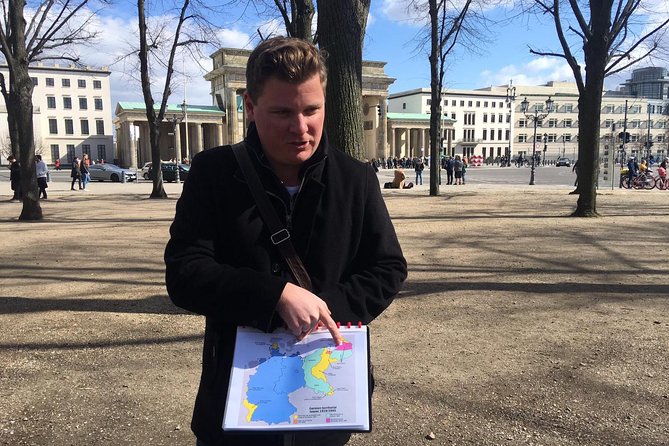
- A guide with academic WWII training and plenty of time for questions
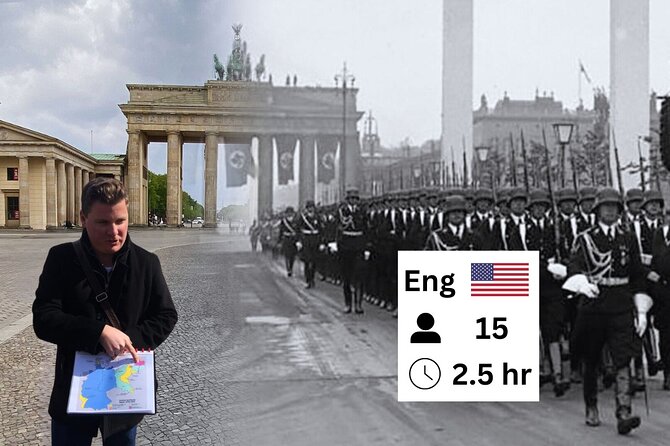
- Then & Now photos and historic maps to make the city’s changes feel real
- All ages and answers welcomed, within the group size (maximum 15 people)
A small-group route through Nazi Germany’s key sites
This is a walking tour built for comprehension, not speed. You spend a little time at each stop, then your guide ties it together into a clear story: how Nazi power rose, how persecution escalated, and how Berlin became a battleground and a place of forced remembrance after the war.
The small group format matters. With up to 15 people, you can ask questions and get responses that fit what you are curious about, not just generic facts aimed at the middle of the group. I also like that this tour keeps the focus grounded in places. When you stand in front of a memorial or a former government location, the history stops being abstract.
All the stops are close enough to feel cohesive. Even though Berlin’s scale can make visitors think everything is far apart, this route stays in a tight pocket. You get a big-picture view of major turning points without needing a transit hop every few minutes.
Further Third Reich and wartime history tours:
- Berlin: Third Reich & Cold War Guided Walking Tour
★ 4.9 · 8,378 reviews - Berlin’s Best: 2 Hour Walking Tour Third Reich and the Cold War
★ 5.0 · 5,486 reviews - Third Reich Berlin: Hitler and WWII Walking Tour
★ 5.0 · 3,301 reviews
Starting at Pariser Platz, then walking to Topography of Terror
The tour starts at Brandenburg Gate, Pariser Platz, 10117 Berlin. That’s a smart choice, because it puts you right in the “center gravity” of Berlin. You’re also not stuck trying to find a random side street while you’re still figuring out the city.
You’ll end at Topography of Terror, Niederkirchnerstraße 8, 10963 Berlin. The tour ends there, and your guide can suggest the best connection to whatever comes next. This matters if you have a museum, dinner, or a long evening plan, because Topography of Terror is well placed for continuing your day.
Timing-wise, plan for about 2 hours 30 minutes. That includes walking time and short stop-and-listen periods. You should expect a steady rhythm: a few minutes of context, a bit of quiet at memorial sites, then more walking.
And yes, it is outdoors. The tour operates in all weather conditions, but the experience may be canceled due to poor weather, with an alternate date or a full refund offered. So bring a practical layer system and dress for wind as much as for cold.
Stop 1: Memorial to the Sinti and Roma Victims of National Socialism
You begin with the Memorial to the Sinti and Roma Victims of National Socialism, and you get about 10 minutes here. This stop sets the tone. It’s not just names on stone, it’s the cruel social philosophies that Nazi Germany used to justify persecution. It also broadens the story beyond the Holocaust as many people first learn it.
Why this works: if you only focus on one persecuted group, the logic of escalation can feel disconnected. Starting here shows how Nazi ideology targeted multiple communities using dehumanizing claims. It also gives you a fuller view of what “Nazi terror” meant in practice, not only in headlines.
A practical note: memorial sites can feel emotionally intense, and they are often quieter than the city around them. If you want to take notes, do it early in the tour rather than trying to capture everything while you are processing the moment.
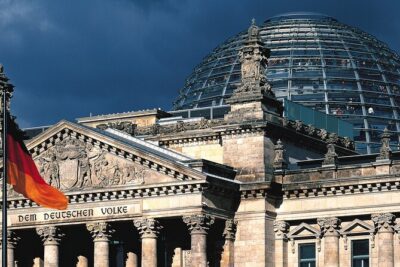
Stop 2: Reichstag building and the rise to power
Next is the Reichstag building, about 15 minutes. Here the conversation shifts from ideology and persecution to politics and power. Your guide explains how the Nazi Party gained power and how Hitler became Führer of Germany.
This stop is valuable because it helps you connect two things visitors often keep separate: democratic processes, and the way those processes can be manipulated. You’ll come away with a clearer sense of how dictatorship is not always a sudden event. It can be built from political leverage, propaganda, and institutional collapse.
There is also a Berlin-specific benefit. Seeing the Reichstag area within the context of the memorials you saw first gives you a more honest contrast between political “center stage” and what that stage enabled elsewhere.
Stop 3: Soviet Memorial Tiergarten and the cost of the Battle of Berlin
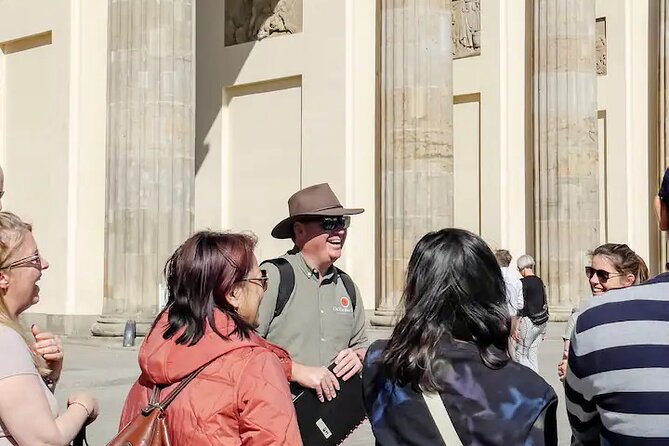
At the Soviet Memorial in Tiergarten, you get about 15 minutes. This is where the tour acknowledges Berlin as a wartime city, not just a symbolic one. The Battle of Berlin is described as one of WWII’s bloodiest operations, and your guide talks through the brutal fighting and what came after in terms of remembrance.
Why I like including this stop: it stops the story from being only about Nazi crimes and Nazi end days. World War II in Berlin included massive suffering on many sides. That does not dilute responsibility for Nazi atrocities, but it does sharpen your understanding of why Berlin looks the way it does today, both physically and in how it remembers.
You may also find this stop shifts your emotional focus, from genocide-focused memorials to battlefield remembrance. If you tend to feel overwhelmed by one tone for too long, this change of focus can help keep the story understandable.
Also holding a platform in Berlin

Stop 4: Memorial to the Murdered Jews of Europe
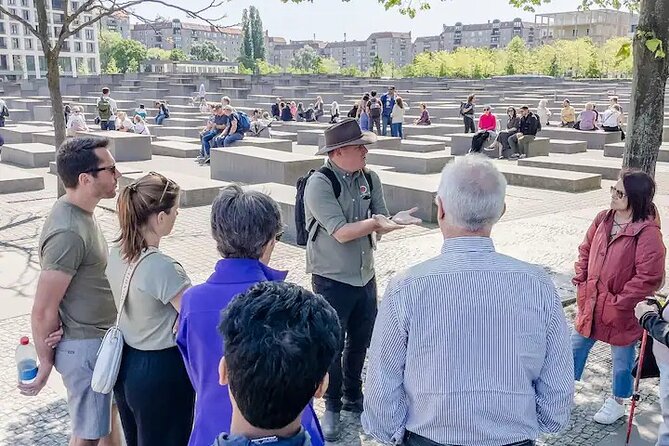
Then you reach the Memorial to the Murdered Jews of Europe, about 15 minutes. This is the largest ethnic group targeted by the Nazis, and your guide helps you interpret what you are seeing. The memorial also includes space for discussion, so you can talk about the meaning with your guide.
This is often the hardest stop. It is designed to be thought-provoking rather than explanatory, and the guide’s role is to make sure you leave with context instead of confusion. You get a chance to ask questions, and that helps if you have ever wondered why memorials can feel so abstract compared with more traditional museums.
A practical consideration: this is a high-attention area, but it can still be busy or noisy depending on the day. If you want quiet reflection, arrive with the mindset that you will have short moments of stillness, not a long solitary visit.
Stop 5: Monument to Homosexuals Persecuted Under National Socialist Regime
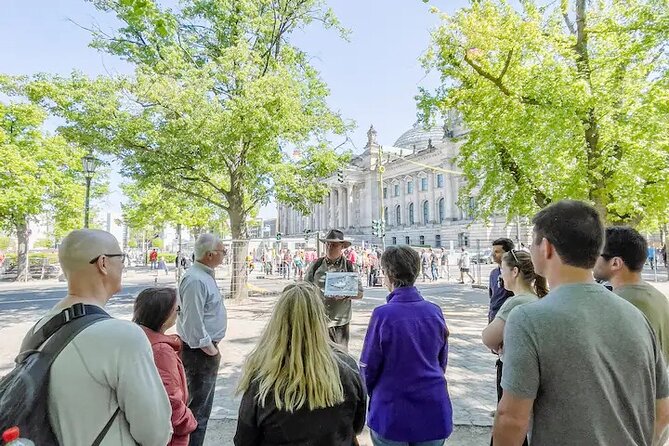
You spend about 5 minutes at the Monument to Homosexuals Persecuted Under the National Socialist Regime. Short stop, but it fills an important gap.
Many visitors first learn Nazi persecution through the most widely taught stories. This stop reminds you that the Nazi regime persecuted more than political opponents and the communities most commonly covered. Your guide frames how Nazi laws and social policies targeted LGBTQ people as part of a broader project of control.
Given the short time, keep your expectations realistic: this is a signpost for further learning, not the full story by itself. But it’s a strong one, and it helps you understand how persecution worked as a system.
Stop 6: Führerbunker and Hitler’s final days
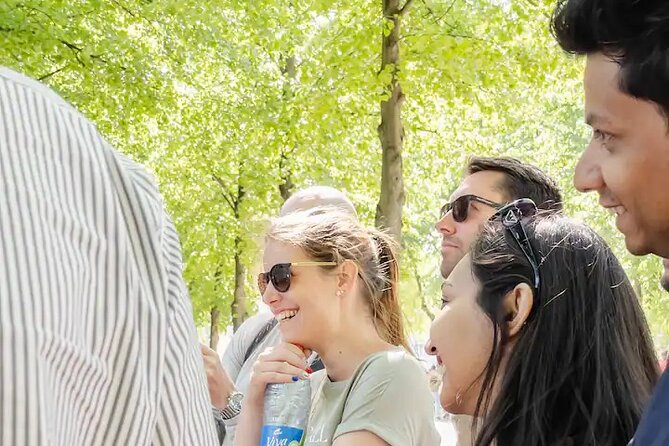
Next comes Führerbunker, about 15 minutes. This is where your guide talks about Hitler’s final days as WWII neared its end.
This stop can be surreal for visitors. You are hearing about the moment the regime collapsed, while standing in the city that still carries the scars of that collapse. You get the story of the bunker’s role, but more importantly, you get the narrative turn: from how Nazis gained power to how they ended, and what that ending meant.
A good mindset here is to focus less on spectacle and more on responsibility and consequences. If you let your brain treat it like a thriller setting, you’ll miss the lesson the guide is trying to shape.
Stop 7: Johann Georg Elser and resistance beyond famous names
At the Johann Georg Elser Memorial, you get about 15 minutes. This stop shifts the story toward resistance, and specifically Elser’s attempt to oppose the Nazi regime by playing a role in an assassination attempt against Adolf Hitler.
Why this matters: it complicates the usual narrative that only high-level leaders mattered. Elser represents the idea that opposition existed even under extreme risk. You’ll also hear how his story relates to the actions of others trying to resist.
This stop can land especially well if you came to Berlin wanting more than a timeline of oppression. It’s a reminder that people are not just victims or villains. They can be resistors too.
Stop 8: Aviation Ministry of Berlin, the building that signaled power
You then visit the Aviation Ministry of Berlin for about 5 minutes. The tour explains that, at the time of its construction, it was the largest office building in Europe, built in 1936 for the German Ministry of Aviation (Reichsluftfahrtministerium), led by Hermann Göring.
This is a quick stop, but it carries weight. Buildings can tell you what a regime prioritized. Aviation was tied to military capacity and expansion, so this location is not random. It’s a physical indicator of how the Nazi state invested in war-making.
If you love architecture that has history baked into it, you’ll appreciate the tour’s choice here. The guide doesn’t just point out a structure, they connect it to the machinery of power.
Stop 9: Topography of Terror, where the Gestapo headquarters once stood
Your final stop is Topography of Terror, about 20 minutes, including a break. This is the location where the Gestapo headquarters once stood, and you get time to reset.
The built-in break matters because it prevents the final part of the tour from becoming information overload. You also have a chance to get tea or coffee and use the restrooms. Food and drinks are not included in the tour price, so treat that break as an opportunity to buy something, not a free meal.
This ending location is powerful. After walking past memorials and major political sites, you reach the system’s operational heart. The tour’s arc often feels like it is tightening at the finish, and Topography of Terror is a strong place to bring that arc to closure.
Price and value for a 2.5-hour expert-led walking tour
At about $54.44 per person, this tour is priced in the mid-range for Berlin guided experiences. The value comes from the combination, not any one line item.
Here’s what you are really paying for:
- Small group format (maximum 15) for better interaction and questions
- An expert local guide with academic background in WWII history
- Guided visits to key Nazi-era sites and memorials in a compact route
- Then & Now photographs and historic maps to connect past and present
- Time for reflection and Q&A
Also, the listed stops note admission ticket free for each memorial and site in the route. That doesn’t mean you should treat Berlin memorials as “free attractions,” but it does reduce add-on costs and makes the value easier to calculate.
What’s not included is food and drinks. For a 2.5-hour tour with emotional stops, I’d plan a light snack earlier in the day and bring a bottle of water if you are the type who needs something small to keep going.
Who should book this tour, and who might want a different pace
This is a strong match if you:
- Want a half-day, walking-based introduction to Nazi Germany in Berlin
- Like clear connections between politics, ideology, and real locations
- Prefer a guide who can handle a heavy topic with sensitivity and answer questions
It may be less ideal if you:
- Want lots of seating or long museum-style explanations
- Are sensitive to graphic historical themes and want a softer introduction
- Struggle with walking on mixed city surfaces, even if the route is not described as extreme
One practical tip from how the tour tends to feel: wear comfy shoes and keep your expectations realistic about noise. Even with a guide and group listening time, street sound and wind can make a few words harder to catch. If you can, stay close enough to your guide to hear the important parts.
Should you book Hitler’s Berlin with a small group?
I’d book this tour if you want a structured, guided path through Berlin’s Nazi rise and fall that includes memorials first, not last. The itinerary choices make sense as a learning sequence, from targeted victims and ideology, to political power, to wartime devastation, to the sites tied to terror and resistance.
If you are short on time but want an experience that goes beyond photos and random browsing, this fits well. And if you like the idea of Q&A, small-group pacing, and using Then & Now visuals to understand how Berlin changed, you’ll likely find it worth your money.
FAQ
How long is the Hitler’s Berlin small-group tour?
It lasts about 2 hours 30 minutes.
What is the group size?
The tour has a maximum of 15 travelers.
Is the tour offered in English?
Yes, it is offered in English.
Where does the tour start?
The meeting point is Brandenburg Gate, Pariser Platz, 10117 Berlin.
Where does the tour end?
The tour ends at Topography of Terror, Niederkirchnerstraße 8, 10963 Berlin.
Is admission included for the stops?
For the listed stops, admission is marked as ticket free.
Does the tour include food or drinks?
No. Food and drinks are not included. There is a break at Topography of Terror where you can get tea or coffee.
How fit do you need to be?
The tour recommends moderate physical fitness. It is a walking experience with multiple stops.
What should I bring for weather?
The tour operates in all weather conditions, but you should dress appropriately. If the experience is canceled due to poor weather, you will be offered a different date or a full refund.
What if I need to cancel?
Cancellation is free if you cancel up to 24 hours in advance for a full refund. If you cancel less than 24 hours before the start time, the amount paid is not refunded.
Fresh on the arrivals board for Berlin



Third Reich & World War II Tours, compared.

Berlin’s Best: 2 Hour Walking Tour Third Reich and the Cold War
Read our review →
Third Reich Berlin: Hitler and WWII Walking Tour
Read our review →
Walking Tour of Former Nazi Party Rally Grounds
Read our review →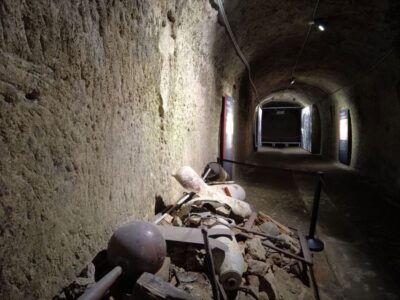
Browse the lists this tour appears in