
Reviewed · MUSEUMS
Hamburg: Entrance to the Museum Ship Cap San Diego
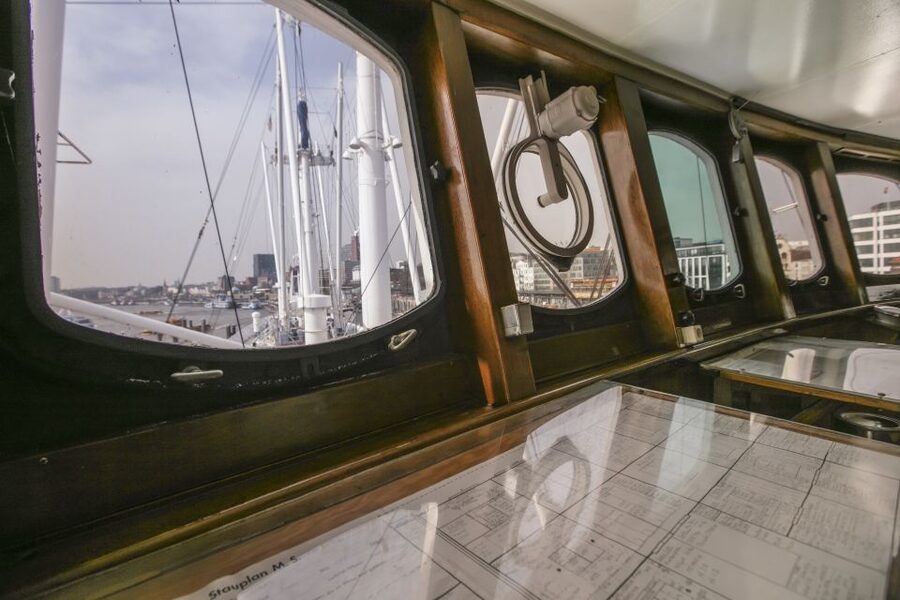
Hamburg’s harbor ships you won’t forget. Cap San Diego lets you roam a real cargo ship and time-travel into the 1960s and 70s, with views from the bridge to the engine room. You can explore at your own pace, and the setting makes the stories feel physical.
Two things I really love here. First, it is the largest civil museum ship in the world, and you feel that scale as you move from decks to hatches. Second, the content connects shipping to real human outcomes, including a documentary focused on the fate of emigrants between 1850 and 1930.
One drawback to plan around: it is not wheelchair accessible and there are multiple flights of stairs. If you have claustrophobia or mazeophobia, the ship layout can feel like a lot.
In This Review
- Key Points You Should Know Before You Go
- Hamburg’s Cap San Diego Turns a Cargo Ship Into a Time Machine
- Where to Start: Finding the Ship Entrance at the End of Überseebrücke
- A Self-Guided Walk That Feels Like Bridge to Hatch
- The 1960s to 70s Voyage Theme, and Why It Works
- The Documentary on Emigration: A Suitcase Full of Hope
- Hatch 2: General Cargo and Container Handling From 1960 to Today
- The Engine Room Experience: Feeling the Steady Pulse
- Relax Time in the Saloon, and the Ship’s Human Side
- Price and Value: Is 14 Dollars for a Whole Day Fair?
- Timing Your Visit: How to See the Best Bits Before Closing
- Who This Museum Ship Is Best For, and Who Should Think Twice
- What the Onboard Staff Adds (Even Without a Live Guide)
- Should You Book Cap San Diego in Hamburg?
- FAQ
- How much does the Hamburg Cap San Diego entrance cost?
- How long is the visit?
- Where do I go to enter the museum ship?
- What are the opening hours?
- Is the tour guided by a live person?
- Is the ship wheelchair accessible?
Key Points You Should Know Before You Go
- Big ship scale, not a small exhibit: you spend your time walking the ship, from bridge areas down toward the machinery.
- Self-guided means you control the tempo: pause for the documentary, then choose whether you go deeper into technical spaces.
- South Atlantic storytelling: the ship experience frames a voyage route from the Atlantic to Rio de Janeiro and Buenos Aires and back.
- Emigration story focus: the on-board film links Hamburg to the emigrant experience from 1850 to 1930.
- Hatch 2 gives you shipping context: the General Cargo and Container Handling exhibition explains how freight transport changed from 1960 to today.
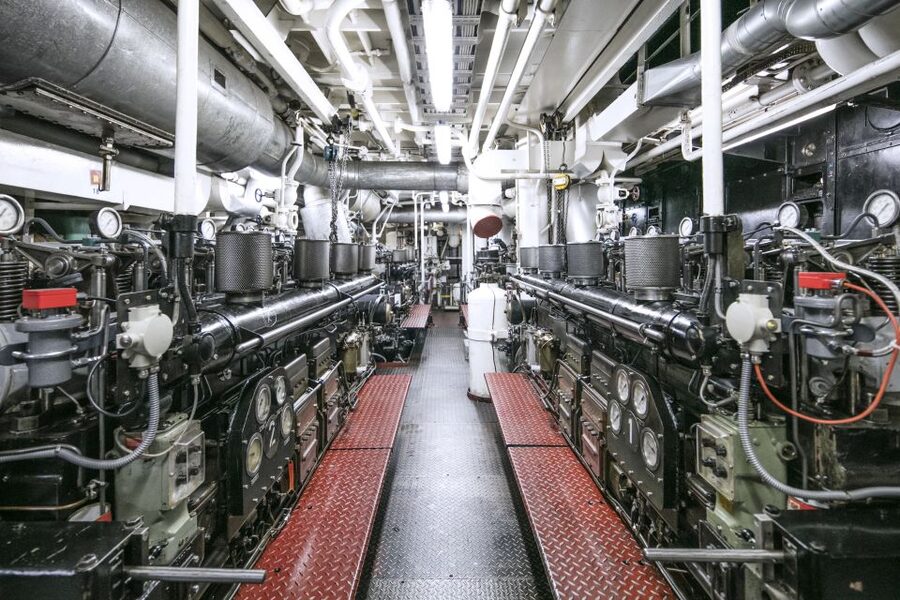
- Engine room energy: you can stand deep in the Machine Room to feel the steady pulse of the engines.
Hamburg’s Cap San Diego Turns a Cargo Ship Into a Time Machine
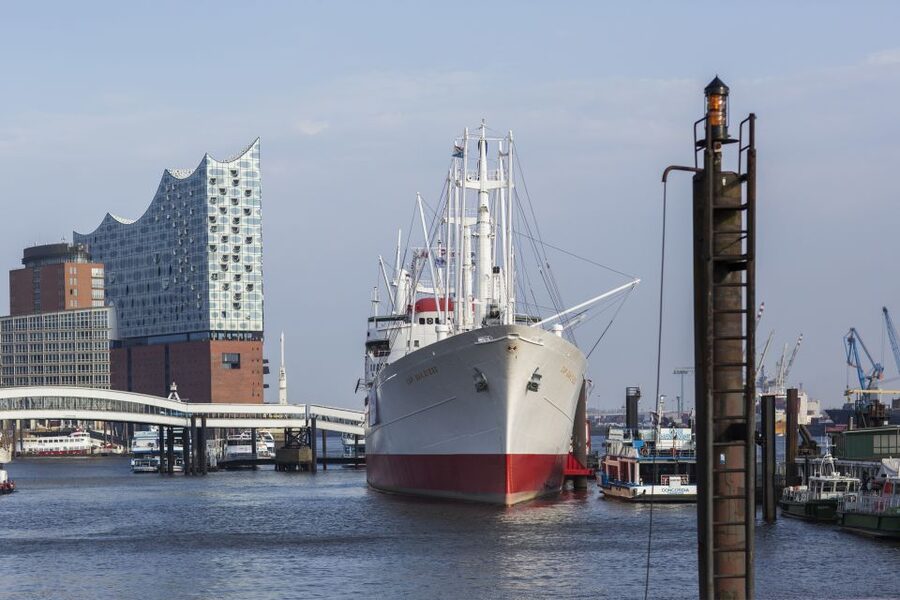
Hamburg has plenty of sea-themed stops, but Cap San Diego is in a special class. This is not a static model or a single room with artifacts. It is a full museum ship, and it was built to do a very specific job: fast general cargo shipping.
Cap San Diego is the last surviving ship in a series of six fast general cargo ships built in 1961 and 1962 for Hamburg Süd. It carried freight to South America until the end of 1981, then became a museum ship in 1988. That timeline matters because you are not just looking at history, you are walking through it in the way the ship was designed to be used.
And the best part is how the experience is framed. You get an imaginary journey to the 1960s and 70s, across the Atlantic Ocean to Rio de Janeiro and Buenos Aires, and back again. It helps you understand what life aboard might have felt like, whether you picture yourself as a lookout on the bridge or as someone deep inside the ship’s working spaces.
If you like experiences that make you move, this one fits. You will do real exploring, from open-feeling viewpoints down into the ship’s interior.
More Museum Tours in Hamburg
- Hamburg: International Maritime Museum Entrance Ticket
★ 4.7 · 547 reviews - Hamburg: Museum of Illusions Ticket
★ 4.3 · 366 reviews - Hamburg: Ticket for the Paradox Museum
★ 4.3 · 321 reviews
Where to Start: Finding the Ship Entrance at the End of Überseebrücke
Your time starts before you even step aboard. Go directly to the ship entrance located at the end of Überseebrücke. Do that, and you avoid the classic museum problem of wandering around while your ticket time ticks away.
Once you are at the entrance, you are essentially starting a self-guided loop. There is no live guide herding you from one highlight to another. Instead, you follow your own curiosity, and the ship provides the structure.
Plan on giving yourself enough time to move at a comfortable pace. Since the museum is open daily from 10 AM to 6 PM, you can arrive near opening if you want a quieter visit, or later if you prefer a more relaxed pace.
A Self-Guided Walk That Feels Like Bridge to Hatch
Cap San Diego is designed for exploration across multiple levels. The experience is described as going from bridge to hatch and from heart to head, which is a good summary of the physical journey. You are not just going forward in a straight line, you are changing elevation, changing sections, and changing the kind of space you are standing in.
Since it is self-guided, the “itinerary” is really a choose-your-own-walk. Here is what you can expect as you move through the main zones:
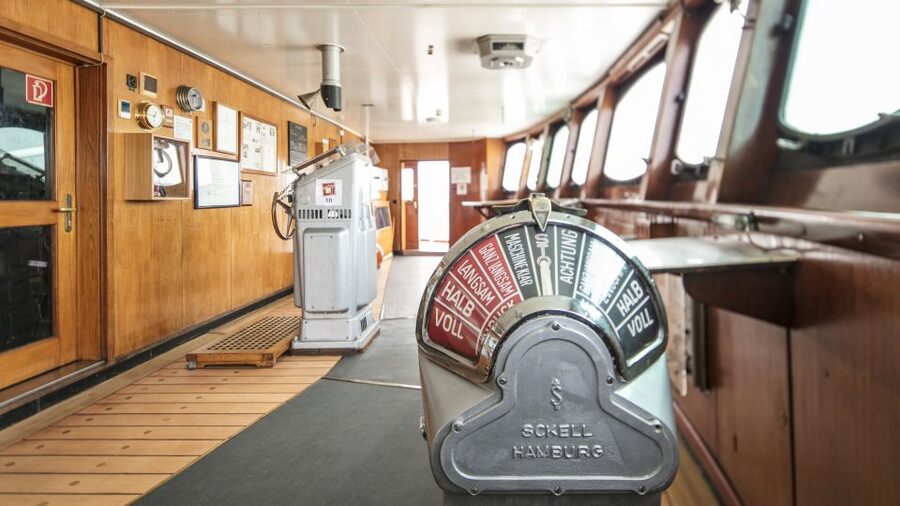
- Bridge areas where the ship’s lookout role makes sense
- Passenger and saloon-like spaces where you can imagine downtime during the voyage
- Working compartments where the ship’s machine presence takes over
- Hatch 2 for a focused exhibit tied to freight handling
The upside of self-guided is freedom. You can linger where you care most, then move on before you feel rushed. The downside is you are responsible for pacing yourself.
Also, a small practical note: wayfinding may not be perfect. The good news is that you can still get your bearings quickly once you start walking the ship.
The 1960s to 70s Voyage Theme, and Why It Works
The museum does something clever with storytelling. Instead of treating the ship as a cold technical artifact, it frames it as a lived environment in the 1960s and 70s. The Atlantic-to-South-America route, including Rio de Janeiro and Buenos Aires, gives you a simple mental map.
That theme helps in two ways. First, it turns the building into a timeline, so you are not only thinking about the ship’s construction but also about its purpose during the cargo years. Second, it makes the different spaces feel linked: bridge, saloon, and machine room are not random rooms, they are different parts of the same working world.
You will likely enjoy this most if you like narratives you can walk through. If you prefer a strictly guided, script-like tour, this ship’s approach may feel more like exploring a compact city than following a classroom lecture.
The Documentary on Emigration: A Suitcase Full of Hope
One of the strongest content anchors on board is the documentary called A Suitcase Full of Hope – Emigration Port of Hamburg. It focuses on the fate of emigrants between 1850 and 1930.
This is where the museum becomes more than maritime tech. Shipping is not just freight and engines, it is people moving across oceans, with huge consequences. By placing that documentary inside a working-era cargo ship context, it gives you a tangible setting for what emigration means. You are surrounded by the logic of travel, storage, and transport, so the human story hits harder.
I like that you can fit this film into your day rather than having it forced at a specific moment. You can watch it when your energy is right, and then continue your walk with a better sense of why the ship mattered beyond trade.
More museum halls between train times:
Hatch 2: General Cargo and Container Handling From 1960 to Today
After you get the human context, Hatch 2 is a smart next step. This is where you find the permanent exhibition General Cargo and Container Handling. It clearly documents the history of sea freight transport from 1960 to today, using historical images and explanatory text.
What makes this exhibit valuable is its focus. It is not trying to cover every nautical topic under the sun. It stays on the big shift in shipping: how cargo handling evolved and how containers changed the rhythm of moving goods.
For you, that means the ship visit starts to connect like a chain. The ship is a piece of the era when general cargo systems were still in the foreground, and the exhibit helps you see what came next. Even if you are not a shipping nerd, you will likely recognize how much modern freight relies on container thinking.
A practical tip: do not race through the text panels. If you skim too fast, you miss the cause-and-effect feel of how freight changed. Take a bit longer here, then return to the physical ship spaces with new context.
The Engine Room Experience: Feeling the Steady Pulse
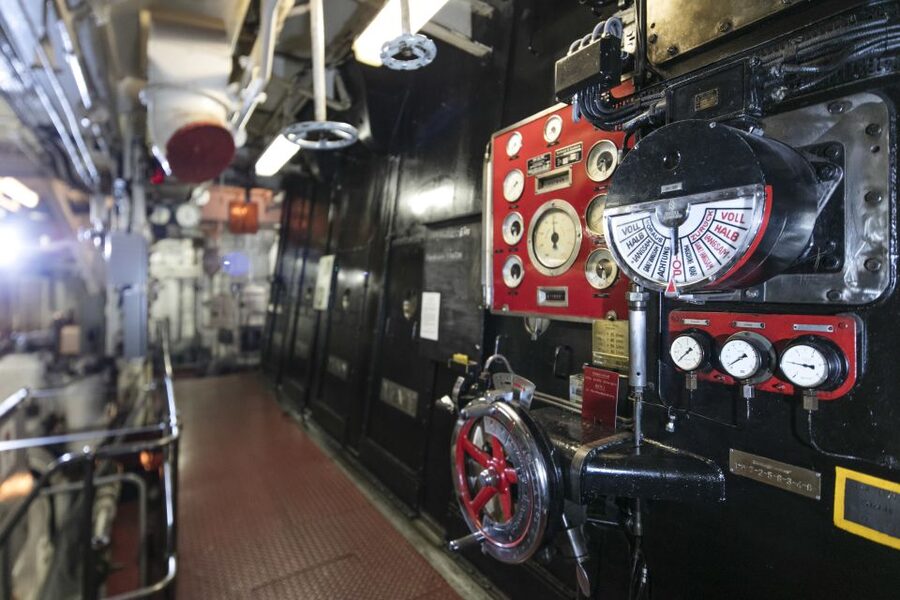
Cap San Diego is famous for its interior “work space” approach. You can stand deep within the Machine Room to feel the steady pulse of the engines. That detail is not just marketing. It is the core reason many people remember this ship.
Why that matters: maritime history is often explained through pictures or written descriptions. Here, you can stand inside the area where the ship’s power lived. The ship’s design becomes easier to understand when you are physically close to what made it move.
If you love engineering, this is your payoff zone. If you feel uneasy around tight, enclosed spaces, treat the engine room as a “think first” decision. The museum is not recommended for people with claustrophobia or mazeophobia, and the Machine Room area is exactly the kind of space that can feel intense.
So, choose your level of exploration. You can still get a full experience by focusing on bridge views and key exhibits, rather than pushing into every interior pocket.
Relax Time in the Saloon, and the Ship’s Human Side
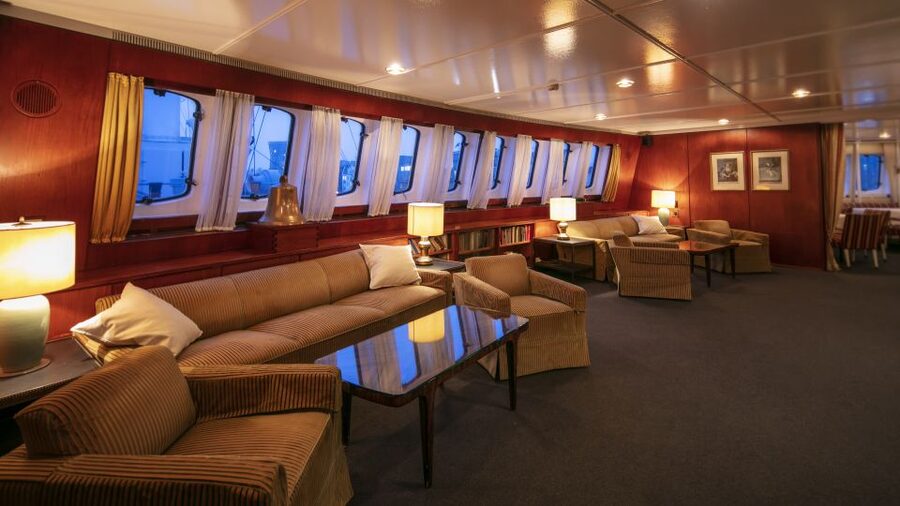
One part of the experience framing mentions relaxing with the passengers in the saloon to light music sounds. That matters because it balances the heavy machinery parts of the story.
This is where you get a sense of daily life on board, not only the ship’s job. Even if your imagination does most of the work, the layout helps you understand how a voyage could include both labor and downtime.
For you, that balance makes the day more enjoyable. You get the “wow” factor of the scale and the engines, then you get moments that feel more human and less technical.
Price and Value: Is 14 Dollars for a Whole Day Fair?
At $14 per person, Cap San Diego is strong value for a one-day museum experience. You are not paying for a single room. You are paying for time on a large ship, plus documentary content and a permanent exhibition in Hatch 2.
If you add the optional audio guide, the experience becomes even easier to manage at your own pace. Even without it, the self-guided setup means you can spend more time where you want, instead of being stuck to a group schedule.
Here is the value calculation that matters: you get both story and structure. The documentary gives emotional context about emigration, the exhibition gives technical context about freight handling, and the ship itself supplies the physical context. That combo is rare in small museums.
To make it worth your money, plan a full walk, not a quick pass. If you only do the most obvious parts in 30 minutes, you will feel like you underused your ticket. If you pace yourself for the film and Hatch 2, $14 becomes a bargain.
Timing Your Visit: How to See the Best Bits Before Closing
Because the museum is open from 10 AM to 6 PM daily, you have flexible options. For the smoothest experience, I suggest you aim to start earlier in the day. It gives you more time to move carefully through stairs and interior spaces.
Since it is self-guided, you should build your own mini schedule. Here is a simple way to think about it:
- Start with the bridge and overview spaces, so the ship layout makes sense
- Next fit in the documentary, while you still have energy for story content
- Then do Hatch 2, so the freight-handling exhibit clicks into place
- Finish with the Machine Room, if you want the most intense zone last
That order is not required, but it helps you keep the visit coherent. Also, closing time can make people hurry, and this ship rewards calm walking.
Who This Museum Ship Is Best For, and Who Should Think Twice
Cap San Diego is a great fit if you enjoy hands-on history. You like maritime settings, engineering-adjacent spaces, and stories tied to real world movement of goods and people.
It is also a good fit for curious solo visitors and couples who want quiet exploration. The self-guided format works well when you do not need a live guide to stay engaged.
But there are clear limits based on the ship itself. It is not recommended for people with claustrophobia or mazeophobia. It is also not wheelchair accessible and not recommended for people with limited mobility due to multiple flights of stairs.
If you fall into any of those categories, it is better to skip this one rather than stress yourself out trying to force it. A museum ship can be fun, but it is still a ship with real constraints.
What the Onboard Staff Adds (Even Without a Live Guide)
Even though the tour is self-guided with no live guide, the onboard presence matters. The staff experience highlighted here points to friendly help and good information, which can make a big difference when you are exploring on your own.
If you have questions while walking, it is worth asking. You are on a working-era vessel, and sometimes the best context comes from a quick explanation rather than from reading every label.
Should You Book Cap San Diego in Hamburg?
I think Cap San Diego is a strong yes if you want a memorable, walk-through museum with real atmosphere. For $14, you get a full ship setting, a documentary about emigration between 1850 and 1930, and a permanent exhibit on cargo and container handling from 1960 to today. That mix makes it more than a photo stop.
Book it if you like to explore at your own pace and you are comfortable with stairs. Skip it if you need wheelchair access or if you know ship interiors could trigger claustrophobia or maze anxiety. If you are in the right group, this is the kind of museum you end up thinking about after the harbor view fades.
FAQ
How much does the Hamburg Cap San Diego entrance cost?
The entrance price is $14 per person.
How long is the visit?
The activity is valid for 1 day, and you can visit during the museum’s open hours.
Where do I go to enter the museum ship?
Go directly to the ship entrance located at the end of Überseebrücke.
What are the opening hours?
The museum is open 10 AM to 6 PM daily.
Is the tour guided by a live person?
No. This is a self-guided visit with no live guide.
Is the ship wheelchair accessible?
No. It is not wheelchair accessible, and it is not recommended for people with limited mobility due to multiple flights of stairs.
Fresh on the arrivals board for Hamburg



Museums, compared.


Skip-the-Line: Berlin Wall Museum at Checkpoint Charlie
Read our review →Browse the lists this tour appears in