
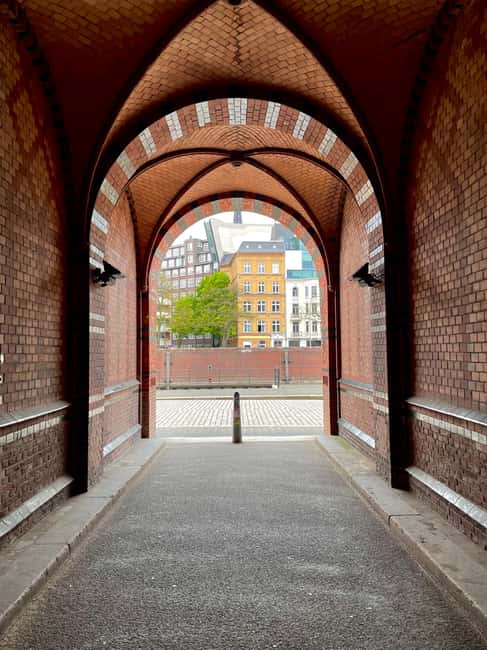
Reviewed · HAMBURG TOURS & ACTIVITIES
Hamburg: Speicherstadt – Stories from the heart of the trading empire
Brick warehouses have a pulse you can feel. This Hamburg Speicherstadt tour is built for people who love photo moments and real backstory, from the iconic Wasserschloss canals to the spice-trade rise, the WWII scars, and what the district looks like now.
It works best when you enjoy walking briskly and reading buildings as evidence, but the big drawback is practical: it is not suitable for wheelchair users or people with walking difficulties, and the route stays on streets and paths that need steady footing.
In This Review
- Key highlights to look for
- From Baumwall to the UNESCO Warehouse District, you start with the right bearings
- Neo-Gothic brick buildings, tree-pile foundations, and the logic behind the place
- Wasserschloss and canal photography: where the district looks its best
- Sandtorkai harbor history: seeing ships, not just buildings
- The language of proverbs and the WWII chapter that keeps it honest
- Die Seute Deern and Miniatur Wunderland: fun add-ons without derailing the story
- Price, time, and what you really get for 25 euros
- Who should book this Speicherstadt stories tour
- Should you book it or go it alone
- FAQ
- How long is the Hamburg Speicherstadt tour?
- Where do I meet the guide?
- What does the tour cost?
- What language is the live guide?
- Is food or drinks included?
- Is the tour suitable for wheelchair users or people with walking difficulties?
Key highlights to look for
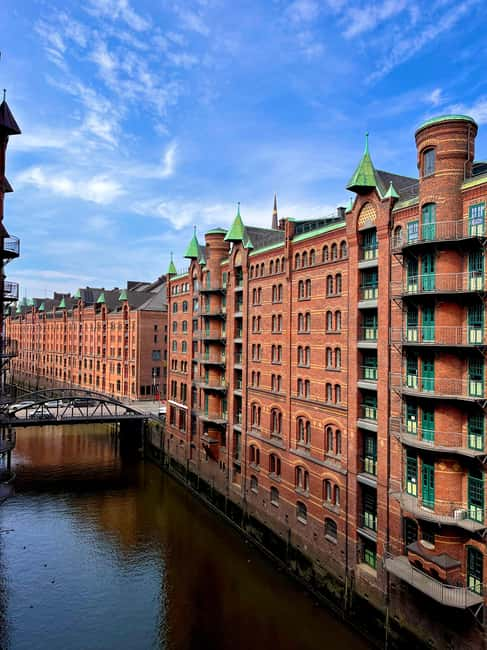
- Wasserschloss photo stop: the most popular motif in the warehouse district, especially near the water
- Sandtorkai harbor viewpoint: you get the maritime setting that made this trading empire work
- Low German street talk: you’ll learn terms that still feel tied to the canals
- Elena Sandik’s storytelling: a guide who answers questions patiently and keeps the tone human
- Elbphilharmonie sighting: a quick “modern Hamburg” contrast during the walk
- With luck, Die Seute Deern: a chance to spot the historic ship if timing lines up
From Baumwall to the UNESCO Warehouse District, you start with the right bearings
The tour starts at Baumwall subway station, next to the kiosk. That matters, because it puts you close to the water and the entry vibe of Hamburg, not in some far-off parking-lot start where you need to “commute” to the atmosphere.
You have 2 hours, and the pace is meant to be focused. This is not a slow stroll where you wander until you feel like stopping, it is a structured walk with lots of story beats, photo angles, and quick “look closer” prompts along the way.
The group is capped at 10 people, which is a big deal for a place like Speicherstadt. With fewer people, you get time to ask questions, and you hear the guide’s explanations clearly instead of playing phone tag behind the crowd. In the guide-led reviews, Elena is specifically praised for that, with a warm, engaged delivery and time for questions.
Weather is a non-issue in the sense that the tour runs rain or shine. Hamburg’s not shy about drizzle, so treat this like a walking tour with a damp-weather plan. Comfortable shoes and rain gear are not optional.
Also holding a platform in Hamburg
- Hamburg: Sex and Crime in St. Pauli Tour for Ages 18 +
★ 4.7 · 17,793 reviews - Hamburg: 1.5-Hour Harbor and Speicherstadt Day Cruise
★ 4.6 · 14,200 reviews - Hamburg: 90-Minute Evening Lights Harbor Cruise
★ 4.5 · 7,728 reviews
Neo-Gothic brick buildings, tree-pile foundations, and the logic behind the place
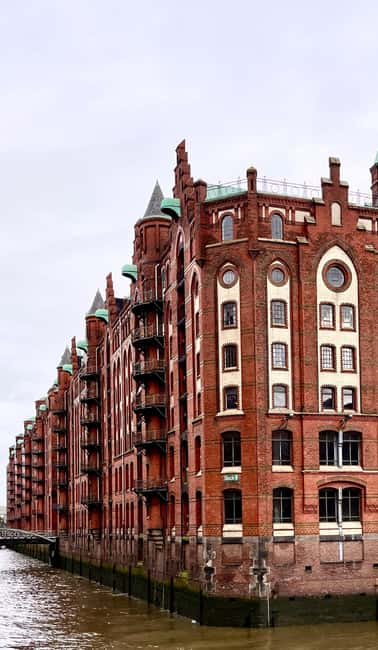
One of the best parts is how the tour teaches you to see the warehouses as engineering and ambition, not just pretty brick. Speicherstadt is known for its striking neo-Gothic look, and the guide frames those facades around the brave visionaries who made the district happen.
You’ll also learn why the warehouses ended up on tree piles. That sounds like a trivia fact until you understand the problem it solved: this is soft ground near the water, and they needed a foundation that could handle it. Once you know that, the buildings stop feeling like scenery and start feeling like infrastructure.
The tour also explains the people who shaped the district, including the term for the “neighborhood people.” That is the kind of detail that changes how you interpret the streets you see today. Instead of imagining only merchants and officials, you start thinking about the workers, the everyday residents, and the routines that made trade function.
And it keeps moving through time. You’ll hear about the golden years of the spice trade, then the darker turn during World War II, and finally how the district lives in the present day. The structure matters because Speicherstadt is easy to romanticize if you only see canals and brick. The tour helps you hold both truths at once.
Wasserschloss and canal photography: where the district looks its best
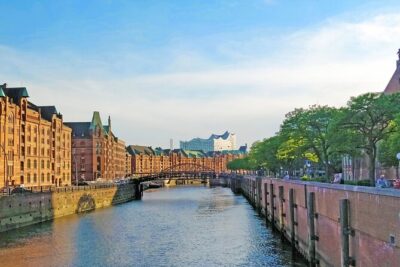
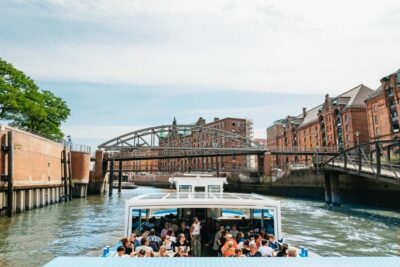
If you like pictures, this tour is built around real photo payoff. Wasserschloss is called out as the most popular photo motif in the warehouse district for a reason, it’s one of those scenes where the angles, the water, and the brickwork all line up.
You’ll stop in a way that makes sense for cameras, not just for standing. The goal is to help you understand where to stand and why the view works, so you get a better result than a random snap taken while everyone else walks on.
The canal setting does more than help your camera roll. It explains the district’s entire logic. Speicherstadt was a trading machine, and water access was part of the workflow, not just decoration. Once you see the canals as transport corridors, the architecture feels more purposeful.
The guide also brings in language and local texture. You’ll pick up Low German terms that echo through these alleys, and those small words make the place feel less like a museum and more like a living neighborhood. Even if you only catch a few terms, they give you a souvenir that’s mental, not only visual.
Practical tip: bring an umbrella even if the forecast looks fine, and keep your phone protected. Two hours is short, but Hamburg weather can still catch you mid-stop.
Sandtorkai harbor history: seeing ships, not just buildings
A key stop is the historic harbor on Sandtorkai. This is where the story shifts from warehouses as static structures to warehouses as parts of a system that moved goods.
I like this part because it corrects a common tourist imbalance. It is easy to focus on brick facades and forget that ships and docks made the entire district worth building. Sandtorkai brings you back to the maritime side of Hamburg, the part that explains why the warehouses exist where they do.
This stop also helps you connect the past trade routes to the present look of the area. When you understand how goods arrived and left, today’s canal edges and loading angles start to make sense. You stop thinking of the district as a set piece and start thinking of it as logistics made visible.
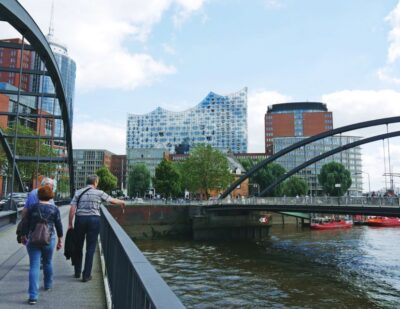
There is also a “now Hamburg” contrast baked in. You’ll check out the Elbphilharmonie, which gives you a skyline reference point. Speicherstadt is older and more industrial in feel, and the Elbphilharmonie is modern. That pairing is useful because it shows you Hamburg’s habit of stacking eras close together.
If you love maritime atmosphere, pay attention to details during this section. Even without a long commentary, the surroundings help the guide’s stories land. You can feel the difference between a warehouse window view and a dockside view.
The language of proverbs and the WWII chapter that keeps it honest
This tour doesn’t only stick to architecture. It also explains how proverbs you use every day connect to the origins rooted in the district’s culture. That’s a smart approach, because proverb talk gives you a personal bridge. You leave not only knowing facts, you also know how language carries old experiences forward.
Then the tour moves into the WWII period. Speicherstadt’s story is not only “spices and success.” You’ll hear about the dark hours of World War II, and the guide frames it so you understand it as part of Hamburg’s larger history, not an isolated tragedy floating in isolation.
This is where I think a small-group format helps. When you have fewer people, it is easier to ask a question that’s more human than factual, like why certain things were rebuilt, preserved, or remembered the way they are. The guide, Elena Sandik, is repeatedly praised for patience and for answering questions with care, which matters when the subject turns heavier.
The positive takeaway is that you do not finish the tour only feeling sad. You also get the present-day view of Speicherstadt and what the district offers now. The past is not erased, it is contextualized, and that makes the walking experience feel more balanced.
Onward connections from Hamburg:



Die Seute Deern and Miniatur Wunderland: fun add-ons without derailing the story
Two hours is enough to cover the core Speicherstadt themes without turning into a marathon. Still, the tour gives you optional “fun layer” value if you’re traveling with kids or you want a change of tempo.
With a bit of luck, you might see Die Seute Deern. The key phrase here is with luck, because it depends on timing. Don’t build your whole plan around it, but if it happens, it’s a charming maritime detail that reinforces the harbor theme.
For families, the guide points you toward Miniatur Wunderland as a nearby stop after your walk. That works well because it shifts from real buildings and real water stories to a different kind of wow, a scaled, kid-friendly version of geography and transport. You get both sides of the same fascination: where goods moved, and how the world is mapped.
After the tour, you’re also guided to explore on your own. You can check out museums in the Speicherstadt area, or grab coffee in one of the roasteries in the district. This is practical advice, because it turns your two hours of guided context into an easy self-directed follow-up.
Price, time, and what you really get for 25 euros
The price is listed as 25 euros per person, and the overall tone is clearly “story value,” not “museum ticket value.” There are no entrance fees included, and food and drinks are not included either.
So is it worth it? For Speicherstadt, I think the answer depends on what you want. If you only want photos, you can probably wander the district independently. If you want to understand why warehouses sit on tree piles, what the spice trade changed, and how the WWII chapter fits into the district’s identity, a guided two-hour walk is strong value.
The sweet spot is the guide’s role. Elena is praised for making the tour feel alive and for creating space for questions. That is exactly what you pay for in a place like this, because the buildings can look similar from street to street until someone points out what matters.
Also, 2 hours is the right length for keeping attention while still covering multiple districts elements. You do not have to commit to a half-day tour, and you can still layer in museums or Miniatur Wunderland after.
Who should book this Speicherstadt stories tour
Book it if you fit one or more of these:
- You want UNESCO-site architecture explained in plain language, not just dates and titles
- You care about maritime Hamburg, and you want to connect the harbor to how trade worked
- You’re a photographer who wants stops at the places that actually photograph well, like Wasserschloss
- You like walking tours where language details, like Low German terms, are part of the payoff
- You’re traveling as a small group and you want interaction, not a megaphone-style lecture
Skip it if you have mobility limits. The tour is unfortunately not suitable for wheelchair users or people with walking difficulties. Even with supportive guidance, the structure assumes you can do a steady walking route on typical outdoor surfaces.
Should you book it or go it alone
I’d book it if your goal is to walk through Speicherstadt with your eyes turned on. This is the kind of district where you can easily pass by impressive buildings without getting why they were built the way they were. The tour’s mix of engineering detail (tree-pile foundations), economic motive (spice trade), and historical honesty (WWII) makes the whole place click.
I’d go it alone if you’re mainly chasing a checklist of photo stops and you’re comfortable reading the place independently. The district is photogenic, and you can probably recreate some of the viewpoint fun without a guide.
My practical call: if you can walk comfortably and you value stories that connect language, architecture, and Hamburg’s harbor life, this is a smart, high-value way to spend two hours in Speicherstadt with a guide named Elena Sandik who clearly knows how to keep attention and answer questions.
FAQ
How long is the Hamburg Speicherstadt tour?
The tour duration is 2 hours.
Where do I meet the guide?
You meet at Baumwall subway station, next to the kiosk.
What does the tour cost?
The price is 25 euros per person.
What language is the live guide?
The live tour guide speaks German.
Is food or drinks included?
No. Food and drinks are not included.
Is the tour suitable for wheelchair users or people with walking difficulties?
No. The tour is unfortunately not suitable for wheelchair users or people with walking difficulties.
Fresh on the arrivals board for Hamburg


Hamburg Tours & Activities, compared.
Sex and Crime in St. Pauli Tour for Ages 18 +
Read our review →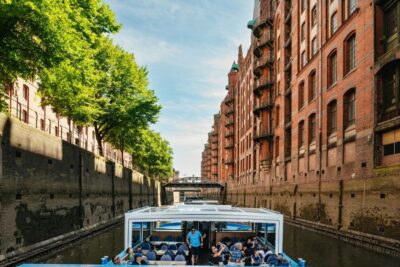
1.5-Hour Harbor and Speicherstadt Day Cruise
Read our review →
Reeperbahn Lust & Laster Tour for Adults Only
Read our review →Browse the lists this tour appears in