
Reviewed · MUSEUM TOURS IN BERLIN
Cold War, Berlin Wall, Spies and the East Side Gallery
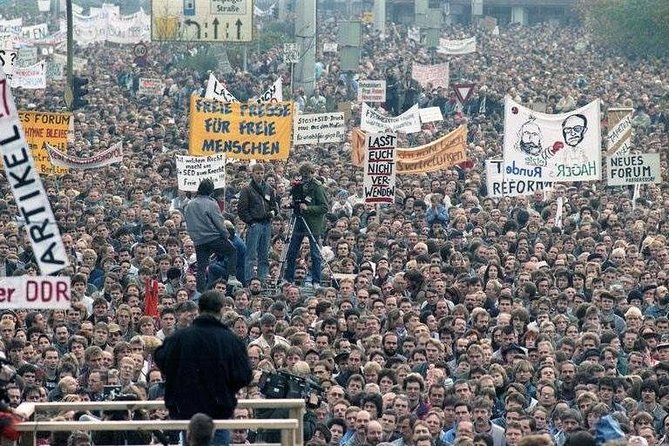
The Cold War feels close with real wall views. This 3-hour walk turns Cold War stories into street level reality, with stops that connect spies, Stasi surveillance, and escape attempts to concrete places. I love how the guide builds the picture of everyday fear and courage, and I love that you end with Tränenpalast and the East Side Gallery in the same route.
One practical note: you will need an AB day pass to hop between sites by public transport, so factor that into your start time. Also, this is real walking, so pack comfortable shoes and dress for the weather, since the tour runs in rain too.
In This Review
- Key Things I’d Prioritize on This Tour
- Cold War Berlin, Compressed Into a 3-Hour Story Walk
- Meeting Outside Friedrichstrasse and Starting at Tränenpalast
- The AB Day Pass Requirement and Why It’s Part of the Experience
- Tränenpalast (Palace of Tears): Cold War Lives, Not Just Dates
- Alexanderplatz: The Pulse of Former East Berlin
- Karl-Marx-Allee: Where Propaganda Lives in Monumental Design
- Friedrichshain and the Lead-Up to the Wall
- Berlin Wall Remnants: Death Strip Reality and Surveillance Geography
- East Side Gallery: When the Wall Becomes Open-Air Art
- Guides Make or Break This Kind of Tour, and Reviews Agree
- Price and Value: Why $18 for 3 Hours Can Make Sense
- What to Bring, and a Few Rules That Keep the Pace Moving
- Who This Tour Fits Best (and Who Might Want Something Different)
- Should You Book This Cold War, Berlin Wall, Spies, and East Side Gallery Tour?
Key Things I’d Prioritize on This Tour
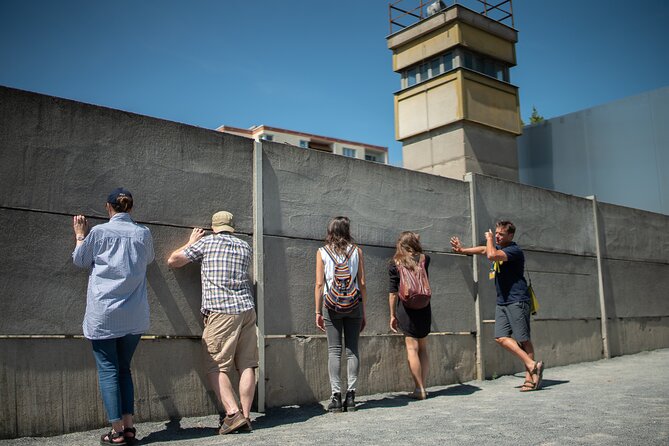
- Original death strip area: you walk through the physical geography where control was enforced and escape could get fatal.
- Karl-Marx-Allee explained: the boulevard’s size and design become propaganda, and the guide points out what to notice.
- Palace of Tears (Tränenpalast): a high-emotion stop where the Cold War isn’t abstract, it’s personal.
- Alexanderplatz and Friedrichshain: you get a feel for how East Berlin functioned in daily life, not just at monuments.
- East Side Gallery: the Wall becomes open-air art, where graffiti reframes what concrete once tried to block.
- Story-first guiding: reviews repeatedly praise guides like Paul, Xavier, Jamie g, and Klaus for making the history stick.
Cold War Berlin, Compressed Into a 3-Hour Story Walk
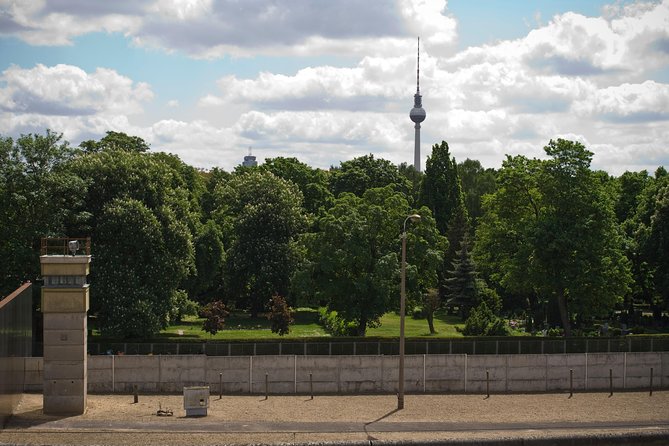
Berlin’s Wall is famous, but what makes this kind of tour work is scale and sequence. In about three hours, you move from the politics to the pavement, following the logic of division: surveillance, restricted movement, and desperate attempts to get out.
What I like about this format is that it’s not just “see a wall, take photos, leave.” You get a guided narrative about informants, escape routes that people tried, and how ordinary residents lived with fear in their daily routines. Then you finish with the East Side Gallery, where the same Wall becomes a canvas instead of a cage.
And yes, some guides really lean into storytelling. Reviews mention Paul’s passion and Paul’s ability to make people understand how and why events happened, even if you start with minimal background. Others, like Xavier and Klaus, are praised for turning history into something you can picture, not just memorize.
More Museum Tours in Berlin
- Berlin: DDR Museum Tickets
★ 4.3 · 3,443 reviews - Berlin: Natural History Museum Entrance Ticket
★ 4.6 · 3,382 reviews - Berlin: Museum Island Multiple Museum Entry Ticket
★ 4.4 · 2,861 reviews
Meeting Outside Friedrichstrasse and Starting at Tränenpalast
You start outside Friedrichstrasse station, in the square beside the Traenenpalast (Palace of Tears). The meeting instructions are straightforward: look for the guide with a yellow name badge and a yellow umbrella.
If you choose hotel pickup, you wait in the hotel lobby five minutes before pickup. If you’re dropped off after the tour start, the instructions point you to the Tourist Information at the Brandenburg Gate for the pickup option, again with the guide clearly marked by the yellow badge.
This matters because Cold War sites can feel scattered if you try to connect them yourself. Starting in the right place helps you build a clean mental map fast, and the tour’s public transport hops make more sense once you understand the route logic.
The AB Day Pass Requirement and Why It’s Part of the Experience
This tour uses public transportation between stops, and you need an AB public transport day pass. The good news is that the info says you can buy it on the day with help from the on-site staff, so you should not panic if you forget.
Still, plan your morning with that in mind. If you show up late, you might spend your tour time stuck figuring out tickets instead of listening to the guide. Also, the tour proceeds regardless of weather, so those quick station transfers can be your shelter breaks, if you’re lucky.
I’d treat the transit as part of the story too. Berlin is easy to move through today, but the guide is framing how movement was once restricted, tracked, and punished. Taking the train between sites gives you contrast, modern mobility against Cold War limits.
Tränenpalast (Palace of Tears): Cold War Lives, Not Just Dates
Your first sightseeing stop is Tränenpalast for about 20 minutes. Even if you know the Wall story in broad strokes, this stop is a reminder that the Cold War was experienced one farewell at a time, not just by governments on maps.
What you’ll get here is the tour’s approach: narrative history tied to place. The guide connects this stop to the larger themes you’ll see repeatedly on the walk, including how people tried to flee East Germany while the Stasi watched for leaks, patterns, and escape efforts.
One reason this starting point works is emotional pacing. You begin before the biggest Wall visuals, so by the time you reach the “hard” locations, you’re already ready to understand what makes them so heavy.
Alexanderplatz: The Pulse of Former East Berlin
Next you move to Alexanderplatz for another guided block of about 20 minutes. This is where the tour pivots from Cold War systems to daily geography.
You’re looking at a central area associated with East Berlin life, and the tour frames it as a place that still shows classic GDR architecture. The point is not to turn Alexanderplatz into a time machine, but to help you notice how the built environment shaped everyday routines, social expectations, and movement.
This stop is also a useful reset for your brain. After Tränenpalast, the tour starts to widen out: you see how state power and public space connect, then you follow that thread toward Karl-Marx-Allee, where the architectural message is far more monumental.
More traces of the Wall through Berlin:


Karl-Marx-Allee: Where Propaganda Lives in Monumental Design
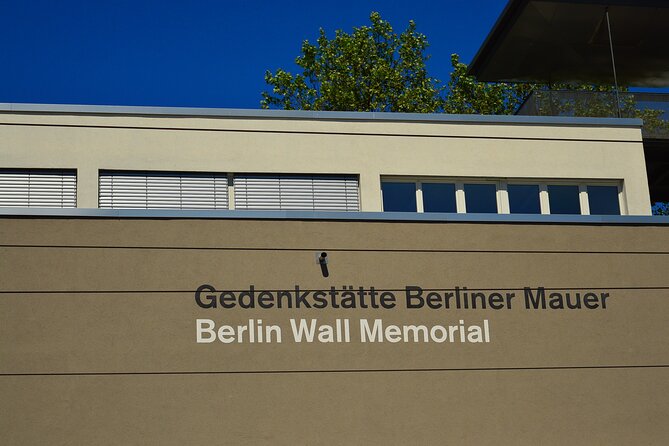
Then comes one of the best “walk and read the city” segments: Karl-Marx-Allee. You get about 20 minutes here with guided sightseeing.
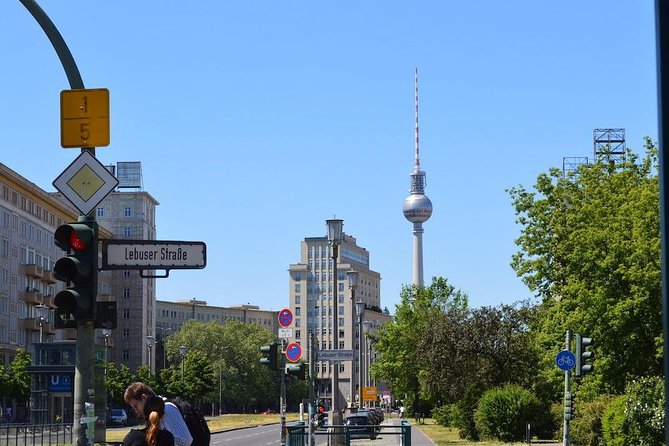
This boulevard is described as once designed as the ultimate socialist paradise, and the guide’s job is to decode how that design functioned as propaganda. In practice, this means you are not just passing buildings. You’re learning what to notice, like how size, symmetry, and bold planning can be used to project certainty and control.
There’s also a historic anchor tied to the space. The tour references the 1953 workers’ uprising that shook the foundations of the communist regime and changed German history. Even if you don’t know the specifics, you’ll understand why a boulevard like this became important in how people organized, resisted, and remembered.
I like this stop because it helps you shift from thinking about the Wall as a single object. You start to see the Cold War as an entire environment, political messaging built into streets and public squares.
Friedrichshain and the Lead-Up to the Wall
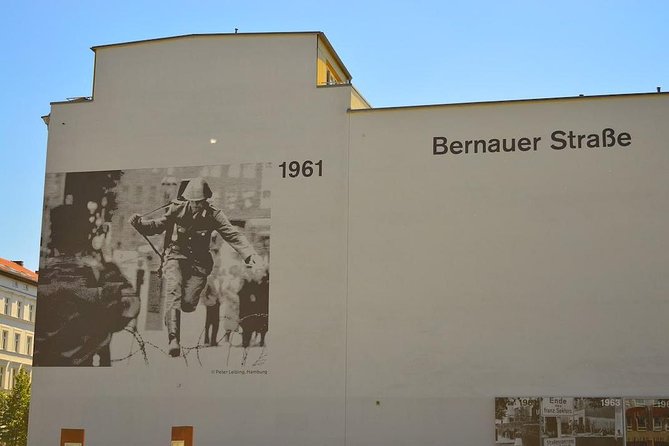
After Karl-Marx-Allee, the tour passes through Friedrichshain for guided sightseeing of about 20 minutes. This section is part history, part positioning, and it prepares you for the Wall itself.
You’re getting more of the tour’s core theme: the Cold War was about surveillance and the threat of force, not just ideology in speeches. The guide links the “systems” story, Stasi monitoring and informants, to actual locations you’re walking near.
This also helps with one common problem when visiting Berlin Wall sites. If you jump straight to the Wall, it can feel like a list of landmarks. The Friedrichshain piece makes the Wall feel like the destination of an entire chain of control, not a random monument.
Berlin Wall Remnants: Death Strip Reality and Surveillance Geography
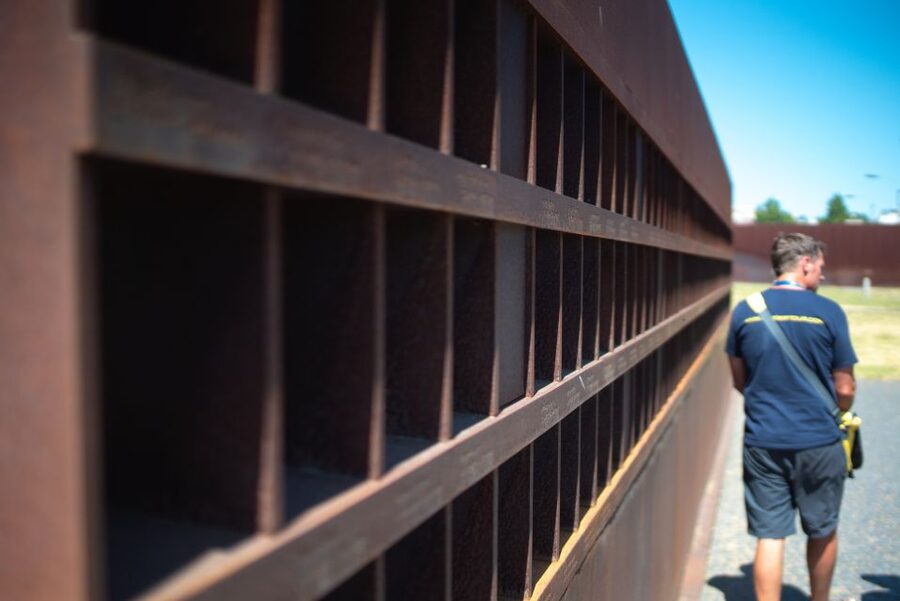
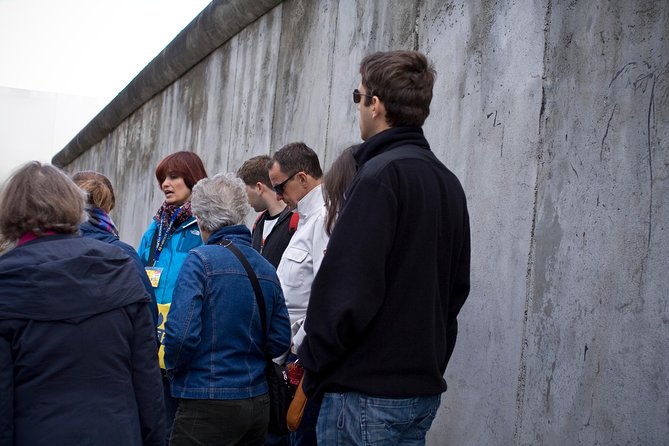
Now you hit the Berlin Wall guided tour and sightseeing time, about 16 minutes. This is the moment that brings the story to its physical edge.
The tour is explicitly framed around seeing the Berlin Wall and the original death strip area. That matters because it’s the geography of fear. The death strip was not just a line. It was a controlled zone, and the tour helps you understand the logic of why certain distances, barriers, and vantage points mattered.
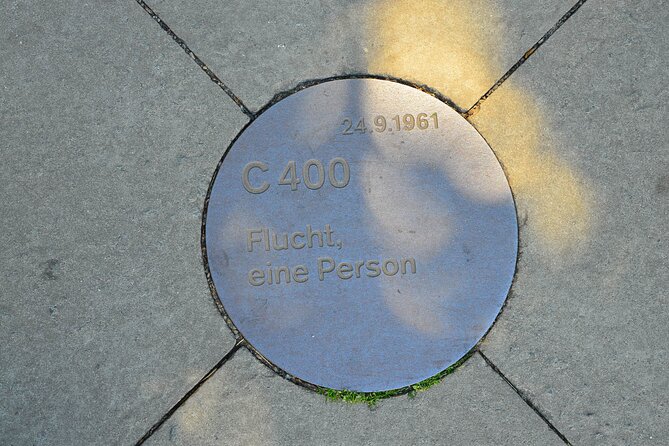
And the tour keeps talking about people who tried to escape. The guide ties in stories of how ordinary residents risked everything, including escapes attempted through tunnels, over rooftops, and across death strips, while Stasi surveillance loomed.
I find this segment is strongest when you ask questions. Reviews mention guides like Jamie g, Maria, and Nikolai for staying open to questions and making sure the group is following along. If you’re the kind of traveler who likes “how did that work,” this is where you’ll get the most satisfaction.
East Side Gallery: When the Wall Becomes Open-Air Art
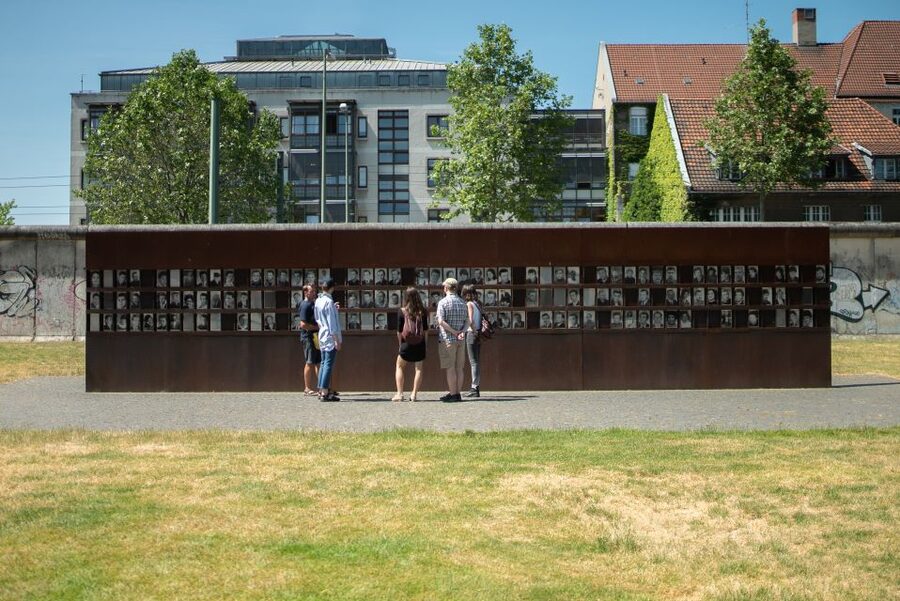
Finally, you reach the East Side Gallery for guided sightseeing of about 20 minutes. This is a different emotional register, and that’s the point.
The tour frames the East Side Gallery as the former Berlin Wall transformed into a world-famous open-air art gallery. Instead of repeating the tragedy, the guide points you to how the Wall’s meaning changed over time, from oppression to expression.
This is also where you can enjoy your camera again. You’re still in a historic place, but the guide’s focus shifts to interpretation. You’re looking at graffiti and art as a public response, a way citizens reclaim space after it once controlled them.
If you’re doing Berlin as a “serious history” trip, this stop is a needed contrast. It gives you somewhere to land, and it prevents the whole day from feeling like a continuous grim lesson.
Guides Make or Break This Kind of Tour, and Reviews Agree
This tour’s rating is high for a reason: the storytelling quality shows up again and again in reviews. People repeatedly praise guides for clarity, passion, and the ability to answer a lot of questions.
Specific guide names pop up across the feedback. Paul is described as a standout storyteller who can bring everyday life into focus, Jamie g is praised for covering the Cold War impact clearly, and Xavier is mentioned as highly informative with active group care when weather changed. Klaus and Nikolai are praised for background stories at each stop, with Nikolai described as patient with questions.
There’s also a recurring theme that some guides bring firsthand lived experience, or at least proximity to the real East Berlin context. Even when a guide is just a brilliant educator, that extra closeness often makes the tour feel less like a lecture and more like a conversation with the city.
Price and Value: Why $18 for 3 Hours Can Make Sense
At about $18 per person for a three-hour, guided walk that covers multiple major Cold War anchors, the value is mostly in the guide time and the “how to see it” factor.
If you try to do this route solo, you’ll still pay for transit and you’ll likely spend time hunting for the right remnants and explanations. Here, the guide does the hard work of turning a scattered set of sites into a connected story about spies, informants, and escape attempts tied to the landscape.
The tour also gives you structured time in each place, so you don’t get stuck lingering at one stop while the rest of your day turns into a rushed sprint. For a short Berlin visit, that pacing is a big deal.
What to Bring, and a Few Rules That Keep the Pace Moving
Wear comfortable shoes, since you’re walking and moving between areas. Bring your camera, and dress for the weather, because the tour goes forward in rain.
Food and drink are not included, so you’ll want to plan a snack strategy around the three hours, especially if you’re combining this with other Berlin stops. The tour data also says alcohol and drugs are not allowed, which helps keep the group focused and respectful.
If you like learning visually, you might appreciate that some guides use pictures or digital aids, like one review mentioning iPad pictures as a complement. Even if every guide doesn’t use the same tools, expect explanations that go beyond the simplest “look here” interpretation.
Who This Tour Fits Best (and Who Might Want Something Different)
I think this tour fits best if you want Berlin Wall history with story weight. If you like spy stories, underground escape attempts, Stasi surveillance, and the human consequences, you’ll probably enjoy how the guide connects themes to each stop.
It also suits first-time Berlin visitors who want a strong East Berlin thread without losing time. The route hits several recognizable locations, but it’s guided so you are not just collecting postcards.
If you want a pure political lecture with lots of policy detail, you might find this tour leans more toward lived experience and site-based storytelling. One review mentions a desire for more “war and politics” and less “wall,” which is a reminder that this is still primarily a Wall and East Berlin route.
Should You Book This Cold War, Berlin Wall, Spies, and East Side Gallery Tour?
If your goal is to understand the Wall beyond photos, I’d book it. For the money, you’re getting structured time at key sites, plus a guide who can connect concrete places to the fear, surveillance, and escape attempts that defined the era.
If you’re short on time, this is a smart pick because it’s only three hours. And if you like stories, pay attention to guide selection once you’re matched, since reviews repeatedly highlight standout guiding like Paul, Xavier, Jamie g, Klaus, and Nikolai.
If you’re already fluent in Cold War details and want a more academic angle, you might prefer a different format. But for most travelers, the mix of Tränenpalast, Alexanderplatz, Karl-Marx-Allee, Wall remnants, and the East Side Gallery gives you an excellent, well-paced foundation.
If you want Berlin to feel real, not just historic, this tour is the kind of plan that makes that happen.
Halls Between Trains
- Berlin: Interactive DeJa Vu Museum Entrance Ticket
★ 4.1 · 1,338 reviews - Berlin: “Pergamonmuseum. The Panorama” Exhibition Tickets
★ 4.6 · 1,245 reviews - Cold War, Berlin Wall, Spies and the East Side Gallery
★ 5.0 · 1,024 reviews - Berlin WelcomeCard: Museum Island & Public Transport
★ 4.3 · 999 reviews
Fresh on the arrivals board for Berlin




Museum Tours in Berlin, compared.

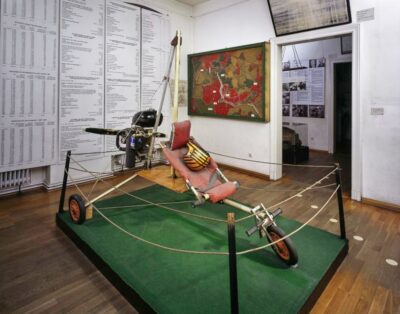
Skip-the-Line: Berlin Wall Museum at Checkpoint Charlie
Read our review →
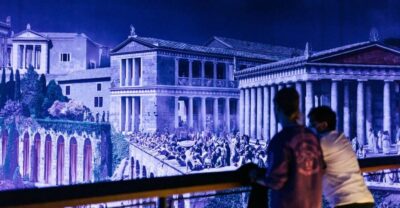
“Pergamonmuseum. The Panorama” Exhibition Tickets
Read our review →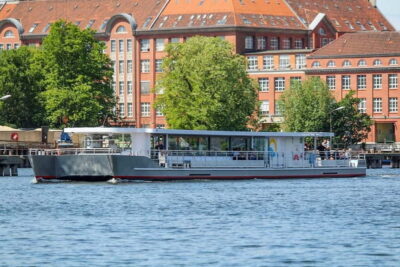
East Side Gallery Spree Cruise in a Solar Catamaran
Read our review →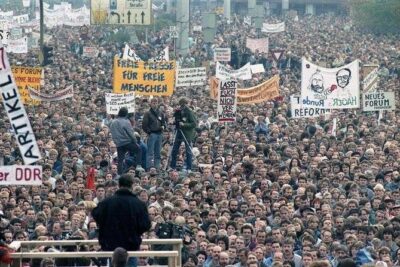
Cold War, Berlin Wall, Spies and the East Side Gallery
Read our review →Browse the lists this tour appears in