
Reviewed · BERLIN WALL TOURS
Berlin Wall: City Tour of Divided Germany
A city built on a wall tells a story fast. This 2-hour Berlin Wall city tour connects daily life with the Cold War line on the map, from Friedrichstraße’s border era to Checkpoint Charlie. I love how the walk stays personal and human, with guide narration that brings the division into everyday routines. I also love the smart route, because you see the border’s impact from major landmarks and lesser-known angles in one tight loop.
The main catch is simple: it is a walking tour through outdoor Berlin, so comfortable shoes matter, especially if the weather is chilly.
In This Review
- Key highlights you will actually notice
- Why this Berlin Wall tour works in just 2 hours
- Starting at Tränenpalast and Friedrichstraße station
- Following the Spree toward parliament and the government district
- Brandenburg Gate: the border line made symbolic
- Holocaust memorial and the former death strip
- Potsdamer Platz and the Tiergarten Triangle split
- The longest remaining stretch of wall and what it teaches
- Checkpoint Charlie: fame with a purpose
- Price and value for a 2-hour Wall walk
- Who should book this tour, and who might want to skip it
- If you should book this Berlin Wall city tour
- FAQ
- How long is the Berlin Wall city tour?
- Where does the tour meet?
- What language is the live guide?
- What should I bring?
- How much does the tour cost?
- Is there free cancellation?
Key highlights you will actually notice
- Tränenpalast to Friedrichstraße station: start at the place tied to departures and crossings
- A guided route that follows the Spree: you see how the border reached into government space
- Brandenburg Gate where the border ran: the symbol of division, shown in context
- Holocaust memorial at the former death strip: memory and history in one stop
- Potsdamer Platz and the Tiergarten Triangle split: the division becomes visible in the city plan
- The longest remaining wall stretch plus Checkpoint Charlie: two classic wall moments, side by side on your route
Why this Berlin Wall tour works in just 2 hours
Berlin can feel huge. But a wall tour in two hours can still be powerful if the guide focuses on how the barrier shaped real life, not just facts on a timeline. This one is built for that. You do not just look at wall segments. You connect them to places people tried to reach, buildings that sat near restricted areas, and the daily choices that became complicated overnight.
What I like most for your planning is the focus. The highlights cover the big-picture sites most people want, but the story thread stays on how life changed on both sides. That matters because the Wall was not only concrete. It was rules, access, fear, waiting, and sudden detours. You get a guided walk that keeps all of that moving, stop to stop, without turning into a lecture you have to mentally translate.
Another practical win is that the route is efficient. You start near Friedrichstraße station, move along the Spree toward the government district, hit Brandenburg Gate and the former death strip area, then swing into the western-split visuals at Potsdamer Platz and the Tiergarten Triangle. Finally, you reach the longer surviving wall segment and the world-famous Checkpoint Charlie. In a short window, you cover the key “readable” parts of divided Berlin.
More traces of the Wall through Berlin:
- Berlin: Third Reich & Cold War Guided Walking Tour
★ 4.9 · 8,378 reviews - Berlin’s Best: 2 Hour Walking Tour Third Reich and the Cold War
★ 5.0 · 5,486 reviews - Skip-the-Line: Berlin Wall Museum at Checkpoint Charlie
★ 4.1 · 2,041 reviews
Starting at Tränenpalast and Friedrichstraße station
Your tour begins at the entrance of Tränenpalast, the Palace of Tears, in front of Friedrichstraße station. The guide meets you on Reichstagufer, 10117 Berlin, and the key detail to know is that Tränenpalast has only one entrance. I suggest you arrive a bit early, not because you will be late, but because Berlin entrances can be easy to misread if you are rushing.
Why this start matters: Friedrichstraße station was one of the most important crossing points during the Cold War era, and it is tied to the kind of separation people felt in body and routine. Starting at Tränenpalast is an immediate emotional anchor. It gives you a human lens before you start seeing the broader geography of the border.
From there, your guide sets the pattern for the day. Instead of random sightseeing, you move like you are following the logic of the border. You will also see why Friedrichstraße is not just a name on a map. It was a real daily corridor where crossing and waiting shaped what people did next.
Tip: plan your route to the meeting point so you can comfortably find that one entrance. If you are using transit, aim to reach Friedrichstraße station first, then walk calmly to Reichstagufer and look specifically for Tränenpalast.
Following the Spree toward parliament and the government district
After your start, you follow the Spree toward the parliament and government district. This is one of those sections that feels visually “quiet,” because river paths can look normal today. But the guide’s job is to make you see what was hidden in plain sight.
Part of the power here is the idea of a border that reached into high-level power spaces. The buildings near the government district were partly situated along the border strip, so the Wall did not only cut through neighborhoods. It affected the core locations of governance and visibility. You begin to understand how division could be built into the city fabric even when the city still appeared whole.
As you walk along the water, you also get a better sense of scale. From a distance, Berlin’s geometry looks clean and navigable. Up close, you start realizing where restricted zones would have changed foot traffic, access, and day-to-day logistics. That is what you want from a wall tour: the bridge between “what you see” and “how it would have felt.”
If you like walking with a narrative, this leg is a good match. The Spree route helps you keep a steady pace, and the guide can connect the physical geography to the human story.
Brandenburg Gate: the border line made symbolic
Next, you reach the Brandenburg Gate, and this stop is framed around a very specific point: the border ran right by it. That detail changes the experience. Without it, the Gate is simply a famous photo spot. With it, it becomes an emblem you can place on the actual Cold War reality of Berlin.
You will be shown how the symbol worked because it stood in an area where division was not abstract. It was physical and enforced. A landmark that looks like pure monument history becomes, in your guide’s telling, a place where lives were affected by the border’s presence.
This is where I think the tour earns its reputation. The experience is not just sightseeing. It is a guided way to interpret the meaning of a site you already recognize. And for many visitors, Brandenburg Gate is the emotional peak because it is so instantly legible, even if you did not grow up knowing Cold War Berlin.
Practical tip: this area can be popular. Stay close to your guide. Keep your pace. If you pause for photos, do it quickly so you do not drift away from the narrative.
Holocaust memorial and the former death strip
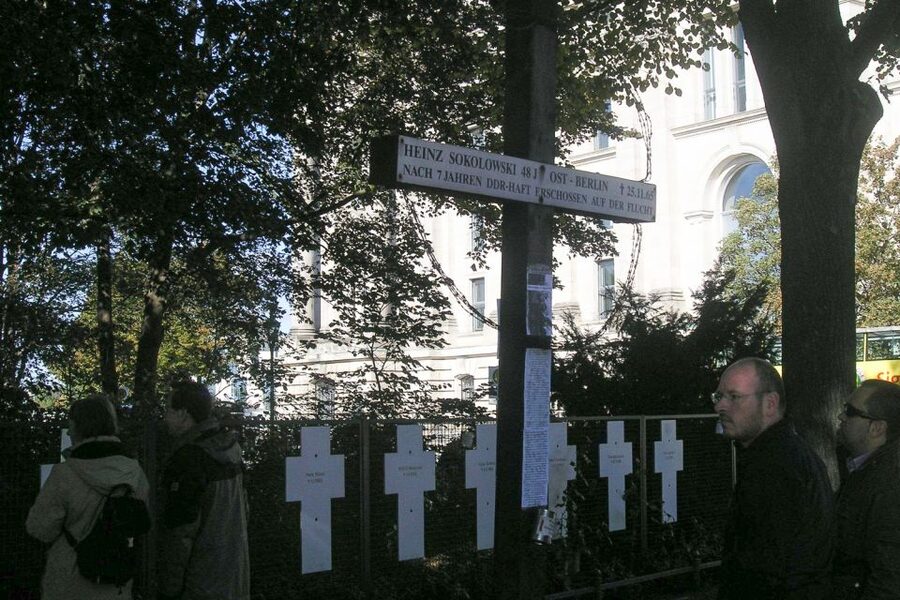
From the Brandenburg Gate area, the tour continues to the Holocaust memorial at the former death strip. This is an essential moment because it shifts the focus from political division to human catastrophe and the way violence was embedded into the border system.
The important thing to understand is tone. A Wall tour can accidentally turn into a “cool history walk” if the guide does not handle the subject with care. Here, the inclusion of the former death strip location signals that the tour treats the area as memory ground, not just wall sightseeing.
You get a stop that forces you to slow down mentally. Even if you already know what a death strip meant in general terms, being in the space and hearing the guide connect it to the memorial helps your understanding feel grounded. It is one of the stops that makes this tour more than a highlights list.
If you are someone who prefers respectful pacing, this section tends to click. It also helps you connect how the border was not only about keeping people out. It was about control that had deadly consequences.
Also holding a platform in Berlin



Potsdamer Platz and the Tiergarten Triangle split
Now the story moves into a part of Berlin that shows division in the city plan. You head to Potsdamer Platz, where the split is particularly visible in the former Tiergarten Triangle.
This is a big reason I like this tour for first-timers. Potsdamer Platz and the surrounding geometry are the kind of places where your eyes can understand what the guide is saying. Streets, corners, and sightlines can make the division feel less like a concept and more like a physical layout that changed how people moved.
The Tiergarten Triangle is not a random add-on. It is used here because the split is visible. That visibility is key. When you can connect your walking path to the historical division, you remember it longer. You stop seeing Berlin as just “old plus new” and start seeing how the past controlled movement.
A drawback to consider: if you are visiting during a busy time of day, this area can feel crowded. The tour lasts two hours, so you will want to stay focused on the guide’s key points and not spend the entire stop chasing the perfect photo angle.
The longest remaining stretch of wall and what it teaches
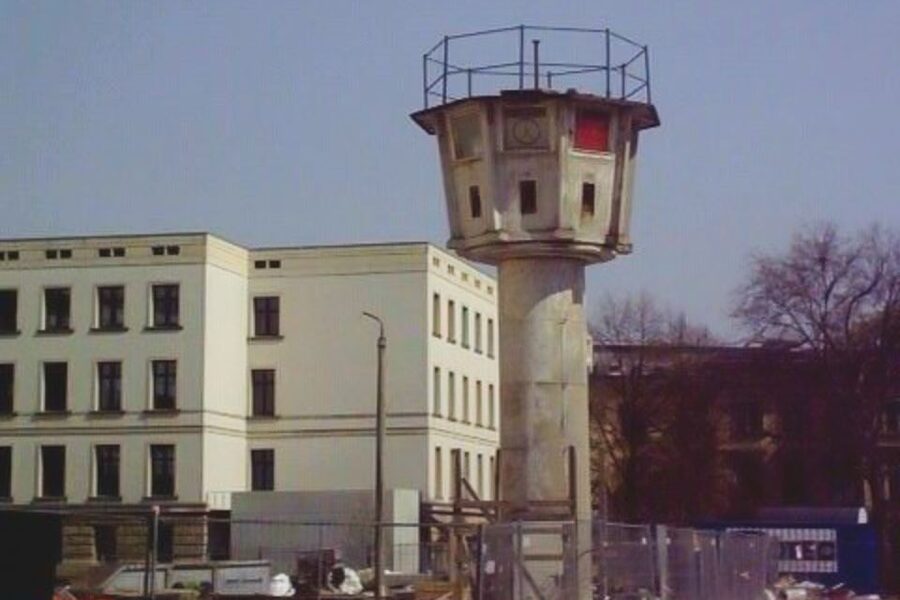
Every wall tour has the big iconic segments, but this one includes something that gives you a different kind of understanding: the longest remaining stretch of the wall on the route.
That detail matters for how you comprehend the Wall as a system. Longer visible sections help you grasp how it functioned in the urban environment. Short bits can feel like relics. A longer stretch makes it feel more like infrastructure.
The guide’s narration typically helps you read that infrastructure. You get context that turns a wall segment into evidence of daily reality. It helps you imagine surveillance and barriers as part of normal city life for people living nearby.
If you like tours where the route teaches you to “see” with history glasses on, this stop is a keeper.
Checkpoint Charlie: fame with a purpose
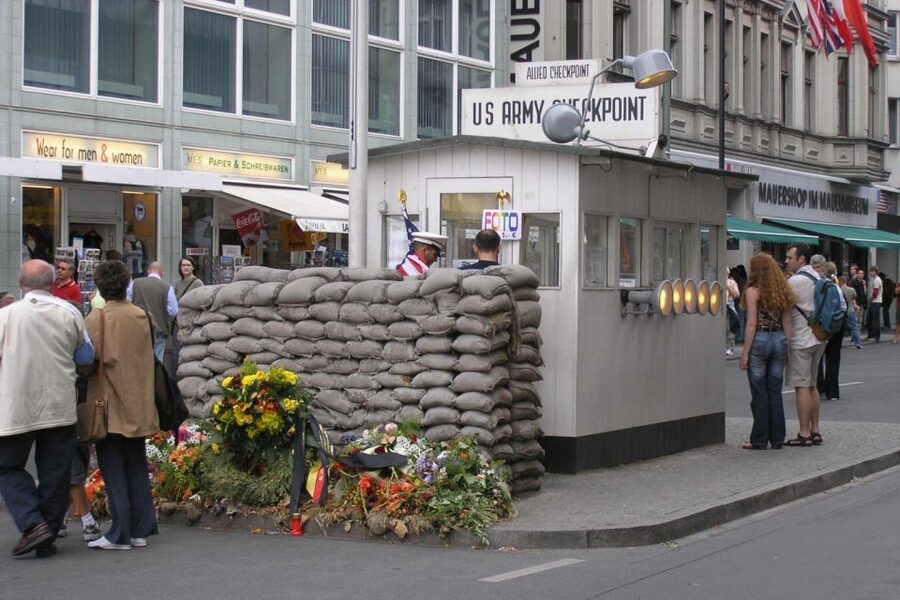
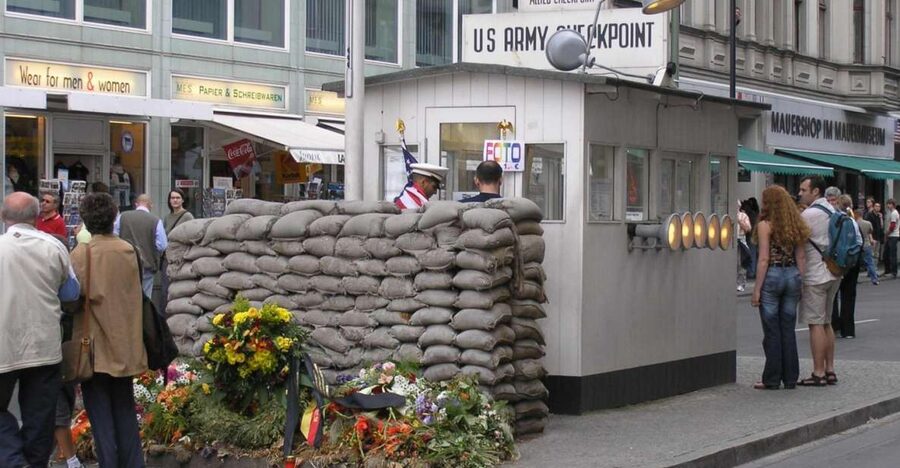
The tour also takes you to Checkpoint Charlie, one of the world-famous border symbols. This is the classic ending point for many wall walks, but the value here is that it is not just a place name. You reach it after you have already built the broader geography through Friedrichstraße, the Spree, Brandenburg Gate, and the former death strip area.
That sequencing matters. It makes Checkpoint Charlie feel like a part of a connected system, not a single standalone landmark. By the time you arrive, you understand why people talked about checkpoints so much. They were the interfaces between rules and real lives.
This stop also tends to be a good final “put it all together” moment. You have seen multiple angles of division, so your questions become more specific, like how neighborhoods, access, and movement were shaped.
Note on the guide style: from German-language tours like this, you often get narration that includes personal stories, and names like Stephan and Stefan show up in past guides who are known for making the experience feel more than factual. Even better, one guide added extra time when the group’s interest was high, which says a lot about the commitment to clarity and connection.
Price and value for a 2-hour Wall walk
The price is $21 per person for a 2-hour guided city tour. For Berlin, that is strong value because the tour includes multiple major sites that would each take time to navigate on your own. More importantly, the price buys context. Berlin Wall stops are easy to misread if you only rely on signage or a couple of guidebooks.
At this cost, you are paying for two big things:
- A focused route across key division landmarks
- A live German guide who ties the physical places to how daily life was affected
If your time in Berlin is tight, this is the kind of tour that helps you get more meaning out of fewer hours. You do not need to be a Cold War expert. The tour is structured around the experience of division in everyday terms.
For budgeting, plan for shoes, weather gear, and any snacks after. With two hours outdoors, your comfort is part of the value equation.
Who should book this tour, and who might want to skip it
This tour is a great fit if you:
- Want a first-pass Berlin Wall experience with clear story connections
- Like city walking tours that explain daily life, not just monuments
- Prefer a guided route that hits major landmarks plus meaningful context
You might hesitate if you:
- Want only museum-style history with minimal walking
- Dislike outdoor city routes where stops are spread along streets and open spaces
- Prefer tours in languages other than German
Because the tour is 2 hours and focused, it is also ideal as your “orientation” Wall day. You can then pair it with self-guided time on your own terms afterward.
If you should book this Berlin Wall city tour
Yes, I think you should book this tour if you want the Wall explained through the city’s geography and daily-life impact. The route is practical and the sequence matters, from Tränenpalast and Friedrichstraße through Brandenburg Gate, the former death strip area, Potsdamer Platz and the Tiergarten Triangle visuals, then the longer wall stretch and Checkpoint Charlie.
The main deciding factor is your comfort with walking and the outdoors. If you wear good shoes and you are ready to listen to a German-speaking guide’s storytelling, this is an efficient, high-value way to understand how division shaped Berlin.
FAQ
How long is the Berlin Wall city tour?
The tour lasts 2 hours.
Where does the tour meet?
Meet at the entrance of Tränenpalast (Palace of Tears) in front of Friedrichstraße station on Reichstagufer, 10117 Berlin. Tränenpalast has only one entrance.
What language is the live guide?
The live tour guide speaks German.
What should I bring?
Wear comfortable shoes.
How much does the tour cost?
The price is $21 per person.
Is there free cancellation?
Yes. You can cancel up to 24 hours in advance for a full refund.
Fresh on the arrivals board for Berlin

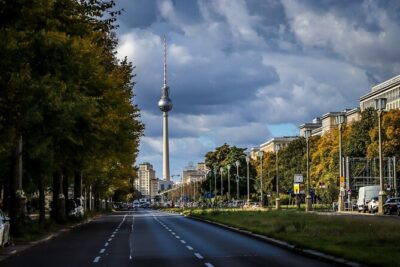


Berlin Wall Tours, compared.

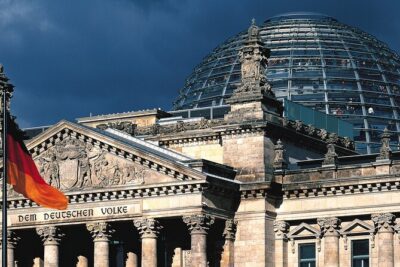
Berlin’s Best: 2 Hour Walking Tour Third Reich and the Cold War
Read our review →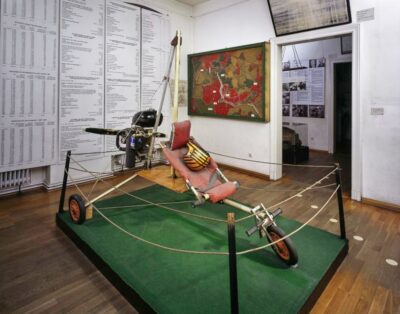
Skip-the-Line: Berlin Wall Museum at Checkpoint Charlie
Read our review →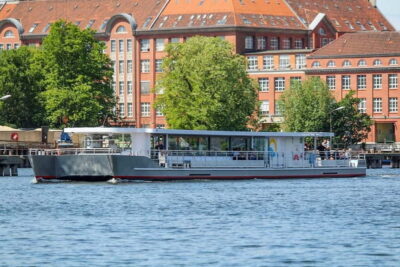
East Side Gallery Spree Cruise in a Solar Catamaran
Read our review →
Cold War, Berlin Wall, Spies and the East Side Gallery
Read our review →
Cold War & Berlin Wall History Guided Bike Tour
Read our review →
Browse the lists this tour appears in