
Reviewed · MUSEUM TOURS IN BERLIN
Berlin: Museum of Communication Entrance Ticket
A stamp can tell you a revolution.
At the Museum für Kommunikation Berlin, you follow the story of human communication from ancient tools to modern tech, with an exhibit that keeps it practical and fun instead of dusty. I especially like the chance to see the Blue Mauritius among the world’s most famous and rare stamps, and to connect that tiny bit of paper to big cultural change. One thing to consider: if you only want passive looking, this museum leans into interacting with terminals, screens, and hands-on prompts.
My second favorite part is the way the museum uses guided media without forcing a rigid group tour. The audio-visual app helps you move through the galleries at your own pace, and the interactive communication gallery around the atrium makes you try out signals and greeting styles rather than just reading about them. The main drawback is simple: there is no substitute for a live specialist guide, so if you want deep explanations in real time, you’ll mainly rely on the app and the exhibit text.
In This Review
- Key highlights you will notice right away
- Museum for Kommunikation Berlin: a smart value stop for curious people
- From hand axe to smartphone: the communication story you can actually track
- The Blue Mauritius stamp: why one icon matters
- The atrium communication gallery: where you test signals and rules
- Greeting people across the world: communication as culture
- How to pace your visit in about 1.5 hours, without rushing the good stuff
- Ticket basics: entry is easy, and you can stay flexible
- When to go in Berlin: opening hours that matter for your day plan
- Who should book this experience, and who might want to skip it
- Should you book the Museum für Kommunikation Berlin entrance ticket?
- FAQ
- How long does the museum visit take?
- Do I need to reserve a time slot for entry?
- What is included with the ticket?
- Can I pay with cash at the museum?
- When is the museum open?
- Is it wheelchair accessible?
- Is hotel pickup included?
Key highlights you will notice right away

- 40,000 years, 2,000 objects that connect early tools to smartphones
- Blue Mauritius stamp viewing, tied to postal history
- Interactive terminals using smoke, light, and acoustic signals
- Touch-friendly hands-on moments that work well for families
- Self-paced audio-visual app so you can linger or skim
- No time slot pressure for entry, with ticket purchase options at the counter
Museum for Kommunikation Berlin: a smart value stop for curious people
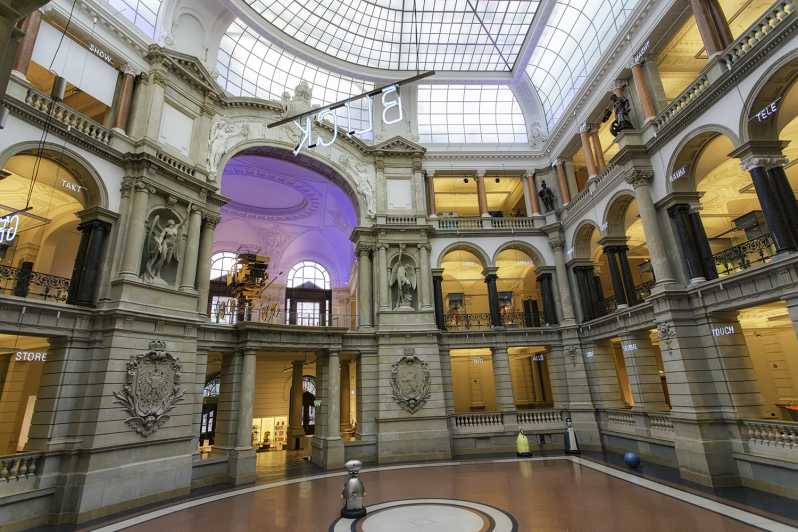
For $9, you’re buying more than admission. You’re getting a museum designed around one clear idea, communication is human history you can try. That matters in Berlin, where museums can sometimes feel like either very academic lectures or very visual distractions. Here, the exhibits aim for a middle path: you learn the timeline, but you also test the concepts.
You should think of this as a “learning by doing” visit. The museum frames communication from the hand axe to the smartphone, and it also nods to current debates about how people share information. That gives your visit a little momentum, because you’re not only staring at artifacts. You’re watching the big question of how we connect change over time.
The other value point: the museum includes an audio-visual app, so you can spend less time guessing where to go and more time reading what matters. If you like control over your pace, this is a strong match.
More Museum Tours in Berlin
- Berlin: DDR Museum Tickets
★ 4.3 · 3,443 reviews - Berlin: Natural History Museum Entrance Ticket
★ 4.6 · 3,382 reviews - Berlin: Museum Island Multiple Museum Entry Ticket
★ 4.4 · 2,861 reviews
From hand axe to smartphone: the communication story you can actually track
The core galleries are built as a timeline. The museum’s concept is straightforward: communication has milestones, and each one shifts how societies coordinate, trade, govern, and build identity. You’ll move through the arc of tools, methods, and networks, starting with early practical messaging and reaching into today’s digital world.
What I like is that the museum doesn’t treat history like a straight line where today is obviously best. The exhibits are described as inviting different angles and encouraging you to participate in the discourse. In plain terms, you’ll see that communication systems change because people argue, experiment, regulate, and adapt.
This is also where the “2,000 objects” detail starts to feel real. A collection of that size is big enough that you can find multiple entry points, not just one famous room. If you like social history, you’ll find it. If you like tech progress, you’ll see it. If you care about design, the way messages are carried and displayed becomes part of the story.
One practical note for your experience: because it’s self-guided with an app, you can build your visit around what you actually enjoy. If you love objects, focus on the displays. If you like interactive stations, spend more time in the atrium area.
The Blue Mauritius stamp: why one icon matters
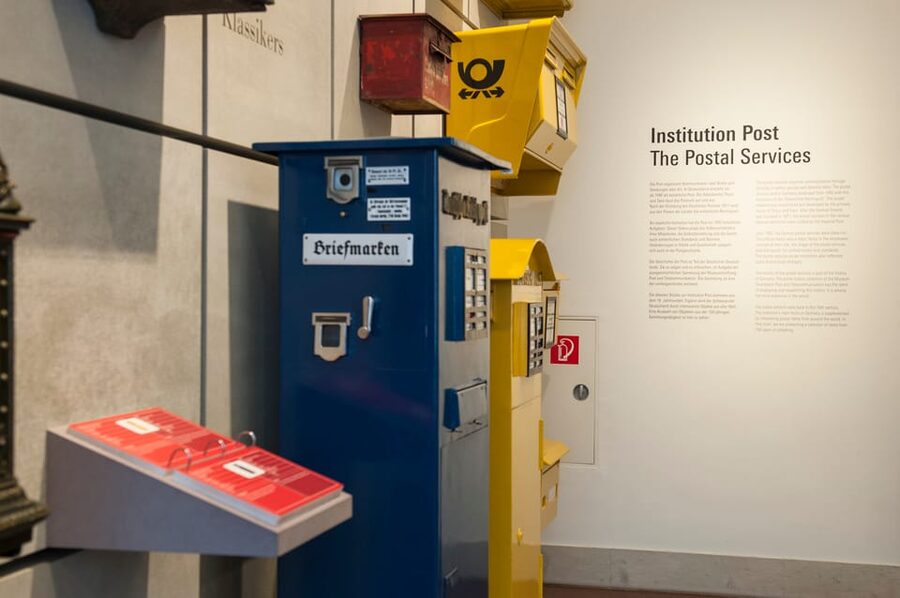
Postal history can sound niche until you see it as communication technology in miniature. And then the museum gives you the perfect hook: you can see the Blue Mauritius. It’s presented as one of the world’s most famous and rare stamps, which turns the stamp into a story magnet.
Here’s why that’s worth your attention. Stamps are small, but they represent systems. When stamps become standardized, communication gets cheaper, more reliable, and more scalable. The stamp itself becomes a recognizable sign that helps networks work. So even if stamps are not your thing, the exhibit is using this famous example to show how trust, access, and infrastructure shape who can communicate and how fast.
This is also a good spot if you want a break from the more conceptual sections. You can slow down, look closely, and connect what you see to the bigger timeline running through the museum.
The atrium communication gallery: where you test signals and rules
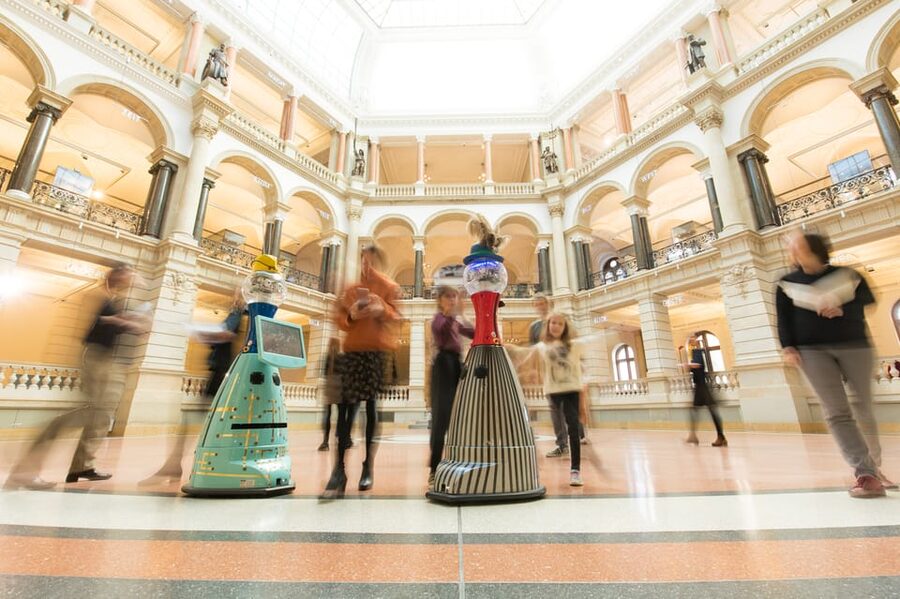
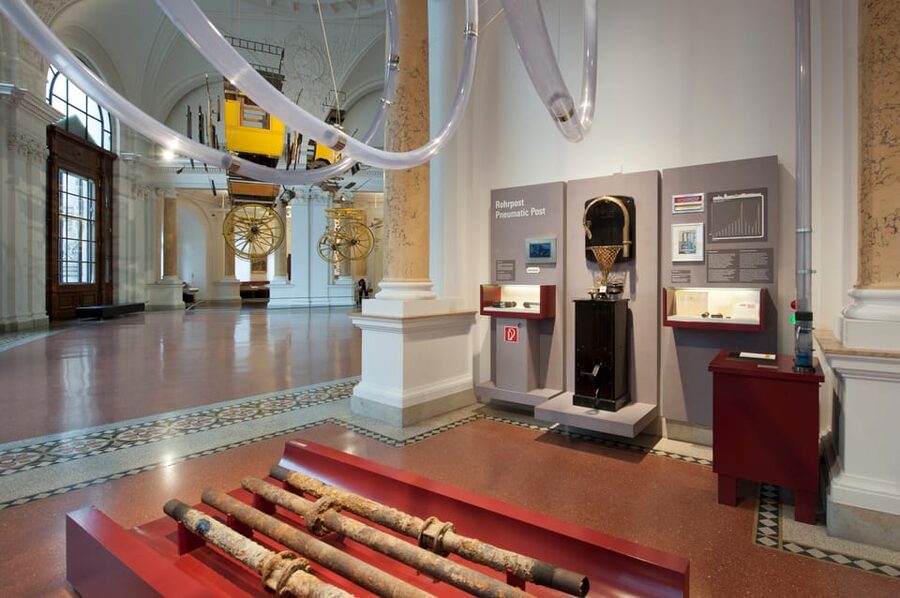
Around the atrium, the museum turns communication basics into something you can play with. There are interactive terminals that mix learning with experimentation. The standout detail from the museum concept is that you can exchange the latest news by smoke, light, or acoustic signals.
That single list is more educational than it looks. It shows that communication is not only about the message, it’s about the channel. Smoke signals and light signals depend on visibility and weather conditions. Acoustic signals depend on range and noise. And those constraints echo through history, because every method comes with limits.
When you try these kinds of systems, you naturally start thinking in engineering terms: what happens if the signal is weak, or the timing is off, or the environment changes? That mental shift is the whole point. You leave with more than facts. You leave with a clearer understanding of why certain methods worked and others faded.
I also like that these terminals are in a central area, so you don’t feel like you’re hunting. You can bounce between interactive stations and still keep your bearings.
Greeting people across the world: communication as culture
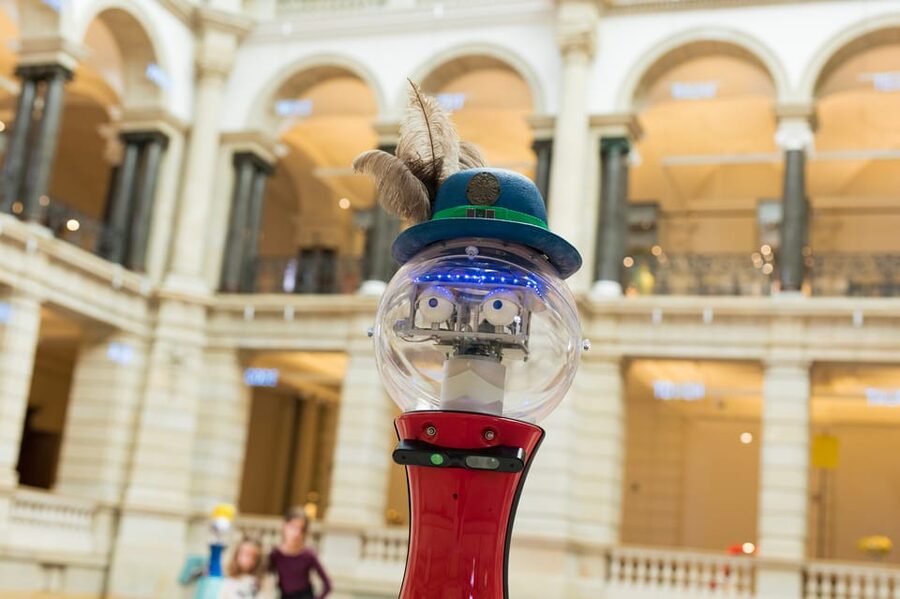
One of the more interesting elements is the focus on greeting people from around the world. That’s not just “how to say hi.” Greetings are social signals that communicate status, friendliness, distance, and intent. In many cultures, a greeting is the opening protocol for the entire interaction.
In a museum setting, that becomes a practical lesson. You get to see that communication is not one universal script. Even in a country like Germany, where you might assume everyone greets the same way, you can learn how different customs shape first contact.
This section fits the museum’s overall theme of communication milestones plus modern debates. It reminds you that technology changes faster than behavior. People still rely on norms, interpretations, and context.
If you enjoy cultural experiences and you like learning through short prompts, this is one of the sections that will keep you engaged.
More museum halls between train times:




How to pace your visit in about 1.5 hours, without rushing the good stuff
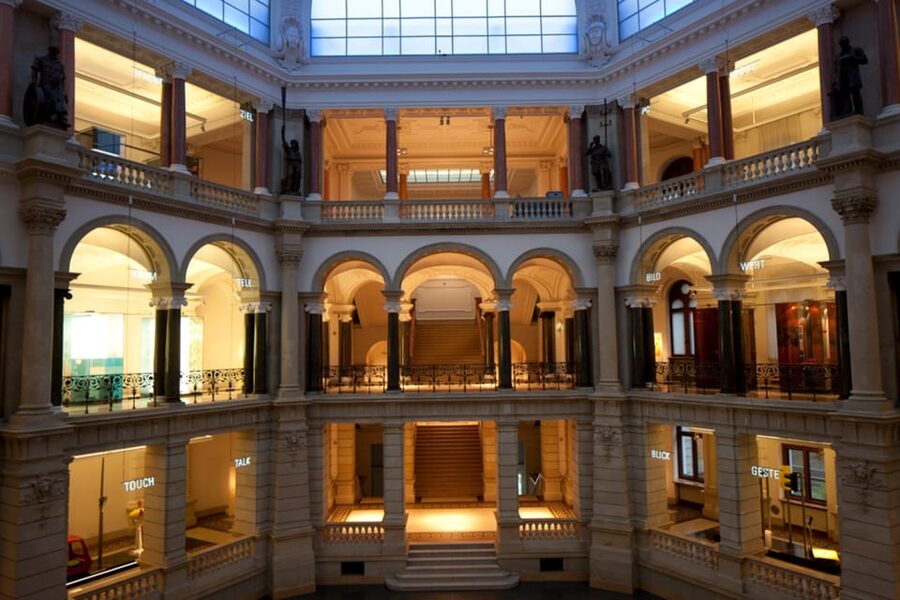
You can easily do this as a focused museum stop. A reasonable pace is around 1.5 hours, especially if you prioritize a few themes: the postal story and the interactive atrium stations. If you’re more of a linger-and-read person, you might stretch longer, but you don’t have to.
Here’s a practical way to structure it:
- Start with the main communication story so the timeline locks in your head.
- Then go straight to the Blue Mauritius and postal content while your “communication as systems” thinking is active.
- Finally, spend time at the atrium terminals, since those take a bit of trial and error to feel satisfying.
Since you have an audio-visual app guiding your way, don’t feel like you need to read every label. Use the app to steer you toward key areas, then choose what to slow down for.
Also plan small breaks. The visit experience is listed with options like coffee and a drink nearby in the overall day rhythm, so if you want to keep your energy up, build a short pause into your plan.
Ticket basics: entry is easy, and you can stay flexible
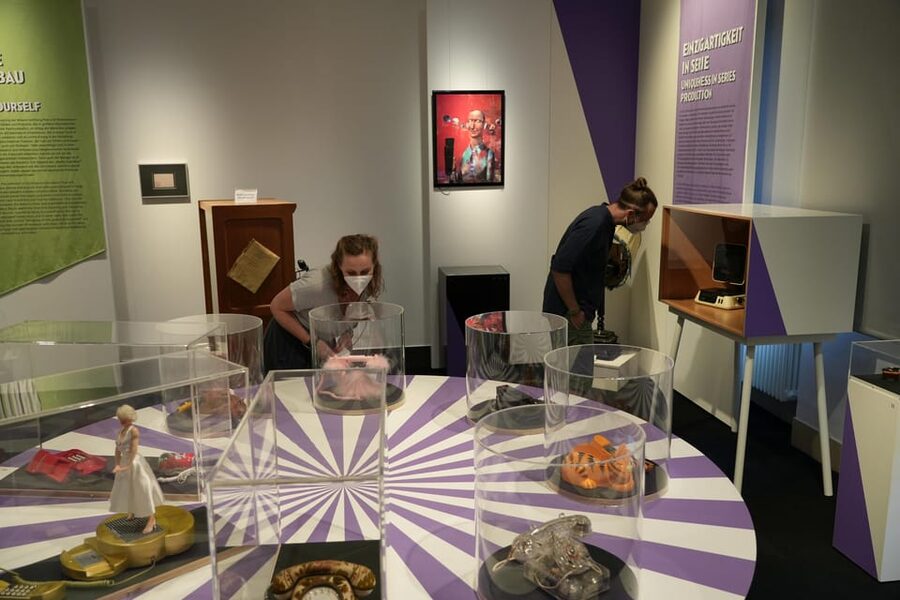
Good news for planning: you do not need to reserve time slots for your museum visit. That makes it easier to fit into a day that also includes walking around neighborhoods, grabbing a bite, and slipping into a couple of sights.
On ticket payment, you have flexibility. The info notes you can purchase tickets without cash, and at the museum counter you can pay with cash. In other words, if your day goes off-script and you end up with cash, you’re not stuck.
Also, the ticket is valid for one day, and availability is tied to starting times. So you’re not locked into a specific museum entry minute, but you should still check what starting windows are offered that day.
When to go in Berlin: opening hours that matter for your day plan
The museum is closed on Mondays. It also closes on December 24, 25, and 31. On public holidays, it’s open from 10:00 AM to 6:00 PM.
So if you’re visiting during a weekday, you have an easy path. If your trip includes a Monday, you’ll want a Plan B so you do not arrive at a locked door and have to scramble.
Who should book this experience, and who might want to skip it
This is a great fit if you:
- like hands-on museums that teach by interaction
- want an approachable introduction to communication and postal history
- enjoy stamps, artifacts, and the stories behind famous objects like the Blue Mauritius
- are traveling with kids, since the museum is described as super for children and includes interactive, touchable elements
You might consider skipping or pairing with something else if you:
- only want quiet galleries with no interactive screens
- expect a fully guided, live interpretation with deep commentary in real time
This one is best as a focused stop, not as your only museum for the day.
Should you book the Museum für Kommunikation Berlin entrance ticket?
Yes, if you want value and you like museums that turn history into hands-on learning. For $9, you get admission plus an audio-visual app, and the museum covers a huge span of communication history while still keeping the experience active. The chance to see the Blue Mauritius plus the interactive atrium stations makes it a visit that feels varied, not repetitive.
Book it if your travel style includes experimenting, reading just enough to connect the dots, and spending time with objects you can picture in the real world. Skip it only if you prefer traditional, quiet museum viewing with minimal interaction.
FAQ
How long does the museum visit take?
The experience is listed as 1 day, with the visit itself lasting about 1.5 hours in the planned schedule.
Do I need to reserve a time slot for entry?
No. You do not need to reserve time slots for your museum visit.
What is included with the ticket?
Your ticket includes admission to the museum and an audio-visual app.
Can I pay with cash at the museum?
Yes. The information says you can purchase tickets without cash, and at the museum counter you can pay with cash.
When is the museum open?
The museum is closed on Mondays and on December 24, 25, and 31. On public holidays, it is open from 10:00 AM to 6:00 PM.
Is it wheelchair accessible?
Yes, the museum is wheelchair accessible.
Is hotel pickup included?
No. Hotel pickup and drop-off are not included.
Fresh on the arrivals board for Berlin





Museum Tours in Berlin, compared.

Skip-the-Line: Berlin Wall Museum at Checkpoint Charlie
Read our review →
“Pergamonmuseum. The Panorama” Exhibition Tickets
Read our review →
East Side Gallery Spree Cruise in a Solar Catamaran
Read our review →
Cold War, Berlin Wall, Spies and the East Side Gallery
Read our review →Browse the lists this tour appears in