
Reviewed · THIRD REICH & WORLD WAR II TOURS
World War 2 Hamburg Private Guided Tour
Hamburg has a way of leaving marks. This private World War II tour strings those marks into a clear story, from the rise of antisemitism to the city’s bombing and aftermath. I like that you get one guide for your group, so you can ask questions without waiting. I also like the focus on real locations you can still stand in front of.
One thing to consider: it covers heavy topics and you will do a fair bit of walking in about five hours. If your group prefers a lighter, purely scenic day, you might find the tone intense. If you do want context, this setup makes it much easier to follow than doing it on your own.
In This Review
- Key things that make this tour worth your time
- Private Hamburg WWII tour: why it beats self-guided wandering
- Laeiszhalle and the interwar years: where antisemitism gained power
- Sievekingplatz to Planten un Blomen: courts, downfall, and a city you cannot ignore
- Feldstraße bunkers, Turmbar, and Hamburg’s scale of fortifications
- Grindel: Jewish Hamburg, Kristallnacht, and where the story continues today
- Jungfernstieg and Rathausmarkt: decoy city planning and Nazi use of power
- Afrikahaus and St. Nikolai Memorial: colonial memory and the bombed church’s message
- Price and logistics: is $714.85 per group good value?
- Who this tour is best for
- Should you book the World War 2 Hamburg Private Guided Tour?
- FAQ
- How long is the WWII private guided tour in Hamburg?
- What is the group size for this private tour?
- Is the tour offered in English?
- Where does the tour start and end?
- Are there admission tickets required for the stops?
- Is the tour suitable if I have moderate physical fitness?
- Is the tour near public transportation?
- What is the cancellation policy?
Key things that make this tour worth your time
- Private guide for up to 15 people, so you can keep the pace comfortable and ask questions
- Lots of free stops, with only the St. Nikolai tower/museum part not included
- Bunkers and memorials in active city settings, including a bunker repurposed as a skyline garden
- A balanced timeline, starting in the interwar years and moving through WWII and remembrance
- Jewish Hamburg history on today’s streets, including Kristallnacht and book burnings
- Guides named Evan and Sarah in past tours, including one who tailored the day for three generations
Private Hamburg WWII tour: why it beats self-guided wandering
You could do a quick version of Hamburg WWII history alone, but you will miss the connections. This tour is designed to help you see how decisions, propaganda, and persecution turned into real places and real suffering. The big win is that you are not piecing clues together in your phone’s map app.
With a private guided format, you can stop whenever something feels unclear. You can also ask follow-ups that make the story stick. It is the difference between seeing stone plaques and understanding what those plaques are trying to prevent from being forgotten.
And because the day is timed around specific city points, you do not waste half your tour figuring out what is worth your time.
Further Third Reich and wartime history tours:
- Hamburg Historic Old Town and WW2 Walking Tour in Small Group
★ 5.0 · 39 reviews - Hamburg: Historic WW2 Walking Tour & Panorama in Small Group
★ 5.0 · 5 reviews - Berlin: Third Reich & Cold War Guided Walking Tour
★ 4.9 · 8,378 reviews
Laeiszhalle and the interwar years: where antisemitism gained power
Your tour begins at Laeiszhalle, but don’t expect it to be a simple landmark photo stop. You use the building area as a launchpad into the interwar period, including the less-known thread of World War I history, the hyperinflation crisis of the 1920s, and how economic stress fed political anger.
From there, you work through the rise of antisemitism and the Treaty of Versailles. This is one of the best choices for a first stop because it prevents the most common mistake people make in WWII storytelling. Instead of starting at the war’s bombs, you start at the conditions that made the ideology spread and harden.
The practical bonus: admission is free here, and the visit is short enough that you are not tired before the day gains momentum.
Sievekingplatz to Planten un Blomen: courts, downfall, and a city you cannot ignore
Next comes Sievekingplatz, where you focus on how Hamburg’s judicial and political system unraveled in the 1930s, and what that collapse enabled. The key value of this segment is that it explains a mechanism, not just an event. You are learning how institutions can fail, and what that failure looks like on the ground.
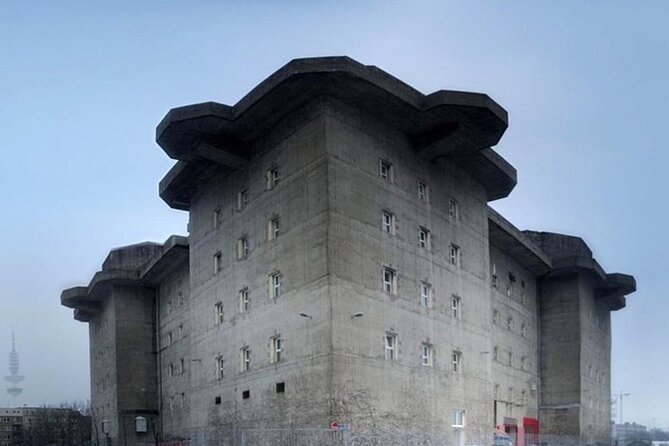
Then the tour moves to Feldstraße, tied to one of the largest WWII bunkers in Hamburg. Today, that bunker is being repurposed as a skyline garden. It is a stark lesson in how cities adapt, and how the physical structures of terror can later be used for something calmer. You get just enough time here to register the scale and notice the contrast without turning the stop into a casual park break.
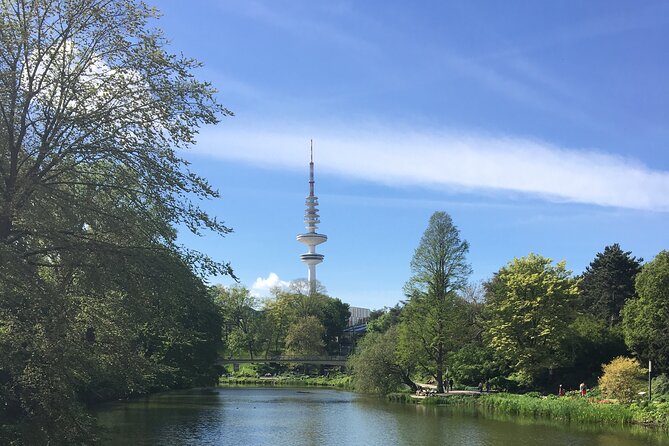
After that, Planten un Blomen hits you in the gut in the most Hamburg way possible. It is one of the city’s scenic spaces now, but it also served darker purposes during WWII. You look at its role as a central location for executions, a propaganda project, a human zoo, and a displaced persons camp.
If you visit Hamburg for architecture and parks, this stop can feel like a plot twist. That is also why it matters. The tour does not let you keep a comfortable version of the city in your head.
Feldstraße bunkers, Turmbar, and Hamburg’s scale of fortifications
At Feldstraße you get a concrete anchor point, then the tour adds another layer at Turmbar. What looks like a water tower is actually one of the many bunkers built across Hamburg during WWII, with the city-wide total exceeding 2,000.
This is useful because it changes your sense of scale. Bombing sites can feel abstract until you see how much concrete the city expected to rely on. You start realizing that wartime infrastructure was everywhere, not tucked away in a single historical district.
The stops here are short and efficient, which helps if you are balancing walking with thinking. You can take the photos, yes, but you also get the meaning.
Grindel: Jewish Hamburg, Kristallnacht, and where the story continues today
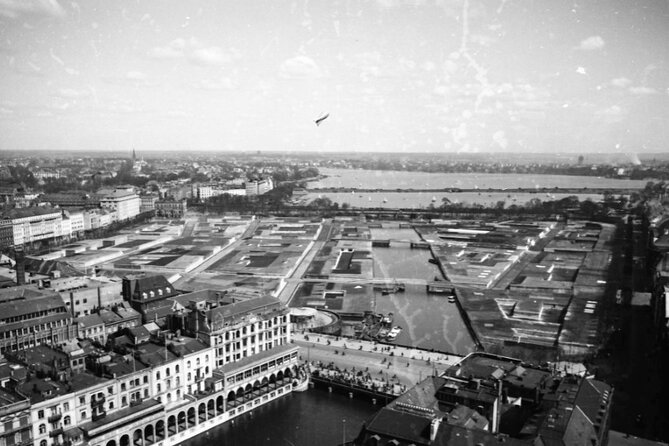
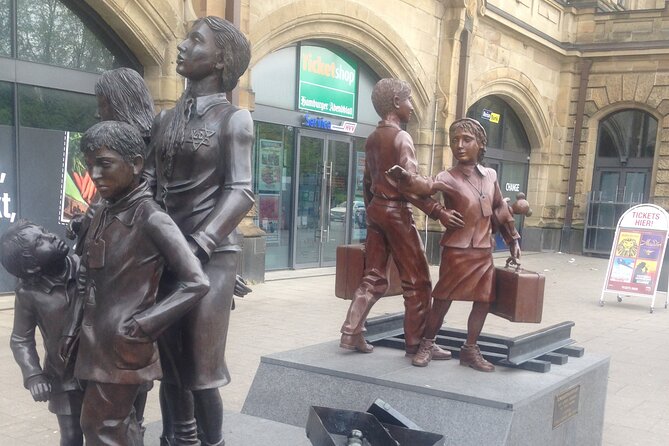
One of the most powerful sections of the tour happens around Grindel. This was once home to a lively Jewish community, and you walk through what shaped the neighborhood, who lived here, what happened during the war, and what the area looks like now.
You also cover specific reference points that keep the history grounded. The tour addresses the place of the deported Jewish persons of Hamburg. It connects that to Kristallnacht in 1938 and the 1933 book burnings.
You will also hear about the Born Synagogue and the Talmud Torah School. That part helps you move beyond dates and into community life. When you see school and synagogue names tied to a neighborhood, you understand that persecution did not arrive out of nowhere. It targeted real people and real institutions that had been part of daily life.
This is also a section where having a guide matters. The story is layered, and the guide can help you keep all the names and events in the right order, without dumping facts on you too fast.
Also holding a platform in Hamburg

Jungfernstieg and Rathausmarkt: decoy city planning and Nazi use of power
At Jungfernstieg, you focus on a tactic: Hamburg’s attempt to build a decoy city center to help avoid bombings. The point is not just that Hamburg tried something. The point is that wartime deception shaped city space, and that planning left traces you can still interpret today.
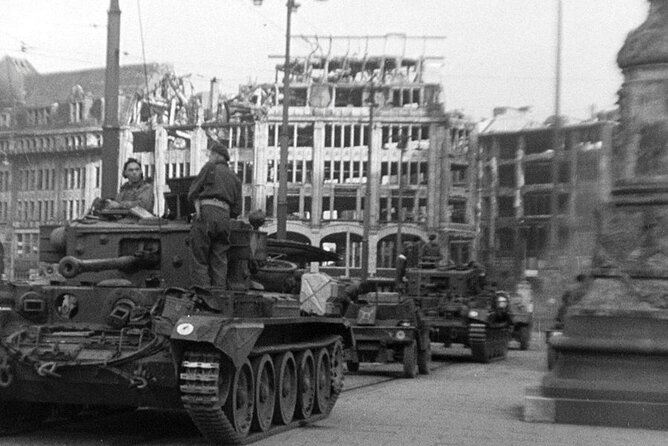
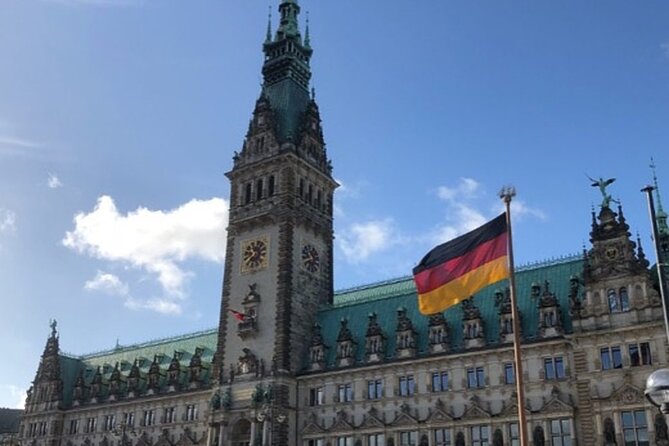
Then the tour shifts to Rathausmarkt, centered on Hamburg’s town hall as the symbolic and literal seat of power. Here you learn how the Nazi party used this space during WWII, and you spend time with the surrounding memorials.
The memorials you encounter are tied to several themes: political opposition to the Nazi party, the book burnings of 1933, and WWI propaganda in Nazi Germany. This is a strong moment for visitors who like structure. You are not just walking past history. You are reading the city’s message system for remembrance.
Afrikahaus and St. Nikolai Memorial: colonial memory and the bombed church’s message
Afrikahaus brings in a chapter people often skip, the German colonial period. You are not just hearing that it existed. You connect it to how racial segregation and genocide fit into WWII Germany. It makes the broader story harder to reduce to one narrow narrative, which is exactly what good history education should do.
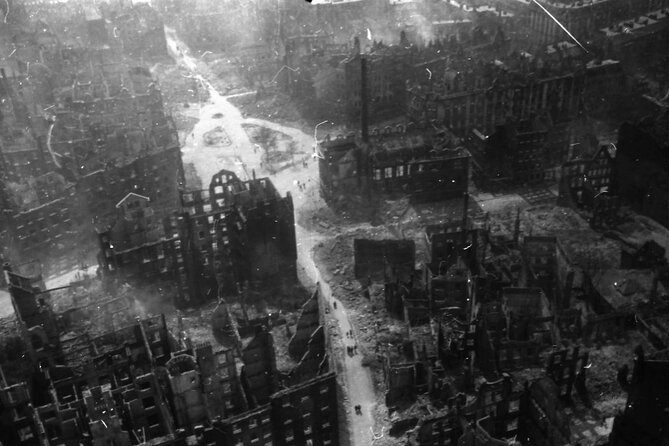
Then you end at St. Nikolai Memorial. This church serves as a memorial to the victims of war and the rule of terror. The site is the remains of the former church bombed along with much of the city in 1943.
You also look at memorials connected to the bombing of Hamburg and to victims from the Neuengamme concentration camp. The tour also includes reconciliation between post-war Germany and the UK, which gives the ending a sense of purpose beyond tragedy.
There is a museum component at this stop, plus a tower with an elevator for views of the city. That tower and related admission is not included in the tour price, so you can decide if you want the panoramic payoff after the heavy lesson.
Price and logistics: is $714.85 per group good value?
The price is $714.85 per group, up to 15 people, for about five hours. On paper, that number can look steep if you are traveling solo. For a family, a small group of friends, or a multi-generation crew, it can feel more reasonable fast because you are paying for a private guide and a structured route, not paying per person.
Value comes from three things:
1) You are not paying for ticketed attractions most of the time. The stops are listed as free admission, except the St. Nikolai tower/museum part.
2) You get a guided thread. WWII history is easy to scramble without context. The tour order gives you a timeline you can hold.
3) You get responsiveness. If someone in your group needs slower pacing or more explanation, a private format can actually make the day feel humane.
Logistics are straightforward. You start at the Denkmal für die Gefallenen beider Weltkriege at Schleusenbrücke 1, 20354 Hamburg, and you finish at the Hamburg BUNKER at Feldstraße 66, 20359. If you want, the guide can drop your group back to a location of your choosing. The tour is offered in English, you’ll receive a mobile ticket, and it is near public transportation. Service animals are allowed, and you should plan for moderate walking.
Who this tour is best for
This is a great pick if you want WWII history tied to real Hamburg places. It is especially good for people who like to ask questions and compare what they see with what they know.
It is also a strong choice for mixed-age groups, because the private setup makes it easier to tailor pacing. Past tours included a three-generation group, and the guide approach can adapt when your group spans different attention levels.
If your group wants a purely relaxed sightseeing day with minimal heavy content, you may want a different kind of Hamburg tour. This one is honest, and the story gets difficult.
Should you book the World War 2 Hamburg Private Guided Tour?
If your goal is to understand how Hamburg’s WWII era shaped streets, buildings, and memorials you can still visit, I’d book it. The private format makes the biggest difference, because you get explanations at each stop instead of collecting disconnected facts.
Also, the itinerary is designed to prevent the common WWII “too big to understand” problem. You start in the interwar years, then track the institutional and social breakdown. You move through bunkers and public spaces, then land on remembrance at St. Nikolai. That arc gives meaning to the concrete.
If you do book, bring your questions. Wear comfortable shoes. And know that the quieter, scenic parts of the city can carry loud history.
FAQ
How long is the WWII private guided tour in Hamburg?
The tour lasts about 5 hours.
What is the group size for this private tour?
It is priced for a group up to 15 people, and only your group participates.
Is the tour offered in English?
Yes, it is offered in English.
Where does the tour start and end?
It starts at Denkmal für die Gefallenen beider Weltkriege, Schleusenbrücke 1, 20354 Hamburg. It ends at the Hamburg BUNKER, Feldstraße 66, 20359 Hamburg.
Are there admission tickets required for the stops?
Admission is listed as free for the stops in the itinerary. The St. Nikolai Memorial museum and tower are noted as not included.
Is the tour suitable if I have moderate physical fitness?
The tour is intended for travelers with moderate physical fitness.
Is the tour near public transportation?
Yes, it is near public transportation.
What is the cancellation policy?
Free cancellation is available. You can cancel up to 24 hours in advance for a full refund. If you cancel less than 24 hours before the start time, the amount paid is not refunded.
Fresh on the arrivals board for Hamburg

Third Reich & World War II Tours, compared.

Berlin’s Best: 2 Hour Walking Tour Third Reich and the Cold War
Read our review →
Third Reich Berlin: Hitler and WWII Walking Tour
Read our review →
Walking Tour of Former Nazi Party Rally Grounds
Read our review →
Browse the lists this tour appears in