
Reviewed · GUIDED WALKS IN BERLIN
The History of Berlin City Center Exclusive Guided Walking Tour
Berlin can feel like a puzzle at first.
This 3-hour private guided walking tour strings major sights together so you understand how Berlin got from its past to its present. I especially like the way it mixes famous landmarks with sobering WWII and Cold War sites, so the story feels whole instead of headline-only.
What I like most is getting help from a real guide like Jochen or Orit, not a generic audio app. You also get a smart pace for a dense route, with manageable time at each stop instead of rushing past everything. The only drawback to plan for is that some highlights are walk-by moments, and a couple of attractions have admission not included.
In This Review
- Key things to know before you go
- A smart way to get your bearings in Berlin’s center
- How the start and end points shape your day
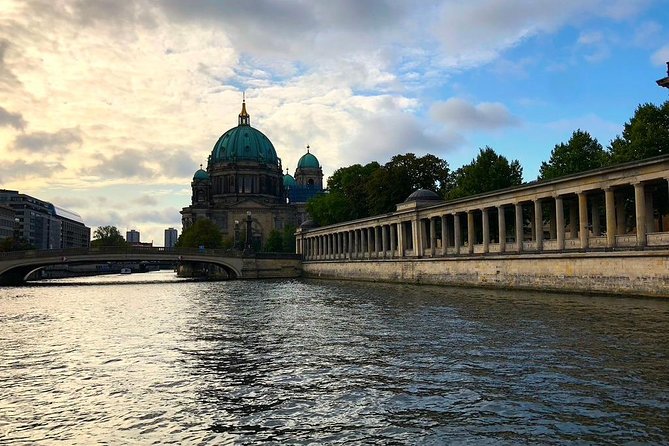
- Museum Island to Berlin Cathedral: art, empire, and national identity
- TV Tower and the Royal Palace: exterior landmarks with real context
- Berlin Wall Memorial to Niederkirchnerstraße: where the city’s division becomes personal
- Bebelplatz and the Holocaust Memorial: learning how remembrance works
- Checkpoint Charlie and Fuhrerbunker: the Cold War and the last days of WWII
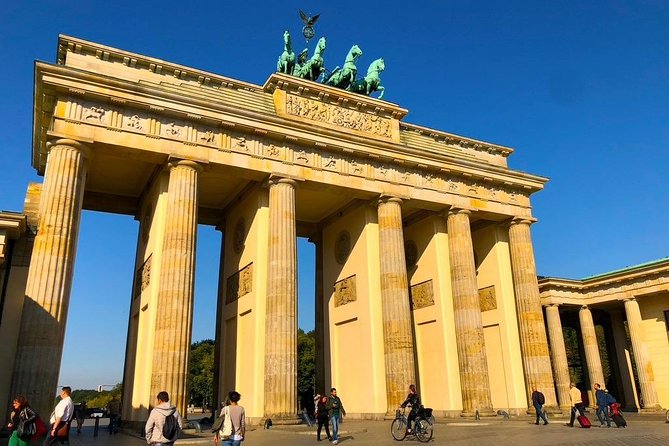
- Brandenburg Gate finish: a landmark that ties the story together
- Price and value: is $62.54 a good deal?
- Who this Berlin city center tour suits best
- Should you book this guided Berlin history walk?
- FAQ
- What is the price of the Berlin City Center Exclusive Guided Walking Tour?
- How long is the tour?
- Is this tour private?
- What language is the tour offered in?
- Where does the tour start and end?
- Is wheelchair access available?
- Are tickets included for all stops?
- What is the meeting point area like for getting there?
- Can I cancel for a full refund?
Key things to know before you go
- A private guide, exclusively for your group means questions never feel awkward and the route can fit your pace.
- Two ends of the city story bookend the walk, starting near the Museum Island area and ending at Brandenburg Gate.
- No-nonsense Berlin history route hits Museum Island, Cold War dividing lines, and Nazi-era memory sites in one loop.
- Wheelchair friendly is a real plus if you need mobility support for a walking-heavy day.
- Two major look-ups are not included (the TV Tower and the Royal Palace), so plan on photos from the outside unless you add tickets separately.
- Moderate fitness level is required, since you’re walking across city center for about three hours.
A smart way to get your bearings in Berlin’s center
If you want Berlin to make sense fast, this tour is built for that exact goal. You start in the city’s cultural core, then slide into the political and violent history that shaped modern Germany, and you finish at the most recognizable symbol in Berlin. That gives you a mental map you can actually use the rest of your trip.
I like that the tour doesn’t try to be neutral about everything. It explains what each place meant. It also keeps the pace human. One guide mention you’ll see often is that the walk is a fair bit of distance, but the tempo stays manageable. That matters, because Berlin is not a city where you want to be constantly negotiating sore feet while you’re trying to learn.
There’s also value in the “few hours, lots of sights” approach. Berlin city center is compact, so three hours can cover a lot more than you might expect, as long as the route is planned well. You’ll also get enough context at each stop to connect the dots without needing a textbook.
More Guided Walks in Berlin
- Discover Berlin Half-Day Walking Tour
★ 5.0 · 9,624 reviews - Berlin City walk Government District and Places of Democracy
★ 4.7 · 8,467 reviews - Berlin: Third Reich & Cold War Guided Walking Tour
★ 4.9 · 8,378 reviews
How the start and end points shape your day
You meet at James Simon Gallery on Bodestraße 1-3 (Berlin’s Museum Island area). That’s a practical choice. It’s central, it’s easy to reach on public transportation, and it puts you near several major landmarks right away.
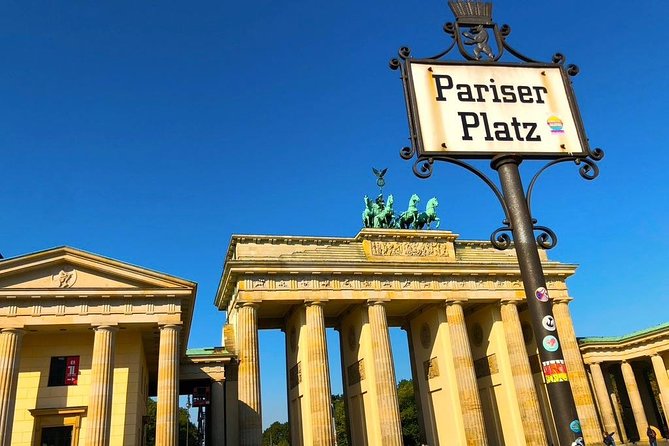
You end at Brandenburg Gate on Pariser Platz. Ending here is convenient because you can roll right into sightseeing nearby after the tour. You can also grab a ride without fighting across the city. The tour doesn’t include hotel pickup or drop-off, so it’s smart to plan for an easy taxi or Uber connection from wherever you’re staying.
Why this matters: when tours end near Brandenburg Gate, you’re positioned for evening light, dinner, and easy onward transit. If you’re coordinating multiple activities, it gives you a clean “bookend” for your schedule.
Museum Island to Berlin Cathedral: art, empire, and national identity
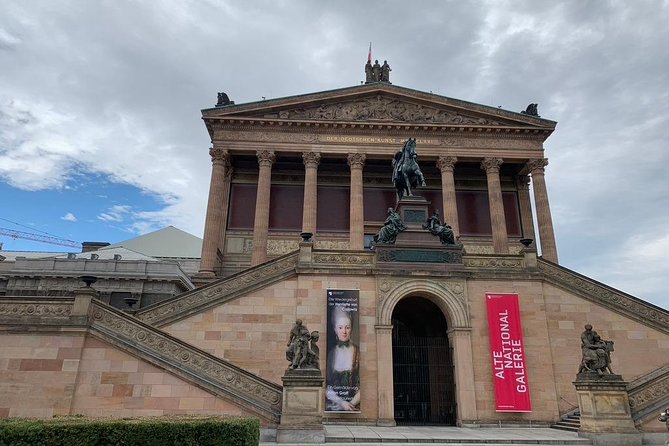
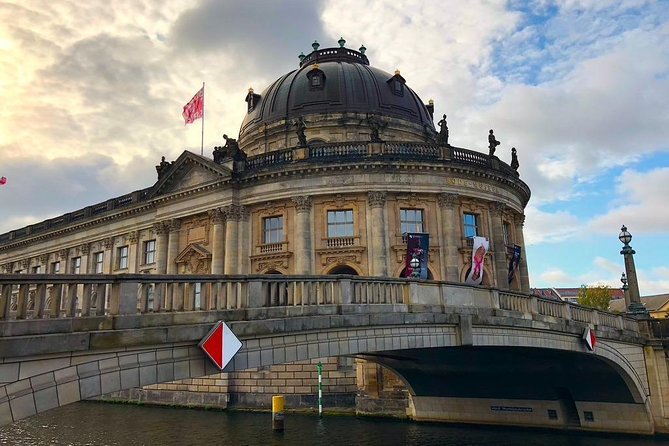
Your first stop is the Museum Island area. You’re not just looking at pretty buildings. You’re standing in a place that helped shape Germany’s public identity through art, learning, and world-famous museum culture. The tour lists museum island with admission ticket free, which is a good sign that you’ll focus on seeing and understanding the place rather than spending time buying tickets and entering galleries.
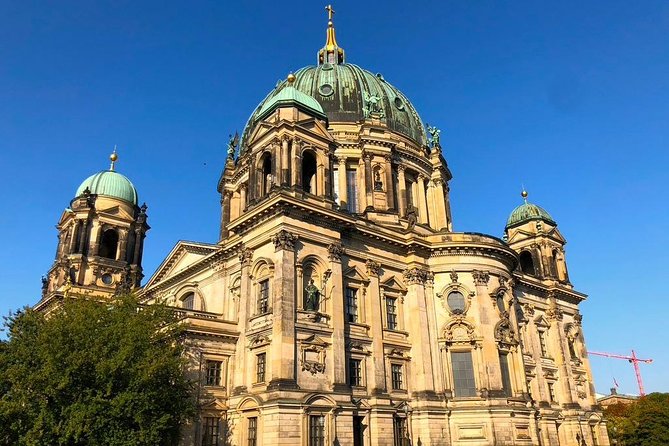
Next you head to Berliner Dom (Berlin Cathedral). This is one of those buildings that changes how you read the skyline. In a few minutes, you can absorb a lot: scale, position, and the way it dominates views from multiple directions. The tour also lists admission ticket free here, so you’re likely to spend time observing and listening, not waiting for entry logistics.
A key benefit for you as a first-timer: these stops teach you how Berlin organizes itself visually. Cultural institutions, grand architecture, and the way landmarks anchor neighborhoods are part of the story. Even if you don’t go inside a museum or church, standing in the right spot while a guide explains the meaning can be surprisingly satisfying.
Possible drawback: because time at each early stop is brief, you won’t get a long, slow “museum day” feeling. This is a guided orientation walk, not a deep museum visit.
TV Tower and the Royal Palace: exterior landmarks with real context
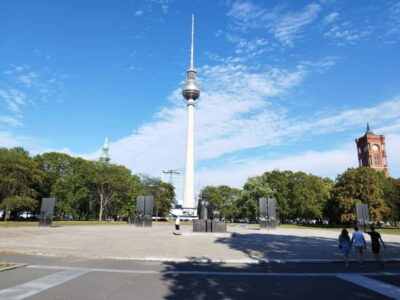
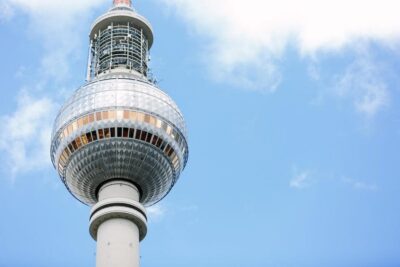
After the cathedral, you walk past the Berliner Fernsehturm (TV Tower), described as Berlin’s most visible landmark. The tour notes that admission is not included. That typically means you’re viewing it and learning about it from the ground, which is still worthwhile. The tower is not just a photo stop. It’s a symbol people associate with the city’s political era and the way governments tried to project power and modernity.
You also see Stadtschloss Berlin (Royal Palace). Like the TV Tower, admission is not included. The tour has you in the “see it from the outside” mode, which is honestly a smart use of time. You get the architectural and historical framing without committing to a separate ticket process that can eat up your schedule.
This section is valuable because Berlin’s skyline is history in vertical form. The tower, the palace, and the surrounding structures let you picture how leadership wanted the city to look at different points in time. You’ll likely notice how the city’s layers sit on top of each other, sometimes in the same view.
Practical tip for you: wear comfortable shoes here. Even if the stops are short, the walk between skyline points adds up. If you’re the type who likes to linger for photos, just know the guide is keeping an overall rhythm.
Berlin Wall Memorial to Niederkirchnerstraße: where the city’s division becomes personal
Then the tone shifts. You visit the Memorial of the Berlin Wall, described as the wall that divided Berlin during the Cold War. This stop has admission ticket free and about 15 minutes, which is enough time to learn what you’re looking at and why that particular memory matters.
Next comes Niederkirchnerstraße, where the tour points you to the former SS Headquarters, including Gestapo association during WWII. The tour lists admission ticket free and about 10 minutes. This is one of those sections where you learn that history is not only about battles and leaders. It’s also about institutions, offices, and systems of control.
Why this is powerful for first-time visitors: Berlin can be confusing because it’s full of “pretty” sights that were shaped by brutal decisions. A good guide makes the contrast clearer. You’re not just walking by walls. You’re being helped to understand the machinery behind the wall, and what it meant for real people.
Possible consideration: this part of the walk can feel heavy. If you’re traveling with kids or you prefer lighter content, you might want to pause, step back, and take breaks as needed. The tour is designed for a shared experience, so you’ll likely hear serious discussion rather than a purely sightseeing tone.
More German cities at walking speed:




Bebelplatz and the Holocaust Memorial: learning how remembrance works
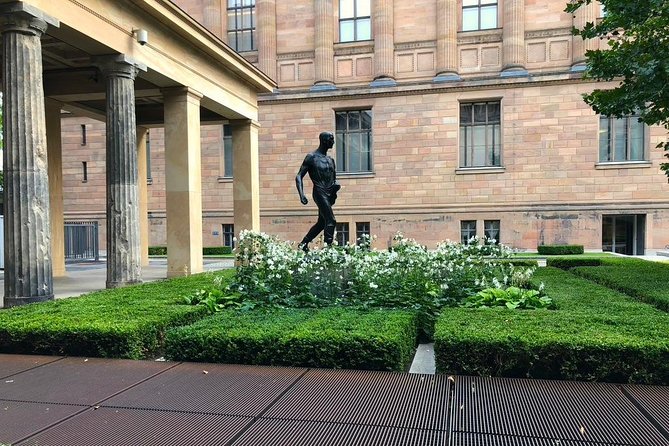
You pass by the Book Burning Memorial at Bebelplatz, tied to the Nazi-era burning of about 20,000 books. Admission is listed as free, and the time is short, about 10 minutes. But don’t let the short window fool you. This is a place that communicates something big with minimal spectacle. It’s a reminder that censorship is a weapon, not an abstract idea.
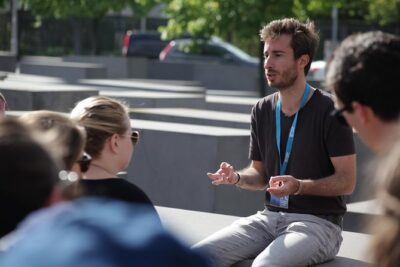
Then you move to the Holocaust Memorial (Memorial to the Murdered Jews of Europe), created by Peter Eisenman. The tour sets aside about 15 minutes and lists admission ticket free. This stop is different from most “sightseeing” in the city. The design is meant to affect how you move through space and how you feel while doing it.
For you, the value is not only the facts. It’s the shift in how you experience a site. A guide can explain why the memorial’s layout matters, what you should notice, and how to respect the space. Even if you already read about the Holocaust before your trip, being in the setting with explanation can make the memory land differently.
Possible drawback: this stop is emotionally intense. If you need time to process, keep an eye on your own pacing. The tour’s schedule is set, but taking a slow minute at a memorial is always okay.
Checkpoint Charlie and Fuhrerbunker: the Cold War and the last days of WWII
Next is Checkpoint Charlie, described as the best-known Berlin Wall crossing point during the Cold War. Admission is listed as free, with about 10 minutes. It’s a famous place, but the best part is how your guide helps you connect it to the reality of border life. In Berlin, you often see artifacts of division turned into icons. A guide keeps that from becoming cartoon history.
After that, you visit Fuhrerbunker. The tour notes this as the place where Hitler resided until the last week of WWII. Admission is listed as free, and time is about 10 minutes.
This is a tough stop, so I’ll give you the honest travel framing: you’re not going there to feel inspired. You go to understand what happened and how near-history events shape a city’s layout and memory culture. In a walking tour, short stops like this can still be effective because the guide’s job is to give you the context you’d otherwise miss.
One practical note: you’re moving from one major narrative theme to another quickly. If you get overwhelmed, it’s totally fine to slow down your attention. Focus on what the guide says, then take your own moment to look around before you move on.
Brandenburg Gate finish: a landmark that ties the story together
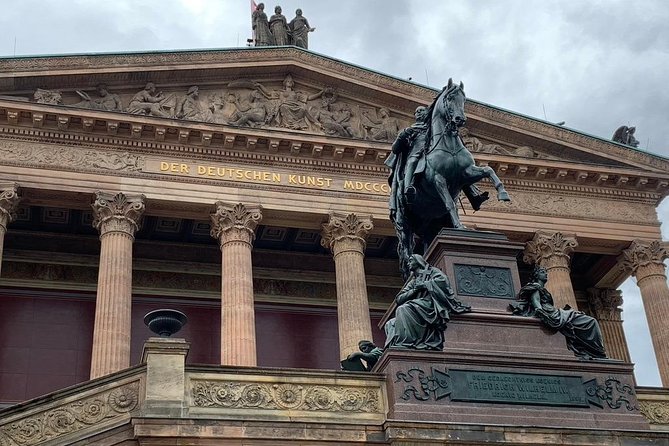
Finally, you end under the Brandenburg Gate, described as Berlin’s only surviving historical city gate. Admission is listed as free, and time is about 10 minutes.
Ending here works because Brandenburg Gate isn’t just a pretty landmark. It’s a symbol tied to reunification and to the city’s changing political identity. After walking through cultural institutions, division sites, Nazi-era remembrance, and Cold War crossings, the Gate becomes easier to read. You can see how Berlin transformed, not only how it looks.
This last stretch is also practical. You finish in a place that’s built for sightseeing around it. If you’re planning a dinner reservation or a museum visit afterward, you’re in a strong position to do both.
Price and value: is $62.54 a good deal?
At $62.54 per person for about 3 hours, the value depends on what you want out of Berlin.
If you’re a first-timer, this tour often feels like a good shortcut. You’re paying for a focused route plus a guide, and you’re not spending your time searching for the right order of sites. You also get private guided walking tour treatment, meaning it’s not a mega-group where questions get lost.
It’s also a smart buy if you want the history to be connected. A standard self-guided “see these places” approach can still be fun, but it usually misses the meaning between stops. Here, the guide fills those gaps as you walk.
What’s not included matters, too. The TV Tower and Royal Palace do not include admission. If you’re hoping to go up the tower or do a palace visit during the walk, you’d need extra planning and tickets on your own. But the tour still gives you the landmarks themselves, and the time is optimized for a history orientation.
Finally, the tour offers group discounts and a mobile ticket. If you’re traveling with friends or family, that can make the price feel even more reasonable.
Who this Berlin city center tour suits best
This is a strong choice if you:
- want a guided history route that covers both famous landmarks and harder topics
- like structured walking tours, not random wandering
- enjoy asking questions and getting straight answers from a guide, not piecing together context on your own
- can handle a moderate walking pace for about three hours
- appreciate a route that ends at a major landmark you’ll want to revisit
It might be less ideal if you:
- want long museum time inside specific attractions
- strongly prefer only “light” sightseeing with no WWII or Holocaust memorial stops
- need minimal walking, because it is still a city-center walking experience
Should you book this guided Berlin history walk?
Yes, you should book it if you want a fast, organized way to understand Berlin’s story with a private guide and a route that hits both power symbols and painful memory sites. The guide-driven storytelling is the standout, and the pacing helps you get a lot without feeling like you’re sprinting.
Skip it or reconsider if you’re mainly chasing ticketed attractions like going inside the TV Tower or Royal Palace. This is a walk-and-learn format, with those admissions marked as not included. Also, if you know memorial content will be too much for your travel style, plan extra breaks or choose a different kind of tour.
If you’re arriving in Berlin and thinking, I need the big picture before I pick museums and neighborhoods, this is a solid place to start.
FAQ
What is the price of the Berlin City Center Exclusive Guided Walking Tour?
The tour costs $62.54 per person.
How long is the tour?
The tour lasts about 3 hours.
Is this tour private?
Yes. It is a private tour/activity, and only your group participates, with a guide exclusively for you.
What language is the tour offered in?
The tour is offered in English.
Where does the tour start and end?
It starts at James Simon Gallery, Bodestraße 1-3, 10178 Berlin, Germany, and ends at Brandenburg Gate, Pariser Platz, 10117 Berlin, Germany.
Is wheelchair access available?
Yes. The tour is listed as wheelchair friendly.
Are tickets included for all stops?
Some stops list admission ticket free, while others are not included. The Berlin TV Tower and Stadtschloss Berlin are marked as admission not included.
What is the meeting point area like for getting there?
The start location is near public transportation.
Can I cancel for a full refund?
Yes. You can cancel for a full refund if you cancel at least 24 hours before the experience start time.
Centuries Per Block
- Berlin: Natural History Museum Entrance Ticket
★ 4.6 · 3,382 reviews - Berlin: 3-Hour World Heritage Cruise to Potsdam
★ 4.5 · 1,569 reviews - Berlin: History of the Third Reich Guided Walking Tour
★ 4.7 · 791 reviews - Berlin: Berlin Charité Guided History Tour
★ 4.4 · 660 reviews
Fresh on the arrivals board for Berlin
Guided Walks in Berlin, compared.
Berlin City walk Government District and Places of Democracy
Read our review →
Berlin’s Best: 2 Hour Walking Tour Third Reich and the Cold War
Read our review →
Third Reich Berlin: Hitler and WWII Walking Tour
Read our review →
Browse the lists this tour appears in