
Reviewed · NUREMBERG TOURS & ACTIVITIES
Nuremberg: St. Johannis Friedhof &Hesperidengärten IN GERMAN
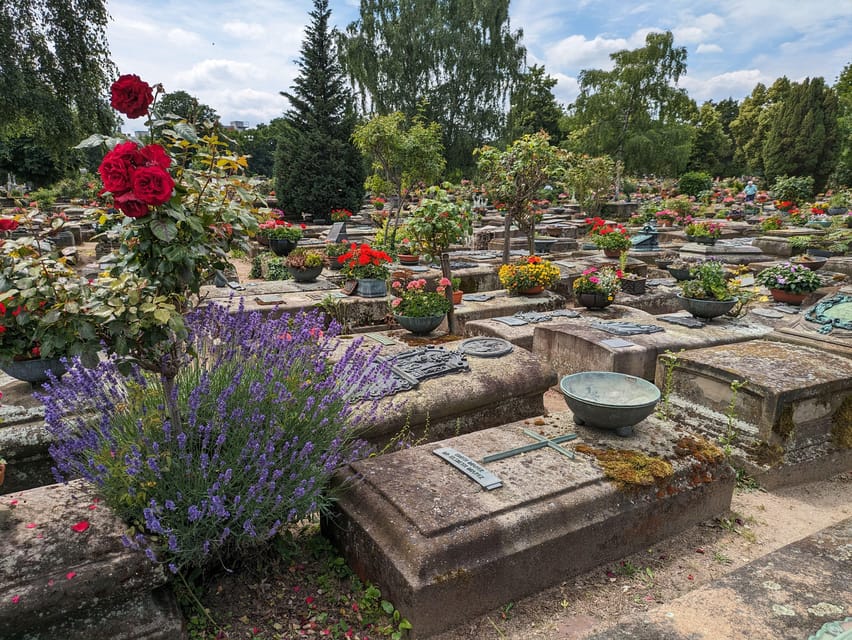
Cemeteries are not usually this beautiful. On this St. Johannisfriedhof walk, the city’s story comes alive through names, symbols, and artful grave markers, with a special stop at Albrecht Dürer’s grave. The one catch is simple: the tour is in German, so it may feel slow if you are not comfortable following spoken history.
You’ll see the graves of patricians, craftsmen, artists, and politicians, then continue to the nearby Hesperidengärten, which were built for both recreation and growing Mediterranean fruit. One more timing note to plan around: the Hesperidengärten are only visitable from May to October.
In This Review
- Key points before you go
- St. Johannisfriedhof: Nuremberg’s cemetery that feels like a history book
- A short walk with a clear route, starting at Lindengasse and Johannisstraße
- Albrecht Dürer’s grave: the art stops, but the guide does the connecting
- Reading Nuremberg through patricians, craftsmen, artists, and politicians
- Hesperidengärten: recreation grounds and Mediterranean fruit, not just a pretty detour
- Weather reality: chilly tips for winter plans, heat tips for summer
- Language matters: German-only guidance is part of the experience
- Price and value: what you get from $17 for 1.5 hours
- What to bring: shoes, patience, and realistic expectations
- Who this tour suits best, and who should look elsewhere
- Should you book this Nuremberg cemetery and Hesperidengärten tour?
- FAQ
- How long is the tour?
- Is the tour offered in German?
- Where do I meet the guide?
- What does the tour cost?
- When can I visit the Hesperidengärten?
- Is the tour cancellable?
- Is this tour suitable for wheelchair users or visually impaired visitors?
Key points before you go
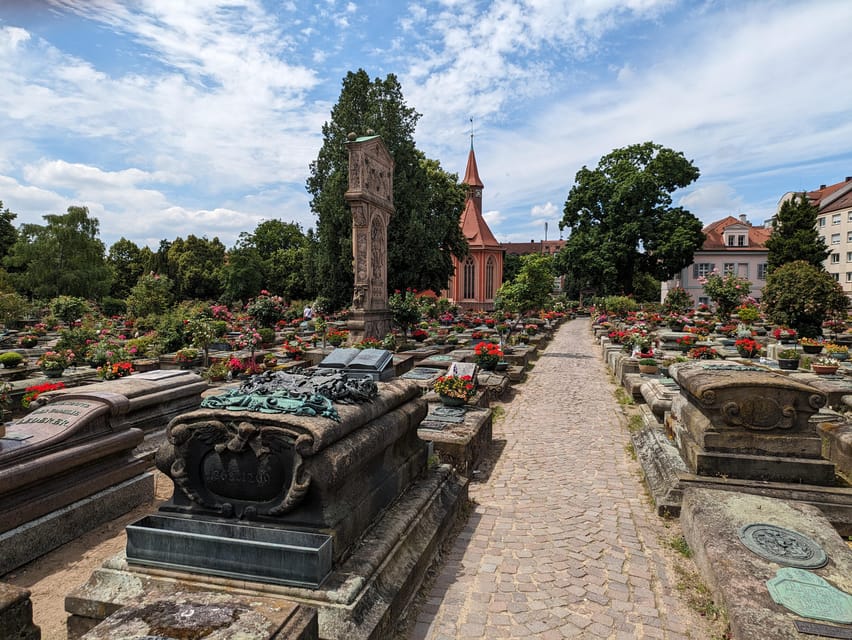
- Germany’s most beautiful cemetery (2013): St. Johannisfriedhof is famous for its memorial art and historical weight.
- Albrecht Dürer’s grave included: a high-interest stop without extra ticket hunting.
- Graves that map Nuremberg’s social classes: patricians, craftsmen, artists, and politicians.
- Artistic epitaphs you can actually read and understand (with your guide translating the meaning).
- Hesperidengärten run May to October: the garden part depends on the season.
- High guide energy is a real plus: one example was Sabine Peters, who brought history to life in a lively way.
St. Johannisfriedhof: Nuremberg’s cemetery that feels like a history book
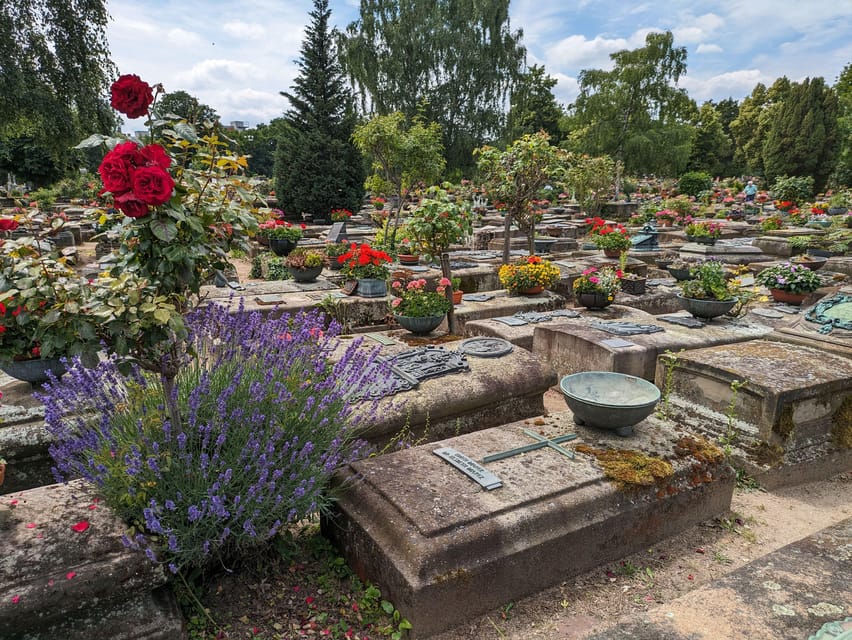
This is the kind of tour that changes how you think about burial grounds. St. Johannisfriedhof is widely known as one of Europe’s most important cemeteries, and it was voted Germany’s most beautiful cemetery in 2013. Instead of treating graves as background, the guide turns them into clues to how Nuremberg functioned, who held influence, and what people valued enough to mark for centuries.
What I like about it for visitors is that the cemetery is not presented as gloomy trivia. You are guided through a sequence, with stops that connect individual lives to the bigger city story. That makes the 1.5-hour format feel purposeful, not rushed.
Also holding a platform in Nuremberg
- Nuremberg: City Tour with the Bimmelbahn Train
★ 4.4 · 2,475 reviews - Nuremberg: Old Town Guided Walking Tour
★ 4.6 · 2,416 reviews - Nuremberg: Tunnels and Secret Passages in the City Wall Tour
★ 4.8 · 2,334 reviews
A short walk with a clear route, starting at Lindengasse and Johannisstraße
You’ll meet at St. Johannisfriedhof at the east entrance, Lindengasse, right by the corner of Johannisstraße. From there, expect an easy to moderate walking route through the cemetery grounds and then toward the nearby gardens.
Pacing is a major value factor on a tour like this. One reviewer noted the walking was about one kilometer, and that it felt manageable even for older participants interested in history. Still, it is outdoors and you will be on your feet, so comfortable shoes matter.
Albrecht Dürer’s grave: the art stops, but the guide does the connecting
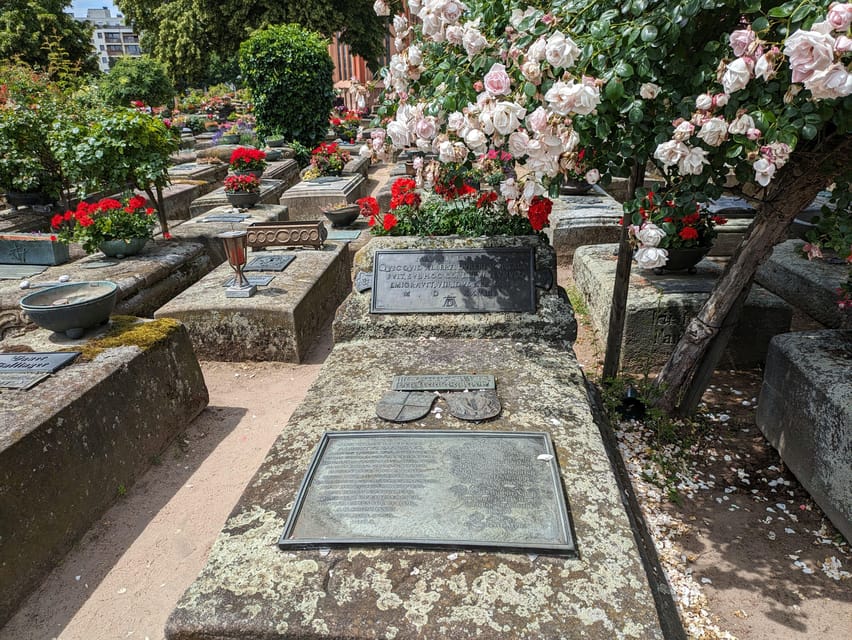
One of the strongest reasons to pick this tour is the built-in focus on Albrecht Dürer’s grave. It’s the kind of name many people know from books, but seeing how he fits into the local cemetery setting helps the person behind the fame feel real.
Your guide uses the grave area as a springboard into broader context, linking memorial choices to Nuremberg’s cultural life. That is what makes the stop more useful than a quick photo moment. If you like art history but you also want the local “how and why,” this is a good match.
Reading Nuremberg through patricians, craftsmen, artists, and politicians
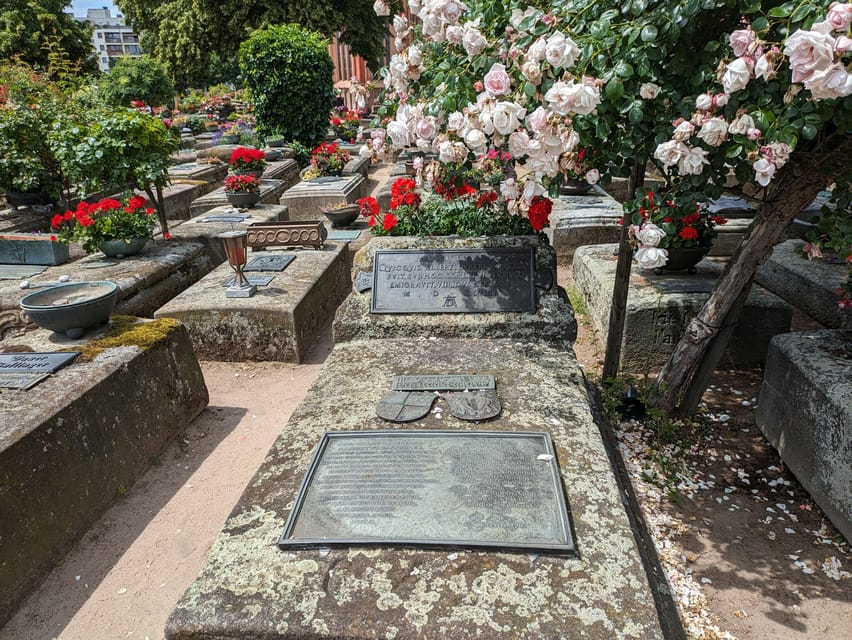
The tour’s cemetery section focuses on social groups that shaped Nuremberg. You’ll move through graves associated with patricians, craftsmen, artists, and politicians, and your guide uses those examples to explain city history in plain terms.
This matters because cemeteries often reflect economics and community structure more honestly than many monuments. Who could afford prominent memorials? What professions got recognized? How did public standing show up in the way families commemorated their people? This tour is built to help you spot those patterns.
You will also hear about artistic epitaphs. These are not only decorative. They often tell you something about family identity and the values the deceased and relatives wanted to carry forward. With a German guide, you are not left guessing what the inscriptions might mean.
Hesperidengärten: recreation grounds and Mediterranean fruit, not just a pretty detour
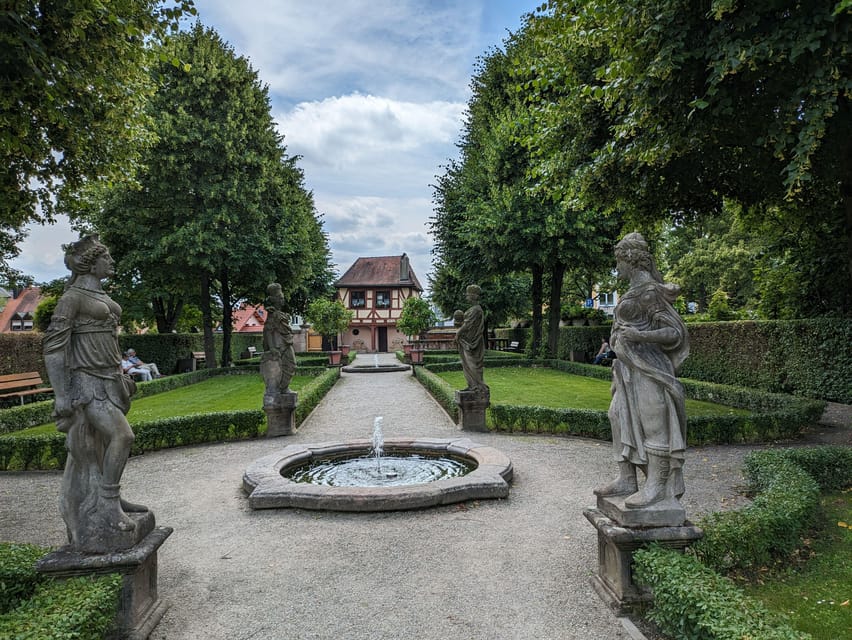
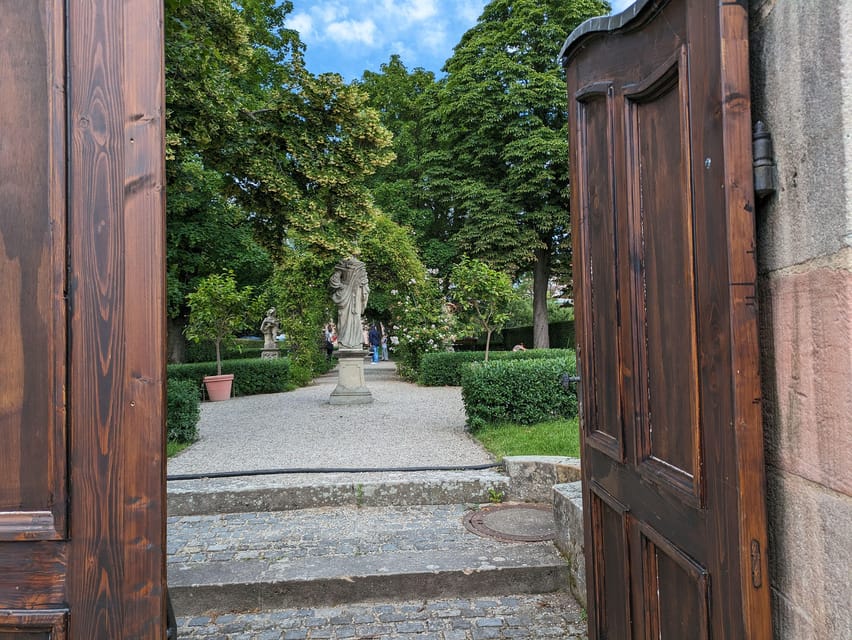
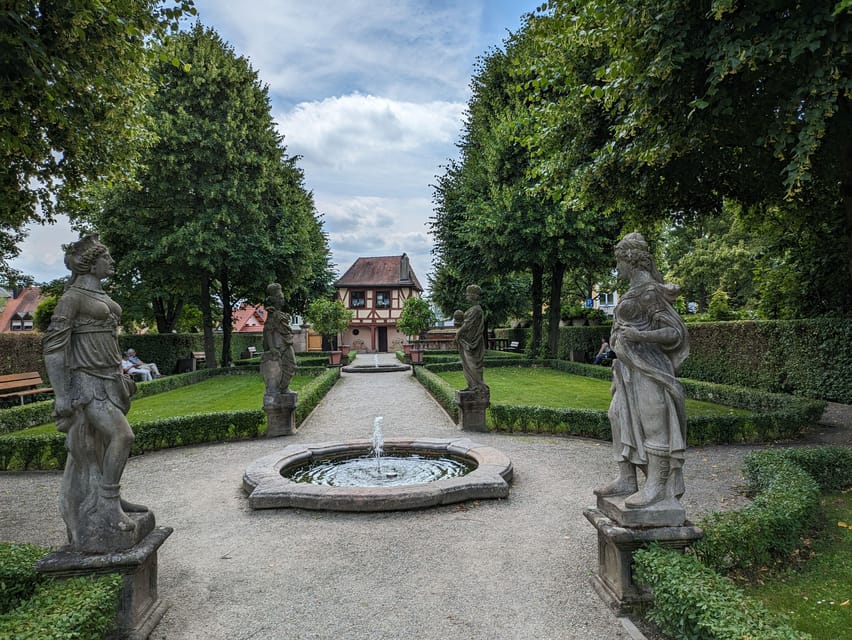
After the cemetery, you’ll head to the Hesperidengärten, part of the “green Johannis district.” This is the garden twist that keeps the tour from becoming a one-note museum walk.
The Hesperidengärten had a practical side. They were used for recreation, but they also served for cultivating Mediterranean fruit. That mix changes how you experience the greenery. It becomes part of the city’s daily life, not just a scenic pause.
There is also a strong historical contrast with the cemetery. The cemetery section asks you to think about memory and community. The garden section flips the lens to leisure and growing things. Together, they give you a more rounded picture of the Johannis area.
One practical note: the Hesperidengärten can only be visited from May to October. If your trip falls outside those months, you may miss the garden portion entirely, even though the cemetery portion still has plenty to offer.
Onward connections from Nuremberg:



Weather reality: chilly tips for winter plans, heat tips for summer
This tour is outdoors, so weather changes the feel. One review specifically mentioned a chilly day in October, but the guide’s storytelling kept things engaging. If you’re visiting in shoulder season, bring layers you can adjust while you walk.
In summer, the biggest risk is heat, especially during the garden time. Another reviewer felt the Hesperidengärten visit was less interesting during very high heat, which makes sense because gardens ask you to slow down outdoors. If you travel in hot months, I’d plan for earlier in the day, bring sun protection, and pace yourself so you can still enjoy the memorial and garden stops.
Language matters: German-only guidance is part of the experience
This tour is in German. That can be a deal-maker or deal-breaker, depending on your comfort level.
If you can follow spoken German at a basic to moderate level, you’ll likely enjoy how the guide explains epitaphs, city roles, and why certain graves were made prominent. The tour works because you’re not just seeing individual names, you’re learning what those names represent within Nuremberg’s story.
If your German is beginner level, you might still enjoy the visuals. But you may miss much of the meaning that turns the cemetery into a real learning experience. For me, that is the single biggest practical consideration for choosing this tour.
Price and value: what you get from $17 for 1.5 hours
At about $17 per person for a 1.5-hour guided tour, this is priced for people who want interpretation, not just access. The value is not in the cost alone, it’s in the combination: a famous cemetery, meaningful graves, and the Hesperidengärten seasonally, all guided in a live format.
Cemetery tours can sometimes feel like long lectures with little payoff. Here, the structure is built around specific stops and themes, so you can connect dots as you walk. Add in the presence of a major name like Albrecht Dürer, and you get a stronger “worth it” feeling even with a short duration.
If the tour price is your only deciding factor, it helps to ask yourself one question: do you want a guide to explain the symbolism behind inscriptions and memorial choices? If yes, this price is reasonable. If not, you could also explore on your own, but you would likely miss the whole point of this specific route.
What to bring: shoes, patience, and realistic expectations
You should bring comfortable shoes. The tour is not described as wheelchair-friendly, and it is also marked as not suitable for people with low fitness or for visually impaired participants. That’s less about danger and more about terrain and how the experience is paced.
Bring water in warmer months, and if you’re visiting between May and October, add basic sun protection. Since you will be outside for the full 1.5 hours, small comfort items help more than you’d expect.
Finally, keep your expectations realistic. This is not a fast photo sprint. It is a guided walk meant to help you understand place. If you go in with that mindset, you’ll enjoy it more.
Who this tour suits best, and who should look elsewhere
This works especially well for you if you like:
- art and inscriptions, not just big landmarks
- guided stories that connect individuals to city history
- a short, focused walk that does not eat your whole afternoon
It’s also a solid choice if you enjoy quiet, reflective settings. The cemetery part gives you a different side of Nuremberg than the typical city sights.
You might want to skip it if:
- you need step-free access or you rely on mobility aids
- you are visually impaired and need a different kind of support
- you cannot handle walking outdoors for roughly a short but steady circuit
And if you do not speak German, decide based on how you feel about following a guided history tour in a language you are still learning.
Should you book this Nuremberg cemetery and Hesperidengärten tour?
Book it if you want a meaningful, structured walk through a place that is famous for more than its age. The big wins are the St. Johannisfriedhof setting, the guide-led explanation of graves tied to Nuremberg’s social groups, and the special stop at Albrecht Dürer’s grave. The Hesperidengärten add a thoughtful contrast, especially if you are traveling in May through October.
I’d skip or reconsider if German guidance is a problem for you, or if you are traveling outside the months when the Hesperidengärten are open. Also, if walking on uneven outdoor ground is a challenge, this format likely won’t feel comfortable.
If you do fit the sweet spot, this tour is one of those rare experiences where history is not stuck in a building. It’s written into the cemetery art and carried into the garden space beside it.
FAQ
How long is the tour?
The tour lasts 1.5 hours.
Is the tour offered in German?
Yes, the guided tour is in German.
Where do I meet the guide?
Meet at St. Johannisfriedhof, east entrance, Lindengasse, at the corner of Johannisstraße.
What does the tour cost?
The price is listed as $17 per person.
When can I visit the Hesperidengärten?
The Hesperidengärten can only be visited from May to October.
Is the tour cancellable?
Yes, free cancellation is available up to 24 hours in advance for a full refund.
Is this tour suitable for wheelchair users or visually impaired visitors?
No, it is not suitable for wheelchair users or visually impaired people, and it is also not suitable for people with low level of fitness.
Fresh on the arrivals board for Nuremberg



Nuremberg Tours & Activities, compared.


Tunnels and Secret Passages in the City Wall Tour
Read our review →
Walking Tour of Former Nazi Party Rally Grounds
Read our review →

Browse the lists this tour appears in