
Reviewed · NUREMBERG TOURS & ACTIVITIES
Nuremberg: Medieval Ages Tour in Spanish
Medieval Nuremberg has a darker side. This Spanish tour threads together witch trials, city defenses, and local legend as you walk from the Frauenkirche toward the Imperial Castle. It is the kind of old-town storytelling that makes the streets feel like a timeline, not a postcard.
I especially like the focus on witch hunts and how everyday life got shaped by fear, gossip, and public punishment. I also like the stop connected to Franz Schmidt, the city’s famed executioner, plus the guide’s knack for turning famous medieval legends into something you can picture on the cobbles, with guides like Víctor, Jonathan, and Federico showing up in past experiences.
One drawback: the themes can be heavy. If you prefer upbeat history, or you are sensitive to stories about witch hunts and public punishments, go in with your head and heart ready, and wear comfortable shoes for uneven stones.
In This Review
- Key things to know before you go
- Frauenkirche start at Hauptmarkt, and why that matters
- Church of Our Lady photo stop, quick orientation without the lecture
- Witch hunts and public fear, where the Middle Ages get personal
- Trödelmarkt Island and the executioner Franz Schmidt house
- Medieval legends on the walk, devils, knights, and even space jokes
- Weissgerbergasse lane time, daily life beyond the big drama
- City officials’ tactics against invaders, and how the endgame works
- Finish at the Imperial Castle of Nuremberg, where the story “lands”
- Price and value at about $20 for 3 hours in Spanish
- Who should book this tour, and who might skip it
- Should you book the Nuremberg Medieval Ages Tour in Spanish?
- FAQ
- How long is the Nuremberg Medieval Ages Tour in Spanish?
- Where do I meet the guide?
- What language is the guide?
- Is the tour wheelchair accessible?
- What should I bring?
- Is food, drinks, or museum entry included?
Key things to know before you go
- Spanish guide, built for real listening: Expect straight talk and a guided walk where you are meant to stay with the story, not just follow signs.
- Witch trials as the turning point: The tour spends time on how accusations spread and what public punishment meant for daily life.
- Trödelmarkt Island and Franz Schmidt: You will visit the area tied to Nuremberg’s well known executioner.
- Medieval legends, from devils to flying knights to galactic aliens: The guide plays with the mythology that started locally.
- Street-by-street city defense: You get a practical angle on how officials tried to protect Nuremberg from invaders.
- 3 hours that move at walking pace: Short photo stops, then guided sections, then a final finish at the Imperial Castle area.
Frauenkirche start at Hauptmarkt, and why that matters
Your tour begins at the Frauenkirche, right by Hauptmarkt, with your guide holding a white and red umbrella. It is a smart start because you are already in the thick of Nuremberg’s old center, where churches, squares, and smaller lanes all sit close together.
If you are going during the winter window, from November 22, 2025 to January 6, 2026, the meeting point shifts to next to the Ship of Fools Fountain, Plobenhofstraße 10, between Museumsbrücke Bridge and Hauptmarkt. Either way, the umbrella helps you spot the person in charge fast, which is a small detail that saves time when you have a tight schedule.
This is also a good tour length for first-timers. Three hours is long enough to connect themes, short enough that you can still eat, wander, and choose your own pace afterward.
Also holding a platform in Nuremberg
- Nuremberg: City Tour with the Bimmelbahn Train
★ 4.4 · 2,475 reviews - Nuremberg: Old Town Guided Walking Tour
★ 4.6 · 2,416 reviews - Nuremberg: Tunnels and Secret Passages in the City Wall Tour
★ 4.8 · 2,334 reviews
Church of Our Lady photo stop, quick orientation without the lecture
The itinerary includes a photo stop at the Church of Our Lady in Nuremberg, known as the Frauenkirche. That first 10 minutes is not about museum detail. It is about getting your bearings and setting visual anchors before the story gets darker.
Then you hit another short photo pause as you keep moving through the center. Those breaks matter more than you might think. Cobblestones slow people down, and a couple of brief pauses helps you stay with the group instead of falling behind when the guide starts telling longer, connected bits.
What I like here is the rhythm. You get just enough time to look up, take a quick picture, and settle your legs before the tour shifts into guided storytelling.
Witch hunts and public fear, where the Middle Ages get personal
The heart of the tour is Nuremberg’s history of witch hunts, including the era when hundreds of women were accused of witchcraft. The guide’s job is not to sensationalize it, but to explain what accusations meant on the ground: how community fear could turn into action, and how punishment became part of everyday reality.
This is where the tour earns its title, Medieval Ages. You are not only seeing buildings, you are learning how people lived under pressure. When a society starts to treat rumor like evidence, daily routines, reputations, and even safety can change overnight.
And because this tour is in Spanish, it works best if you are comfortable following history as it is spoken, not read. If your Spanish is solid, you will probably enjoy it even more, since the guide can connect themes fast, without stopping to translate concepts into museum labels.
Possible drawback for this segment: if you are traveling with kids, or you are taking someone who does not handle grim topics well, this is the part to flag beforehand. The tour is not graphic in the details provided here, but the topic itself is emotionally intense.
Trödelmarkt Island and the executioner Franz Schmidt house
Next comes Trödelmarkt Island, tied to the notorious executioner Franz Schmidt. In the Middle Ages, public punishments and executions were part of the calendar, and this stop helps you understand why the city cared so much about who held that power.
Even if you only know Nuremberg from famous names or old photos, this kind of connection changes how you read the place. It puts you face-to-face with the uncomfortable truth that law, fear, and spectacle were intertwined.
You also get the sense that the city was managing social order, not just reacting to crime. That matters because it links to later parts of the tour about tactics and defenses. In other words, the story stays connected, not random facts stacked on top of each other.
If you are the type who likes history with a human scale, you will probably appreciate this stop. It is the difference between reading about an executioner and standing near the neighborhood where that role lived.
Medieval legends on the walk, devils, knights, and even space jokes
One of the most fun parts is the way the guide shares popular medieval legends that originated from Nuremberg. You might hear tales involving devils, knights on flying horses, and even galactic aliens. Yes, that last one sounds silly, but it is exactly the point.
Medieval legends were entertainment, warnings, and explanations wrapped into stories. People used them to make sense of the world, including illness, bad luck, enemies, and strange events. By mixing the supernatural with local characters and city life, the guide helps you feel how culture traveled by word of mouth.
This is also where a good guide earns their keep. A lively storyteller makes the legends easier to remember and easier to connect to the real streets you are standing on. Past participants have praised guides such as Jonathan and Federico for being enthusiastic, organized, and responsive to questions, which tells me the tour style works best when you engage, not when you sit back and only listen.
Onward connections from Nuremberg:

Weissgerbergasse lane time, daily life beyond the big drama
The itinerary includes time at Weissgerbergasse, plus more guided segments along the way. Weissgerbergasse is one of those historic city lanes that helps you transition from major landmarks to the texture of daily life.
This is important because witch hunts and executions are the extremes. But history becomes real when you also picture the everyday spaces: where people walked, worked, met, and heard news. A lane like Weissgerbergasse gives you that in-between feeling, the stuff that turns legends and laws into the background noise of ordinary days.
You will also have guided sections that likely connect these street views to professions, daily activities, and traditions that still show up in Nuremberg’s culture today. Even without specific museum stops, the walk structure helps you build a coherent picture: citizens doing their jobs, customs shaping behavior, and the city’s leadership trying to manage threats.
Practical note: narrow streets plus cobblestones can make photo taking slower. If your camera matters, take your pictures during the guided pauses and keep moving when the group does.
City officials’ tactics against invaders, and how the endgame works
Another key theme is military tactics used by city officials to protect against invaders. This part gives the tour balance. After learning about fear inside the city, you also see how Nuremberg planned for danger from outside.
That matters because medieval cities were complicated systems. Leaders did not only govern courts and punishments, they also dealt with walls, planning, and defense decisions. In a single 3-hour walk, the tour covers both sides of survival, social control and physical security.
It is also a useful way to avoid a one-note history. Instead of only focusing on the darkest stories, you get a snapshot of how the city thought and acted when risk was real.
Finish at the Imperial Castle of Nuremberg, where the story “lands”
The tour finishes at the Imperial Castle of Nuremberg. Ending here is practical and symbolic. It is a strong visual payoff after walking through streets tied to fear, legend, and daily life.
Even if you do not go inside, you still get a better sense of why places like this mattered. Castles were not just scenic backdrops. They were power centers, decision-making hubs, and part of how cities tried to stay standing.
If you still have energy after the tour, this is a good moment to keep exploring on your own. You are already near a major landmark, and you can decide whether you want more views from outside or a deeper visit with museum time (not included in the tour).
Price and value at about $20 for 3 hours in Spanish
At around $20 per person for a 3-hour guided walk with a Spanish guide, the value is strong if you want interpretation, not just location-hopping. A lot of self-guided wandering can eat hours without giving you the connections between topics.
Here, the structure tries to do the work for you: witch trials, executioner Franz Schmidt tied to Trödelmarkt Island, local legend, and how officials thought about defense. That combination is uncommon in a short time window, and it saves you the effort of piecing together the story from multiple sources.
What you do not get is included food, drinks, or museum tickets. That is normal for walking tours, and it is actually a plus if you prefer choosing your own meal afterward. Just plan on budgeting time for a snack stop when you are done.
For language: it is Spanish only. If you speak Spanish well enough to follow discussions, you will likely enjoy the guide’s storytelling style more than if you rely on translation.
Who should book this tour, and who might skip it
This tour fits you if you like history that feels lived-in, stories tied to specific places, and a guide who keeps moving the narrative forward. It is also a good match if you want a guided starting point for later independent exploring of Nuremberg.
Skip or think twice if you want a light, family-friendly tour in tone. The topics include witch hunts and public punishment, which can be uncomfortable even when presented historically.
It also helps if you are okay with a walking format. Even though it is wheelchair accessible, comfortable shoes are still recommended because cobblestones can be slow and uneven.
If you want to get the most out of it, arrive on time and be ready to ask questions. Guides like Víctor, Jonathan, and Federico have been singled out for answering questions with detail and keeping things engaging, which suggests interaction is part of the experience.
Should you book the Nuremberg Medieval Ages Tour in Spanish?
I think you should book it if you want a compact, story-driven way to understand medieval Nuremberg, including its darker episodes. The witch hunts theme, the Franz Schmidt connection at Trödelmarkt Island, and the closing Imperial Castle finish give you both social history and a sense of power.
You should pause before booking if you dislike grim subject matter, because this tour treats those events as central. Also, if your Spanish is still shaky, you might enjoy the route but miss some of the sharper story links.
If you are on the fence, one practical test: ask yourself whether you want “what happened” or “how it felt in the streets.” This tour leans hard toward the second option, and for many people, that is exactly the reason to choose a guided walk.
FAQ
How long is the Nuremberg Medieval Ages Tour in Spanish?
The tour lasts 3 hours.
Where do I meet the guide?
Meet in front of the main entrance of the Frauenkirche in Hauptmarkt. During the period between November 22, 2025 and January 6, 2026, the meeting point is next to the Ship of Fools Fountain, Plobenhofstraße 10, between the Museumsbrücke Bridge and Hauptmarkt.
What language is the guide?
The tour is guided in Spanish.
Is the tour wheelchair accessible?
Yes, it is wheelchair accessible.
What should I bring?
Wear comfortable shoes.
Is food, drinks, or museum entry included?
No. Food and drinks are not included, and museum tickets are also not included.
Fresh on the arrivals board for Nuremberg


Nuremberg Tours & Activities, compared.
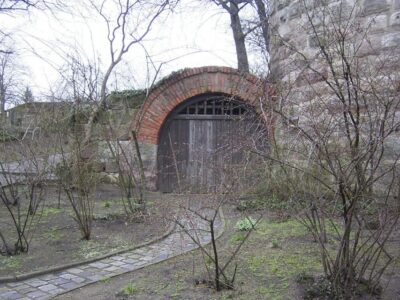
Tunnels and Secret Passages in the City Wall Tour
Read our review →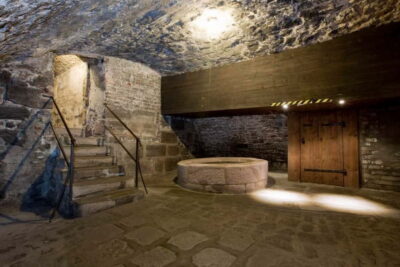
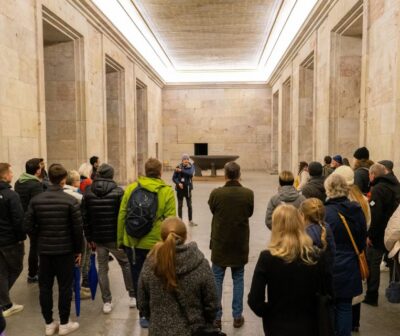
Walking Tour of Former Nazi Party Rally Grounds
Read our review →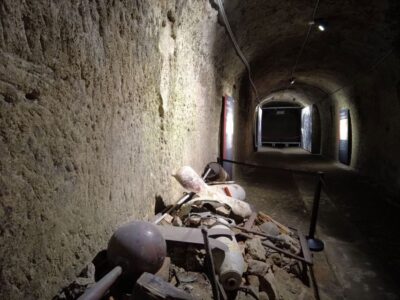

Browse the lists this tour appears in