
Reviewed · THIRD REICH & WORLD WAR II TOURS
Munich: Third Reich and World War II Private Guided Tour
Munich hides Nazi beginnings in plain sight. This private walking tour turns familiar landmarks into a clear story of the Third Reich, using a WWII history guide to connect speeches, power centers, and key events across Old Town.
I like the private format because you can ask hard questions at the pace you want, instead of trying to catch up with a crowd. I also like how the route is built around specific places you can still see today, like Hofbräuhaus and Führerbau, so the history feels grounded in real street corners.
One thing to consider: this is a heavy subject and most of it is outdoors, so wear comfortable shoes and decide ahead of time how much intensity you want in one sitting.
In This Review
- Key moments that make this tour hit harder
- Where it starts: Marienplatz and Munich’s public face
- Hofbräuhaus to Feldherrnhalle: the Beer Hall Putsch on the street
- Munich’s Nazi power buildings: Führerbau, the Munich Agreement, and accountability
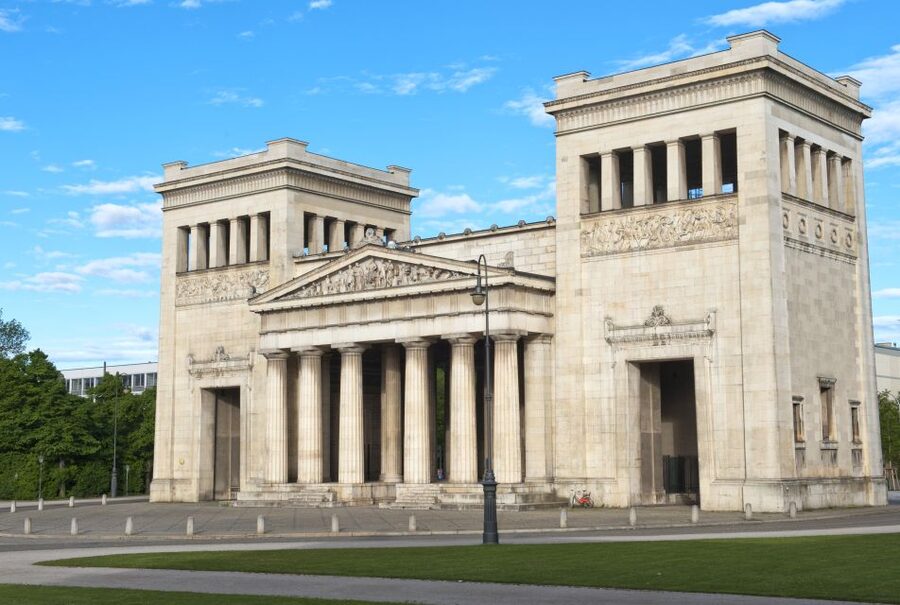
- Königsplatz: mass rallies and book burning in one place
- The 4.5-hour upgrade: NS Documentation Center for the History of National Socialism
- Price and value: what $311 gets you (and how it compares)
- Who this tour suits best in Munich
- Should you book this Munich Third Reich and WWII private tour?
- FAQ
- Where is the meeting point for the tour?
- How long is the standard tour?
- What does the longer option add?
- What is the tour route focused on?
- Which languages are available for the guide?
- Is the tour private?
- Is the tour wheelchair accessible?
- What is the cancellation and payment option?
Key moments that make this tour hit harder
- Marienplatz start point at the center of Munich’s public life, where Nazi propaganda drew crowds
- Beer Hall Putsch route tracing the attempt to seize power, from Hofbräuhaus onward
- Feldherrnhalle and Odeonsplatz as physical waypoints tied to how the regime sold its story
- Führerbau and the 1938 Munich Agreement linking Nazi leadership to international decisions
- Königsplatz as a site for mass rallies and book burnings, not just a pretty square
- NS Documentation Center option (4.5 hours) for photos, documents, film, and media stations on wartime and aftermath
Where it starts: Marienplatz and Munich’s public face
Your tour begins at the heart of Munich’s Old Town, at Marienplatz. This is the kind of place where, in any era, power loves a stage. In this case, it becomes a starting line for understanding how the Nazi Party treated public space like a megaphone.
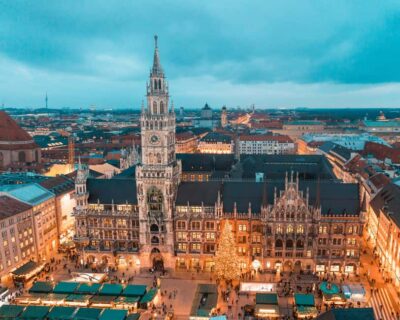
You’ll also be pointed toward the Neues Rathaus, the reconstructed New Town Hall. The story here is not just architecture. The building still shows the marks of the 1945 bombings that destroyed much of downtown, so you get an honest visual reminder that Munich’s wartime end was not distant or abstract.
It helps that a private guide can tailor emphasis. If you want to focus on how ordinary civic spaces were used for political theater, you can. If you want to focus on the chain of events leading to war, you can. That choice is one of the real value points of a private walking tour.
Tip: expect walking and standing. You’ll learn faster if you take a second before each stop to look around like a local, not like a tourist clicking photos.
Further Third Reich and wartime history tours:
- Munich: Third Reich & WWII Walking Tour
★ 4.6 · 6,181 reviews - Third Reich Walking Tour Munich
★ 4.5 · 4,291 reviews - Munich: Birthplace of the Third Reich Guided Walking Tour
★ 4.6 · 771 reviews
Hofbräuhaus to Feldherrnhalle: the Beer Hall Putsch on the street
Next comes one of the tour’s most concrete, memorable anchors: Hofbräuhaus am Platzl. This is where Adolf Hitler made a speech tied to the founding of the National Socialist German Workers’ Party in 1920. The guide uses the building and its location to explain not only what happened, but why it mattered as a messaging moment.
From there, the route follows the steps of the Beer Hall Putsch, walking toward Feldherrnhalle and Odeonsplatz. These stops aren’t treated as sightseeing. They’re used like checkpoints in a failed attempt to seize power, and you’ll learn how the uprising became part of the Nazi Party’s self-mythology.
One detail I find especially important for readers: the tour connects the Putsch to the Bavarian Defense Ministry incident, and how it inspired Hitler to write his political manifesto, Mein Kampf. That link is useful because it shows you how propaganda turns events into a narrative tool, even when the event fails in the moment.
Practical note: this section moves with purpose. If you have mobility limits, the good news is the tour is listed as wheelchair accessible, and the private nature helps your guide manage pace and positioning.
Munich’s Nazi power buildings: Führerbau, the Munich Agreement, and accountability
As you continue, you’ll reach Führerbau, often referred to as the Führer’s building. This part of the walk is where the tour starts feeling less like an origin story and more like a record of systems in place.
Here, the guide ties the building to a major 1938 moment: Chamberlain and Hitler signed the Munich Agreement there. I like how the tour keeps the framing practical. It’s not just about names and dates. It’s about how decisions were made and how they were allowed to gain legitimacy, step by step.
Then you shift into the theme of human consequences. The route includes the Monument to the Victims of National Socialism, which changes the tone in a way that feels respectful and necessary. It’s an important stop because it pulls the focus from political buildings back to the people harmed by the regime.
Also, you’ll hear about resistance within Munich, including the White Rose Group, led by five university students. This is key if you only associate Nazi history with one direction, from rise to total control. You get reminders that refusal existed, and it came from specific people, in specific places, even under severe pressure.
If you’re the kind of person who reads about history but wants to understand what it cost, this is a strong section. It forces you to hold two truths at once: how power operated, and how others pushed back.
Königsplatz: mass rallies and book burning in one place
The final street stop is Königsplatz, a square tied to Nazi mass rallies. The guide uses the space to explain how public ritual helped shape belief, from crowd behavior to the symbolism of the events.
A detail that makes Königsplatz especially sobering is the connection to book burning. This isn’t a vague reference to censorship. The tour positions it as an act with real cultural damage, aimed at controlling what people could think and learn. In a city where buildings can still look dignified even after all that happened, this stop makes the contrast impossible to ignore.
By the time you reach this end point, the tour has built momentum in a specific way. You start with propaganda energy, move into the attempt to seize power, then into the physical infrastructure of authority, and finally into the mass rituals meant to normalize ideology.
That structure matters. It gives you a mental timeline you can carry after the walk ends, instead of a list of unrelated landmarks.
The 4.5-hour upgrade: NS Documentation Center for the History of National Socialism
If you choose the 4.5-hour option, your tour adds a major indoor component at the NS Documentation Center for the History of National Socialism.
This is where the pacing changes. The streets give you context you can see. The center gives you context you can read and watch. The exhibits use photographs, documents, and texts, plus film projections and media stations. That mix matters because it supports different learning styles. Some people need images. Others need written evidence. Some need moving material to understand how the story developed.
The real value of this option is that it broadens the frame beyond Munich’s role into the wider flow of WWI and WWII and the postwar period. For readers who want more than a walking-route narrative, this addition turns the tour into a fuller education.
One drawback to weigh: it’s longer, so it’s not as quick a fix as the 3-hour version. If you’re short on time, the walking tour still delivers the main street-level story. If you want a deeper grounding in documents and media, the center is worth the extra half day of mental bandwidth.
Also holding a platform in Munich

Price and value: what $311 gets you (and how it compares)
This tour costs $311 per person and runs about 3 hours (270 minutes) for the standard version, with the longer 4.5-hour option adding the Documentation Center.
On the surface, it’s not a budget price. But the value is in three places:
First, you’re buying a private historian guide who can answer questions as you go. That’s especially important for a topic like this, where the best learning comes from follow-up questions, not just listening.
Second, you’re paying for a tight route in central Munich that connects multiple major sites into a single story. Walking tours in Old Town can become generic when they cover too much. Here, the stops are tied together by events like the Beer Hall Putsch, the 1938 Munich Agreement, and the mass rally culture at Königsplatz.
Third, the optional upgrade adds a museum-style education with documents, films, and media stations. If you choose that option, the price starts to make more sense because you’re no longer just walking past history, you’re spending time processing it.
Who should consider the 3-hour version? People who want a focused street walk with enough context to understand how Munich fit into the Nazi rise and war period, without committing to a longer museum session.
Who should consider the 4.5-hour version? People who like evidence, want to see how information is presented through photographs and documents, and prefer a more structured learning format.
Who this tour suits best in Munich
This is a great fit for you if you want:
- A clear, location-based explanation of Munich’s Third Reich era story
- A chance to ask questions directly, in English, German, French, Italian, or Spanish
- A route that doesn’t stop at leaders and dates, but also includes the resistance side, including the White Rose Group
It may be less ideal if:
- You’re looking for light entertainment in Munich
- You want a quick history hit with zero emotional weight
- You don’t want to stand and walk outdoors through central squares and landmark streets
The private group format helps with comfort and pacing. If you’re traveling with someone who processes history differently than you do, you’ll appreciate the ability to pause, reframe, and ask.
One extra note: there are guides who show up with strong feedback. One name you might see in recent booking feedback is Mireya, and the tone of that praise is simple: the guide was great. In other words, pay attention to the guide assignment when you book, because the delivery matters a lot for a topic this serious.
Should you book this Munich Third Reich and WWII private tour?
Book it if you want Munich to make sense, not just look picturesque. The route turns specific buildings and squares into a coherent story, from Marienplatz propaganda settings to Hofbräuhaus, the Beer Hall Putsch route, Führerbau and the Munich Agreement, ending at Königsplatz and its mass rally culture.
I’d especially recommend it if you’re choosing between a quick overview and a deeper learning experience. The standard 3-hour walk gives you the bones of the story. The 4.5-hour option adds the NS Documentation Center, where you can work with documents, photos, and film to make the history feel more grounded.
If you’re emotionally cautious, plan your day around it. Pair it with a slower afternoon afterward. For most people, that’s the difference between remembering a few landmarks and actually understanding the city’s role in the darkest chapters of Germany’s 20th century.
FAQ
Where is the meeting point for the tour?
Meet your guide in front of hotel BEYOND by Geisel at Marienplatz 22, 80331 Munich, opposite St Peter. Do not enter the hotel.
How long is the standard tour?
The standard option runs 3 hours (270 minutes).
What does the longer option add?
The 4.5-hour option includes a visit to the NS Documentation Center for the History of National Socialism.
What is the tour route focused on?
It focuses on Munich during the Third Reich and WWII, including sites connected to Adolf Hitler and the Nazi Party, the Beer Hall Putsch, and resistance groups such as the White Rose Group.
Which languages are available for the guide?
The live guide is available in English, German, French, Italian, and Spanish.
Is the tour private?
Yes. The experience is listed as a private group.
Is the tour wheelchair accessible?
Yes. The tour is listed as wheelchair accessible.
What is the cancellation and payment option?
There is free cancellation up to 24 hours in advance for a full refund, and the tour offers a reserve now & pay later option.
Fresh on the arrivals board for Munich


Third Reich & World War II Tours, compared.

Berlin’s Best: 2 Hour Walking Tour Third Reich and the Cold War
Read our review →
Third Reich Berlin: Hitler and WWII Walking Tour
Read our review →
Walking Tour of Former Nazi Party Rally Grounds
Read our review →
Browse the lists this tour appears in