
Reviewed · THIRD REICH & WORLD WAR II TOURS
Inside the Third Reich (Private Tour)
Hitler’s map of Munich is still on the streets. This private tour connects major Third Reich moments, from the Isartor beer-hall era to sites tied to Kristallnacht, Nazi rallies, and resistance, with Curt Milburn guiding you through it all. I love how the route is built around specific street-level locations you might otherwise miss, and I love the way the commentary stays grounded in what happened to real people and real buildings. One possible drawback: the subject matter is heavy, and the tour talks about it in plain terms.
You can expect about 2 to 3 hours, starting at Marienplatz 18 (10:30am) and returning back there at the end. Curt uses an iPad full of films and images to help you interpret the buildings, and you can ask questions throughout, not just at the end.
In This Review
- Key highlights you should know before you go
- Why this Inside the Third Reich tour in Munich feels different
- Curt Milburn, iPad storytelling, and a pace built for your questions
- Isartor and Platzl, where the story starts in the beer-hall era
- Old Town Hall: Kristallnacht begins here, and an assassination attempt fits the timeline
- Odeonsplatz, the SA purge, and war damage you can actually see
- A memorial stop that grounds the whole route
- Glyptothek and the Nazi architecture still built into Munich
- Residenz München: the failed putsch and resistance stories
- Price and value: what $180.72 per group really buys you
- Who should book, and who might want a different kind of tour
- Should you book Inside the Third Reich in Munich?
- FAQ
- How long is the Inside the Third Reich private tour in Munich?
- Where is the meeting point, and when does the tour start?
- Is this tour private or shared?
- What does it cost?
- Can I cancel for free?
- Are service animals allowed?
Key highlights you should know before you go
- A true private format so your group sets the pace and can ask questions as you walk
- Street-level Third Reich sites that map Hitler’s rise, key events, and the aftermath in Munich
- Curt Milburn’s iPad visuals with films and images to connect history to what you see
- War-damage evidence you can spot on Munich architecture, not just read about later
- A remembrance stop built into the route at the memorial for victims of National Socialism
Why this Inside the Third Reich tour in Munich feels different
This is not a history lecture where you stand there and hope it makes sense later. The whole point is that you move through Munich, stop at specific places, and get the story attached to the location. You end up learning how propaganda, power grabs, and violence were tied to buildings and public spaces, not just dates in a textbook.
Two things make it click. First, it is private, so the guide can steer the conversation toward what you actually want to understand. Second, the route includes reminders of the consequences, including visible war damage and a memorial for the victims. That matters because it keeps the tour from floating in theory.
The tour is also fairly compact, about 2 to 3 hours. That can be a plus if you want a focused outing. It can also be a consideration if you prefer longer, slower museum time, or if you need breaks from intense topics.
Further Third Reich and wartime history tours:
- Munich: Third Reich & WWII Walking Tour
★ 4.6 · 6,181 reviews - Third Reich Walking Tour Munich
★ 4.5 · 4,291 reviews - Munich: Birthplace of the Third Reich Guided Walking Tour
★ 4.6 · 771 reviews
Curt Milburn, iPad storytelling, and a pace built for your questions
Curt Milburn runs the show, and he brings the kind of energy that keeps you from zoning out. The tour is described as if a trusted friend who really loves Munich is showing you the places that matter, but with a serious backbone of historical context. Curt has over 7 years of experience, is rated as the top tour guide in Munich, and has earned more than 700 written reviews. People consistently mention his anecdotes and his willingness to answer questions.
The tool that makes it practical is the iPad. You are not just looking at facades and guessing what you are seeing. Curt puts hundreds of films and images into your hands, including material that spans over 1,000 years of European history. That visual support helps you connect the dots between what is still standing and what is long gone, so the sites land faster.
Another detail I like: the tour is designed to adjust to your level. One of the repeated strengths is that Curt can shift from big themes to as much detail as you want. If you know a bit already, he does not talk down. If you are starting from scratch, you still get the structure you need to follow the story.
Isartor and Platzl, where the story starts in the beer-hall era
The tour begins close to the center of Munich, at Marienplatz 18, and then you head to the earliest anchors of the Nazi movement as it took shape in public.
Stop 1: Isartor (about 15 minutes)
This is tied to the beer-hall era, specifically the setting where Hitler met the Nazis. Even if you have heard the name Munich and the Nazis in the same sentence for years, a street-level stop helps you understand why these early gatherings mattered. You are seeing the kind of public venue where ideas could spread fast, get audience buy-in, and become a political force.
Stop 2: Platzl (about 20 minutes)
Here the highlight is Hitler’s first speech and his rise to success. This stop is useful because it shifts the story from private organization to public performance. You are not just hearing that he gained followers, you are standing in a location linked to the moment he went from fringe to political momentum.
What makes these early stops valuable is their simplicity. They are short. The guide uses them to set the framework quickly, so the later, heavier sites do not feel random.
Old Town Hall: Kristallnacht begins here, and an assassination attempt fits the timeline
From the early rise, the route moves into events that show how quickly political power turned into targeted violence.
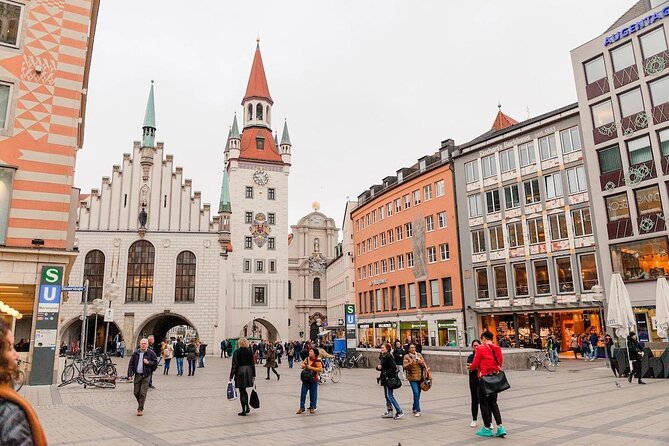
Stop 3: Old Town Hall (about 20 minutes)
The key highlights here are the beginning of Kristallnacht and the site of an assassination attempt on Hitler’s life. That pairing is important. It forces you to hold two ideas at once: the regime escalating brutality while also dealing with plots and threats. The tour approach makes this feel less like disconnected chapters and more like one tightening system.
For you, the practical benefit of this stop is that you can tie the word Kristallnacht to a real place in Munich, instead of it staying as a distant historical term. And because this is part of a walking route, you also learn how the city’s layout and public spaces factored into the story.
A possible consideration: if you are sensitive to discussions of persecution and violence, this portion may hit hard. Curt’s pacing is built for questions, so if you need time to think, you can ask for clarity or context.
Odeonsplatz, the SA purge, and war damage you can actually see
The next stretch makes the shift from speeches to enforcement, and from political theater to consequences.
Stop 4: Platzl (about 15 minutes)
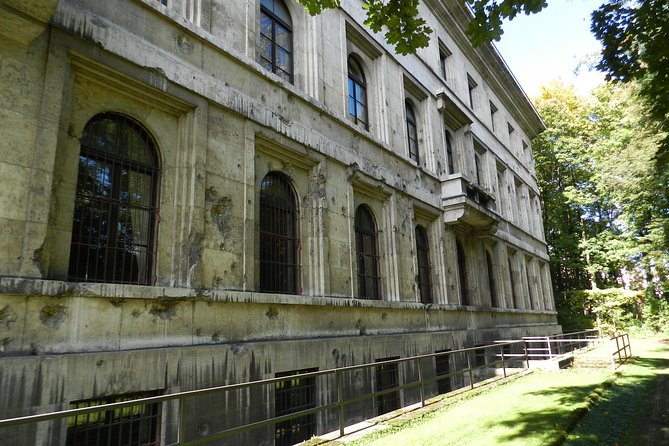
This is where you look for evidence of war damage on Munich buildings. This is one of the most “I did not know that” moments in the whole format. Many people can read about war and destruction, but fewer notice how damage changes architecture, streets, and the face of a city. Being able to spot physical scars while someone explains what you are looking at turns abstract history into something tangible.
Stop 5: Odeonsplatz (about 10 minutes)
The highlight is Hitler’s purge of the SA, plus a site of his speeches. Short stop, strong meaning. This is where you see how public spaces were used to stage power, punish rivals, and communicate that the regime was in full control. Even in a quick visit, the guide’s explanation helps you connect the dots between speeches and enforcement.
I like that the tour does not treat Munich as just a backdrop. It treats the city as part of the mechanism, where key events played out in view of the public.
Also holding a platform in Munich

A memorial stop that grounds the whole route
After you spend time with speeches, architecture, and hard events, you get a necessary reset.
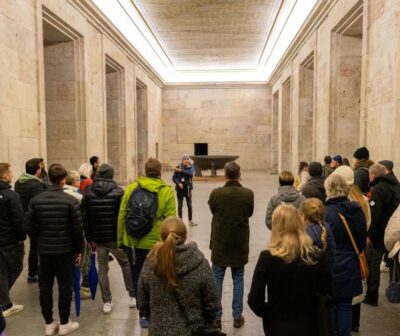
Stop 6: Platz der Opfer des Nationalsozialismus (about 15 minutes)
This is Munich’s memorial to those who died at the hands of the Third Reich. It is not an add-on. It changes the temperature of the tour, steering you from the machinery of power to the people who suffered.
For me, the value here is balance. If a tour spends the whole time on the men and their moves, it can tilt toward spectacle. A memorial stop keeps the focus anchored on victims, and it gives the tour a moral center.
You do not need to be a museum person to appreciate this. It is short, but it is direct. It also gives you a moment to reflect before the route moves again into Nazi-era public spaces.
Glyptothek and the Nazi architecture still built into Munich
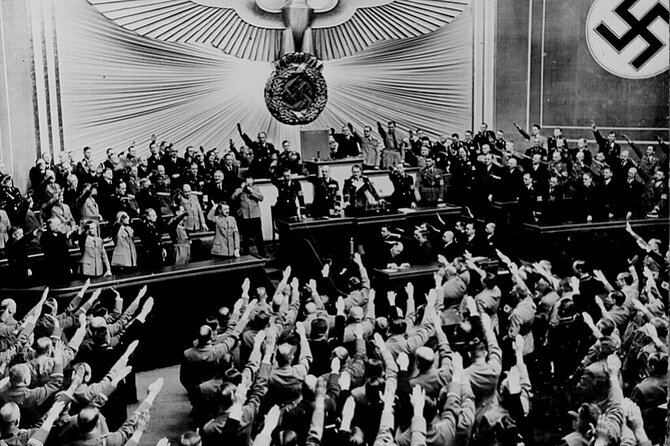
This is where the tour becomes very visual. You start seeing how Nazi ideology was built into public design and official settings.
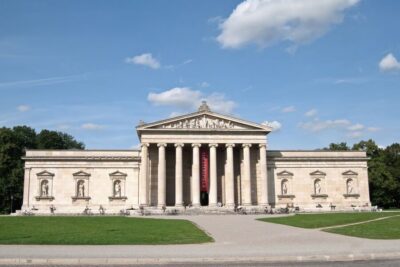
Stop 7: Glyptothek (about 20 minutes)
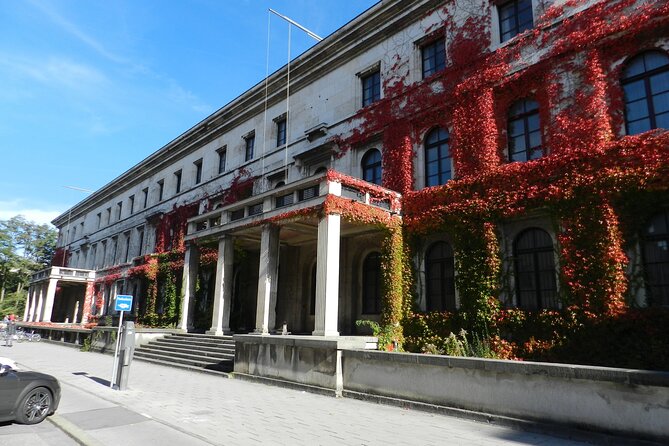
The highlight is Munich’s rally grounds, along with fascist buildings of Hitler that still stand. This stop matters because rally grounds are about performance. They are about gathering bodies, showing dominance, and turning politics into theater. Seeing the setting, then hearing what it was used for, helps you understand why propaganda could work at scale.
Stop 8: Alter Botanischer Garten (about 15 minutes)
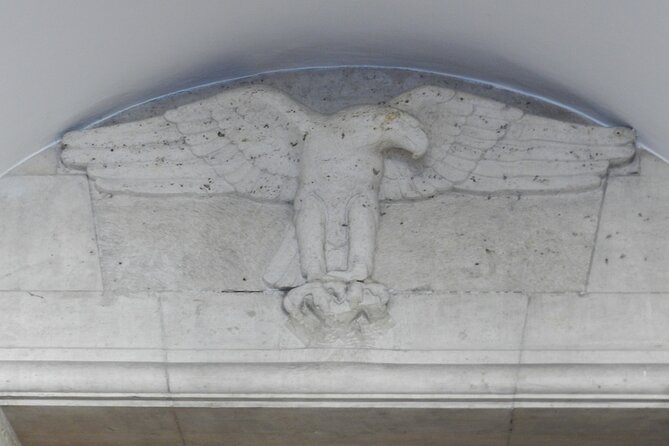
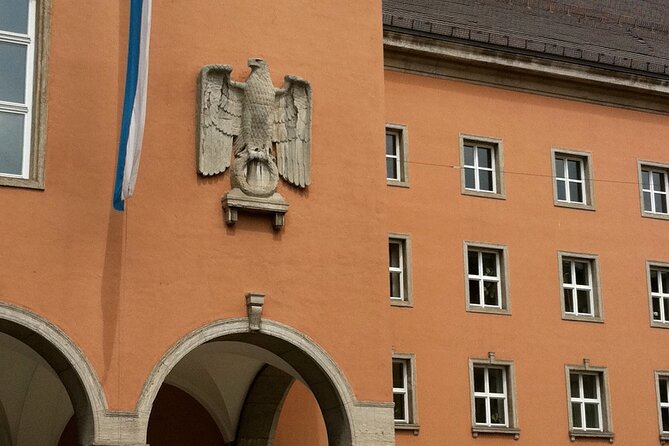
Here you visit the largest Nazi Eagle still on public display in Germany, plus evidence of Nazi architecture and art. This stop is striking in a practical way. The guide helps you look at the design choices, and it is hard not to think about how art and architecture were used as persuasion tools.
Two warnings, both useful. First, this part of the route is not subtle. If you are not ready to confront Nazi symbolism in real spaces, this may feel uncomfortable. Second, because these are exterior or public-facing points, you will be on foot in normal street conditions. Wear comfortable shoes and plan for time outdoors.
Residenz München: the failed putsch and resistance stories
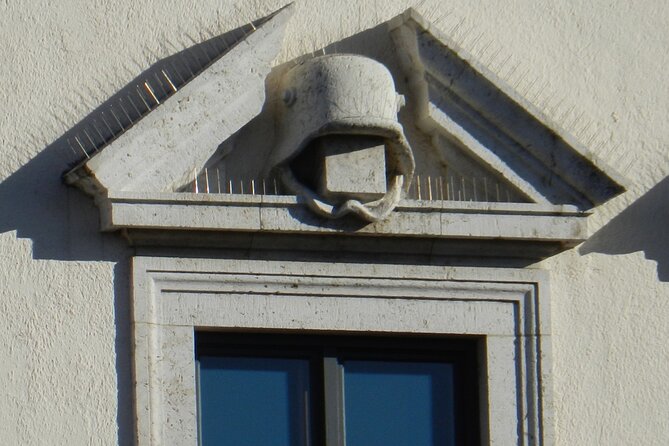
The final stop brings you back toward the idea that history is not one-directional. Even inside a terror system, people resisted.
Stop 9: Residenz München (about 20 minutes)
The highlight includes Hitler’s failed putsch and the story of resistance to the Nazis. This is a good capstone because it closes the story loop. You start at the early rise and escalate through key events, then you end with the reality that opposition existed, even if it was brutally suppressed.
For you, this makes the tour feel complete. You leave with a stronger sense of how the regime tightened its grip, how violence escalated, and how resistance shaped the outcome, even when it did not change things quickly.
After about 2 to 3 hours total, your tour ends back at the meeting point near Marienplatz.
Price and value: what $180.72 per group really buys you
The price is $180.72 per group, up to 15 people. That structure is a big part of the value. Instead of paying a per-person premium and feeling stuck with an average group experience, you pay for a guide and a private walking route.
It also helps that you are not spending time in transit hopping between random places. The route is built as a tight sequence of stops tied to the Third Reich story, with short segments at each point, plus time for questions as you go.
One more practical factor: this kind of tour attracts people who want something specific, and it is often booked around 66 days in advance on average. If your dates are fixed, I would not wait until the last minute.
Who should book, and who might want a different kind of tour
This works best if you want history anchored to street corners and public buildings, and if you like asking questions while you walk. It also suits small groups who want a shared experience where your pace stays flexible.
It is less ideal if you want a purely visual, self-guided route with no discussion, or if you need lots of museum-style pauses. The tour format is designed for movement and conversation.
Most people can join, and service animals are allowed. The area is also near public transportation, so you should be able to fit it into a Munich day without stress.
Should you book Inside the Third Reich in Munich?
If you want a focused, private way to understand the Third Reich in Munich through the actual places tied to Hitler’s rise, major turning points like Kristallnacht, Nazi rally settings, and resistance, I think this is a strong choice. The repeated standout here is the combination of Curt Milburn’s story flow and his willingness to answer questions, plus the iPad visuals that help you read what you see.
Book it if you are ready for heavy subject matter and you like guided explanations at street level. Skip it if you prefer light or purely scenic outings, or if you need a long, quiet time away from emotionally intense topics.
FAQ
How long is the Inside the Third Reich private tour in Munich?
The tour lasts about 2 to 3 hours.
Where is the meeting point, and when does the tour start?
The meeting point is Marienplatz 18, 80331 München, Germany. The start time listed is 10:30am, and the tour ends back at the meeting point.
Is this tour private or shared?
This is a private tour/activity. Only your group will participate.
What does it cost?
The price is $180.72 per group, for a group size of up to 15.
Can I cancel for free?
Yes. Free cancellation is available, and you can cancel up to 24 hours in advance for a full refund.
Are service animals allowed?
Yes, service animals are allowed.
Fresh on the arrivals board for Munich

Third Reich & World War II Tours, compared.

Berlin’s Best: 2 Hour Walking Tour Third Reich and the Cold War
Read our review →
Third Reich Berlin: Hitler and WWII Walking Tour
Read our review →
Walking Tour of Former Nazi Party Rally Grounds
Read our review →
Browse the lists this tour appears in