
Reviewed · HISTORICAL TOURS
Frankfurt – Old Town Historic Walking Tour
Frankfurt history hits your feet fast. This Frankfurt Old Town Historic Walking Tour is a tight 1.5-hour loop that pairs big landmarks with smart context, and a guide can keep it lively with extra pictures and clear explanations (Alexa has done exactly that for recent groups). I love how the walk stays focused, so you get bearings fast without feeling like you are sprinting through a checklist.
Two things I especially like are the chance to cross Eiserner Steg on foot and the chance to step into Goethe’s world at the Goethe House to see his writing desk. It is also great value for a private group, since the guide stays with you the whole time. The one drawback to consider is that entrance fees are not included, so if you want to go inside places like Goethe House, plan on extra costs.
In This Review
- Key highlights you should know before you go
- Starting at the Römer: Frankfurt’s city-hall center in medieval clothing
- Frankfurt Cathedral: Roman Gothic scale and Empire-era symbolism
- Eiserner Steg across the Main: a bridge that keeps getting rebuilt
- Städel Museum and Eurotower: art and finance in the same breath
- Goethe House: seeing the writing desk tied to his early works
- St. Paul’s Church and the 1848 Parliament moment
- Kleinmarkthalle and Hauptwache: where Frankfurt eats, meets, and lives
- Alte Oper: ending at the Old Opera and its 1937 staging
- Price and value for a private group up to 20
- Who this tour fits best
- Should you book this Frankfurt Old Town Historic Walking Tour?
- FAQ
- How long is the Frankfurt Old Town Historic Walking Tour?
- Where do I meet the guide?
- Is this a private tour?
- What does the tour cost?
- What is included in the tour price?
- Are entrance fees included?
- What languages are available?
- What is the cancellation policy?
- Can I reserve now and pay later?
Key highlights you should know before you go
- Römer start at Frankfurt’s historic city hall zone: a medieval center with city hall history for more than 600 years.
- Frankfurt Cathedral stop focuses on why it matters: the largest Roman Gothic church in the city, with an Empire-era unity theme.
- Eiserner Steg has real history you can walk across: first built in 1868, destroyed in 1946, rebuilt, and operating again since 1993.
- Städel Museum facts that help you appreciate it fast: Museum of the year 2012 by AICA, with 2,700 paintings and a smaller 600 on display at a time, plus a library of 100,000 books.
- Eurotower is a quick “modern Frankfurt” reality check: 148 meters high, architect Richard Heil, and the European Central Bank’s seat until 2015.
Starting at the Römer: Frankfurt’s city-hall center in medieval clothing
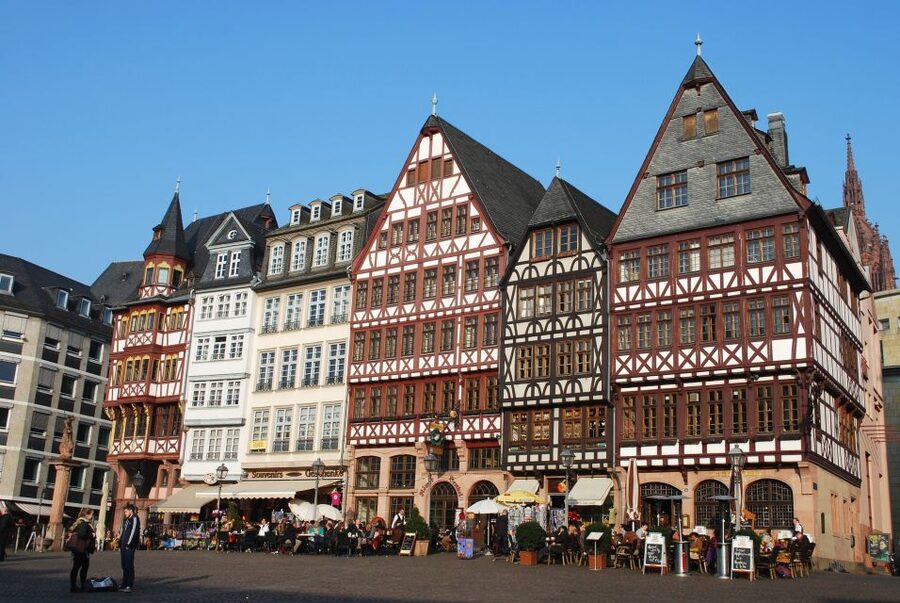
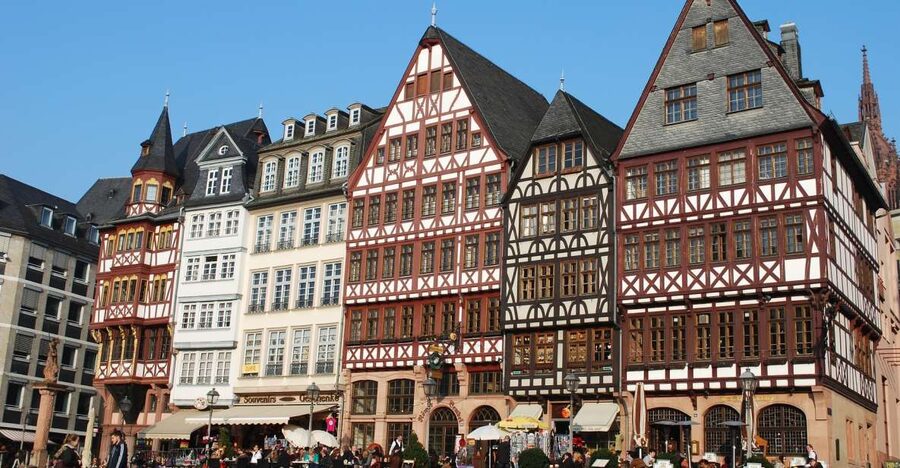
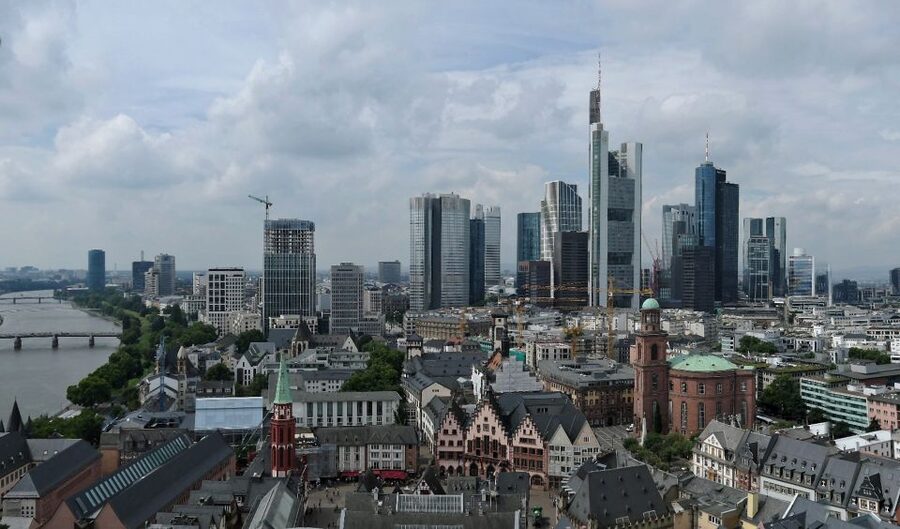
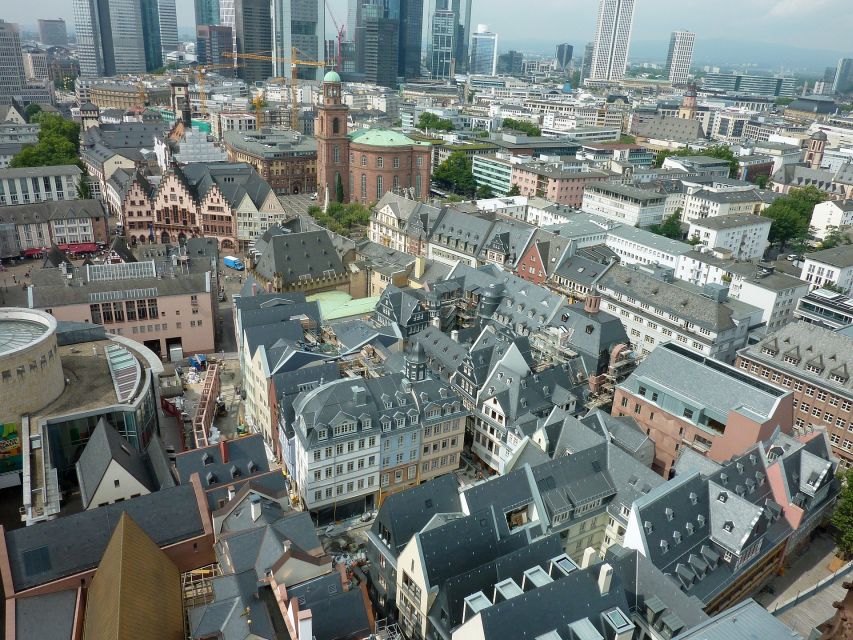
Most people want Frankfurt to feel dramatic, but a lot of the drama starts at street level. Your tour begins at the Fountain of Justice, where you meet your guide with a signboard, then you head to the Römer, also called the Roman. This is that famous cluster of nine medieval houses in the center of town, and it has served as Frankfurt’s city hall for more than 600 years.
I like this start because it anchors everything else. You are not just seeing pretty buildings. You are seeing the machinery of a city that held on to its identity, then kept reshaping it over centuries. Weddings and civil registrations happen here in that feudal atmosphere, so even when you are just passing by, you can feel how the place still works.
One practical note. This is a walking tour with a fixed time window, so you will get meaningful context, but not a long sit-down pause at every stop. If you are the type who wants to read every plaque and take a 20-minute detour for side streets, save that energy for later. Here, you get the main story beats, then you move on.
More Walking Tours in Frankfurt
- Frankfurt Highlights English Walking Tour
★ 5.0 · 1,203 reviews - Frankfurt on Foot Daily Walking Tour in English
★ 4.9 · 323 reviews - Frankfurt: Private or Shared Walking Tour
★ 4.5 · 158 reviews
Frankfurt Cathedral: Roman Gothic scale and Empire-era symbolism
Next up is the Frankfurt Cathedral, formally the Imperial Cathedral of Saint Bartholomew. The big draw is scale and style. It is the largest Roman Gothic church in Frankfurt, and it was a strong symbol of unity during the Empire era.
When you stand near it, the tower, the organ, and the vaulted ceilings become more than decoration. They are part of the message the building was built to send, a visual reminder that religion and state power were tightly linked in earlier eras. You can also use the cathedral as a “time marker” for the rest of your walk. After this stop, the tour keeps shifting between politics, art, and literature, but the cathedral keeps the historical weight in place.
If you have limited time in Frankfurt, this is a smart stop to prioritize. Cathedral exteriors are great, but this is the one where the guide’s explanation really matters. You walk away with a clearer sense of why Frankfurt wanted a cathedral of this size and why it carried so much symbolic weight.
Eiserner Steg across the Main: a bridge that keeps getting rebuilt
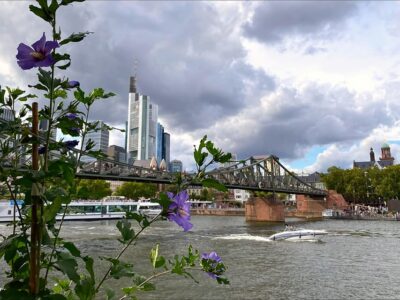
Then you head to one of Frankfurt’s most photogenic power moves, the Eiserner Steg, the Iron Footbridge. Walking across it is a break from “standing and staring,” because your view changes every few steps. You also get a better sense of the river Main as a divider and connector, not just a backdrop.
This bridge has seen a lot. The first version was built in 1868. It was replaced and rebuilt multiple times. During the fighting of 1946, it was destroyed by the Wehrmacht, and then the bridge you can walk on today has been in use since 1993. It is 170 meters long, with steel reinforcements and two piers.
I love stops like this for one simple reason. A lot of cities have bridges that look old. This one has a documented story of destruction and rebuilding, so you understand that the city’s history is not only in buildings. It is also in infrastructure. Your walk across becomes a mini history lesson with your feet doing the work.
Städel Museum and Eurotower: art and finance in the same breath
After the river, the tour threads you through a more modern Frankfurt vibe without turning it into a full day in museums or offices. You walk by the Städel Museum, and the facts matter here. The museum was selected as Museum of the year 2012 by AICA. It holds impressive collections, including 2,700 paintings, but only 600 are displayed at any time.
If you ever wondered why some museums feel constantly changing, this is one answer you can take with you. The display rotates, so you are not seeing the whole collection in one visit. The museum also has a library with more than 100,000 books, which hints at the institution as a research and education center, not only a gallery.
Next comes a complete contrast: the Eurotower. It is 148 meters high, so you will likely find yourself looking up. Eurotower was the seat of the European Central Bank for years until 2015. Designed by architect Richard Heil, it is a big symbol of Europe’s financial history.
For me, the value of this section is the contrast. The tour does not force you to choose between “old Frankfurt” and “new Frankfurt.” It shows you how they sit side by side, and how the city’s identity can hold both.
Goethe House: seeing the writing desk tied to his early works
Then the tour leans hard into literature with a stop at the Goethe House, the birthplace and childhood home of Johann Wolfgang von Goethe. This is the part that turns a history walk into something personal.
The key promise here is practical. You get the chance to see Goethe’s writing desk of his early works by entering the house. Instead of treating Goethe as a name in a textbook, you get a physical object tied to his early writing. Even if you are not a literary superfan, seeing a desk used for work helps your brain connect to the human side of the story.
Just keep your budget in mind. Entrance fees are not included, so this is one stop where “included” and “actual cost” can diverge. If you want the desk time, plan ahead.
More German cities at walking speed:



St. Paul’s Church and the 1848 Parliament moment
From literature you move into politics at St. Paul’s Church. The building has an identity change that your guide will connect to Germany’s larger shifts. It was previously identified as a Lutheran church, and it became a Protestant church.
It is also a significant political symbol. It served as the seat of the first Frankfurt Parliament in 1848, an event important for the city. This is the kind of stop that can feel abstract if you treat it as architecture only. With a guide, it becomes a landmark in a timeline of decision-making and national conversation.
This is also a nice emotional pivot. After a bridge and a writers’ home, you get a reminder that Frankfurt has repeatedly been a stage for big moments, not just a city people visit for aesthetics.
Kleinmarkthalle and Hauptwache: where Frankfurt eats, meets, and lives
Now the tour turns into a food-and-people section with Kleinmarkthall and Hauptwache. Kleinmarkthalle is a must for food lovers, and it is easy to see why. It is open six days of the week and it has at least 156 stalls.
The guide will point out variety that goes beyond a few German basics. You can find Frankfurt’s famous green sauce, and you can also find worldwide imported food. The idea is simple. This is not a museum of food. It is a working market. If you love the smell of bakeries, stalls, and fresh produce, this is where your senses get their turn.
Then you move to Hauptwach, also known as the Main Guardroom. It is a central point in Frankfurt where many locals meet. The baroque building there was built in 1730, and that is part of how the place got its name.
I like this stop because it helps you understand that a city is more than monuments. It is daily rhythm. Markets and meeting points are where your trip starts to feel like you are in the city, not just touring it.
Alte Oper: ending at the Old Opera and its 1937 staging
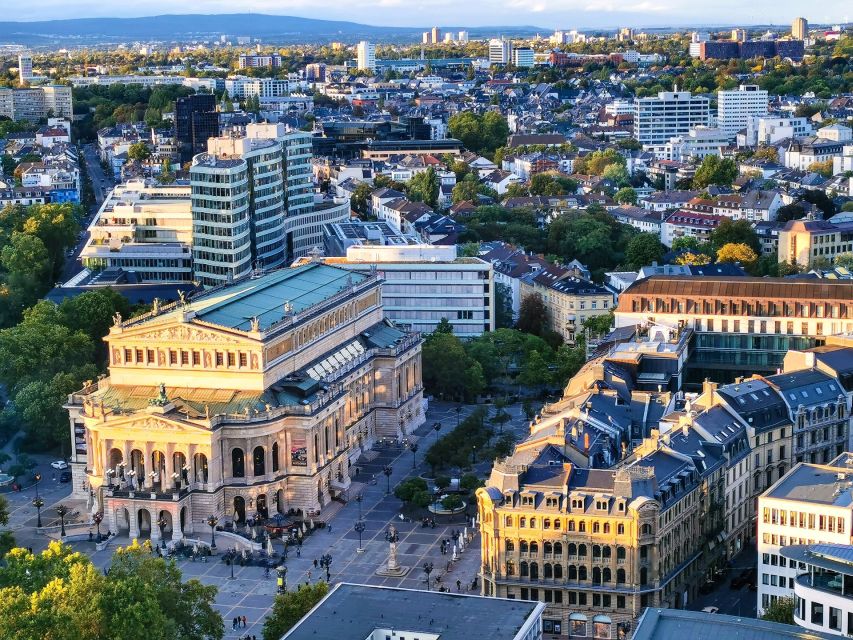
Your tour finishes at the Alte Oper, the Old Opera of Frankfurt, and it is a satisfying ending because the building looks grand but feels approachable in the open square in front of it. It is now a concert hall, and the tour notes that it hosted operas like Carl Orff’s Carmina Burana in 1937.
The building was first built at the end of the 19th century, and the Opera Square right outside gives you a natural place to take in the architecture. Ending here also works because the tour has moved through multiple identities of Frankfurt, imperial, literary, political, and everyday. The Old Opera is another identity layer, one connected to performance and culture.
When tours do end where something is visually strong, you get a better memory hook. You do not leave thinking only about a list of sights. You leave thinking about the feeling of the city at different scales.
Price and value for a private group up to 20
The price is $397 per group up to 20, for a 1.5-hour private tour with a live guide. That pricing structure is the biggest value lever here. You are not paying per person, so cost becomes easier to manage if you travel with family or friends.
To budget, think in terms of math. Divide $397 by the number of people in your group. For example, if you had 5 people, it would be about $79.40 each. If you had 10 people, it would be about $39.70 each. If you are traveling solo or as a couple, the per-person cost is higher, but you still get the benefit of a private guide and a tight route with minimal coordination stress.
Entrance fees are not included, so set aside extra money if you want interior time, especially at Goethe House. That is the main “hidden” cost category to remember.
Who this tour fits best
This is a great match if you want:
- A short, structured Old Town walk that hits the big names without eating your whole day
- A guide who can connect the dots between architecture, politics, art, and literature
- A private format where you can move at your pace and ask questions
It is also a good choice if Frankfurt is one of a few stops on your trip and you need a high-impact orientation. If you are the kind of traveler who loves markets and street life, Kleinmarkthalle and Hauptwache give you that everyday Frankfurt feeling.
If you only want museum depth, this may not feel long enough. The tour is built for highlights and context, not for full museum hours.
Should you book this Frankfurt Old Town Historic Walking Tour?
Yes, if you want a focused introduction to Frankfurt’s Old Town with stops that actually explain why they matter. The combination of Römer, Frankfurt Cathedral, the Eiserner Steg crossing, and Goethe House gives you a strong mix of power, culture, and human storytelling, all in 1.5 hours.
If you have your heart set on spending long inside buildings, or you want extra time for photos and wandering off route, you may feel slightly rushed. Still, even then, the tour is a solid way to get your bearings, then branch out on your own with a clearer sense of where to go next.
FAQ
How long is the Frankfurt Old Town Historic Walking Tour?
The tour lasts about 1.5 hours.
Where do I meet the guide?
You meet at the Fountain of Justice. The guide will be waiting with a signboard.
Is this a private tour?
Yes. It is a private group tour with a private tour guide.
What does the tour cost?
The price is $397 per group, up to 20 people. Starting times depend on availability.
What is included in the tour price?
A private, live tour guide is included.
Are entrance fees included?
No. Entrance fees are not included.
What languages are available?
English, German, Portuguese, Spanish, Italian, and French.
What is the cancellation policy?
You can cancel up to 24 hours in advance for a full refund.
Can I reserve now and pay later?
Yes, you can reserve now and pay later.
Centuries Per Block
- magnificent historic Heidelberg, private Tour, from Frankfurt
★ 4.5 · 15 reviews - from Frankfurt: historic treasure Rothenburg, private 1 day Tour
★ 5.0 · 9 reviews - Leipzig: City History Canal Sightseeing Tour on a Motorboat
★ 4.7 · 7,671 reviews - Berlin: Natural History Museum Entrance Ticket
★ 4.6 · 3,382 reviews
Fresh on the arrivals board for Frankfurt



Historical Tours, compared.
City History Canal Sightseeing Tour on a Motorboat
Read our review →

Browse the lists this tour appears in