
Reviewed · GUIDED WALKS IN BERLIN
Explore Berlin History and Highlights Sightseeing Walking Tour
Berlin has layers. This 3.5-hour walk turns them into a story, with a guide keeping you on track and explaining what you see. I like the small group limit of 15 and the expert guide approach, so the walk feels personal instead of a lecture with a headset. One thing to consider, though, is that it is a true walking tour, so bring comfortable shoes and be honest about your stamina.
What I really like is how the route strings together Berlin’s big turns in time, from Imperial Germany to the Nazi years to the Cold War, then toward modern reunification. You also get the practical perk of no paid entry fees at each listed stop, plus the whole thing is in English with a mobile ticket. The possible drawback is mental energy: some stops are heavy and you will want a bit of quiet time afterward.
If you like history you can see with your own eyes, this tour is a smart way to get your bearings quickly. The pace is built for sightseeing, but there is no way around the fact that you are covering a lot of ground on foot.
In This Review
- Why This Walk Works So Well for First-Timers
- Getting Oriented at Brandenburger Tor, Then Letting Berlin Explain Itself
- Reichstag Building and the Meaning of Power in Stone
- Holocaust Memorial and Fuhrerbunker, Two Stops You Should Take Slowly
- German Ministry of Finance and the Air Force Past
- Topography of Terror and the Cold, Specific Machinery of the Nazi State
- Checkpoint Charlie, Where You Feel the Cold War in Plain Sight
- Gendarmenmarkt and the Joy of Beautiful Symmetry
- Bebelplatz and the 1933 Book Burning Reminder
- Unter den Linden, Museums, and the Berlin You Can Walk Into Next
- What You Learn From the Guides, and Why the Human Part Matters
- The Real Trade-Off: It Is a Walking Tour, and the Topics Are Heavy
- Should You Book This Berlin History and Highlights Walking Tour?
- FAQ
- How long is the Berlin History and Highlights Sightseeing Walking Tour?
- Where does the tour start, and what is the end point?
- Is this tour a walking tour?
- What languages is the tour offered in?
- What is the group size limit?
- Are admission tickets needed for the stops?
- Is free cancellation available?
Why This Walk Works So Well for First-Timers
- 15-person max small group, which usually means more chances to ask questions as you go
- All-in feeling for your day, with multiple major sights and stops marked admission ticket free
- Chronological storytelling, so Brandenburg Gate is not just a photo spot, it is a clue to what came next
- A focused central route, ending at Museum Island so you can continue exploring nearby museums
- English commentary that connects the dots, from architecture to politics to memorials
- Expert-led navigation, starting right by Brandenburger Tor and finishing at Museum Island
Getting Oriented at Brandenburger Tor, Then Letting Berlin Explain Itself
The tour starts at Wurst 🙂 am Brandenburger Tor, near Ebertstraße Ecke Scheidemannstraße (10117 Berlin). If you arrive a few minutes early, you avoid the usual stress of finding a meeting point while already excited about the photos.
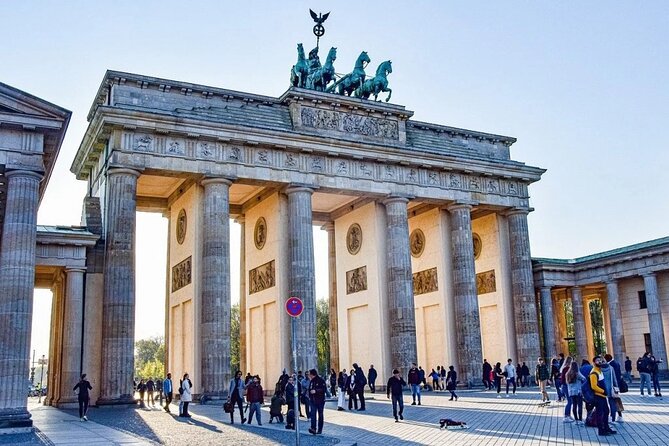
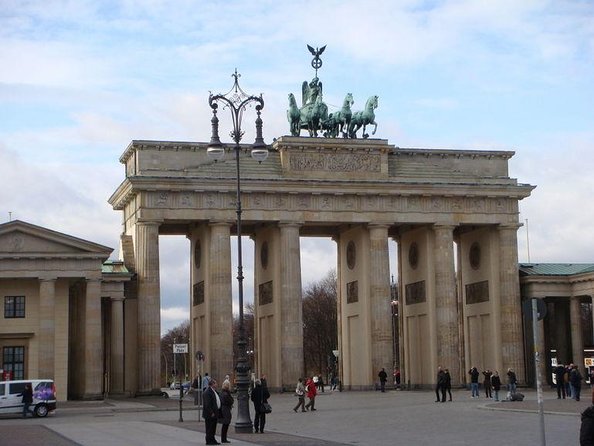
Brandenburg Gate (about 20 minutes) is the right first stop. It is one of the most famous gates in the world, and your guide frames it like a witness, not just a monument. You will hear how it connects to major events across Berlin’s modern timeline, including how the city’s political mood shifted again and again.
Here is the practical win for you: after you stand there and hear the storyline, the rest of the walk makes sense. Without that context, Berlin can feel like a museum of disconnected scenes. With it, the streets turn into a timeline you can actually walk.
If you care about photos, the gate can get busy around the busiest hours. The tour starts at 10:00 am, so if you want a quieter picture, you might plan to take your own extra photo before or after your tour window, but the guided stop still gives you a solid view and a big-picture understanding.
More Guided Walks in Berlin
- Discover Berlin Half-Day Walking Tour
★ 5.0 · 9,624 reviews - Berlin City walk Government District and Places of Democracy
★ 4.7 · 8,467 reviews - Berlin: Third Reich & Cold War Guided Walking Tour
★ 4.9 · 8,378 reviews
Reichstag Building and the Meaning of Power in Stone
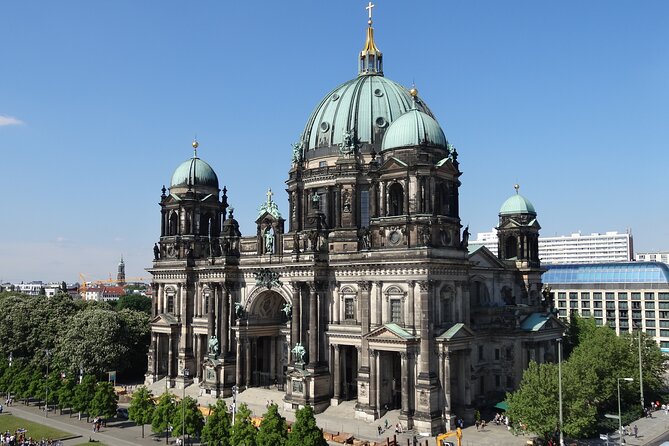
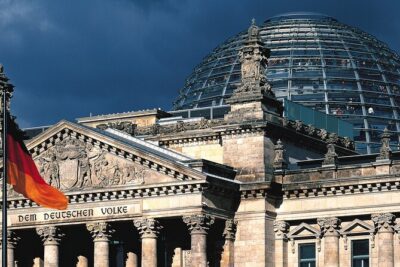
Next is the Reichstag Building (about 20 minutes). This is not just a grand parliamentary building. Your guide ties it to three different layers of power.
First, it is linked to Germany’s Imperial period as a symbol of governance. Then the story turns darker with the infamous Reichstag fire shortly after Hitler became Chancellor, which is tied to how the Nazi regime tightened control. Finally, after the Second World War, it becomes a target and a prize in the Soviet advance and the battle for the city.
If you like architecture, this stop rewards you. The exterior tells you it was built to project authority, while the history told by your guide explains why it kept being pulled into major turning points.
A quick caution: this is one of those locations where you might want your brain switched on. You will likely have no trouble following in English, but it is also a moment where the tour moves from scenic landmark to political gravity.
Holocaust Memorial and Fuhrerbunker, Two Stops You Should Take Slowly
Then you hit two of the most emotionally intense sites on the route, and both matter.
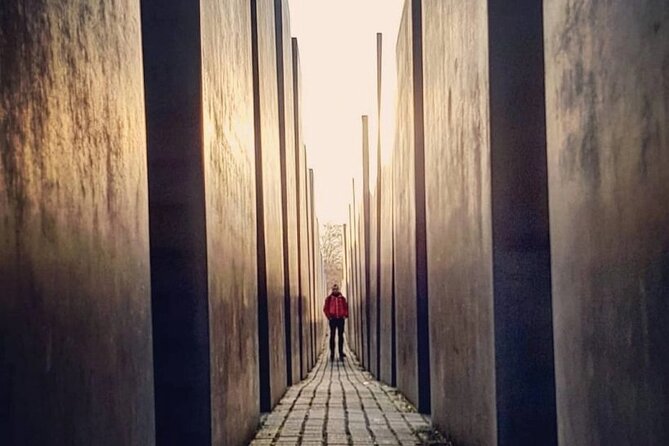
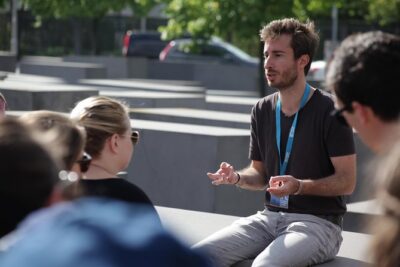
The Holocaust Memorial, the Memorial to the Murdered Jews of Europe (about 15 minutes) is described as the largest memorial in central Berlin. Your guide will explain not only what you are looking at, but the story around how it was built and what enabled the crimes it commemorates. The point is to understand it as memorial design with purpose, not as a backdrop for a quick snapshot.
After that comes Fuhrerbunker (about 15 minutes). The tour’s wording might be jokingly grim, but the meaning is serious: this is connected to the site where Hitler ended his reign. Your guide places it within the broader setting of the New Reich’s Chancellery gardens, which helps you picture what the leaders controlled during the final stretch of the war.
These two stops are where your guide’s pacing really matters. In a small group, it is easier to pause, absorb, and ask questions without feeling rushed. If you are sensitive to difficult topics, mentally plan for a heavier part of the walk here. A good strategy is to slow your pace, let the information land, and take your photos only when you are ready.
German Ministry of Finance and the Air Force Past
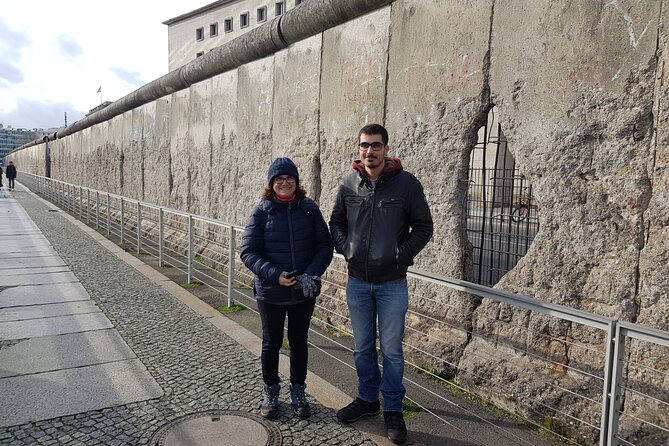
The tour continues to the Bundesministerium der Finanzen (about 15 minutes), now Germany’s finance ministry building. Your guide connects the building’s past use to its Cold War relevance and notes that it was formerly the HQ building of the Luftwaffe.
This stop is a great example of what makes a guided walk more valuable than wandering. On your own, you might see an official government building and move on. With commentary, you learn how the same walls can serve different regimes and different eras, and how history sticks to architecture even when the function changes.
If you like how buildings evolve over time, this is a satisfying moment. It bridges Nazi-era military history to later postwar political reality in a way that feels grounded in place.
Topography of Terror and the Cold, Specific Machinery of the Nazi State
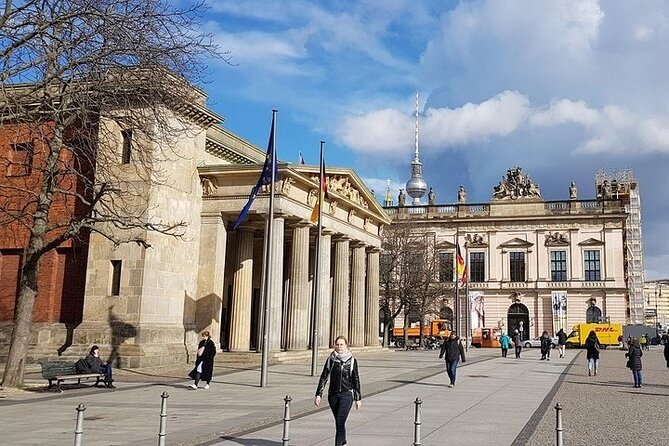
Next up is Topography of Terror (about 20 minutes). This is the site of former headquarters of the SS, Gestapo, and SD. Your guide explains what the site was during the Nazi period and then how postwar memorialization efforts shaped the meaning afterward.
This is another stop where you should expect serious content. It is not just about big dates; it is about systems. Your guide’s job here is to make the story clear and not feel like a blur.
One practical thing I appreciate on tours like this: you are walking past what you might otherwise skim. The guide helps you understand what to notice, so the time you spend here feels earned.
More German cities at walking speed:



Checkpoint Charlie, Where You Feel the Cold War in Plain Sight
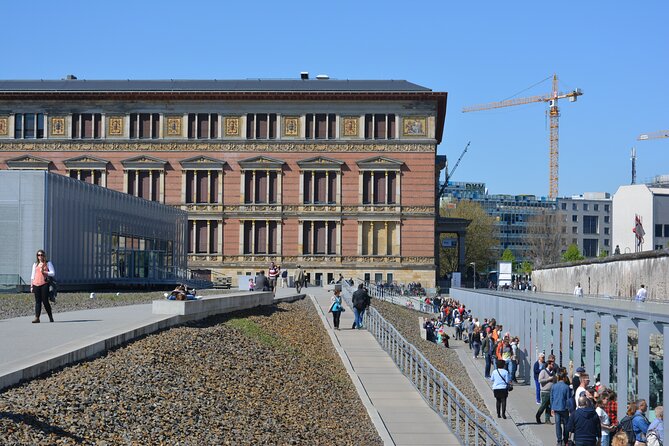
Then comes Checkpoint Charlie (about 20 minutes). This checkpoint is one of the iconic symbols people associate with Cold War Berlin. Your guide ties it to what it meant to live in a divided city, and how checkpoints functioned as real boundaries, not just lines on a map.
Checkpoint Charlie is also one of those locations where people come for photos. The guided version helps you see it as an operating point in a political reality, which makes the stop more than a tourist stop.
If you want to understand Berlin beyond headlines, this is a key moment. It links the physical city to how people moved, got checked, and lived with restrictions.
Gendarmenmarkt and the Joy of Beautiful Symmetry
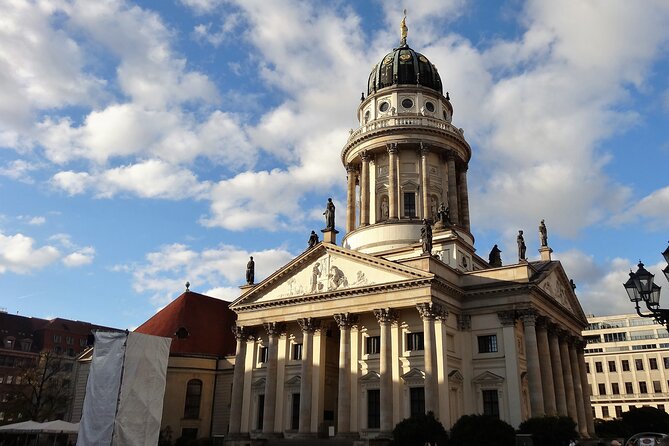
After the heavier stops, the route shifts to Gendarmenmarkt (about 15 minutes). Here you get the history of the square and the foundation and development of the space, plus the splendor of 18th and 19th century architecture.
This is a nice balance. Berlin can swing between tragedy and triumph, and Gendarmenmarkt gives you a breather. You will still get historical context, but the focus becomes how planning and design shaped a city center, not only what happened during wartime.
For photo lovers, this is a better section of the tour for getting architecture shots without feeling like the mood turns too bleak.
Bebelplatz and the 1933 Book Burning Reminder
The next stop is Bebelplatz (about 15 minutes). Your guide explains how the square fits into the grandeur of Frederick the Great’s Prussian capital, and you also see the Memorial to the darkest chapter, the 1933 Nazi Book Burning.
This stop works best when you approach it as a lesson in cultural control. The story is not only that books were burned, it is why that mattered to the regime and what it represented for future thinking in Germany.
If you like memorials that connect history to ideas, this is a meaningful addition. It is not just a monument, it is a reference point for how authoritarianism targets language, knowledge, and dissent.
Unter den Linden, Museums, and the Berlin You Can Walk Into Next
Then the tour flows to Unter den Linden (about 20 minutes), focusing on the eastern end. Your guide points out the Humboldt University area, plus the Memorial to Victims of War and Tyranny and the German History Museum.
This is a useful stop for two reasons. First, you learn what the boulevard is, historically speaking. Second, it puts you near institutions you can continue exploring on your own afterward.
After that, you reach Museum Island (about 20 minutes). This is your finish point, and it is a satisfying one. Your guide describes crossing from the tour back into what is medieval Berlin, linked to the 15th century Stadt Schloss (City Palace). The area is now home to five world-class museums, and your tour ends with views and discussion toward Alexanderplatz, the center of postwar East Berlin from the eastern side of the island.
This ending is valuable because it sets you up for the rest of your day. After a guided history walk, you can pick a museum that matches what you just learned, instead of randomly choosing based on which building looks prettiest.
What You Learn From the Guides, and Why the Human Part Matters
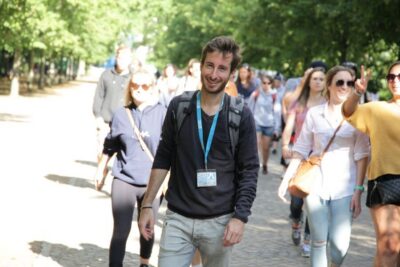
One reason this tour gets so many high marks is the way guides connect the group to the material. Guides named across recent tours include Aurel, Cairan, Eugen, Rhys, Paul, Al, Aaron, and others. Even when personalities differ, the pattern is the same: the storytelling sticks, and the guide is patient with questions.
You can also feel the difference between a timeline and a narrative. A well-led walk helps you understand why certain buildings were built where they were, why they were targeted, and why they were rebuilt or repurposed. That is the kind of detail that makes your photos more than souvenirs.
A small-group setup also helps if you travel with kids or family. One of the strongest practical notes here is that your guide can keep the pacing friendly and explain things in a way that does not feel like homework.
And yes, there is a lot to take in. I recommend bringing a small snack or planning a quick break soon after, especially if you know you get hungry when you are concentrating.
The Real Trade-Off: It Is a Walking Tour, and the Topics Are Heavy
Let’s be honest about the trade-offs.
First, it is a walking tour, roughly 3 hours 30 minutes. That means comfortable shoes are not optional. If long distances are an issue for you or your travel partner, check whether you can handle a full morning or consider a more stop-light option.
Second, the itinerary includes major memorials and sites tied to Nazi crimes and the Cold War. Even if you are confident about history, these stops can hit hard. If you are traveling with someone who gets overwhelmed by emotional content, plan for that and allow time after the tour to decompress.
The upside is that the tour does not hide behind generalities. You leave knowing what you saw, why it matters, and how the pieces connect.
Should You Book This Berlin History and Highlights Walking Tour?
You should book if you want a high-value way to connect major landmarks into a readable story. The combination that makes it worth your time is: a small group, a strong route through Brandenburg Gate to Museum Island, English commentary, and no listed paid entry fees for the stops. It is also a smart move if Berlin feels unfamiliar and you want a guided framework before exploring on your own.
Skip it if walking for 3.5 hours is not realistic for you, or if you know you are not up for memorial and war-related content. In that case, you can still see the sites on your own, but a guided explanation may be what you miss most.
If your goal is to understand Berlin fast, and in a way that makes later museum visits click, this is a very solid choice.
FAQ
How long is the Berlin History and Highlights Sightseeing Walking Tour?
It runs for about 3 hours 30 minutes.
Where does the tour start, and what is the end point?
It starts at Wurst 🙂 am Brandenburger Tor on Ebertstraße Ecke Scheidemannstraße, 10117 Berlin, and ends at Museum Island (10 Berlin).
Is this tour a walking tour?
Yes. The tour is walking-based, and the duration is designed for time on foot between stops.
What languages is the tour offered in?
The tour is offered in English.
What is the group size limit?
The maximum group size is 15 travelers.
Are admission tickets needed for the stops?
The listed stops are marked admission ticket free, and the tour is built around visiting those locations on the route.
Is free cancellation available?
Yes. You can cancel up to 24 hours in advance for a full refund. If you cancel less than 24 hours before the start time, the amount paid is not refunded.
Centuries Per Block
- Berlin: Natural History Museum Entrance Ticket
★ 4.6 · 3,382 reviews - Berlin: 3-Hour World Heritage Cruise to Potsdam
★ 4.5 · 1,569 reviews - Berlin: History of the Third Reich Guided Walking Tour
★ 4.7 · 791 reviews - Berlin: Berlin Charité Guided History Tour
★ 4.4 · 660 reviews
Fresh on the arrivals board for Berlin



Guided Walks in Berlin, compared.
Berlin City walk Government District and Places of Democracy
Read our review →
Berlin’s Best: 2 Hour Walking Tour Third Reich and the Cold War
Read our review →
Third Reich Berlin: Hitler and WWII Walking Tour
Read our review →
Browse the lists this tour appears in